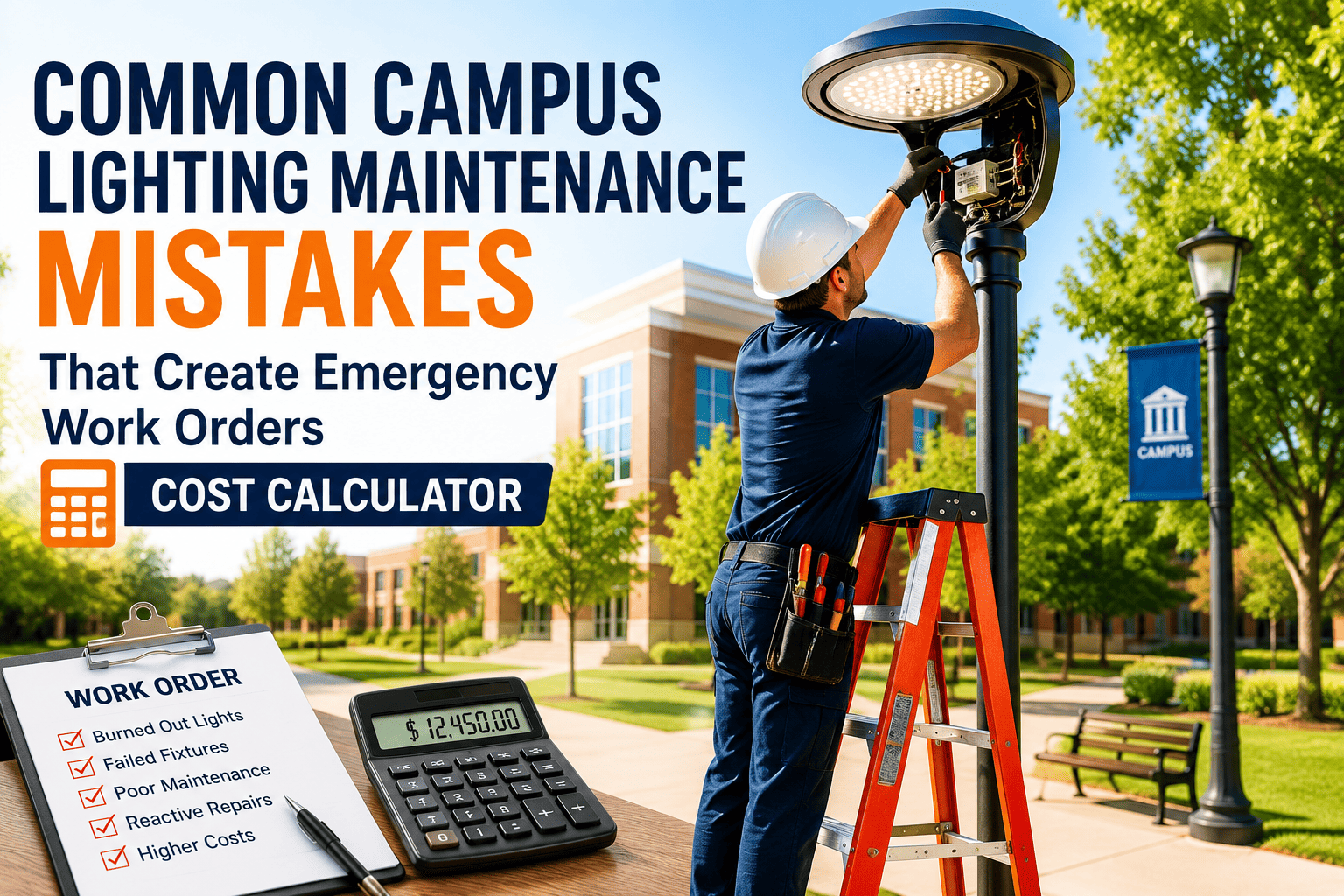
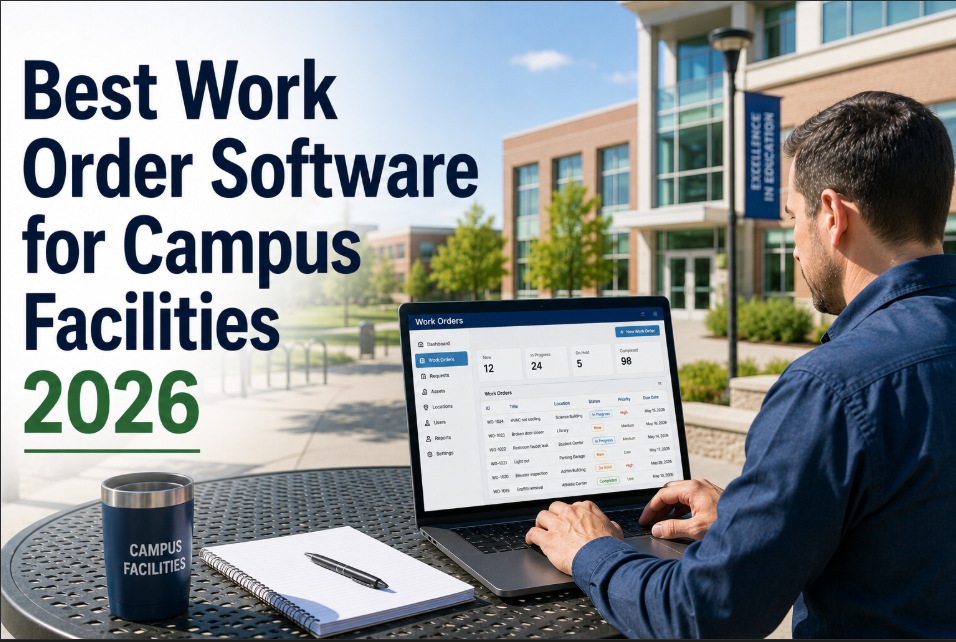
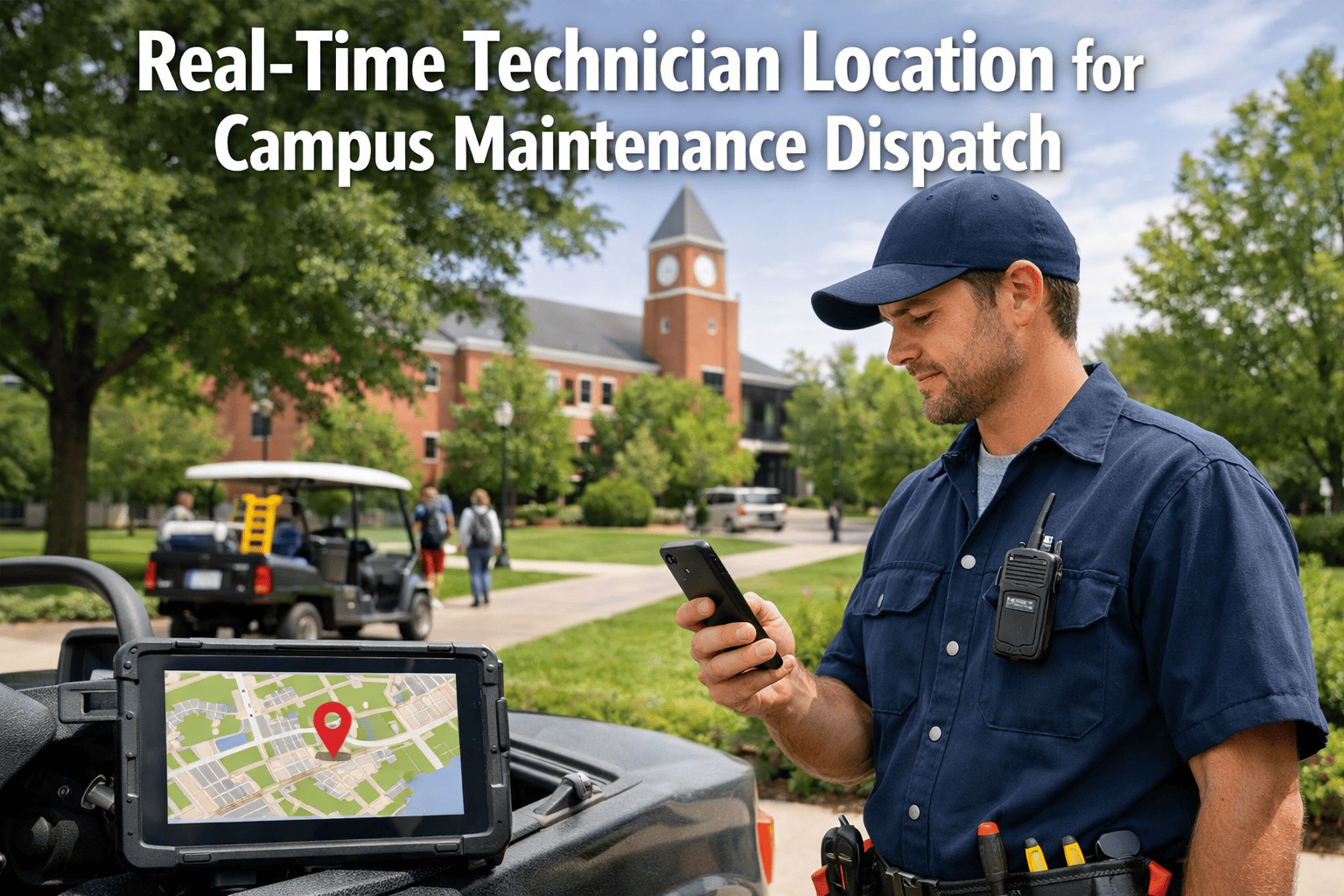
A university facilities director with 14 technicians, 80 buildings, and 2,500 maintainable assets starts every Monday morning the same way: reviewing a backlog of 340 open work orders, deciding which 60 can realistically be completed this week, assigning them based on memory and availability, and hoping no emergencies blow up the plan by Tuesday. By Wednesday, two HVAC emergencies and a plumbing failure have consumed three technicians for two days, 18 scheduled PMs have been deferred, and the plan is fiction. Autonomous maintenance scheduling eliminates this cycle entirely. AI evaluates every open work order, every asset risk score, every technician skill and location, every academic calendar constraint, and every compliance deadline simultaneously, then generates an optimized daily schedule that maximizes completed work, minimizes travel time, prioritizes student-facing spaces, and automatically re-sequences when emergencies arrive. The human role shifts from building the plan to approving it. Schedule a demo to see autonomous scheduling running on campus maintenance data.
What Autonomous Scheduling Actually Means
Autonomous scheduling is not a digital calendar. It is an AI optimization engine that continuously evaluates every variable affecting maintenance execution and produces the sequence of tasks that delivers the highest total value from available resources. The distinction from traditional scheduling is fundamental: traditional scheduling asks a human to decide what gets done today. Autonomous scheduling decides for you, then asks you to approve.
How It Works Today
- Supervisor reviews backlog Monday morning
- Assigns tasks by memory and availability
- Emergencies re-shuffle everything manually
- PMs deferred when reactive work spikes
- No visibility into optimal task sequence
- 45-minute dispatch meeting every morning
What Basic CMMS Adds
- Work orders are digital instead of paper
- Backlog is visible in a list or dashboard
- Assignment is still manual (drag-and-drop)
- PM schedules auto-generate but not optimized
- No routing, clustering, or skill matching
- Emergencies still require manual re-planning
What AI Suggestions Add
- System recommends assignments by skill match
- Suggests priority based on asset criticality
- Supervisor still makes final assignment
- Geographic clustering suggested, not enforced
- Re-scheduling still requires human decision
- Better than manual, still human-dependent
What Autonomous Scheduling Delivers
- AI generates complete daily schedules per tech
- Optimizes across skill, location, priority, calendar
- Emergencies auto-re-sequence the entire team
- Student-impact weighting built into every decision
- Zero dispatch meetings. Zero manual re-planning.
- Supervisor approves or adjusts, not builds
The Seven Variables AI Evaluates Every Scheduling Cycle
Autonomous scheduling is not random assignment with a digital interface. It is a constrained optimization problem that evaluates seven variables simultaneously to produce the schedule that maximizes maintenance value delivered per labor hour available. No human can hold all seven in working memory across 14 technicians and 340 work orders. AI does it in 90 seconds.
Asset Risk Score and Failure Probability
The scheduler prioritizes work orders on assets with the highest failure probability first. A chiller scoring 82/100 risk gets scheduled before a light fixture scoring 15/100, regardless of when each work order was submitted. This ensures the most consequential work happens first.
When the ML engine detects a developing failure 3–6 weeks out, the scheduler places that predictive work order into the optimal maintenance window — an academic break, a weekend, or a low-occupancy period — automatically.
Technician Skills, Certifications, and Availability
An HVAC work order on a chiller is never assigned to an electrician. A controls task requiring BAS certification is never assigned to a general maintenance tech. The scheduler matches every work order to the technician pool with the required qualifications.
Vacation, sick leave, training days, and shift boundaries are factored into every scheduling cycle. The AI does not assign work to technicians who are unavailable — a problem that manual dispatch encounters constantly.
Geographic Clustering and Travel Optimization
On a 200-acre campus, the difference between random task assignment and geographically clustered routing is 60–90 minutes of productive time recovered per technician per day. That is the equivalent of adding 1+ FTE to a 12-person team at zero hiring cost.
If three work orders exist in the same building or adjacent buildings, the scheduler batches them into a single trip rather than dispatching three separate visits across the day. Travel time drops. Completed work orders per day increase.
Student-Impact Prioritization and Academic Calendar
Classrooms, residence halls, dining facilities, labs, and admissions tour routes receive higher scheduling priority than back-of-house and administrative spaces. During finals week, classroom HVAC work orders auto-escalate to same-day scheduling.
Noisy repairs, system shutdowns, and access-blocking maintenance are automatically scheduled for evenings, weekends, or academic breaks — not during lecture hours. The calendar integration makes this automatic, not dependent on the planner remembering the schedule.
Compliance Deadlines and Regulatory Windows
The scheduler treats compliance-driven work orders as immovable deadlines. A fire alarm inspection due in 5 days cannot be deferred for a lower-priority corrective work order, regardless of other scheduling pressures. Compliance work is scheduled first, then remaining capacity fills around it.
When a compliance work order approaches its deadline without being completed, the scheduler auto-escalates it: reassigning to any available qualified technician, notifying the facilities director, and flagging the risk in the compliance dashboard.
Parts Availability and Pre-Staging
The scheduler checks inventory for required parts before assigning a work order. If the part is not in stock, the work order is held until the part arrives — preventing the wasted technician trip that occurs when a tech arrives at a job only to find the repair part is unavailable.
The evening before, the scheduler generates the next day’s kitting list — all parts needed for all scheduled work orders, organized by technician. The storeroom prepares kits overnight. Technicians pick up their kitted parts and go. Zero searching, zero delays.
Emergency Re-Sequencing Logic
When an emergency work order arrives, the scheduler does not just assign the nearest tech — it re-optimizes the entire team’s schedule. The displaced tasks from the emergency-assigned tech are redistributed across remaining available staff, preserving as much of the original plan as possible.
After the emergency is resolved, the scheduler regenerates the next cycle’s plan accounting for the work that was deferred. Deferred PMs are rescheduled within their compliance windows. No tasks fall through the cracks because the emergency consumed the planner’s attention.
Measurable Outcomes: Before and After Autonomous Scheduling
The shift from manual to autonomous scheduling produces structural improvements that compound over time. These metrics represent documented outcomes within 90–180 days of deployment at institutions ranging from 500,000 to 15 million square feet under management. Schedule a demo to see these metrics projected for your campus.
Geographic clustering, parts pre-staging, and optimized sequencing increase wrench time from the industry average of 35% to over 70% — effectively doubling each technician’s output capacity without adding headcount.
Automated dispatch eliminates the manual assignment bottleneck. Work orders are routed to the optimal technician within seconds of classification, reducing average response from 6.3 days to under 24 hours.
Autonomous scheduling treats PM deadlines as hard constraints, not suggestions. PMs are scheduled into available capacity first, then corrective work fills around them. Compliance rates move from 55–65% to 95%+ within two semesters.
Higher PM compliance prevents the failures that generate emergencies. Predictive work orders catch developing issues before they escalate. The combined effect drops emergency ratio from 45% to under 15% within 6 months.
The facilities director shifts from building the daily schedule (2–3 hours) to reviewing and approving the AI-generated schedule (10–15 minutes). Recovered time goes to capital planning, vendor management, and strategic initiatives.
Parts pre-staging, asset history surfacing, and skill-matched assignment ensure technicians arrive with the right parts, the right knowledge, and the right qualifications. Return trips drop by 40–60%.
How Autonomous Scheduling Handles Emergency Disruptions
The real test of any scheduling system is not how it performs on a quiet Monday — it is what happens when a chilled water pipe bursts at 10 AM on a Wednesday, consuming two technicians for the rest of the day while 28 other work orders were already assigned. Manual systems collapse. Autonomous scheduling adapts in seconds.
The entire process — from emergency detection to full team re-optimization — takes under 90 seconds with zero human intervention. In a manual system, the same disruption consumes 45–90 minutes of the facilities director’s time, produces a suboptimal plan based on incomplete information, and drops at least 3–5 tasks through the cracks entirely.
The Enrollment Connection: Why Scheduling Is a Retention Strategy
In 2026, with WICHE projecting the sharpest enrollment decline in a generation, every operational function is an enrollment function. Autonomous scheduling directly impacts student satisfaction and retention because it ensures student-facing spaces receive maintenance attention proportional to their enrollment impact — not proportional to when the work order was submitted or who complained loudest.
Financial Impact: What Autonomous Scheduling Saves Annually
The financial case for autonomous scheduling is built on four quantifiable pillars. Conservative estimates for a mid-size university managing 2–3 million gross square feet with 12–18 maintenance technicians:
Doubling effective technician capacity through routing optimization, clustering, and parts pre-staging avoids the cost of 2–4 unfilled positions that most campuses cannot recruit for. At $65K–$90K fully loaded cost per technician, the savings are immediate.
Higher PM compliance prevents 65% of emergency failures. Emergency repairs cost 3–5× planned repairs through overtime labor, expedited parts, and collateral damage. Preventing 6–10 major emergency events per year generates six-figure savings.
Scheduling HVAC maintenance before performance degrades prevents the 15–25% energy waste from stuck dampers, fouled coils, and simultaneous heating/cooling faults. PM compliance on energy-consuming assets is the fastest path to savings.
Treating compliance deadlines as hard scheduling constraints eliminates the missed inspections and expired documentation that trigger OSHA ($161K/willful), NFPA (building closure), and ADA ($150K–$500K/lawsuit) penalties.
Student-impact scheduling ensures residence halls, classrooms, and dining facilities are maintained at recruitment-grade condition. Every retained student represents $20K–$45K in annual tuition. Preventing 15–25 facility-driven transfers protects significant revenue.
Consistent PM execution extends equipment useful life 25–35% beyond calendar replacement schedules. Across 2,500+ assets, deferred capital replacement generates millions in avoided spending over a five-year planning horizon.
Implementation: From Manual to Autonomous in 90 Days
Transitioning to autonomous scheduling does not require a multi-year IT project. Oxmaint deploys in phases designed to deliver measurable results within 90 days while building toward full autonomous operations. Start your free trial and begin the 90-day transformation from manual dispatch to autonomous scheduling.
Frequently Asked Questions
Does autonomous scheduling replace the facilities director’s role?
No. It replaces the most time-consuming and lowest-value part of the role: manually building daily schedules, dispatching technicians, and re-planning after emergencies. The facilities director shifts from scheduling operator to scheduling approver — reviewing AI-generated plans, making strategic adjustments, and focusing on capital planning, vendor management, and institutional strategy. Most directors report recovering 10–15 hours per week of time previously consumed by scheduling and dispatch logistics.
Can the AI schedule be overridden when the supervisor disagrees?
Yes — at any point. The supervisor can adjust individual assignments, change priorities, lock specific time blocks, or re-sequence tasks manually. The AI then re-optimizes around those constraints. The system is designed for human-in-the-loop operation: the AI proposes, the human disposes. Over time, as confidence in the AI increases, most supervisors reduce their adjustment rate from 20–30% of tasks in the first month to under 5% by month three.
How does the system handle technicians who prefer certain buildings or tasks?
Technician zone preferences can be configured as soft constraints — the AI respects them when possible but overrides them when skill requirements, priority, or capacity demands it. Building familiarity is a legitimate scheduling factor (technicians who know a building’s quirks work faster), and the system can weight this. However, over-reliance on building-specific assignment creates single points of failure when that technician is absent. The AI balances familiarity with cross-training exposure to build team resilience. Start a free trial to see how zone preferences and skill matching work together in the scheduling engine.
What data does the AI need to start generating schedules?
Three data sets are required at minimum: (1) an asset registry with building locations and criticality ratings, (2) technician profiles with skills, certifications, and shift schedules, and (3) your current open work order backlog. With these three inputs, the AI can generate its first optimized schedule within hours of setup. Additional data — academic calendar, BAS sensor feeds, maintenance history, parts inventory — enhances scheduling quality progressively as it is connected over the first 4–8 weeks.
What ROI should we present to our board to justify autonomous scheduling?
The business case rests on four quantifiable pillars: (1) workforce productivity — doubling effective technician capacity avoids $180K–$350K annually in unfilled position costs, (2) emergency reduction — 65% fewer emergencies saves $800K–$2M per year in avoided emergency repair premiums, (3) energy savings — timely PM on HVAC systems delivers 15% energy cost reduction, typically $150K–$500K annually, and (4) enrollment protection — facility condition as a top-3 retention factor means every percentage point of improved student satisfaction protects $500K–$2M in annual tuition revenue. Combined, the platform typically delivers 5–8× return on investment within the first year. Book a demo and we will model the specific ROI projection for your institution.