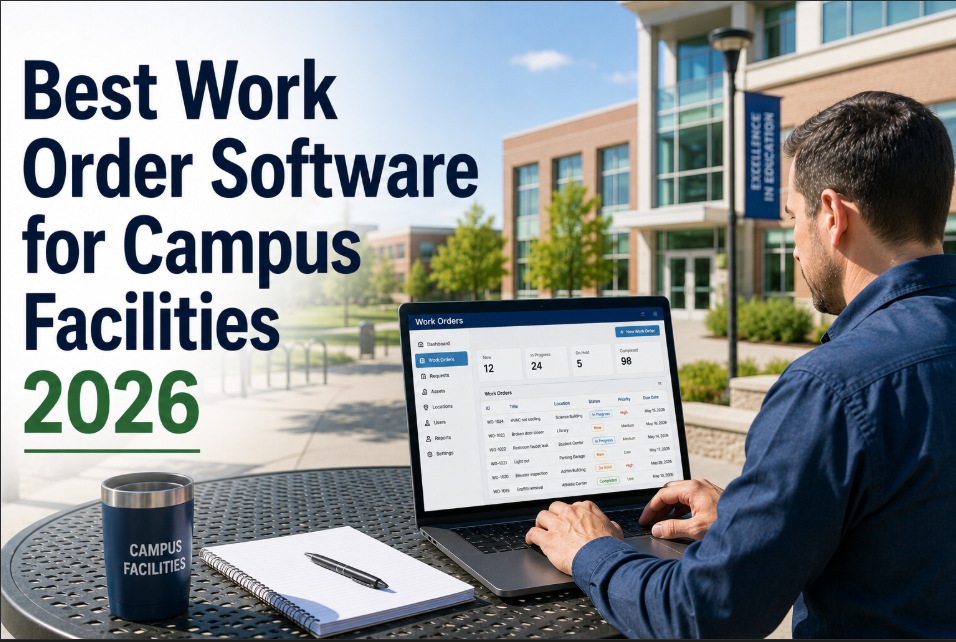
University facilities teams that rely on reactive maintenance spend 4.8 times more per repair event than those running structured preventive maintenance programs — and they still end up with worse building performance, more compliance findings, and more academic disruptions. The math is straightforward: a planned HVAC service that costs $400 prevents the $1,900 emergency repair and the $12,000 classroom shutdown that follows a system failure during exam period. What prevents most university maintenance departments from running effective PM programs is not a lack of awareness — it is a lack of tooling. Scheduling PMs manually across 60 buildings, 1,200 assets, and a 12-person team using spreadsheets and email is practically impossible to execute at 90%+ compliance. Preventive maintenance software built for university campuses automates the triggers, assigns the work, tracks completion, and feeds the compliance record — so the program actually runs instead of existing only on paper. Start a free trial for 30 days to see how Oxmaint automates PM scheduling for university facilities, or book a demo with a higher education specialist.
Higher Education · Preventive Maintenance Software · 2026 Ranked Guide
Best Preventive Maintenance Software for Universities 2026
Automated PM scheduling, asset condition triggers, mobile work orders, and compliance reporting — ranked and compared for university and college facilities management teams
See University PM Compliance Go From 58% to 94% — Without More Staff
Oxmaint automates PM work order generation, technician assignment, and completion tracking for every asset across every campus building. PM schedules live inside asset records — not spreadsheets. Work orders generate automatically at trigger points. Compliance rates tracked in real time. Start a free trial or book a demo to see the university PM automation workflow.
4.8x
Higher cost per repair event for reactive vs preventive maintenance at university facilities
94%
PM compliance rate achievable with automated scheduling vs 58% average on manual spreadsheet programs
31%
Reduction in total maintenance spend within 12 months of implementing structured PM programs in higher ed
82%
Fewer emergency repair events in university facilities maintaining PM compliance above 90%
Why University PM Programs Fail Without the Right Software
Manual PM management at university scale is not a process problem — it is a mathematics problem. The volume and complexity exceed what any team can manage reliably without automation.
FAILURE MODE 01
PM Schedules Exist but Do Not Execute
The schedule is in a spreadsheet. Nobody checks it every Monday morning without fail. High-volume weeks cause deferrals. Deferrals accumulate silently. Six months later, the HVAC unit that was supposed to receive 3 services received 1 — and nobody knows until it fails during a heat wave in August, one week before student move-in.
FAILURE MODE 02
PM Intervals Are Calendar-Based, Not Condition-Based
A lab building used 14 hours a day, 7 days a week, has different HVAC service needs than an administration building used 8 hours on weekdays. Calendar-based intervals apply the same PM frequency to both — over-maintaining low-use assets and under-maintaining high-use ones. Condition and usage-based triggers prevent both outcomes simultaneously.
FAILURE MODE 03
Completion Is Recorded but Evidence Is Not
A checkmark on a paper form is not compliance documentation. OSHA, state fire marshals, elevator inspectors, and accreditation bodies require timestamped records with technician identification and task detail. When those records exist only as paper forms in a binder, audit preparation requires weeks of manual compilation — and findings are common for records that exist but cannot be quickly produced.
FAILURE MODE 04
PM Data Never Informs Asset Replacement Decisions
PM completion data sits in the maintenance system. Asset condition assessments sit in a separate spreadsheet. CapEx forecasts are assembled from neither. The result is capital decisions based on asset age rather than actual condition — replacing assets that could run 5 more years while missing the ones that are failing quietly because their maintenance history is not connected to their condition score.
How Oxmaint Runs University PM Programs Automatically
Oxmaint's PM engine is built around the asset record — not a separate scheduling calendar. Every PM trigger, assignment rule, and compliance record is tied directly to the asset it protects. Start a free trial to configure your first university building PM program, or book a demo for a live walk-through of PM automation setup.
01
Asset-Linked PM Schedules
PM tasks are configured inside each asset record — specifying interval type (calendar, runtime hours, inspection-triggered), task checklist, required technician certification, estimated duration, and parts required. When the trigger fires, the work order generates automatically and inherits all this context. No dispatcher action required for routine PM generation.
02
Automatic Work Order Generation and Assignment
PM work orders generate at the trigger point and route automatically to the qualified technician based on building assignment, trade certification, and current workload. No manual work order creation. No assignment emails. The right person receives a mobile notification with the task checklist, asset history, and any special instructions already attached.
03
Mobile Completion with Digital Signature
Technicians complete PM checklists from mobile devices — mandatory fields enforce complete documentation before the work order can close. Digital signature, timestamp, photos, and any noted deficiencies captured at the point of work. Records are immutable once signed — providing the compliance-grade documentation that paper forms cannot.
04
Condition Scoring Updates from PM Completion
When a PM is completed, the asset's condition score updates automatically based on the inspection findings. An HVAC unit serviced with no issues maintains its condition score. One with a noted refrigerant leak triggers a condition flag that rolls into the building's capital planning model. PM completion feeds asset lifecycle data — not just the compliance record.
05
Real-Time PM Compliance Dashboard
Facilities managers see PM compliance rates by building, system, technician, and time period in real time — not in a monthly report assembled from raw data. Overdue tasks escalate visually. Compliance trends visible over 30, 60, and 90-day windows. Directors of Facilities have the visibility to correct compliance drift before it becomes a failure event or an audit finding.
06
Seasonal PM Calendars for Academic Cycles
University maintenance operates in academic cycles — summer is the primary window for major system work. Oxmaint supports seasonal PM calendar overlays that adjust task frequency and scheduling priority based on academic calendar, building occupancy cycles, and summer shutdown windows. PM programs adapt to the university's operational reality, not a generic industrial calendar.
Manual PM Management vs Oxmaint Automated PM
94%
PM Compliance Achievable
with CMMS-automated PM scheduling vs 58% average on manual spreadsheet programs
31%
Maintenance Spend Reduction
total maintenance cost reduction within 12 months of structured PM program implementation
82%
Fewer Emergency Repairs
reduction in emergency repair events at facilities maintaining PM compliance above 90%
Hours
Audit Report Generation
time to produce PM compliance audit report — vs weeks of manual evidence gathering
Frequently Asked Questions
What PM interval types does Oxmaint support for university buildings?
Oxmaint supports three PM trigger types: calendar-based (every 30, 90, 180 days, or annually), usage-based (after a defined number of runtime hours or operational cycles), and condition-triggered (when an inspection finding or sensor reading crosses a defined threshold). For most university building systems, Oxmaint recommends a combination: calendar triggers for regulatory compliance tasks like fire alarm testing and elevator inspection, usage-based triggers for HVAC components in high-utilization buildings, and condition-triggered escalation when an inspection reveals early-stage wear. This combination prevents both over-maintenance of low-use assets and under-maintenance of high-demand systems.
How do you set up PM schedules for an existing campus with no digital asset data?
Most universities start with a mix of existing spreadsheets and institutional knowledge. Oxmaint's implementation process begins with an asset import from whatever source exists — spreadsheets, existing CMMS exports, or manual entry for buildings where no records exist. You do not need a complete, clean dataset before starting. Oxmaint recommends beginning with your top 20 highest-criticality assets and configuring PM schedules for those first. As technicians complete work orders, the asset database builds progressively. Most university campuses have their critical building systems fully scheduled within 60 days, with full campus coverage at 90–120 days.
Can Oxmaint accommodate the summer shutdown and academic year calendar?
Yes. Oxmaint supports academic calendar overlays that adjust PM scheduling priority and frequency windows based on semester cycles. Summer shutdown windows can be configured as high-intensity PM periods where deferred major system work is automatically rescheduled for execution during the off-season. Pre-semester startup inspections can be set as mandatory PM tasks that must complete before building occupancy is permitted. Building occupancy levels can be linked to PM frequency adjustments — a building at 20% capacity during winter break receives lower-frequency PM scheduling than the same building at 95% occupancy during finals week.
How does Oxmaint connect PM completion data to capital planning?
Oxmaint's PM and asset management layers are integrated by design, not connected via data export. When a PM is completed, the technician records inspection findings that include condition observations for the serviced components. These findings automatically update the asset's condition score. Assets with recurring PM findings — repeated notes of early corrosion, worn seals, or declining performance — generate condition trend flags that appear in the CapEx forecasting model as elevated replacement probability. The result is capital planning data that reflects actual asset condition as observed by the technicians doing the work — not static age-based assumptions made by planners who have not seen the equipment.
University Preventive Maintenance · Oxmaint CMMS Platform
Stop Running PM Programs on Spreadsheets — Automate Them
Oxmaint generates PM work orders automatically, assigns them to the right technician, enforces complete digital documentation, and feeds completion data into asset condition scoring and CapEx forecasting — all from a single platform. University facilities teams go from 58% manual PM compliance to 94% automated compliance. No extra staff. No consultant engagement. No paper.