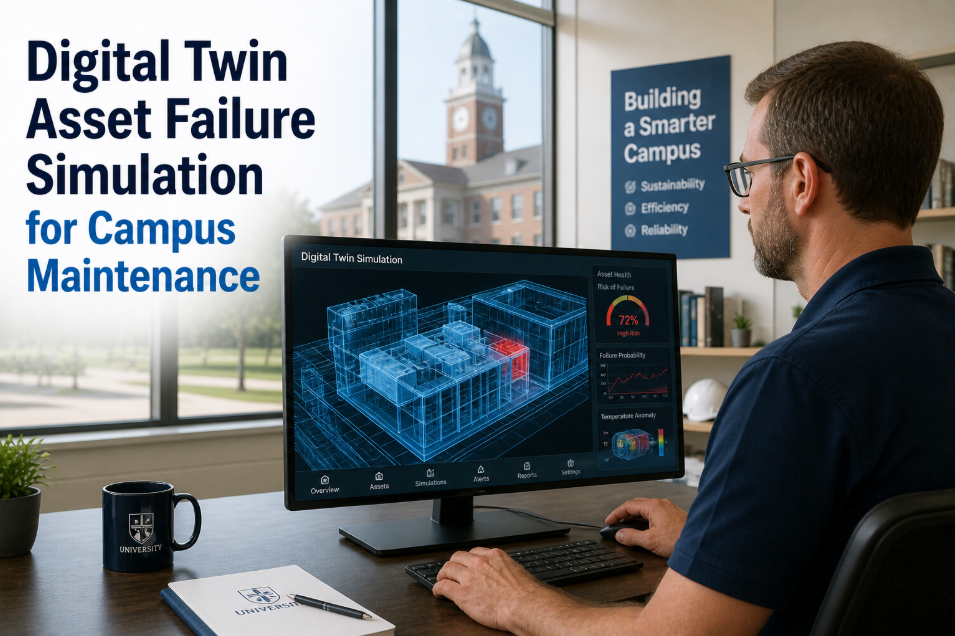
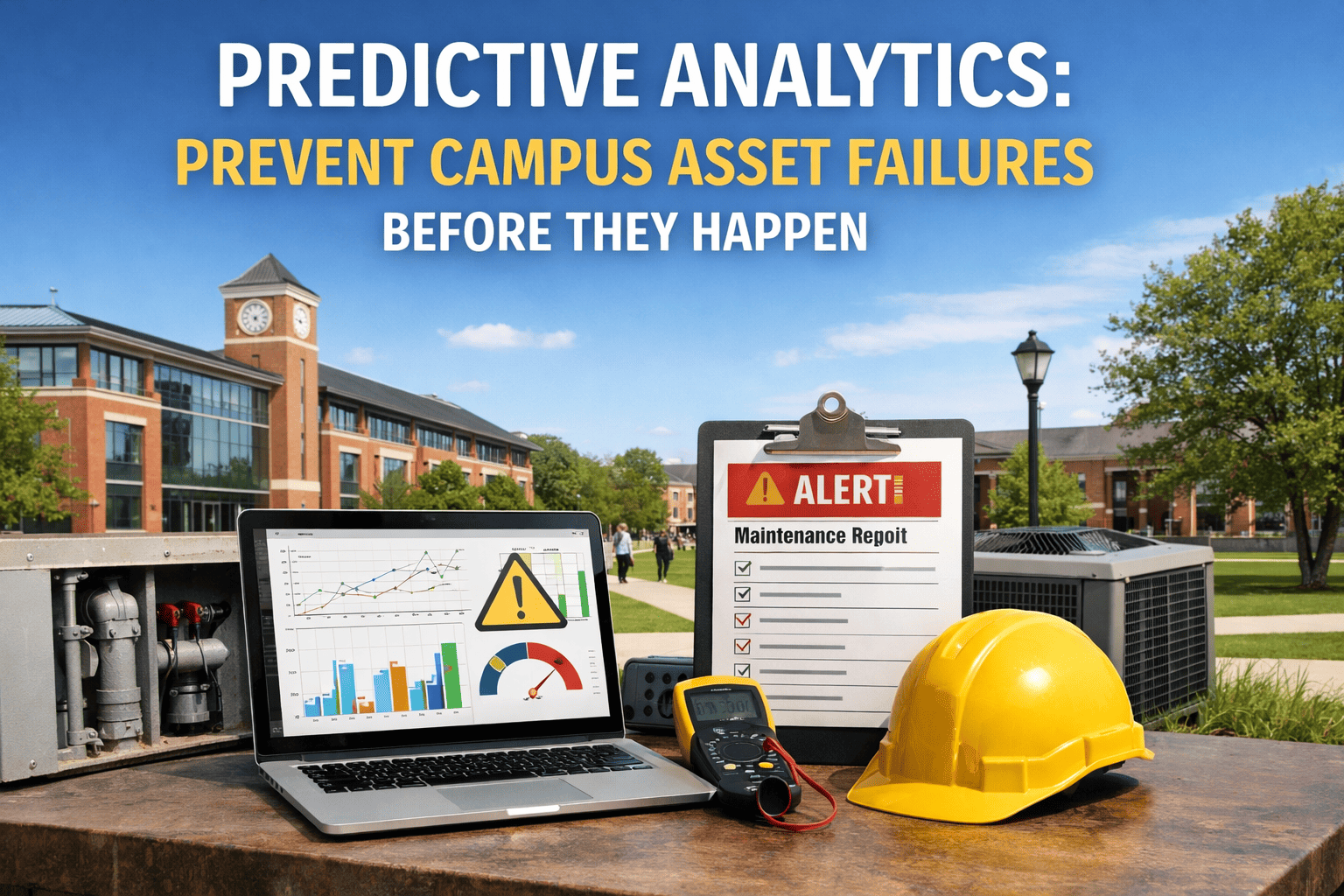
It was 6:15 AM on the coldest Monday of January when Riverside University's central heating boiler failed without warning. With temperatures dropping to 12°F outside, residence halls housing 3,200 students quickly became uninhabitable. Emergency portable heaters cost $47,000. The investigation revealed something troubling: the boiler had been sending distress signals for weeks—rising flue gas temperatures, increasing vibration patterns, declining efficiency metrics. But without AI-powered monitoring, no one noticed until it was too late. Today, predictive maintenance boiler systems using artificial intelligence can detect these warning signs 2-4 weeks before failure, transforming campus utility management from reactive crisis response to proactive reliability engineering.
For schools and higher education institutions, boilers aren't just equipment—they're the heartbeat of campus operations. They heat classrooms, power cafeteria steam systems, and ensure student comfort during critical academic periods. With the average U.S. public school building now 49 years old and K-12 schools facing $542 billion in deferred maintenance, the question isn't whether boiler failures will happen—it's whether your institution will see them coming.
49 yrs
Average age of public school buildings in the United States
50%
Reduction in boiler downtime achievable with AI predictive maintenance
75%
Of equipment breakdowns eliminated through predictive approaches
How AI Transforms Boiler Maintenance in Education
Traditional boiler maintenance operates on schedules or reactions—either performing maintenance at fixed intervals regardless of actual condition, or waiting until something breaks. AI-powered predictive maintenance boiler systems fundamentally change this equation by continuously analyzing real-time sensor data to forecast failures before they occur.
How It Works
Smart sensors continuously monitor critical boiler parameters: pressure, temperature, vibration, flame quality, fuel flow, water levels, and exhaust gas composition. Data streams in real-time to cloud platforms for analysis.
Parameters Monitored
Pressure & Temperature
Vibration Patterns
Flame Quality
Exhaust Composition
How It Works
AI algorithms learn normal operating patterns and detect subtle deviations that indicate developing problems. Studies show AI can predict boiler tube leaks up to 5 minutes before occurrence—and trending issues weeks in advance.
AI Capabilities
Pattern Recognition
Anomaly Detection
Failure Prediction
Trend Analysis
How It Works
When algorithms detect anomalies or predict impending failures, the system automatically generates alerts via text, email, or CMMS work orders—giving maintenance teams time to plan interventions during scheduled downtime.
Alert Methods
Mobile Notifications
Email Alerts
Auto Work Orders
Dashboard Warnings
How It Works
Instead of fixed maintenance schedules, AI determines optimal intervention timing based on actual equipment condition—performing maintenance only when needed, during breaks and low-demand periods.
Scheduling Benefits
Condition-Based Timing
Academic Calendar Sync
Resource Optimization
Cost Reduction
Reactive vs. Preventive vs. Predictive: The Maintenance Evolution
Understanding where predictive maintenance boiler systems fit in the maintenance spectrum helps facilities teams appreciate the transformative potential of AI-driven approaches for campus utility systems.
Strategy: Fix it when it breaks. This approach leads to emergency repairs during the coldest days, overtime costs, and disrupted campus operations. A school that waited for boiler failure spent 10x the cost of annual maintenance on emergency replacement.
Highest Cost
Unplanned Downtime
Safety Risks
Shortest Equipment Life
Strategy: Scheduled maintenance at fixed intervals. Better than reactive, but may perform unnecessary maintenance or miss developing problems between scheduled checks. ASHRAE recommends boiler inspections annually or semi-annually.
Moderate Cost
Scheduled Downtime
May Over-Maintain
Can Miss Issues
Strategy: Maintain based on actual equipment condition using IoT sensors and AI analysis. This approach eliminates up to 75% of equipment breakdowns, reduces maintenance costs by 40%, and extends equipment life by detecting issues at the earliest possible stage.
Lowest Total Cost
Minimal Downtime
Maximum Equipment Life
Optimal Resource Use
Data-Driven Decisions
Continuous Monitoring
Ready to Predict Before Problems Strike?
OxMaint integrates with IoT sensors to bring AI-powered predictive maintenance to your campus boiler systems—detecting anomalies, automating alerts, and keeping your facilities warm when students need it most.
Key Parameters AI Monitors for Boiler Health
Effective predictive maintenance boiler systems track multiple parameters simultaneously, using AI to correlate data and identify patterns that human operators might miss. Here's what smart monitoring systems watch for in campus boiler installations.
Flue gas temperature trends
Water/steam temperature
Bearing temperature rise
Ambient environment factors
Operating pressure stability
Fuel line pressure
Feedwater pressure
Draft pressure variations
Pump bearing vibration
Fan motor patterns
Combustion vibration
Structural resonance
O₂ and CO₂ levels
Flame characteristics
Fuel-to-air ratio
NOx emission trends
The ROI of Predictive Maintenance for Campus Boilers
AI-powered predictive maintenance delivers measurable returns across multiple dimensions. For educational institutions operating on tight budgets, these savings directly translate to resources available for educational programs.
Financial Impact:
Studies show AI-driven predictive maintenance can reduce boiler downtime by up to 50% and reactive maintenance costs by up to 40%. Universities implementing smart monitoring report 20% reductions in energy costs through efficiency optimization. Running equipment to failure costs 3-10x more than proper maintenance programs.
Operational Impact:
Predictive approaches can eliminate 70-75% of equipment breakdowns. Proper maintenance extends boiler life from 10-12 years (neglected) to 15-20+ years. Integration with schools and higher education CMMS enables automated work orders, comprehensive maintenance history, and data-driven capital planning.
40%
Reduction in reactive maintenance costs with AI monitoring
20%
Energy cost savings through efficiency optimization
5-10 yrs
Extended equipment lifespan with predictive maintenance
Want to see how predictive maintenance can transform your campus boiler operations? Sign up free to explore OxMaint's IoT integration capabilities, or schedule a demo to discuss your specific campus utility challenges.
Implementing AI Boiler Monitoring: A Practical Roadmap
Transitioning to predictive maintenance doesn't require replacing your entire infrastructure overnight. Here's a phased approach that educational institutions can follow to implement AI-powered boiler monitoring.
Audit current boiler systems, identify critical equipment, and document existing maintenance practices. Establish baseline performance metrics and prioritize which boilers would benefit most from predictive monitoring.
Equipment Inventory
Criticality Ranking
Baseline Metrics
ROI Projections
Install IoT sensors on priority boilers to monitor key parameters. Start with temperature, pressure, and vibration sensors. Ensure connectivity infrastructure supports real-time data transmission to your CMMS platform.
Sensor Selection
Installation Planning
Connectivity Setup
Data Validation
Allow the system to learn normal operating patterns through baseline data collection. AI models require clean, calibrated sensor data to make accurate predictions—typically 2-4 weeks of operation establishes reliable baselines.
Baseline Learning
Pattern Recognition
Threshold Setting
Alert Configuration
Connect predictive insights with your CMMS for automated work order generation. Continuously refine thresholds based on actual outcomes. Track KPIs weekly: downtime, fault recurrence, and cost savings.
CMMS Integration
Workflow Automation
KPI Tracking
Continuous Improvement
Frequently Asked Questions
What types of boiler failures can AI predict?
AI-powered predictive maintenance can detect developing issues across multiple failure modes: tube scaling or fouling (through efficiency degradation patterns), burner problems (via flame quality and combustion analysis), pump and motor failures (through vibration signatures), water treatment issues (via chemistry trends), and control system anomalies. Research shows AI models can predict boiler tube leak trips up to 5 minutes before occurrence, while trending analysis can identify developing problems weeks in advance.
How much does implementing predictive maintenance cost?
Implementation costs vary based on boiler complexity and existing infrastructure. IoT sensors range from a few hundred to several thousand dollars per unit, with installation and connectivity costs adding to initial investment. However, ROI typically materializes within 12-18 months through reduced emergency repairs, energy savings, and extended equipment life. For educational institutions, the cost of a single emergency boiler failure often exceeds the entire first-year investment in predictive monitoring.
Can predictive maintenance work with older boiler systems?
Yes. IoT sensors can be retrofitted to virtually any boiler system, regardless of age. In fact, older boilers often benefit most from predictive monitoring because they're more prone to failures and unexpected issues. The key is selecting appropriate sensors and positioning them to capture meaningful data. Even legacy boilers without modern controls can be equipped with external sensors that monitor critical parameters without modifying the boiler itself.
How does AI-powered monitoring integrate with our existing CMMS?
Modern schools and higher education CMMS platforms like OxMaint are designed to integrate with IoT sensor systems through APIs and standard data protocols. When AI algorithms detect anomalies or predict failures, the system can automatically generate work orders in your CMMS, assign them to appropriate technicians, and track completion. This integration creates a closed loop where predictive insights translate directly into maintenance actions without manual intervention.
What happens if the AI system generates false alarms?
False positives are a consideration with any predictive system, but they decrease significantly as AI models learn your specific equipment patterns. Initial deployment may require threshold tuning to balance sensitivity with specificity. Good systems allow maintenance teams to provide feedback on alert accuracy, which further refines the AI model. The cost of investigating a few false alarms is minimal compared to the cost of missing a genuine failure prediction.
Transform Your Campus Boiler Operations with AI
Join educational institutions using OxMaint to implement predictive maintenance, integrate IoT monitoring, and ensure reliable heating for students and staff—before winter emergencies strike.