A campus emergency generator only matters in the ten seconds after the power goes out, and by then it is far too late to discover the battery was dead or the fuel had gone stale. NFPA 110, the standard most school districts, universities, and fire marshals reference, sets out exactly how often an emergency power supply system needs to be inspected, exercised under load, and fully tested — weekly, monthly, and at least once every 36 months. Campuses that treat generator testing as an occasional task rather than a fixed schedule are usually the ones that discover a dead battery or a fuel problem during a real outage instead of a routine test. The schedule itself is not complicated; what trips up most facilities teams is keeping a written record that proves every test actually happened on time. Facilities directors who want their generator testing schedule built and tracked automatically can start a free trial today.
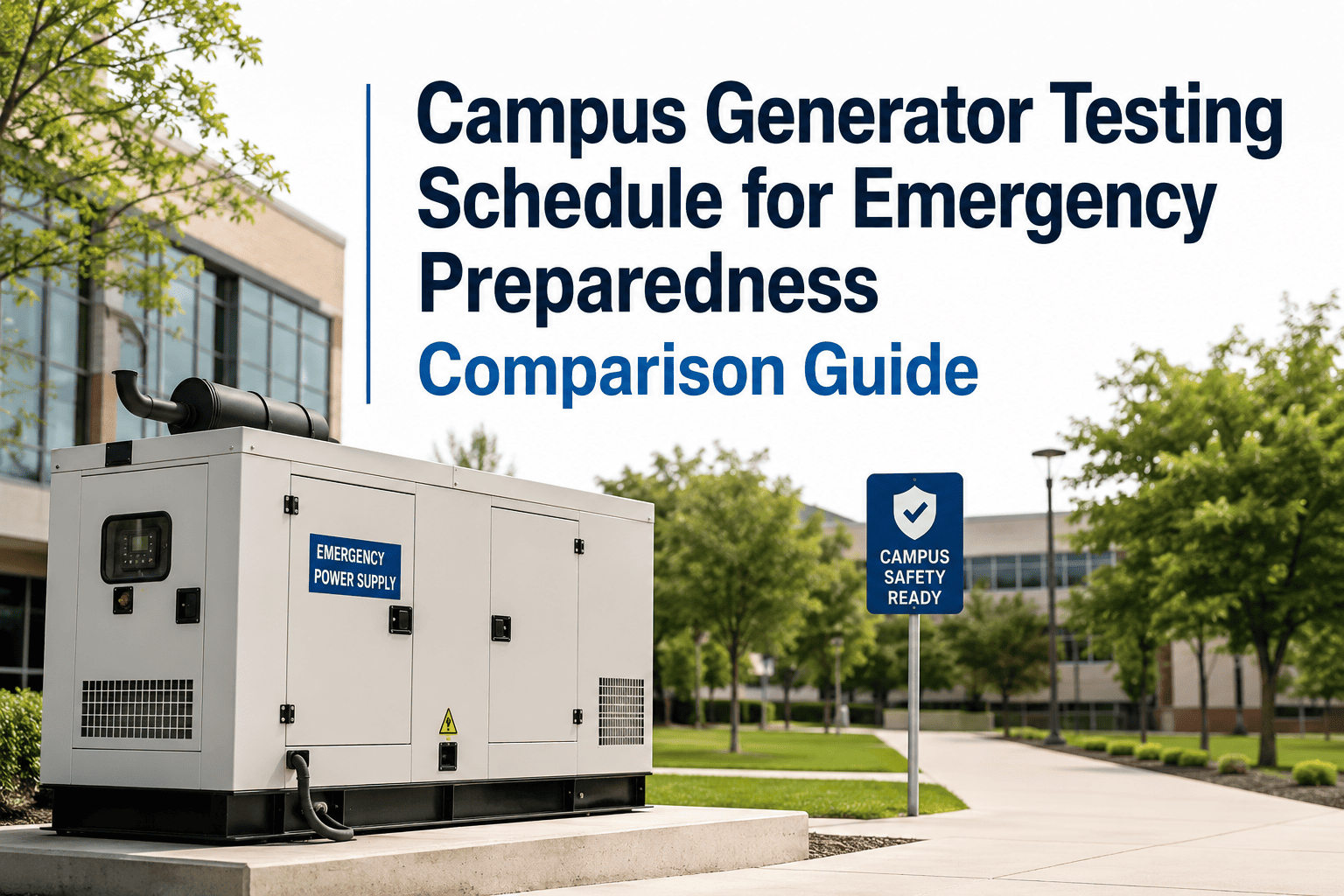
Campus Generator Testing Schedule for Emergency Preparedness Comparison Guide
A campus emergency generator that hasn't been tested under load in six months is not a backup plan — it's an unconfirmed guess.
The NFPA 110 Testing Schedule, Plainly Stated
Every requirement below comes from NFPA 110, but most facilities teams have never seen it laid out as a single schedule rather than scattered across a 200-page standard.
| Test | Frequency | What's Required | Who Performs It |
|---|---|---|---|
| Visual Inspection | Weekly | Check fluid levels, battery condition, and alarm indicators | In-house facilities staff |
| Load Test | Monthly | Run under load for at least 30 minutes, reaching 30% of nameplate kW for diesel units | In-house staff or contracted technician |
| Supplemental Load Bank Test | Annually if needed | 30 minutes at 50%+ load, then 1 hour at 75%+ load | Qualified contractor with load bank |
| Full EPSS Test | Every 36 months | Extended run at rated load, duration based on system class | Qualified contractor, often combined with annual test |
| Acceptance Test | At install or major repair | Two-hour test verifying start time, transfer switch, and full load capability | Manufacturer-certified technician, AHJ present |
Never Wonder if Your Generator Test Is Overdue
Tie every weekly check, monthly load test, and 36-month full test to an automatic schedule with a signed record behind it.
A Compliant Schedule vs One Drifting Out of Compliance
The two columns below usually look identical from the outside — same generator, same building. The difference only shows up in the records.
Fitting Generator Testing Around the School Year
Monthly testing never stops, but the longer tests are easiest to schedule around the academic calendar's natural quiet windows.
Monthly load tests continue. Review the prior year's test data for early signs of wet stacking.
Monthly load tests continue. Schedule the annual supplemental load bank test if one is required.
Run the annual supplemental load bank test during the summer's lower-occupancy window; verify fuel quality.
Monthly load tests continue. Prepare documentation for a 36-month full system test if it falls due this cycle.
Turn NFPA 110 Into a Schedule, Not a Guess
See exactly which generator is due for its monthly load test, and which one is approaching its 36-month full test, in one view.
Frequently Asked Questions
How often does NFPA 110 require an emergency generator to be tested?
What happens if a generator doesn't reach 30% load during its monthly test?
Who is allowed to perform generator load bank testing?
What records does a fire marshal or AHJ expect to see?
How does a school district plan generator testing around the school year?
Make Sure Your Generator Works the One Time It Has To
Schedule every NFPA 110 weekly check, monthly load test, and periodic full test automatically, with a signed record waiting for the next inspection.