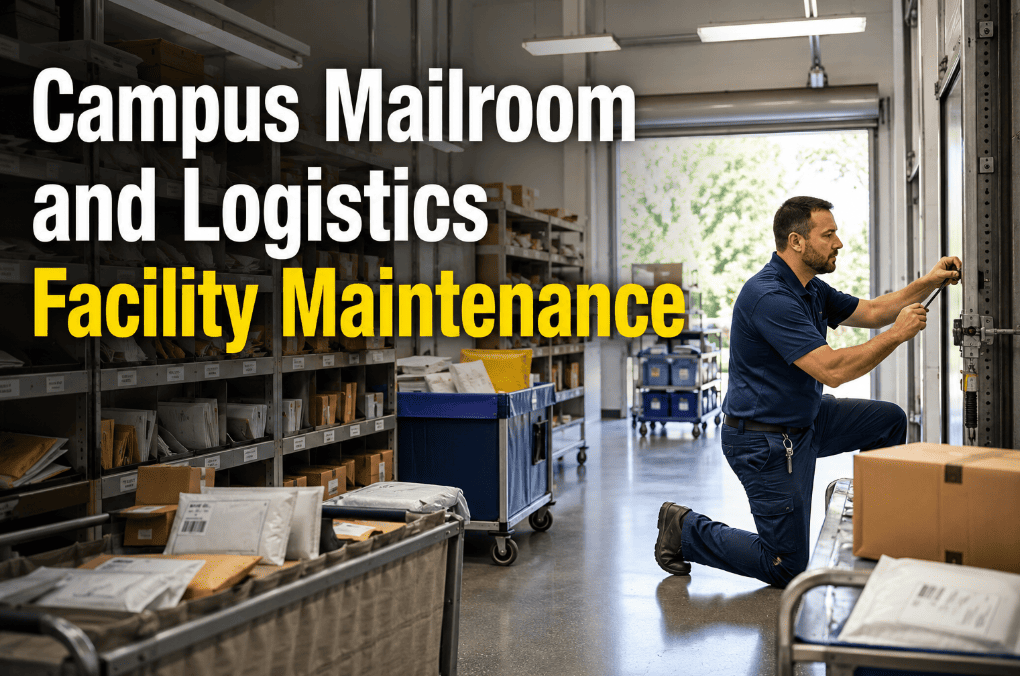
University mailrooms and logistics facilities are the circulatory system of a modern campus — processing 2,000 to 15,000 packages per week during peak periods, operating X-ray screening for every inbound piece, managing courier dock scheduling for a dozen carriers simultaneously, and maintaining the climate and access controls that protect everything from student medication deliveries to research equipment shipments worth six figures. When the X-ray machine goes offline without a maintenance record, it is not just an operational inconvenience — it is a security compliance gap that campus safety offices cannot sign off on. When the dock leveler fails during peak move-in weekend, hundreds of packages stack up and staff overtime costs spike. Oxmaint tracks every asset in the campus logistics chain — X-ray units, dock levelers, conveyor systems, HVAC, refrigerated lockers, and access control — so none of them fail during the moments that matter most. If your mailroom is still running on verbal handoffs and paper logs, start a free trial or book a demo to see how structured PM works at the facility level.
Campus Mailroom and Logistics Facility Maintenance
High-throughput campus mail centers operate X-ray screening, dock systems, climate control, and conveyor equipment that cannot fail during peak periods. Structured PM and CMMS-tracked compliance protect security operations and student service levels simultaneously.
A Campus Mail Center Failure Is Never Just a Facilities Problem
When the X-ray unit goes down, campus security steps in. When the dock leveler fails, receiving grinds to a halt. When the refrigerated package locker loses temperature, student medication and lab specimens are at risk. Every system in a campus logistics facility touches either student welfare, security compliance, or academic operations. Oxmaint creates a single PM platform for every asset in the facility — so your team catches the failure in a scheduled inspection, not when a student is standing at the counter. See how it works — start a free trial or book a demo today.
Eight Asset Domains Inside a Campus Logistics Facility
A university mail center is far more complex than a sorting room. The facility spans eight distinct asset domains — each with its own PM schedule, regulatory context, and consequence when it fails during a peak operational period.
Fluoroscopic X-ray conveyors used for security screening of inbound mail and packages. Requires belt tension checks, detector calibration verification, image quality tests using standardized penetrometer tools, and radiation safety compliance documentation per NRC or state radiation control program requirements.
Hydraulic dock levelers, dock seals and shelters, vehicle restraints, and dock doors. Dock leveler failure during peak receiving periods creates immediate throughput collapse. Hydraulic systems require fluid checks, lip hinge lubrication, and cylinder seal inspection at defined intervals.
Belt conveyors, roller beds, diverters, and barcode scan tunnels used for package routing. Belt wear, roller bearing failure, and diverter solenoid degradation are the primary failure modes — all detectable through scheduled inspection before they cause a line stoppage.
Temperature-controlled smart lockers and walk-in cold storage for medication, biological specimens, and perishable research materials. Compressor PM, door gasket condition, and temperature logging continuity are critical — a temperature excursion on a medication delivery is a student health incident.
Card readers, door strikes, camera systems, intercom units, and cage/secure area locks. Campus mail centers handle high-value shipments and require documented access control functionality — particularly for areas holding prescription medications, financial documents, and sensitive research deliveries.
RTUs, split systems, and exhaust fans maintaining sorting room temperature and humidity. High package throughput generates significant heat load from conveyor motors and staff density. Inadequate climate control reduces staff productivity and creates humidity conditions that damage cardboard packaging integrity.
Epoxy and sealed concrete floors, aisle marking, anti-fatigue mat condition, pallet rack inspections, and slip-resistance testing. OSHA 29 CFR 1910.22 requires walkways to be kept in good repair — and pallet rack systems in distribution environments require annual load capacity inspections.
Sprinkler heads, fire extinguishers, smoke detectors, and emergency lighting in high-density package storage areas. The fire load in a package handling facility is significant — stacked cardboard and plastic packaging burn rapidly. NFPA 13 and 25 compliance documentation is mandatory and regularly audited.
Where Campus Mailroom Maintenance Fails — and What It Costs
An X-ray unit without documented calibration records cannot demonstrate compliance to campus security leadership or external auditors. Many universities operate under threat-assessment protocols that require certifiable screening capability — and an undocumented X-ray is a documented compliance gap, regardless of whether it is physically functional.
Fall move-in generates 3 to 4 times normal package volume in a 72-hour window. A dock leveler hydraulic failure during this period creates a receiving backlog of 1,000+ packages, forces manual unloading from ground level with significant ergonomic risk, and triggers overtime labor costs of $2,000–$6,000 per event.
Student health centers and campus pharmacies route controlled medication shipments through the campus mailroom. A refrigerated locker compressor failure causing a temperature excursion on a prescription medication delivery triggers a pharmacy recall process, potential patient safety review, and insurance notification — all traceable to deferred compressor PM.
November and December drive a 200–340% increase in package volume at most university mail centers. A conveyor belt splice failure or roller bearing seizure during this period requires manual sorting of 500+ packages per shift — a throughput reduction of 60–70% that creates a 3 to 5 day backlog even with overtime staffing.
How Oxmaint Manages Campus Logistics Facility Maintenance
Oxmaint registers every X-ray unit, dock leveler, conveyor system, refrigerated locker, and HVAC asset in the campus logistics facility with its own PM schedule, service history, and compliance record. Facilities teams that want to eliminate peak-period failures can start a free trial or book a demo.
X-ray unit assets tracked with quarterly calibration work orders, image quality test records, belt tension inspection logs, and annual radiation safety audit documentation — all linked to the asset and exportable for campus security reviews.
Hydraulic dock leveler PM scheduled 60 days before fall move-in and holiday peak — with pre-peak inspection checklists covering fluid condition, lip hinge lubrication, cylinder seal integrity, and dock door operation. No dock leveler fails during a 340% volume surge when it was serviced six weeks prior.
Compressor PM, door gasket inspection, and temperature data logger calibration scheduled quarterly — with temperature excursion alerts triggering immediate work orders before a student or pharmacy recipient's shipment is compromised.
Belt condition scores, roller bearing noise checks, splice integrity tests, and diverter solenoid function verification recorded at each monthly PM — with condition trend data that predicts belt replacement needs 30–60 days before failure.
Fire suppression inspection records, pallet rack annual certification, X-ray radiation safety documentation, and floor safety inspection logs — all stored in Oxmaint and exportable in one click for university safety office audits and external regulatory reviews.
Oxmaint supports scheduled PM campaigns triggered 4–8 weeks before identified peak periods — ensuring all critical facility systems are serviced, tested, and documented before volume surges that make reactive repairs 4.8x more expensive and operationally catastrophic.
Campus Logistics Facility Maintenance Intervals
| Asset / System | Maintenance Action | Interval | Regulatory / Standards Basis | CMMS Trigger |
|---|---|---|---|---|
| X-Ray Screening Unit | Image quality and penetrometer test | Quarterly | NRC / State Radiation Control | Calendar PM |
| X-Ray Screening Unit | Belt tension, detector alignment, interlock test | Semi-annually | OEM specification | Calendar PM |
| X-Ray Screening Unit | Radiation safety audit and compliance review | Annually | NRC / State Radiation Control | Annual PM |
| Hydraulic Dock Leveler | Fluid level, lip hinge lube, seal inspection | Semi-annually | OEM / ASSA ABLOY standard | Calendar PM |
| Dock Leveler | Full operational test and load verification | Annually | OEM | Annual PM |
| Conveyor Belt System | Belt condition, roller bearing, splice check | Monthly | OEM + OSHA 1910.217 | Calendar PM |
| Conveyor System | Full lubrication and diverter test | Quarterly | OEM specification | Calendar PM |
| Refrigerated Locker / Cold Storage | Temperature log review and alert test | Monthly | USP 1079 / Pharmacy standards | Calendar PM |
| Refrigerated Locker / Cold Storage | Compressor service, door gasket, data logger cal | Quarterly | OEM + USP 1079 | Calendar PM |
| Fire Extinguishers | Visual inspection and tag verification | Monthly | NFPA 10 | Calendar PM |
| Sprinkler System | Quarterly inspection per NFPA 25 | Quarterly | NFPA 25 | Calendar PM |
| Pallet Rack System | Load capacity and structural integrity inspection | Annually | OSHA / RMI specification | Annual PM |
Unmanaged Logistics Facility vs. Oxmaint-Structured PM Program
What Structured PM Delivers for Campus Logistics Facilities
Emergency dock leveler repair during move-in weekend costs 4.8x more than the same hydraulic service performed 8 weeks earlier on a scheduled PM cycle
Service vendors require calibration history and service records to diagnose X-ray faults efficiently — facilities without CMMS records average 72 hours longer repair time
Fall move-in and holiday peaks drive 340% volume increases — every equipment failure during these periods creates multi-day backlogs that cannot be cleared with overtime alone
NFPA, OSHA, NRC, and radiation safety records — all timestamped, technician-signed, and exportable in one click for campus safety office and external regulatory reviews
Frequently Asked Questions
What compliance documentation is required for campus mailroom X-ray equipment?+
How should campus mail centers prepare facility equipment for peak package periods?+
Can Oxmaint track refrigerated locker temperature compliance for campus pharmacy and student health deliveries?+
How does Oxmaint help with pallet rack inspection compliance in campus distribution centers?+
Your Campus Mail Center Processes 15,000 Packages a Week. It Deserves Structured PM.
X-ray screening, dock levelers, conveyors, cold storage, fire suppression, and pallet racks — every system in your logistics facility has a PM interval, a compliance requirement, and a consequence when it fails at the wrong moment. Oxmaint puts all of them on a single schedule with digital records your safety office can audit in minutes.