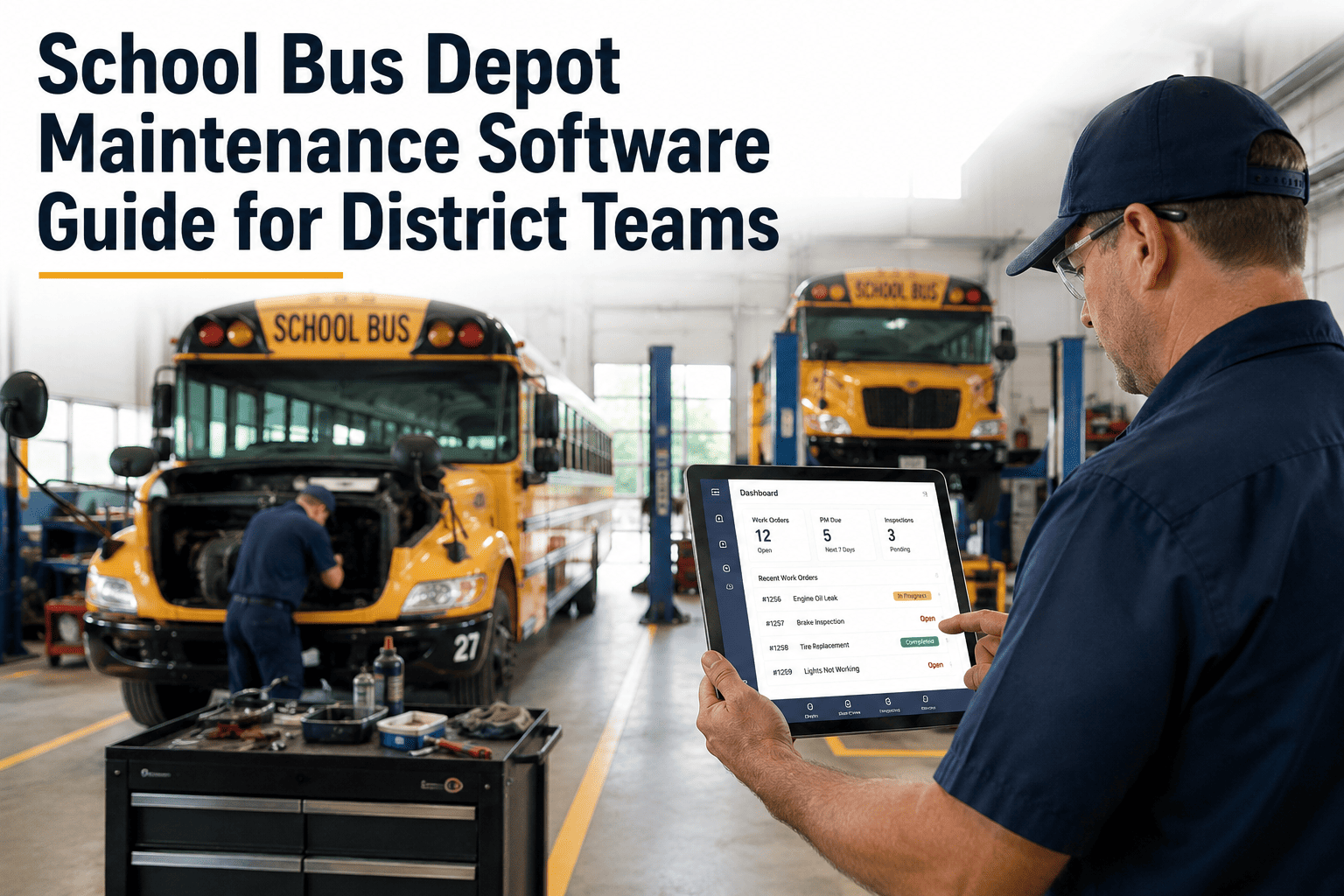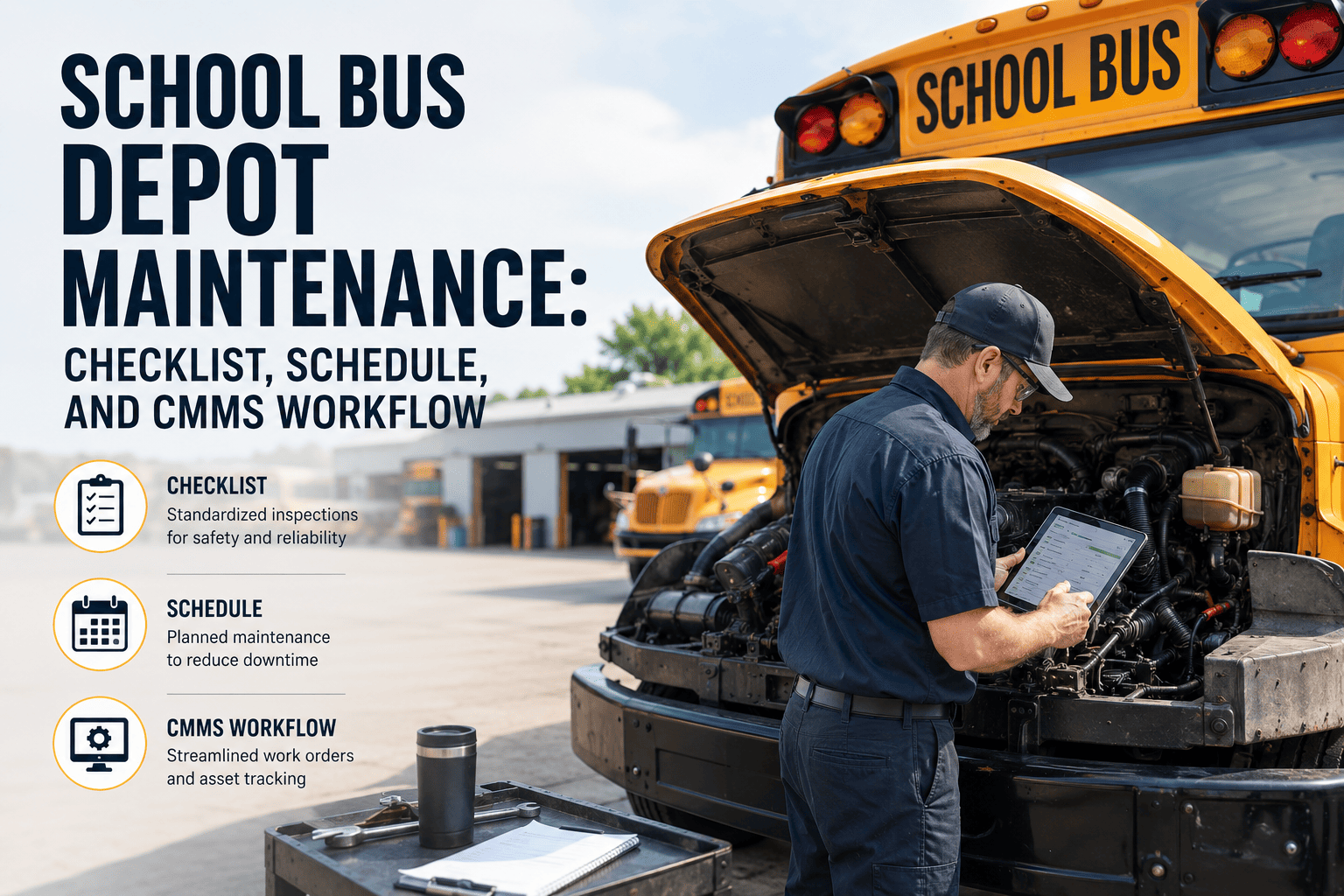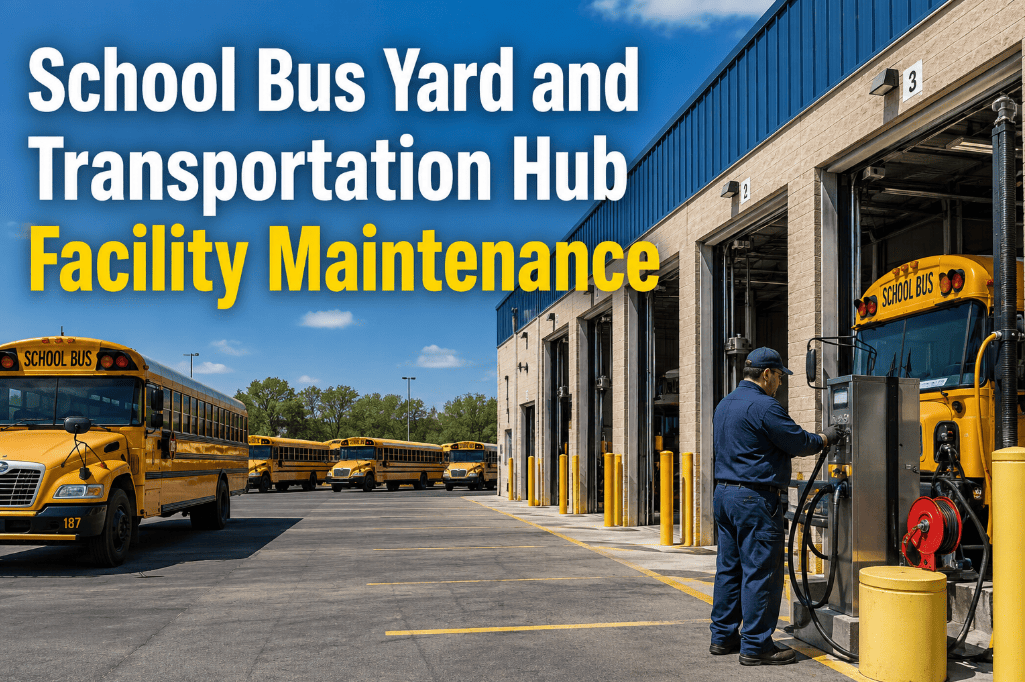
School district transportation departments operate some of the most asset-intensive facilities in public education — bus barns housing 50 to 400 vehicles, fueling islands running six days a week, wash bays processing every bus before the morning route, and HVAC systems keeping mechanics productive through winter overhauls. When a bus yard lacks structured preventive maintenance, the consequences reach every student on every route. A single fueling system failure during AM dispatch affects hundreds of families. A wash bay compressor down during flu season creates hygiene compliance gaps. Oxmaint gives transportation directors full asset-level control over every system in the yard — from the underground fuel tank sensors to the bus barn exhaust ventilation. If your yard is still running on paper logs and tribal knowledge, start a free trial or book a demo to see what structured yard maintenance looks like.
School Bus Yard and Transportation Hub Facility Maintenance
Bus barns, fueling islands, wash bays, and HVAC systems are critical infrastructure for safe student transportation. One failed system at dispatch time affects every route and every family it serves.
Every Bus Yard System That Fails at 5:30 AM Impacts Student Safety
Transportation directors cannot afford a fueling pump failure during AM dispatch, a wash bay compressor down during inspection season, or a bus barn heating system failure in January. These are not maintenance inconveniences — they are route disruptions, parent complaints, and safety incidents waiting to happen. Oxmaint tracks every yard asset with scheduled PM, digital inspection logs, and compliance records built for school district audits. Ready to bring structure to your yard? Start a free trial or book a demo and configure your first yard PM schedule in under an hour.
What a School Bus Yard Actually Maintains
A school bus yard is not just a parking lot with a garage. It is a multi-system facility where every asset — from the underground fuel storage to the overhead exhaust extraction — must operate reliably on a school-day schedule that begins before 6:00 AM and runs six days a week. The average mid-size district transportation yard contains eight to twelve distinct maintenance domains, each with its own inspection cadence, compliance requirement, and failure consequence.
Diesel and CNG/propane dispensing equipment, underground storage tanks, leak detection sensors, vapor recovery systems, and spill containment. EPA and state UST regulations require documented inspections, sensor testing, and release detection on strict schedules.
Automatic touchless wash systems, high-pressure rinse booms, water reclaim units, chemical injection systems, and drain trap maintenance. Wash bays process 50–400 buses weekly and fail from pump cavitation, nozzle clogging, and chemical line blockage.
Overhead unit heaters, exhaust hose drop systems, CO/NO2 monitoring, makeup air units, and roof exhaust fans. OSHA and EPA mandate diesel exhaust extraction systems in enclosed maintenance bays — and those systems must be documented as functional.
Bulk oil storage, DEF dispensing, coolant handling, waste oil collection, and fluid transfer pump systems. Fluid management failures cause contamination events, regulatory violations, and bus downtime from improper fluid application.
Yard lighting, bay drop cords, EV charging infrastructure for electric school buses, panel boards, and emergency lighting. Yard lighting failures create safety hazards during early-morning dispatch and after-school return operations in dark winter months.
Perimeter fencing, gate automation, camera systems, access control, and intercom infrastructure. School bus yards are high-value targets for fuel theft and vandalism — and many districts face insurance and liability requirements for documented security system functionality.
In-ground or surface vehicle lifts, alignment racks, tire changers, balancers, brake lathes, and compression testers. OSHA requires annual inspection and load testing for all vehicle lifts — a compliance requirement that many transportation shops manage inconsistently.
Oil-water separators, catch basin filters, spill kits, and yard drainage systems. Stormwater permits for transportation yards require documented inspection of separators and catch basins at defined intervals — with records available for state environmental audits.
Eight Yard Failures That Disrupt District Operations
Transportation yard failures are not abstract maintenance problems. Each one has a direct operational consequence that affects routes, drivers, students, or regulatory standing. These are the eight highest-impact failure modes in K-12 transportation facilities.
A fueling island pump failure at 5:45 AM cannot be resolved before first bell. Buses leave under-fueled, routes are shortened, or buses are pulled entirely. Districts without documented fueling system PM have no scheduled inspection history to reference when diagnosing the failure — extending downtime from 2 hours to 2 days.
EPA 40 CFR Part 280 requires monthly monitoring of underground storage tank leak detection systems. Districts that cannot produce 12 months of documented leak detection records face fines of $10,000–$37,500 per day per violation during state UST inspections. Undocumented inspections are treated as uninspected.
State annual bus inspections require clean vehicles with clearly visible VINs, lighting, and structural components. A wash bay pump failure during the 6-week inspection window forces manual washing of 50–400 buses — a labor burden that derails mechanic scheduling and pushes buses into inspections under-prepared.
OSHA PEL for diesel particulate matter is 0.1 mg/m3 as elemental carbon. An exhaust hose drop system with a failed blower or disconnected hose exposes mechanics to levels 4–10x above the PEL. Beyond the health risk, a non-functioning exhaust extraction system is an OSHA recordable event and a district liability exposure.
Bulk waste oil storage tanks that are not tracked against capacity and scheduled for pickup overflow into yard drainage — triggering spill response requirements, EPA notification obligations, and potential state environmental violations. Most districts have no CMMS alert tied to waste oil tank capacity thresholds.
OSHA 29 CFR 1910.179 and ANSI/ALI ALOIM-2017 require annual inspection and load testing of all vehicle lifts. Transportation shops using lifts without documented annual certification face OSHA citations, workers' compensation exposure from lift failures, and potential loss of insurance coverage for lift-related incidents.
Stormwater permits for transportation yards typically require quarterly inspection and annual cleaning of oil-water separators. A separator with a failed coalescing media pack passes petroleum hydrocarbons into the stormwater system — a permit violation that triggers state environmental agency enforcement and potential consent orders.
Districts transitioning to electric school buses under EPA Clean School Bus Program grants face a new failure mode: overnight charging infrastructure downtime that grounds electric buses for the morning route. Level 2 and DC fast chargers require scheduled PM and SLA-tracked uptime monitoring that most transportation departments have never managed before.
How Oxmaint Manages Every System in the Transportation Yard
Oxmaint treats the transportation yard as a multi-asset facility — every fueling pump, wash bay component, HVAC unit, lift, and environmental system is registered as a tracked asset with its own PM schedule, inspection history, and compliance record. Transportation directors who want to eliminate reactive yard failures can start a free trial or book a demo.
Every fueling island component, wash bay unit, HVAC system, lift, and environmental control registered with manufacturer specs, install date, warranty status, and service history in a single searchable platform.
Monthly UST leak detection verification, annual lift load test reminders, quarterly oil-water separator inspections, and exhaust extraction checks — all auto-triggered with digital completion records available for state audits.
Work orders generated from PM schedules or staff-reported issues carry full asset history — last service date, parts used, technician notes, and open deficiency items — before the technician touches the asset.
Yard technicians complete fueling island inspections, wash bay operational checks, and HVAC filter rounds on mobile devices — with photo capture, digital signatures, and automatic work order generation on failed items.
Level 2 and DCFC charger assets tracked with scheduled PM, fault response SLA monitoring, and firmware update records — ensuring overnight charging infrastructure is ready for every morning electric bus dispatch.
Transportation directors generate PM completion rates, open deficiency summaries, compliance inspection histories, and CapEx forecasts for facility systems — ready for board presentations, state transportation department reviews, and grant reporting.
Transportation Yard PM Intervals by System
Every yard system has a different inspection cadence driven by regulatory requirements, OEM specifications, and operational risk. This reference covers the primary PM intervals for the eight major systems in a K-12 transportation facility.
| System | Inspection / Service Action | Required Interval | Regulatory Driver | CMMS Trigger Type |
|---|---|---|---|---|
| Underground Storage Tank | Leak detection monitoring verification | Monthly | EPA 40 CFR Part 280 | Calendar PM |
| Underground Storage Tank | Walkthrough inspection and STP test | Monthly | EPA / State UST Program | Calendar PM |
| Fueling Dispenser | Filter replacement and flow rate test | Annually / per OEM | OEM + State Weights & Measures | Calendar PM |
| Bus Wash System | Pump, nozzle, and chemical injector check | Monthly | Operational / OEM | Calendar PM |
| Exhaust Extraction System | Blower motor, hose condition, connection test | Quarterly | OSHA 29 CFR 1910.1000 | Calendar PM |
| Vehicle Lift | Annual load test and certification | Annually | OSHA / ANSI ALI ALOIM | Annual PM |
| Oil-Water Separator | Inspection and coalescing media check | Quarterly | State Stormwater Permit | Calendar PM |
| Oil-Water Separator | Full cleaning and media replacement | Annually | State Stormwater Permit | Annual PM |
| Bus Barn HVAC | Filter replacement and belt inspection | Quarterly | OEM + OSHA | Calendar PM |
| EV Charger (Level 2 / DCFC) | Connection, firmware, and cable inspection | Quarterly | NEC / OEM / Grant SLA | Calendar PM |
Paper-Based Yard Operations vs. Oxmaint-Managed Facility
What Structured Yard PM Delivers for Transportation Departments
Emergency fueling system repairs, after-hours HVAC calls, and rush-order wash bay parts cost 4.8x more than the same work performed on a scheduled PM cycle
EPA violations for undocumented UST leak detection reach $37,500 per day per violation — avoided entirely with monthly CMMS-triggered inspection records
Districts using structured yard PM programs report 30–40% fewer unplanned system failures — translating directly to fewer route disruptions and lower emergency labor costs
Every inspection, every PM completion, and every corrective action stored with date, technician, and outcome — exportable in minutes for state audits, insurance reviews, and board presentations
Frequently Asked Questions
What EPA regulations apply to school district underground fuel storage tanks?+
How often do vehicle lifts in school district shops need to be certified?+
Can Oxmaint manage both the transportation yard facility and the bus fleet PM in the same platform?+
How does Oxmaint support districts transitioning to electric school buses?+
Your Transportation Yard Has Eight Systems. All Eight Need PM.
Fueling islands, wash bays, bus barn HVAC, vehicle lifts, waste fluid systems, stormwater controls, security infrastructure, and EV charging — every one has regulatory requirements, failure consequences, and a PM schedule that cannot live in a binder. Oxmaint brings all eight under one platform with auto-triggered inspections, digital compliance records, and reporting your board can actually read.