A K-12 school district that runs maintenance reactively — waiting for the boiler to fail in January or the roof drain to overflow in October — is not managing facilities, it is managing emergencies. A documented preventive maintenance calendar turns seasonal and recurring tasks into scheduled work orders that are assigned, tracked, and closed before the failure happens. Districts using a CMMS-backed PM calendar consistently reduce reactive maintenance costs by 20–40% and pass facility audits without last-minute scrambles. OxMaint's AI predictive maintenance platform helps K-12 facilities teams build, schedule, and execute a preventive maintenance calendar that runs automatically across every school in the district.
K-12 Schools · Districts · Facilities Operations
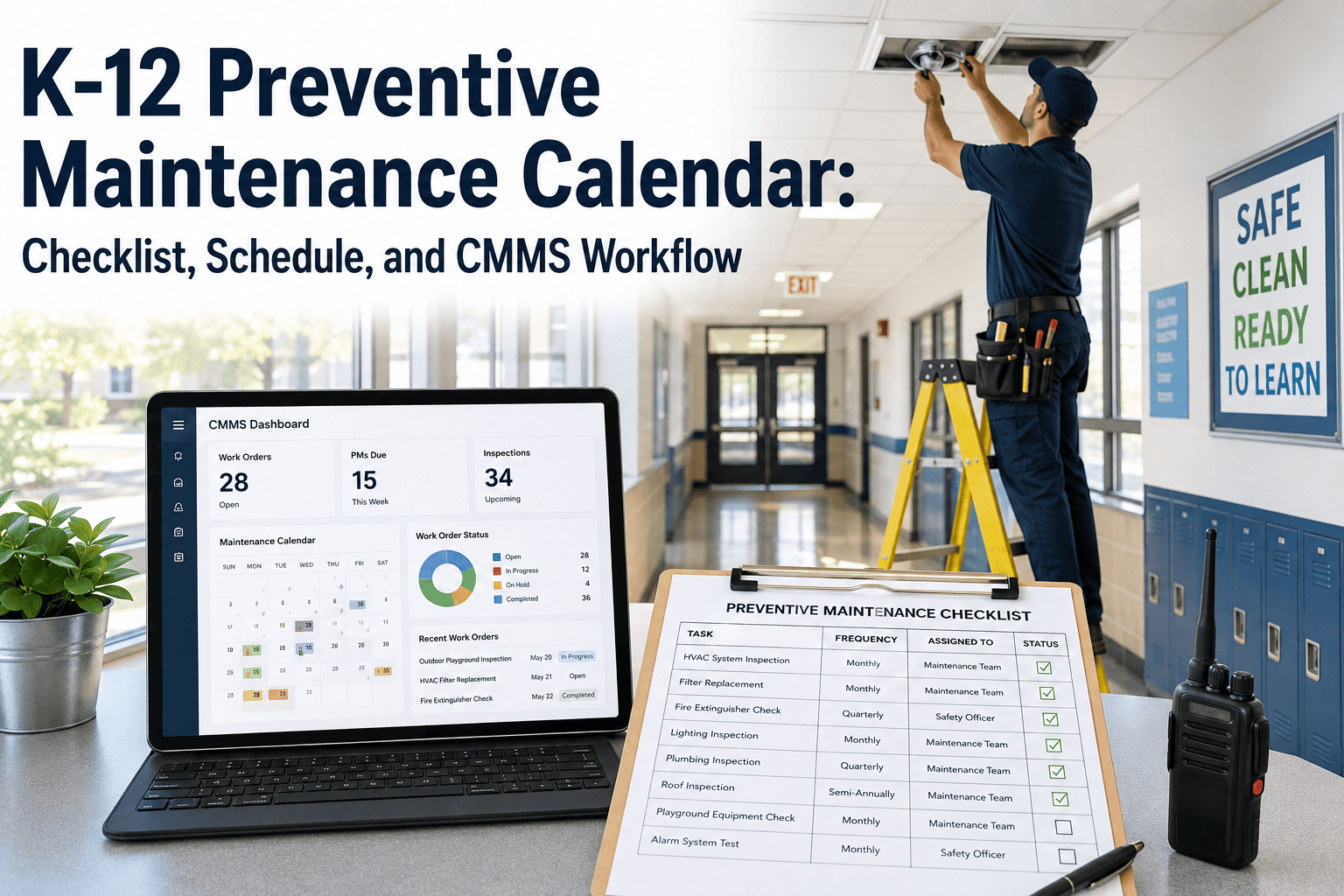
K-12 Preventive Maintenance Calendar: Checklist, Schedule, and CMMS Workflow
A month-by-month preventive maintenance framework for school districts covering HVAC, roofing, plumbing, electrical, life safety, and grounds — structured so every PM task has an owner, a schedule, and a verifiable completion record in your CMMS.
12
Month Coverage
6
System Categories
40%
Avg Cost Reduction
AI
Predictive Scheduling
Annual PM Calendar at a Glance
What Gets Maintained and When
Q1 — Winter
Jan · Feb · Mar
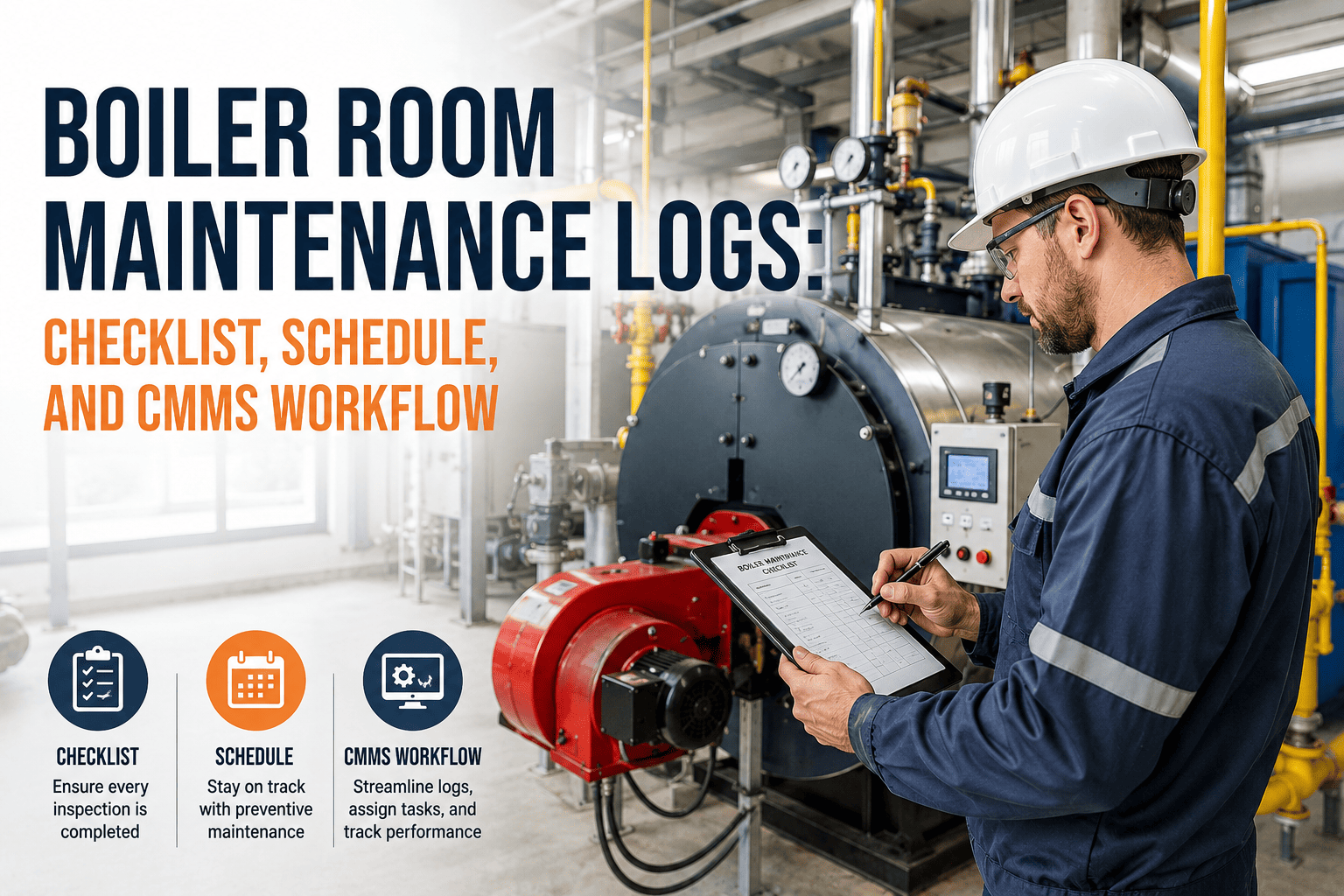
Boiler inspection and combustion analysis
Heating system filter replacement
Roof drainage check after freeze-thaw cycles
Fire suppression semi-annual inspection
Exterior lighting performance check
Q2 — Spring
Apr · May · Jun
Cooling system pre-season startup and coil cleaning
Roof and gutter inspection post-winter
Plumbing fixture and backflow preventer testing
Playground equipment safety inspection
Irrigation system startup and leak check
Q3 — Summer
Jul · Aug · Sep
Deep building cleaning and floor refinishing
HVAC full system service before school opens
Electrical panel and safety inspection
Painting, repairs, and capital project execution
Kitchen equipment servicing and hood cleaning
Q4 — Fall
Oct · Nov · Dec
Heating system switchover and boiler startup
Fire alarm annual test and inspection
Roof pre-winter inspection and minor repairs
Pest control perimeter treatment
Irrigation winterization and shutdown
DDaily
WWeekly
MMonthly
QQuarterly
AAnnual
System 01
HVAC Systems — Heating, Ventilation, and Air Conditioning
HVAC failures account for the largest share of reactive emergency work orders in K-12 facilities. A unit that is not cooling on the first day of school in August is not a surprise — it is the predictable result of a skipped spring coil cleaning and a missed filter replacement. HVAC PM is the highest return-on-investment task category in any school district's maintenance program.
Air handling unit filters replaced on schedule — filter type and MERV rating confirmed per the system specification; replacement date, technician, and filter quantity logged in CMMS with next replacement date auto-scheduled; clogged filters above resistance threshold replaced immediately regardless of schedule
MFacilities Tech · Filter Replacement Log
Cooling coils cleaned and refrigerant charge verified before cooling season — evaporator and condenser coils cleaned, refrigerant pressure checked against manufacturer specification, and condenser fan motor amp draw measured; any unit with refrigerant loss flagged for leak search before the cooling season begins
AHVAC Contractor · Cooling Season Startup Log
Boiler annual inspection and combustion analysis completed — heat exchanger inspected for cracks, burner combustion efficiency tested, controls and safety limits verified functional; boiler inspection certificate filed in CMMS with next service date
ABoiler Contractor · Boiler Inspection Certificate
Building automation system (BAS) setpoints reviewed — heating and cooling setpoints, occupied and unoccupied schedules, and holiday overrides confirmed current and accurate; incorrect setpoints waste energy and generate comfort complaints that consume technician time
QControls Tech · BAS Setpoint Review Log
System 02
Roofing and Building Envelope
A school roof that leaks into a classroom ceiling in November was not inspected in September. Water intrusion from roof failures is the single largest source of mold, structural damage, and interior finish damage in K-12 facilities — all of which cost multiples more to remediate than the inspection and minor repair that would have prevented them.
Roof membrane and flashing inspected twice annually — spring inspection targets winter damage including freeze-thaw membrane cracking, flashing separation, and blocked drains; fall inspection targets summer UV degradation and prepares the roof for snow and ice loading; all deficiencies photographed and logged with repair priority
QRoofing Contractor · Roof Inspection Report
Gutters and roof drains cleared of debris — all gutters and interior roof drains confirmed free of leaves, debris, and bird nesting material; ponding water in areas above drains investigated for drain blockage; blocked drains generate hydrostatic loading that exceeds roof structural design limits
MFacilities Tech · Drainage Inspection Log
Exterior caulking and sealants inspected around windows, doors, and penetrations — failed caulk joints at window perimeters or mechanical penetrations are water intrusion pathways that are inexpensive to reseal and expensive to remediate after water damage occurs; failed joints logged and scheduled for resealing
AFacilities Tech · Building Envelope Inspection Log
Spreadsheet-based PM calendars get abandoned when the facilities director changes, work orders fall through the cracks, and audit season becomes a documentation emergency. OxMaint keeps your entire K-12 preventive maintenance calendar live in one platform — with automated work order generation, mobile completion, and audit-ready reports that prove your PM program is running, not just planned.
System 03
Life Safety Systems — Fire, Egress, and Security
Life safety system inspections are non-negotiable and non-deferrable. A fire alarm system with a missing pull station, a suppression system past its last inspection date, or an exit door that does not open freely from the inside are not maintenance items — they are regulatory violations and liability exposures that require immediate correction regardless of budget cycle.
Fire alarm system annual test and inspection completed by licensed contractor — all initiating devices, notification appliances, and control panel functions tested; inspection report filed with the authority having jurisdiction (AHJ) and retained in CMMS for minimum 3 years
AFire Alarm Contractor · Fire Alarm Inspection Certificate
Fire extinguisher monthly visual inspection and annual service completed — all extinguishers confirmed in designated locations, pressure gauge in operable range, and seal intact; annual service tag current; any extinguisher missing or discharged replaced same day
MFacilities Tech · Extinguisher Inspection Log
Emergency exit lighting monthly test performed — all emergency egress lighting units tested for minimum 30-second illumination; failed units replaced before the next school day; test date, technician, and unit locations documented in CMMS
MFacilities Tech · Emergency Lighting Test Log
Lockdown hardware and access control systems tested quarterly — all electronically controlled door locks, card reader stations, and intercom entry systems tested for correct operation; any access control failure logged as a priority security work order with same-day repair target
QSecurity + Facilities · Access Control Inspection Log
System 04
Plumbing and Domestic Water Systems
Lead in school drinking water became a national policy issue because routine plumbing inspection and water quality testing programs were absent from most district maintenance calendars. Backflow preventer testing, water heater maintenance, and fixture inspection are not optional items — they are the baseline of a responsible school facilities program.
Backflow preventer annual test completed by certified tester — all reduced pressure zone (RPZ) and double check valve assemblies tested and certified; test reports filed with the local water authority and in CMMS; failed devices repaired and retested before being returned to service
ACertified Backflow Tester · Backflow Test Report
Domestic hot water temperature verified at point of use — water heater setpoint confirmed at 120°F (or per district policy); hot water temperature at remote fixtures measured to confirm delivery above 110°F; low-temperature conditions investigated for circulation pump failure or heat exchanger fouling
MFacilities Tech · Hot Water Temperature Log
Drinking water outlet fixtures flushed after extended periods of low use — fountains, sinks, and bubblers in rooms unused for more than 7 days flushed for minimum 2 minutes before student access; flushing records maintained in CMMS as part of the district's lead reduction program
WCustodial Staff · Fixture Flushing Log
System 05
Electrical Systems and Lighting
Electrical maintenance in K-12 facilities is consistently deferred until a failure creates a safety incident. Panel inspections, lighting maintenance, and ground fault interrupter testing are the minimum electrical PM tasks that should appear in every school's annual maintenance calendar — and they should all be in the CMMS with scheduled completion dates, not just on a checklist.
Electrical panel visual inspection and thermal scan completed — all panel covers opened, breakers visually inspected for signs of overheating or corrosion, and infrared thermal scan performed on main distribution panels; any panel with a hot spot or undersized breaker flagged as a priority electrical work order
ALicensed Electrician · Panel Inspection Report
GFCI outlets in wet locations tested monthly — all ground fault circuit interrupter outlets in kitchens, restrooms, labs, and exterior locations tested with integrated test button; any non-tripping GFCI replaced before the space is returned to use; replacement date logged in CMMS by room and circuit
MFacilities Tech · GFCI Test Log
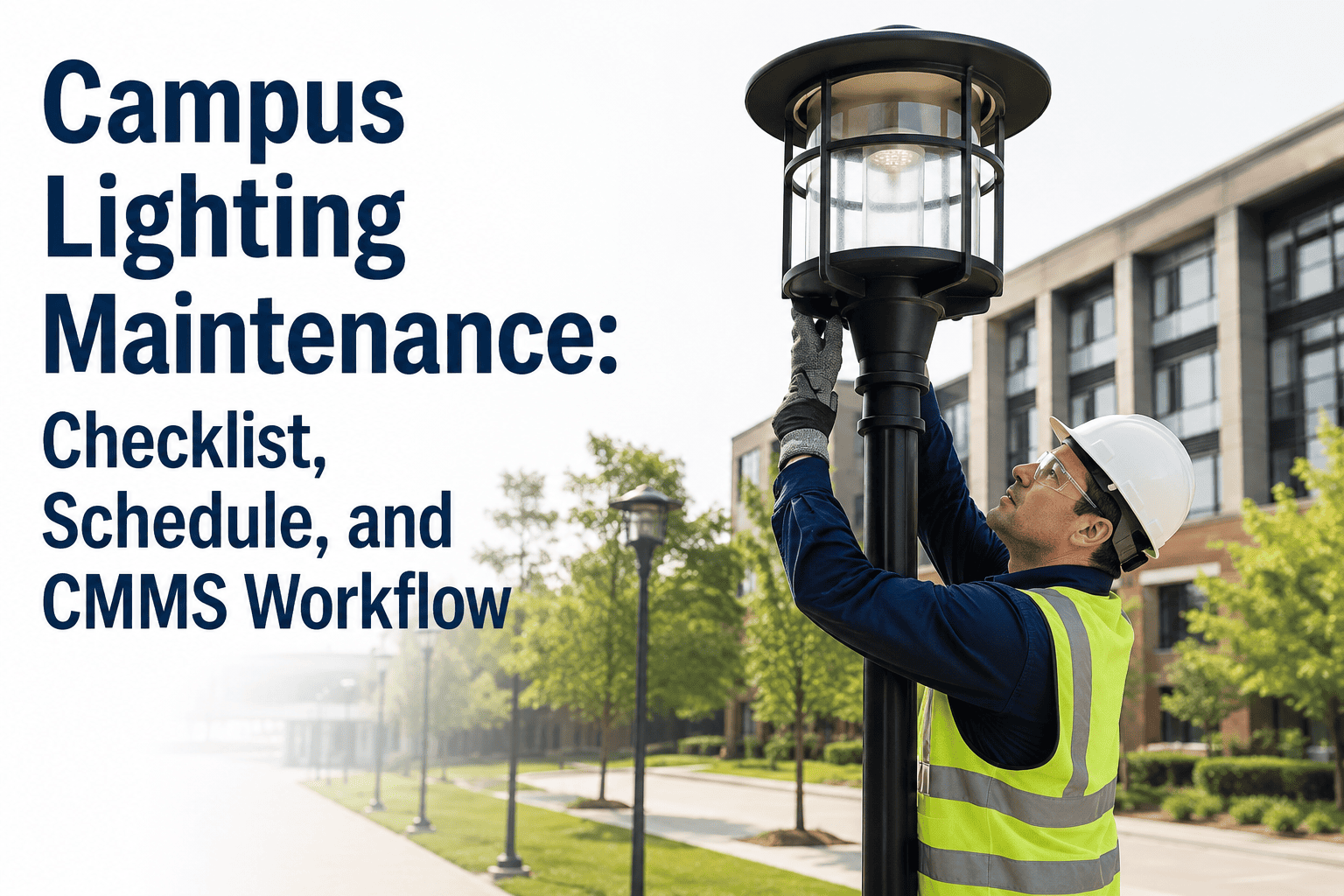
Exterior and parking lot lighting inspected and lamp failures replaced — all site lighting confirmed operational at dusk; failed fixtures logged with pole ID and repair scheduled within 5 days; parking lot lighting outages represent a security risk and are treated as priority work orders
WFacilities Tech · Exterior Lighting Log
System 06
Grounds, Playgrounds, and Athletic Facilities
Playground equipment that has not been formally inspected and certified is a liability risk that most districts only recognize after an injury. A structured grounds and playground PM program documents condition, tracks repair history, and provides the defensible record that shows the district exercised reasonable care in maintaining student play areas.
Playground equipment formal inspection completed by Certified Playground Safety Inspector (CPSI) — all structural components, fasteners, surfaces, and entrapment zones inspected to ASTM F1487 standards; inspection report filed in CMMS; any critical hazard results in equipment being taken out of service until repaired
ACPSI Inspector · Playground Inspection Report
Playground surfacing depth measured and maintained — impact-attenuating surfacing (engineered wood fiber, rubber tiles, or poured rubber) depth verified at fall zones to meet ASTM F1292 standards; surfacing that has compacted below minimum depth triggers an immediate top-off work order
MGrounds Staff · Surfacing Depth Log
Athletic field drainage and turf condition assessed before each season — natural turf fields inspected for drainage issues, bare spots, and surface irregularities before the fall and spring athletic seasons; synthetic turf fields inspected for seam separation and infill compaction
QGrounds Supervisor · Athletic Field Condition Log
Performance Metrics
Key PM Calendar Metrics for K-12 Districts
| Metric |
How to Measure |
Target |
Frequency |
| PM Completion Rate |
PM tasks completed on time / Total PM tasks due |
> 95% |
Monthly |
| Reactive vs Preventive Work Order Ratio |
Reactive WOs / Total WOs (target: less than 30% reactive) |
< 30% reactive |
Monthly |
| Life Safety PM Compliance |
Fire, egress, and safety PMs completed on schedule |
100% |
Monthly |
| Average Work Order Age |
Mean days open across all active work orders |
< 10 days (standard) |
Weekly |
| Inspection Certificate Currency |
Certificates with valid, unexpired dates / Total required |
100% |
Quarterly |
| Equipment Downtime Rate |
Hours of unplanned equipment downtime per month |
Reduce MoM |
Monthly |
FAQs
Frequently Asked Questions
What should a K-12 preventive maintenance calendar include?
A complete K-12 PM calendar covers HVAC (filters, coils, boilers, controls), life safety (fire alarm, extinguishers, exit lighting), plumbing (backflow preventers, water heaters, fixtures), electrical (panels, GFCI, exterior lighting), roofing (semi-annual inspections), and grounds (playground, athletic fields). Each task should have a defined frequency, assigned owner, and CMMS work order. OxMaint auto-generates PM work orders from your calendar schedule.
How does AI predictive maintenance improve a K-12 PM program?
AI predictive maintenance analyzes work order history, asset age, failure patterns, and usage data to identify which assets are most likely to fail before the next scheduled PM — allowing facilities teams to adjust inspection frequency or prioritize resources proactively. In K-12 facilities, this is particularly valuable for aging HVAC and roofing assets where failure timing directly affects instructional continuity. See OxMaint's AI predictive maintenance features in a live demo.
What is the right ratio of preventive to reactive maintenance for a school district?
Industry benchmarks for well-managed school facilities target at least 70–80% of work orders as planned preventive or scheduled maintenance, with no more than 20–30% reactive. Districts below this threshold are spending more per repair, experiencing more instructional disruptions, and accumulating deferred maintenance faster than their budget can address.
When is the best time to schedule major K-12 maintenance tasks?
Summer break is the primary window for deep maintenance — HVAC full service, floor refinishing, painting, roof repairs, and capital projects. Spring is ideal for cooling system startup and roofing inspections. Fall triggers heating system switchover and fire alarm testing. Winter is used for boiler inspections and interior work that does not require building access interruption.
How can a small district manage a PM calendar with limited staff?
A CMMS with automated PM scheduling removes the manual coordination burden from small teams — work orders are generated, assigned, and tracked automatically based on the calendar. Districts with limited in-house staff benefit most from automated scheduling because it prevents tasks from being forgotten during high-demand periods. OxMaint is designed for small to mid-size districts managing multiple buildings.
AI-Powered K-12 Maintenance Scheduling
Stop Chasing Maintenance. Start Scheduling It.
OxMaint converts your K-12 preventive maintenance calendar into automated work orders, mobile inspection checklists, and real-time completion reports — so your facilities team spends time maintaining buildings, not tracking spreadsheets. Built for school districts that run lean and need to prove compliance.