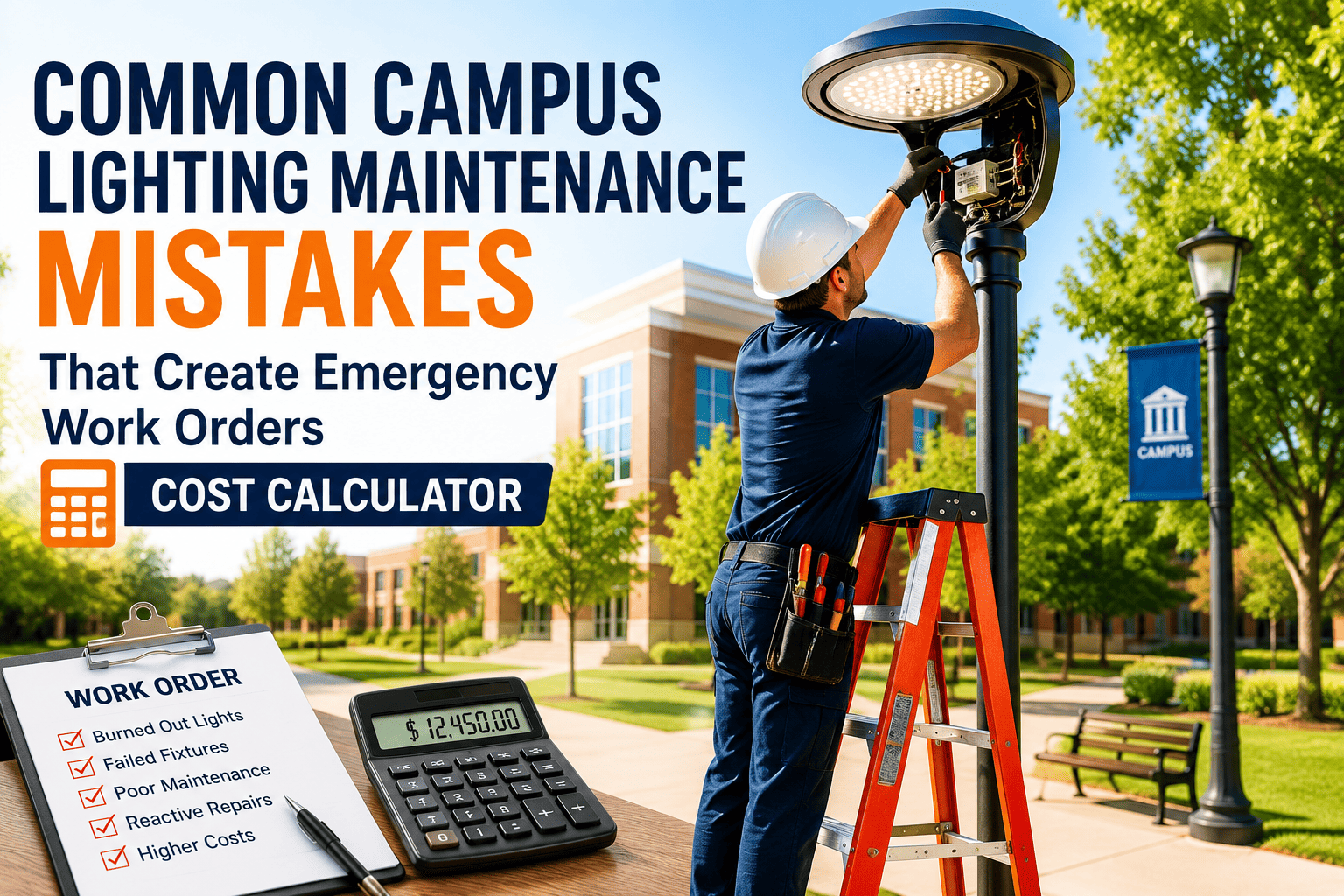
Most emergency work orders are not bad luck — they are the predictable result of how space is tracked and used. When rooms are reassigned without updating asset records, when underused buildings drop off the maintenance rotation, or when occupancy data never reaches the people scheduling repairs, small issues grow quietly until they fail on the coldest Monday of the year. Emergency repairs run several times the cost of the same job done on schedule, and every one of them pulls a technician off planned work. This guide walks through the space utilization mistakes that quietly manufacture emergencies, and how to break the cycle. You can start a free trial of OxMaint to put space and work orders on one system.
Guide · Space & Assets · Work Order Management
Common Campus Space Utilization Mistakes That Create Emergency Work Orders
Five tracking and scheduling habits that turn routine upkeep into after-hours emergencies — and the work-order workflow that stops the cycle before it starts.
4.8x
Cost of an emergency repair versus the same job planned
70%
PM compliance below this level signals rising reactive work within 90 days
20–30%
HVAC issues that go undetected without continuous tracking
How a Small Miss Becomes an Emergency
Deferred and untracked work does not stay the same size while it waits. A skipped routine task escalates in cost at every stage — and the bill that lands is rarely the one you could have paid earlier.
$200
Routine task
Filter change or inspection, planned in off-hours. Zero disruption.
→
$12,000
Emergency repair
Compressor fails mid-term. Premium-rate contractor, classroom offline.
→
$250,000
System replacement
Full replacement years later, after repeated failures and downtime.
Five Mistakes That Manufacture Emergencies
Each of these starts as a space or tracking habit and ends as an after-hours call. The pattern is always the same: the record and the reality drift apart.
01Reassigning rooms without updating asset records
Why it escalatesThe new use loads equipment differently, but the maintenance plan still reflects the old room. Wear outpaces the schedule.
The fixTie every room change to its asset record so PM frequency updates with the use.
02Letting underused buildings fall off the rotation
Why it escalatesLow-traffic wings feel low-risk, so inspections lapse — until a hidden leak or failed valve surfaces as flooding.
The fixKeep every space on a condition-based cadence regardless of how busy it looks.
03Cannibalizing planned-maintenance time for complaints
Why it escalatesComfort calls always feel urgent, so PM blocks get raided. Compliance slips under 70% and reactive work climbs within a quarter.
The fixProtect PM blocks in the schedule and triage complaints against real priority.
04Scheduling disruptive work during occupied hours
Why it escalatesAccess conflicts cancel the job mid-task, so it gets deferred again — and deferral is how routine work becomes an emergency.
The fixAuto-schedule shutdown-type work into breaks and off-hours using the calendar.
05Keeping work-order history in people's heads
Why it escalatesWithout a record, repeat failures stay invisible and the next technician starts from zero. Patterns that predict failure go unseen.
The fixLog every work order to the asset so recurring issues surface as data, not lore.
Work Order Management · OxMaint
Turn emergencies back into scheduled work.
OxMaint connects space records, assets, and work orders so changes update the plan automatically — and recurring failures show up as patterns before they become after-hours calls.
Planned vs Emergency — The Same Job, Two Prices
When the same work is caught on schedule rather than after failure, the cost and the disruption both collapse. This is the gap a connected work-order system closes.
Reactive path
HVAC service call$850
Work consumed by emergenciesOver 50%
DisruptionClassrooms offline
Planned path
Scheduled PM task$180
Target planned share80%
DisruptionOff-hours, none
Frequently Asked Questions
Why do space changes cause maintenance emergencies?
When a room's use changes but its asset and PM records do not, equipment is maintained for the wrong load. Wear accelerates and surfaces as a failure. Keeping space and maintenance on one system prevents the drift.
Start a free trial to see it.
How do I stop comfort complaints from eating PM time?
Protect preventive blocks in the schedule and route complaints through a priority triage so only true emergencies interrupt planned work. When PM compliance holds above target, reactive volume falls within a quarter.
What is the fastest mistake to fix first?
Start by logging every work order to the asset. It costs nothing in hardware and immediately reveals the repeat failures driving your emergencies — the cheapest, highest-leverage change most teams can make.
Do underused buildings really need the same attention?
Yes. Roofs, valves, and envelopes fail silently in low-traffic wings and surface as floods or closures. A condition-based cadence keeps every space covered regardless of how busy it appears day to day.
How does OxMaint reduce emergency work orders?
It links rooms, assets, and work orders, auto-schedules disruptive jobs into off-hours, and surfaces recurring failures as data. The result is more planned work and fewer surprises.
Book a demo to walk through it.
Emergency Work Order Prevention · OxMaint
Stop paying emergency prices for routine work.
OxMaint keeps space, asset, and work-order data in sync so issues are caught on schedule — protecting your budget, your technicians, and your school day.