A classroom floor that looks clean but was mopped with dirty water grows bacteria faster than an unmopped floor. A janitor closet stacked with chemicals that should never touch each other is one mislabeled bottle away from an evacuation. Custodial quality inspections exist to catch these failures before they turn into a flooded hallway, a slip-and-fall claim, or a sick-out among staff — but most school and campus custodial programs run inspections that miss the mistakes that actually matter. This checklist breaks down the most common custodial inspection mistakes that quietly create emergency work orders, and how a structured inspection routine in OxMaint closes the gap before it becomes a callout.
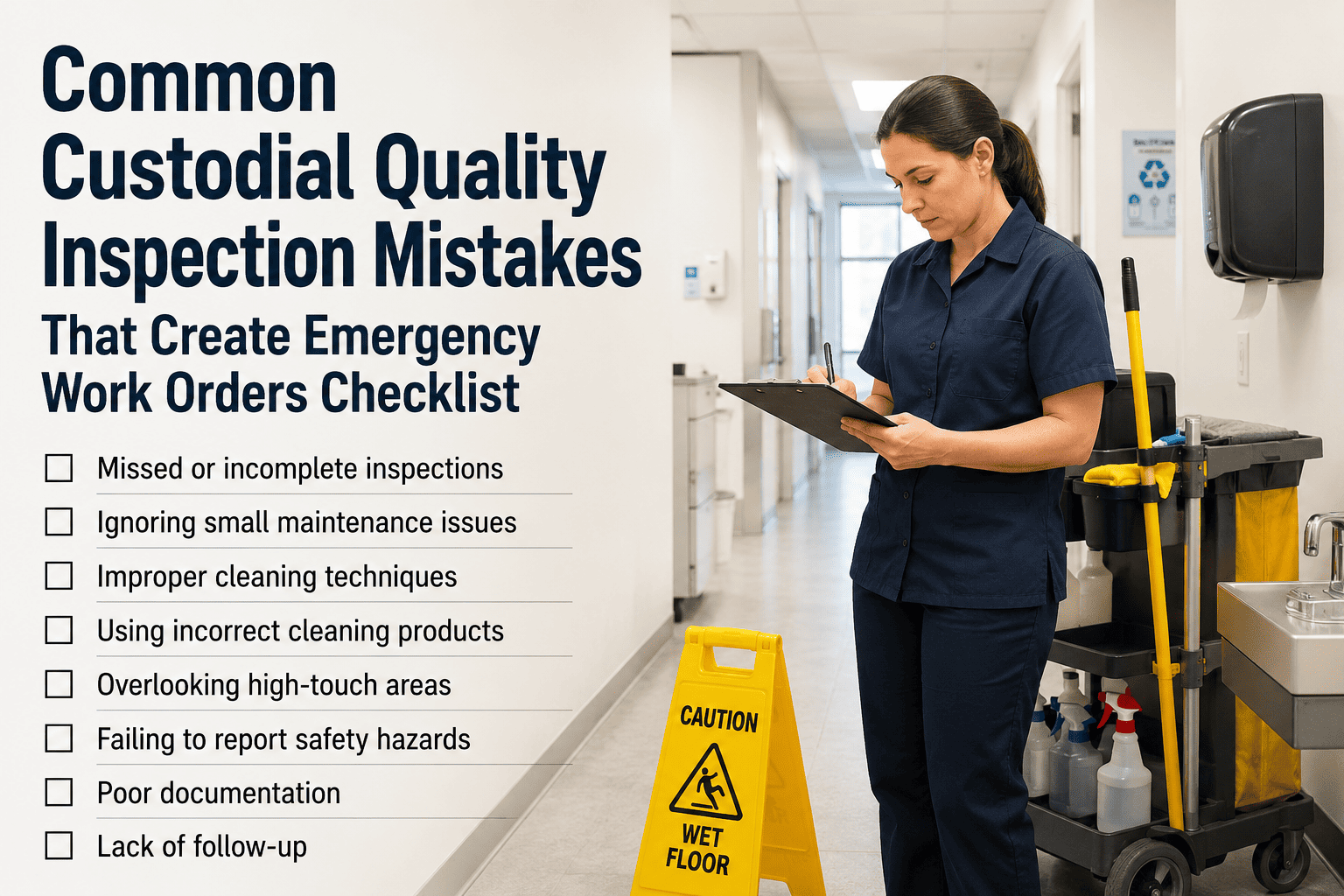
Common Custodial Quality Inspection Mistakes That Create Emergency Work Orders
Every missed inspection point on a custodial checklist is a small decision that turns into a big one later — a slick floor, a clogged drain, a chemical stored wrong. Here is where most inspection routines break down, and what catches it before it becomes an emergency call.
Checking That a Task Was Done, Not That It Was Done Correctly
A checklist that asks "were the restrooms cleaned?" gets a yes even when the floor drain was never flushed and the trap is starting to run dry. The mistake is binary thinking — inspectors confirm presence of a task, not the standard it was done to. A dry trap lets sewer gas back up into the room within days, and by the time the smell is reported, it is a plumbing emergency instead of a thirty-second monthly fix.
Treating Chemical Storage as a One-Time Setup, Not a Recurring Check
Custodial closets get organized once, correctly, and then drift over months as new products arrive and old labels fade. Ammonia-based and bleach-based cleaners stored on the same shelf are a routine finding in incident reports, and the fumes from an accidental mix send staff to urgent care before anyone identifies which two bottles touched.
Skipping Equipment Condition During Floor Inspections
Inspectors check whether the floor looks clean and skip whether the mop water, pads, or auto-scrubber that produced that result are themselves contaminated. Reusing the same dirty mop water across a building spreads bacteria rather than removing it, and a cracked auto-scrubber pad leaves streaks that become a slip hazard within the same shift.
Most custodial emergencies started as a missed inspection line item weeks earlier. OxMaint turns custodial rounds into structured, photo-verified checks with instant escalation, so the gap between a missed standard and an emergency work order closes before it opens.
No Escalation Path When an Inspector Flags a Deficiency
An inspector notices a loose floor tile or a leaking fixture, writes it on a paper form, and the form sits in a binder until someone reviews it at month-end. The deficiency was caught — the system just had no way to act on it in time. A loose tile becomes a trip-and-fall claim in the three weeks before anyone reads the binder.
Inspecting Only the Areas That Are Easy to Reach
High-touch but low-visibility areas — behind kitchen equipment, under sinks, inside HVAC return grilles — get skipped because they take longer to inspect and rarely show visible problems on the surface. Grease buildup behind a cafeteria range or mold growth under a leaking sink trap develops for months before it surfaces as an odor complaint or a fire-code citation.
Using a Generic Checklist for Every Building Type
A gymnasium, a science lab, and a dormitory kitchen carry completely different custodial risks, yet many districts run the same one-page checklist across every building. Lab benches need chemical-resistant cleaning verification that a gym floor does not, and a dormitory kitchen needs grease-trap checks that a classroom never requires. A generic checklist passes every building while missing the risk specific to each one.
No Photo Evidence, Only a Checkbox
A checked box says a restroom passed inspection, but it gives a facilities manager nothing to verify, compare against last month, or show a parent or regulator who disputes the finding. Without a photo record, disputes turn into he-said-she-said conversations and repeat deficiencies go unnoticed because no one can compare today's condition to last month's.
Daily Custodial Quality Inspection Points
These are the checks that catch the fastest-developing risks — the ones that can turn into an incident within a single shift if missed.
Weekly Custodial Quality Inspection Points
Weekly checks catch developing conditions that a daily glance will not reveal — buildup, drift, and equipment wear.
Monthly Custodial Quality Inspection Points
Monthly review is where the program itself gets evaluated — not just the building, but whether the inspection process is closing the loop on what it finds.
Five Metrics That Show Your Custodial Inspections Are Actually Working
| Metric | How to Measure | Target |
|---|---|---|
| Deficiency-to-Work-Order Time | Time from flag logged to work order created | Under 1 hour |
| Repeat Finding Rate | Same deficiency flagged twice in 30 days | Under 5% |
| Low-Visibility Zone Coverage | Deep-check zones inspected per cycle | 100% per quarter |
| Chemical Storage Pass Rate | Closets passing separation/labeling audit | 100% |
| Emergency Work Order Trend | Emergency vs. scheduled work order ratio | Declining month over month |
Frequently Asked Questions
What is the most common custodial inspection mistake that leads to emergencies?+
How often should chemical storage areas be re-inspected?+
Why do low-visibility areas get skipped during routine inspections?+
What should happen the moment an inspector flags a deficiency?+
Can a digital inspection system actually reduce emergency work orders?+
Catch the Small Miss Before It Becomes the Emergency Call
OxMaint turns custodial rounds into structured, photo-verified checks that flag deficiencies the moment they happen — not weeks later in a binder. Fewer emergency work orders, fewer claims, cleaner facilities.