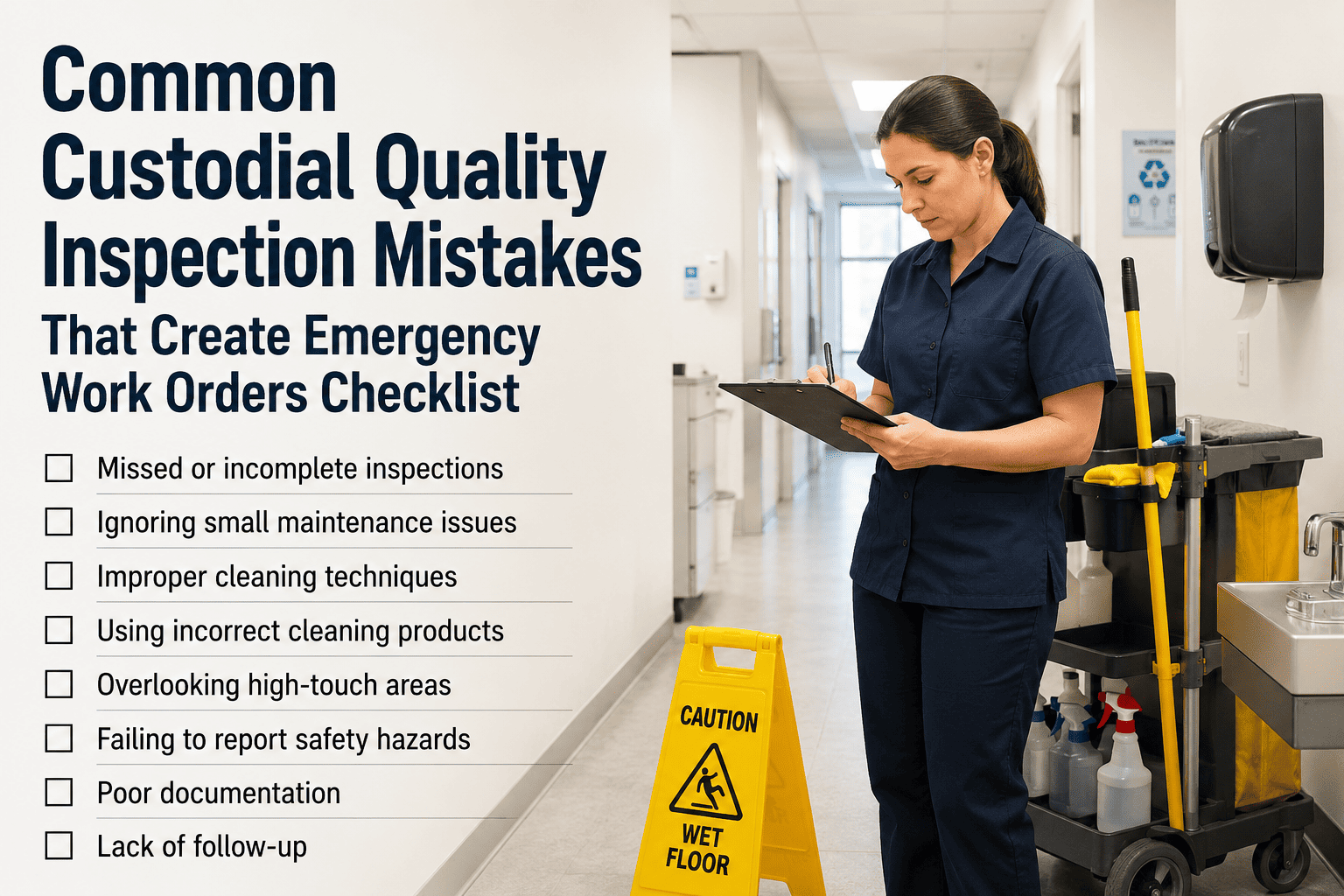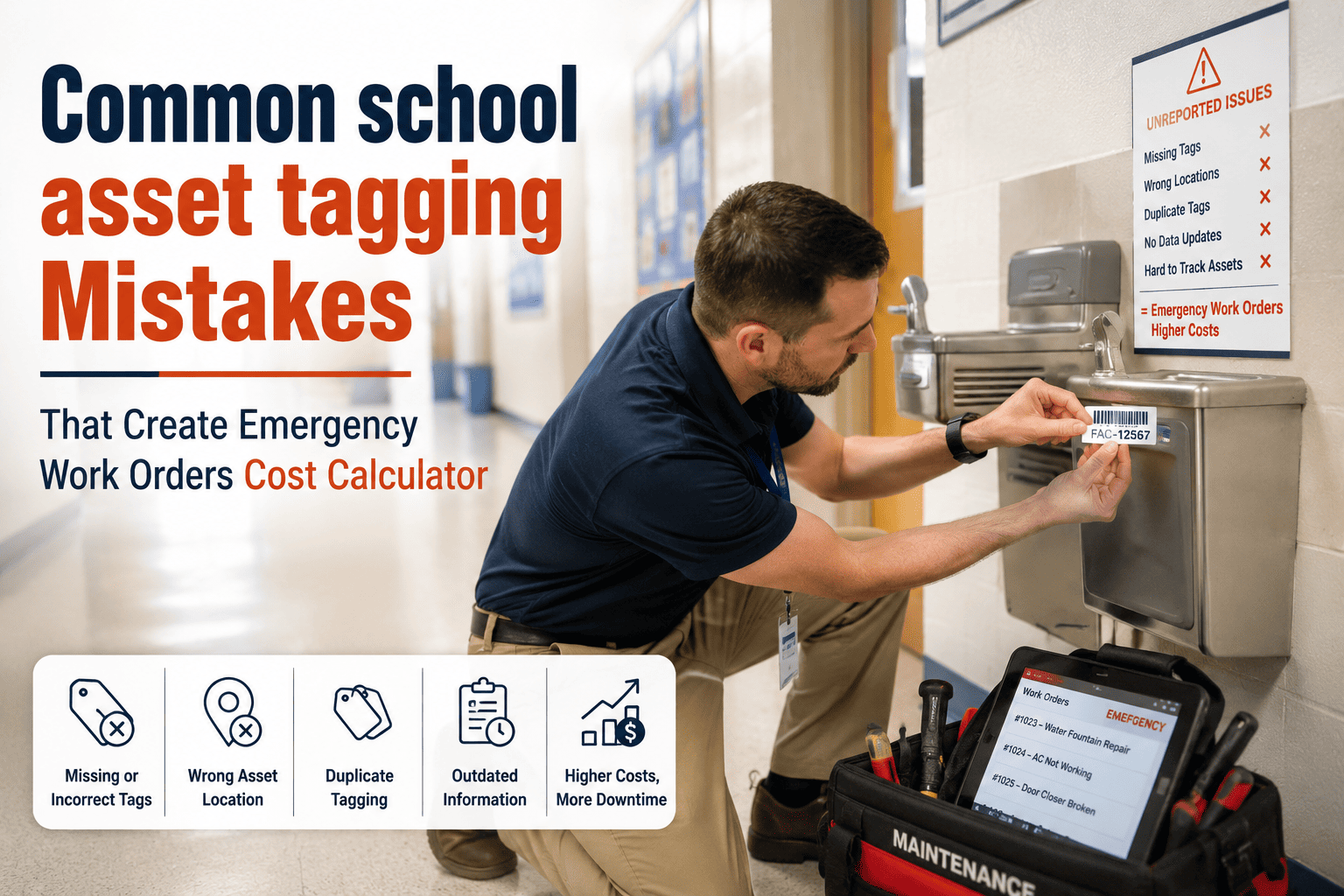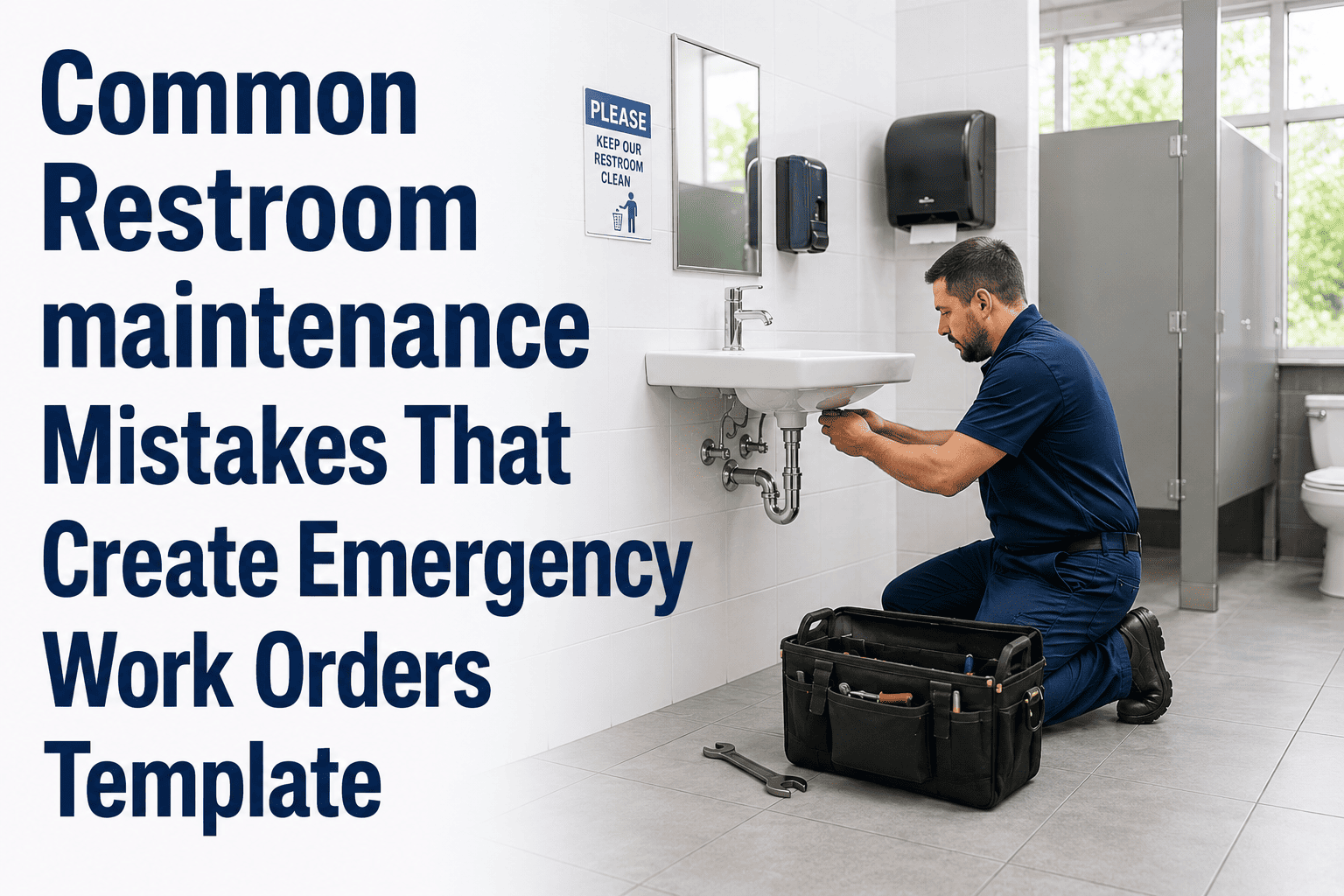
Restroom failures are the top source of reactive work orders in K-12 and higher education facilities — not because custodial teams are negligent, but because common maintenance patterns create gaps that guarantee emergency calls. A clogged drain discovered mid-morning, an inoperable paper towel dispenser during a health inspection, or a broken stall lock reported by a student are each symptoms of a preventable miss in the inspection cycle. The cost of a reactive restroom repair is 3-5x higher than a scheduled fix, and the impact on occupant trust is immediate. This template identifies the mistakes that generate those calls — and shows how OxMaint's CMMS turns restroom maintenance from a reactive scramble into a documented, schedule-driven program. If your facilities team is still catching restroom failures at the point of complaint, start a free trial or book a demo to see how automated inspection scheduling works for your campus.
Common Restroom Maintenance Mistakes That Create Emergency Work Orders
Every emergency restroom work order has a paper trail that leads back to a skipped inspection. This template maps the 7 most expensive mistakes — and shows the OxMaint workflow that closes each gap.
7 Restroom Maintenance Mistakes — And the Fix for Each
Each mistake below follows the same pattern: a skipped or under-documented step that looks harmless until it generates a work order at the worst possible moment. The fix column shows the OxMaint workflow that eliminates each gap.
Custodians clean surfaces and restock consumables but do not systematically check fixture function, caulk condition, or hardware integrity. A loose flush valve or cracked supply line goes unrecorded for weeks until it fails completely during peak occupancy.
Digital inspection checklist separates cleaning tasks from inspection tasks. Each visit requires pass/fail on fixtures, hardware, and seals — not just consumable restock. Failures auto-generate a work order before the next shift.
Flush valves, faucet cartridges, and door closers have predictable wear intervals. Without a calendar-based replacement schedule, teams replace them only after failure — which always happens during class hours or a high-traffic event.
Asset-level PM schedules auto-generate replacement reminders at manufacturer-recommended intervals. Each fixture is an asset with its own service history, so pattern failures across a building are visible before they cascade.
Floor drains and P-traps require scheduled flushing and enzyme treatment to prevent odor and slow-drain complaints. Teams address them only when a backup occurs, by which point the event has already disrupted the facility and may require a plumber call.
Monthly drain maintenance tasks are scheduled as recurring PMs linked to each restroom asset. Completion is logged digitally — giving supervisors visibility into which buildings are on schedule and which are overdue before a backup occurs.
Failed grout and caulk lines allow moisture into subfloor and wall assemblies. The visible symptom — mold growth or tile loosening — appears months after the infiltration began, by which point the repair scope has grown from a $200 recaulk to a $4,000 tile replacement.
Annual grout and caulk inspection is a scheduled checklist item with photo documentation. Early findings are flagged for repair before moisture infiltration begins, and the repair record is linked to the restroom asset history.
Grab bars, lever handles, and accessible stall hardware loosen under regular use. Teams assume hardware is functioning unless a complaint is received. A grab bar that pulls free under load is both a safety failure and an ADA compliance event with potential legal exposure.
ADA hardware torque and function checks are included in the monthly restroom inspection template. Loosened hardware is flagged and a work order created before the next occupant uses the fixture, with digital sign-off confirming completion.
Exhaust fans accumulate lint and debris, reducing airflow below code-required levels. The result is elevated humidity, accelerated mold growth, and persistent odor complaints — all of which generate reactive calls and occupant dissatisfaction without ever triggering an obvious failure event.
Semi-annual exhaust fan cleaning and airflow verification is scheduled as a PM task. Cleaned fans are logged against the asset record, and any fan requiring replacement is flagged to a maintenance work order rather than left until an IAQ complaint arrives.
Custodians note a finding on a paper log or verbal handoff, but no work order is created. The finding is not repaired before the next inspection cycle — and when the emergency call arrives, there is no documentation proving the issue was identified and reported weeks earlier.
Every inspection finding in OxMaint automatically generates a prioritized corrective work order. The repair record is linked to the original inspection finding, creating a complete audit trail from discovery to resolution — in minutes, not days.
Your Restroom Emergency Work Orders Are Predictable — And Preventable
Every facility that tracks inspection data discovers the same pattern: 80% of emergency restroom calls come from 20% of locations, and almost all of them follow a missed or incomplete inspection. OxMaint gives your custodial team the scheduling and documentation infrastructure to catch those gaps before they become calls. Start your free trial or book a demo to see the full inspection workflow for your building count.
OxMaint Restroom Inspection Checklist — What to Capture at Every Visit
This checklist structure maps to the 7 mistake categories above. Each item is a required pass/fail field in the OxMaint inspection template — not a free-text note that gets lost in a binder.
Paper Logs vs OxMaint — Side by Side
Frequently Asked Questions
Can OxMaint handle inspection scheduling across dozens of restrooms in multiple buildings?+
How does OxMaint handle repeat failures at the same fixture location?+
Does this checklist template apply to higher education facilities as well as K-12?+
How long does it take to set up restroom inspection templates in OxMaint?+
Can OxMaint generate reports for state or district facility compliance reviews?+
Stop Catching Restroom Failures at the Point of Complaint
The 7 mistakes in this template are responsible for the majority of emergency restroom work orders in school and campus facilities. Each one is preventable with a scheduled inspection, a digital checklist, and a closed-loop work order system. OxMaint gives your custodial team all three — with no implementation project and first automated inspections running in week one.