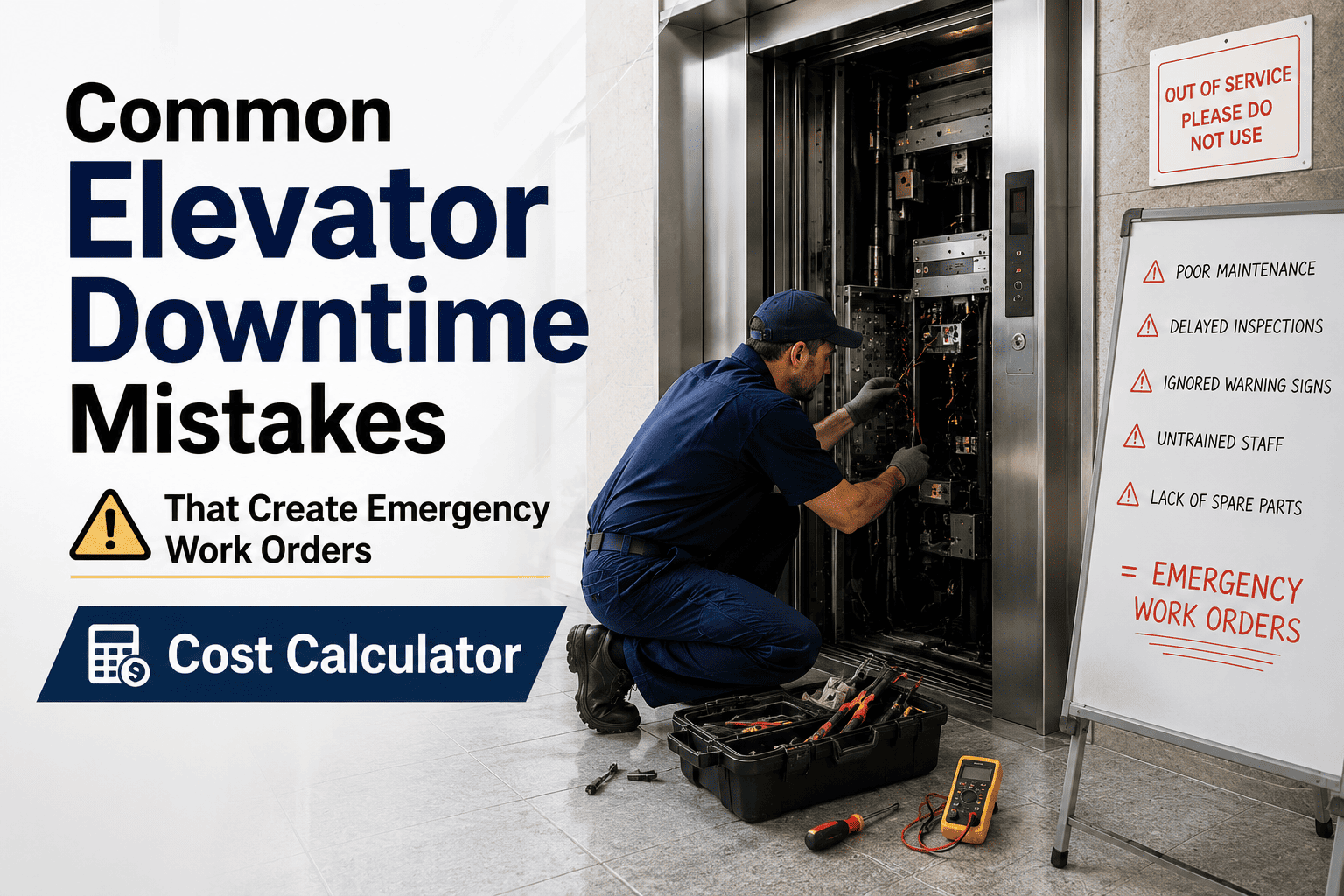
Every campus elevator that drops out of service mid-semester starts the same way — not with a dramatic failure, but with a small mistake nobody costed out: a skipped lubrication round, an inspection certificate left to lapse, a recurring fault logged on paper and never escalated. By the time the car stops between floors, that quiet oversight has become an after-hours emergency call billed at two to three times the standard rate, plus the accessibility complaints and the scramble to find records. The gap between a planned repair and an emergency one is rarely about the part — it is about how early the warning was caught. You can put that early-warning layer in place with OxMaint's predictive maintenance for campus elevators and stop budgeting for surprises.
The Elevator Mistakes That Quietly Become Emergency Work Orders
A cost breakdown of the five most common campus elevator oversights — what each one looks like, what it costs when it turns into an after-hours emergency, and how predictive maintenance catches it first.
2-3x
higher labor rates for after-hours and weekend emergency elevator callouts versus scheduled service
$300+
per hour for a business-hours service call, climbing sharply for emergency response
2.4x
higher lease non-renewal risk for tenants hit by three or more elevator outages a year
The Pattern
Five Mistakes, Five Cost Multipliers
Each of these starts as a routine task worth a few hundred dollars. Left unmanaged, each one converts into an emergency work order worth thousands. Here is the typical jump.
The MistakePlanned CostEmergency Cost
Skipped lubrication round
Guide rails and bearings run dry, accelerating wear
~$250
$2,000+
Lapsed inspection certificate
Unit operates out of compliance until flagged
~$500
Shutdown order + fines
Ignored recurring fault
Same intermittent code logged, never escalated
~$400
$3,500+ failure
Deferred controller service
Aging board pushed off another budget cycle
$85,000 planned
$140,000 forced
Paper logs lost at handoff
No history when the next failure needs diagnosing
$0 to prevent
Hours of blind diagnosis
The Multiplier
Where the Extra Cost Actually Comes From
An emergency work order is never just the repair. Four hidden layers stack on top of the base cost — and none of them appear on the original maintenance line item.
Premium labor
After-hours and weekend callouts carry rates two to three times the standard hourly charge.
Rush parts
Components ordered urgently cost more and arrive slower, extending the outage further.
Lost accessibility
Students and staff with mobility needs lose access, raising complaints and liability exposure.
Staff diversion
Facilities staff stop planned work to coordinate the repair and field complaints.
See the failure before the car stops
OxMaint trends every elevator's service history and flags the recurring faults and overdue tasks that turn into emergency callouts — so the work order fires on your schedule, not the elevator's.
The Fix
How Predictive Maintenance Breaks the Cycle
1
Every elevator registered with its inspection cycle, service history, and component age in one asset record.
2
Recurring faults trend automatically so an intermittent code becomes a flagged pattern, not a forgotten note.
3
Tasks and certificates auto-schedule with reminders well before a deadline can lapse into a violation.
4
Work orders fire on plan at standard rates during business hours — before the failure forces an emergency call.
Expert Review
Most buildings overspend on elevators for one reason — they wait until something breaks before calling a technician. On a multi-building campus that habit compounds, because the same skipped task repeats across a dozen cars. The fix is not a bigger repair budget; it is catching the recurring fault the second time it appears, not the tenth, when it has finally stranded someone between floors.
Reviewed by OxMaint's Facilities Reliability Advisory Team
FAQ
Frequently Asked Questions
Why does an emergency elevator repair cost so much more than a planned one?
Emergency callouts carry premium after-hours labor rates two to three times standard, plus rush-ordered parts and a longer outage. The same fault caught on schedule is a routine business-hours visit.
Can OxMaint track inspection certificates so they never lapse?
Yes. Each elevator's certificate and inspection cycle is stored against its asset record with automated reminders before the deadline, so a unit never quietly runs out of compliance.
Start free to register your first elevator.
How does predictive maintenance catch a recurring fault?
OxMaint trends repeated fault codes and service notes per asset, so an intermittent issue surfaces as a flagged pattern rather than a one-off entry that gets forgotten between technicians.
We manage elevators across many buildings. Does that work in one place?
It does. Every car across every building rolls up into one dashboard, so a facilities director sees compliance and fault status campus-wide while site teams see only their own units.
How quickly can we get our elevators set up?
Most teams register their highest-traffic elevators and load existing service history within the first week, starting with the cars that fail most often.
Book a demo to see the setup.
Stop budgeting for elevator emergencies you can predict
OxMaint turns every skipped task and recurring fault into a scheduled work order at standard rates — before it becomes an after-hours call your budget never planned for.