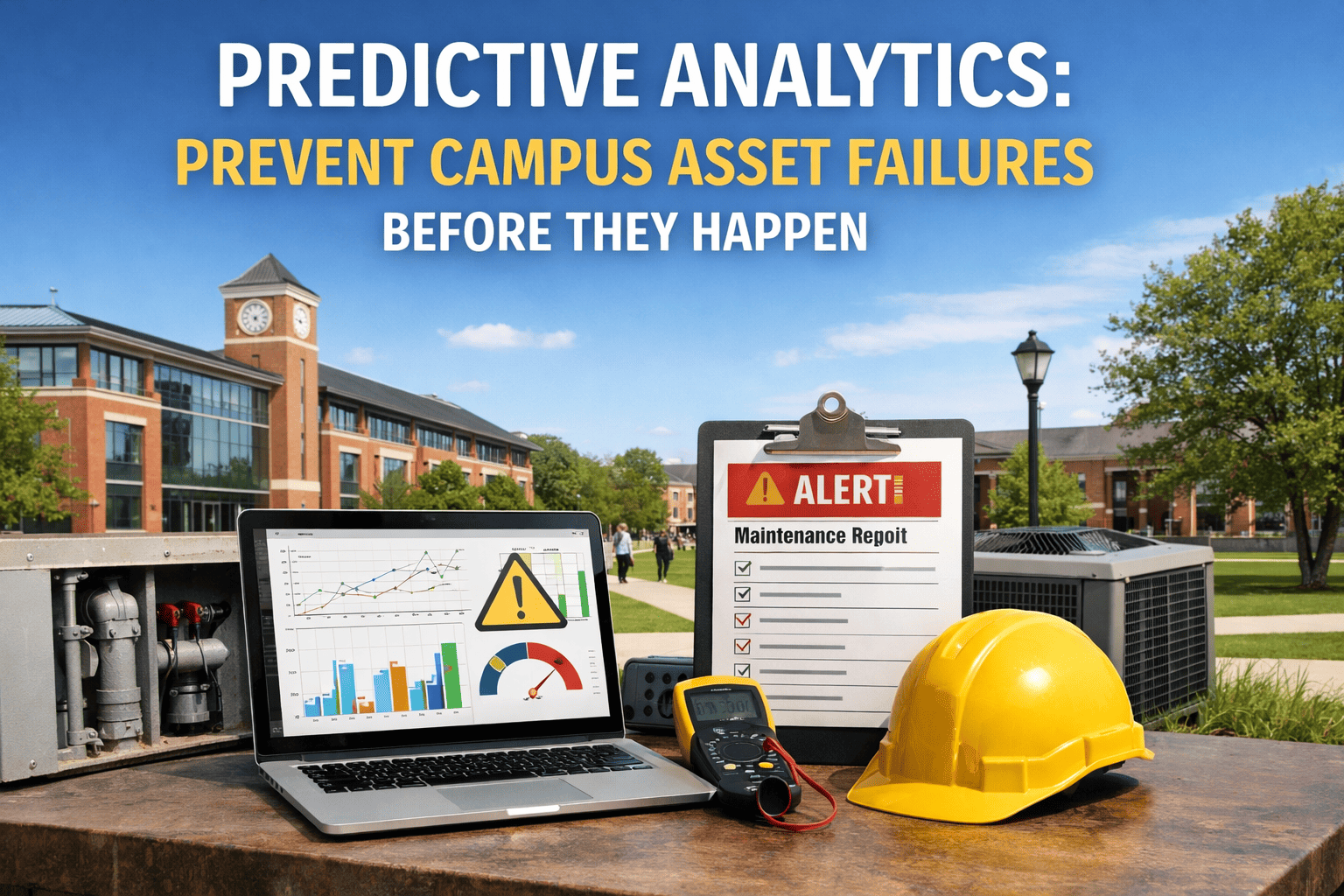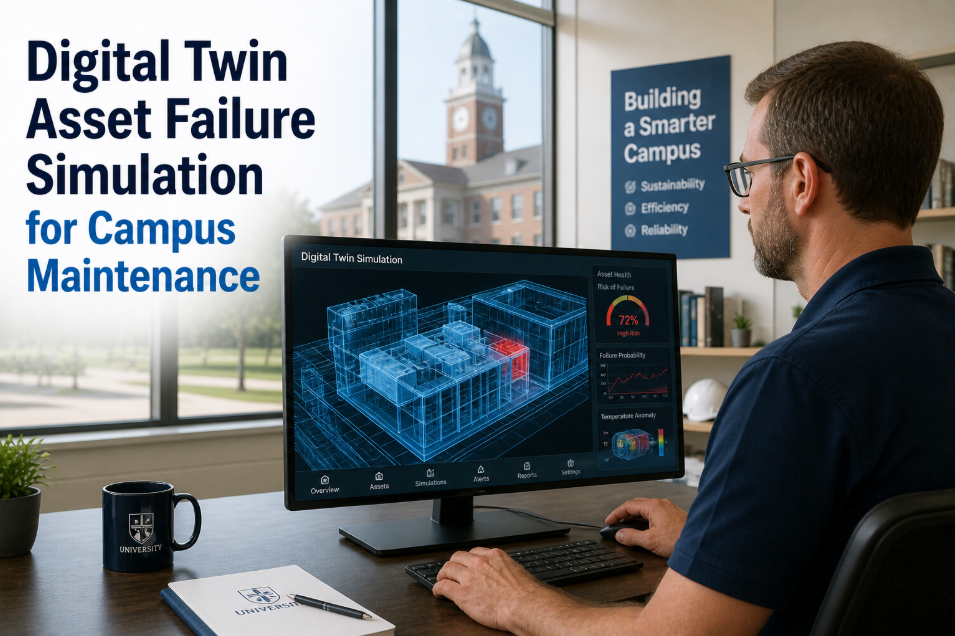
Before a campus facilities team spends $180,000 replacing a 20-year-old central chiller, they could run a failure simulation on a digital twin of that same asset — testing the cost and consequence of three different intervention scenarios before committing a single dollar to procurement. That simulation would show whether a major overhaul at year 18 extends useful life by 8 years at $40,000, whether replacement now prevents three predictable failure events in the next 24 months worth $65,000 in reactive costs, and whether a do-nothing approach creates an 87% probability of a critical failure event before the end of the next cooling season. Digital twin failure simulation in campus maintenance is not science fiction — it is the decision-support layer that separates facilities teams making evidence-based capital decisions from those making educated guesses with $180,000 at stake. Start a free trial of OxMaint and see how digital twin asset modeling works for your campus portfolio, or book a demo to walk through a live failure simulation on a real campus asset scenario.
Digital Twin Asset Failure Simulation for Campus Maintenance: Run the Failure Before It Happens
Campus facilities teams make multi-hundred-thousand-dollar capital decisions on aging assets with incomplete service records and no failure modeling. Digital twin simulation closes that gap — running every failure and intervention scenario on a virtual copy of the asset before the physical decision is made, with accuracy that reduces unplanned CapEx by an average of 34%.
Stop Guessing When an Asset Will Fail. Start Modeling It.
OxMaint's condition-based asset lifecycle tracking builds the data layer that digital twin simulation runs on — giving campus facilities and finance teams a shared model for every major asset replacement, overhaul, and CapEx decision.
What Is a Digital Twin in Campus Asset Maintenance?
A digital twin is a virtual model of a physical asset that mirrors its real-world condition, performance history, and degradation trajectory in real time. In campus maintenance, a digital twin of a cooling tower is not a 3D graphic — it is a live data object that holds the asset's installation date, current condition score, all historical maintenance events, sensor readings from attached IoT devices, failure mode library for that asset class, and a predictive model that calculates remaining useful life and probability of failure under different maintenance scenarios. When you run a failure simulation, you are asking the digital twin: "If we do nothing for 18 months, what is the probability of a Category A failure event and what is the projected cost?" The model runs the calculation using your actual asset data — not generic industry averages — and returns a probability distribution with cost outcomes for each scenario. Campus facilities teams that integrate digital twin simulation into their CapEx planning process report 34% lower unplanned capital spend in the first 24 months. Want to see how OxMaint builds the data foundation for digital twin simulation on your campus? Start a free trial for 30 days and explore the asset lifecycle modeling tools, or book a demo to walk through a complete simulation scenario for a real campus asset type.
The Four Types of Failure Simulations Campus Teams Run on Digital Twins
Model asks: at what point in this asset's degradation curve does the cost of operating and maintaining it exceed the cost of replacement? Simulation runs the cost trajectory forward using actual maintenance frequency and cost data — not manufacturer estimates — and identifies the precise crossover point. On a 25-year-old AHU, this simulation typically surfaces the crossover 18 to 30 months earlier than intuition suggests.
Before approving a $45,000 major overhaul of a chiller, the simulation models what the overhaul actually buys in terms of extended useful life, reduced reactive spend, and deferred replacement CapEx — versus the cost of replacement now. For assets in the 60 to 75% lifecycle stage, intervention typically wins by $80,000 to $140,000 in net present value. Outside that window, replacement wins.
Finance wants to delay a $12,000 PM for 6 months to manage Q3 cash flow. The simulation models the probability of a failure event during that deferral window, the expected cost of the resulting reactive repair, and the risk of a cascade failure affecting connected assets. This produces a quantified risk argument that replaces the facilities manager's gut feeling with a defensible number.
At portfolio level, the digital twin simulation models the multi-year CapEx demand across all major assets simultaneously — showing what the replacement and overhaul schedule looks like under three budget scenarios: minimum viable maintenance, optimized intervention, and accelerated renewal. Finance and facilities align on the same model with the same data before the budget meeting starts.
Why Campus CapEx Decisions Fail Without Failure Simulation
A 22-year-old boiler with thorough PM records and good condition scores is less risky than a 12-year-old one with deferred maintenance and three reactive events in 18 months. Campus CapEx decisions based on age rather than condition routinely misallocate capital by replacing low-risk assets while deferring high-risk ones.
When a facilities director presents a $320,000 chiller replacement request to finance without a failure probability model, cost trajectory, or scenario comparison, the response is almost always deferral. Digital twin simulation translates asset risk into a financial model that finance can evaluate using the same logic they apply to any capital investment.
An emergency chiller replacement during a heat wave — with premium contractor rates, expedited shipping on parts, temporary cooling equipment rental, and research or operational disruption costs — costs an average of 4.8x the planned replacement cost. Digital twin simulation provides the evidence to prevent this outcome.
A facilities director producing a 5-year CapEx forecast without condition-based asset data is projecting based on age, instinct, and past budgets. When the actual failure timeline diverges from the forecast — as it does in 67% of cases — the resulting unplanned CapEx breaks the annual budget and damages the team's credibility with finance.
How OxMaint Builds the Data Layer Digital Twin Simulation Requires
Every campus asset in OxMaint carries a real-time condition score derived from maintenance event frequency, reactive-to-planned ratio, age against expected useful life, and sensor readings where connected. This score is the foundational input for all failure simulation models.
OxMaint's work order history captures every reactive repair, PM completion, and inspection event with cost, labor hours, and technician notes. The pattern in this data — increasing reactive frequency, shortening intervals between failures — is what the simulation model reads to calculate failure probability.
Vibration, temperature, pressure, and energy consumption data from connected sensors feed the digital twin in real time. Trend deviations from baseline — a chiller drawing 8% more current than its 12-month average — appear in the condition score before the failure event, giving the simulation accurate current state data.
OxMaint generates rolling 5 to 10 year CapEx forecasts from asset condition data — showing projected replacement and overhaul demand per year, per building, per system. Facilities and finance see the same model, updated automatically as new work order and sensor data arrives.
OxMaint's asset database includes failure mode profiles by asset class — chillers, AHUs, boilers, switchgear, elevators — built from aggregated maintenance data across the platform's customer base. Your asset's condition score is compared against its class failure profile to calculate probability of each failure mode.
Simulation outputs export as structured reports showing scenario assumptions, probability distributions, NPV comparisons, and recommended intervention timing — formatted for finance, ownership groups, and board review without requiring the facilities team to reformat data for each audience.
CapEx Decisions Without Simulation vs OxMaint Digital Twin Modeling
| Decision Area | Without Failure Simulation | With OxMaint Digital Twin Modeling |
|---|---|---|
| Asset Replacement Timing | Based on age and gut instinct, 67% forecast miss rate | Condition-based probability model, 18-month advance visibility |
| Overhaul vs Replace Decision | Preference-based, no cost trajectory comparison | NPV comparison of overhaul vs replacement at current condition stage |
| Finance CapEx Justification | Verbal argument, often deferred without quantified risk | Failure probability model with cost scenarios — same language as finance |
| 5-Year Budget Forecast Accuracy | Based on age averages, diverges from actual within 18 months | Condition-based rolling model, updated as new asset data arrives |
| Unplanned CapEx Rate | 23% of annual capital spend is unplanned emergency replacement | 34% average reduction in unplanned CapEx after simulation-based planning |
What Digital Twin Simulation Delivers for Campus Facilities Finance
Frequently Asked Questions
Does our campus need IoT sensors on assets before digital twin simulation is useful?
How does OxMaint calculate failure probability for a specific campus asset?
Can digital twin simulation outputs be formatted for finance and board review?
How far in advance can OxMaint's digital twin model predict major asset failure risk?
The Asset Has Already Told You When It Will Fail. You Just Need a System That Listens.
OxMaint builds the condition-scored asset registry, work order history, and CapEx modeling layer that digital twin failure simulation runs on — giving campus facilities teams 18 months of forward visibility on major asset decisions, finance-ready scenario reports, and a 34% average reduction in unplanned capital spend.