Research integrity failures cost universities millions in retracted studies, failed audits, and accreditation sanctions — and 34% of these failures trace back to expired instrument calibrations that were never tracked properly. A single spectrophotometer with a lapsed calibration certificate can invalidate six months of biochemistry research. An out-of-calibration autoclave can compromise an entire microbiology lab's sterility validation. Manual calibration tracking using spreadsheets and paper certificates creates gaps where instruments fall through cracks, due dates are missed, and compliance documentation disappears when auditors ask for it. CMMS-based calibration tracking automates the entire lifecycle — scheduling calibrations by instrument type and regulatory requirement, storing certificates digitally with timestamp validation, sending overdue alerts before lapses occur, and generating audit-ready compliance reports on demand. This guide breaks down why manual calibration tracking fails in academic labs, the regulatory requirements across ISO 17025, CLIA, and CAP standards, and how CMMS delivers automated compliance without adding administrative burden to lab managers already stretched thin. If your lab still tracks calibrations in spreadsheets or relies on technician memory, start a free trial with OxMaint or book a demo to see automated calibration scheduling in action.
Lab Calibration CMMS 2026
Research Compliance
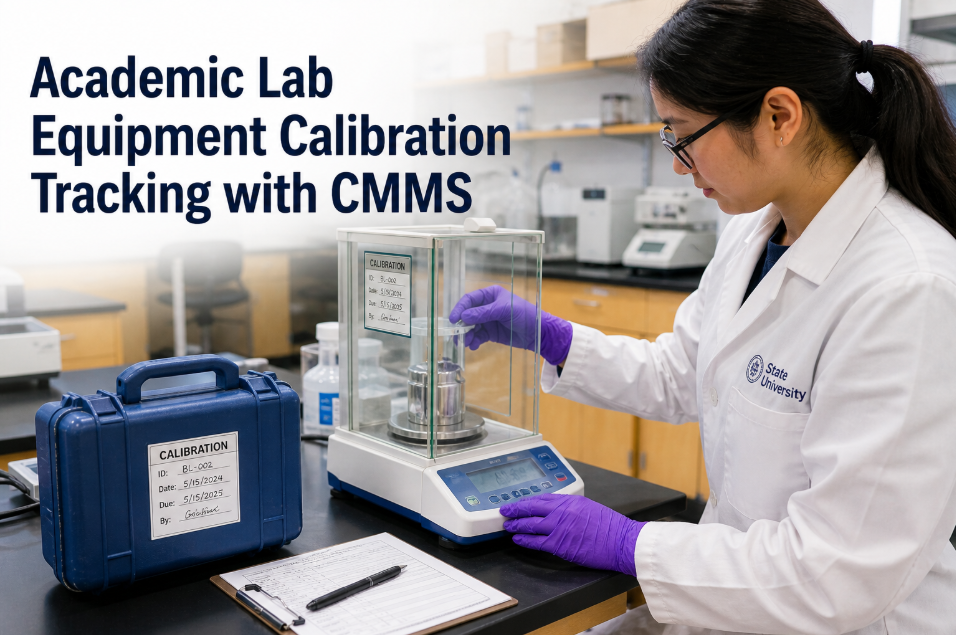
Academic Lab Equipment Calibration Tracking with CMMS
Automated calibration scheduling, certificate storage, and audit-ready compliance reporting for every research instrument — from spectrophotometers to autoclaves to analytical balances.
34%
Of research integrity failures traced to lapsed instrument calibrations
18 months
Average retroactive data invalidation when calibration lapse discovered during audit
$280K
Average cost of research data invalidation from single calibration failure
100%
Calibration compliance required for ISO 17025 and CLIA accreditation
Never Miss Another Calibration Due Date
OxMaint automatically schedules calibrations by instrument type and regulatory standard, stores certificates with timestamp validation, sends alerts 30–60 days before expiration, and generates audit-ready compliance reports. Free for 30 days — import your instrument inventory and see automated scheduling in action.
Why Manual Lab Calibration Tracking Fails — And What It Costs
Academic research labs operate under constant pressure — grant deadlines, publication timelines, teaching responsibilities, and equipment shared across multiple research groups. Calibration tracking falls to lab managers, senior technicians, or graduate students who inherit binders full of calibration certificates and spreadsheets listing instrument due dates. This system works until someone graduates, takes a new position, or simply forgets to check the spreadsheet for three months. The consequences of calibration lapses are not hypothetical — they are documented in retracted papers, failed accreditation audits, and invalidated research data requiring months of repeat experiments. Understanding why manual tracking fails is critical because the problem is not technician carelessness — it is system design that relies on human memory in environments where humans are overwhelmed. To see what automated tracking eliminates, start a free trial and import your current calibration schedule, or book a demo to walk through automated certificate management.
1
Spreadsheet Due Dates Without Automated Alerts
Calibration tracking spreadsheets list instrument IDs and next due dates — but spreadsheets do not send alerts. Someone must manually check the spreadsheet weekly or monthly to identify upcoming expirations. When the person responsible for checking leaves, gets busy with grant deadlines, or simply forgets, instruments slide past due dates without anyone noticing. Labs discover lapses months later during audits or when someone happens to check the certificate binder and realizes the HPLC has been out of calibration for 14 weeks.
Impact: 42% of calibration lapses discovered during audits rather than proactive monitoring
2
Paper Certificates Lost or Misfiled
Calibration service providers deliver certificates as PDFs via email or paper copies mailed to the lab. These certificates get printed, hole-punched, and filed in binders organized by instrument. Over time, certificates get misfiled under wrong instrument IDs, lost when binders are moved during lab renovations, or simply disappear when students and postdocs leave without proper documentation handoff. When auditors ask for three years of calibration history on a specific balance, the lab cannot produce complete records — resulting in audit findings and compliance sanctions.
Impact: 28% of audit findings related to missing or incomplete calibration documentation
3
No Visibility Into Cross-Lab Instrument Status
Large research universities have dozens of independent labs each maintaining their own calibration tracking systems. Environmental health and safety auditors, accreditation inspectors, and department chairs have no central visibility into compliance status across the facility. They must email individual labs requesting status reports, consolidate data manually, and hope every lab responds accurately. This fragmentation makes it impossible to identify systemic issues like specific vendors delivering late calibrations or instrument types with chronic compliance problems.
Impact: Institutional compliance reporting delayed by 3–6 weeks due to manual data consolidation
4
Instrument Sharing Without Calibration Status Visibility
Expensive analytical instruments — mass spectrometers, electron microscopes, NMR spectrometers — are shared across multiple research groups through core facilities. Researchers book time on these instruments weeks in advance. If an instrument's calibration expires between booking and use, the researcher may complete their entire experiment on out-of-calibration equipment before anyone notices. All data generated during that period becomes suspect and may require complete re-collection after recalibration — wasting weeks of work and potentially invalidating grant milestones.
Impact: Average 6.4 weeks of research data invalidated per calibration lapse on shared instruments
Regulatory Requirements — What Labs Must Track and Document
Calibration requirements vary by lab type, certification, and research application — but all share common elements. Understanding which standards apply to your lab determines what calibration tracking system must deliver to maintain compliance and accreditation.
Required Documentation:
Calibration certificates traceable to national or international standards
Documented calibration intervals based on manufacturer recommendations or historical drift data
Records of all calibrations including date, technician, results, and adjustments made
Uncertainty budgets for measurement equipment
Out-of-tolerance notifications and impact assessments on past data
Typical Calibration Frequency: Annually for most analytical equipment, quarterly for critical measurement instruments
Required Documentation:
Calibration verification performed at intervals specified by manufacturer or every 6 months minimum
Calibration records retained minimum 2 years
Documentation of calibration procedures including acceptable ranges
Corrective action documentation when calibration fails
Personnel training records showing calibration procedure competency
Typical Calibration Frequency: Every 6 months minimum, more frequent for high-complexity testing
Required Documentation:
Calibration verification at intervals appropriate to test system stability
Calibration traceability to reference materials or higher-order standards
Documentation of calibration acceptance criteria
Investigation and documentation when calibration verification fails
Retention of calibration records for minimum 2 years
Typical Calibration Frequency: Manufacturer-specified intervals or every 6 months, whichever is more frequent
Required Documentation:
Standard operating procedures for calibration of each equipment type
Calibration records signed and dated by person performing calibration
Traceability to NIST or equivalent national standards
Equipment logs showing calibration status before each use
Documentation of out-of-calibration impact on study integrity
Typical Calibration Frequency: Annually minimum, more frequent for critical measurement equipment
The Six Core Capabilities of CMMS Calibration Tracking
CMMS calibration modules deliver capabilities impossible with manual spreadsheet systems. These six functions define audit-ready automated calibration management that prevents lapses, preserves documentation, and generates compliance reports on demand.
01
Automated Calibration Scheduling by Instrument Type
CMMS stores calibration intervals for each instrument category — analytical balances calibrated quarterly, spectrophotometers annually, thermocouples every 6 months. When a calibration is completed, the system automatically schedules the next calibration based on instrument-specific intervals and regulatory requirements. No manual date calculation. No spreadsheet updates. Next calibration due date auto-populates the moment current calibration closes.
Benefit: Zero missed calibrations due to forgotten scheduling — next due date auto-generates with 100% accuracy
02
Multi-Tier Alert System with Escalation
System sends email and mobile push notifications at configurable intervals — 60 days before expiration to lab manager, 30 days to lab supervisor, 14 days to department head, 7 days to compliance officer. Alerts escalate automatically if calibration remains unscheduled. When calibration actually expires, instrument status changes to "Out of Compliance" on all dashboards and usage logs, preventing inadvertent use of out-of-calibration equipment.
Benefit: Proactive intervention before expiration instead of reactive response after lapse discovered in audit
03
Digital Certificate Storage with Timestamp Validation
Calibration certificates upload directly to instrument records as PDF attachments with automatic timestamp, uploader ID, and version control. Certificates are searchable by instrument ID, calibration date, service provider, or certificate number. System prevents deletion of historical certificates — only new versions can be added. Full calibration history for any instrument retrievable in under 10 seconds for audit response.
Benefit: Audit-ready documentation with zero risk of lost or misfiled certificates — complete history always retrievable
04
Usage Lockout for Out-of-Calibration Equipment
When calibration expires, instrument status automatically changes to "Out of Service — Calibration Expired" in the equipment reservation system. Researchers attempting to book the instrument receive notification that it is unavailable pending recalibration. For non-bookable equipment, out-of-calibration status displays on QR code labels and usage logs, providing visual warning at point of use that data generated may not be valid.
Benefit: Prevents inadvertent use of expired instruments that would invalidate research data and require costly re-collection
05
Vendor Performance Tracking and Service History
System tracks which calibration service providers calibrate which instruments, average turnaround time, out-of-tolerance rates, and cost per calibration. Lab managers can identify vendors with chronic delays, excessive costs, or high rejection rates. Service history shows which instruments require frequent recalibration or adjustment — indicating potential replacement needs or environmental control issues affecting instrument stability.
Benefit: Data-driven vendor selection and instrument reliability trending impossible with manual spreadsheet tracking
06
Audit-Ready Compliance Reporting
One-click generation of compliance reports showing all instruments by calibration status — current, due within 30 days, overdue. Reports include instrument ID, location, last calibration date, next due date, service provider, certificate number, and responsible personnel. Export to PDF or Excel for submission to accreditation bodies, regulatory inspectors, or institutional compliance officers. Historical compliance reports show calibration status as of any past date for retrospective audit response.
Benefit: Audit preparation time drops from days of manual data consolidation to under 10 minutes for report generation
Common Lab Instrument Calibration Intervals — By Equipment Type
Calibration frequency depends on instrument type, manufacturer recommendations, regulatory requirements, and historical drift data. This table provides industry-standard intervals for common academic lab equipment as a starting baseline — individual labs may adjust based on usage intensity and compliance requirements.
| Equipment Type |
Standard Calibration Interval |
Typical Calibration Method |
Regulatory Driver |
| Analytical Balances |
Quarterly (every 3 months) |
NIST-traceable mass standards |
ISO 17025, GLP, CAP |
| pH Meters |
Monthly or before each use |
NIST-traceable buffer standards |
CLIA, CAP, GLP |
| Spectrophotometers |
Annually |
NIST-traceable absorbance standards |
ISO 17025, CLIA |
| Pipettes (Adjustable) |
Annually or every 5,000 uses |
Gravimetric calibration with certified balance |
ISO 17025, GLP |
| Autoclaves |
Annually (validation quarterly) |
Biological indicators and RTD probe calibration |
CAP, CLIA, institutional biosafety |
| Incubators and Ovens |
Annually |
NIST-traceable temperature probes |
GLP, CAP |
| Refrigerators and Freezers |
Annually |
NIST-traceable temperature probes |
GLP, CAP, vaccine storage requirements |
| HPLC Systems |
Semi-annually (every 6 months) |
NIST-traceable retention time and peak area standards |
ISO 17025, GLP |
| Gas Chromatographs |
Semi-annually |
NIST-traceable calibration gas mixtures |
ISO 17025, EPA Method validation |
| Microscopes (Calibrated Stages) |
Annually |
Stage micrometer calibration |
ISO 17025 for quantitative microscopy |
| Centrifuges |
Annually |
Tachometer verification of RPM accuracy |
GLP, CAP |
| Timer Devices |
Annually |
NIST-traceable time standard comparison |
GLP when used for critical time-dependent measurements |
How OxMaint Delivers Lab Calibration Tracking — Implementation Walkthrough
OxMaint's calibration module integrates directly with asset management and preventive maintenance scheduling — treating calibration as a specialized PM type with compliance-specific documentation requirements. Here is how implementation works in a typical academic research lab environment.
Implementation Step 01
Import Instrument Inventory with Calibration Requirements
Lab uploads instrument inventory as CSV or Excel including equipment ID, make, model, serial number, location, and current calibration status. For each instrument type, define calibration interval based on regulatory requirements and manufacturer recommendations. OxMaint's equipment templates include pre-configured calibration intervals for 200+ common lab instruments — analytical balances default to quarterly, spectrophotometers to annual, pH meters to monthly verification.
Implementation Step 02
Upload Historical Calibration Certificates
Scan or upload existing calibration certificates as PDFs attached to corresponding instrument records. System extracts calibration date and next due date from certificate metadata or manual entry. Historical certificates establish baseline compliance documentation and enable trending analysis of instrument drift over time. All future certificates upload to same instrument record creating complete chronological calibration history.
Implementation Step 03
Configure Multi-Tier Alert Schedule
Define who receives calibration alerts and at what intervals before expiration. Typical configuration: Lab manager receives notification 60 days before due date to schedule calibration appointment. Lab technician receives 30-day reminder to confirm scheduling. Department compliance officer receives 14-day escalation if calibration still unscheduled. All personnel receive immediate alert when calibration expires without completion.
Implementation Step 04
Integrate with Equipment Reservation System
For shared core facility instruments, sync calibration status with equipment booking calendar. When calibration expires, instrument automatically blocks new reservations and displays out-of-service status. Researchers with existing reservations during expired period receive notifications that their bookings are canceled pending recalibration. Instrument re-enables for booking automatically when new calibration certificate is uploaded.
Implementation Step 05
Generate QR Code Labels for Point-of-Use Verification
Print QR code labels for each instrument linking to mobile-accessible calibration status page. Researchers scan QR code with smartphone before use to verify current calibration status, view certificate, and see next due date. Out-of-calibration instruments display red warning banner on scan. QR codes enable self-service calibration verification without requiring login to CMMS or calling lab manager.
Implementation Step 06
Schedule Automated Compliance Reporting
Configure monthly automated compliance reports emailed to department heads, compliance officers, and lab directors showing calibration status across all instruments. Reports highlight upcoming expirations, overdue calibrations, and vendor performance metrics. Quarterly reports generate automatically before accreditation audits with complete documentation ready for inspector review — no manual data consolidation required.
Measured Impact — Calibration Compliance After CMMS Implementation
Academic labs that transition from manual spreadsheet tracking to automated CMMS calibration management document measurable improvements in compliance rates, audit readiness, and administrative time savings. These benchmarks represent outcomes from university research facilities with 50–500 calibrated instruments across multiple labs.
94%
Reduction in Calibration Lapses
Automated alerts and escalation reduce missed calibrations from 22% of instruments per year to under 1.5% — primarily instruments awaiting vendor scheduling
87%
Faster Audit Preparation
Compliance report generation drops from 3–5 days of manual data consolidation to under 15 minutes for complete documentation package
100%
Certificate Retrieval Success Rate
Digital certificate storage eliminates lost or misfiled documentation — auditors can retrieve complete calibration history on any instrument instantly
68%
Reduction in Research Data Invalidation
Usage lockout and QR code verification prevent inadvertent use of expired instruments — protecting research integrity and preventing costly data re-collection
Frequently Asked Questions
Can CMMS track both internal verifications and external calibrations?+
Yes — and this is critical for regulatory compliance. Many instruments require monthly or daily internal verification checks between annual external calibrations. Example: pH meters require daily two-point buffer verification but only need external calibration annually. OxMaint tracks both verification schedules and external calibration schedules as separate PM task types linked to the same instrument. Daily verification tasks generate checklists with acceptable ranges — technician documents buffer readings and system flags out-of-range results requiring corrective action. External calibration tasks trigger vendor scheduling workflows and certificate upload requirements. Both verification logs and calibration certificates store in the same instrument record providing complete measurement assurance documentation. Want to see verification and calibration tracking together —
start a free trial and configure multi-tier calibration requirements for different instrument types.
How does CMMS handle calibration certificate metadata and traceability requirements?+
ISO 17025 and GLP require traceability to national standards — typically NIST in the United States. OxMaint's calibration certificate upload includes structured metadata fields for certificate number, accreditation body, traceability statement, calibration date, next due date, as-found condition, as-left condition, and uncertainties. This metadata is searchable and reportable — auditors can generate reports showing all calibrations performed by a specific vendor, all instruments with specific uncertainty requirements, or all calibrations traceable to specific NIST standards. The system also tracks certificate version history — if a vendor reissues a corrected certificate, both original and corrected versions remain in the record with timestamps showing which was active during which periods. This version control is critical for retrospective data integrity assessments when calibration issues are discovered months after the fact.
What happens when an instrument fails calibration and must be removed from service?+
Failed calibrations trigger a documented investigation and corrective action workflow. When calibration vendor indicates instrument is out-of-tolerance and cannot be adjusted to specification, the CMMS automatically changes instrument status to "Out of Service — Failed Calibration" and blocks all usage. System generates a non-conformance report requiring lab manager to document investigation: What caused the failure? What data was generated on this instrument since last successful calibration? Is that data still valid or must it be invalidated? What corrective action is required — repair, replacement, or retirement? All investigation findings, corrective actions, and data impact assessments attach to the instrument record and the failed calibration certificate. This documentation is audit-critical because regulators require evidence that you identified affected data and took appropriate corrective action. OxMaint's non-conformance module automates this workflow with checklist-driven investigation forms and automatic notification to affected research groups. Ready to see non-conformance workflows —
book a demo and we will walk through failed calibration response procedures.
Can CMMS integrate with equipment reservation systems used by core facilities?+
Yes through API integration with common lab scheduling platforms like PPMS, iLab, LabCollector, and Clustermarket. When calibration expires in OxMaint, the system pushes instrument status update to the reservation platform automatically blocking new bookings and canceling future reservations during out-of-service period. When new calibration certificate is uploaded and validated, instrument status updates to available and reservation system re-enables booking. This integration eliminates double-entry and ensures researchers cannot book instruments that are out of calibration — protecting research integrity and preventing wasted booking time on unusable equipment. For facilities not using dedicated reservation platforms, OxMaint includes built-in equipment calendar with calibration-aware booking that blocks expired instruments automatically. The key capability is bidirectional sync — reservation requests flow into CMMS and calibration status flows back to booking system in real time.
Lab Calibration Tracking with OxMaint
Automated Compliance. Zero Missed Calibrations. Audit-Ready Documentation.
OxMaint automates calibration scheduling by instrument type, sends multi-tier alerts before expiration, stores certificates with timestamp validation, blocks usage of expired instruments, and generates compliance reports on demand. Free for 30 days — import your instrument inventory and see automated scheduling in action.
94%
Reduction in calibration lapses
87%
Faster audit preparation
100%
Certificate retrieval success
Zero
Lost or misfiled certificates