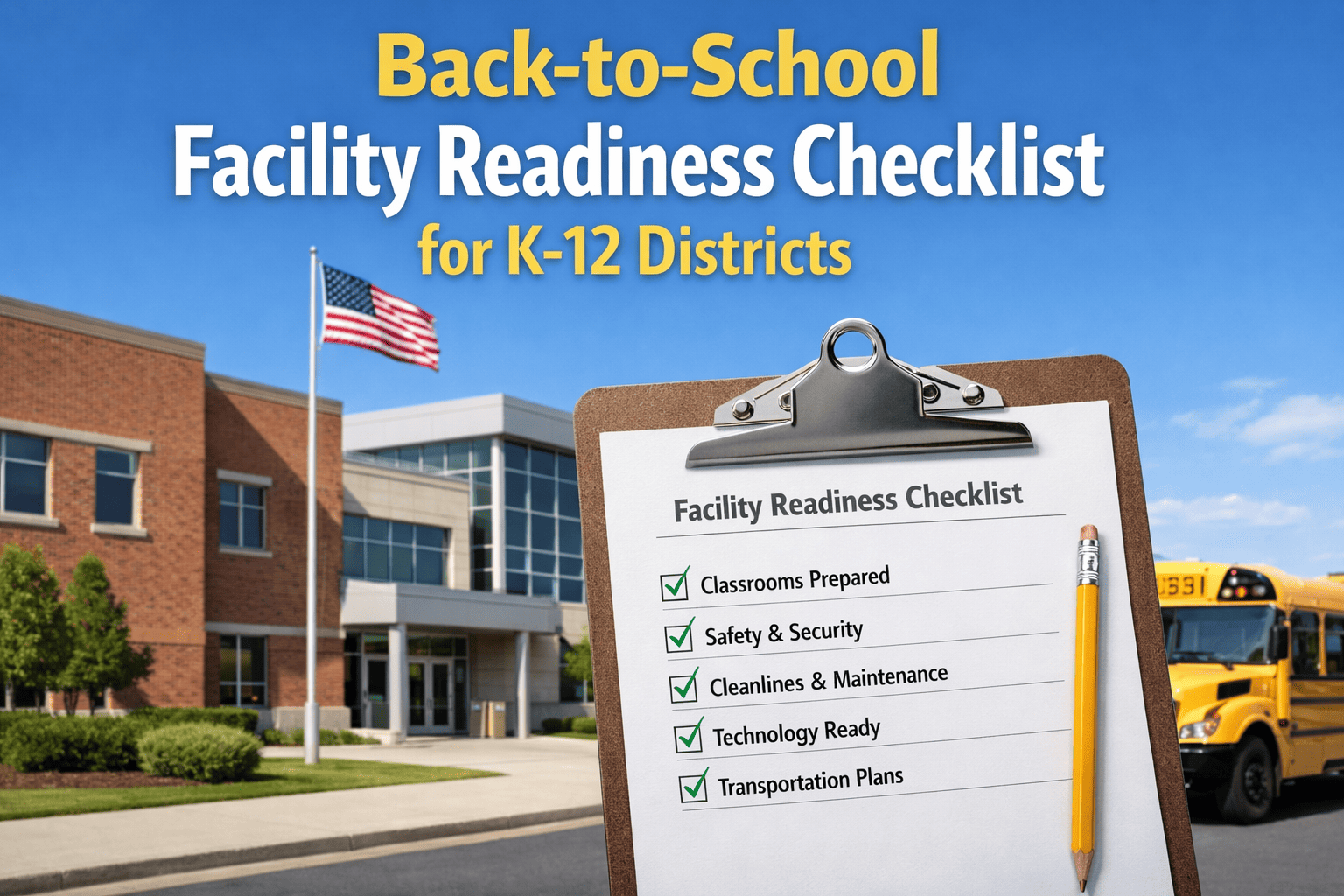
School districts that fail to sequence summer maintenance projects correctly lose 18–22 days of their already compressed maintenance window — resulting in incomplete projects, contractor overtime charges, and buildings that are not ready when students arrive in August. The average K-12 district has 67 working days between the last day of school and the first teacher workday, but only 42 of those days are usable once contractor mobilization, material lead times, and final inspections are factored in. Oxmaint helps district facilities directors build sequenced summer project timelines with dependency tracking, contractor window management, and automated readiness checklists that ensure every building passes its back-to-school inspection on schedule. If your district is still managing summer projects with spreadsheets and email chains, start a free trial or book a demo to see how CMMS-driven sequencing eliminates the August scramble.
K-12 Summer Maintenance Project Sequencing for District Facilities Directors
67 calendar days. 42 usable working days. Front-load PM, sequence contractor windows, align ESSER capital, and guarantee every building passes its back-to-school readiness inspection — all driven by CMMS data.
Stop Losing Summer Days to Poor Sequencing
The difference between districts that finish summer projects on time and those scrambling through August is not budget — it is sequencing discipline. When roofing contractors block HVAC access for three weeks, when flooring arrives before asbestos abatement is complete, when fire alarm testing is scheduled the same week as ceiling tile replacement — you lose days you cannot recover. Oxmaint sequences every summer project with dependency logic, contractor calendars, and milestone tracking that surfaces conflicts before they cost you time. See the full summer sequencing workflow — start a free trial or book a demo to configure it for your district.
What Is K-12 Summer Maintenance Sequencing?
Summer maintenance sequencing is the discipline of ordering all preventive maintenance, capital projects, contractor work, and readiness inspections across a compressed 8–10 week window so that every task completes in the correct dependency order — without conflicts, rework, or schedule collisions that waste irreplaceable summer days.
Scheduling the highest-dependency work in weeks 1–3 so downstream projects are never waiting on upstream completions. Mechanical, structural, and abatement work must precede cosmetic and finish work.
Coordinating external contractor access with in-house PM schedules. 72% of summer project delays trace to contractor scheduling conflicts that were not identified until mobilization day.
Mapping which tasks must complete before others can begin. Flooring cannot start until plumbing is tested. HVAC commissioning cannot happen until ductwork cleaning is done. Fire alarm testing requires all ceiling work to be finished.
The final walkthrough protocol — typically 5–7 days before teachers return — that verifies every system, every classroom, and every safety item is operational and code-compliant for occupancy.
The 4-Phase Summer Sequencing Framework
Districts that complete 95%+ of summer projects on time follow a four-phase sequencing model that front-loads high-dependency work, manages contractor windows in the middle weeks, reserves the final phase for commissioning and inspection, and builds a documented buffer for weather delays and material shortages.
Abatement, demolition, structural repairs, roofing, major plumbing, and electrical rough-in. These tasks have the longest lead times and the most downstream dependencies. A one-week delay in Phase 1 cascades into a three-week delay by Phase 3.
HVAC servicing, boiler inspections, chiller maintenance, BAS testing, fire alarm system testing, kitchen equipment PM, elevator inspections, and playground equipment certification. In-house crews and specialty contractors work simultaneously across buildings.
Flooring, painting, ceiling tile, furniture installation, technology infrastructure, security camera upgrades, and ADA improvements. These tasks require clean, dry spaces with all mechanical work complete above the ceiling line.
System commissioning, fire life safety walk, health department kitchen inspections, custodial deep clean, classroom setup verification, and the formal back-to-school readiness checklist that the facilities director signs off before teacher return day.
Six Sequencing Failures That Derail District Summer Projects
Three contractors mobilized to the same building on the same week. Roofing blocks HVAC access. Electricians cannot work while abatement crew has the building sealed. Result: 8–12 days lost per building.
HVAC coils ordered in June arrive in August. Flooring materials on 6-week lead time ordered in week 3. Districts that do not pre-order critical materials by April lose 30% of their usable summer window.
Ceiling tile replacement scheduled before the plumber fixes the leak above. Flooring installed before the fire sprinkler test that floods the corridor. 62% of rework during summer traces to missing dependency logic.
ESSER-funded HVAC or IAQ projects not sequenced with routine PM. Ventilation upgrades completed but never commissioned. $180K in ESSER equipment installed without warranty registration or PM schedules created.
Project status lives in one person's spreadsheet. No real-time visibility for principals, superintendent, or board. 47% of districts still track summer projects in Excel with no automated status updates.
Buildings declared "ready" based on informal walkthroughs. Fire extinguisher certifications missed. Playground mulch depth not verified. Classroom HVAC not tested under load. 28% of opening-day work orders trace to skipped readiness items.
How Oxmaint Sequences Your Entire Summer Maintenance Program
Oxmaint gives district facilities directors a single platform to sequence every summer project, track every contractor window, manage every PM schedule, and generate the back-to-school readiness report that the superintendent and board need. Districts ready to eliminate the August scramble can start a free trial or book a demo.
Every summer project assigned to a phase with predecessor dependencies. The system flags conflicts when a downstream task is scheduled before its upstream dependency is marked complete.
External contractors assigned to specific buildings and weeks with access windows that do not overlap with in-house crew schedules or other contractor mobilizations at the same site.
Every building's summer project status visible in one dashboard. Red/yellow/green readiness indicators for each school. Drill down from district view to individual building to specific work order.
Annual PM tasks for HVAC, fire systems, kitchen equipment, and playground equipment auto-generated and assigned to the correct summer phase based on dependency rules and crew availability.
Digital readiness checklists covering fire life safety, HVAC operation, plumbing, electrical, playground, kitchen, classroom condition, and ADA compliance — completed on mobile, signed off digitally.
Capital projects funded by ESSER, bonds, or state grants tracked with separate budget codes and completion milestones — generating the documentation auditors require for fund expenditure verification.
Spreadsheet Summer vs CMMS-Sequenced Summer
District Outcomes After CMMS-Driven Summer Sequencing
Phase-based sequencing with dependency tracking eliminates the cascading delays that cause incomplete projects at opening day
Dependency logic prevents out-of-sequence work that requires demolition and re-execution during the final summer weeks
Pre-scheduled contractor windows and front-loaded material orders eliminate the idle days caused by scheduling conflicts
Digital checklists ensure every fire, HVAC, plumbing, and safety item is verified and documented before teacher return day
Frequently Asked Questions
When should districts start planning summer maintenance sequencing?+
How do ESSER-funded projects fit into the summer sequence?+
Can Oxmaint track summer projects across 20+ school buildings simultaneously?+
What should the back-to-school readiness checklist include?+
Every Building Ready on Day One — No Exceptions
CMMS-driven summer sequencing eliminates the August scramble. Front-load PM, manage contractor windows, track capital projects, and generate the readiness documentation your superintendent and board need — first summer project plans built in week one.