Playground Equipment Inspection Checklist for School Safety
By Oxmaint on January 30, 2026
The morning bell rings and 200 elementary students rush toward the playground for recess. Within seconds, children are climbing, swinging, sliding, and spinning—putting equipment through forces that would stress-test industrial machinery. A loose bolt on a swing chain. A cracked plastic slide. A rotted wooden beam in a climbing structure. Any of these could turn a joyful 15-minute break into a life-altering injury and a lawsuit that devastates your district's budget and reputation.
Playground injuries send more than 200,000 children to emergency rooms annually in the United States. The Consumer Product Safety Commission reports that 79% of these injuries involve falls, and the majority occur on public playgrounds—including schools. Yet most playground accidents are entirely preventable through systematic inspection programs that identify hazards before children encounter them.
This comprehensive playground equipment inspection checklist follows ASTM F1487 and CPSC guidelines to help your facilities team identify safety hazards, document conditions, and maintain equipment that protects students every recess. Schools implementing digital inspection programs report 84% fewer playground injuries and demonstrate the due diligence that protects against liability claims. Sign up free to digitize your playground safety inspections.
Every recess is a safety test. Make sure your playground passes.
children injured on playgrounds annually in the US
79%
of injuries involve falls to surface below
84%
injury reduction with systematic inspections
15 min
daily inspection time to protect your students
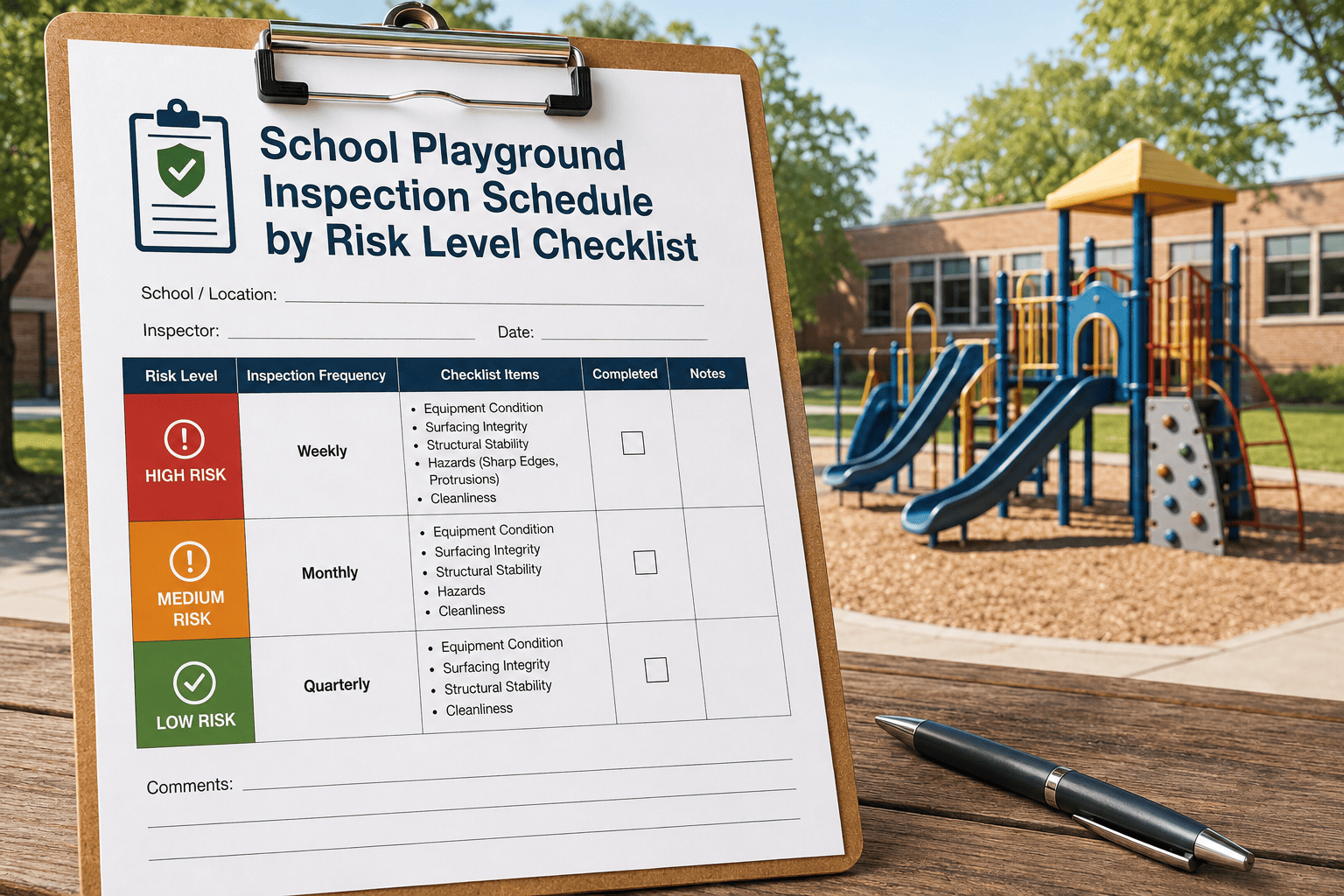
Inspection Frequency Standards (ASTM F1487)
Daily
Visual walk-through before first recess
Weekly
Detailed component inspection
Monthly
Comprehensive safety audit
Annual
Certified CPSI inspection
How to Use This Checklist: Click each checkbox as you complete the inspection item. This checklist follows ASTM F1487 safety standards and CPSC Public Playground Safety Handbook guidelines. Perform daily visual inspections before students access the playground. Any item marked as a hazard should be addressed immediately or the equipment taken out of service until repaired.
SECTION 1: FALL ZONE & SURFACING
Section 1: Fall Zones & Protective Surfacing
Fall-related injuries account for 79% of all playground injuries. Proper surfacing is your first line of defense. Check surfacing depth, coverage, and condition daily—this is the single most important safety inspection you can perform.
SECTION 2: SWINGS
Section 2: Swing Equipment
Swings are the most common source of playground injuries due to impact with moving swings and falls. Inspect all swing components for wear, proper spacing, and structural integrity. Remove damaged swings from service immediately. Sign up free to track swing maintenance history and replacement schedules digitally.
SECTION 3: SLIDES
Section 3: Slides & Sliding Equipment
Slides present burn hazards from hot surfaces, entrapment risks at openings, and fall hazards from platforms. Inspect the entire slide path from entry platform to exit, including guardrails and access points.
Document every inspection with photos and timestamps.
Digital records protect your district if incidents occur.
Climbing equipment includes ladders, climbing walls, cargo nets, horizontal ladders (monkey bars), and composite structures. These present the highest fall risk and require careful inspection of structural integrity and fall protection. Never miss an inspection—sign up free for automated scheduling that sends reminders before due dates.
SECTION 5: SPINNING & MOTION EQUIPMENT
Section 5: Spinning & Motion Equipment
Merry-go-rounds, spinners, spring riders, and see-saws involve moving parts that can cause impact injuries, pinch points, and falls. These require special attention to bearings, speed limiters, and entrapment hazards.
SECTION 6: GENERAL SAFETY & HARDWARE
Section 6: General Safety & Hardware
These items apply to all playground equipment regardless of type. Check hardware, entrapment hazards, and general condition to ensure compliance with CPSC safety guidelines. Photo documentation proves due diligence—sign up free to capture issues with timestamps automatically.
SECTION 7: SITE CONDITIONS
Section 7: Site Conditions & Environment
Beyond equipment itself, the playground environment presents hazards. Check perimeter, landscaping, and site conditions that could create dangers for students during play. Need help setting up a comprehensive inspection program? Book a demo to see how digital tools can streamline your process.
Protect Students. Protect Your District.
Digital inspection records demonstrate due diligence and provide documentation if incidents occur. 84% of districts using systematic inspections report zero serious playground injuries.
Understanding where injuries occur most frequently helps prioritize inspection focus. This breakdown reflects CPSC injury data from school playgrounds. Sign up free to generate inspection reports instantly for administrators and insurance audits.
Climbing Equipment43%
Primary hazards: Falls from height, structural failure, head entrapment in openings
Critical checks: Fall zone surfacing depth, guardrail integrity, hardware tightness
Swings23%
Primary hazards: Impact from moving swing, falls from seat, chain/connector failure
Critical checks: S-hook closure, chain wear, swing spacing, extended fall zone
Slides19%
Primary hazards: Burns from hot surfaces, falls from platforms, exit zone impacts
Critical checks: Surface temperature, guardrail height, exit zone clearance
Spinning Equipment9%
Primary hazards: Falls during rotation, pinch points, impact with structure
Critical checks: Bearing condition, pinch point covers, speed limiting
Frequently Asked Questions
How often should playground equipment be inspected?
ASTM F1487 recommends three inspection levels: (1) Daily visual inspections before students access the playground—checking for obvious hazards, vandalism, and debris; (2) Weekly detailed inspections of all components; (3) Monthly comprehensive inspections with documentation. Additionally, annual inspections by a Certified Playground Safety Inspector (CPSI) are strongly recommended for liability protection.
What are the most critical items to check daily?
Daily checks should focus on: surfacing condition and contamination (glass, debris, animal waste), obvious equipment damage, loose or missing hardware, vandalism damage, and standing water or ice. These quick visual inspections take only 10-15 minutes and catch hazards that could injure students that same day.
When should equipment be taken out of service?
Remove equipment immediately if you find: broken or missing components, sharp edges or protrusions, head entrapment hazards (3.5"-9" openings), structural cracks or instability, exposed concrete footings in fall zones, or any condition that presents imminent injury risk. Tag equipment as "Out of Service" and document the hazard. Do not allow use until repairs are completed and verified.
What is the required depth for playground surfacing?
For loose-fill materials (wood chips, engineered wood fiber, pea gravel): minimum 9" depth for equipment up to 7' fall height, and 12" depth for equipment up to 10' fall height. Depth should be measured after compaction, and high-use areas will require more frequent maintenance to maintain depth. Poured rubber surfacing thickness varies by product—follow manufacturer specifications.
Who should perform playground inspections?
Daily and weekly inspections can be performed by trained school staff (custodians, PE teachers, administrators) using standardized checklists. Monthly comprehensive inspections should be performed by facilities personnel with playground safety training. Annual inspections should be conducted by a Certified Playground Safety Inspector (CPSI) who can identify code compliance issues and document the inspection for liability purposes.
Make Every Recess Safe
200,000 playground injuries happen every year—but they don't have to happen at your school. Systematic inspections with digital documentation catch hazards before they hurt students and protect your district from liability.




.png)


