Real-Time Facility Monitoring for Universities: IoT Sensors and Smart Campus Solutions
By jamie lanister on March 26, 2026
A research university in the UK had 48 buildings and a facilities team of 22 people responsible for 1.4 million square feet. Until 2022, the team's primary information source about building conditions was staff and student complaint emails. A boiler failure in the library was reported at 9:14 AM on a Tuesday — the boiler had been running outside its normal temperature range since 11 PM the previous evening. A water leak in a laboratory was discovered by a researcher at 8 AM — the pipe had been failing for six hours and caused £34,000 in equipment damage. Every event that reached the facilities team was already a problem, not a warning. Since deploying OxMaint with a campus-wide IoT sensor network, the average time between a building condition deviation and a facilities team response is 11 minutes. The boiler failure scenario now generates an automated work order at 11:12 PM — before anyone arrives in the morning. OxMaint integrates with IoT sensor networks to convert building data into maintenance intelligence — automated work orders, predictive alerts, and board-ready energy and condition reports. Book a demo to see OxMaint's smart campus monitoring module.
Know What's Happening in Every Building Before Anyone Reports a Problem.
Occupancy sensors, energy monitors, HVAC telemetry, water leak detectors, and CO2 monitors — all feeding OxMaint in real time so the facilities team responds to data, not complaints. Every deviation generates a work order. Every pattern generates a prediction.
Eight Sensor Types OxMaint Integrates for Smart Campus Monitoring
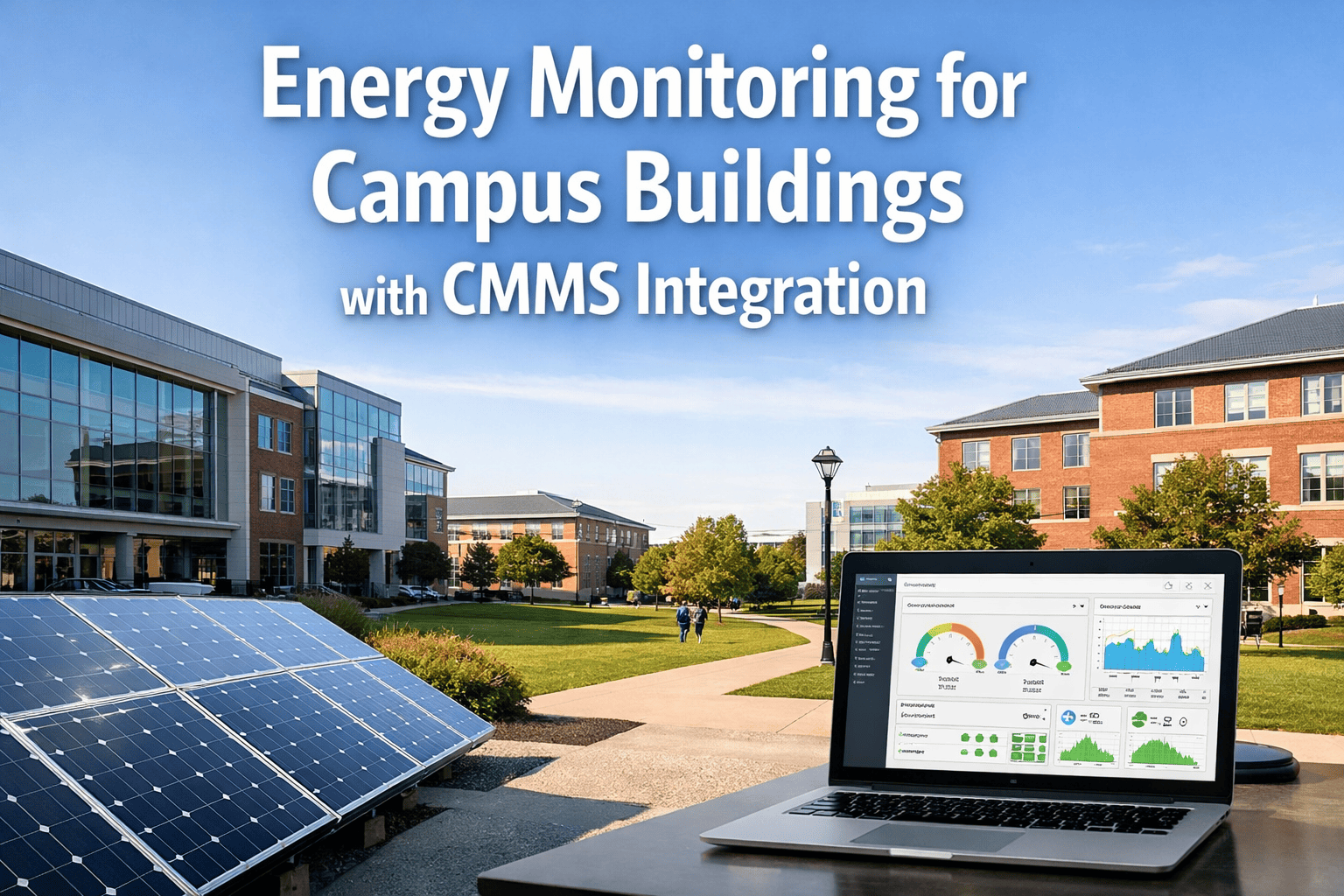
A smart campus monitoring programme does not require replacing existing building systems — it requires adding a sensor layer above them and connecting that layer to a CMMS that can act on the data. OxMaint integrates with all eight sensor categories through BACnet/IP, Modbus, MQTT, and direct API — generating work orders automatically when readings breach defined thresholds. Start free and connect your first sensor building today.
PIR, CO2-based, and camera-AI occupancy detection per room and zone — drives HVAC setback when spaces are empty and restores conditioning 30 minutes before scheduled occupancy. Reduces energy waste by 25–40%
Energy Sub-Meters
kWh consumption per building, floor, and circuit — feeding OxMaint's energy analytics. Consumption spikes trigger investigation work orders. Baseline comparison flags equipment drawing above-design current before failure
HVAC Telemetry
Supply and return air temperature, static pressure, fan speed, and compressor current — continuous performance monitoring per AHU. Deviations from design parameters generate predictive maintenance work orders before the equipment fails
Water Leak Detectors
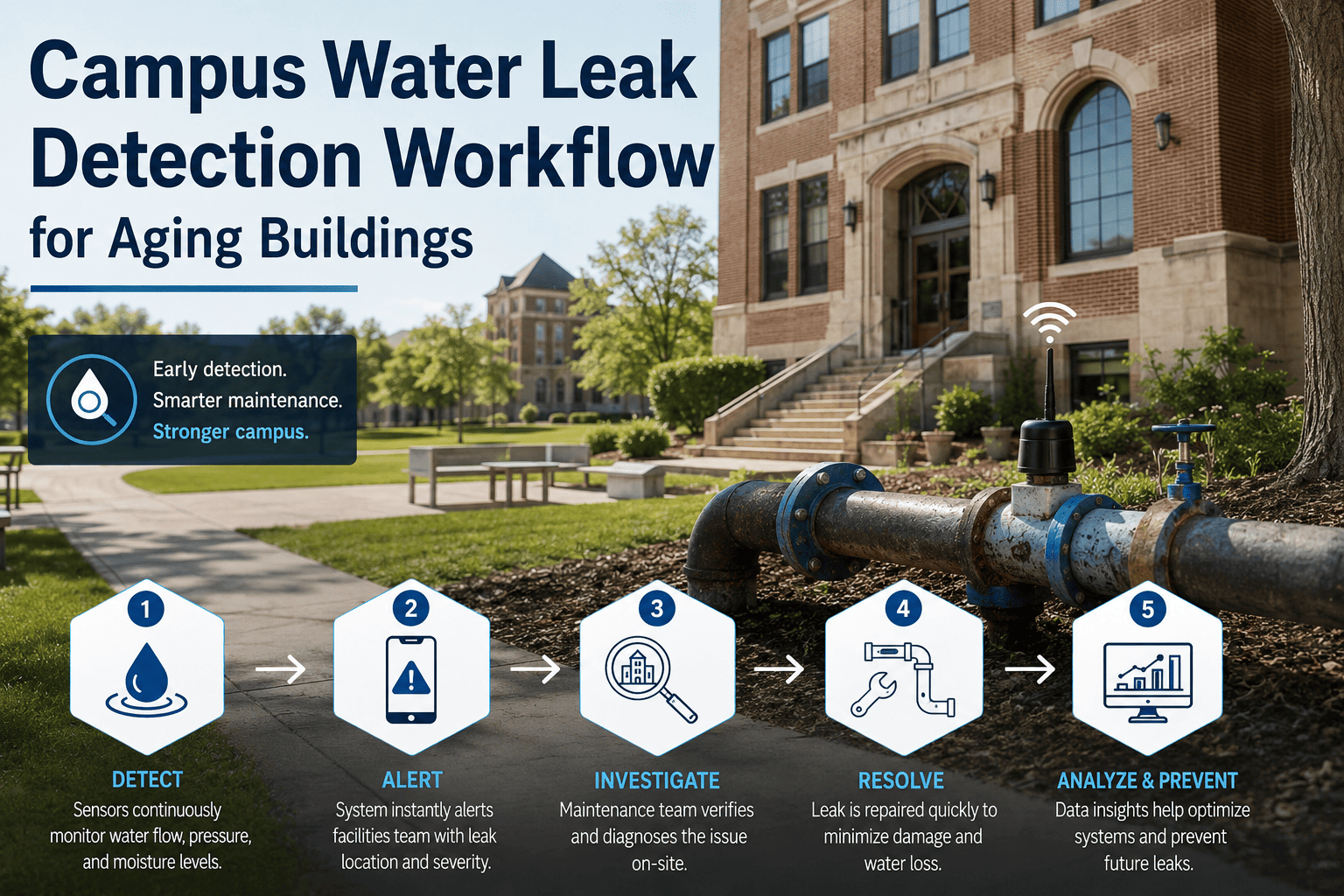
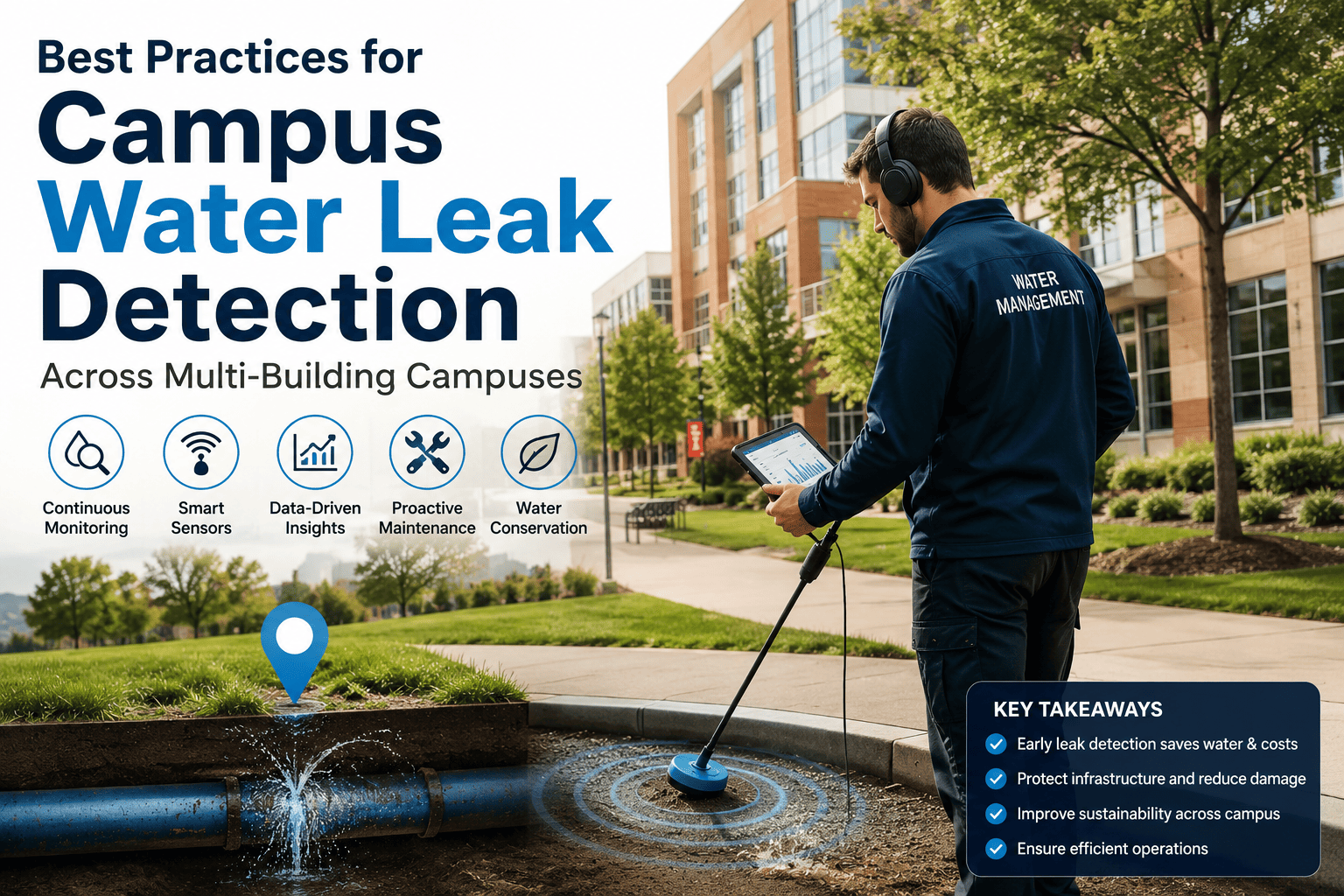
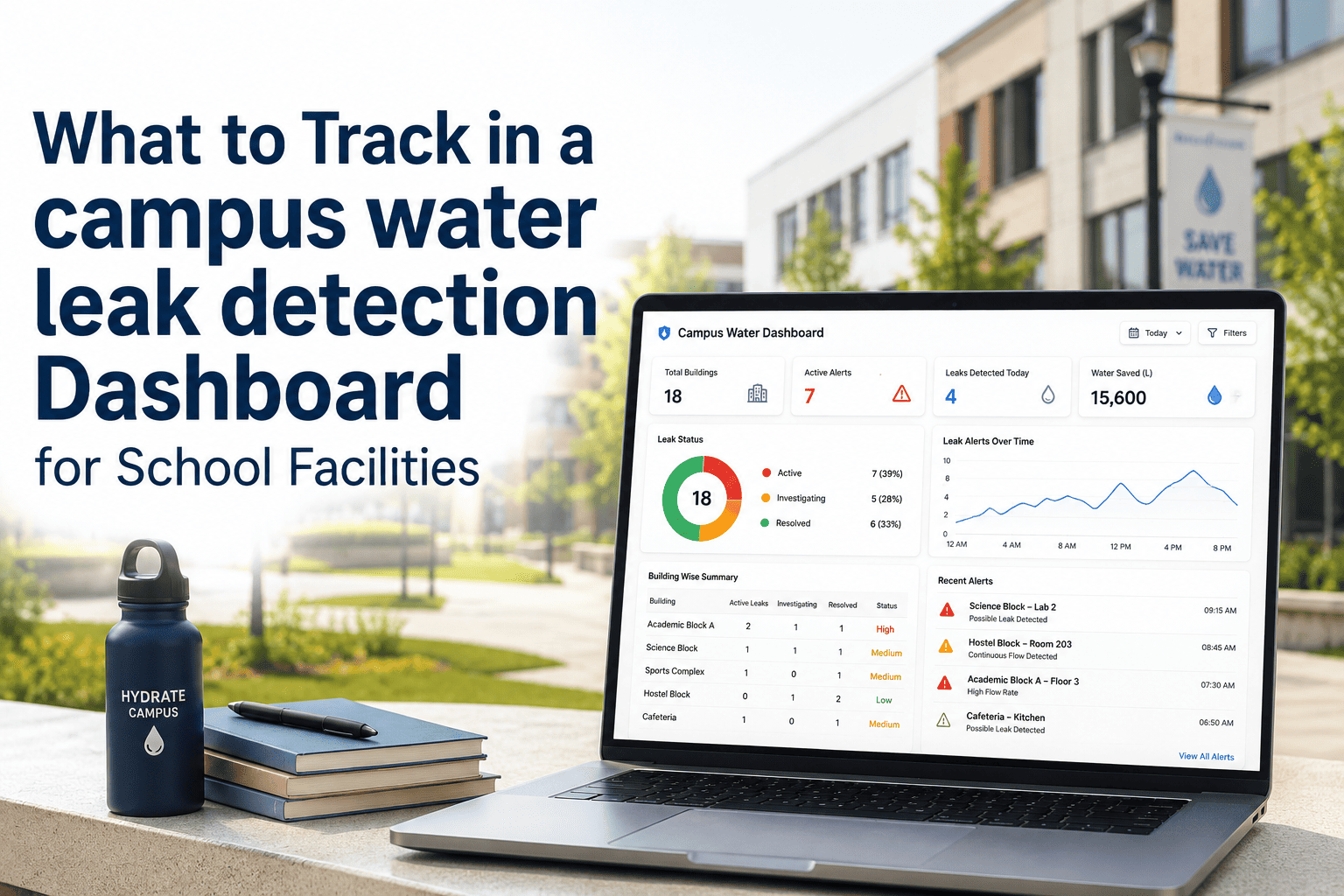
Rope-type leak sensors in plant rooms, under lab benches, around pipe runs, and in server rooms. Detection within minutes instead of hours — average water damage cost in university buildings drops 80% vs manual discovery
CO2 and IAQ Monitors
CO2, TVOC, PM2.5, and humidity per room — continuously feeding OxMaint's IAQ dashboard. Readings above 1,000 ppm CO2 trigger a ventilation check work order automatically. Lecture theatre IAQ data is exportable for accreditation audit
Temperature & Humidity
Room and plant room temperature monitoring — feeds back into BMS for zone-level control and into OxMaint for server room and cold storage compliance logging. Humidity alerts prevent mould risk in storage and archive spaces
Access & Security
Door access logs, after-hours entry alerts, and perimeter sensor integration — feeding OxMaint's occupancy data layer and generating security work orders for door faults. Access events validate cleaning schedule and grounds inspection completion
Plant Room Telemetry
Boiler flow temperature, return temperature, and flue gas analysis — chiller condenser pressure and refrigerant temperature — generating predictive maintenance flags when performance deviates from the validated design envelope
From Sensor Data to Work Order: The OxMaint Automation Workflow
Sensor data without action is just noise. The value of IoT monitoring is not the dashboard — it is the automated work order generated at 2 AM when the building management system would otherwise log an anomaly that nobody reads until Monday. OxMaint converts sensor data into maintenance intelligence through five automated response workflows.
IoT TO WORK ORDER — FIVE AUTOMATED RESPONSE WORKFLOWS
Threshold Breach
Immediate Alert → Work Order
Sensor reading crosses a defined threshold (boiler flow temp above 95°C, CO2 above 1,200 ppm, moisture sensor triggered) — OxMaint immediately generates a work order assigned to the on-call technician with the sensor reading, location, asset details, and recommended action pre-filled. Alert sent via mobile push and email within 60 seconds of detection.
Water leak detected
Server room >28°C
CO2 >1,200 ppm
Trend Detection
Gradual Deviation → Predictive Work Order
OxMaint's AI analyses 30-day trends per sensor stream. A boiler return temperature gradually rising over 3 weeks, a chiller compressor drawing increasing current, or a building consuming 12% more energy than its seasonal baseline — each generates a predictive work order before the deviation becomes a failure. This is the difference between a £180 service call and a £12,000 emergency repair.
Rising energy baseline
Compressor current drift
Temperature trend up
Occupancy Scheduling
Empty Space Detected → HVAC Setback Command
When occupancy sensor confirms a lecture theatre has been empty for 30 minutes during scheduled-occupied hours, OxMaint writes a setback command to the BMS zone control — reducing conditioning to setback setpoints. Pre-occupancy restore is triggered 30 minutes before the next scheduled booking in the room calendar system. Unoccupied heating and cooling is the single largest energy waste in university buildings.
HVAC setback command
Pre-heat restore
Lighting dimming trigger
PM Validation
Sensor Data Validates PM Completion
After a filter replacement PM is completed, OxMaint compares AHU static pressure data from before and after the work order. A pressure drop confirms the filter was replaced and airflow was restored — sensor data validates the work quality. If pressure fails to drop, a follow-up work order is generated automatically. Sensor-validated PM records are stronger evidence than technician sign-off alone.
Filter change confirmed
Coil clean validated
Calibration confirmed
Reporting
Sensor Data → Board and Sustainability Reports
Monthly energy consumption per building, CO2 reduction metrics, water use intensity, and HVAC runtime efficiency — all compiled from sensor data in OxMaint's reporting module. Output: a sustainability dashboard for the university's Scope 1 and Scope 2 emissions reporting, an energy savings report showing the financial impact of the IoT programme, and a board-ready facilities performance summary.
Scope 1 & 2 emissions
Energy savings report
Board KPI dashboard
"In the first six months after deploying our IoT sensor network with OxMaint, we caught two water leaks, one chiller trending towards failure, and three buildings consuming 18–22% more energy than the baseline with no change in occupancy. Those six months also gave us the data we needed to apply for the university's sustainability grant — we showed exactly what the IoT investment had saved and projected the savings over five years. The grant covered 60% of the next phase expansion."
Director of Estates
Russell Group University · 48 buildings · 1.4M sq ft · OxMaint user since 2022
Smart Campus Readiness: Reactive vs Real-Time vs Predictive
Most university facilities operations fall somewhere on a maturity spectrum — from fully reactive (respond to complaints) through real-time monitoring (respond to sensor alerts) to predictive intelligence (respond to trends before they become failures). OxMaint supports all three stages and provides the data infrastructure for a university to progress through them systematically.
SMART CAMPUS MATURITY — REACTIVE VS REAL-TIME VS PREDICTIVE
Water Leak Response
Reactive
6 hrs avg exposure
OxMaint
<12 min detection
Rope sensor triggers OxMaint alert within 60 seconds — work order to on-call plumber before water damage reaches equipment
Energy Waste Detection
Reactive
Annual bill review
OxMaint
Daily anomaly flag
Sub-meter data compared to seasonal baseline daily — 10%+ deviation triggers investigation work order before it runs for months
HVAC Failure Prevention
Reactive
After breakdown
OxMaint
30–60 day warning
HVAC telemetry trend analysis gives 30–60 day advance warning of likely failures — planned replacement vs emergency call-out
Occupancy-Led HVAC
Fixed schedule
34% wasted
OxMaint
Real-time match
HVAC setback triggered by occupancy sensor within 30 minutes of space becoming empty — 25–40% energy reduction in controlled zones
Sustainability Reporting
Manual
Weeks to compile
OxMaint
Automated monthly
Scope 1 and 2 emissions data compiled automatically from sensor feeds — export-ready for HESA, EAUC, and board reporting
What Sensor Integration Prevents — and What It Costs Without It
The ROI of a campus sensor network is most clearly visible in what doesn't happen — the water damage that didn't destroy a server room, the chiller that didn't fail during exam season, the energy waste that stopped accumulating in August. OxMaint documents these prevention events automatically — giving the Estates Director the evidence to justify the next phase of IoT investment.
INCIDENT SCENARIOS — COST WITHOUT SENSORS VS WITH OXMAINT IoT
Incident Type
Without Sensors
With OxMaint IoT
Plant room water leak — pipe failure overnight
6-hr exposure · £30K–£80K damage
12-min detection · damage contained
Chiller compressor failure during exam week
Emergency repair £18K · exam disruption
30-day warning · planned service £3K
Building HVAC on full schedule during summer break
£22K/yr wasted — identified in annual review
Academic calendar setback — saving actioned day 1
CO2 above 1,200 ppm in lecture theatres — undetected
Ongoing cognitive impact — no corrective trigger
Ventilation check work order within 60 seconds
Server room temp rising after CRAC fault at 2 AM
Hardware failure by 8 AM · data loss risk
On-call alert at 2:04 AM · CRAC serviced before damage
Scope 2 emissions report — manual compilation
3–4 weeks per report · incomplete data
Automated monthly from sub-meter feeds
Frequently Asked Questions
OxMaint integrates via BACnet/IP (the standard for building management systems), Modbus TCP/RTU (common in plant room equipment), MQTT (lightweight IoT protocol for high-volume sensor networks), and direct REST API for cloud-connected sensor platforms. It connects with all major BMS vendors — Siemens Desigo, Honeywell EBI, Johnson Controls Metasys, Trend IQ, and Schneider EcoStruxure. For standalone IoT sensors, OxMaint works with LoRaWAN, Zigbee, and Wi-Fi based sensor networks from vendors including Disruptive Technologies, Pressac, Spacewell, and EnOcean. Integration typically takes 3–5 days per building without replacing any existing infrastructure.
By triggering HVAC setback within 30 minutes of a space becoming unoccupied and restoring pre-occupancy conditioning 30 minutes before the next scheduled booking. The typical university building operates HVAC on a fixed schedule that assumes all spaces are occupied from 7 AM to 10 PM — actual occupancy averages 40–60% of scheduled hours. Occupancy-led HVAC control reduces conditioning energy in affected zones by 25–40%. OxMaint's occupancy data also identifies chronically underused spaces where scheduled cleaning and grounds maintenance can be reduced.
Within 60 seconds of a sensor breaching a defined threshold. The work order is pre-populated with: the sensor ID and location, the asset the sensor is monitoring, the reading that triggered the alert, the threshold that was breached, recommended action from the asset's maintenance procedure, and the assigned technician for that building zone. The technician receives a mobile push notification and email simultaneously. For critical thresholds (water detection, server room overtemperature), an escalation alert to the supervisor is triggered if the work order is not acknowledged within 15 minutes.
Yes — OxMaint compiles sub-meter energy data, gas consumption from BMS integration, and water use data into a monthly sustainability report aligned with Scope 1 (direct gas combustion) and Scope 2 (purchased electricity) emissions categories. Reports are formatted for HESA sustainability data submission, EAUC reporting frameworks, and ISO 50001 energy management system documentation. The data is also used to support grant applications — several OxMaint university customers have used their IoT-documented energy savings data as evidence for UKRI, EPA, and Innovate UK sustainability grants.
Start with the highest-impact sensor type for your primary problem. If energy cost is the priority: sub-meters and occupancy sensors deliver the fastest ROI. If maintenance reactivity is the problem: HVAC telemetry and water leak detectors in plant rooms. If IAQ is the concern: CO2 monitors in lecture theatres and labs. Most universities start with 2–3 buildings as a pilot, demonstrate measurable savings and incident prevention within 6 months, and use that data to fund the portfolio rollout. OxMaint's deployment team provides a building prioritisation framework based on your portfolio's risk profile. Book a demo to see the smart campus deployment roadmap.
Real-Time. Predictive. Automated. The Smart Campus Your Estates Team Can Actually Run.
IoT sensor integration, automated work orders, occupancy-led HVAC, water leak detection, predictive maintenance alerts, and sustainability reporting — all in OxMaint. Free to start today.