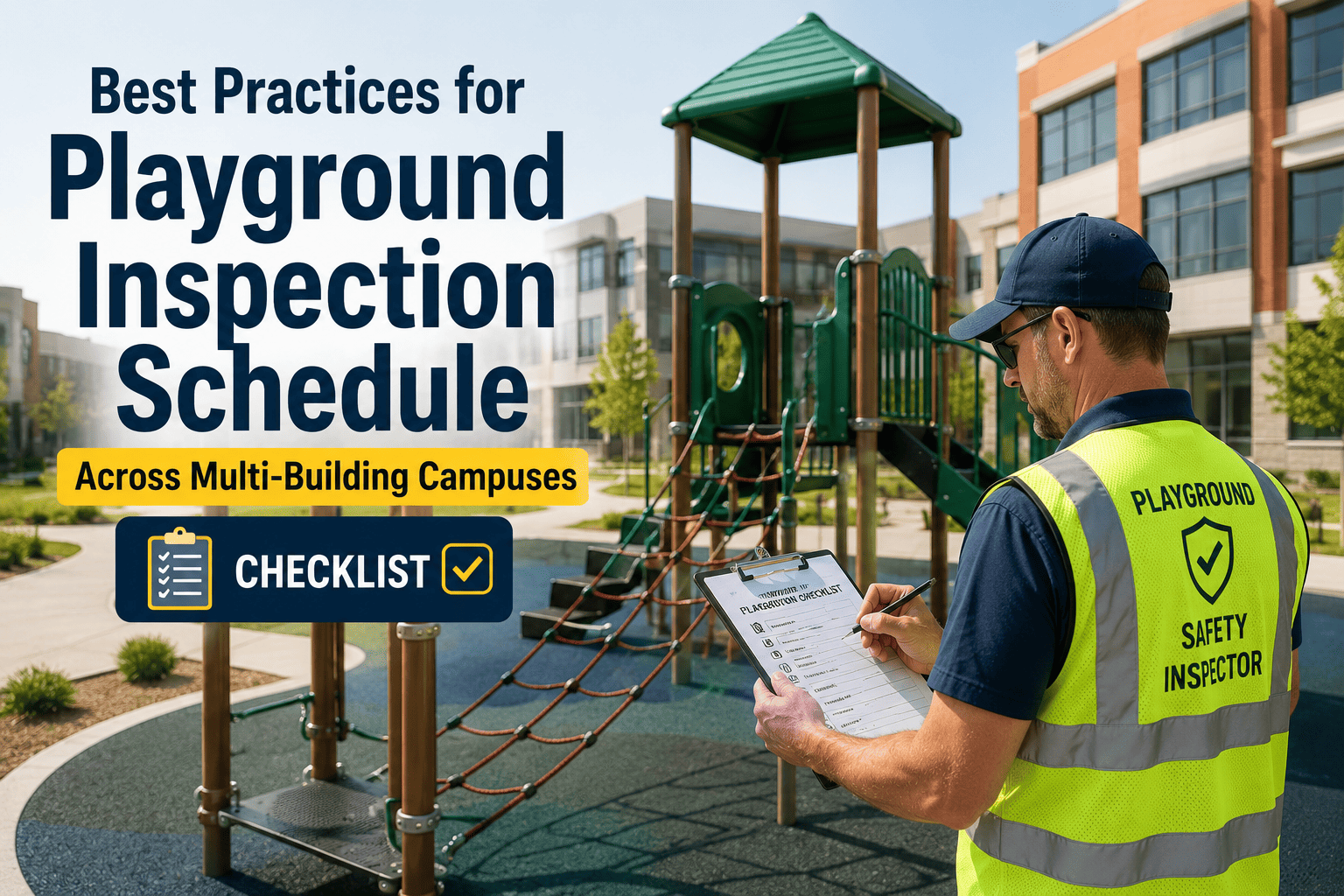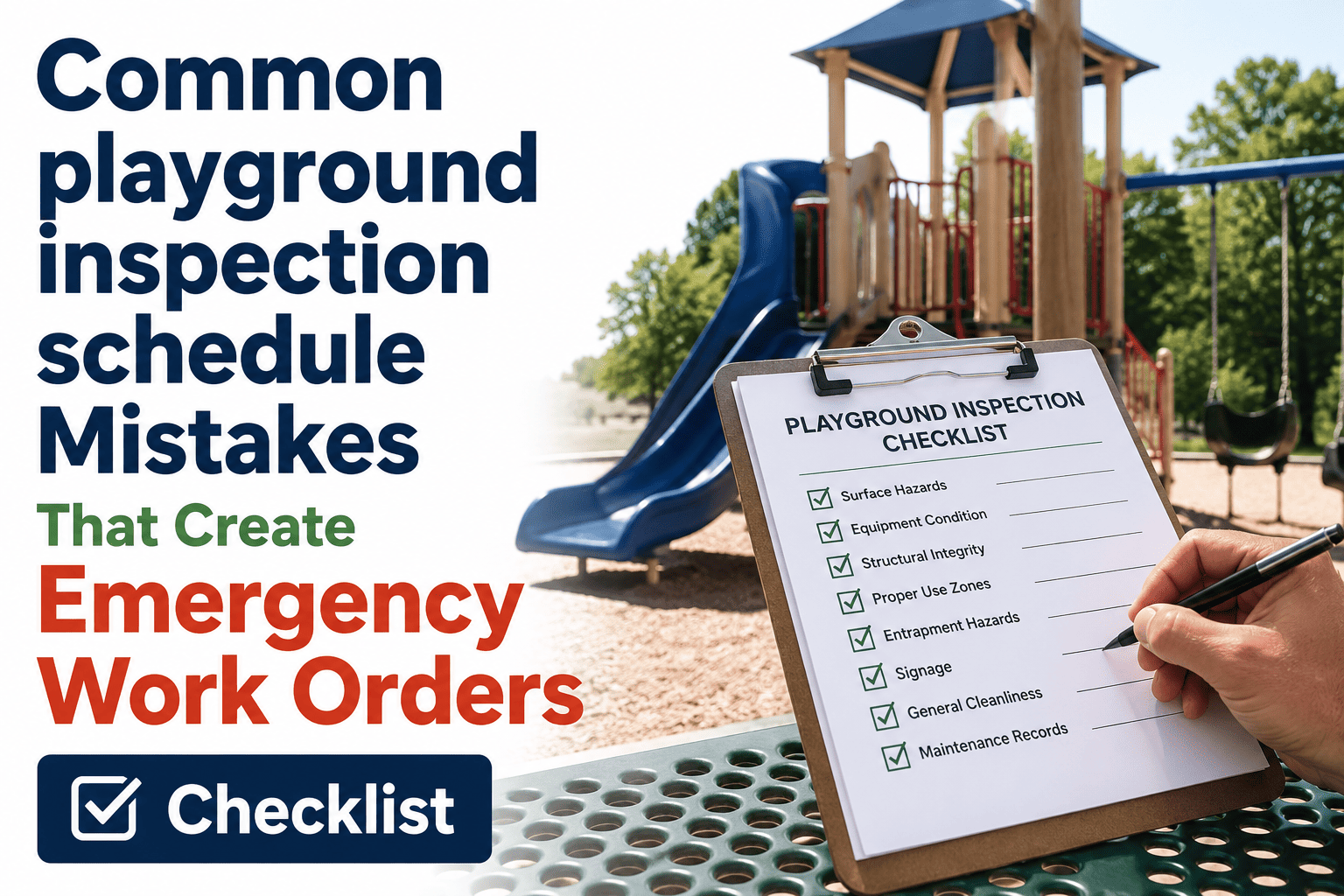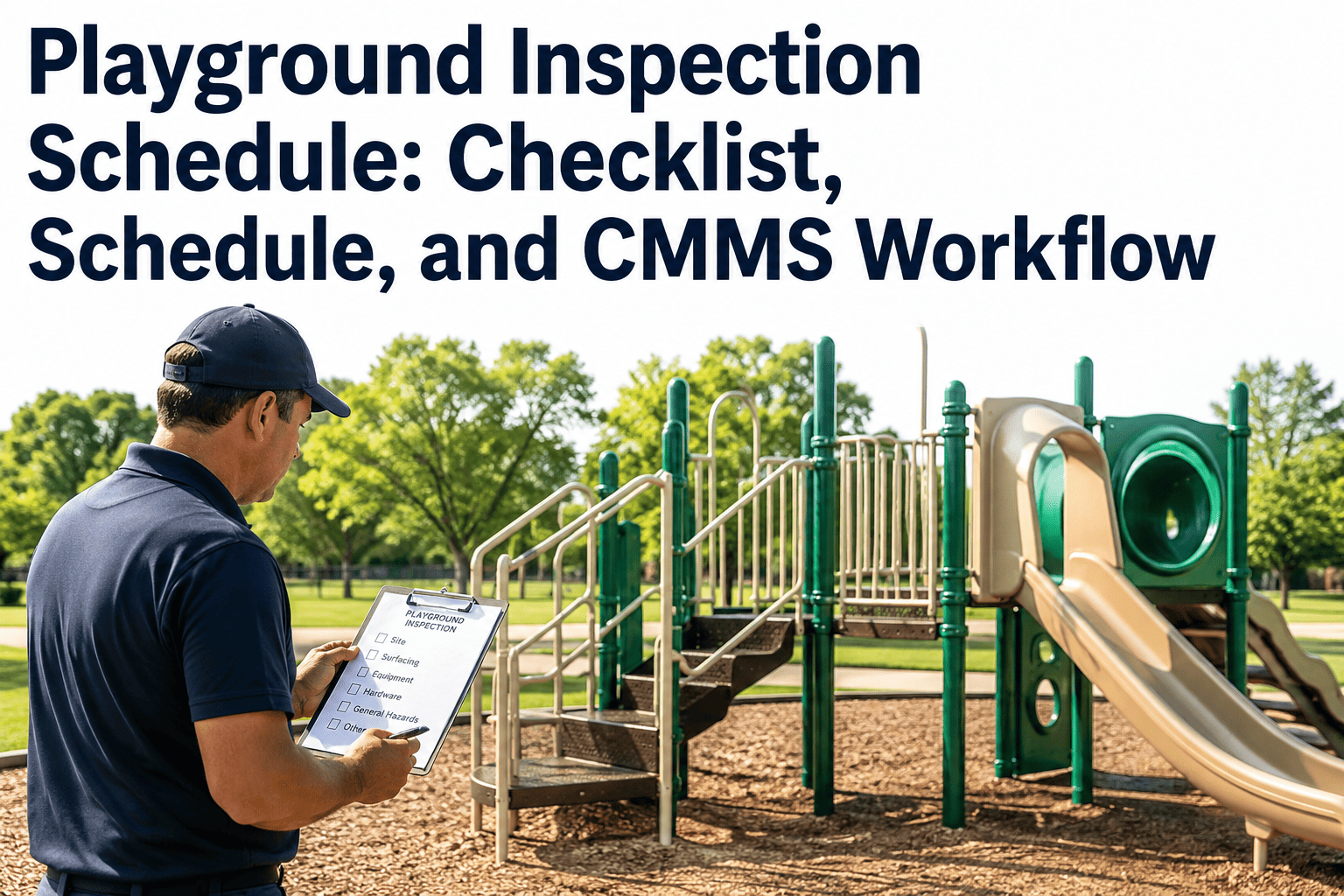
A playground that gets the same inspection treatment every week regardless of equipment age, fall height, or daily traffic is not a safety program — it is a guess dressed up as a schedule. CPSC and ASTM F1487 set the floor for daily, monthly, and annual checks, but school districts that schedule every play structure on one identical calendar miss the equipment quietly drifting toward failure between visits. This checklist sorts every playground inspection task by risk level so your team checks the highest-danger items most often, with every record traceable in OxMaint's inspection management platform.
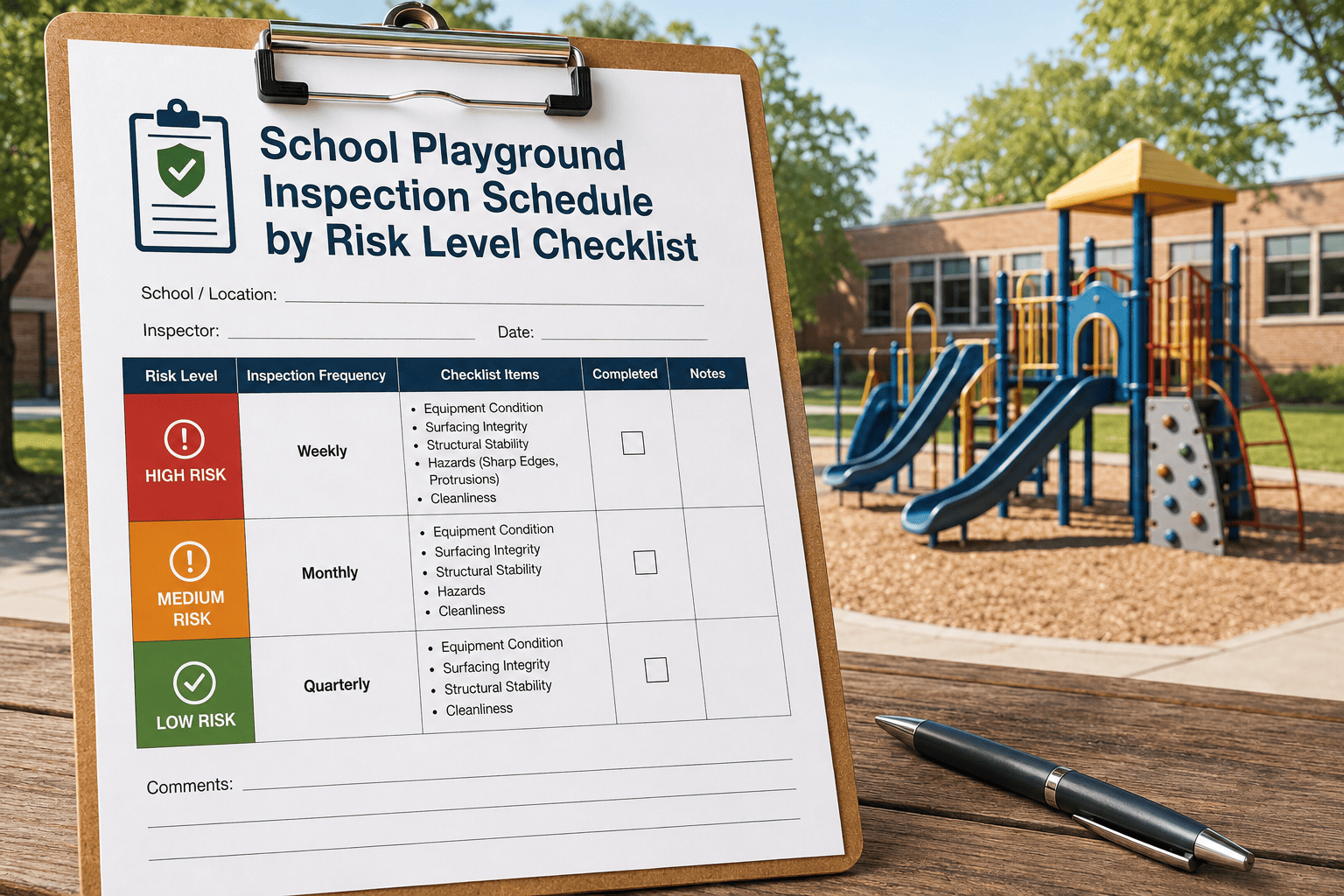
School Playground Inspection Schedule by Risk Level Checklist
A three-tier inspection schedule built around CPSC and ASTM F1487 requirements, sorted by risk level so high-danger equipment gets checked far more often than low-risk site conditions.
Critical Risk — Checked Before Children Arrive
These conditions can injure a child within minutes of the playground opening and can appear overnight from weather, wear, or vandalism. A trained staff member walks the entire play area before access is permitted, every single school day.
Operational Risk — Checked by the Facilities Team
These conditions develop slowly under repeated use and are not always visible from a quick walkthrough. Surfacing compacts, hardware loosens, and entrapment gaps can open up through normal wear long before anyone notices by eye alone.
A spreadsheet cannot escalate a missed monthly depth check or remind a district that this year's CPSI inspection is overdue. OxMaint schedules all three tiers automatically, captures depth and hardware readings as structured data, and stores every signed record against the exact playground asset it belongs to.
Structural Risk — Checked by a Certified Inspector
These conditions take years to develop and require the trained eye of a Certified Playground Safety Inspector to evaluate properly. A district that combines this tier into the monthly walkthrough is making the single most common compliance error in K-12 facilities.
Some findings cannot wait for a scheduled repair. Any opening between 3.5 and 9 inches, a structural crack, a broken or missing component, exposed concrete footing in a fall zone, or a sharp edge means the equipment is quarantined from use until a work order closure is recorded — not flagged for next month's round.
Five Metrics That Show Your Playground Program Holds Up
| Metric | How to Measure | Target | Frequency |
|---|---|---|---|
| Daily Pre-Open Completion | Logged daily checks / Scheduled school days | 100% | Daily |
| Surfacing Depth Compliance | Zones at or above 9-inch minimum | 100% of zones | Monthly |
| Open Entrapment Findings | Unresolved 3.5–9 inch gaps | Zero open findings | Monthly |
| Priority 1 Closure Time | Hours from finding to work order closure | Same day | As needed |
| CPSI Annual Coverage | Equipment inspected / Total district inventory | 100% | Annual |
Frequently Asked Questions
How often should school playgrounds be formally inspected?
Three levels are required: daily pre-use checks by trained staff, monthly inspections by the facilities team covering surfacing and hardware, and annual inspections by a Certified Playground Safety Inspector. OxMaint schedules all three tiers automatically.
What is the most common playground inspection mistake in school districts?
Combining all three required inspection tiers into a single annual walkaround is the most common compliance error, since it leaves daily and monthly hazards unchecked between visits.
What surfacing depth does CPSC require under playground equipment?
CPSC requires nine to twelve inches of loose-fill or ASTM F1292-certified unitary surfacing to the critical fall height, measured with a depth probe rather than estimated visually.
What documentation protects a district in a playground injury claim?
Courts look for proof that a structured inspection program existed, that any hazard was either absent or already had a work order raised, and that the district responded within a reasonable time. Book a demo to see audit-ready records in under two minutes.
What playground openings count as an entrapment hazard?
Any opening between 3.5 and 9 inches is a head entrapment risk because a child's body can pass through but the head cannot, and it requires immediate closure or equipment removal.
Stop Checking Every Playground on the Same Calendar
OxMaint sorts your inspection schedule by actual risk level, sends mobile checklists to the right team at the right frequency, and keeps every signed record tied to the exact piece of equipment it covers — ready the moment a parent, a board member, or an inspector asks for proof.