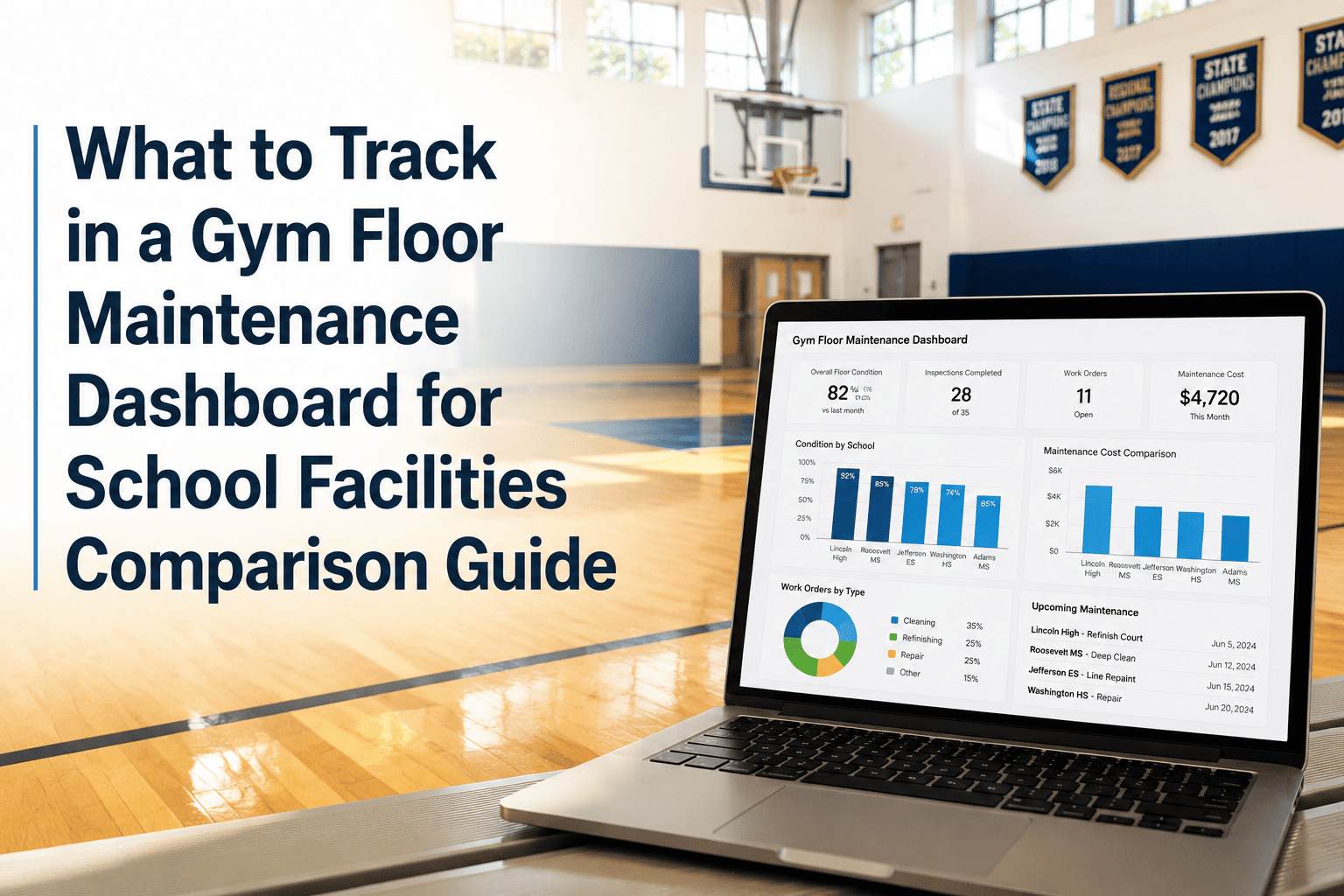
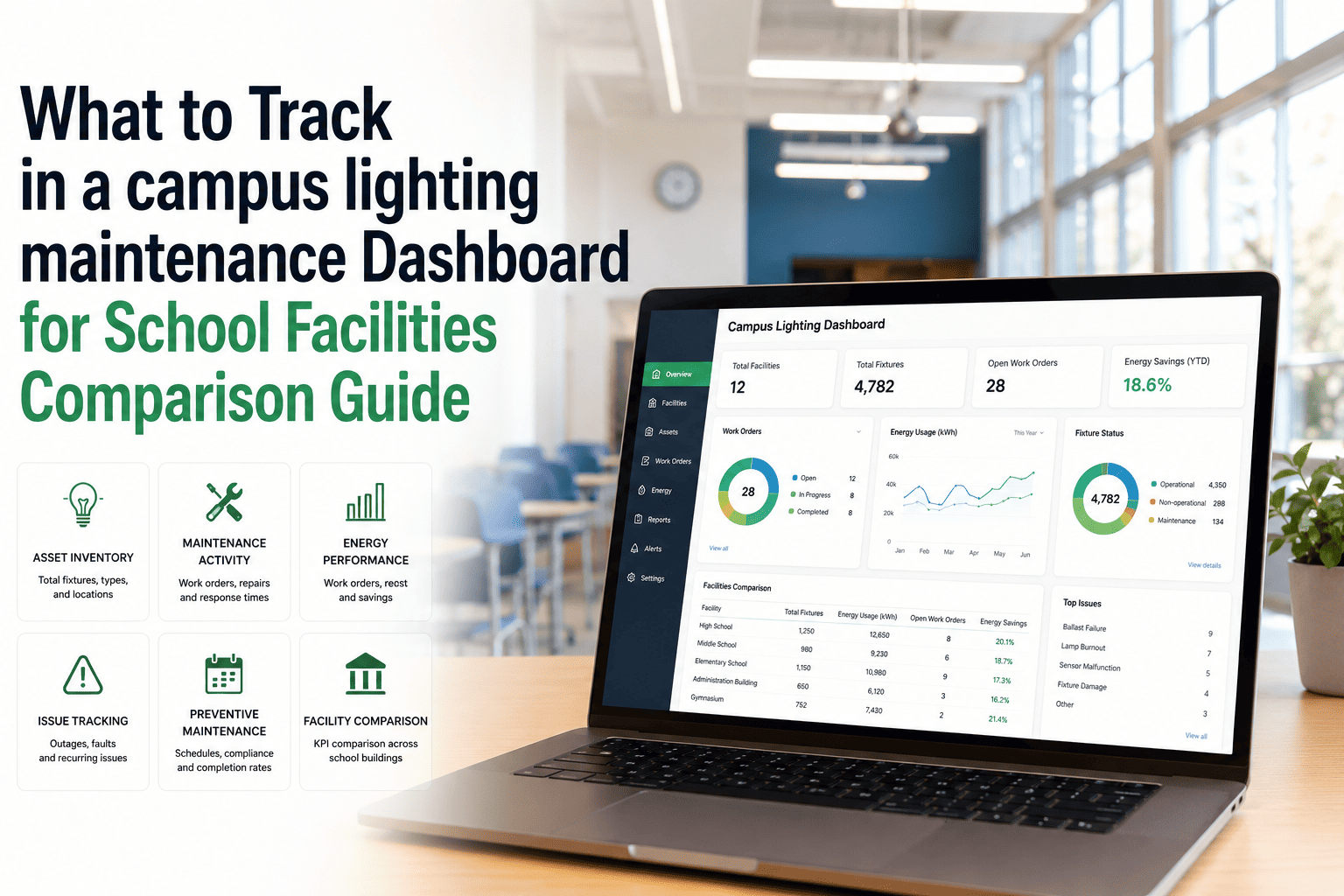
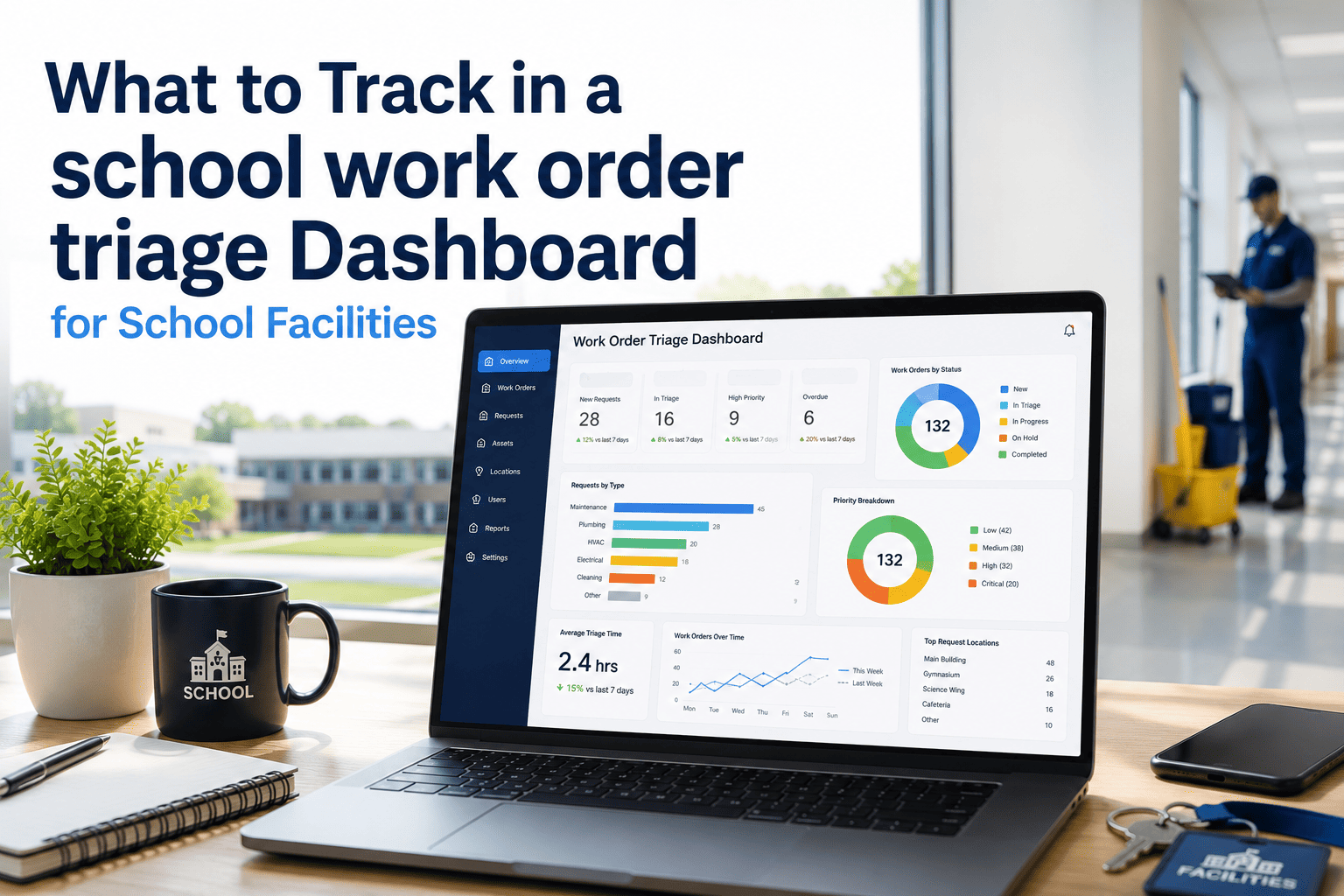
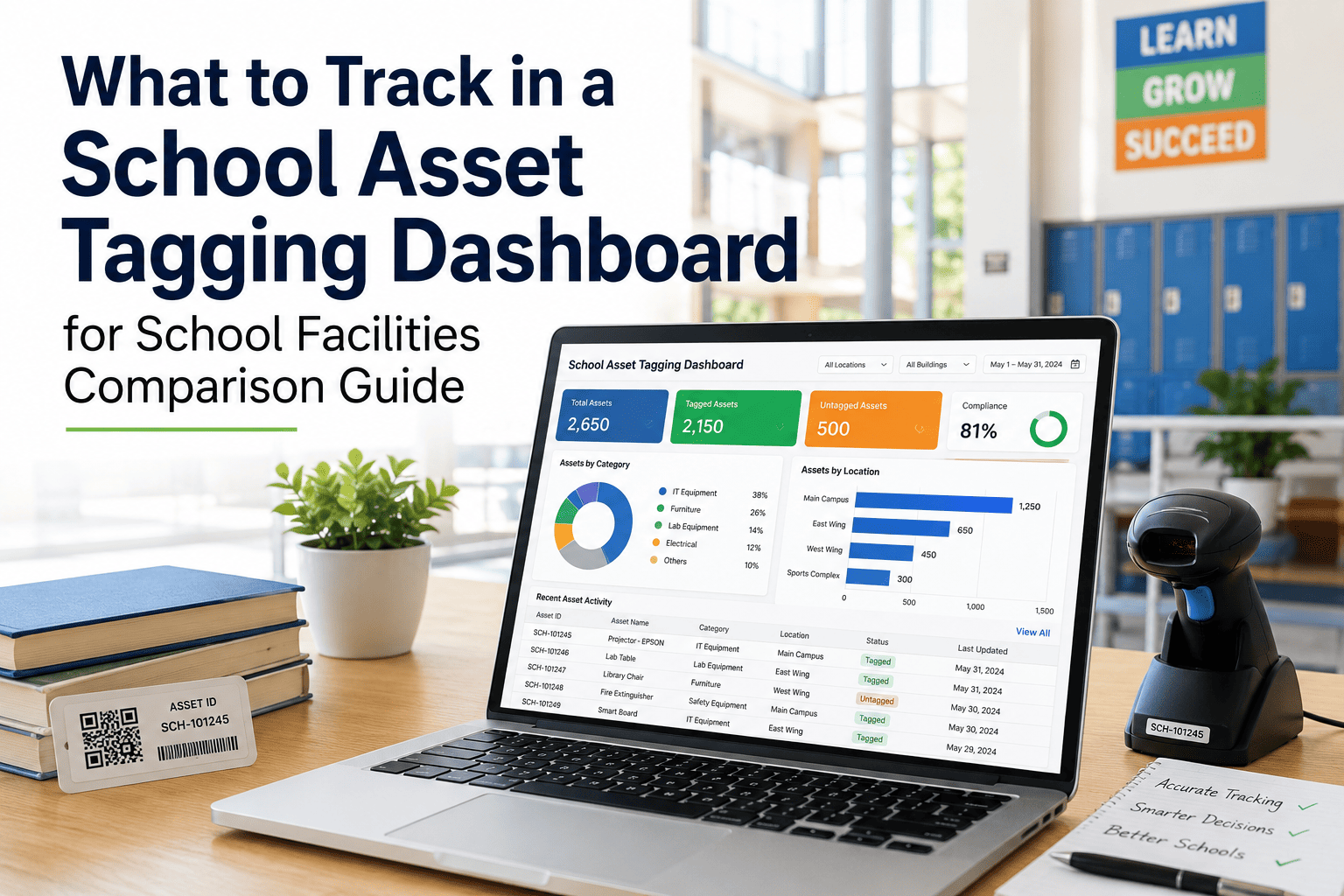
A gym floor dashboard is only useful if it tracks the few signals that actually predict damage — not a wall of numbers nobody reads. Most school facilities teams either track nothing and react to complaints, or track everything and drown in it. The floors that last decades are watched through a short list of metrics: cleaning compliance, humidity, recoat timing, slip reports, and refinishing spend per court. Get those right on one screen and small problems surface while they are still cheap, which is exactly what OxMaint is built to show.
Sports Facilities · Maintenance Dashboard
The Five Numbers That Tell You a Gym Floor Is in Trouble
A comparison guide for school and district facilities teams deciding what belongs on a gym floor dashboard — and what is just noise.
Floor Health Snapshot
Cleaning compliance96%
Relative humidity48%
Days to recoat31
Open slip reports2
Spend vs budgetOn track
Why a Dashboard Beats Waiting for Complaints
In most schools, the first signal that a floor is failing is a coach reporting a slippery patch or a player slipping during practice — and by then the finish has already worn through in that zone. A dashboard flips the order of events. Instead of learning about wear after it becomes a safety issue, the team sees the leading indicators: a building that skipped three dust-mops, humidity creeping toward the cupping range, a recoat date approaching. None of those are emergencies on their own, but together they are the early chapters of an expensive refinishing story. The job of the dashboard is to make those chapters visible while they are still cheap to act on.
The Five Metrics Worth a Tile on Your Dashboard
Every metric below earns its place because it is both measurable and predictive — it changes before damage shows, and acting on it is far cheaper than the repair it prevents. Anything that does not meet both tests is noise.
01
Cleaning Compliance Rate
Percentage of scheduled dust-mops and damp-mops actually completed per floor. The single best predictor of finish life — skipped cleaning lets grit grind down the surface.
Target: 95%+ of scheduled tasks done on time
02
Relative Humidity
Moisture in the gym air. Wood absorbs and releases it, expanding and shrinking. Drift outside the safe band is what causes cupping, buckling, and perimeter gapping.
Target: hold a stable band, watch swings closely
03
Days Until Next Recoat
Countdown to each floor's annual recoat. A recoat restores traction without sanding; missing the window forces a full sand-and-refinish that costs far more.
Target: schedule the recoat before day zero
04
Open Slip & Wear Reports
Active reports of slippery spots, dull patches, or scuffs by floor. Clustering reports on one court signal lost traction that cleaning alone will not fix.
Target: zero open reports older than a few days
05
Refinishing Spend per Court
Recoat and refinish cost tracked per floor over time. Rising spend on one court flags a building whose daily care or humidity control is failing upstream.
Target: flat or falling spend per square foot
See All Five Metrics on One Screen
OxMaint turns scheduled tasks, field reports, and recoat dates into a live gym floor dashboard — so your team spots the floor slipping behind before a coach files a slip complaint. Built mobile-first for crews who are never at a desk.
Spreadsheet Tracking vs a Live CMMS Dashboard
Most facilities teams start with a shared spreadsheet. It works until floors multiply, crews rotate, and the file falls out of date. Here is how a static sheet compares to a dashboard fed by the work itself.
Spreadsheet Tracking
Updated manually, often days or weeks behind
No alerts — you find problems by scrolling
Field crews rarely open or update it
Humidity and slip reports live in other places
History is overwritten or lost between years
Live CMMS Dashboard
Updates automatically as tasks are completed
Flags floors falling below threshold on its own
Crews log from a phone at the court
Cleaning, humidity, and reports on one screen
Full multi-year history per floor, always kept
Reading the Dashboard — Thresholds That Matter
A number is only useful next to the point where it becomes a problem. Use this as a quick reference for when a metric should change from green to a work order.
Metric Reference for School Facilities Teams
Frequently Asked Questions
What is the most important gym floor metric to track?
Cleaning compliance — whether scheduled dust-mops and damp-mops actually happen. Grit left on the floor is the leading cause of finish wear.
OxMaint tracks completion per floor so a skipped routine is visible the same day.
Do I really need to track humidity for gym floors?
Yes. Wood expands and contracts with moisture, and drift outside the safe band causes cupping, buckling, and perimeter gaps. Logging humidity per building catches that damage before it becomes structural and costly to repair.
How is a CMMS dashboard better than our spreadsheet?
A spreadsheet is only as current as its last manual edit and has no alerts. A dashboard updates as work is completed and flags floors falling behind.
Book a demo to compare both side by side.
Can one dashboard cover floors in several buildings?
Yes — that is where a dashboard earns its value. Each floor reports its own compliance, humidity, and recoat countdown, and the team sees every building on one screen instead of visiting each site to check.
How does tracking these metrics save money?
Each metric changes before visible damage, so the team acts with a cheap fix instead of a refinish.
OxMaint also builds a documented history that supports budgeting and warranty claims per court.
Build a Gym Floor Dashboard Your Team Will Actually Use
OxMaint turns daily maintenance into live metrics — cleaning compliance, humidity, recoat timing, slip reports, and spend per court — across every floor and every building. Start free, or book a 30-minute walkthrough with our team.