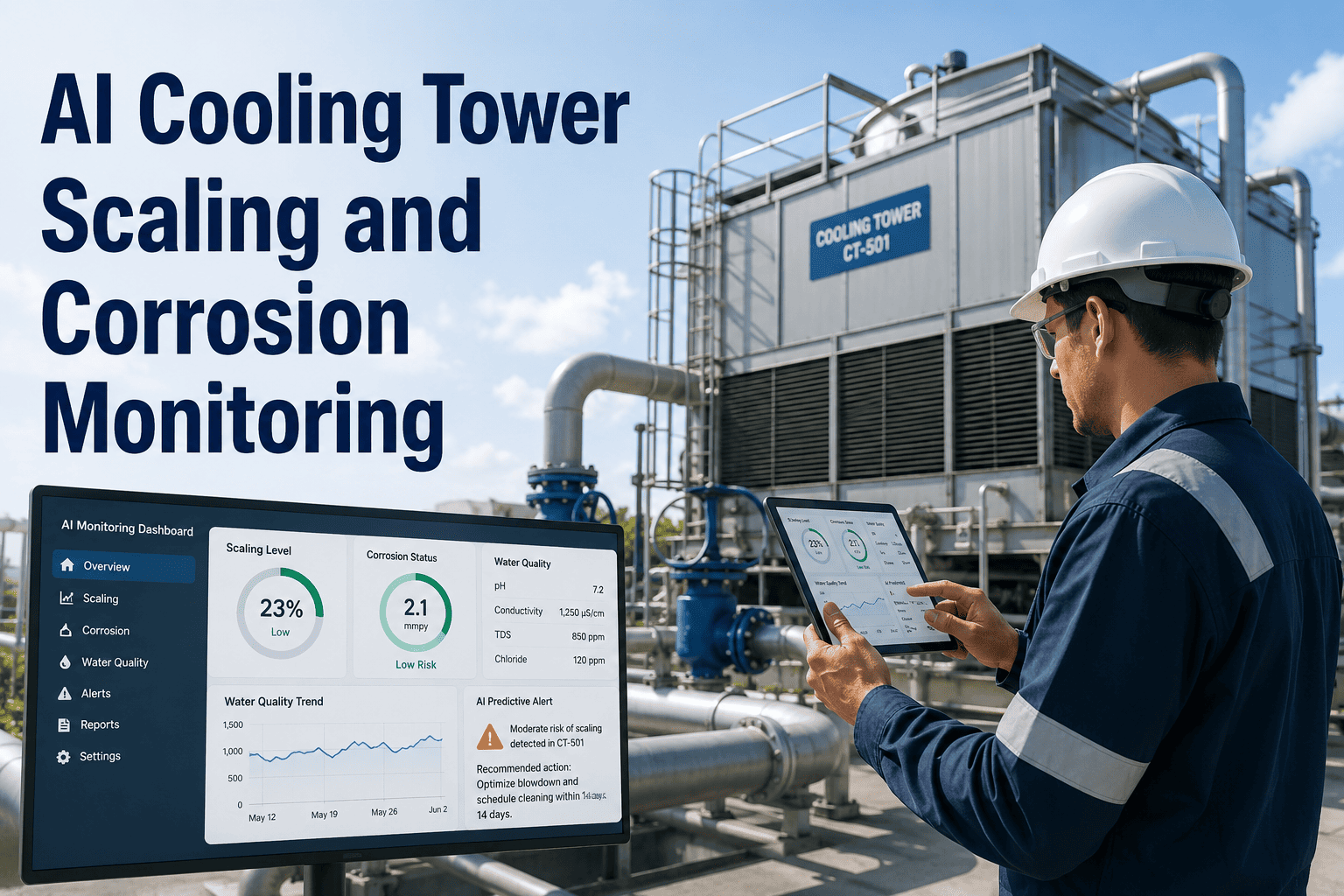
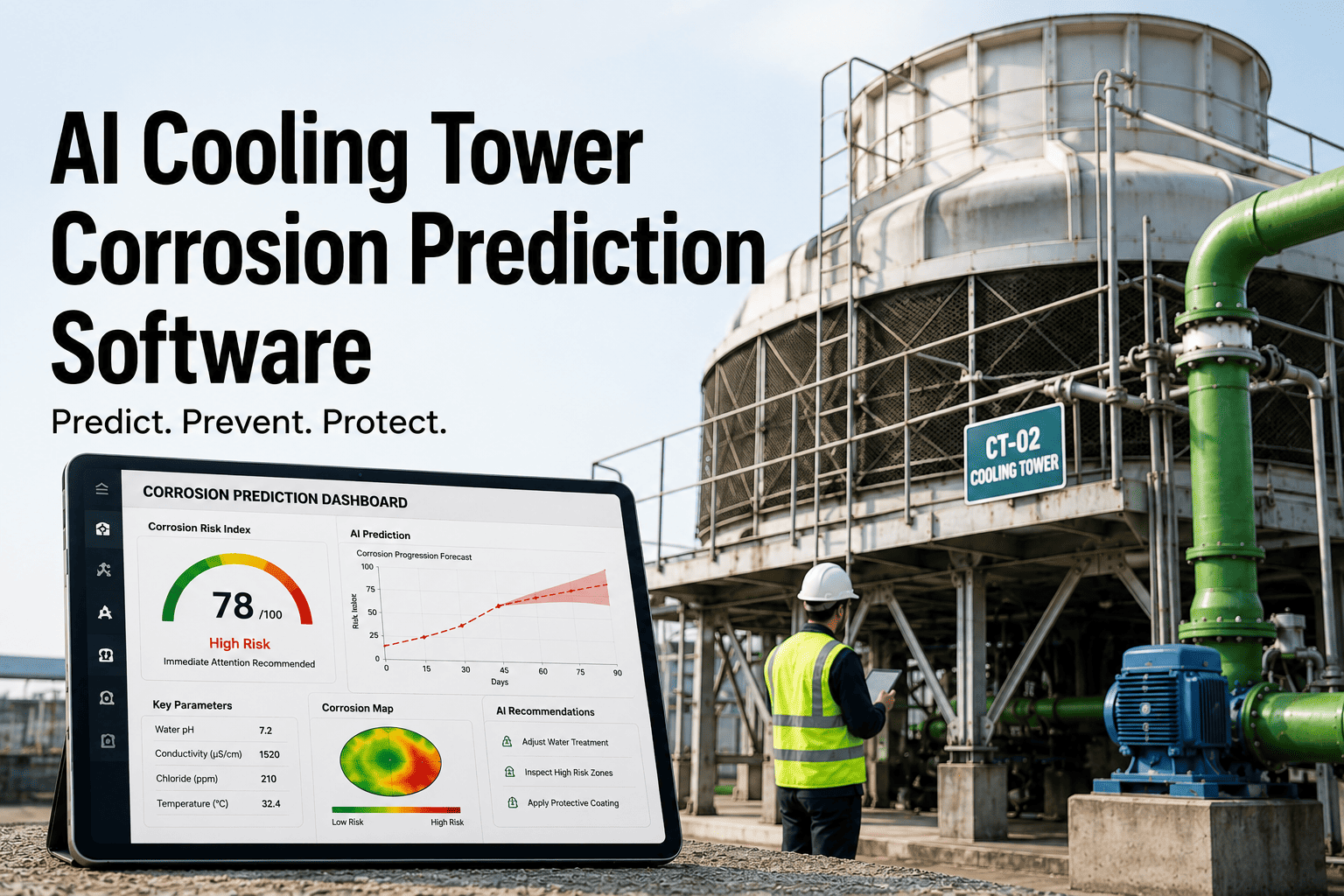
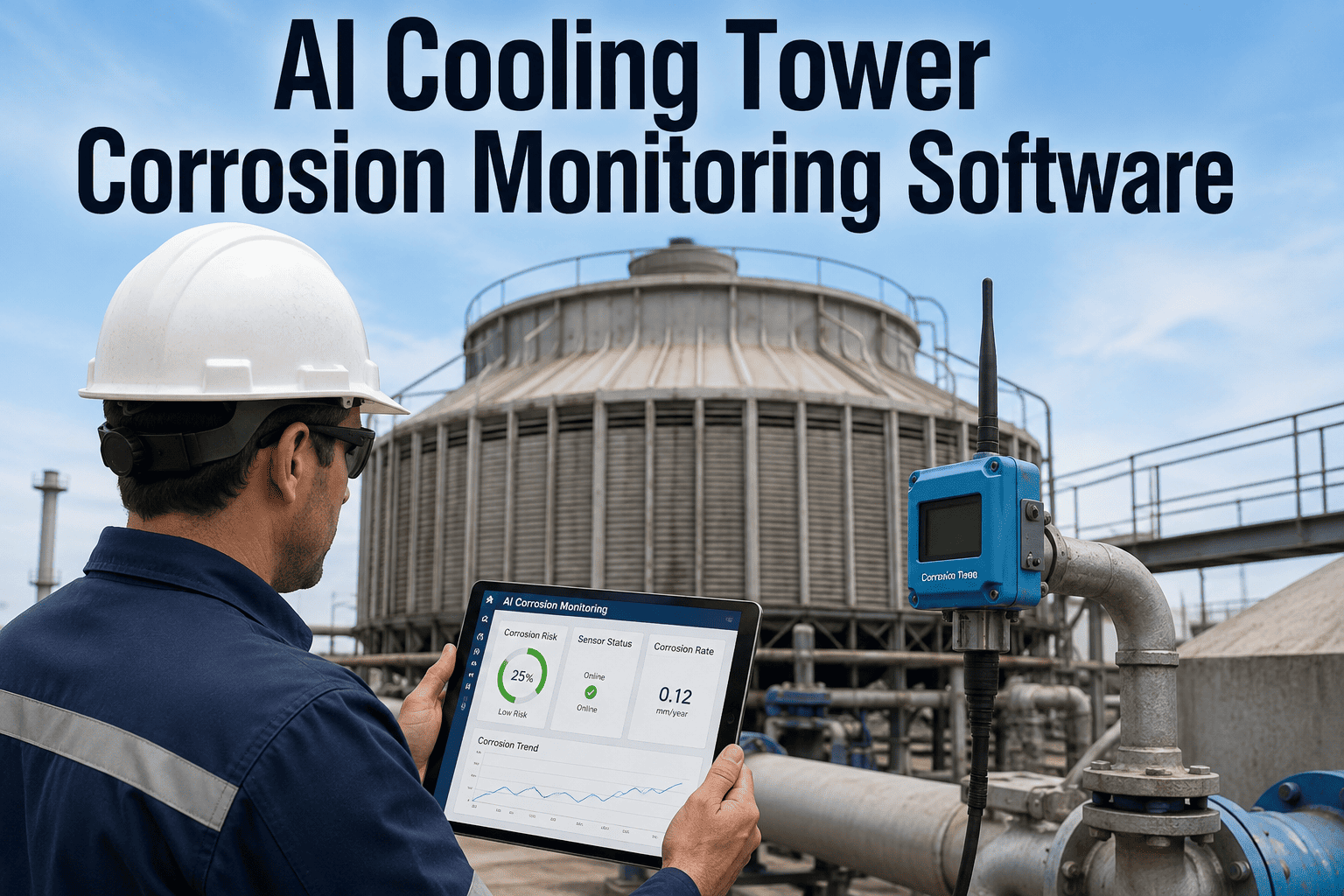
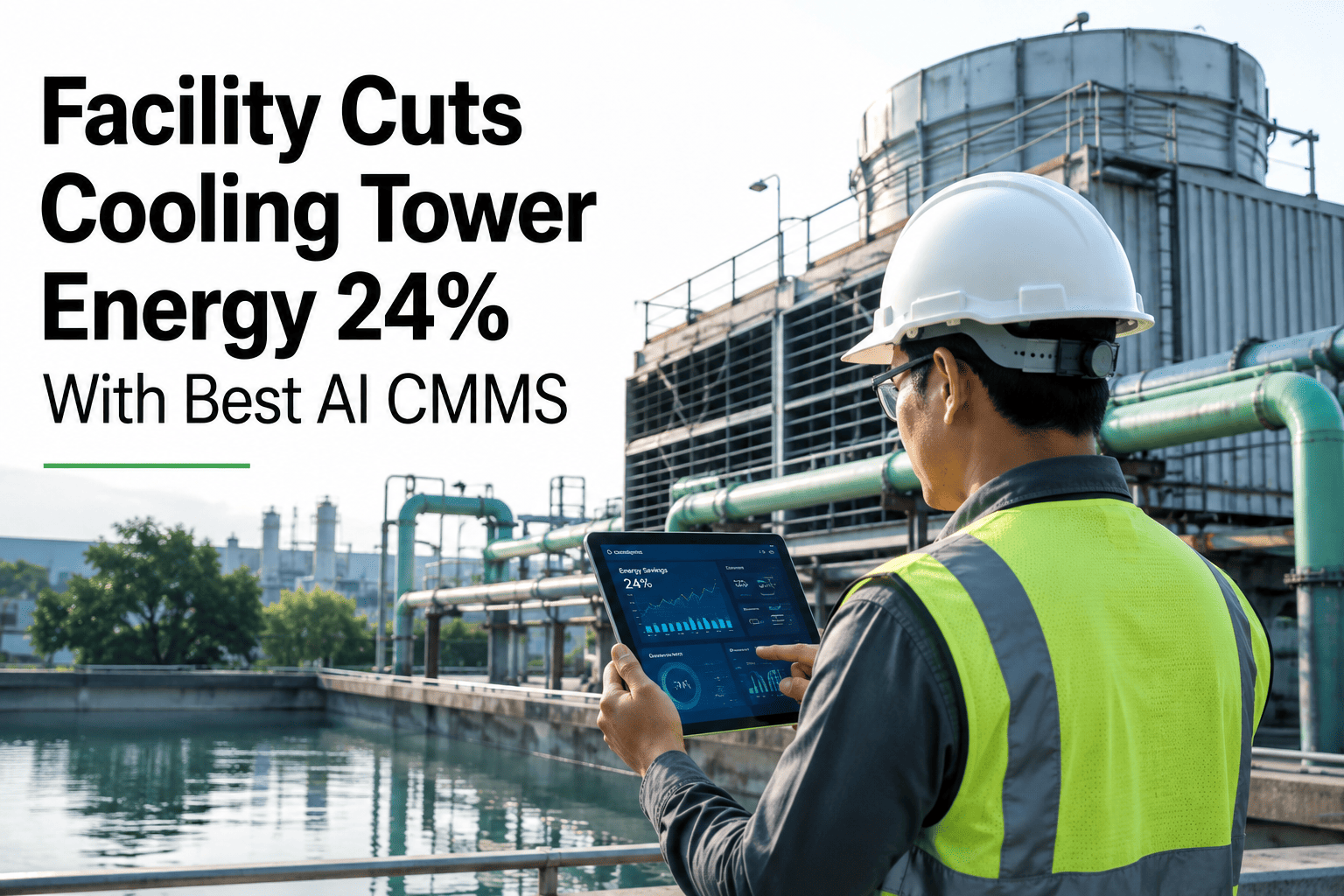
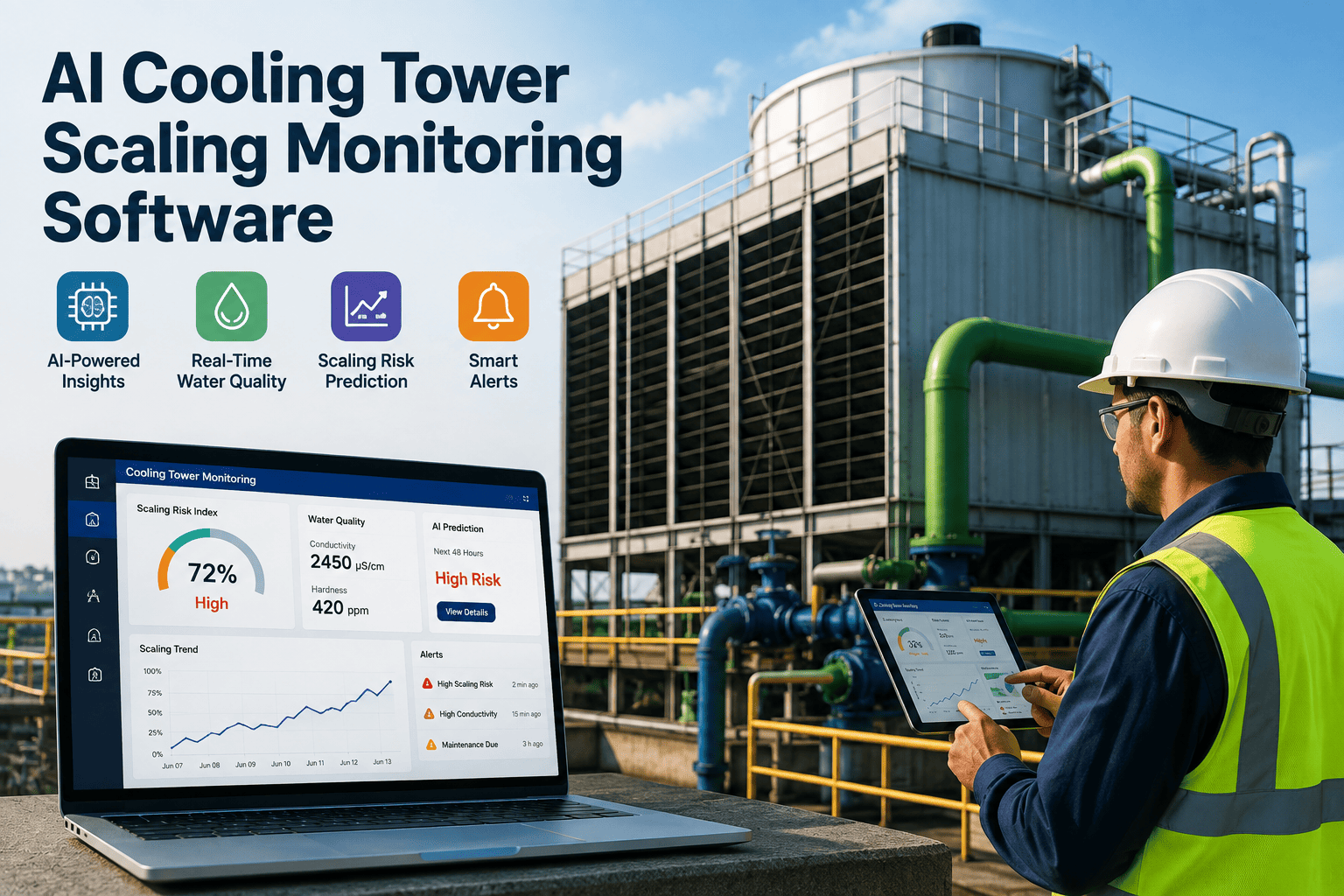
A cooling tower that looks clean on the outside can be silently losing 10 to 50% of its thermal efficiency to mineral scale deposits just 1 mm thick. Corrosion, biological fouling, and water chemistry imbalances compound the problem — and none of these degradation modes announce themselves until a major maintenance event or, worse, a Legionella outbreak. The global cooling tower water treatment market is projected to grow from $2.8 billion in 2025 to $5.2 billion by 2034, driven by AI-enabled monitoring replacing reactive manual programs. Oxmaint's Predictive Maintenance AI brings that same real-time visibility to facility teams managing commercial cooling systems without enterprise-level IT infrastructure.
Water Chemistry · Scale · Corrosion · Legionella
Three Silent Killers Inside Every Cooling Tower
Each risk compounds energy cost, maintenance spend, and regulatory exposure — often simultaneously and without visible warning until significant damage is done.
Scaling Impact on Energy Use
Up to 50% increase per 1mm deposit
Maintenance Cost Reduction via Monitoring
40% reduction with continuous IoT tracking
Water Savings from Optimized Cycles
50% blowdown reduction at higher cycles
Understanding the Three Core Degradation Modes
Cooling towers operate in an environment that simultaneously promotes scale deposition, metal corrosion, and microbial growth. These three failure modes interact: scale deposits protect bacteria from biocides; corrosion byproducts seed scale crystals; biofilm accelerates both corrosion and fouling. Managing them in isolation misses the interactions that make water treatment programs fail in practice.
Scale Deposition
Calcium carbonate and silica deposits form as water concentrates through evaporation. Even a 1 mm layer on heat exchange surfaces increases energy consumption by 10–50% by reducing heat transfer coefficient. Deposits are invisible in early stages — infrared inspection or conductivity trending is required to detect formation before efficiency loss is measurable on utility bills.
Primary indicator: Approach temperature drift above seasonal baseline
Metal Corrosion
Galvanic corrosion between mixed metals (copper-bearing alloys and steel components) accelerates when pH is uncontrolled or inhibitor concentrations fall below threshold. Corrosion product deposition clogs distribution nozzles and fill material. Real-time corrosion monitoring via coupon analysis or online electrochemical sensors identifies protection failures weeks before pipe wall thickness loss becomes measurable.
Primary indicator: Corrosion rate trending above 2 mpy for steel components
Biological Fouling & Legionella
Biofilm establishes in fill material and basin surfaces when biocide residuals fall below effective concentration. Legionella bacteria colonize biofilm matrices, creating an aerosol exposure risk that carries serious health and legal liability. The 2025 Legionnaires' cluster in Central Harlem, linked to an inadequately maintained cooling tower, underscores that biological risk is not theoretical — it is a documented public health event.
Primary indicator: ORP or residual disinfectant trending below target threshold
Water Chemistry Parameters — What to Monitor and Why
Effective AI-driven cooling tower monitoring tracks a defined set of water chemistry parameters continuously, comparing real-time readings against chemistry-specific target ranges. Deviations from any parameter can cascade into scale, corrosion, or biological risk — often before any visible symptoms appear in the tower itself.
| Parameter |
Target Range |
Risk if Low |
Risk if High |
Monitoring Frequency |
| pH |
7.0 – 8.5 |
Corrosion acceleration |
Scale formation |
Continuous |
| Conductivity (TDS) |
Per cycle target |
Blowdown waste |
Scale & corrosion risk |
Continuous |
| ORP (Disinfectant) |
650 – 750 mV |
Legionella & biofilm risk |
Material degradation |
Continuous |
| Cycles of Concentration |
3 – 6 (optimized) |
Excessive water use |
Scale saturation index |
Daily calculated |
| Corrosion Rate (Steel) |
< 2 mpy |
N/A |
Pipe wall loss, leaks |
Monthly coupon / online |
| Legionella CFU/mL |
< 1 CFU/mL |
N/A |
Public health event, liability |
Quarterly minimum |
How AI Monitoring Changes the Detection Window
Traditional cooling tower programs run on scheduled visits, periodic water tests, and reactive chemical dosing. The result is a detection window measured in weeks or months — by which time scale has already reduced efficiency, or corrosion has already progressed. AI monitoring compresses the detection window to hours, enabling intervention before damage accumulates and turning maintenance from reactive to genuinely predictive.
Traditional Program
Day 0
Scale begins forming — no data
Week 2–4
Scheduled tech visit — water sample taken
Week 3–5
Lab results returned — treatment adjusted
Week 4–8
Energy bills up 15–30% before root cause identified
AI-Monitored Program
Hour 0
Conductivity trend deviation detected by sensor
Hour 1–4
AI flags scale saturation index approaching threshold
Hour 4–8
Maintenance alert issued — dosing adjusted or work order created
Day 1–3
Scale formation interrupted before efficiency impact. Zero energy penalty.
Stop Finding Cooling Tower Problems After They Cost You Money
Oxmaint detects scaling, corrosion, and water chemistry drift before they reach operational impact — connecting sensor data, maintenance records, and inspection logs in one platform.
"The facilities that manage cooling towers reactively are essentially paying a hidden tax — inefficient heat exchange, elevated chemical spend, higher water bills, and periodic emergency cleaning that costs 10 to 20 times what a properly optimized program would. Continuous monitoring of approach temperature, conductivity, and ORP is not a premium upgrade. It is the minimum threshold for informed operations. Teams that implement AI-driven trending on these parameters consistently eliminate the clean-it-and-see cycle that drives the majority of cooling tower cost."
Marcus Tran, CWT, PE
Principal Water Treatment Engineer · 20 Years Industrial & Commercial Cooling Systems · ASHRAE TC 3.6 Member
Frequently Asked Questions
How does 1 mm of scale actually affect energy consumption?
Mineral scale — primarily calcium carbonate — has extremely low thermal conductivity compared to metal heat exchanger surfaces. Even a very thin deposit creates a significant insulating layer that forces the chiller to work harder to achieve the same heat rejection. Industry data consistently quantifies this at a 10 to 50% increase in energy consumption per millimeter of scale, depending on deposit composition and system design. The financial impact compounds over time: a 15% chiller efficiency penalty on a 500-ton unit running 3,000 hours annually translates to tens of thousands of dollars in additional electricity cost before the scale is ever detected visually. Conductivity trending and approach temperature analysis are the only practical methods for early detection.
Oxmaint's monitoring dashboards track approach temperature against seasonal baselines to flag scale formation before efficiency loss accumulates.
What cycles of concentration should we target, and why does it matter for water cost?
Cycles of concentration (CoC) represents the ratio of dissolved mineral concentration in circulating water to the makeup water supply. The U.S. Department of Energy has quantified that increasing cycles from three to six reduces makeup water consumption by 20% and blowdown by 50%. Most facilities operate at suboptimal CoC because they blowdown conservatively to avoid scale risk — a trade-off that wastes water and increases chemical spend. AI monitoring enables precise cycles management that maintains the highest safe CoC without approaching scale saturation thresholds, achieving the water efficiency target without the scale risk. The optimal CoC for a specific system depends on local water chemistry and inhibitor program design, which is why continuous monitoring is essential for dynamic CoC optimization rather than static setpoint management.
What Legionella monitoring and water management program documentation is required?
ASHRAE Guideline 12-2020 and CDC best practices require facility operators to maintain a written Water Management Program (WMP) for cooling towers, including documented risk assessment, control measures, verification monitoring, corrective actions, and regular review. Many jurisdictions have enacted mandatory WMP requirements following Legionella outbreak investigations — New York City, for example, requires registered cooling tower WMPs and quarterly Legionella culture testing with results kept on file. The minimum monitoring program includes quarterly Legionella cultures and continuous or near-continuous ORP tracking to verify disinfectant residual.
Book a demo to see how Oxmaint manages WMP documentation, inspection scheduling, and test result tracking alongside your standard maintenance records — providing the complete audit trail a health inspection requires.
Your Cooling Tower Data Should Work for You, Not Sit in a Notebook