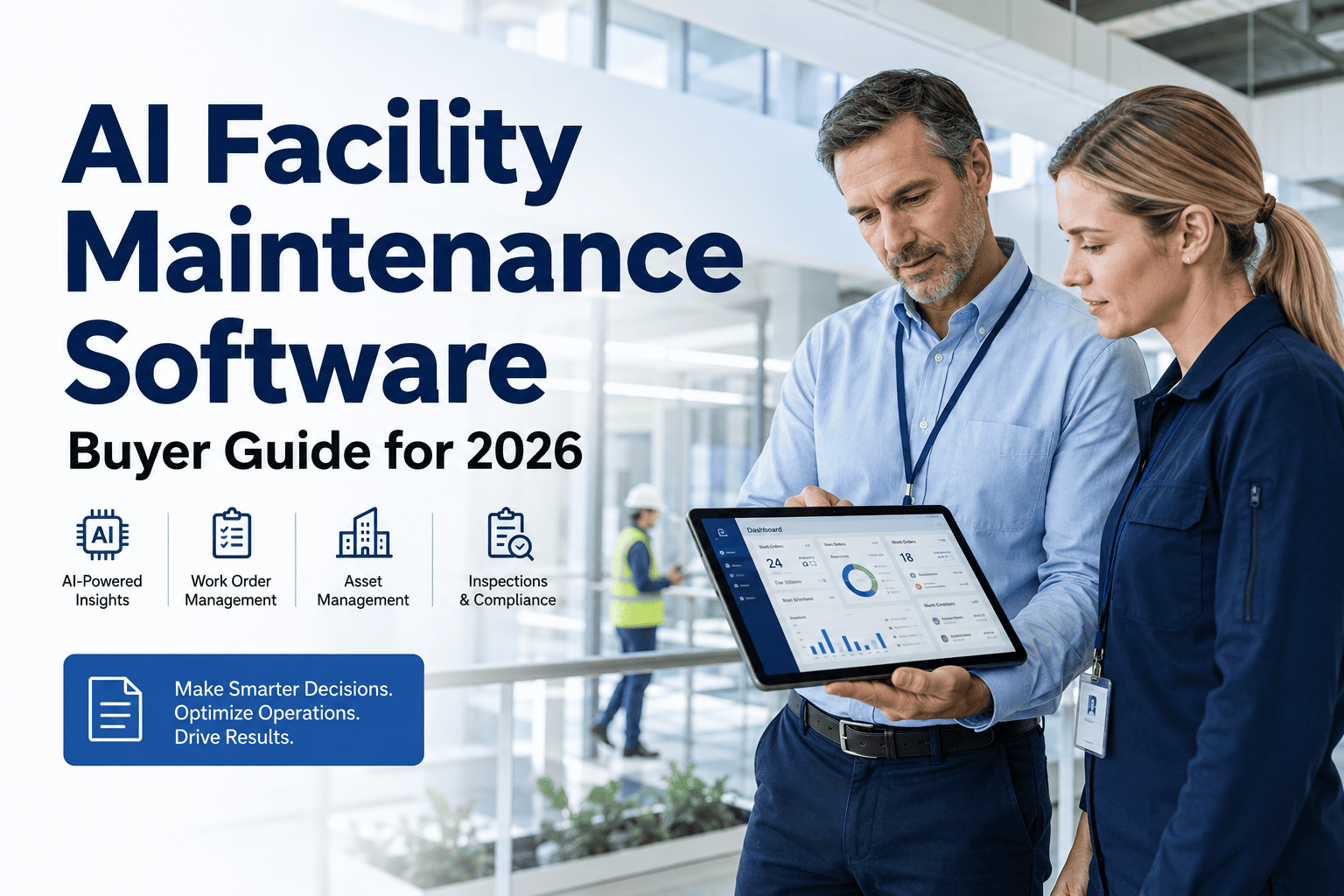
AI Facility Maintenance Software Buyer Guide for 2026

By Lewis Abbott on June 17, 2026

ai-facility-maintenance-software-buyer-guide-for-2026

AI-powered maintenance software is no longer a niche tool — in 2026, it is becoming the standard for facility teams looking to reduce reactive workloads, improve dispatch accuracy, and extract actionable intelligence from their work order data. Yet most facility managers still evaluate CMMS platforms on surface features: mobile apps, QR codes, scheduling calendars. The real differentiator is how deeply the platform's AI understands your maintenance patterns and uses them to make your team faster and smarter. This buyer guide compares what OxMaint's AI work order automation actually delivers versus legacy CMMS tools — from predictive maintenance and smart dispatch to analytics that surface problems before they become emergencies. If you are evaluating facility management software in 2026, book a live demo to see OxMaint's AI capabilities applied to your specific asset inventory and workflows before making any purchase decision.

2026 Buyer Guide · AI CMMS · Facility Teams

The 2026 AI Facility Maintenance Software Buyer Guide

Not all CMMS platforms calling themselves "AI-powered" are equal. This guide shows exactly what AI should do in a modern facility maintenance platform — and how OxMaint delivers it.

2026 State of AI in Facility Maintenance
67%of facility teams plan to adopt AI-enabled CMMS by end of 2026

52%reduction in unplanned downtime reported by AI CMMS adopters

3.4xfaster work order triage with AI-powered dispatch vs. manual
AI Capabilities

What AI Should Actually Do in a Facility CMMS

Many platforms slap "AI" on basic automation. Below are the six AI capabilities that produce real operational outcomes — and what to ask vendors to demonstrate during evaluation.

01
Predictive Maintenance Triggers
AI analyzes historical failure data, sensor readings, and usage patterns to predict when an asset is likely to fail — generating PMs before breakdown occurs rather than on a fixed calendar schedule.
Ask vendors: "Show me a prediction-to-PM workflow with real asset data."
02
Smart Work Order Dispatch
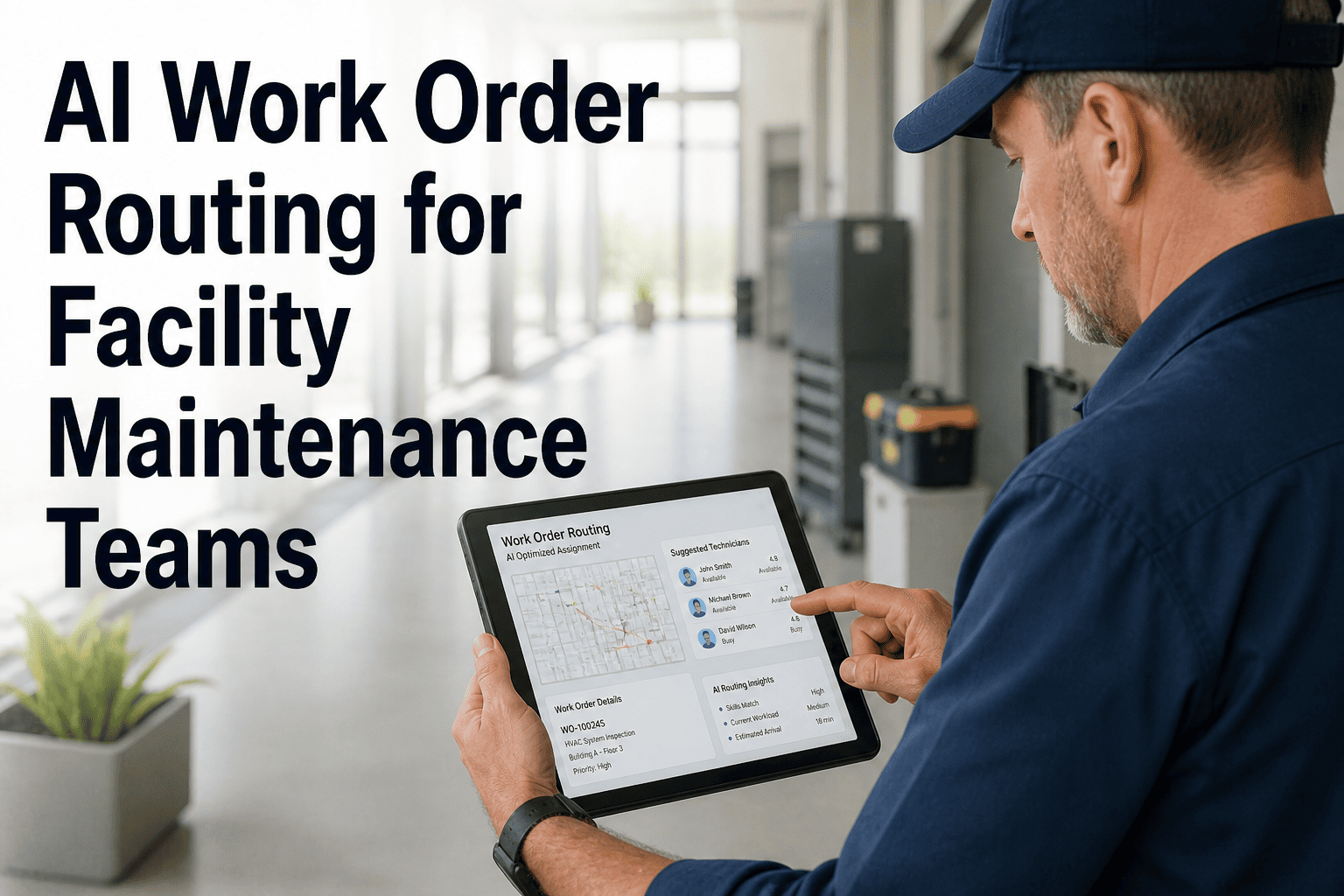
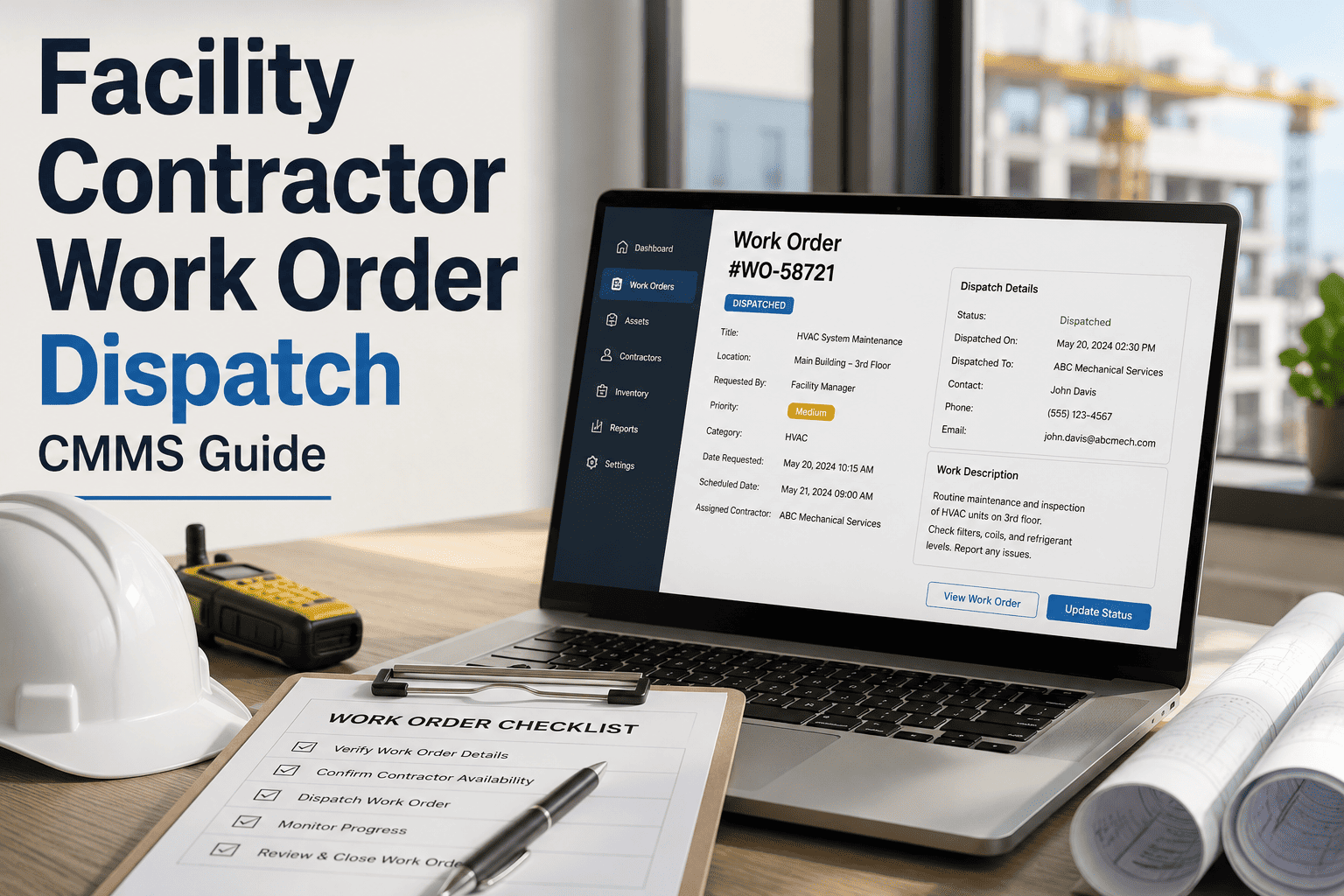
AI assigns incoming work orders to the best-available technician based on skills, location, current workload, and asset familiarity — not just availability. Manual dispatch typically adds 45–90 minutes of lag per request.
Ask vendors: "How does your dispatch algorithm handle multi-skill work orders?"
03
Failure Pattern Recognition
Machine learning identifies recurring failure modes across asset classes — flagging equipment that has failed 3+ times in 12 months and recommending root-cause investigation or replacement rather than another reactive repair.
Ask vendors: "Can your platform identify chronic failure assets automatically?"
04
Anomaly Detection & Alerts
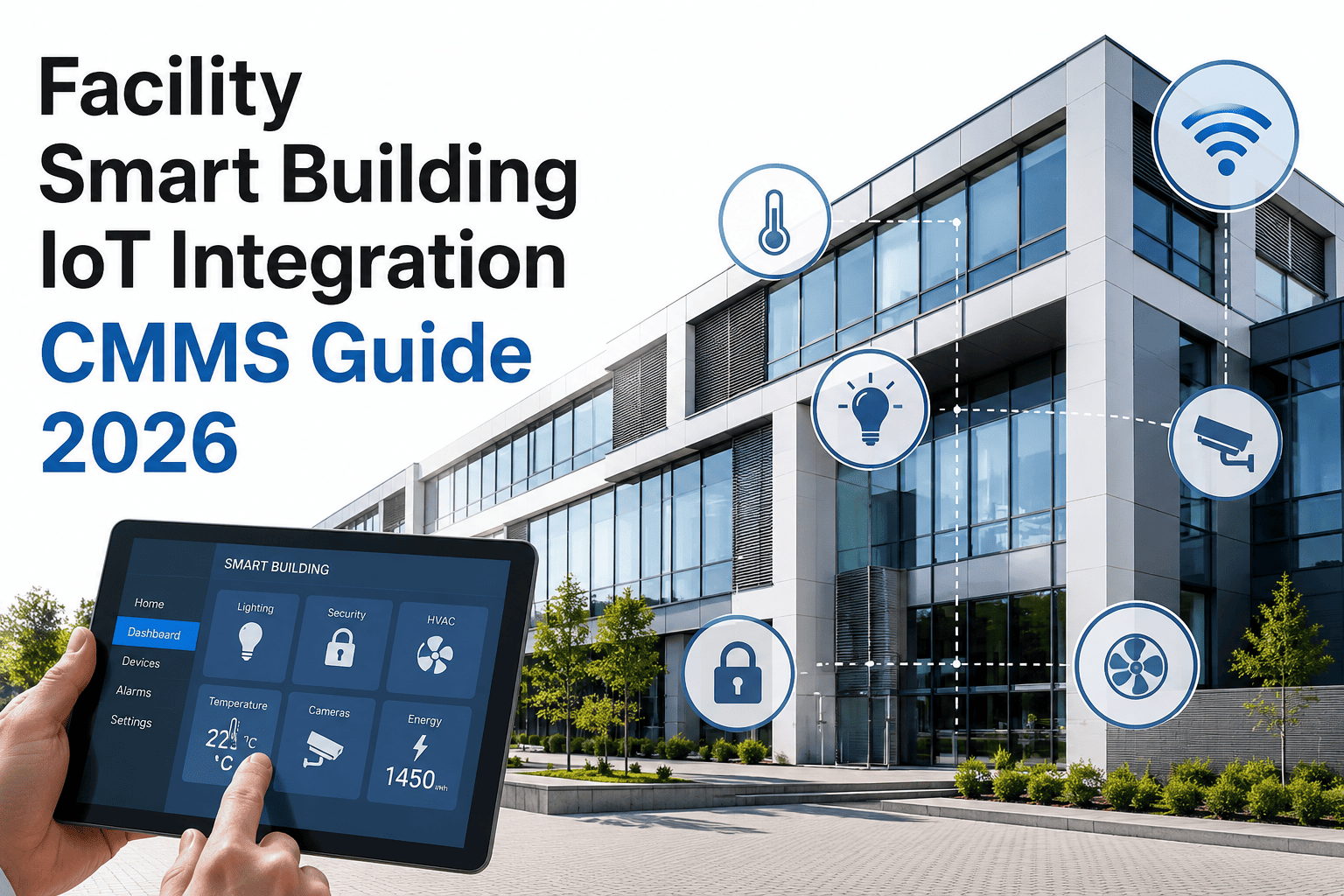
For IoT-connected assets, AI monitors sensor data in real time and generates alerts when readings deviate from learned baselines — catching early-stage faults 2–4 weeks before they become visible failures.
Ask vendors: "Show a live anomaly detection alert from an IoT-connected asset."
05
Natural Language Work Requests
Tenants and staff submit requests in plain language. AI auto-categorizes, prioritizes, and routes without manual triage — reducing request-to-dispatch time from hours to minutes across all facility types.
Ask vendors: "Can a non-technical user submit a request and have it auto-routed?"
06
Maintenance Budget Forecasting
AI uses historical spend, PM schedules, asset age, and failure probabilities to project maintenance costs 12–24 months forward — giving finance teams data-backed budget inputs rather than guesswork.
Ask vendors: "Show me a 12-month cost forecast for an asset class."
Platform Comparison

AI CMMS Feature Comparison: OxMaint vs. Legacy Platforms

Use this matrix when evaluating vendors. Ask each platform to demonstrate these capabilities live — not in a marketing deck.

AI Capability OxMaint Legacy CMMS A Legacy CMMS B Spreadsheet-Based
Predictive PM triggers Included Add-on module Not available Not available
Smart dispatch (skill-based) Included Manual only Basic rules Manual
Failure pattern detection Included Not available Not available Not available
IoT anomaly alerts Included Enterprise tier Add-on Not available
NLP work request intake Included Not available Beta Not available
Budget forecasting AI Included Enterprise only Not available Manual estimate
Mobile-first field app Included Included Limited Not available
Setup time to first PM Under 24hrs 2–4 weeks 4–8 weeks Immediate (no structure)
OxMaint AI Demo

See Every AI Feature Live — Not in a Slide Deck

Our 30-minute demo walks through smart dispatch, predictive PM triggers, failure pattern detection, and budget forecasting using your actual facility context. No slides, no scripts — live product.

Evaluation Checklist

12 Questions to Ask Every AI CMMS Vendor in 2026


Does your AI generate PMs from asset sensor data, or only from fixed calendar schedules?

How does dispatch assign work orders — rules-based, AI-based, or manual?

Can your platform identify chronic failure assets automatically from historical data?

What IoT integrations are supported natively, and what requires third-party middleware?

How long does it take for your AI to generate predictions on a new asset inventory?

Can non-technical staff submit maintenance requests without training or a login?

Does your platform include 12–24 month maintenance budget forecasting out of the box?

How are AI model recommendations surfaced to technicians in the mobile app?

What ERP, BMS, and HR systems do you integrate with, and at what tier?

Can your AI explain why a PM was triggered or why a work order was assigned?

What is the typical time-to-value for AI features after go-live?

Is AI pricing bundled or metered — and what happens to costs as asset count scales?
Expert Review

What AI Actually Changes in Maintenance Operations


The word "AI" in CMMS marketing right now covers a spectrum from genuine machine learning to glorified if-then rules. The difference matters enormously for facility teams. Real AI in a maintenance platform learns your specific asset failure patterns, adapts PM intervals based on usage data, and dispatches work orders with context awareness. Rule-based "automation" can only do what you explicitly configure — and most teams don't have the bandwidth to write and maintain hundreds of routing rules. When evaluating vendors, ask for a live demo on your own data, not a canned demo environment. If they can't run the AI on your asset inventory in the demo, they can't run it in production either. The best implementations I've seen had AI generating its first meaningful recommendations within 60 days of data ingestion — not after a year of tuning.

Director of Smart Building Technology
12+ years in facilities technology, IoT integration, and AI-assisted maintenance at commercial and industrial scale
Common Questions

Frequently Asked Questions

What makes OxMaint's AI different from basic CMMS automation?
OxMaint's AI learns from your facility's specific maintenance history — it doesn't just execute preset rules. Over time, the system adapts PM intervals, dispatch priorities, and failure predictions based on actual patterns in your work order data, not generic industry averages. This distinction means OxMaint's recommendations improve over time, while rule-based automation stays static. See OxMaint's learning AI in a live demo using your own asset context for a direct comparison.
How much historical data does OxMaint need to start generating AI predictions?
OxMaint's AI begins generating initial recommendations with as little as 90 days of work order history, and can ingest historical exports from your previous CMMS or spreadsheets to accelerate the learning period. For new installations with no prior data, the platform applies industry benchmarks during the initial period and refines predictions as facility-specific patterns emerge — typically within 60–90 days post-launch. Start your free OxMaint trial and upload existing maintenance records to jumpstart AI training.
Does AI-powered CMMS require a dedicated IT team to manage?
OxMaint is designed for facility managers and maintenance supervisors — not IT staff. The AI runs automatically in the background, surfacing recommendations through the same dashboards and work order screens your team already uses. Configuration is handled through guided setup wizards, and OxMaint's onboarding team handles integrations with existing BMS, IoT, and ERP systems. Most facilities are live and generating AI insights within 1–2 weeks of initial setup. Book a demo to see the setup process start to finish.
How do I justify AI CMMS investment to finance leadership?
The strongest business case combines reactive maintenance cost reduction (typically 20–35%), labor efficiency gains from smart dispatch, and extended asset life from predictive PMs. OxMaint's ROI reporting suite generates a 90-day impact summary that quantifies each benefit category — making it straightforward to build a finance presentation from real post-implementation data rather than vendor projections. Explore OxMaint's reporting dashboard in a free trial and use the built-in ROI summary for your leadership pitch.
What integrations does OxMaint support for 2026 facility tech stacks?
OxMaint integrates with major BMS platforms (Siemens, Honeywell, Johnson Controls), IoT sensor networks, ERP systems (SAP, Oracle), HVAC monitoring tools, and HR platforms for technician qualification data. The platform also supports open API connections for custom integrations with legacy building systems and proprietary sensor networks common in older facility portfolios. Discuss your specific integration requirements in a live demo to get a confirmation of compatibility before committing.
AI Facility Maintenance · OxMaint 2026

Ready to See AI-Driven Maintenance in Your Facility?

OxMaint's AI handles predictive PMs, smart dispatch, failure detection, and budget forecasting — all in one platform built for facility teams. No IT team required. Live in days, not months.
Share This Story, Choose Your Platform!