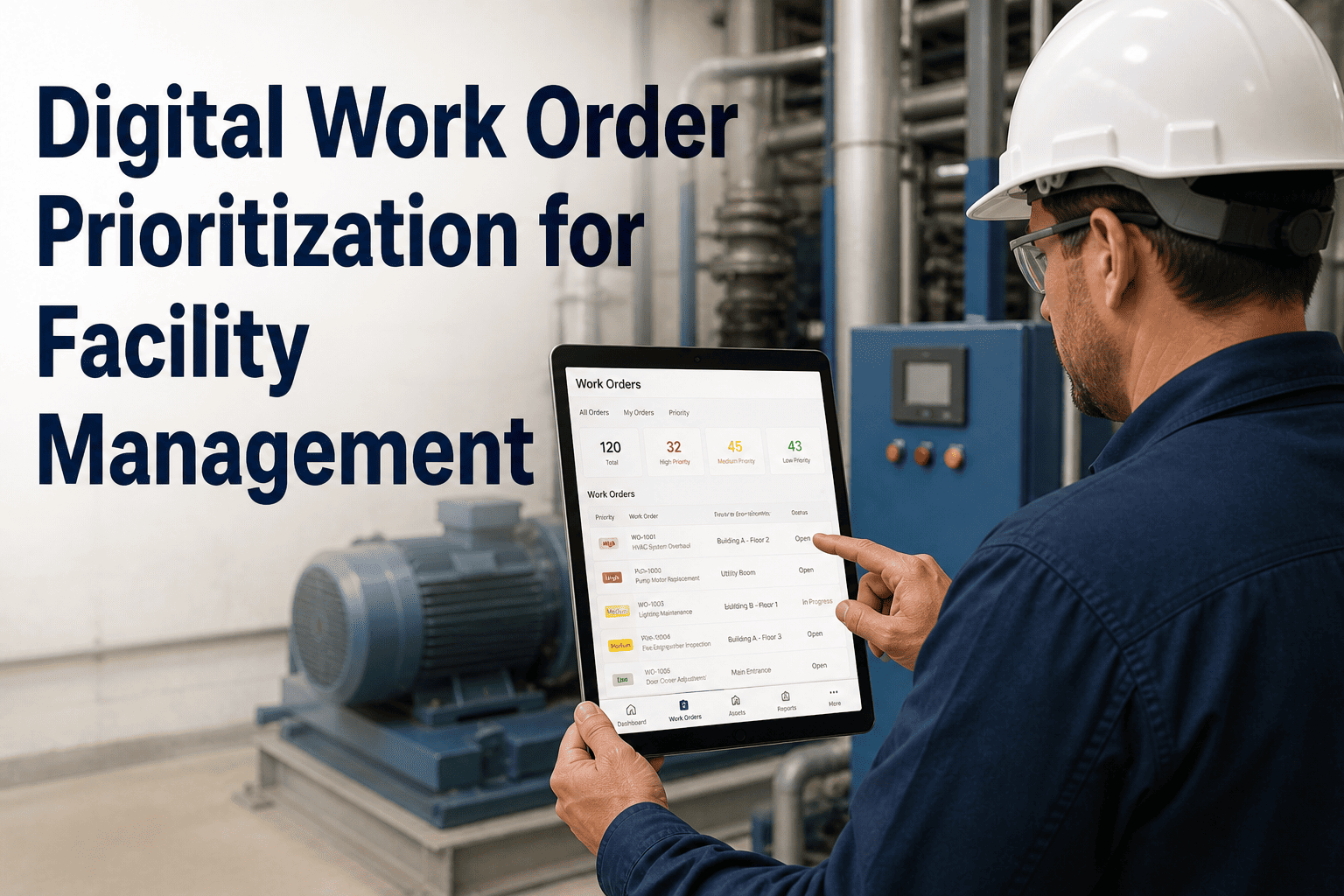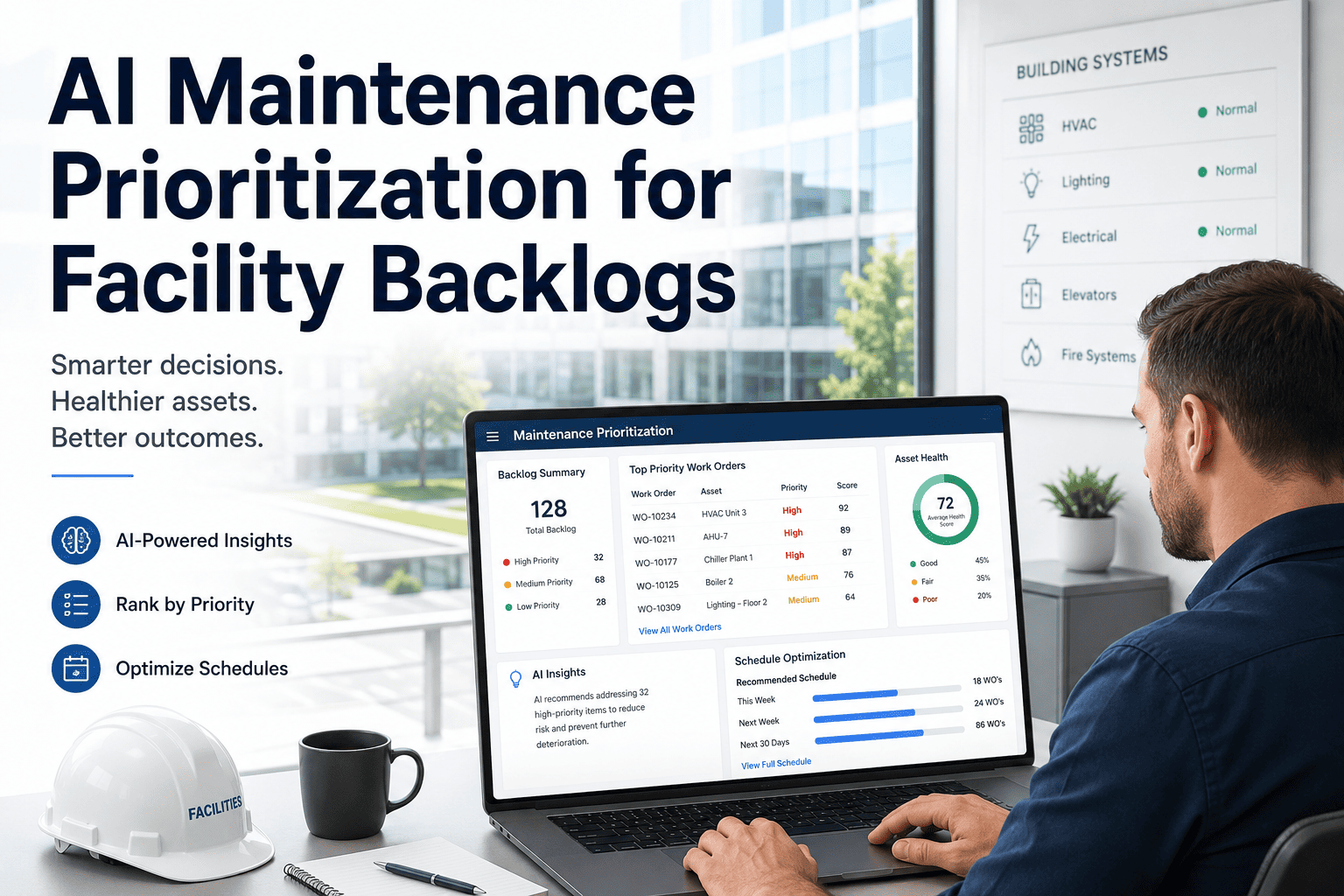
Every facility team has a backlog. The question is not whether work is piling up — it is whether the most critical jobs are getting done first. When technicians self-select their next task, they pick the easiest one, not the most urgent. When managers manually sort 200 open work orders by gut feel, safety-critical repairs sit next to aesthetic complaints with nothing distinguishing them except whoever escalated louder. OxMaint's AI Maintenance Prioritization ranks every backlogged facility job by risk exposure, safety impact, tenant disruption potential, and downtime cost — then surfaces the right work to the right person at shift start. Book a demo to see how facilities teams have cleared critical backlogs 40% faster without adding headcount.
AI Maintenance Prioritization for Facility Backlogs
A backlog without prioritization is just organized chaos. AI ranks your open work by risk, safety impact, downtime cost, and tenant effect — so the right jobs move first.
How AI Scores Every Backlogged Job
Jobs with injury exposure, code violations, or life-safety asset failure potential score highest regardless of asset class.
Revenue-impacting failures — elevator, HVAC in occupied zones, power systems — ranked above non-revenue-impacting issues.
Comfort, access, and habitability issues affecting high-occupancy areas rank above empty-floor issues of equal severity.
AI calculates failure likelihood from asset age, maintenance history, and fault frequency — boosting score for assets near end-of-life.
Prioritization in Practice: Sample Backlog Ranking
| Rank | Job Description | AI Score | Key Driver | Status Without AI |
|---|---|---|---|---|
| 1 | Fire suppression valve — stuck open, Floor 12 | 98 / 100 | Life safety + code violation | Untagged, day 3 |
| 2 | Main lobby elevator — door fault, 3 entrapments this month | 91 / 100 | Safety + tenant impact | Day 5, not assigned |
| 3 | Server room HVAC — temp trending 4°C above setpoint | 85 / 100 | IT downtime risk | Low priority queue |
| 4 | Roof HVAC Unit 3 — 6th alarm this week | 77 / 100 | Repeat failure pattern | Mixed with general queue |
| 5 | Office 4B ceiling tile — cosmetic water stain | 22 / 100 | Aesthetic only | Same queue as items 1–4 |
Stop Letting Low-Priority Jobs Block Critical Repairs
AI puts safety and revenue-critical work at the top — automatically, at every shift start.
Expert Perspective
The fundamental problem with manual backlog management is that urgency and visibility get confused. A tenant who complains loudly moves their cosmetic request to the top of the queue while a silent life-safety fault sits at position 40. AI prioritization removes this bias completely — it scores on objective risk criteria and reranks the queue at every shift boundary. In my experience, the first month of AI prioritization alone typically surfaces 3 to 5 high-risk items that were buried in general queues.
Frequently Asked Questions
Your Most Critical Job Should Never Be at Position 40
AI surfaces the work that matters most — every shift, for every technician.