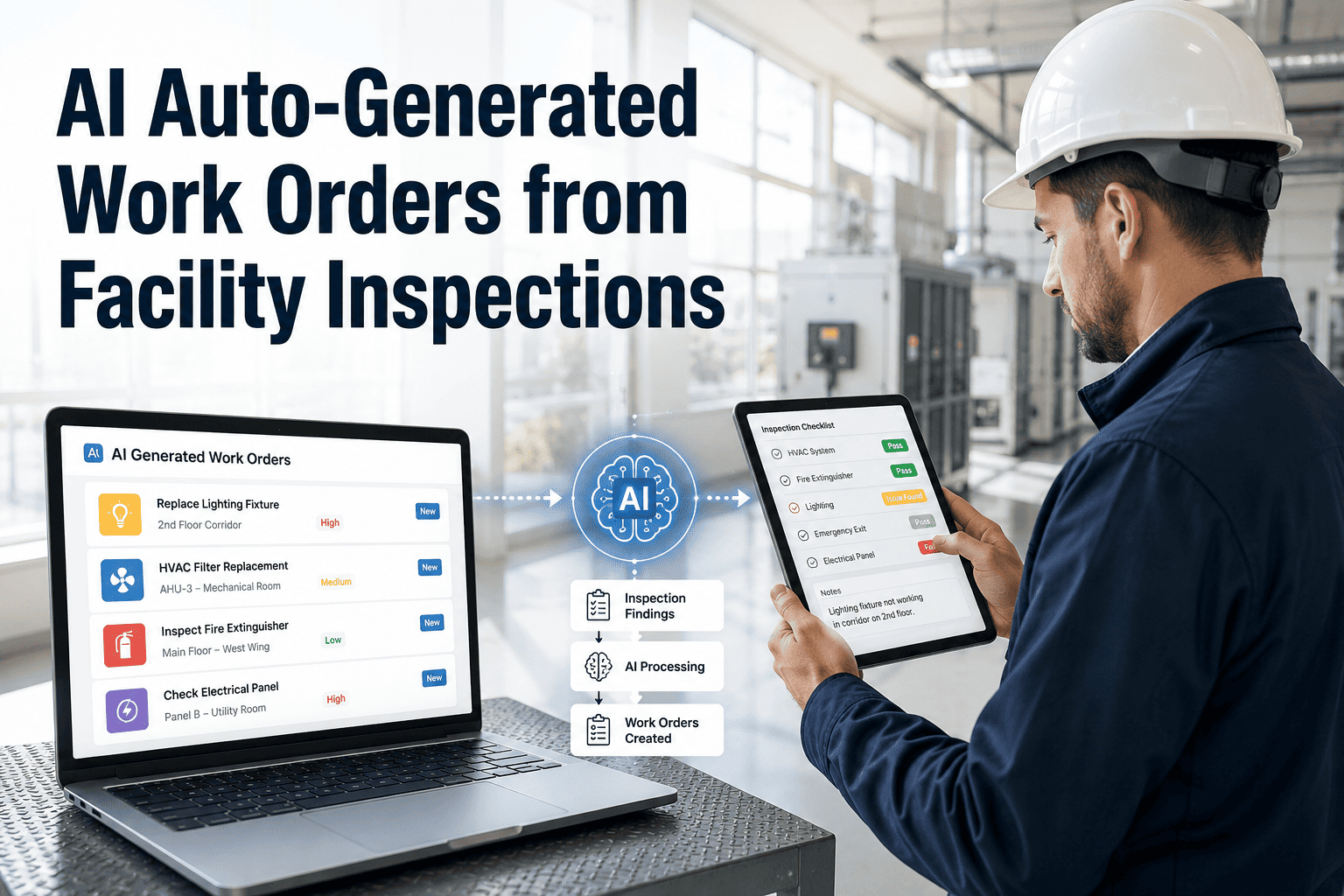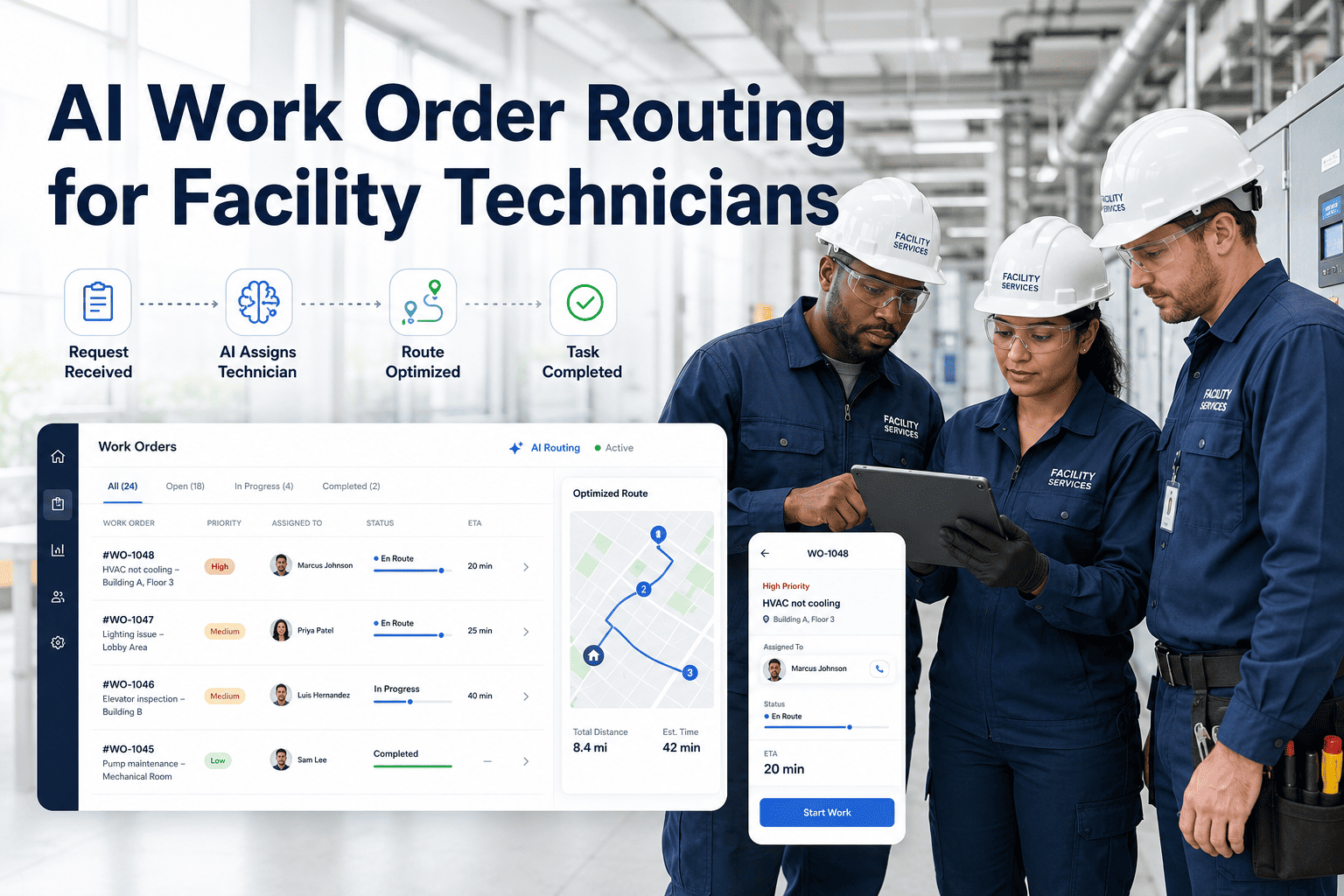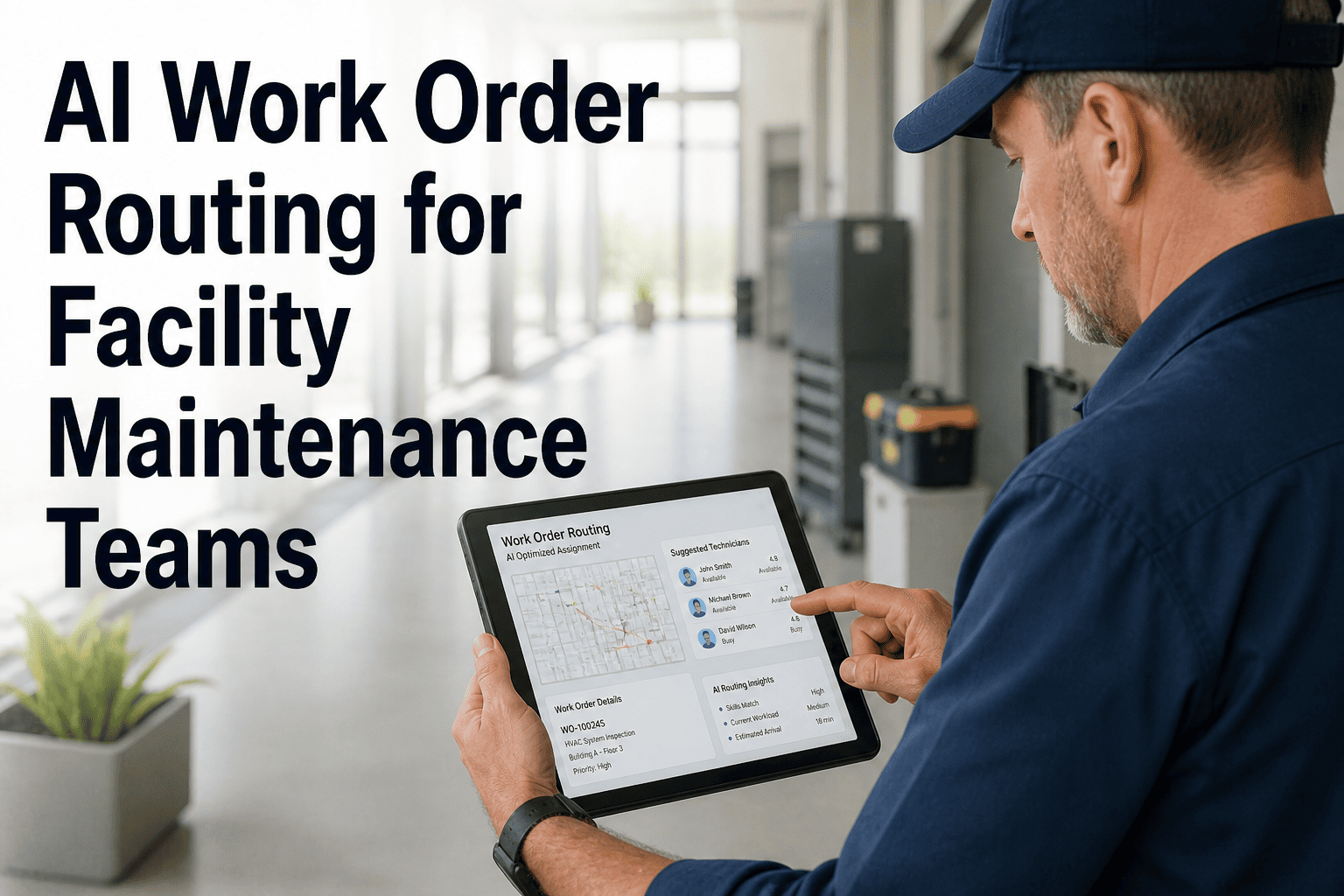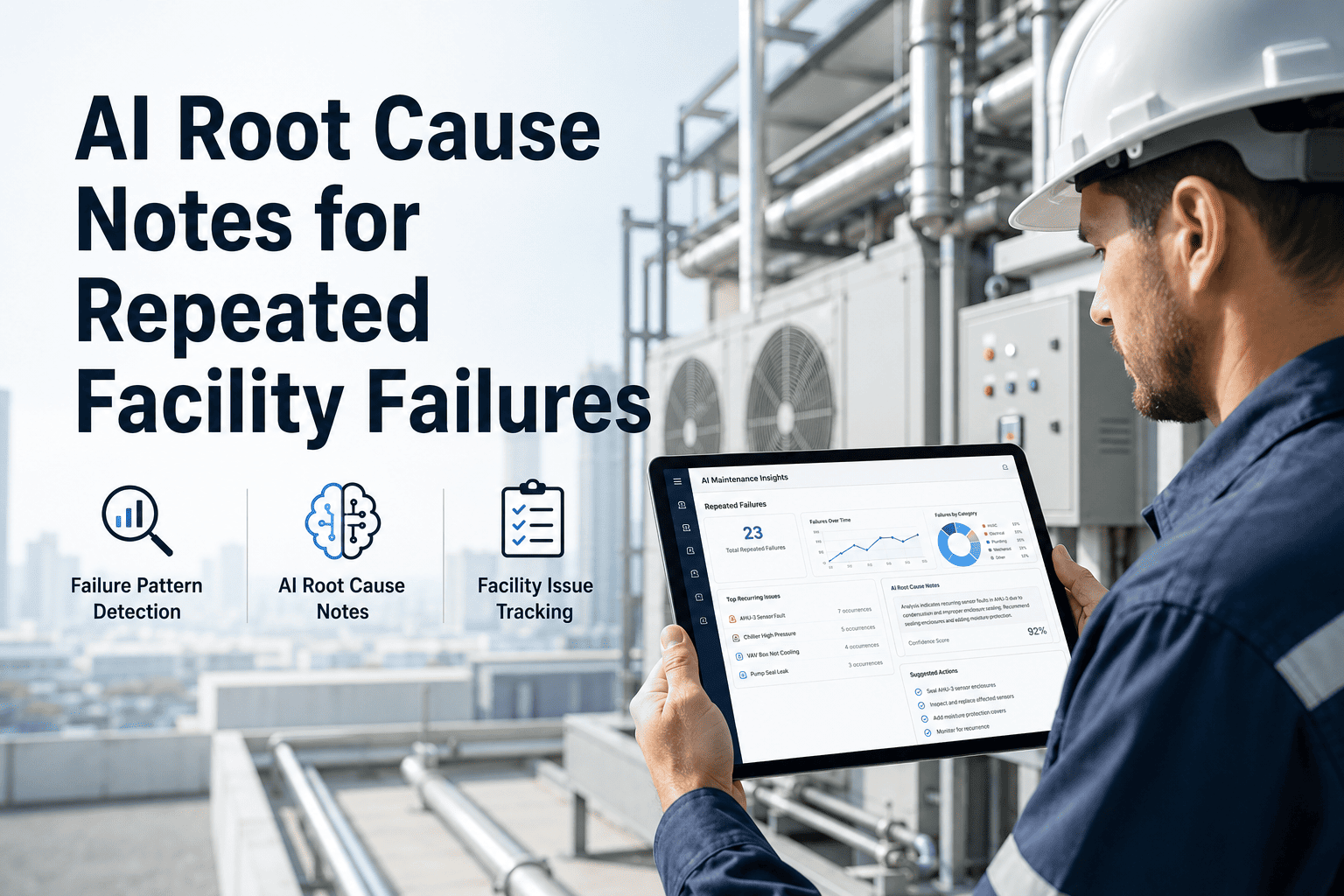
If an HVAC unit trips its circuit breaker three times in six weeks and each event generates a separate work order with a separate technician who replaces the same capacitor and closes the ticket without ever flagging the pattern — that is not maintenance. That is chasing symptoms. Root cause diagnosis requires seeing across time and across individual repair events, which is exactly what individual work orders never allow a single technician or even a busy manager to do. OxMaint's AI Root Cause Notes analyze failure histories across HVAC, electrical, plumbing, and lighting records to surface repeat fault patterns and flag assets showing systemic problems — before the next breakdown. Book a demo to see how facility teams have cut repeat failures by 52% within 90 days of implementation.
AI Root Cause Notes for Repeated Facility Failures
The same fault. The same asset. The fourth time this quarter. AI identifies repeat failure patterns across your entire maintenance history so your team fixes causes, not symptoms.
What Repeat Failure Looks Like in Real Data
Failure Patterns AI Tracks by System
- Recurring belt slippage → misalignment
- Repeat coil freeze → low refrigerant or flow restriction
- Compressor trip patterns → electrical instability
- Repeated circuit breaker trips → load imbalance
- UPS battery failures → thermal environment issue
- Panel overheating events → connection degradation
- Recurring pipe leaks, same section → pressure surge or corrosion
- Pump seal failures → cavitation or misalignment
- Water heater resets → scale buildup or thermostat drift
- Bulb failures under 500 hours → voltage spike pattern
- Ballast failures, same zone → harmonic distortion
- Emergency lighting failures → charging circuit degradation
Impact of Root Cause Identification vs. Symptomatic Repair
| Asset Type | Avg Repair Cost (Symptomatic) | Cost After Root Cause Fix | Annual Savings |
|---|---|---|---|
| AHU / Air Handler | $850/event × 6 events/yr | $2,200 root cause fix × 1 | $2,900 saved |
| Chiller | $1,400/event × 4 events/yr | $3,800 root cause fix × 1 | $1,800 saved |
| Electrical Panel | $600/event × 5 events/yr | $1,600 root cause fix × 1 | $1,400 saved |
| Pump Assembly | $450/event × 8 events/yr | $1,200 root cause fix × 1 | $2,400 saved |
Fix the Cause Once. Stop Paying for Symptoms Repeatedly.
AI surfaces the pattern. Your team fixes it permanently.
Expert Perspective
Repeat failures are a symptom of a data problem, not a technician problem. Technicians do their job correctly — they repair what is in front of them. The issue is that no individual technician can see the cross-time pattern that only becomes visible when you aggregate all work orders for one asset across six months. AI root cause identification does exactly what a skilled reliability engineer would do if they had time to review every work order — spot the recurrence, infer the systemic cause, and recommend a lasting fix before the next failure.
Frequently Asked Questions
Stop Repairing the Same Asset Next Month
OxMaint AI turns your work order history into a root cause radar — surfacing systemic problems before they repeat.