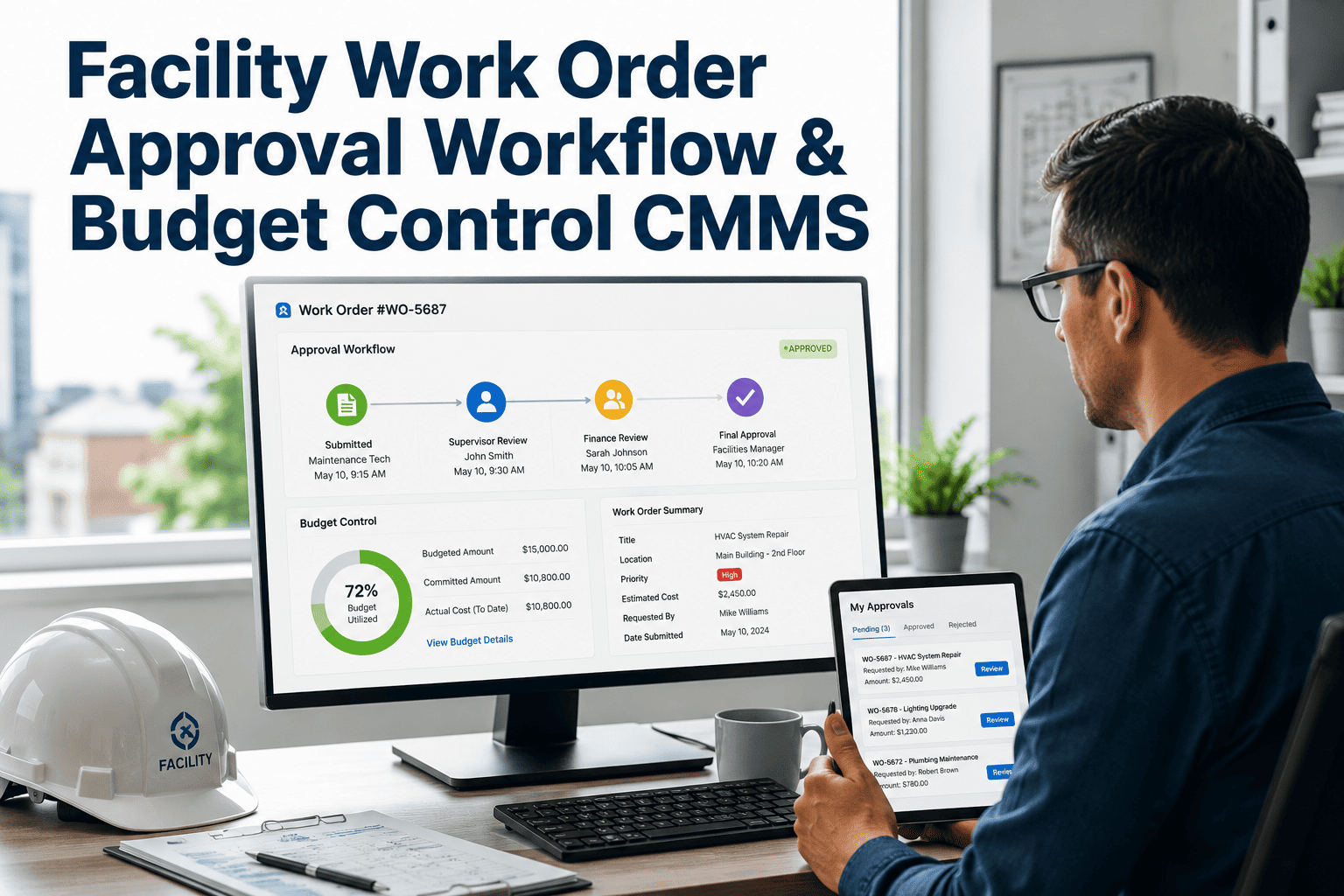
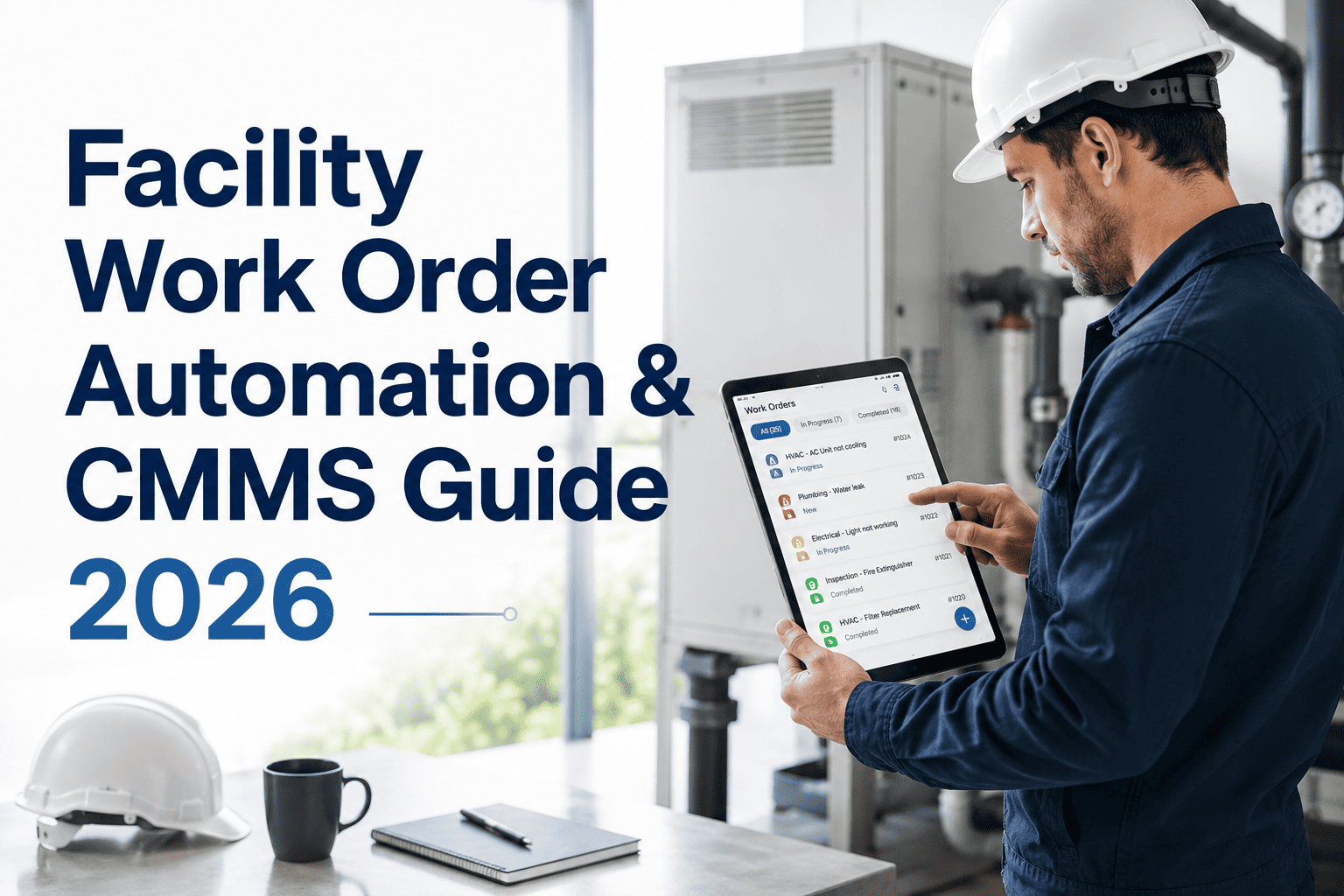
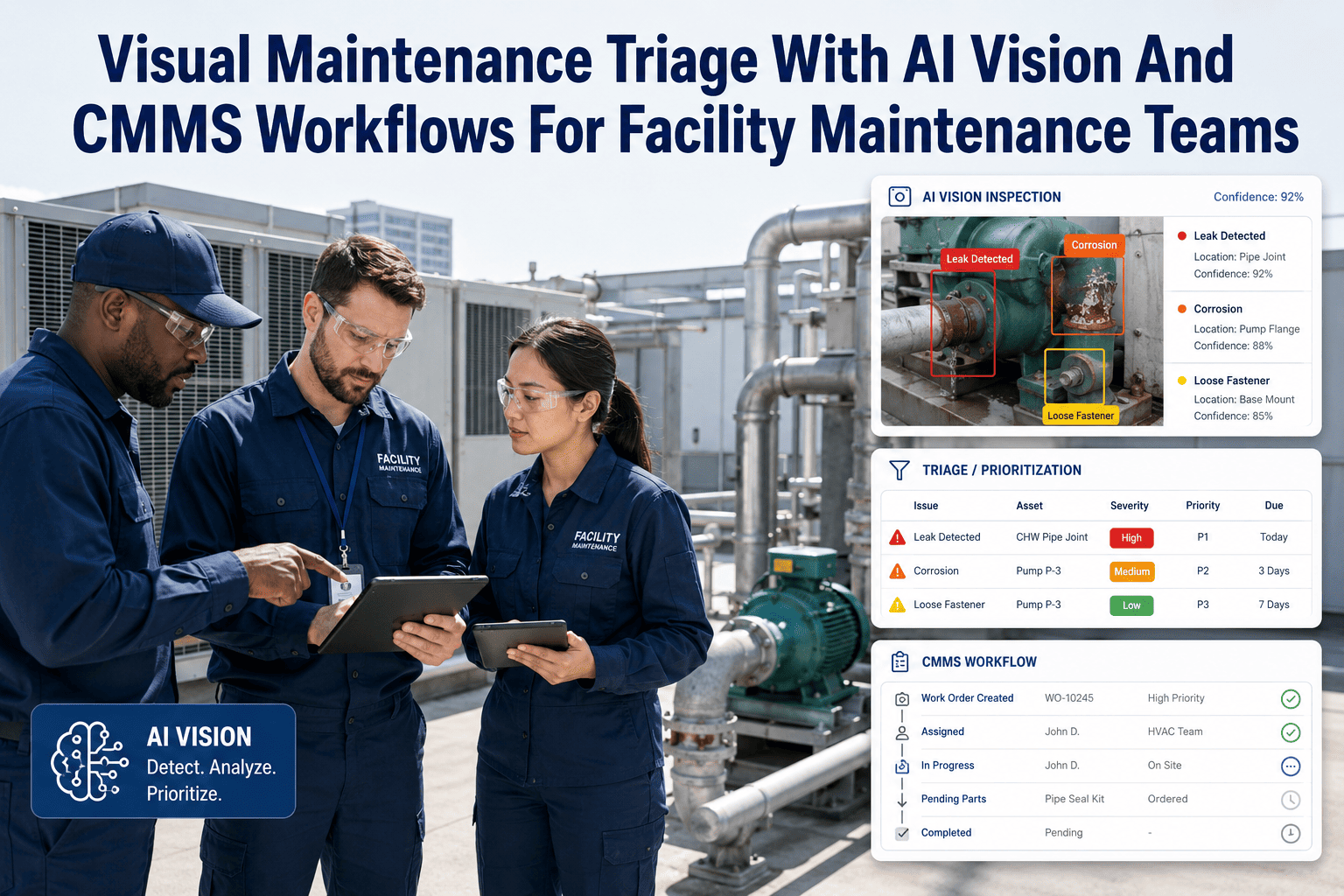
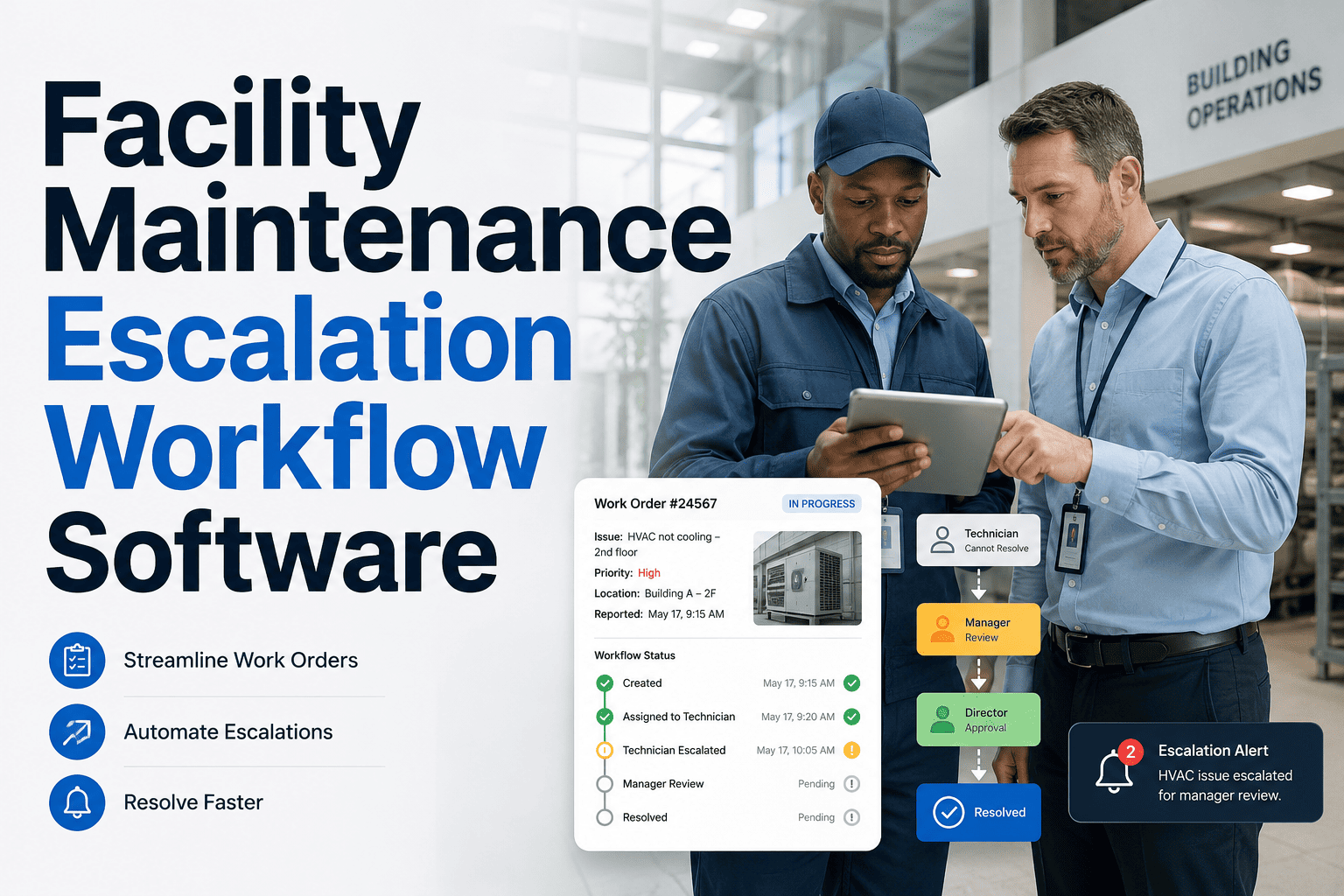
A facilities coordinator at a seven-building corporate campus described her Monday morning routine: 24 open work orders from the weekend, six of them duplicates from the same HVAC complaint logged through three different channels, four technicians waiting for assignments being sorted manually in a spreadsheet, and an emergency repair invoice from Friday that nobody had entered yet. By the time every work order was reviewed, classified, and dispatched, 2.5 hours had elapsed. Nothing had been repaired. In a facility running AI work order automation, that Monday looks entirely different. Service requests from any channel are captured and de-duplicated automatically. AI classifies each by urgency and asset criticality, creates a structured work order with job plan and parts list attached, and assigns it to the right technician on mobile — before the facilities coordinator has opened her second email. Book a demo to see how Oxmaint AI work order automation handles this workflow without manual input. AI adoption in facility management is expected to surpass $12 billion by 2026, growing at 33% annually. 93% of service organisations have already implemented AI in some form. Facilities Dive predicts that in 2026, facility teams will deploy AI agents trained on internal workflows to handle administrative work and automate coordination — freeing professionals to spend less time managing systems and more time on strategic work. The window for competitive advantage is now.
AI Work Order Automation That Eliminates the Dispatcher Bottleneck
Oxmaint AI automatically creates, classifies, assigns, and tracks work orders from any trigger — service requests, sensor alerts, inspection deficiencies, or scheduled PM due dates — with no manual data entry and no lost requests.
$12B
AI adoption in facility management by 2026 — growing at 33%+ annually as automation moves from pilot to standard practice
93%
Of service organisations have implemented AI — work order automation and scheduling are the highest-adoption use cases
75%
Of teams say AI improves first-time fix rates — because technicians arrive with the right job plan, parts, and full asset history
4.8x
Higher cost of reactive emergency repairs vs. planned maintenance — what slow, manual work order processes are costing every week
WHAT AI WORK ORDER AUTOMATION IS
Manual Work Orders vs. AI-Automated Work Orders: The Structural Difference
Most facility teams have work order software. Very few have AI-automated work order workflows. The difference is not a feature toggle — it is a structural shift in how work enters the system, how it is prioritised, how it gets to the right person, and how it feeds back into asset data and scheduling decisions.
Manual Process
Work Order Management Without AI
Technician or operator identifies issue and reports verbally or by email
Dispatcher manually logs work order — description, asset, location, priority
Dispatcher checks technician availability and skill match
Work order assigned via phone call, text, or paper printout
Technician completes work — may or may not update the record
Manager reviews closed work orders manually for reporting
Result: Hours of admin per day. Duplicates, gaps, and misassignments common.
AI-Automated Process
Work Order Management With Oxmaint AI
Any trigger — service request, sensor alert, inspection finding, PM schedule — auto-creates work order
AI classifies by urgency, asset criticality, and failure type automatically
Job plan, required parts, and asset history auto-attached from asset record
AI assigns to qualified available technician — mobile notification sent instantly
Technician completes digital checklist on mobile — work order closes with photo and sign-off
Completion data feeds asset condition score, MTBF trend, and next PM schedule
Result: Zero manual dispatch. Full traceability. Every repair improves future predictions.
THE 6 AUTOMATION LAYERS
The 6 AI Work Order Automation Capabilities That Matter in Facility Management
AI work order automation is not a single feature. It is a stack of connected capabilities — each one eliminating a specific manual bottleneck that slows response times and increases maintenance cost in manual workflows.
01
Multi-Channel Work Order Capture
Capture service requests from mobile apps, QR code scans at equipment, email, tenant portals, voice submission, and IoT sensor alerts — all automatically converted into structured work orders in Oxmaint. Duplicate detection prevents multiple entries for the same issue. No request falls through because it arrived on the wrong channel.
02
AI Priority and Criticality Classification
AI classifies every incoming work order against asset criticality ratings and failure severity indicators. A chiller fault in a food cold store triggers a different response than a broken bathroom door handle — even if both are described with the same vague language by the person who submitted them. Critical assets with active fault codes jump the queue automatically.
03
Intelligent Technician Assignment
AI matches each work order to the qualified available technician based on: skills and certifications for the asset type, current workload and proximity to asset location, and previous history with that asset. The right person gets the right job — with the right job plan — without dispatcher review on routine assignments. 75% of teams that deploy AI assignment report improved first-time fix rates.
04
Auto-Attached Job Plans and Parts Lists
When a work order is created for a specific asset and failure type, Oxmaint automatically attaches: the standard job plan for that repair, the parts list pulled from the asset BOM and MRO inventory, required safety procedures and PPE, and the full maintenance history for that asset. Technicians arrive informed and equipped — eliminating the return trips that inflate MTTR by 40–50%.
05
IoT and Sensor-Triggered Work Orders
When connected sensors detect an anomaly — a vibration signature above baseline on a motor, a temperature deviation in a cold room, a pressure drop in a compressed air system — Oxmaint auto-generates a condition-based work order without any human observation required. The work order includes the sensor reading that triggered it, the asset's current condition score, and the estimated urgency window.
06
Mobile Completion and Asset Feedback Loop
Technicians complete work orders on mobile with required fields, photo documentation, parts consumed, and digital sign-off. Completed data feeds back into the asset record — updating condition score, MTBF baseline, and maintenance cost per asset. Every repair makes the AI scheduling model more accurate for that specific asset. The system learns from every job.
PAIN POINTS AI AUTOMATION ELIMINATES
The 4 Work Order Bottlenecks That Are Costing Your Facility Every Week
Bottleneck 01
Duplicate and Lost Service Requests
When service requests arrive through multiple channels — phone, email, app, verbal report — the same issue gets logged multiple times while other issues never get logged at all. Facilities Dive confirms that duplicate work orders and avoidable rework are among the top drivers of unnecessary maintenance costs. AI multi-channel capture with duplicate detection eliminates both failure modes simultaneously.
Bottleneck 02
Manual Dispatch Delaying Response Time
When every work order waits for a dispatcher or manager to classify, assign, and communicate it, response time is gated by human availability. A failure that occurs at 11 PM on Friday may not reach a technician until 8 AM Monday through a manual process. AI assignment eliminates this gate for every routine work order — critical assets get automated dispatch around the clock.
Bottleneck 03
Technicians Without Context Arriving at Jobs
A technician who arrives at a compressor repair without the asset's last three work orders, without the correct parts, and without the standard job plan for that failure mode will take longer, may make a repeat visit, and will generate an incomplete maintenance record. MTTR inflates 40–50% when technicians must gather context at the job site. AI auto-attachment of job plans and parts eliminates this at the point of assignment.
Bottleneck 04
Work Order Data That Dies at Completion
In manual systems, a completed work order is a record. In Oxmaint AI, a completed work order is a data point that updates the asset condition score, the technician productivity model, the parts demand forecast, and the next PM trigger calculation. The gap between these two approaches compounds over time — manual systems produce maintenance history; AI systems produce maintenance intelligence.
HOW OXMAINT DELIVERS IT
Oxmaint AI Work Order Automation: End-to-End Across Every Trigger Type
Oxmaint is not a work order tool with AI features added on top. It is a unified platform where AI drives the entire work order lifecycle — from initial trigger to completed record, asset history update, and CapEx forecast adjustment. Every module shares data. Every completed work order improves the next one.
PM-Triggered Work Orders
Preventive maintenance schedules trigger work orders automatically — by calendar interval, operating hours, production units, or IoT condition threshold. PM tasks auto-assign to qualified technicians with digital checklists and pre-attached parts lists. PM compliance rate tracked in real time with automated mobile reminders.
Inspection Deficiency-to-Work Order
When a digital inspection in Oxmaint identifies a deficiency — a fire door that doesn't self-close, an electrical panel running hot, a pump with elevated vibration — one tap converts the deficiency into a tracked corrective work order with auto-assigned priority, responsible technician, and due date. Zero manual steps between finding and action.
Sensor Alert-to-Work Order
IoT sensor anomalies above configured thresholds auto-generate condition-based work orders with the sensor reading, asset condition score, and urgency classification attached. High-confidence alerts auto-assign immediately. Borderline alerts surface to the maintenance manager dashboard for review before assignment.
Tenant and Operator Request Capture
Service requests submitted through QR code scans, mobile apps, or web portals are captured, classified by AI, and converted to work orders without dispatcher intervention. Duplicate detection identifies when multiple people have reported the same issue. Requesters receive automated status updates as the work order progresses and closes.
BEFORE VS. AFTER
Manual Work Order Management vs. Oxmaint AI: The Operational Gap
AI Work Order Automation Impact: Manual Process vs. Oxmaint Platform
DOCUMENTED RESULTS
What AI Work Order Automation Delivers: Real Operational Outcomes
88%
Improved Uptime
88% of service organisations implementing AI report improved equipment uptime — because faster work order response and condition-triggered scheduling eliminate the reactive downtime cycle.
40–50%
MTTR Reduction
Mean Time to Repair drops 40–50% when technicians arrive with pre-attached job plans, correct parts, and full asset history — eliminating the information-gathering delays that inflate every repair.
60 days
Time to Documented ROI
Facilities deploying Oxmaint AI work order automation typically document measurable response time reduction and maintenance cost savings within 60 days — before most competing platforms have finished onboarding.
4.8x
Emergency Cost Reduction
Emergency repairs cost 4.8x more than planned maintenance. AI work order automation converts reactive failures into planned, preventive repairs — the single highest-ROI maintenance investment a facility can make.
$12B
AI facility management market by 2026 — work order automation is the fastest-scaling capability
75%
First-time fix rate improvement with AI assignment vs. manual dispatch
33%+
Annual growth in AI facility management adoption — the gap between early adopters and laggards is widening
FREQUENTLY ASKED QUESTIONS
AI Work Order Automation — What Facility Teams Ask Most
Does AI work order automation require IoT sensors to deliver value in our facility?
No. Oxmaint delivers full AI work order automation — multi-channel capture, priority classification, intelligent technician assignment, auto-attached job plans, and real-time dashboards — without any IoT sensors. The AI layer operates entirely on work order history, asset records, PM schedules, and inspection findings from day one. IoT sensor integration adds the condition-based work order trigger layer — generating work orders from equipment anomalies 30–90 days before failures occur — and is deployed as an additional capability rather than a prerequisite. Most facilities start with the software-only deployment and add sensor connections on high-criticality assets once the CMMS workflows are established.
Sign up free and begin automating work orders from day one, or
book a demo to see both deployment paths.
How does Oxmaint handle work orders that require manager approval before dispatch?
Oxmaint's AI work order automation is configurable by work order type, cost threshold, and asset criticality. High-confidence, routine assignments on non-critical assets auto-dispatch without human review. Work orders above a configured cost threshold, involving critical assets, or classified as high-severity can be routed to a manager dashboard for one-click approval before dispatch. Borderline AI classifications surface for review rather than auto-dispatching. The system starts with the approval workflows your organisation requires and automates incrementally as confidence builds — rather than forcing full automation from day one.
Can Oxmaint AI work order automation handle after-hours and weekend failures without a dispatcher on duty?
Yes — 24/7 automation is one of the core operational advantages. When a sensor alert, alarm condition, or emergency service request arrives outside business hours, Oxmaint auto-creates the work order and, depending on configured urgency rules, either auto-assigns to an on-call technician with mobile notification, escalates to the on-call manager via SMS, or queues for Monday morning review with no human input required. Critical assets have configurable emergency response rules separate from standard assignment logic. The facility director who logs in Monday morning sees every weekend event already classified, assigned, and tracked — not a backlog waiting for manual triage.
Book a demo to configure your after-hours response rules, or
start free today.
How long does it take to implement Oxmaint AI work order automation in a multi-site facility portfolio?
Oxmaint deploys in days across a single facility and typically completes multi-site rollouts in 4–8 weeks. Asset records import via CSV or direct API from existing spreadsheets, CMMS platforms, or ERP systems. PM schedules are live within the first week. AI assignment rules activate once technician profiles and asset records are populated — typically days three through seven of deployment. Multi-site portfolios operate from a single Oxmaint instance with site-level permission controls and a consolidated portfolio dashboard. No per-site deployment fees. No implementation consultant required. The entire onboarding process is self-service, with Oxmaint support available throughout. Facilities averaging 50+ active work orders per month typically document measurable response time and cost improvements within the first 60 days.
Every Minute Your Work Orders Wait in a Dispatcher Queue Is a Minute Your Facility Is Reacting.
Oxmaint AI work order automation eliminates the queue entirely — capturing requests from any channel, classifying by criticality, attaching job plans and parts, assigning to the right technician, and closing the loop on every repair. Deploy in days. No implementation project. No per-site fees.