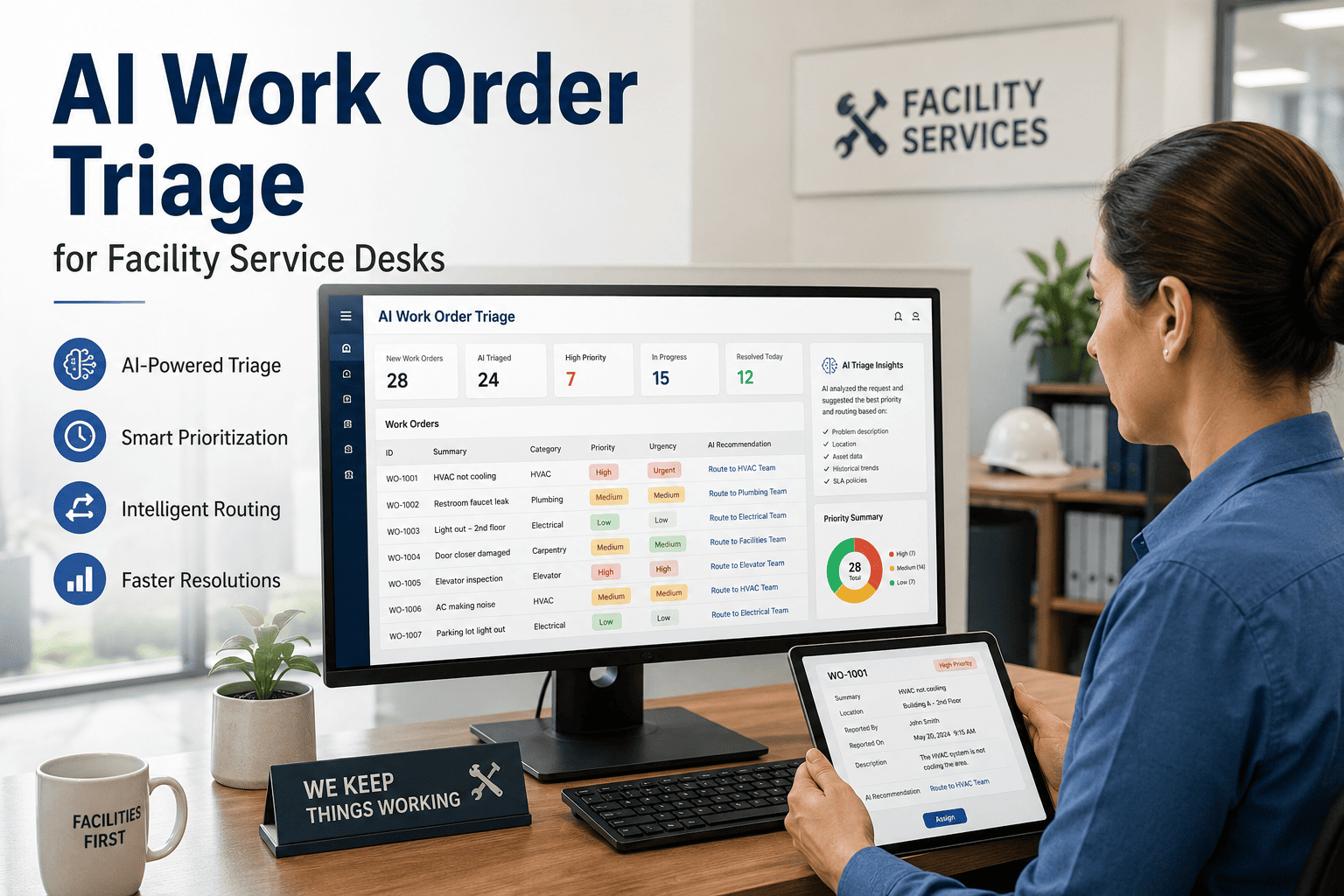
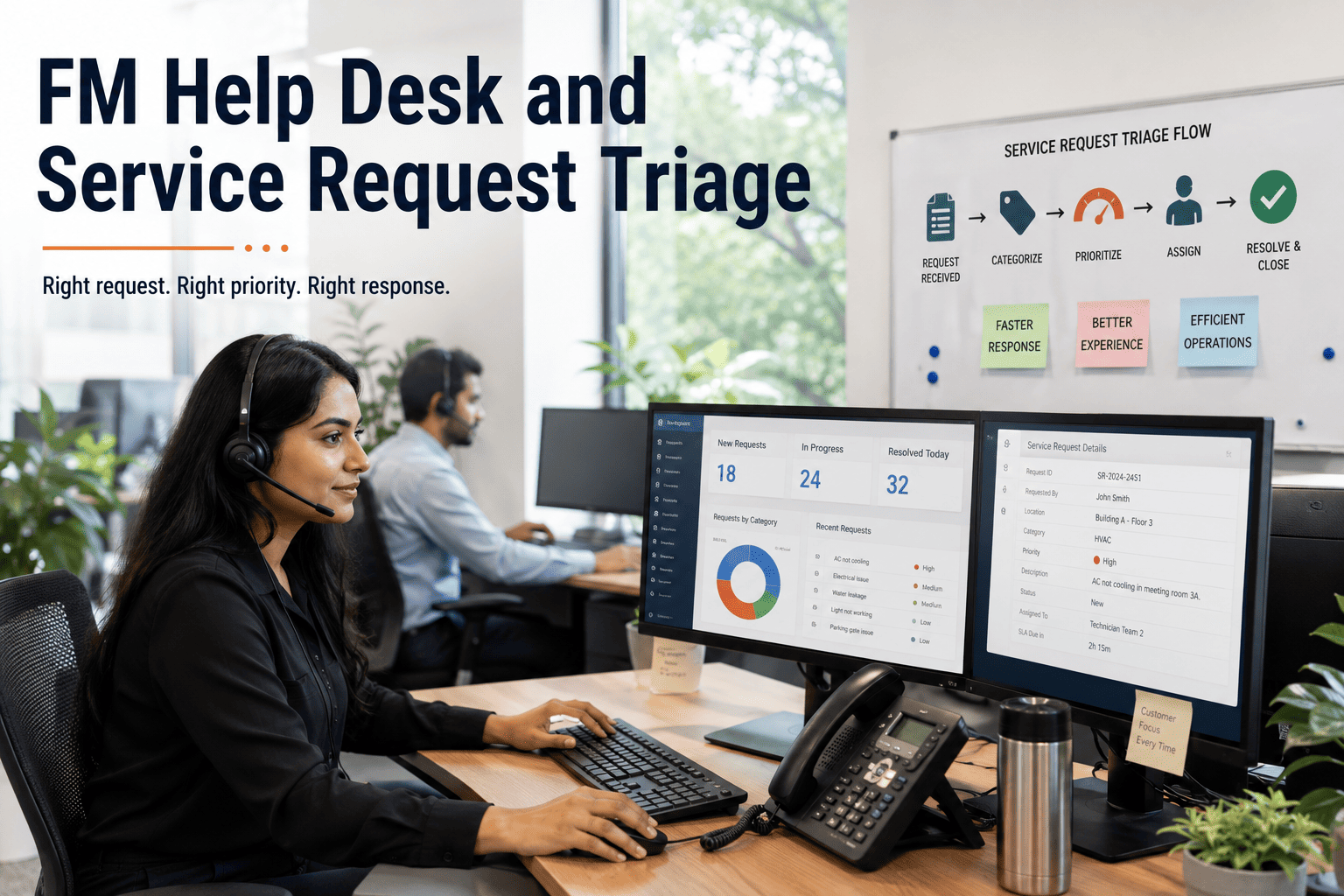
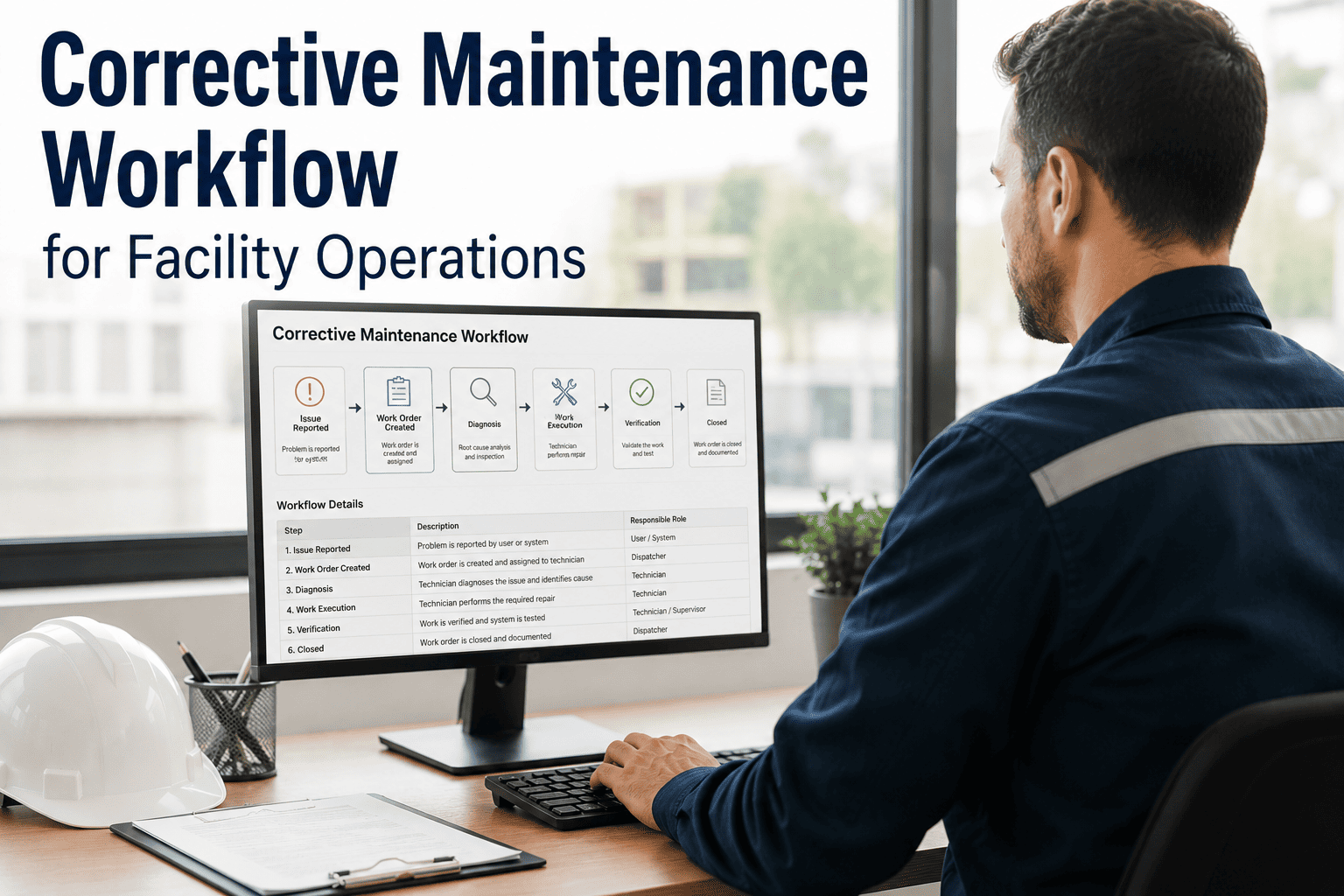
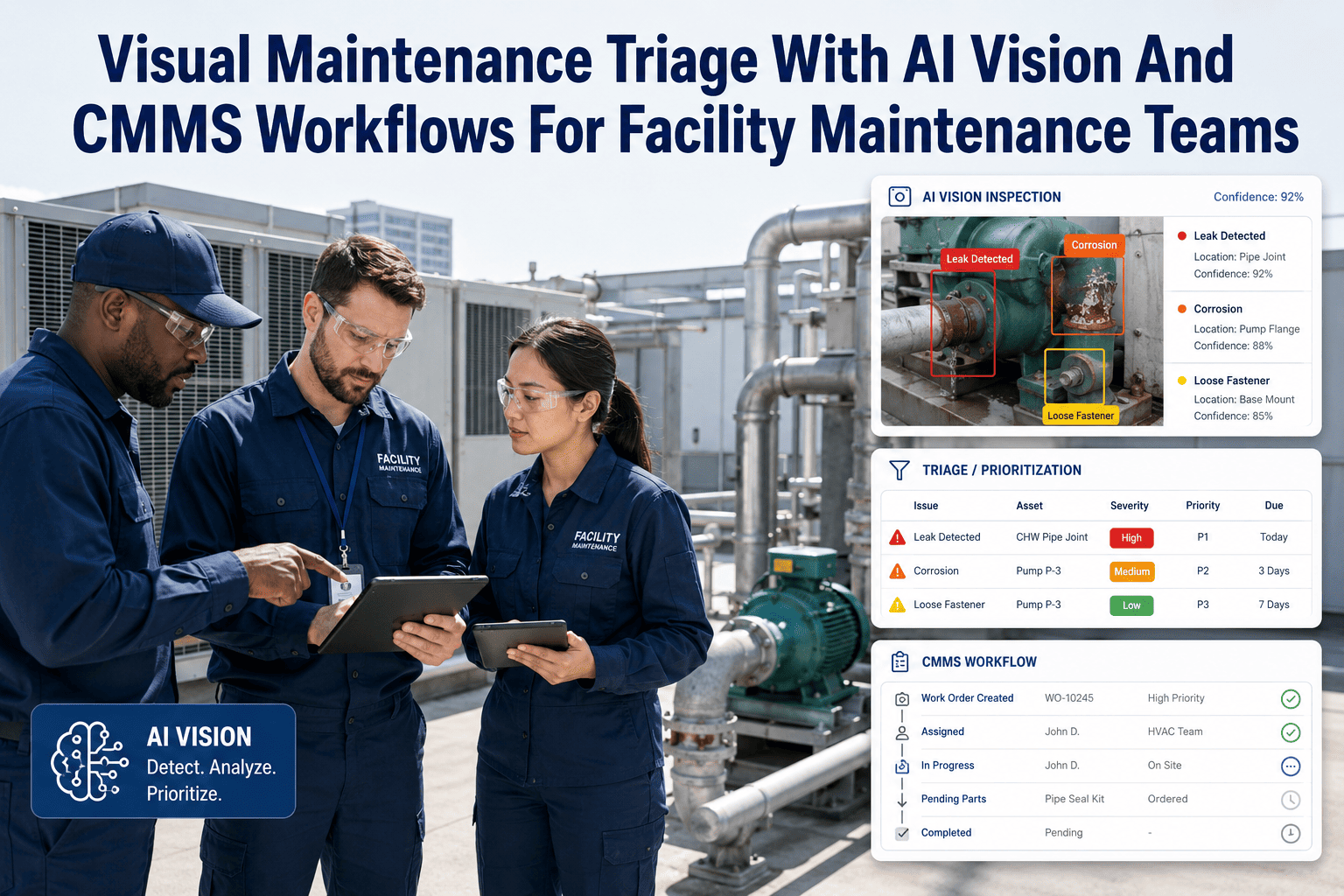
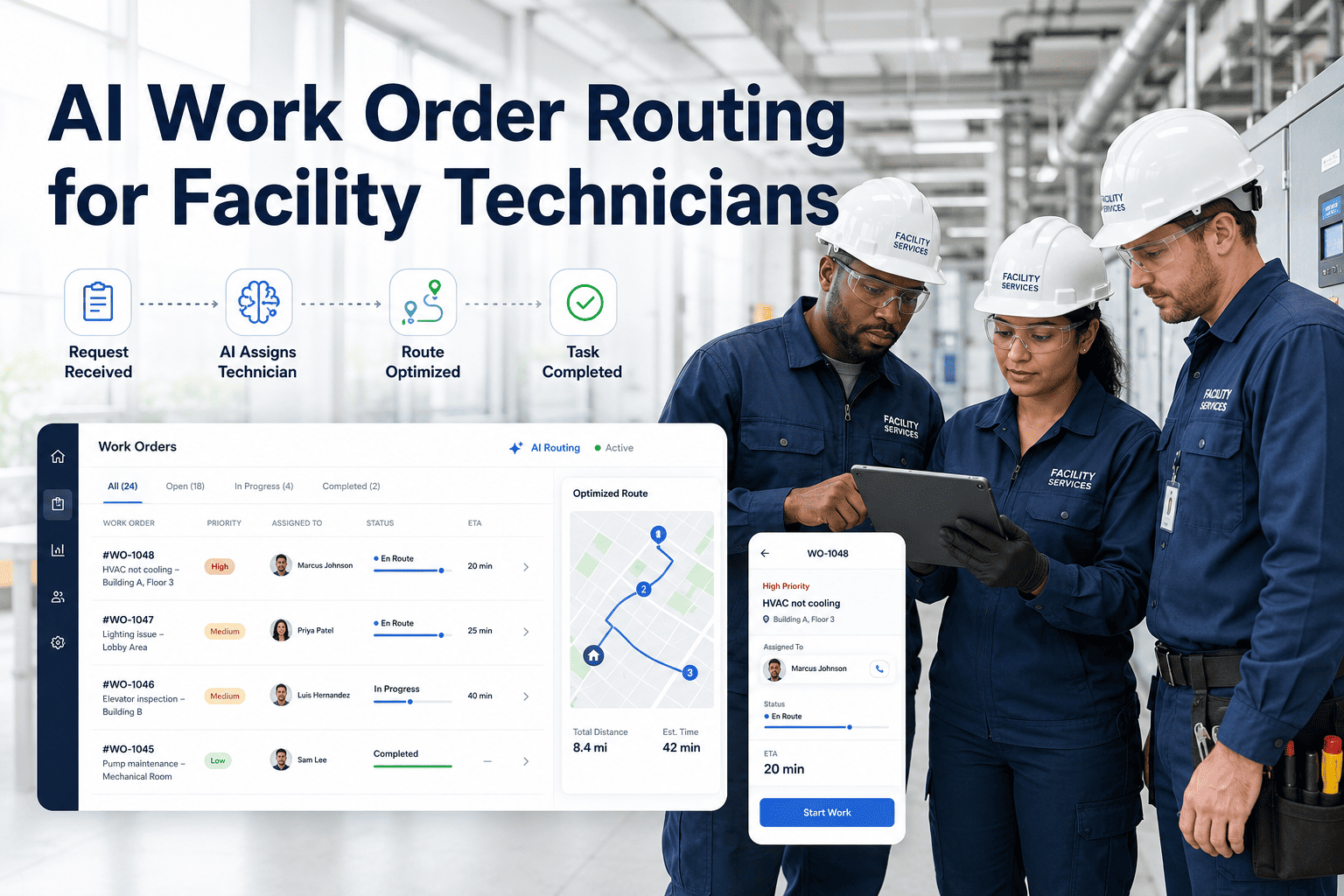
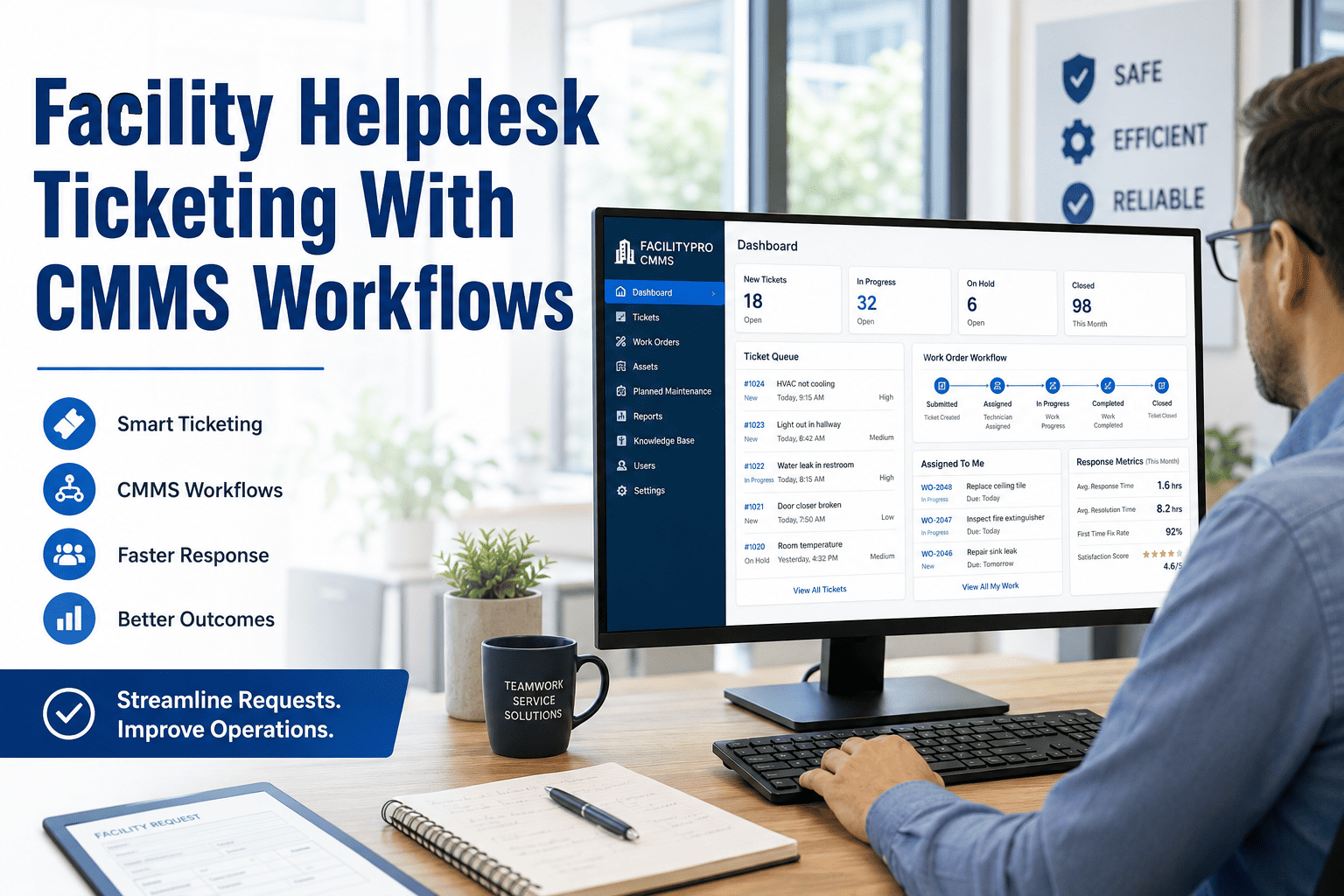
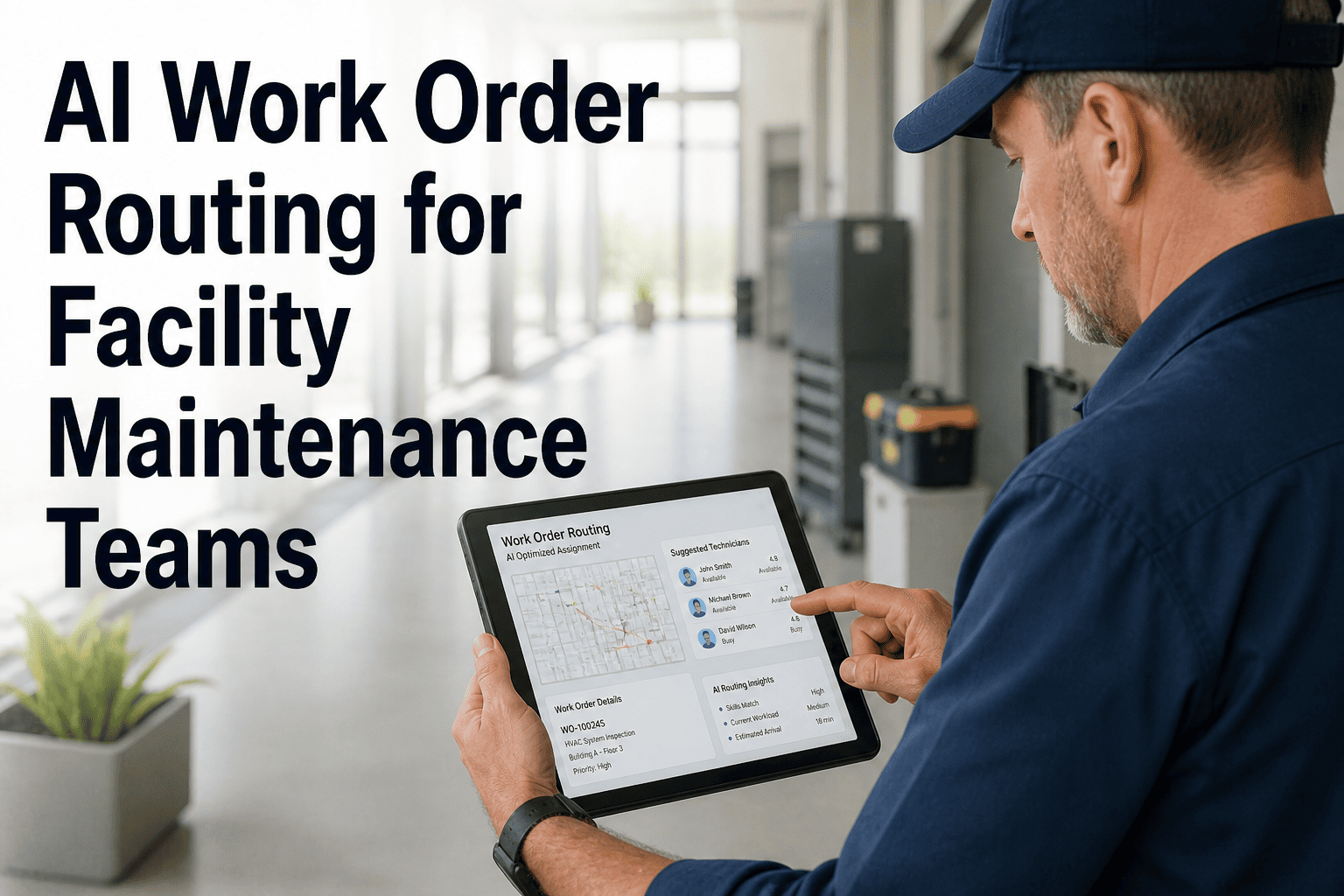
Every facility service desk handles the same daily challenge: a flood of incoming maintenance requests, each one competing for the same technician time and parts inventory. When triage is manual, the loudest request wins — not the most critical one. Oxmaint's AI work order triage automatically classifies, prioritizes, and routes every service request the moment it arrives, based on asset criticality, location, technician proximity, and failure consequence — not whoever sent the most urgent-sounding email. For service desk managers ready to move from inbox chaos to automated dispatch, book a live workflow demo and see the triage engine running on your request types.
AI-Powered Triage
From Request Received to Technician Dispatched — Automatically
1
Request Arrives
Email, mobile, QR scan, IoT alert
→
2
AI Classifies
Type, urgency, asset, location
→
3
Priority Assigned
Critical, High, Medium, Routine
→
4
Tech Dispatched
Nearest qualified, parts confirmed
The Cost of Manual Work Order Triage
When service desk coordinators manually classify and route requests, four failure patterns emerge consistently — each with a measurable cost impact.
42 min
Average delay from request to dispatch
Manual routing introduces decision lag at every handoff — from inbox to coordinator to technician. AI triage eliminates this entirely for routine request types.
31%
Work orders misrouted on first assignment
Wrong technician skill, wrong location, wrong parts — manual dispatch errors result in wasted trips and delayed closures that erode SLA compliance metrics.
18%
Critical requests that waited as routine
Without automated priority scoring, high-consequence failures get queued behind low-risk requests submitted earlier. Severity is invisible without AI classification.
3 hrs
Daily coordinator time on triage admin
Manually reading, classifying, and routing 30–50 daily requests consumes coordinator capacity that should go toward exception handling and escalation management.
Manual triage is costing you more than you realize. Oxmaint AI classifies and routes every request in seconds — letting your team focus on the exceptions, not the inbox.
How AI Triage Classifies and Routes Work Orders
Oxmaint's triage engine evaluates five factors simultaneously the moment a request is submitted — producing a priority score and routing decision in under 10 seconds.
Asset Criticality
Requests tied to life safety, production-critical, or high-value assets receive elevated priority regardless of the request's stated urgency level.
Failure Consequence
AI models the downstream impact of failure — occupant safety, regulatory compliance, revenue loss — and weights this into the priority score automatically.
Request Type Classification
Natural language processing categorizes free-text requests into structured work order types — electrical, HVAC, plumbing, life safety — without coordinator interpretation.
Technician Skill & Proximity
Routing matches request type to qualified technician skill sets and selects the nearest available resource — reducing travel time and misrouted assignments by over 30%.
Parts Availability Check
Before dispatch, inventory is checked for required parts. If unavailable, the work order is flagged for parts procurement and rescheduled — not dispatched to fail on site.
Work Order Triage Performance: Manual vs. AI
| Performance Metric |
Manual Triage |
Oxmaint AI Triage |
Improvement |
| Request-to-dispatch time |
42 min avg. |
Under 2 min |
95% faster |
| First-assign accuracy |
69% |
94% |
+25 points |
| Critical request identification |
Manually reviewed |
Auto-flagged in real time |
Zero miss rate |
| Work order closure rate |
Baseline |
+40% faster closure |
40% gain |
| Coordinator triage hours |
3 hrs/day |
Under 30 min/day |
83% reduction |
"
AI-powered work order triage is one of the highest-ROI investments a facility service desk can make. The gains come from three places simultaneously — faster dispatch, better technician-to-task matching, and the elimination of coordinator bottlenecks. Facilities that automate triage consistently see 30–40% improvement in mean time to resolution within the first 60 days.
Sandra K. Okafor, CFM
Certified Facility Manager, IFMA — Director of Facility Operations Strategy, global real estate portfolio of 4.2M sq ft
Frequently Asked Questions
How does Oxmaint AI classify work orders submitted as free text?
Oxmaint uses natural language processing to read free-text service requests and classify them into structured work order types — HVAC, electrical, plumbing, life safety, janitorial, and others. The model is trained on millions of facility service requests and improves with your facility's historical data. Classification accuracy exceeds 92% on first submission, with coordinator review only required for ambiguous edge cases.
Start a free trial to test classification on your actual request history.
Can Oxmaint triage be configured for our specific priority levels and SLAs?
Yes. Priority thresholds, SLA windows, escalation rules, and technician skill tags are all configurable within the Oxmaint platform. The AI triage engine applies your defined parameters — not generic defaults — so priority scores reflect your facility's actual consequence model and contractual commitments.
Book a demo to walk through a configuration session for your request types and SLA structure.
Does Oxmaint AI triage work for multi-site or multi-building service desk operations?
Oxmaint supports multi-site triage natively — each site's assets, technicians, and SLA parameters are configured independently, but managed through a unified service desk dashboard. Requests are automatically routed to the correct site's technician pool based on asset location, eliminating cross-site routing errors common in centralized manual service desks.
Sign up to configure your first multi-site triage environment.
What happens if AI triage makes an incorrect classification?
Every AI-classified work order is visible to coordinators before dispatch, with the classification logic shown. Coordinators can override any classification in one click, and corrections feed back into the model — improving accuracy over time. The goal is to eliminate routine manual triage, not remove human judgment from complex or unusual requests.
Book a session to see the coordinator override interface and feedback loop in a live demo.
Stop Triaging Manually. Start Dispatching Intelligently.
Oxmaint AI classifies every work order, assigns the right priority, and routes to the best available technician — automatically, in real time.