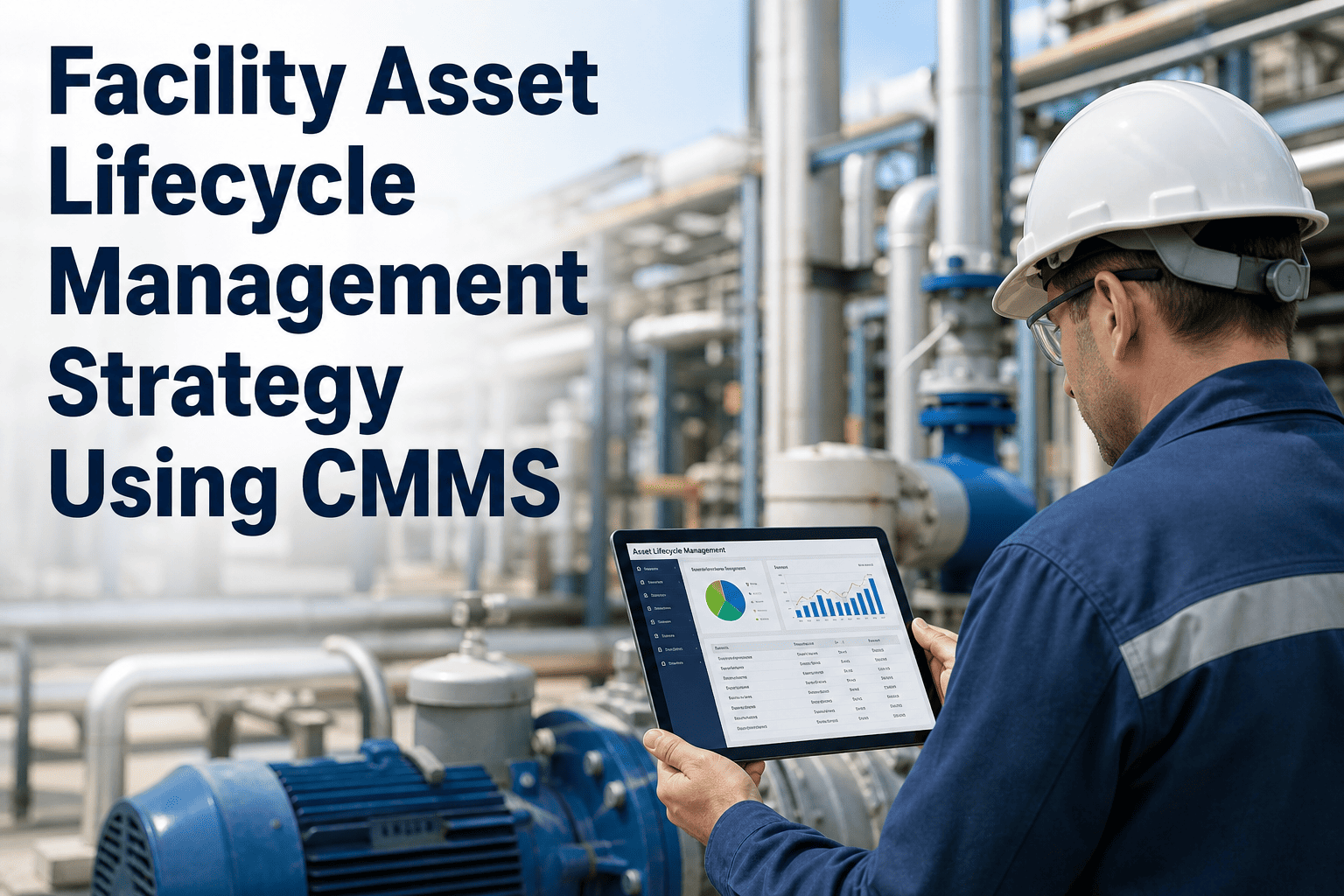
Most facilities treat asset replacement as a reactive event — a machine breaks catastrophically, the repair estimate arrives, and someone makes an emergency capital request. The real cost of that moment was locked in years earlier, when the asset was still running but the maintenance spend data, depreciation schedule, and condition trend were sitting in disconnected systems that nobody had connected into a replacement decision. Sign up for Oxmaint to build the complete asset lifecycle record your capital planning team needs — from procurement to decommission in a single system of record. Or book a demo to see how Oxmaint surfaces the data that makes replacement decisions obvious instead of political.
The Four Phases of Asset Lifecycle Management
Every physical asset moves through four core phases. Most organizations manage each phase in a different system — procurement in ERP, maintenance in a spreadsheet, depreciation in finance software, disposal in a work order. When those systems do not talk, lifecycle intelligence is impossible. Sign in to Oxmaint to manage all four phases in one connected platform.
What CMMS Tracks at Each Lifecycle Stage
The value of a CMMS in asset lifecycle management is not work order management — that is the minimum. The real value is the cumulative cost record that builds with every closed work order, every parts transaction, and every inspection finding. That record is what turns a capital replacement request from a gut-feel opinion into a data-supported decision. Book a demo to see how Oxmaint builds this record automatically.
| Lifecycle Stage | Data Captured in CMMS | Decision Enabled | Without This Data |
|---|---|---|---|
| Procurement | Purchase cost, warranty, vendor, expected lifespan, specs | TCO baseline and depreciation schedule | No baseline to measure against — ROI calculation impossible |
| Installation | Commissioning date, install photos, initial readings, manuals | Warranty claim support, first PM interval setting | Warranty disputes lost, PM intervals set by guesswork |
| Operation | Runtime hours, cycles, operator notes, condition readings | Usage-based PM triggers, utilization reporting | Fixed-calendar PM wastes budget on underused assets |
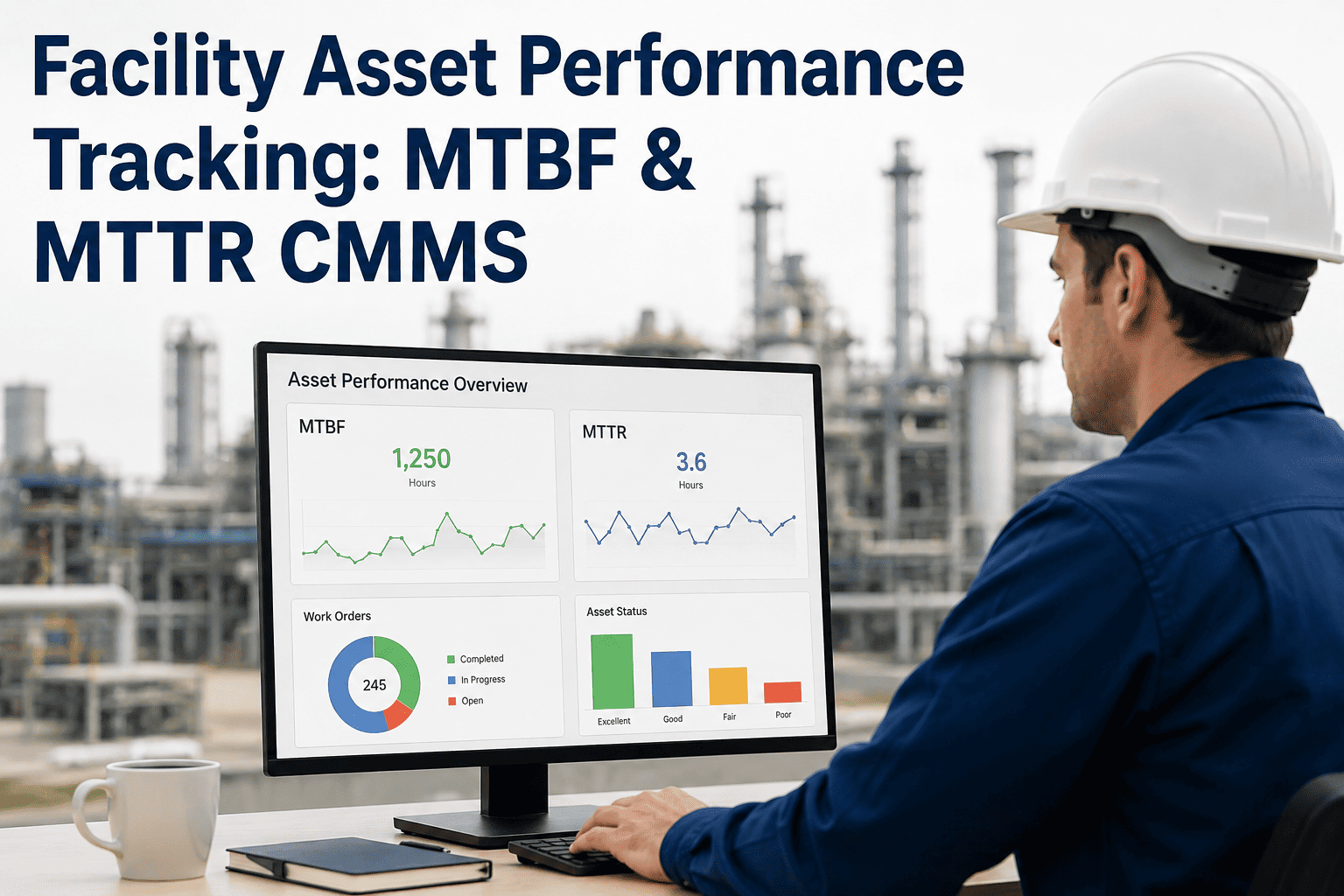
| Maintenance | Work orders, parts, labor, MTBF, MTTR, cumulative cost | Repair vs. replace threshold monitoring | Replacement decisions made on emotion, not economics |
| Decommission | Disposal authorization, removal date, salvage value, archive | Regulatory compliance, future procurement benchmarking | Compliance risk, no data to inform next purchase |
The Repair vs. Replace Decision: Making It Data-Driven
One of the highest-stakes decisions in asset management is knowing when to stop repairing and replace. Made too early, you waste remaining useful life. Made too late, you overpay for emergency repairs, energy waste, and reliability losses. The repair-replace threshold gives you a data-based answer instead of a political debate. Sign in to Oxmaint to see your assets flagged automatically when they approach the replacement threshold.
Every Work Order Builds the Lifecycle Record Your Capital Team Needs
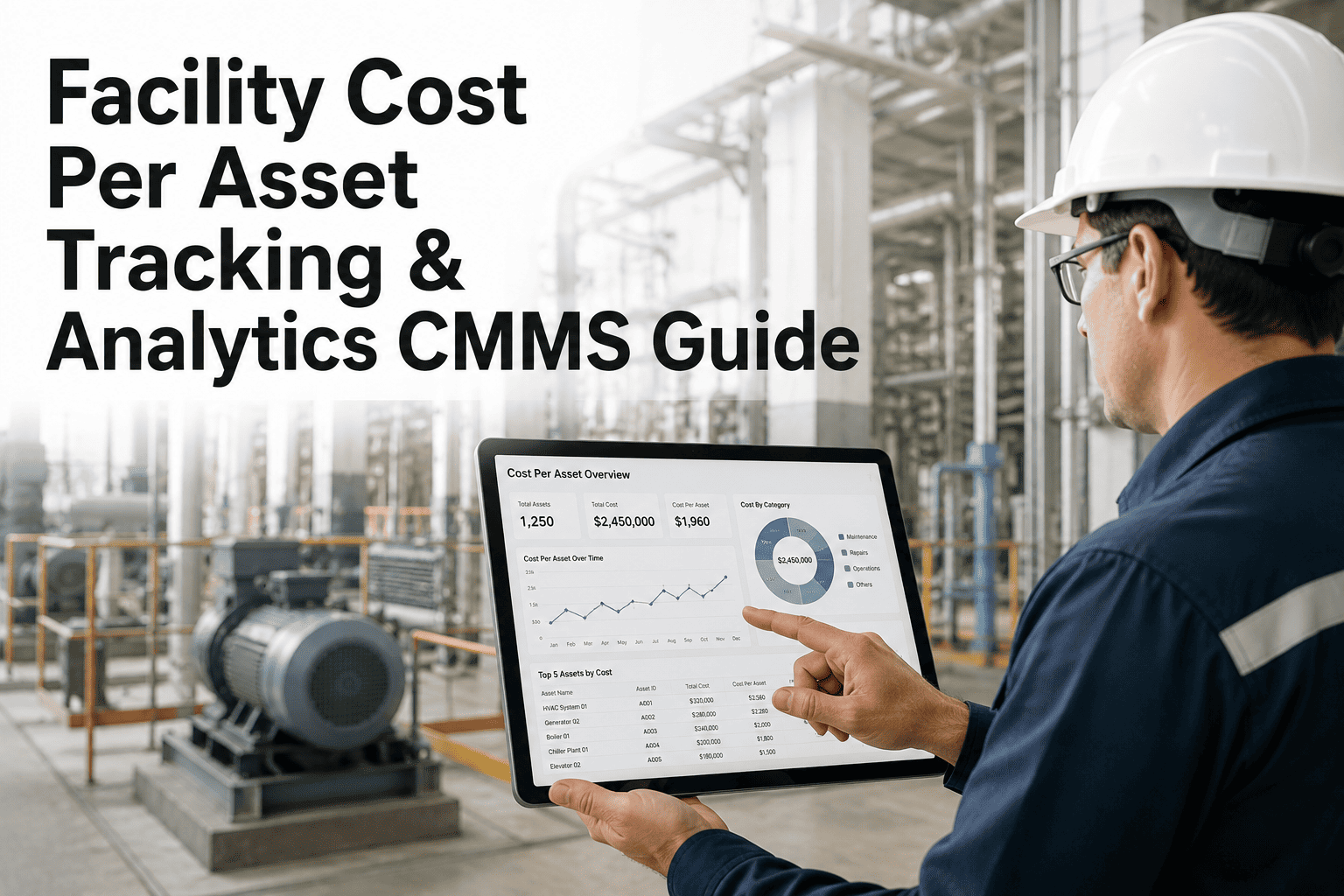
Oxmaint links every work order, parts transaction, and inspection to the asset it serves — building the cumulative cost and condition history that makes capital replacement decisions data-driven, not reactive.
Total Cost of Ownership: What to Include and What Teams Miss
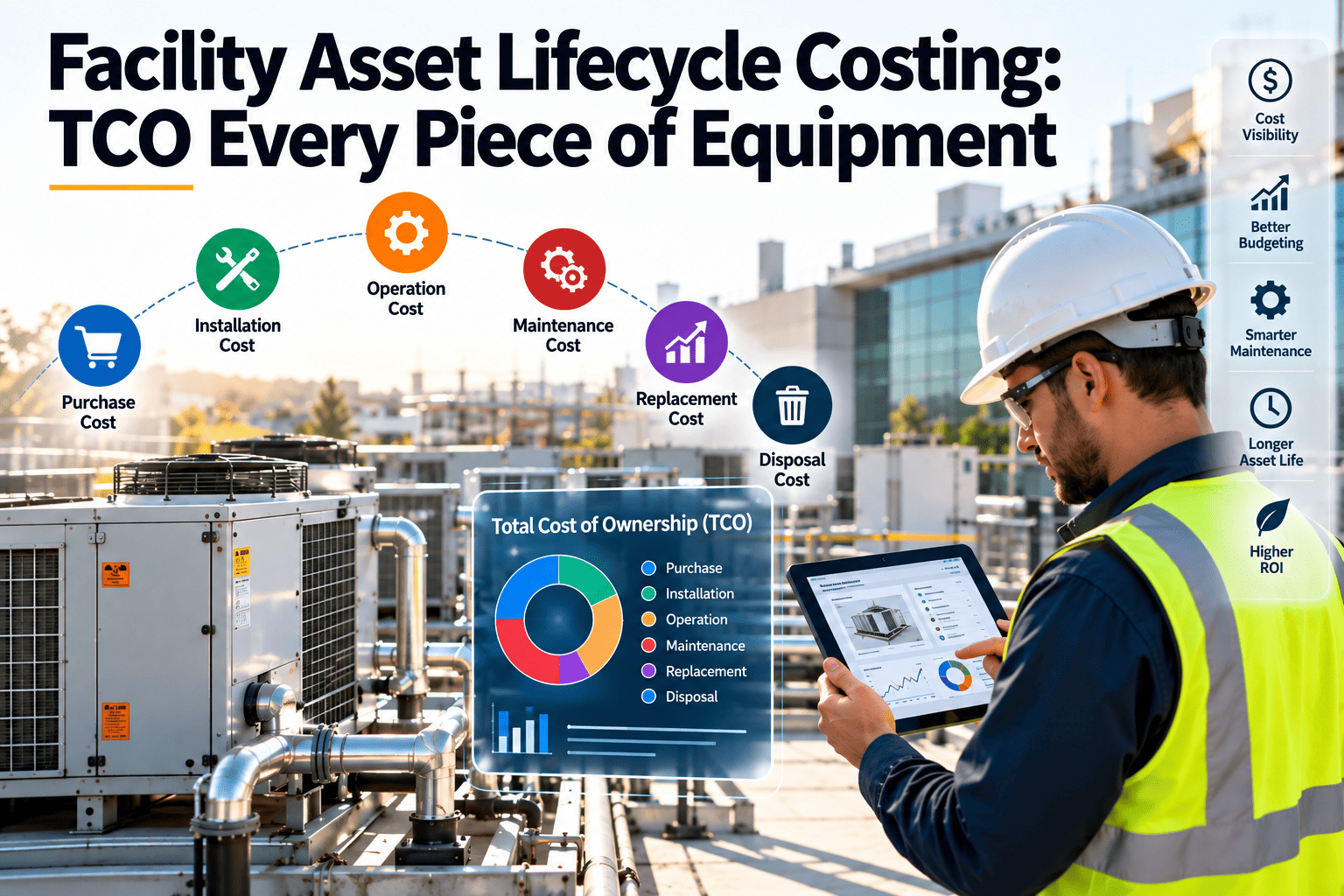
TCO is the financial foundation of asset lifecycle management. Procurement decisions made on purchase price alone systematically underestimate the true cost of asset ownership by 40–60% — because acquisition cost is typically only 20–30% of total lifetime spend for industrial equipment. A CMMS that tracks every cost transaction per asset builds the TCO automatically. Sign in to Oxmaint to see TCO calculated per asset from your existing work order data.
Frequently Asked Questions
A CMMS manages maintenance execution — work orders, PM schedules, and technician assignments. Asset lifecycle management is the broader strategy that uses CMMS data as one input alongside financial records, depreciation schedules, and condition monitoring to make decisions across the full asset life from procurement through disposal. A well-configured CMMS is the operational foundation of an ALM program. Sign up for Oxmaint to build an ALM program on top of your existing maintenance data.
The data-driven threshold is when cumulative maintenance cost approaches 75% of current replacement value. Beyond this point, the economics of continued repair are typically unfavorable when reliability loss, energy inefficiency, and risk of catastrophic failure are included. A declining MTBF trend, rising energy consumption, and parts obsolescence risk are supporting indicators. Book a demo to see how Oxmaint flags assets approaching this threshold automatically.
At minimum: purchase price, vendor and contact, warranty terms and expiry date, expected useful life, manufacturer specifications, installation date, and the name of the commissioning engineer. Also capture the bill of materials (linked spare parts), the first PM interval from the manufacturer, and commissioning photos. Everything recorded here becomes the baseline every future lifecycle decision is measured against.
Oxmaint creates a single asset record that persists from procurement through decommission. Every work order, parts transaction, inspection finding, and condition reading links to the asset and builds its cumulative cost and condition history. Capital replacement reports surface assets crossing the 75% threshold. Disposal documentation is stored in the same record. The complete history archives at decommission and feeds into the specification for the next replacement procurement. Sign in to start building your asset lifecycle records today.
Every Asset Has a Story. Make Sure Yours Is in One Place.
Oxmaint builds the complete asset lifecycle record — from purchase price and warranty to cumulative repair cost and MTBF trend — so every capital replacement decision is data-driven, not reactive.