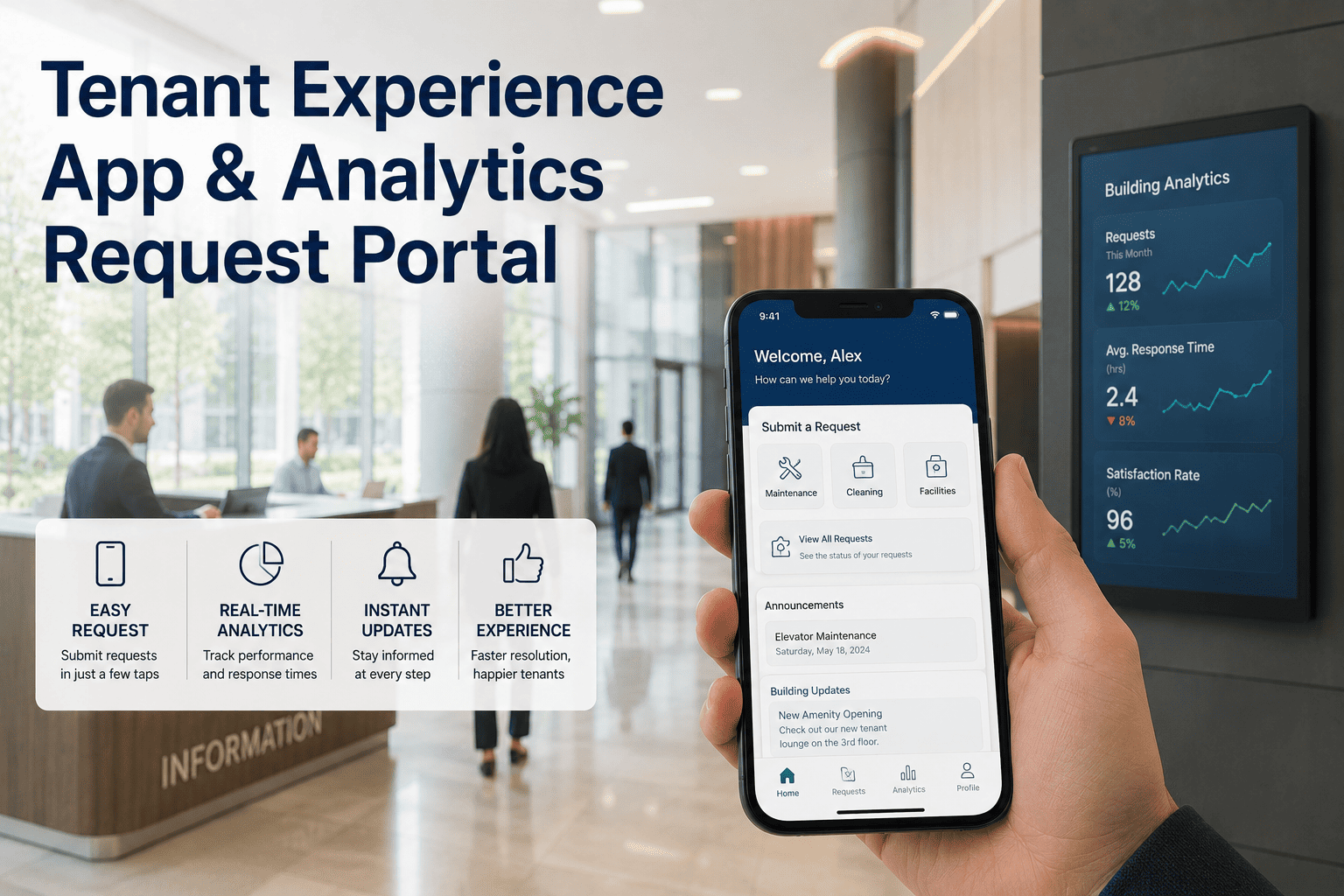
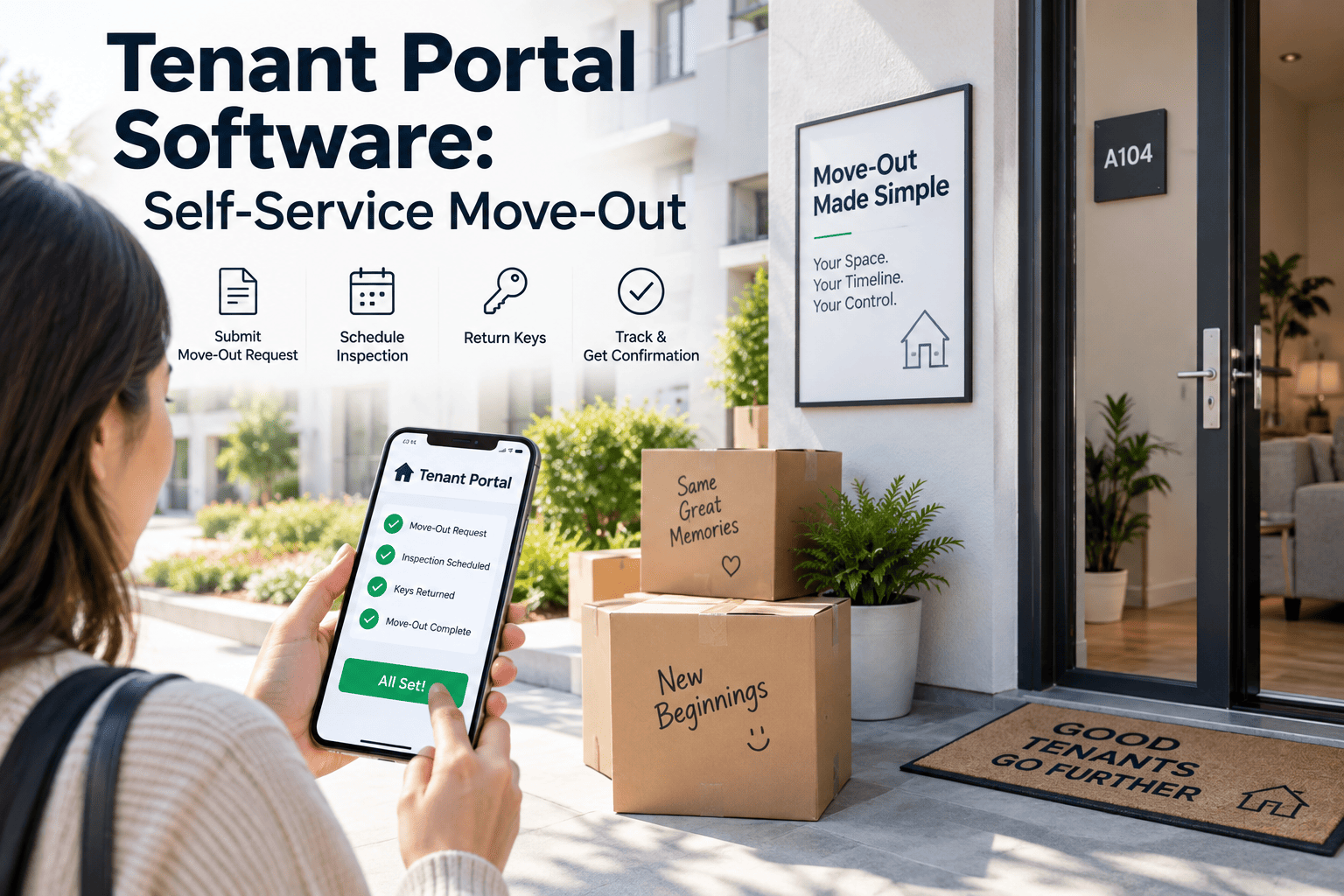
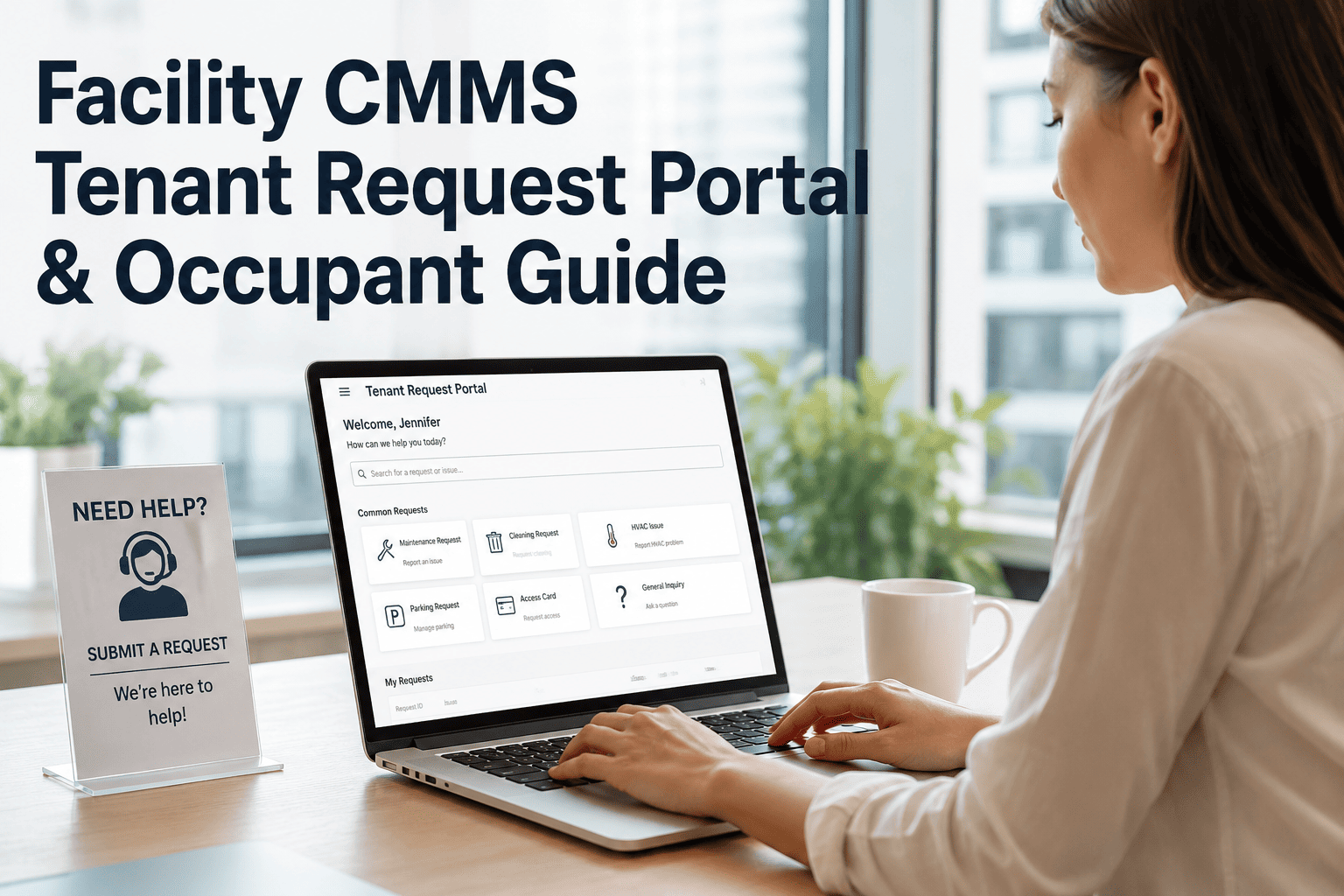
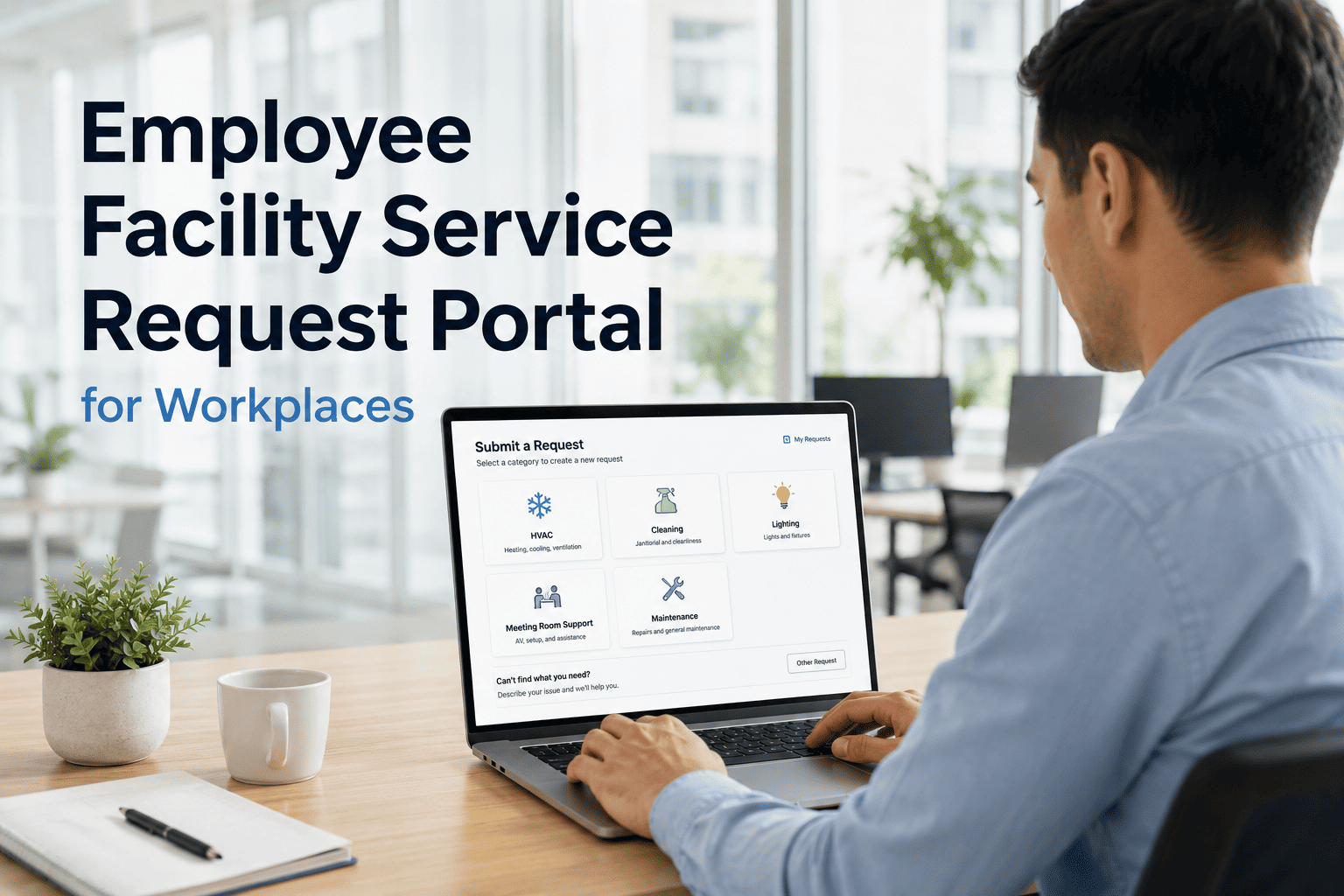
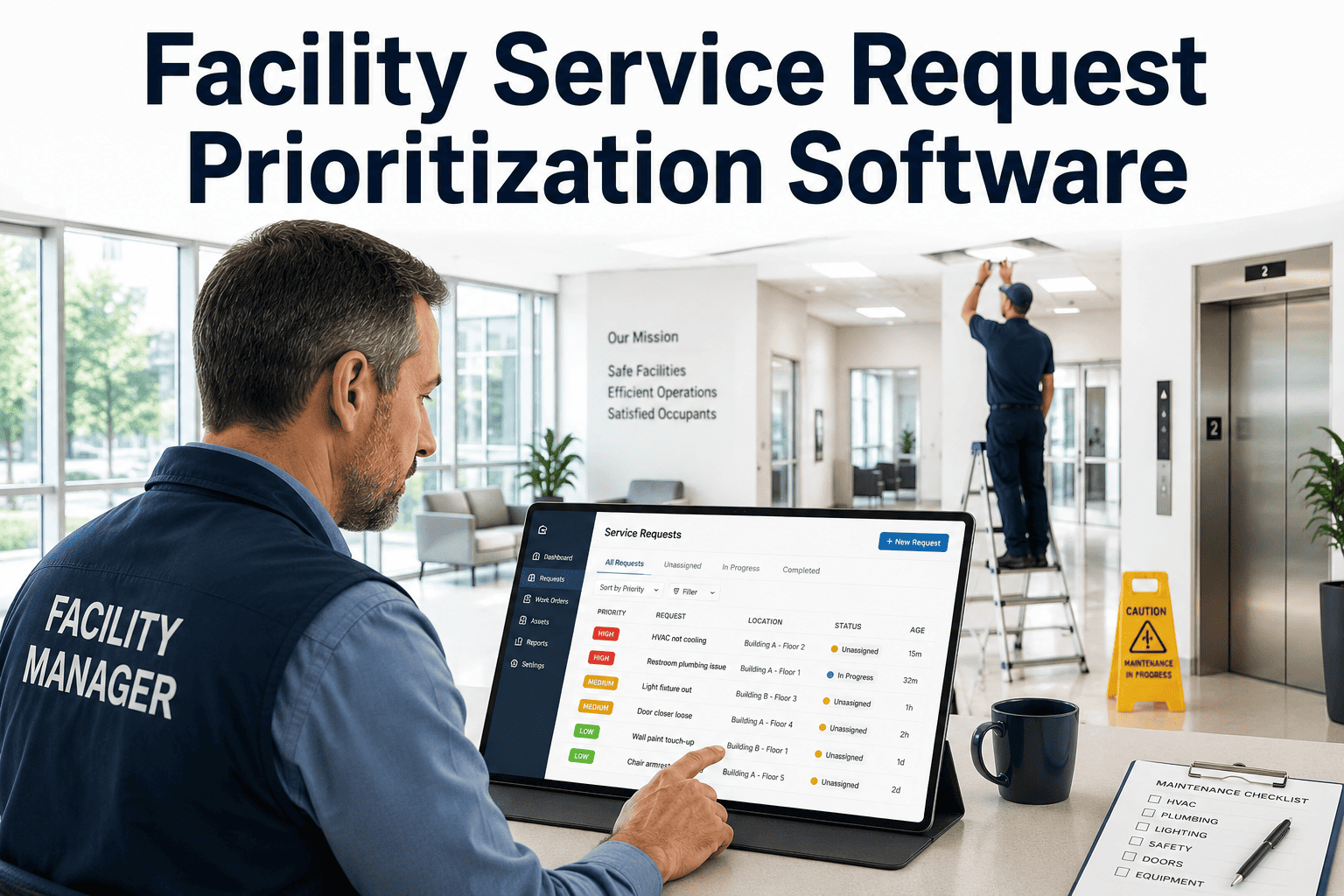
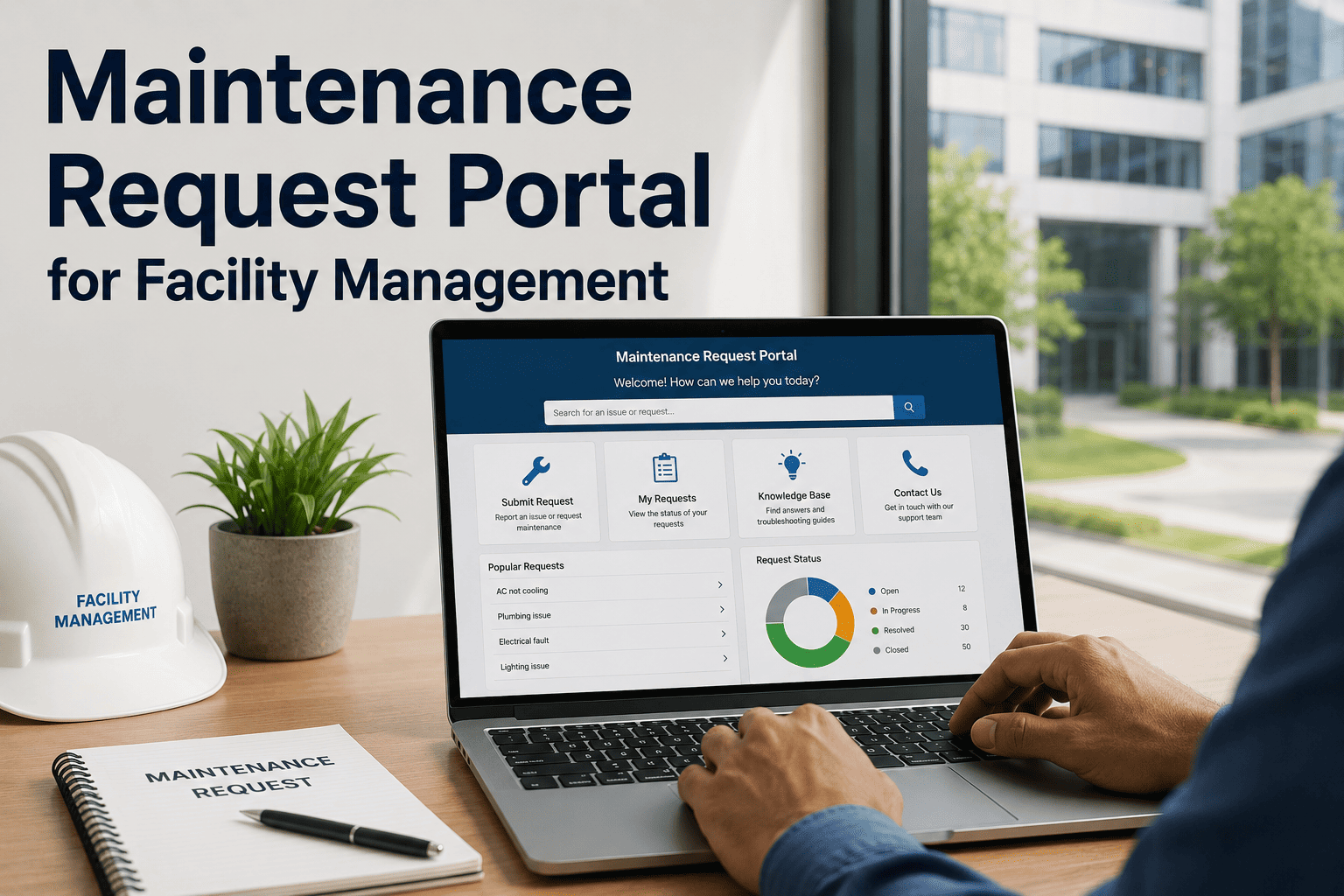
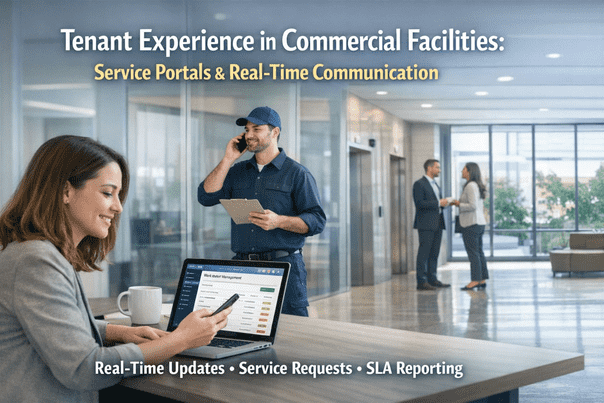
Tenants in commercial buildings submit maintenance requests the same way they did in 2005 — phone calls, sticky notes on the super's door, or emails that disappear into a shared inbox. Meanwhile, property managers are trying to run responsive operations with zero visibility into what was requested, when, by whom, and whether it was ever resolved. The result is a broken feedback loop where tenant satisfaction falls, churn rises, and maintenance teams react to complaints instead of preventing them. A modern tenant experience app combined with a structured maintenance request portal changes this dynamic entirely — giving tenants a fast, transparent way to report issues and giving operations teams the real-time data they need to prioritize, assign, and close requests with measurable response times. Start your free trial on Oxmaint to deploy your tenant request portal today, or book a demo to see the full tenant experience workflow live.
Smart Building · IoT · Tenant Experience
Tenant Experience App & Maintenance Request Portal
Mobile apps, QR code reporting, real-time status tracking, and AI-powered request triage — how modern property teams cut response times and raise tenant satisfaction scores.
67%
Tenants leave over poor maintenance response
3.2×
Faster resolution with digital portals
AC not cooling — Suite 402
Submitted 9 min ago · Open
Light out — Lobby B
Technician assigned · In progress
Elevator noise — Floor 8
Resolved in 1h 24m · Closed
Why Traditional Maintenance Request Systems Fail Tenants
Every building has a maintenance request process. Most of them share the same four failure points that erode tenant trust and inflate response costs simultaneously.
01
No Submission Confirmation
Tenants submit by email or phone with no acknowledgment. They don't know if the request was received, which creates duplicate submissions and frustrated follow-up calls.
02
No Priority Triage
A refrigerant leak and a burned-out corridor light enter the same inbox with no automatic priority distinction. Critical issues wait behind low-impact ones.
03
No Status Visibility
Once submitted, tenants have no way to know if anyone is working on their issue. Silence reads as neglect — even when the technician is en route.
04
No Resolution Data
Without a system, property managers cannot measure MTTR, identify recurring issues by location, or spot patterns that predict future failures.
How a Modern Tenant Request Portal Works — End to End
The request journey from submission to resolution is where tenant satisfaction is won or lost. Each stage must be fast, transparent, and tracked.
1
Tenant Submits via App or QR Code
Tenants submit from a mobile app, web portal, or by scanning a QR code posted in any building space. The form captures location (unit, floor, space), issue category, and optional photo. Submission takes under 60 seconds.
2
AI Triage — Priority, Category, and Assignment
AI reads the submission and automatically assigns a priority level (P1 critical, P2 urgent, P3 routine), categorizes the issue type (HVAC, plumbing, electrical, structural), and routes it to the correct technician or vendor based on skill and availability.
3
Real-Time Status Notifications
The tenant receives automatic push notifications at every status change: request received, technician assigned, work in progress, resolved. No manual updates required from the operations team.
4
Technician Mobile Resolution
The assigned technician receives the work order on mobile with full context — location, issue description, photos, and relevant asset history. They complete the job and close the work order with photo evidence and notes directly from the field.
5
Satisfaction Rating and Analytics
After resolution, tenants receive a one-tap satisfaction rating. All data — response time, resolution time, issue type, location, rating — feeds the property manager's analytics dashboard automatically.
Deploy Your Tenant Request Portal This Week
Oxmaint tenant portals go live in days — QR codes, mobile app, AI triage, and real-time notifications included. No custom development required.
Impact by the Numbers — Tenant Portal vs Traditional Process
| Metric |
Traditional Process |
With Tenant Portal |
Improvement |
| Average response time to acknowledge request |
4–8 hours |
Instant (automated) |
100% faster |
| Duplicate request submissions |
22% of all requests |
Under 2% |
−91% |
| Tenant satisfaction (CSAT) score |
58 / 100 avg |
84 / 100 avg |
+45% |
| Mean time to resolution (MTTR) |
18.4 hours avg |
5.7 hours avg |
3.2× faster |
| Maintenance manager time on request admin |
12–16 hrs/week |
2–4 hrs/week |
−75% |
| Issues with location correctly identified |
61% |
99% (QR/GPS) |
+62% |
Source: BOMA tenant satisfaction benchmarks 2023 · IFMA facility management performance report · Oxmaint platform data
QR Code Reporting — How It Works in Practice
QR codes placed at asset locations, in restrooms, elevator lobbies, and common areas give any tenant a zero-friction way to report issues — no app download, no login, no friction.
01
QR Code Placed at Asset Location
Each QR code is linked to a specific location or asset in Oxmaint. A code on the elevator lobby wall is pre-tagged to that lobby. A code on an AHU is pre-tagged to that specific unit.
02
Tenant Scans, Submits in 30 Seconds
Scanning opens a mobile-optimized form pre-filled with location. Tenant selects issue type, adds optional photo or description, and submits. No account creation required for basic reporting.
03
Work Order Created Automatically
Submission triggers a work order pre-populated with location, asset, issue type, and submitter. AI assigns priority and routes to the correct technician — no dispatcher needed.
04
Tenant Gets Confirmation Immediately
A confirmation screen with a tracking number appears instantly. If the tenant provides contact info, push notifications follow at every status change through to resolution.
Expert Review
LM
"The biggest ROI from tenant portal deployment isn't faster repairs — it's reduced lease terminations. When tenants feel heard and see their issues tracked transparently, they renew. When they feel ignored, they leave. We tracked a 19-point improvement in our tenant satisfaction score in the first six months of QR code deployment, and lease renewal intent in the follow-up survey moved from 54% to 78%. The technology cost was recovered in the first renewal cycle."
Laura Mendez, CPM
Certified Property Manager · 2.8M sq ft Commercial Portfolio · 16 years in property operations
Frequently Asked Questions
Does the tenant portal require tenants to create an account or download an app?
No account or download is required for QR code-based submissions — tenants scan and submit from any smartphone browser in under 30 seconds. For tenants who want status tracking, push notifications, and request history, the optional mobile app provides those features. Most commercial deployments see 60–70% of requests come through QR codes and 30–40% through the app, depending on building type and tenant demographics.
Start your free trial and generate your first QR codes in the setup wizard.
How does AI triage work and how accurate is priority assignment?
Oxmaint's AI reads the issue description and category selected by the tenant, then cross-references the asset type, location criticality, and historical issue patterns for that asset. Priority is assigned as P1 (life safety or major system failure), P2 (significant impact on tenant use), or P3 (cosmetic or low-impact). The system achieves over 91% triage accuracy within the first 90 days, improving as it learns your building's issue patterns. Property managers can override AI priority at any time — the AI learns from overrides to improve future assignments.
Book a demo to see live AI triage in action.
Can the tenant portal integrate with our existing property management software?
Oxmaint integrates with leading property management platforms including Yardi, MRI Software, and Building Engines via API. Work orders created in Oxmaint can sync to your PMS, and tenant data from your PMS can populate Oxmaint automatically. For platforms without native integration, Oxmaint supports webhook-based custom integrations. The API documentation covers all integration endpoints and authentication methods. Most integration projects complete in 1–2 weeks with standard configuration, and no custom development is required on the Oxmaint side.
What analytics does the property manager see from tenant request data?
The property manager dashboard shows request volume by building, floor, unit, and issue category; average response and resolution times trending over time; technician performance by MTTR and closure rate; tenant satisfaction scores by request type and location; and recurring issue patterns by asset that may indicate PM gaps. These analytics are updated in real time as work orders close — no monthly report assembly required. High-frequency recurring issues automatically surface as recommendations to add or adjust PM schedules, turning reactive data into proactive maintenance intelligence.
Start your free trial to access the analytics dashboard immediately.
Tenant Experience Platform
Give Tenants a Faster Way to Report Issues — Give Your Team the Data to Act
Oxmaint tenant portals go live in days. QR codes, mobile app, AI triage, real-time notifications, and analytics — all connected to your maintenance operations workflow.