Most commercial buildings built before 2015 contain the wiring, HVAC systems, and electrical infrastructure needed to become intelligent facilities — what they lack is the sensor layer and integration platform that turns isolated equipment into a connected, data-producing network. Smart building IoT is not a single technology decision. It is a layered implementation: sensors collect data, a building automation platform aggregates it, and AI analytics convert it into operational decisions. Organizations that implement this stack correctly report 20 to 30% reductions in energy costs, 40% improvements in maintenance response time, and measurable gains in tenant satisfaction scores. OxMaint's cloud CMMS platform sits at the center of this stack — connecting IoT sensor data to maintenance workflows, work orders, and compliance records so building intelligence translates directly into operational action.
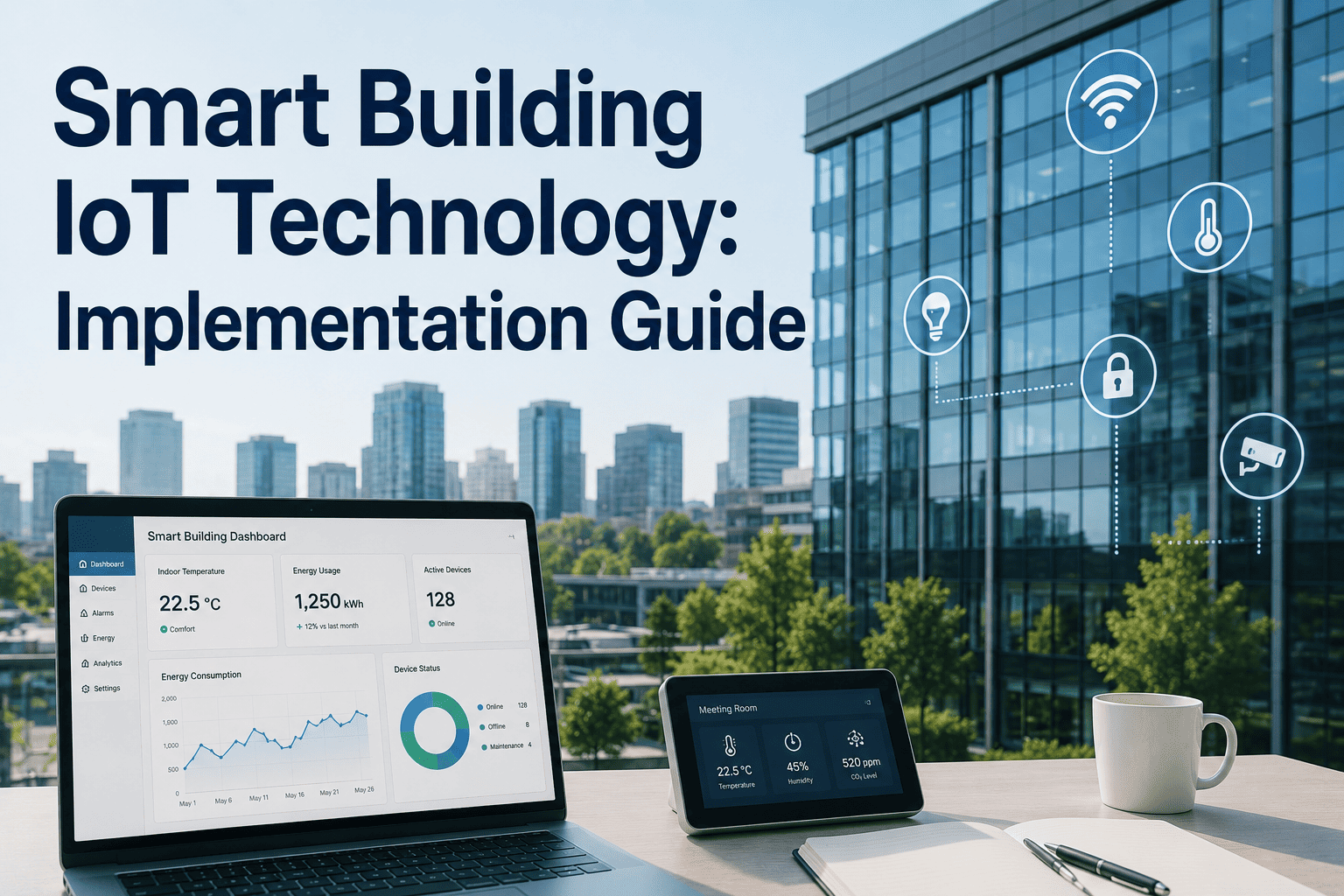
Smart Building IoT Technology: Implementation Guide for Commercial Buildings
A practical, sequenced guide to deploying connected sensors, building automation, and AI analytics — from first sensor to full portfolio intelligence.
The 4-Layer Smart Building IoT Stack
Successful smart building implementations are built in layers — each layer depends on the one below it. Skipping directly to AI analytics without a reliable sensor network produces expensive dashboards with unreliable data. Start at Layer 1 and expand upward.
Which Sensors Deliver the Fastest ROI in Commercial Buildings
| Sensor Type | Primary Use | Typical Payback Period | Key Integration |
|---|---|---|---|
| HVAC Temperature & Humidity | Comfort, energy optimization, PM triggers | 6–12 months | BMS + CMMS energy tracking |
| Occupancy (PIR / mm-wave) | Space utilization, demand-controlled ventilation | 9–15 months | BMS, cleaning dispatch, space planning |
| Energy Sub-Meters | Asset-level energy monitoring, deviation detection | 8–14 months | CMMS energy attribution, ESG reporting |
| Vibration (rotating equipment) | Predictive maintenance, bearing failure detection | 12–24 months | CMMS predictive AI, work order generation |
| Water Leak Detection | Leak early warning, flood prevention | First event avoided | CMMS emergency work order, BMS alarm |
| CO2 / Air Quality | Ventilation control, indoor air quality compliance | 18–30 months | BMS demand control ventilation |
| Restroom Supply & Usage | Cleaning dispatch optimization, supply management | 10–18 months | Facilities management, tenant satisfaction |
Connect Your Building's IoT Data to Live Maintenance Workflows
OxMaint integrates sensor data from your BMS, IoT platform, or individual devices — converting alarms and threshold crossings into tracked work orders, PM triggers, and energy deviation alerts automatically. Book a demo to see your building's data in action.
Implementation Roadmap: From Zero to Full IoT Intelligence
Expert Review
The most common failure mode in smart building IoT implementations is not technology — it is sequence. Organizations purchase AI analytics platforms before they have reliable sensor data to feed them. The AI produces garbage outputs, confidence in the system collapses, and the investment is written off as hype. Every successful implementation I have seen follows the same discipline: get the sensor layer right first, establish data quality and baseline readings, and only then activate analytics. A CMMS that connects sensor data to maintenance workflows from Phase 1 — before the AI layer is even active — delivers immediate operational value through automated work order generation and alarm routing, which builds team confidence in the system while the predictive models are accumulating the data they need to be useful.
Frequently Asked Questions
What is the typical total cost of a smart building IoT implementation for a mid-size commercial building?
For a 100,000 sq ft Class-A commercial building, a full smart building IoT implementation — covering HVAC monitoring, occupancy sensing, energy sub-metering, and CMMS integration — typically costs between $180,000 and $350,000 in hardware, installation, and platform fees. Payback periods range from 18 to 36 months driven primarily by energy savings (typically 20 to 30% of annual energy spend) and maintenance cost reduction (15 to 25% from reactive to planned work shift). Buildings with aging equipment or high reactive maintenance rates achieve payback at the lower end of that range. Phased implementations that start with the highest-ROI sensor categories can achieve positive cash flow within the first year before the full implementation is complete.
Which IoT communication protocol is best for commercial building sensor networks?
Protocol selection depends on the building's existing infrastructure and the sensor categories being deployed. BACnet over IP and Modbus TCP are the dominant protocols for HVAC and BMS-connected sensors in commercial buildings — they are natively supported by most BMS platforms and CMMS integrations including OxMaint. For wireless sensors in buildings where running new cable is cost-prohibitive, LoRaWAN offers long range and low power consumption suitable for occupancy and environmental sensors. Zigbee is appropriate for dense sensor networks in confined areas. Most modern smart building implementations use a mix of protocols — BACnet for core building systems and wireless protocols for supplementary sensing layers.
How does smart building IoT data connect to a CMMS for maintenance management?
OxMaint integrates with smart building IoT platforms through three mechanisms: direct API connection to cloud IoT platforms, BACnet and Modbus protocol integration for BMS-connected sensors, and webhook-based alarm forwarding from third-party systems. When a sensor reading crosses a defined threshold — a motor's vibration exceeding its baseline, a pipe temperature below freezing risk, a fire panel input activating — OxMaint automatically creates a work order with the relevant asset context, assigns it based on technician skill and availability, and notifies the right team member. The result is that every sensor alarm generates a tracked, accountable maintenance response without human intermediation. Book a demo to see the sensor-to-work-order flow live.
Can existing buildings be retrofitted with smart building IoT without major construction?
Yes — most smart building IoT implementations in existing commercial buildings are designed as non-invasive retrofits. Wireless sensors for temperature, humidity, occupancy, and CO2 require no new wiring and can be installed in hours by a small team. Energy sub-meters are typically installed in existing electrical panels during a brief outage window. Vibration sensors for rotating equipment attach magnetically to motor housings. The most significant installation work involves running network cabling for wired BACnet sensors in buildings without structured cabling — this can often be avoided by using wireless bridges or cellular-connected gateway devices. A building connectivity audit before sensor selection identifies which deployment approach minimizes installation cost for the specific building's infrastructure.
Your Building Is Producing Data. Is It Producing Intelligence?
OxMaint connects your smart building sensor data to live maintenance workflows — auto-generating work orders from IoT alarms, tracking energy deviations by asset, and producing ESG reports from your building's operational data.