Build a Preventive Maintenance Program

By John Polus on April 2, 2026

build-preventive-maintenance-program-from-scratch

71% of maintenance professionals claim preventive maintenance as their primary strategy, yet 58% of facilities still spend less than half their time on scheduled maintenance. That gap between intent and execution is where equipment fails, budgets break, and facilities teams lose credibility with leadership. The US Department of Energy quantifies the cost: every dollar invested in proactive maintenance generates 4 to 6 dollars in return. Yet emergency reactive repairs still cost 4.8 times more per event than the same repair completed as a scheduled PM. The problem is not awareness it is execution infrastructure. This guide covers how to build a preventive maintenance programme from scratch using a CMMS, with a complete implementation roadmap, regional compliance alignment for the USA, UAE, UK, Canada, and Europe, a direct platform comparison against leading competitors, and the ROI numbers that make the business case to leadership. Book a demo to see Oxmaint's PM programme setup in action.

2026 Reality Check: Predictive maintenance can reduce maintenance costs by up to 25% and increase uptime by 10% to 20% (Deloitte). IoT-enabled condition monitoring reduces equipment downtime by up to 50% (McKinsey). The gap between facilities running structured PM and those still reacting is widening every quarter.
PM Programme Design  ·  CMMS Implementation  ·  USA and UAE Guide

Build a Preventive Maintenance Programme That Actually Works in 2026

Structured PM scheduling, asset lifecycle tracking, AI-automated work orders, compliance documentation, and rolling CapEx forecasting built into daily operations from day one. Oxmaint deploys in 7 to 14 days with no implementation fees and no IT project.

4-6x
ROI per dollar invested in proactive PM — U.S. Department of Energy
287%
ROI in 11 months achieved by a 12-location portfolio on structured data-driven FM programme
4.8x
Cost of reactive emergency repairs vs the same repair done as a planned PM event
71%
Of professionals cite PM as their primary strategy, yet only 35% actually execute it consistently (2025 State of Industrial Maintenance)
25%
Maintenance cost reduction achievable through predictive maintenance integration — Deloitte 2025
50%
Equipment downtime reduction from IoT-enabled condition monitoring — McKinsey
89%
PM compliance rate achievable with automated CMMS scheduling vs 51% average without structured PM

Stop Reacting. Start Preventing. Oxmaint Builds Your PM Programme in 14 Days.

Asset registry, PM schedule automation, digital work orders, SLA tracking, and compliance documentation ready from day one. No spreadsheets. No implementation consulting. Free to start.

The 6-Step Framework to Build a PM Programme from Scratch

Most facilities fail at preventive maintenance not because they lack intent but because they lack a structured build sequence. These six steps follow the sequence that delivers the fastest path to measurable PM compliance, in the order that generates data before spending on automation.

01
Build the Asset Registry First
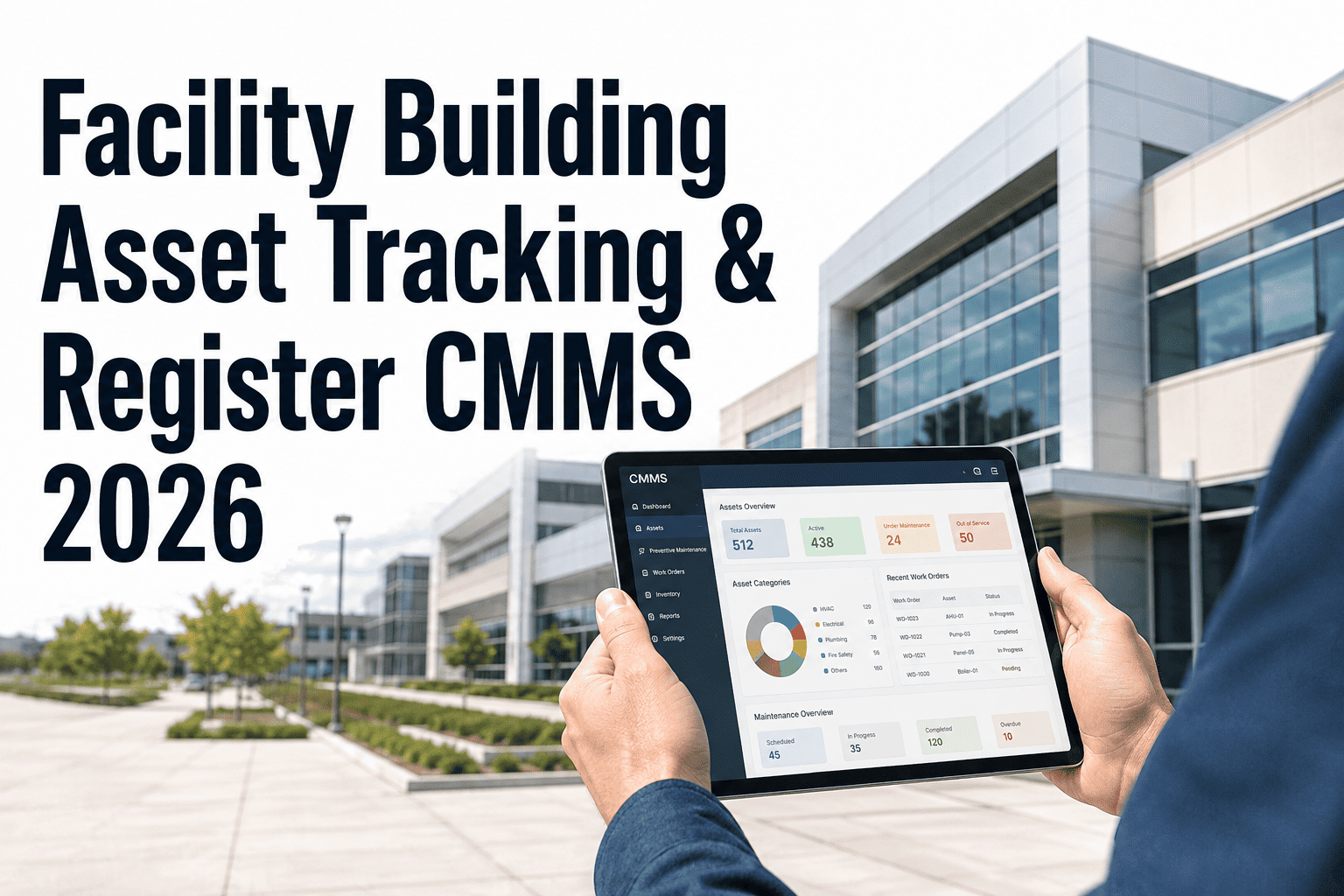
You cannot schedule PM without knowing what you are maintaining. Every PM programme begins with a complete asset inventory: equipment name, manufacturer, model, serial number, installation date, location, and current condition. Oxmaint's asset hierarchy — Portfolio, Property, System, Asset, Component — structures your register so multi-site operators see each asset in context. QR tags at each asset location give field technicians instant mobile access to service history from day one. Without a complete asset registry, PM schedules are guesswork.
Foundation: No PM programme works without this.
02
Classify Assets by Criticality
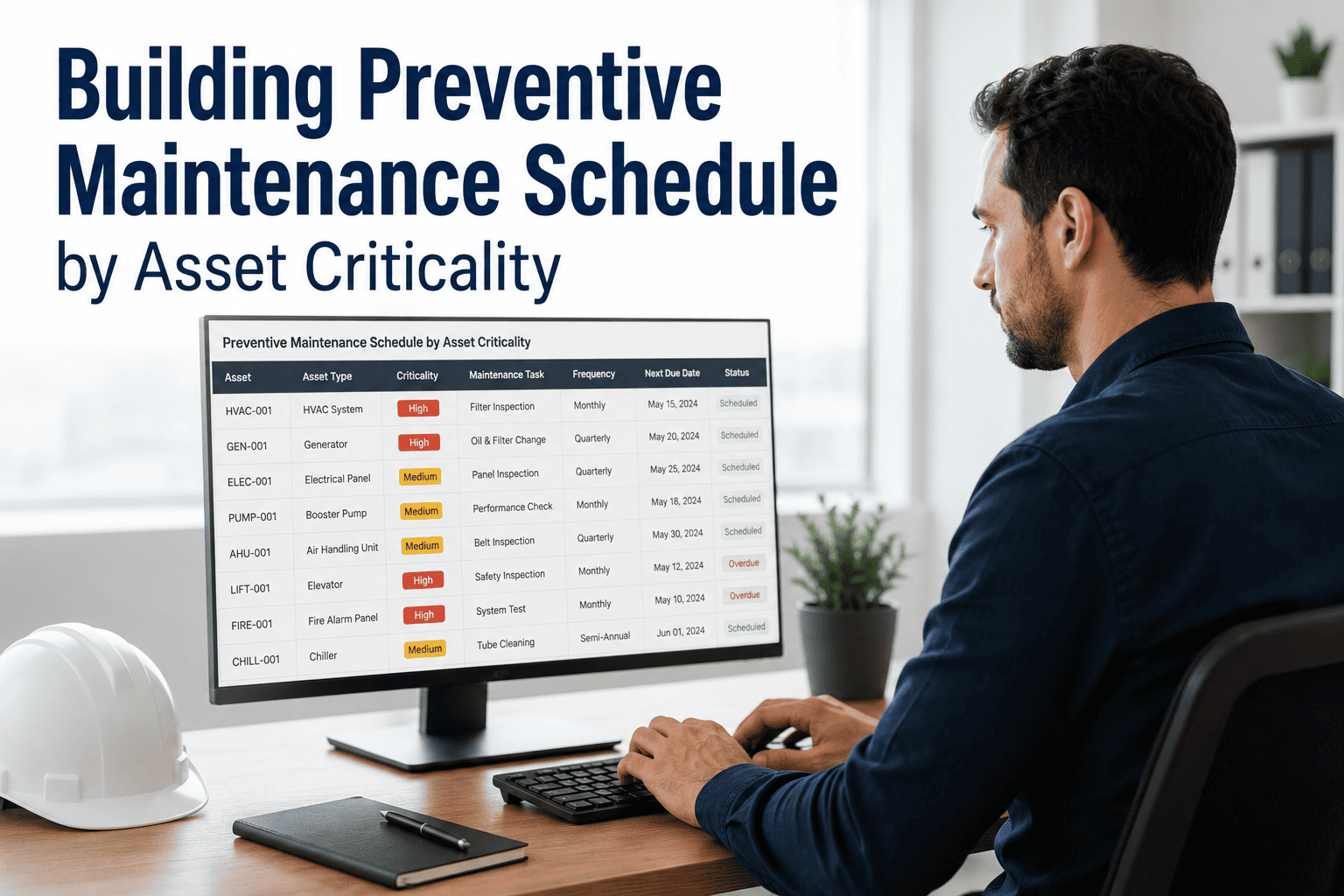
Not every asset deserves the same PM frequency. Criticality scoring ranks assets by the consequence of failure: production impact, safety risk, regulatory obligation, and repair cost. Critical assets (HVAC chillers, emergency generators, fire suppression systems, elevator systems) receive condition-based PM intervals. Standard assets receive time-based PM schedules. Non-critical assets may run to failure with no PM overhead. Oxmaint's condition scoring system updates criticality as work order data accumulates, so your PM schedule evolves with actual asset performance rather than staying frozen at initial configuration.
Prioritise: Focus PM resource where failure hurts most.
03
Define PM Tasks and Intervals Per Asset Class
PM intervals come from three sources: manufacturer specifications, regulatory requirements (NFPA, OSHA, ASHRAE, UAE Federal Authority, CIBSE), and operational history. Oxmaint ships with pre-built PM templates for the most common asset classes in commercial and industrial facility management — HVAC, electrical panels, fire suppression, emergency power, elevators, plumbing, and BMS. Templates are configurable by calendar interval, runtime hours, production cycles, or condition-based triggers from IoT sensors. Starting with manufacturer specs and adjusting based on actual failure data generates PM intervals calibrated to your specific portfolio.
Configure: PM intervals that match actual failure modes.
04
Automate Work Order Generation and Assignment
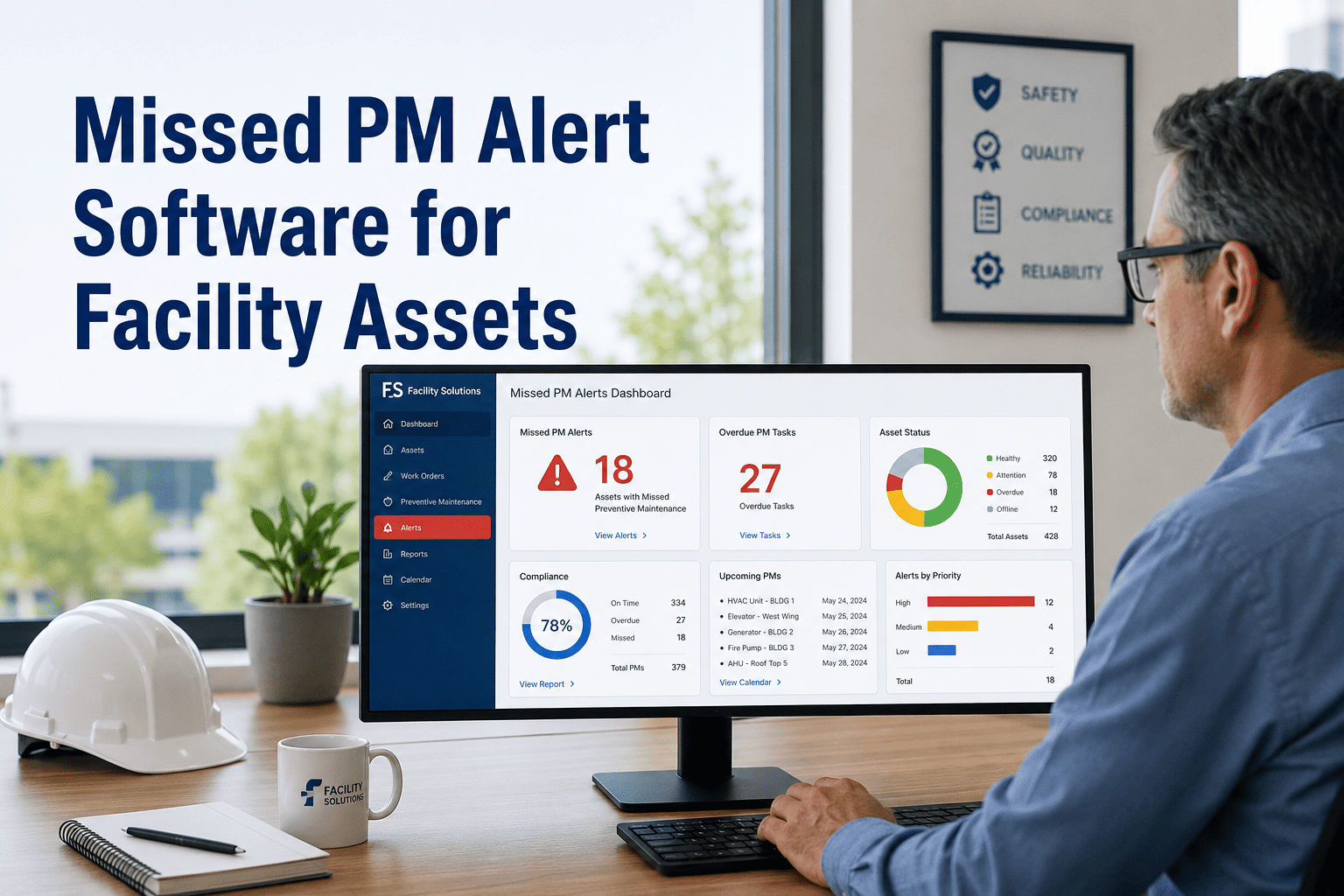
Manual PM scheduling fails because it requires human intervention to create, assign, and track every task. Automated PM scheduling generates work orders before due dates, assigns them to the correct technician based on skill set and location, and escalates overdue items automatically. Oxmaint generates work orders from four sources: PM schedule triggers, IoT sensor threshold breaches, technician condition readings from mobile, and direct service requests. The target PM compliance rate for a mature programme is 85% or higher. Oxmaint-deployed facilities typically reach 89% within six months.
Automate: Human scheduling is where PM programmes break down.
05
Track KPIs and Measure Performance Weekly
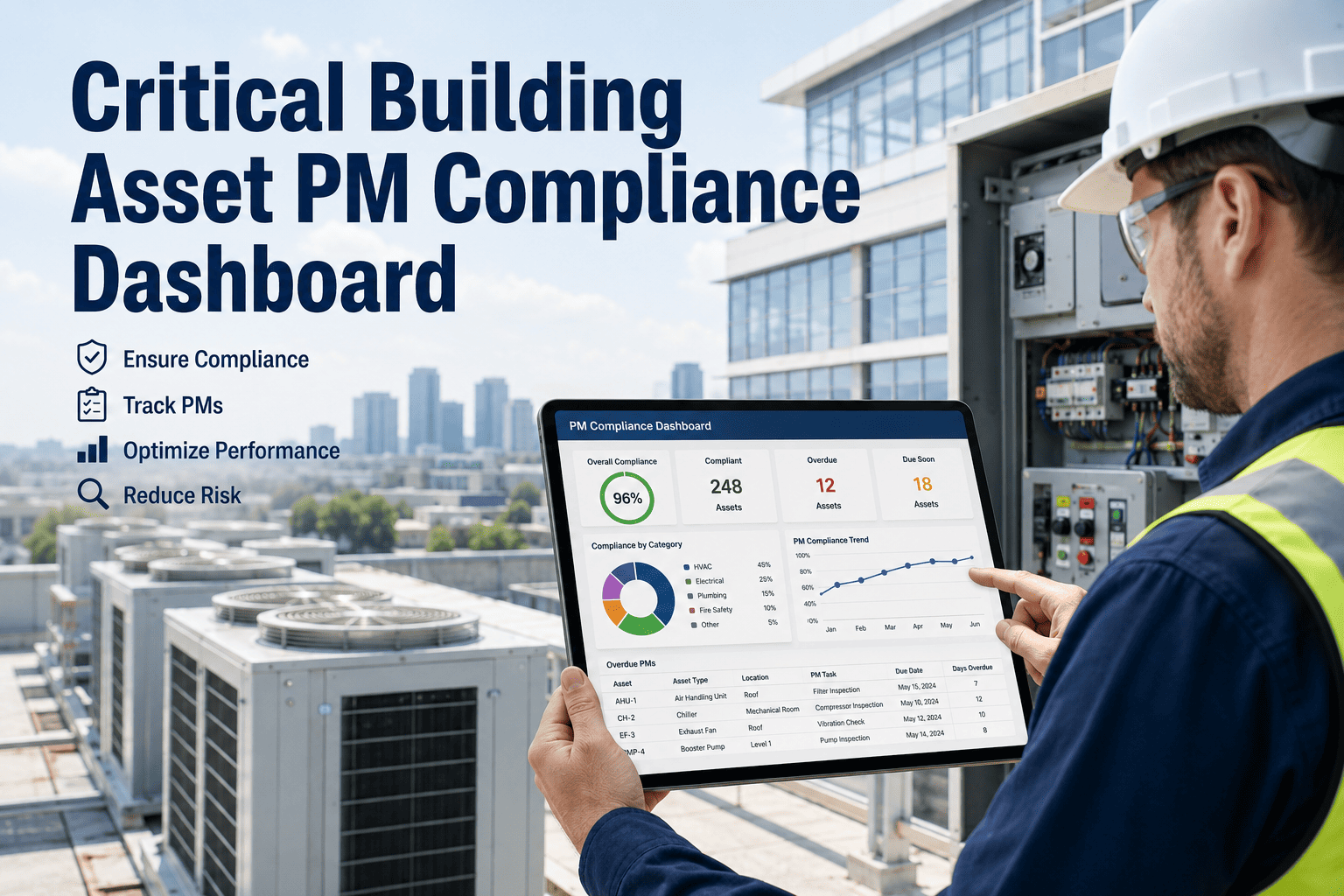
A PM programme without measurement is not a programme — it is a schedule. The six KPIs every PM programme must track are: PM compliance rate (target above 85%), reactive-to-planned maintenance ratio (target below 20%), mean time between failures (MTBF), mean time to repair (MTTR), maintenance cost per asset class, and wrench time percentage. Oxmaint's live dashboards calculate all six in real time from closed work order data. No manual report compilation. Directors see which assets are generating disproportionate reactive cost, which sites are underperforming on PM compliance, and which technicians are completing work at above-average speed.
Measure: PM KPIs are the evidence base for budget justification.
06
Build the CapEx Forecast from Maintenance History
After six to twelve months of structured PM data, every asset in the registry has an actual maintenance cost history, a current condition score, and a remaining useful life estimate. Oxmaint's rolling 5 to 10 year CapEx forecasting model draws from this data automatically, identifying which assets will cross economic replacement threshold in the next 18 to 36 months. Capital requests backed by Oxmaint condition evidence achieve 88% approval rates versus 47% for estimate-based submissions. The PM programme's data value compounds with every completed work order.
Forecast: PM data becomes your CapEx evidence base.

Oxmaint PM Programme Implementation Roadmap

This is the exact deployment sequence Oxmaint uses for commercial and industrial facility portfolios. Most sites go live with a structured PM programme within 14 days. Multi-site portfolios with 10 to 20 properties typically complete full rollout within 21 days.

Week 1
Asset Registry and PM Template Setup
  • Import existing asset list or build from scratch using mobile QR scan
  • Configure asset hierarchy: Portfolio, Property, System, Asset, Component
  • Assign criticality scores per asset class
  • Apply pre-built PM templates to each asset class (HVAC, electrical, fire, etc.)
  • Set PM intervals: calendar, runtime hours, or condition-based triggers
Week 2
Work Order Automation and Mobile Deployment
  • Configure automated PM work order generation with SLA targets per priority level
  • Set up technician accounts with role-based access and site permissions
  • Deploy mobile app to field teams — QR tag assets at each location
  • Train technicians on mobile work order completion, photo capture, and sign-off
  • Connect service request intake portal for tenant and occupant submissions
Weeks 3 to 4
Compliance Mapping and IoT Integration
  • Map compliance frameworks per region: OSHA, Joint Commission, UAE IS2030, NFPA, CIBSE
  • Configure compliance-flagged PM work orders with documentation requirements per standard
  • Connect IoT sensors and BAS via OPC-UA, MQTT, BACnet, or REST API
  • Set sensor threshold-to-work-order automation for critical asset classes
  • Configure multi-site portfolio dashboard for director-level visibility
Ongoing
Performance Optimisation and CapEx Forecasting
  • Monthly KPI review: PM compliance rate, reactive ratio, MTBF, MTTR per asset class
  • Quarterly PM interval adjustment based on actual failure frequency data
  • Rolling CapEx forecast updates automatically as work order cost data accumulates
  • Annual compliance audit package export for regulatory reviews
  • Continuous Oxmaint platform updates — no version upgrades, no IT overhead

Your PM Programme is Live in 14 Days. Leadership Sees Results in 90 Days.

Oxmaint deploys asset registry, PM automation, mobile work orders, and compliance documentation in two weeks. PM compliance rates measurable within 30 days. Emergency repair ratio trending down within 90 days. CapEx forecast available within 6 months.

How Oxmaint Delivers PM Programme Results: Core Platform Capabilities

Oxmaint is not a generic work order tool configured into a PM programme. It is built specifically for multi-site commercial and industrial facility portfolios where PM compliance, compliance documentation, and capital forecasting are operational requirements, not add-on features.

Automated PM Scheduling with 4 Trigger Types
Calendar-interval, runtime-hour, production-cycle, and IoT condition-threshold triggers — all configured per asset class. Pre-built templates for the most common commercial and industrial asset classes. PM schedules update as condition data accumulates, moving the most critical assets from time-based to condition-based maintenance automatically.
Full Asset Registry with Condition Scoring
Portfolio, Property, System, Asset, Component hierarchy. Every asset holds its complete service history, condition score, PM compliance rate, maintenance cost per year, and remaining useful life estimate. Condition scores update with each closed work order and each IoT data point. The registry is the foundation every other PM capability depends on.
AI-Assisted Work Order Prioritisation and Assignment
Incoming work orders are classified by asset criticality, failure mode severity, occupant impact, and technician availability. Assignment dispatches in under 2 seconds for 73% of routine cases without supervisor intervention. SLA tracking with three-tier escalation: notification at 50% elapsed, supervisor alert at 90%, director escalation at 100% breached.
Rolling 5 to 10 Year CapEx Forecasting
Asset condition scores and maintenance cost trends from closed work orders feed the CapEx model automatically. The forecast identifies replacement-threshold assets 18 to 36 months in advance. Capital requests backed by Oxmaint condition data achieve 88% approval rates. Finance presentations that used to take three days of manual compilation now export in under two hours.
IoT and SCADA Integration for Predictive Maintenance
Connect sensor data via OPC-UA, MQTT, BACnet, Modbus, and REST API. Sensor threshold breaches generate PM work orders automatically — eliminating the 23-day average delay between anomaly detection and maintenance response in unintegrated operations. Compatible with all major BAS platforms including Siemens, Johnson Controls, Honeywell, and Trane.
Multi-Site Portfolio Dashboard
PM compliance rates, open work orders, SLA adherence, overdue inspection counts, asset condition alerts, and CapEx forecast visible across every facility in real time on one dashboard. Directors see underperforming sites before failures occur. No manual status reports. No weekly compilation calls. US, UAE, UK, and Canada sites all visible from one account.

Regional PM Compliance Requirements: USA, UAE, UK, Canada, and Europe

A preventive maintenance programme is not just an operational strategy — it is a compliance obligation in every major region. Failure to maintain documented PM records is not an administrative gap; it is regulatory exposure with financial consequences.

Region Primary PM Compliance Requirements Key Regulatory Bodies Oxmaint Coverage
USA OSHA 29 CFR for workplace safety PM, NFPA 101 and 72 for fire life safety, ASHRAE 180 for HVAC maintenance, Joint Commission EOC for healthcare, ADA Title II for government facilities, EPA 40 CFR Part 98 for emissions OSHA, NFPA, ASHRAE, Joint Commission, CMS, EPA, ADA Title II Pre-built PM templates per OSHA, NFPA, ASHRAE, and Joint Commission intervals. Audit export for any US compliance framework. Healthcare-specific EOC module.
UAE UAE Industrial Strategy 2030 digital PM mandate, Dubai Municipality standards, TRAKHEES for free zones, Civil Defence fire and life safety inspection requirements, EHS emission equipment documentation UAE Federal Authority, Dubai Municipality, TRAKHEES, Civil Defence, EHS IS2030-compliant digital PM records, Arabic-language mobile interface, Civil Defence and EHS inspection templates. UAE-specific compliance export.
UK Building Safety Act 2022 maintenance regime requirements, SFG20 planned maintenance standard, Health and Safety at Work Act, CIBSE TM17 guidance, NHS ERIC compliance for healthcare facilities HSE, BSA 2022, CIBSE, SFG20, NHS ERIC, Environment Agency SFG20-aligned PM templates, Building Safety Case documentation support, HSE-compliant work order records, NHS-specific compliance module.
Canada Provincial Occupational Health and Safety regulations, National Building Code maintenance provisions, CSA Z305.5 for healthcare equipment PM, BOMA Canada standards for commercial property management Provincial OHS agencies, NRC, CSA, BOMA Canada, Environment Canada Provincial OHS PM template library, CSA healthcare module, BOMA reporting integration, multi-province portfolio dashboard.
Europe EU EPBD energy performance maintenance obligations, EN 13306 maintenance terminology standard, ISO 55001 asset management, GDPR for maintenance data handling, national fire and safety codes per country EU Commission, ISO, CEN (EN standards), national fire and safety bodies ISO 55001-mapped asset registry, EPBD-linked energy PM scheduling, GDPR-compliant data architecture, EU data residency options, multi-language interface.
Saudi Arabia SASO equipment inspection standards, Civil Defence mandatory inspection logs, Saudi Vision 2030 smart manufacturing digital PM requirements, Ministry of Industry facility audit trail obligations SASO, Saudi Civil Defence, Ministry of Industry, Tadawul ESG SASO-aligned PM templates, Civil Defence inspection scheduling, Arabic mobile interface, Vision 2030 digital compliance records, multi-site Saudi portfolio dashboard.

Before and After: Reactive Maintenance vs Oxmaint PM Programme

Without a Structured PM Programme
XReactive-to-planned ratio above 40%. Emergency repairs consuming budget that was allocated to capital improvements and planned upgrades.
XPM compliance estimated at 51% average — missed tasks not visible until an equipment failure event forces the issue to leadership's attention.
XAsset condition unknown until failure. No condition scores, no remaining useful life estimates, no evidence base for CapEx submissions to finance.
XCompliance audit preparation requires 3 to 5 days of staff time compiling records from email threads, paper logs, and spreadsheets. Records are still incomplete.
XEmergency repair cost 4.8x higher than the same repair completed as a planned PM event. Budget overruns every quarter from unpredictable failure events.
With Oxmaint PM Programme
VEmergency work order ratio drops from 40% to under 17% within 12 months. Every prevented failure event recovers the 4.8x cost premium at that repair event's value.
VPM compliance reaches 89% across portfolio within 6 months. Automated scheduling with escalating alerts means overdue tasks surface before they become failures.
VEvery asset carries a live condition score updated by closed work orders and IoT data. CapEx submissions backed by Oxmaint data achieve 88% approval rate from finance.
VAudit documentation packages export from Oxmaint in under 4 hours with complete PM history, inspection records, and technician attribution. Zero manual preparation.
VA 287% ROI in 11 months is achievable for portfolios adopting structured PM with automated CMMS scheduling, based on documented 12-site portfolio outcomes.

PM Programme Results: What Oxmaint Clients Achieve

PM compliance rate reached by multi-site portfolios on Oxmaint within 6 months89%

Reduction in reactive emergency work order ratio within 12 months of deployment76%

Reduction in audit preparation time with digital PM records vs manual paper and spreadsheets84%

Capital request approval rate when backed by Oxmaint asset condition data and maintenance history88%

Reduction in unplanned equipment downtime within 12 months of IoT-linked condition-based PM68%

Work order cycle time reduction from CMMS automation vs manual scheduling and paper dispatch30%

14 Days
From contract to live PM programme with asset registry, scheduling, and mobile access operational
$0
Implementation consulting fees. Oxmaint deploys with self-service onboarding and free migration support
287%
ROI in 11 months achieved by a 12-location portfolio adopting structured data-driven FM best practices
99.9%
Platform uptime SLA. Your PM records and compliance documentation are always accessible

Platform Comparison: Oxmaint vs Leading CMMS Competitors for PM Programme Delivery

Choosing the right CMMS determines how quickly your PM programme generates measurable results. Here is how Oxmaint compares to the leading platforms across the capabilities that matter most for facility teams building structured PM in the US and UAE.

Platform PM Scheduling Depth Asset Lifecycle + CapEx AI and Predictive Compliance Export Free Tier Deploy Time
Oxmaint Best Fit Calendar, runtime, production-cycle, and IoT condition triggers. Pre-built templates for all major asset classes. Full condition scoring, rolling 5-10 yr CapEx forecast, FCI reporting built-in. Built-in predictive failure alerts, auto-assignment, anomaly detection. No add-on required. OSHA, Joint Commission, CMS, UAE IS2030, NFPA, CIBSE, ISO 55001 — all from same work order. Yes — permanent free tier: 50 assets, work orders, PM scheduling, mobile. 7 to 14 days
MaintainX Calendar-based PM, strong mobile interface. Condition-based triggers limited. Asset tracking and history included. CapEx forecasting not a core feature. AI procedure generator for checklists. Predictive maintenance depth limited. Audit trail strong. Framework-specific exports require higher tiers. Yes — limited free tier with basic work orders. 2 to 3 weeks
UpKeep Calendar and meter-based PM. Polished mobile UX. Condition-based triggers limited. Asset tracking strong. Lifecycle forecasting limited vs enterprise platforms. AI features lagging vs newer platforms. Mobile experience is primary differentiator. Compliance reporting available. Not optimised for healthcare or government frameworks. No — starts at $45 per user per month. 2 to 4 weeks
Fiix (Rockwell) Calendar, meter, condition-based. Strong in manufacturing via PLC/sensor integration. Asset management strong. CapEx forecasting not natively included. Fiix Foresight AI analytics strong for manufacturing. Professional tier required. Compliance tracking for manufacturing. Facility-specific frameworks require configuration. Yes — free plan for basics. Advanced features require Professional tier. 2 to 4 weeks
Limble CMMS Calendar and meter PM. Highly user-friendly. Condition-based available at higher tiers. Asset management solid. CapEx modelling not a primary differentiator. Predictive maintenance available. Analytics depth below enterprise platforms. Compliance features available. Best suited to food production and construction sectors. Yes — starter plan available. 1 to 2 weeks
IBM Maximo Full EAM PM depth. All trigger types. Built for very large enterprise operations. Full asset lifecycle and CapEx capabilities. Enterprise-grade depth. AI and predictive available. Requires significant configuration investment. Comprehensive compliance. Multi-jurisdiction. Requires custom development for specific exports. No — custom enterprise pricing. Typically $100,000 or more to deploy. 6 to 18 months
eMaint (Fluke) Calendar and condition-based PM with condition monitoring hardware integration. Asset tracking strong. CapEx forecasting limited as standalone feature. Predictive and condition-based maintenance through Fluke sensor integration. Strong for compliance-heavy industries. Scales well for global enterprises. No — starts at $69 per user per month. 4 to 6 weeks
Cryotos Calendar and condition PM. Designed for asset-intensive sectors in emerging markets. Asset management included. CapEx forecasting not a primary feature. AI work order recommendations. Predictive capabilities developing. Compliance documentation available. Regional framework depth varies. Free trial available. 2 to 3 weeks
Hippo CMMS (Eptura) Calendar PM scheduling. Suitable for smaller teams and straightforward facility operations. Basic asset tracking. Limited CapEx or lifecycle forecasting features. Limited AI features. Focused on usability for smaller maintenance teams. Basic compliance documentation. Not optimised for enterprise regulatory frameworks. Free trial available. 1 to 2 weeks
Asset Essentials (Brightly) Calendar PM scheduling for government, education, and public sector facilities. Asset lifecycle features available. Stronger in government than commercial. Limited AI automation. Sector focus is public sector compliance over predictive depth. Strong for US government and education compliance frameworks. No free tier — contact for pricing. 3 to 6 weeks

Data Security and Compliance: How Oxmaint Protects Your PM Records

Your maintenance records and compliance documentation contain commercially sensitive operational data. Oxmaint's security architecture is built to the standards that enterprise facility portfolios and regulated industries require.

AES-256
Encryption at Rest and in Transit
All PM records, work order data, asset condition scores, and compliance documentation are encrypted at rest and in transit. No commercially sensitive maintenance data is ever transmitted unencrypted or accessible to third parties without explicit authorisation.
SOC 2 Type II
Certified Infrastructure Security
Oxmaint operates on SOC 2 Type II certified cloud infrastructure. Security controls covering availability, confidentiality, and processing integrity are independently audited annually. This certification satisfies the security requirements for enterprise FM contracts and regulated industry deployments.
GDPR
GDPR-Compliant Data Residency
European deployments benefit from GDPR-compliant data residency options with EU-based infrastructure for portfolios where data localisation is a regulatory requirement. All technician data captured in work orders is handled under GDPR-aligned data processing agreements.
RBAC
Role-Based Access Control
Granular role-based access controls ensure that technicians see only the assets and work orders relevant to their site and role. Directors see portfolio-level data. Contractors access only the specific work orders they have been assigned. Full audit log on every data access and change event.

PM Programme Data Security Built for Enterprise Requirements — Accessible from Day One at No Cost.

SOC 2 Type II certified. AES-256 encrypted. GDPR-compliant. Role-based access control. Full audit logging. Your PM records and compliance documentation are as secure in Oxmaint as they are in any enterprise system, and accessible in days rather than months.

Frequently Asked Questions: Building a PM Programme with Oxmaint

QHow long does it take to build a functioning PM programme using Oxmaint from scratch?
Most facilities go live with an operational PM programme — asset registry, automated PM scheduling, digital work orders, and mobile access — within 7 to 14 days. Multi-site portfolios with 10 to 20 properties complete full deployment within 21 days. No IT project and no implementation consulting fees are required. Sign up free and the onboarding team contacts you within one business day to start the process.
QWhat is the realistic ROI timeline for a PM programme built on Oxmaint?
Within 30 days: PM compliance rate is visible and measurable for the first time. Within 90 days: reactive repair ratio trending down, first prevented breakdown events identifiable. Within 12 months: emergency ratio typically reduces from 40% to under 17%, recovering the 4.8x cost premium at every prevented event. Documented portfolio outcomes show 287% ROI achievable in 11 months. Book a demo for an ROI model specific to your portfolio size and asset base.
QDoes Oxmaint support compliance documentation for both US OSHA and UAE IS2030 from the same platform?
Yes. Every PM work order in Oxmaint generates a timestamped, technician-attributed record tagged to the applicable regional compliance framework. OSHA, Joint Commission, UAE IS2030, Civil Defence, NFPA, and CIBSE records all export from the same system in region-specific formats. Book a demo to review the compliance export module for your specific regions.
QCan Oxmaint connect to existing IoT sensors and BAS systems in our facilities?
Yes. Oxmaint integrates with existing BAS platforms via BACnet, Modbus TCP, MQTT, OPC-UA, and REST API with no hardware replacement required. Most integrations are live within 3 to 7 days of configuration. Sign up free and our integration team maps your current sensor infrastructure before your first PM work order runs.
QWhat is the difference between preventive maintenance and predictive maintenance, and does Oxmaint support both?
Preventive maintenance runs on scheduled intervals (time-based or runtime-based). Predictive maintenance runs on condition data — sensor readings, vibration signatures, temperature trends — that predict failure before it occurs. Oxmaint supports both natively: PM schedules for all asset classes and condition-based triggers from IoT sensor integration for assets where predictive maintenance delivers stronger ROI. Book a demo to see both approaches configured for your facility type.

71% of Facilities Say PM is Their Priority. 58% Still Don't Execute It. Oxmaint Closes That Gap.

Automated PM scheduling, complete asset registry, digital work orders, regional compliance documentation, rolling CapEx forecasting, and multi-site portfolio visibility. Permanent free tier. Paid tier unlocks unlimited assets, AI predictive maintenance, and full compliance reporting. Live in 7 to 14 days. No consulting fees.

Continue Reading

The guides below provide broader context for facility compliance, sustainability, and CMMS integration that supports a complete PM programme strategy.


Share This Story, Choose Your Platform!