Every pound of refrigerant added to a chiller is a clue, and under EPA rules it can also start a repair clock. Leak rate is the share of the full charge lost over a year, and once it passes the threshold for your appliance type, repairs, verification tests, and records follow within set windows. Missing those windows creates compliance exposure and wastes expensive refrigerant. This guide explains the calculation, the days-to-fix logic, and the records auditors expect, with a compliance records system to keep each step documented.
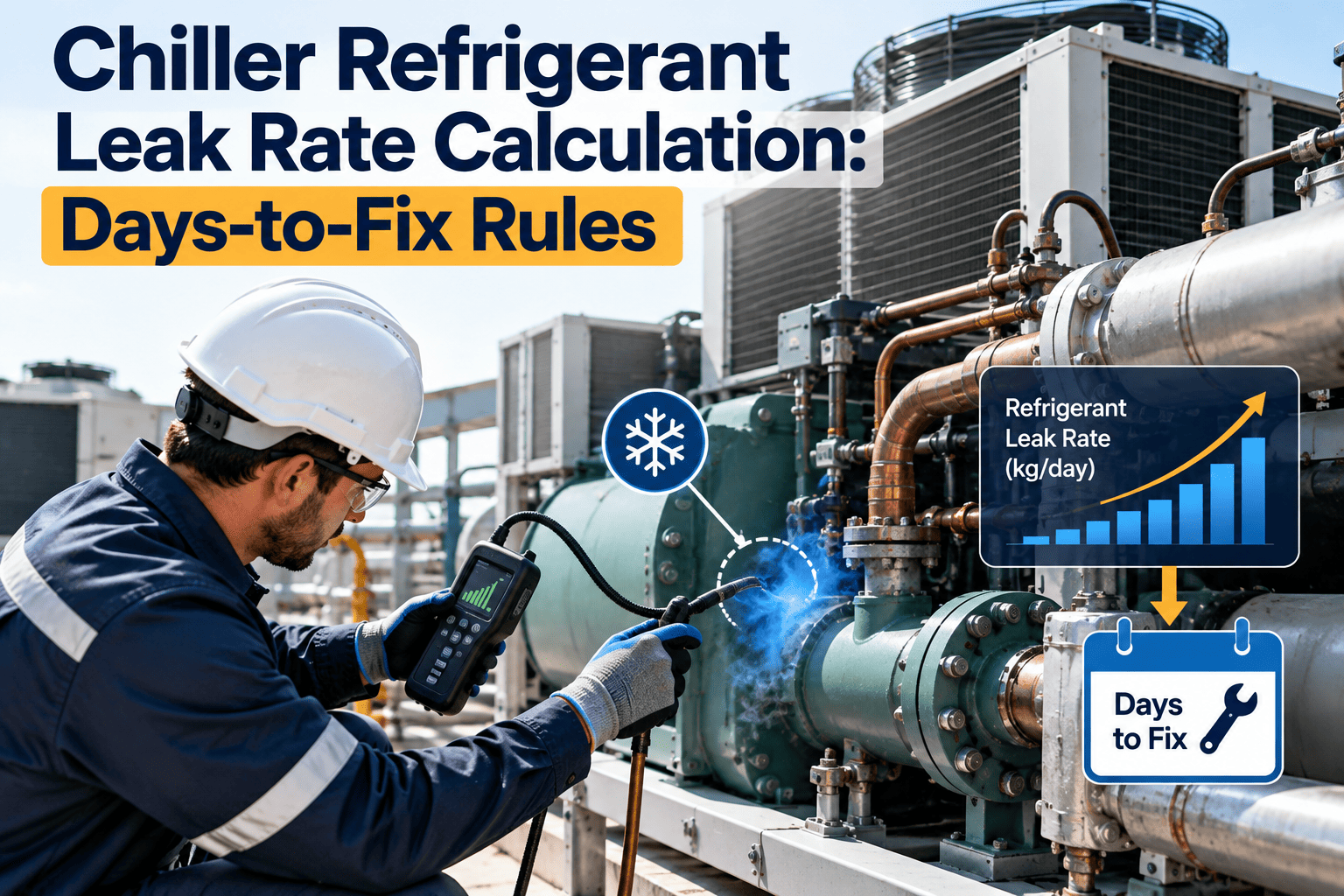
Chiller Refrigerant Leak Rate Calculation: Days-to-Fix Rules
Calculate leak rate every time refrigerant is added, compare it with the threshold, and start the repair clock the day you know.
Leak rate (%)
(Pounds added / Full charge) x (365 / Days since last addition) x 100
Scope: which rule applies to your chiller
EPA leak repair requirements under 40 CFR Part 82.157 apply to appliances with a charge of 50 pounds or more of ozone-depleting refrigerant. EPA has also adopted separate HFC management requirements under the AIM Act, with their own charge thresholds and dates. Confirm which rule covers your refrigerant and charge size.
- Check the nameplate charge and refrigerant type for every chiller
- Note whether the appliance is comfort cooling, commercial refrigeration, or industrial process
- Record the regulation you applied and the date you confirmed it
- Review rule updates annually, since requirements have changed in recent years
Leak rate thresholds by appliance type
| Appliance type | Typical threshold | Common examples |
|---|---|---|
| Comfort cooling | 10 percent per year | Office, hospital, and campus chillers |
| Commercial refrigeration | 20 percent per year | Cold storage and food retail systems |
| Industrial process refrigeration | 30 percent per year | Manufacturing process chillers |
These are the thresholds most facilities encounter. Verify them against the current regulation for your refrigerant.
Calculating leak rate step by step
1
Record the full charge
Use the manufacturer nameplate or the documented charge after a recent service.
2
Log every addition
Capture date, pounds added, cylinder source, and technician for each event.
3
Pick the method
EPA allows an annualizing method and a rolling method. Use one consistently and record which.
4
Calculate within the required window
Run the calculation promptly each time refrigerant is added to the system.
5
Compare with the threshold
If the rate is over, the repair clock starts.
Worked example (illustrative numbers)
Full charge500 lb
Added in the last 12 months60 lb
Rolling leak rate60 / 500 x 100 = 12 percent
Comfort cooling threshold10 percent
ResultOver threshold: start repair clock
These figures are only for illustration. Use your own chiller data and the method your compliance team has selected.
Never miss a leak calculation again
Log each refrigerant addition on the chiller record and keep the calculation attached to the work order.
The days-to-fix timeline
Day 0: Leak rate exceeds threshold
Open a corrective work order and notify the responsible owner.
Within 30 days: Repair
Repair the leaks, or document an allowed extension reason such as parts delays.
After repair: Verification
Perform initial and follow-up verification tests to confirm leaks are fixed.
If not repaired: Retrofit or retire
Develop a plan within the required window and complete it on time.
Timing details, extension conditions, and exceptions vary by rule. Treat this as a planning outline and confirm the exact deadlines in the regulation.
Why leak rate programs fail in practice
Common failure patterns
- Top-offs recorded on paper at the chiller, never entered
- Different technicians use different methods
- Charge size is unknown or guessed
- Repairs happen but verification tests are not documented
What a working program does
- Every addition is logged on the asset at the time
- One documented calculation method
- Charge verified against nameplate
- Repair and test evidence attached to the work order
Records auditors expect to see
Appliance ID, location, refrigerant, and full charge
Date and quantity of every refrigerant addition
Technician name and certification
Leak rate calculation and method used
Leak locations and repair details
Initial and follow-up verification tests
Extension or retrofit plan documents
Retention for the period the rule requires
Keep records together by appliance so an inspector can see the full history in one place.
Reducing leaks before they trigger the clock
- Schedule leak inspections for flanges, valves, fittings, and seals
- Use electronic leak detection or fixed monitors where appropriate
- Track purge unit run time on low-pressure chillers, since rising run time can signal air ingress
- Review pressure and approach trends for early signs of charge loss
- Include refrigerant checks in routine PM rounds
- Investigate any addition, even a small one, for cause
KPIs for refrigerant compliance
Rolling leak rate per chiller
Days from threshold breach to repair
Repairs with verification test on file
Refrigerant added per year
Open leak work orders
Leak inspections completed on time
How Oxmaint supports refrigerant leak compliance
- Chiller asset records with refrigerant type and charge
- Work orders that log each addition, repair, and test
- Recurring inspections for leak checks and purge monitoring
- Compliance records stored with the asset for audits
- Reporting on open leak jobs and overdue inspections
Frequently asked questions
When do I calculate leak rate?
Each time refrigerant is added to an appliance covered by the rule.
What is the common threshold for chillers?
Ten percent per year for comfort cooling. Verify the rule for your refrigerant.
How long do I have to repair a leak?
Generally within 30 days, with specific exceptions. Confirm in the regulation.
Where should records live?
With the asset. Try Oxmaint to keep them together.
Can we automate reminders?
Yes. Book a demo to see inspection scheduling.
Keep every refrigerant record audit-ready
Log additions, calculate leak rate, and track repairs with work orders your team can find in seconds.