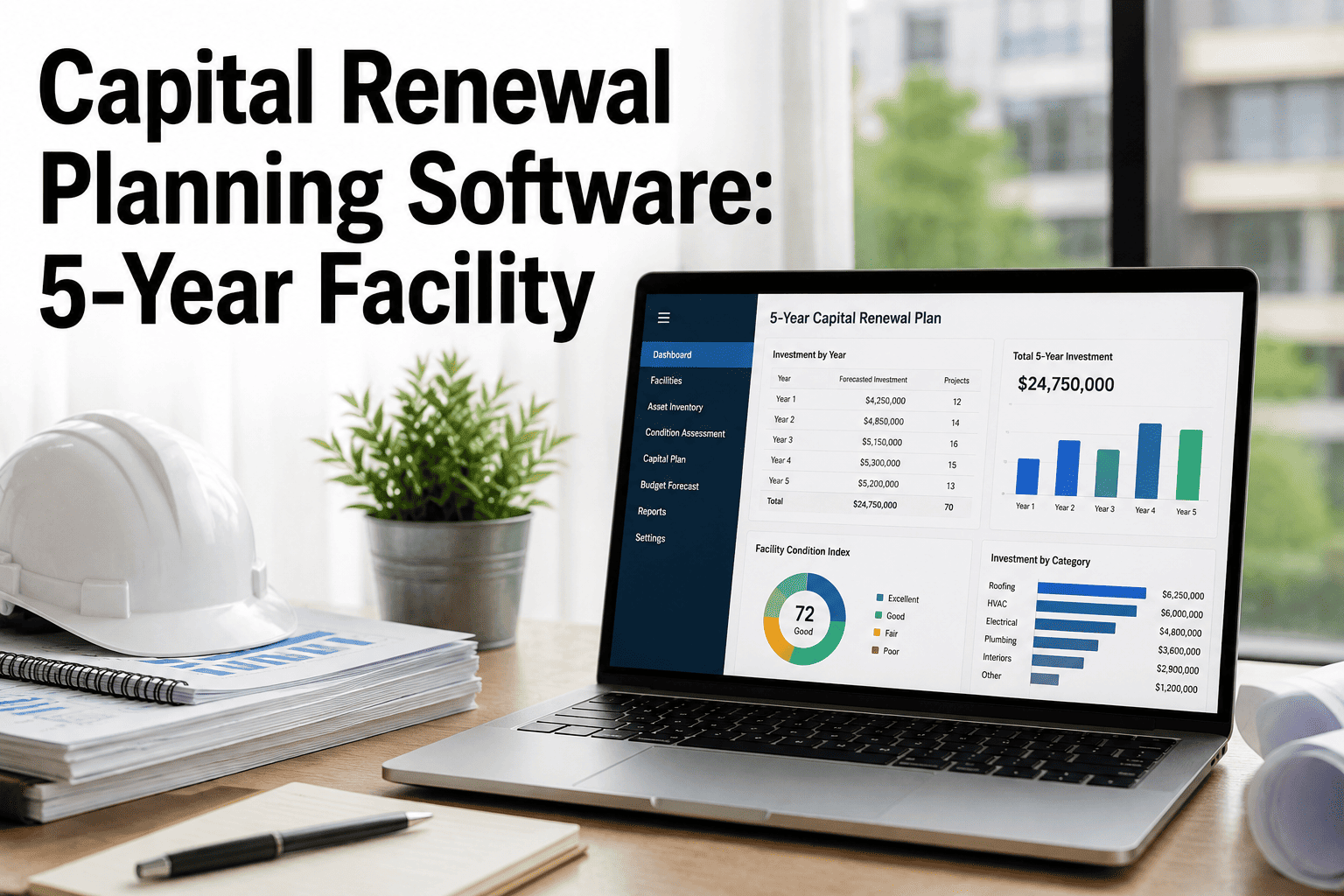
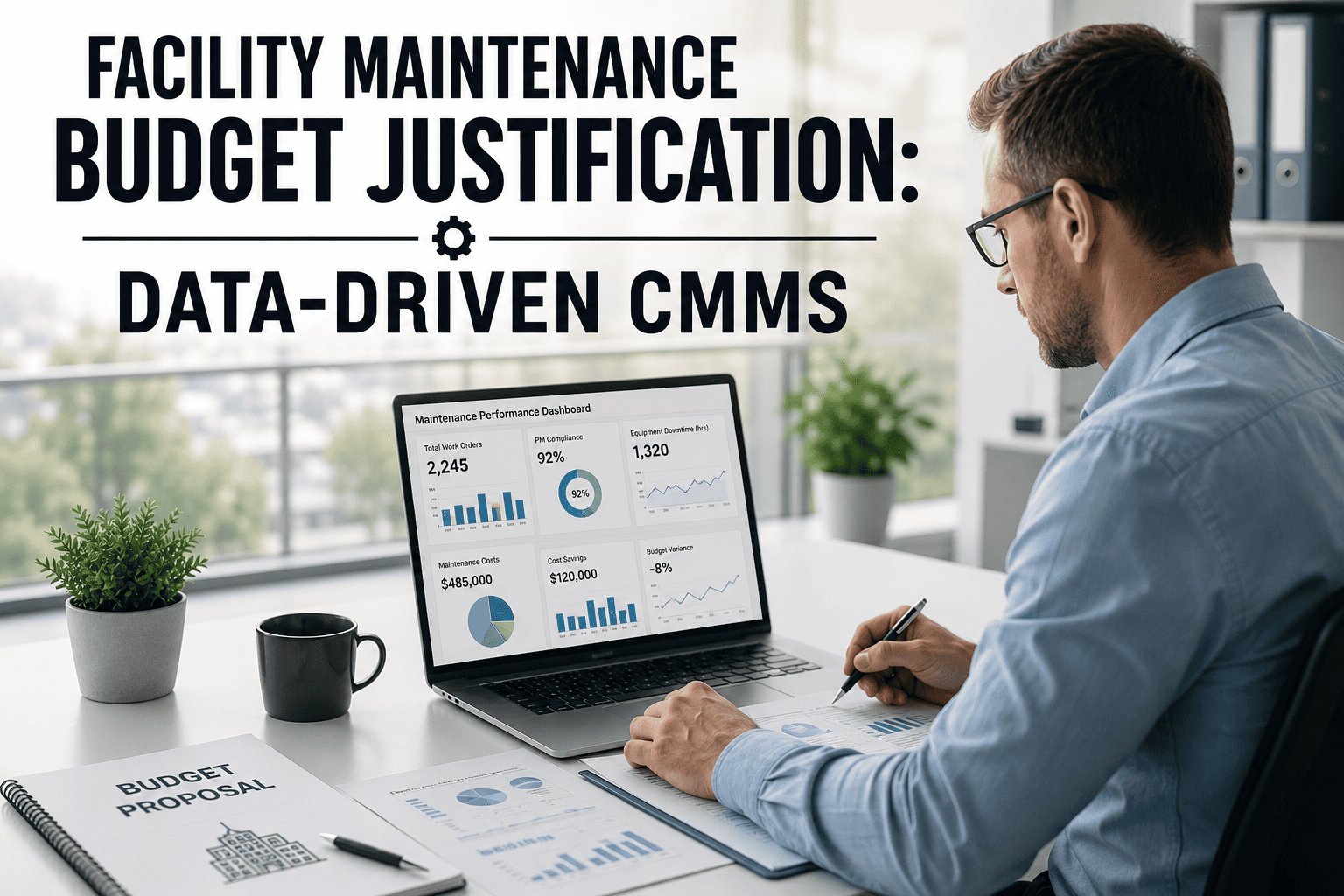
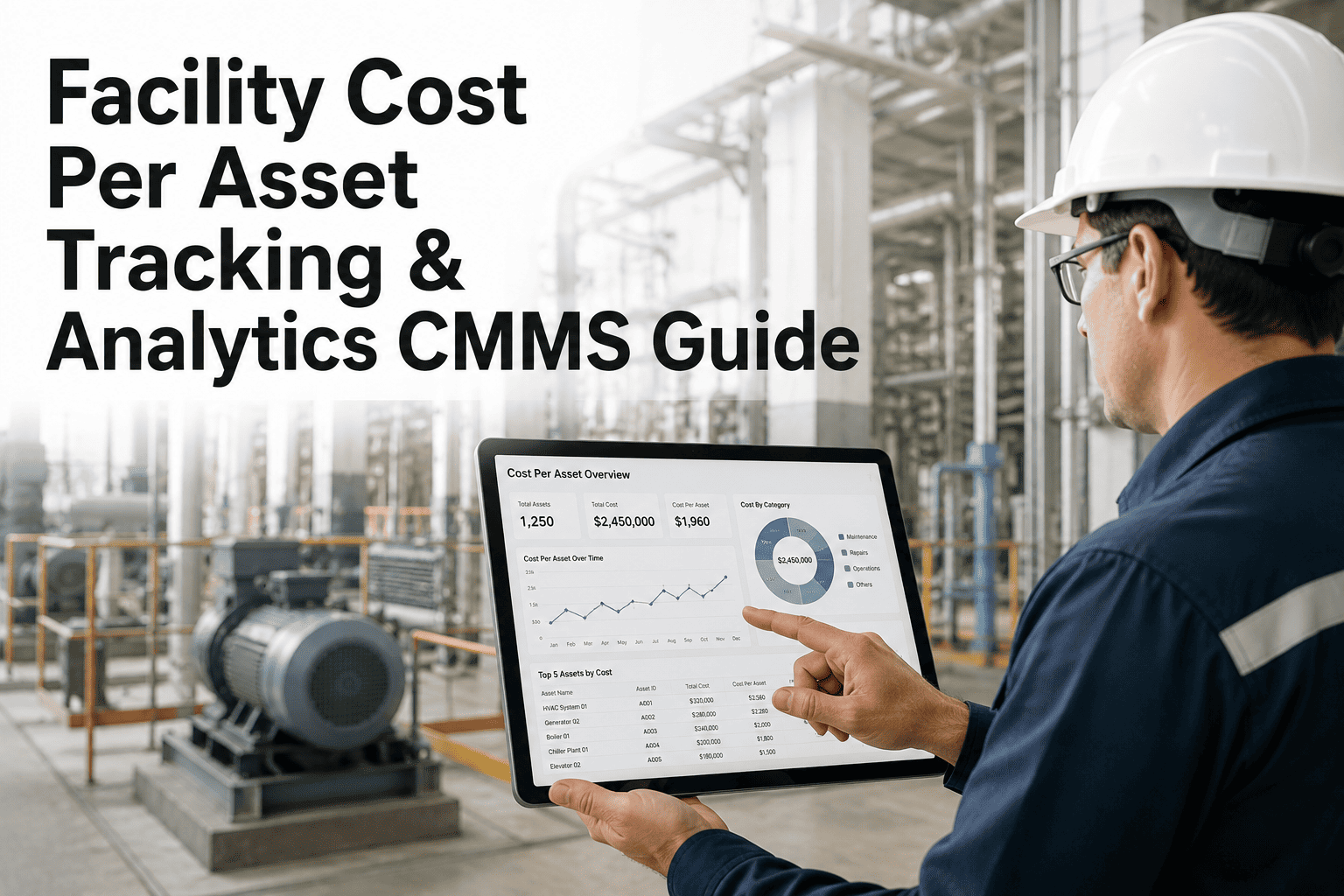
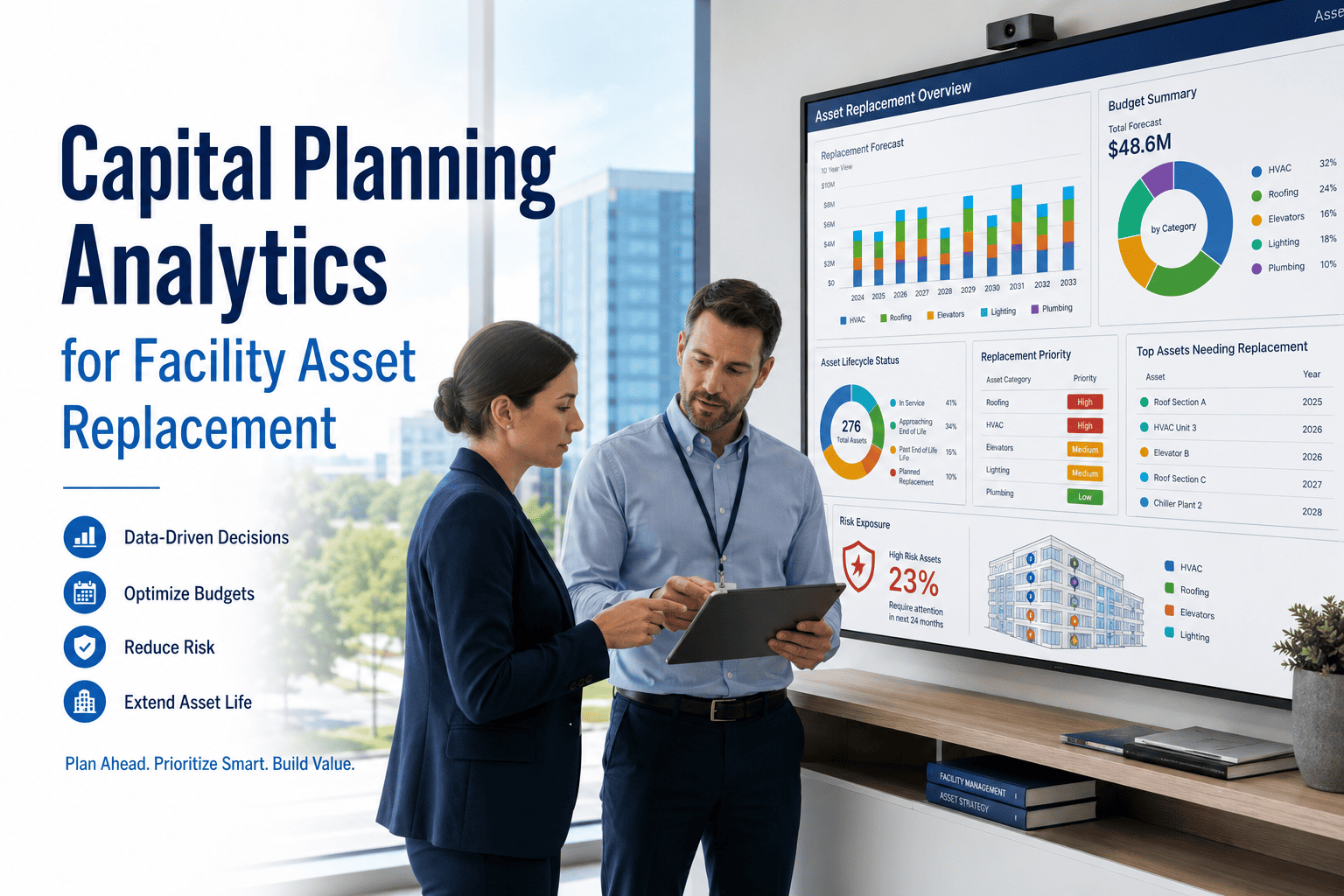
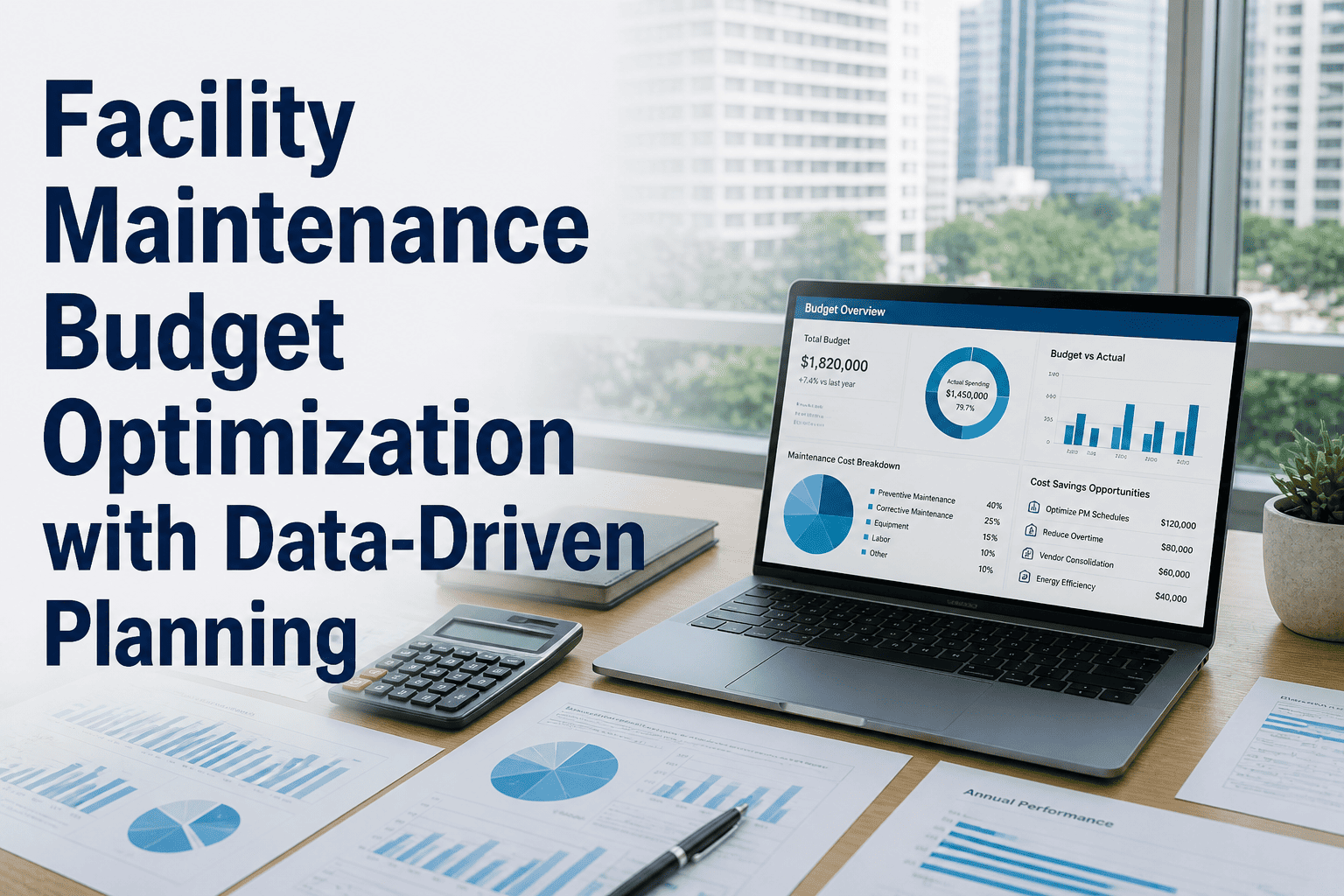
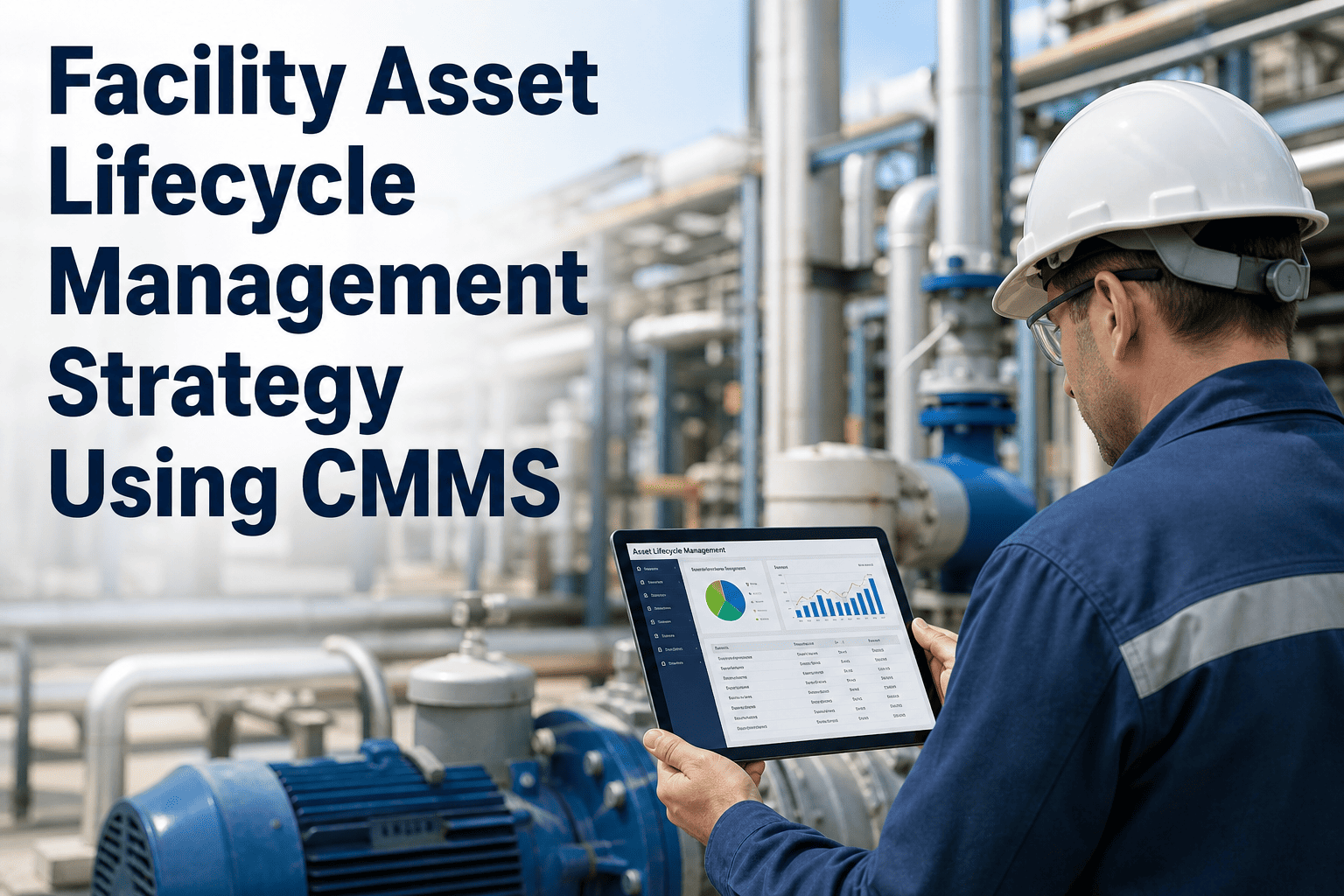
Most facility capital budgets are built on flat percentages, historical precedent, and intuition — not data. A finance team that asks "why does maintenance need $2.3 million next year" and receives "because we spent $2.1 million last year" is not making a capital investment decision. It is approving a number that nobody can defend. The CMMS data that already exists in most organisations contains everything needed to build an evidence-based capital plan: cumulative maintenance cost per asset, failure frequency trends, remaining useful life estimates, and replacement threshold alerts. The only step missing is translating that operational data into the financial format that budget committees and CFOs actually use. Sign in to OxMaint to access the analytics and reporting that converts your maintenance history into a capital budget your finance team can approve — or book a demo to see OxMaint's capital planning reports configured for your asset portfolio.
The Capital Planning Gap
Why Facility Capital Budgets Underperform — In Data
$120K
Annual savings from capital planning errors eliminated at one food processing facility after aligning CMMS lifecycle data with accounting depreciation models
75%
Cumulative repair cost threshold — when maintenance spend reaches 75% of asset replacement value, continued repair is typically less cost-effective than replacement
40–60%
True total cost of ownership that is operating cost — acquisition price is typically only 20–30% of lifetime asset spend, which most capital budgets underestimate
10 yrs → 6
How much reactive maintenance shortens asset lifespan — a well-maintained HVAC unit lasting 15 years may need replacement in 10 without structured PM
The Problem
Why CMMS Data Rarely Reaches the Capital Budget Process
The operational data that determines when assets should be replaced — cumulative maintenance spend, failure frequency, energy consumption trend, and condition readings — lives in the CMMS. The capital budget process happens in a finance spreadsheet or ERP system. Between these two systems is a translation problem that most facilities teams solve with a two-paragraph maintenance summary written from memory two weeks before budget submission. The result is capital requests that cannot be defended, get cut, and result in deferred maintenance that accumulates until a crisis forces an emergency capital expenditure at three times the planned cost.
01
No Per-Asset Cost History
Total maintenance spend is tracked at department or facility level — not per asset. When finance asks why a chiller needs replacing, the maintenance team cannot provide the cumulative repair cost for that specific unit because the CMMS was never configured to track costs per asset. The capital case cannot be made without the cost history.
02
No Replacement Threshold Monitoring
Assets approaching the economic end-of-life — where cumulative repair cost has reached 75% of replacement value — are not flagged until they fail catastrophically or a technician notices a pattern. Without CMMS-generated replacement threshold alerts, capital requests arrive reactively rather than in the planning cycle where they can be approved and budgeted.
Sign in to OxMaint to activate replacement threshold monitoring.
03
Maintenance Budget Built on Last Year's Spend
Budget forecasting by percentage escalation from prior year assumes that next year's maintenance needs are proportionally similar to last year's — which is only true if no assets are ageing, no major PM intervals are due, and no deferred work is accumulating. Ageing portfolios consistently exceed flat-percentage budgets for this reason.
04
Deferred Maintenance Not Quantified
Deferred maintenance accumulates invisibly until it becomes a capital crisis. Without CMMS tracking of every overdue PM, deferred corrective action, and postponed inspection, the total deferred maintenance liability cannot be calculated — and therefore cannot be included in capital planning as a risk-weighted future expenditure.
Book a demo to see deferred maintenance quantification in OxMaint.
The Data Flow
How CMMS Data Becomes a Capital Budget
The path from operational maintenance data to a defensible capital budget follows four translation steps. Each step converts raw CMMS records into a financial format that budget committees can evaluate. OxMaint automates steps 1 and 2 — generating the source data. Steps 3 and 4 use the OxMaint analytics reports directly in budget presentations. Sign in to OxMaint to see your existing work order data already translated into capital planning inputs.
1
CMMS Work Order Data
Every closed work order contains: asset ID, labour hours and cost, parts used and cost, failure mode, date. This is the raw data. Without per-asset cost attribution, this step cannot proceed.
Labour cost per WO
Parts cost per WO
Failure mode recorded
Asset ID linked
2
Per-Asset Cost Accumulation
OxMaint aggregates all work order costs per asset into a cumulative lifetime cost record — showing total maintenance spend, broken down by labour, parts, and contractor, with a trend line per year.
Cumulative cost per asset
Annual spend trend
Cost breakdown by type
MTBF per asset
3
Capital Threshold Analysis
OxMaint compares cumulative maintenance cost against configured replacement value per asset — flagging assets at 50%, 75%, and 100% of the replacement threshold. These are the capital replacement candidates for the next 1, 2, and 3-year planning horizons.
75% threshold alerts
Replacement cost per asset
Planning horizon assignment
Risk priority score
4
Capital Budget Report
OxMaint generates a capital planning report showing: assets by replacement horizon, total capital required by year, continued-operation risk per deferred replacement, and cost of continued repair vs. replacement for each asset. This is the document that goes to finance.
Book a demo to see the OxMaint capital planning report.
3-year capital forecast
Replacement priority ranking
Deferral risk quantification
Finance-ready format
Your CMMS Already Contains the Evidence for Your Capital Budget. You Just Need to Surface It.
OxMaint converts existing work order history into cumulative cost per asset, replacement threshold alerts, and a capital planning report your finance team can review and approve — without a spreadsheet.
Key Reports
Four CMMS Reports That Drive Capital Planning Decisions
These four reports — all generated from standard OxMaint work order and asset data — are the evidence base for capital investment decisions. Each report addresses a specific question that budget committees ask during capital review cycles. Sign in to OxMaint to generate these reports from your existing maintenance data.
Budget committee question: "Why does this asset need replacing now?"
Shows cumulative maintenance spend per asset since installation — broken down by year, by cost type (labour, parts, contractor), and compared against original purchase price. The rising cost curve makes the economic argument for replacement without requiring narrative. A chiller that cost $180,000 new and has consumed $140,000 in maintenance over 12 years is self-evidently approaching replacement territory — the data does the explaining.
Cumulative maintenance cost by year
Labour vs. parts vs. contractor breakdown
Cost as % of original purchase price
Year-over-year maintenance cost trend
Budget committee question: "What capital investments does the facility need in the next 3 years?"
Ranks all assets by replacement threshold proximity — showing which assets are at 75%+ of the economic replacement threshold (Year 1 candidates), 50–75% (Year 2), and 25–50% (Year 3). Each asset shows replacement cost, current cumulative maintenance spend, and projected continued-operation cost if replacement is deferred. This converts capital planning from reactive emergency requests into a scheduled replacement pipeline.
Book a demo to see this report for your asset fleet.
Assets ranked by replacement threshold %
Year 1 / 2 / 3 replacement candidates
Replacement cost per asset
Deferral cost projection per year
Budget committee question: "What happens if we don't fund the maintenance budget fully?"
Quantifies all overdue PMs, deferred corrective actions, and postponed inspections as a financial liability — showing the cost to remediate the backlog and the risk-weighted probability of failure for each deferred item. This makes deferred maintenance visible as a balance-sheet risk rather than an operational inconvenience. Facilities that present this report in budget cycles consistently receive more funding for maintenance than those that present only last year's spend.
Total deferred maintenance backlog value
Overdue PM count and remediation cost
Failure risk per deferred item
Projected cost if deferred items fail unplanned
Budget committee question: "How did you arrive at next year's maintenance budget number?"
Projects next year's maintenance spend per asset from MTBF trends, upcoming scheduled major PM intervals, parts consumption rates, and contractor engagement history — not from flat-percentage escalation. Each asset's projected spend is supported by the historical data it was calculated from. This is a fundamentally different level of budget credibility than "last year plus 5%."
Sign in to generate your maintenance spend forecast in OxMaint.
Per-asset maintenance spend forecast
Major PM interval cost projection
Parts consumption forecast by category
Budget variance vs. prior year with explanation
Decision Framework
The Repair vs. Replace Decision — Making It With CMMS Data
The single highest-stakes capital planning decision is knowing when to stop repairing an asset and replace it. Made too early, you waste remaining useful life. Made too late, you overpay for emergency repairs, energy waste, and reliability losses. The decision framework below uses CMMS data at each stage to convert a subjective judgement into a data-supported recommendation.
| Signal |
CMMS Data Source |
Threshold |
Capital Action |
| Cumulative repair cost |
Work order cost history per asset |
75% of replacement value |
Add to Year 1 capital replacement pipeline |
| MTBF declining trend |
Work order failure frequency per asset |
3+ consecutive MTBF reductions |
Flag for engineering review — likely entering degraded performance phase |
| Maintenance cost rising YoY |
Annual work order cost per asset vs. prior years |
20%+ increase for 2 consecutive years |
Model continued-operation cost vs. replacement cost over 5 years |
| Emergency work order rate |
Emergency vs. planned WO ratio per asset |
>30% emergency rate on specific asset |
PM interval review + replacement threshold check |
| Parts obsolescence |
Parts catalog linked to asset BOM |
Lead time >12 weeks for critical components |
Evaluate replacement risk regardless of maintenance cost |
| Energy consumption rising |
Runtime vs. energy consumption trend |
15%+ increase with stable output |
Quantify energy efficiency gap vs. replacement specification |
The 75% cumulative cost rule is the primary economic trigger. MTBF decline, energy consumption increase, and emergency work order rate are supporting indicators that should be considered alongside cost data. Book a demo to see how OxMaint tracks all six signals per asset automatically.
Capital Budget Approved. Not Because You Asked Louder — Because You Showed the Data.
OxMaint generates the lifetime cost reports, replacement pipeline analysis, and deferred maintenance liability quantification that converts a maintenance budget request into an evidence-based capital investment proposal.
What Finance and Facilities Leaders Say
"
I have been a facilities director for 18 years and have had the same conversation with finance every budget cycle: I ask for capital, they cut it, something fails, we spend three times the planned amount on an emergency replacement, and they ask why maintenance didn't flag it earlier. After implementing OxMaint and producing the capital replacement pipeline report for the first time — showing our CFO that eleven assets were at 75%+ of replacement threshold, with their cumulative repair histories and projected continued-operation costs attached — every single replacement was approved in the first budget cycle. No counter-argument was possible. The data spoke for itself. That approval cycle has changed permanently because the conversation is no longer about trust in the maintenance team. It is about reviewing evidence.
OxMaint Analytics Capabilities
What OxMaint Delivers for Capital Planning and Budget Forecasting
Cost History
Per-Asset Lifetime Cost Record
Every work order cost — labour, parts, contractor — attributed to the specific asset it was performed on. Cumulative lifetime cost visible per asset from installation date. Annual cost trend shows whether spend is accelerating, stable, or declining for each asset in the portfolio.
Sign in to build your asset cost history in OxMaint.
Threshold
Replacement Threshold Alerts
OxMaint compares cumulative maintenance cost against each asset's configured replacement value — generating automatic alerts at 50%, 75%, and 100% thresholds. No manual monitoring required. Replacement candidates surface in the planning dashboard before they arrive as emergency requests.
Book a demo to see threshold alerts configured for your fleet.
Pipeline
3-Year Capital Replacement Forecast
Capital replacement pipeline report showing Year 1, Year 2, and Year 3 candidates ranked by threshold proximity, with replacement cost and deferral risk per asset. The finance-ready format that converts maintenance data into capital investment proposals without manual report assembly.
Backlog
Deferred Maintenance Quantification
All overdue PMs, deferred corrective actions, and postponed inspections quantified as a financial liability — with cost to remediate and failure probability per deferred item. Makes the risk of underfunding maintenance visible in financial terms rather than operational terms.
Sign in to quantify your deferred maintenance backlog.
Forecast
Data-Driven Maintenance Budget Forecast
Next year's maintenance budget forecast built from MTBF trends, upcoming major PM intervals, and parts consumption rates — per asset. Not flat-percentage escalation. Each number is supported by the historical data it was calculated from, making the budget defensible to finance leadership at line-item level.
Reporting
Finance-Ready Report Export
Capital planning reports export in formats compatible with finance presentations — with asset-level detail, cost trend charts, and summary tables. The same data that maintenance tracks operationally is presented in the financial format that budget committees evaluate. No translation layer required.
Book a demo to see a capital planning report export.
Your Next Capital Budget Conversation Should Be a Data Review, Not a Negotiation
OxMaint generates the lifetime cost records, replacement pipeline analysis, deferred maintenance liability, and maintenance spend forecast that convert a maintenance budget request into a data-supported capital investment proposal. Free trial. No implementation fees.
Common Questions
Facility Finance and Maintenance Leaders Ask These About CMMS Capital Planning
What CMMS data is needed to build a capital replacement forecast?
Four data inputs are required: per-asset cumulative maintenance cost from work order history, the replacement value per asset (entered once and updated at procurement or revaluation), the installation date, and the failure frequency trend from MTBF calculations. OxMaint generates all four automatically from your existing work order data once assets are configured with replacement values.
Sign in to configure replacement values and activate threshold monitoring for your assets.
At what cumulative repair cost should an asset be considered for capital replacement?
The industry benchmark is 75% of current replacement value — the point at which continued repair is typically less cost-effective than replacement when reliability loss, energy inefficiency, and rising repair frequency are included. OxMaint flags assets at 50%, 75%, and 100% thresholds automatically. The 75% threshold should be treated as the trigger for entering the Year 1 capital pipeline, not as an immediate replacement decision.
Book a demo to configure replacement thresholds for your asset portfolio.
How do I use CMMS data to justify a maintenance budget increase to the CFO?
Present the deferred maintenance liability report first — quantifying the total overdue PM and corrective action backlog in financial terms. Then present the maintenance spend forecast showing that next year's budget is not "last year plus 5%" but a projection built from MTBF trends, upcoming major PM intervals, and parts consumption rates per asset. The deferred maintenance liability shows the cost of underfunding; the forecast shows that the requested budget is calculated, not estimated.
Sign in to generate both reports from your existing OxMaint data.
Can OxMaint generate a 3-year capital replacement forecast automatically?
Yes. Once assets are configured with replacement values and the work order history has accumulated per-asset cost data, OxMaint generates a capital replacement pipeline report showing Year 1, Year 2, and Year 3 candidates ranked by replacement threshold proximity. The report includes replacement cost, cumulative maintenance spend, and deferral risk per asset — in a format ready for budget committee review without manual report assembly.
Book a demo to see the capital replacement forecast configured for your portfolio.
How long does it take for OxMaint to accumulate enough data for meaningful capital planning?
For assets with existing maintenance history that can be imported at implementation, capital planning reports are available within the first month. For assets starting from scratch, a meaningful 12-month cost trend per asset typically requires 12 months of active work order tracking. The replacement threshold and deferred maintenance reports are useful from day one — they require only current configuration data, not historical trends, to generate actionable outputs.
Sign in to begin configuring your assets for capital planning tracking.