A single failed sealant joint on a mid-rise curtain wall costs roughly $200 to repair at the joint. Left uninspected for two years, the same failure costs $8,000 to $25,000 in water-damaged interior finishes, frame corrosion, and mould remediation — and that is before the HVAC efficiency penalty from a compromised building envelope. Commercial window and glass system maintenance is not a cosmetic programme; it is a building performance programme. Structural silicone sealants carry glass loads and must be inspected annually regardless of their 20 to 30-year rated lifespan. Weep holes blocked by debris turn window frames into water traps within a single season. IGU seal failure — identifiable only by fogging between panes — means the insulating gas has escaped and the unit is contributing to energy loss every hour it remains in place. This checklist covers five glass system zones — surface glazing, sealants and gaskets, hardware and operating components, curtain walls and storefront systems, and skylights — structured to the inspection frequencies recommended by ASTM C1394, AAMA 502, and commercial building maintenance practice. Book a demo to see how Oxmaint's Preventive Maintenance platform manages glass system inspection cycles, defect documentation, and contractor scheduling for commercial buildings.
Equipment & Asset Management · Building Systems · Preventive Maintenance
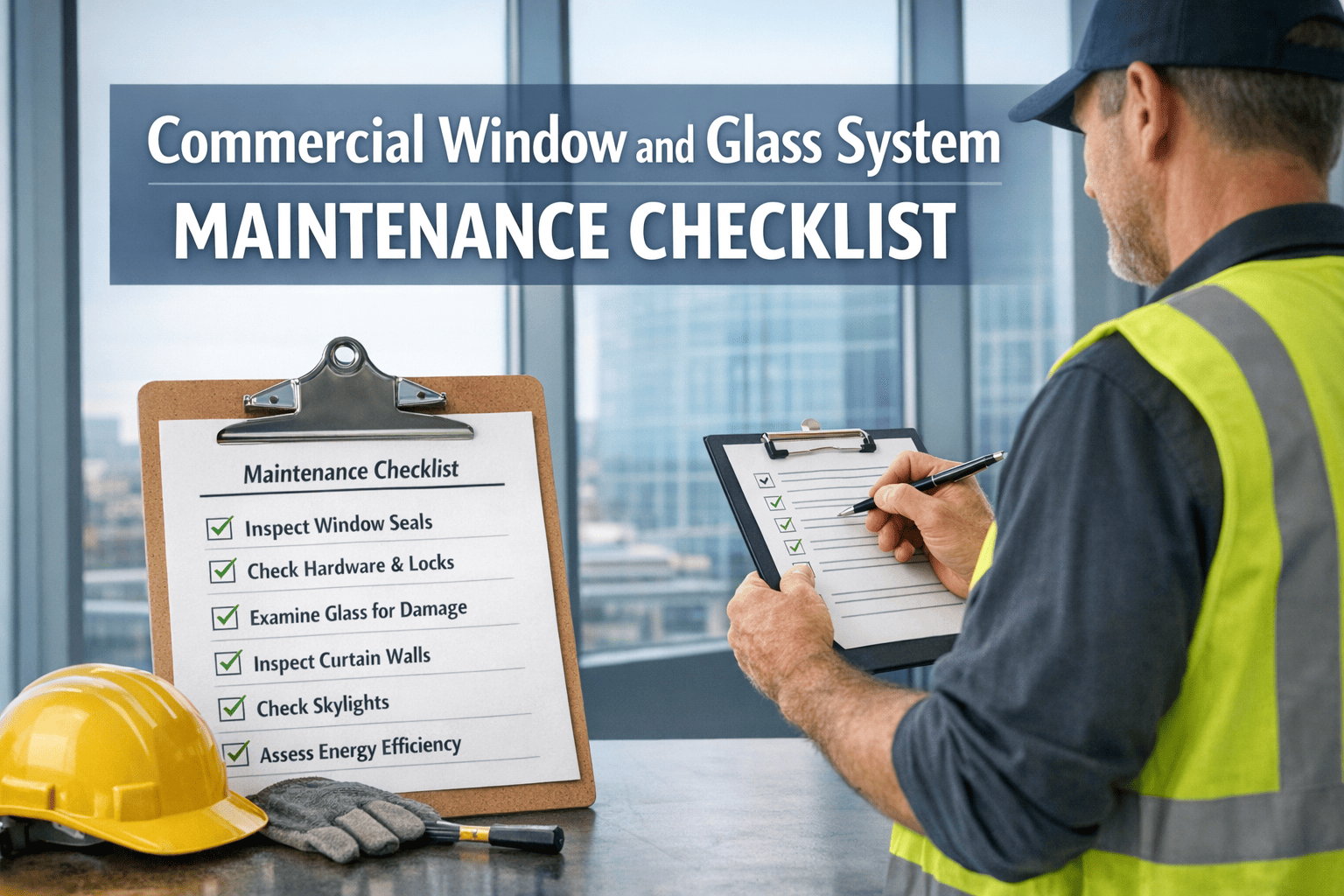
Commercial Window and Glass System Maintenance Checklist
Five glass system zones. Quarterly through 5-year inspection cycles. Every defect type, standard reference, and corrective action threshold your facility management programme needs — in one audit-ready checklist.
5 yearsMaximum interval for close-up sealant adhesion inspection on curtain walls (ASTM C1394)
20-30 yrRated structural silicone lifespan — but annual inspection is still mandatory regardless
3-5 yearsCommercial sealant reapplication cycle — sooner in coastal, UV-intense, or high-cycle environments
QuarterlyMinimum weep hole and drainage channel inspection frequency — primary water intrusion prevention
Zone 1 — Glass Surface
Zone 2 — Sealants & Gaskets
Zone 3 — Hardware
Zone 4 — Curtain Wall & Storefront
Zone 5 — Skylights
What Missed Inspection Actually Costs — The Failure Cascade
Missed sealant inspection
Year 1
▶
Sealant crack allows water entry
Year 2
▶
Frame corrosion + insulation failure
Year 3 — ~$3,000
▶
Mould growth in wall cavity
Year 4 — ~$12,000
▶
Structural damage + full remediation
Year 5 — $20,000+
Zone 01
Glass Surface Inspection
Glass defects visible from 10 feet at 90 degrees in daylight (not direct sun) across the central 80% of the panel constitute actionable defects under ASTM standards. The inspection tasks below cover surface condition, IGU seal integrity, and coating degradation — each on the cadence appropriate to the defect type.
Quarterly — Visual Surface Check
ASTM C1036 / AAMA 502
Glass panels inspected from 10 feet at 90 degrees in daylight — note any chips, scratches, stress fractures, or impact damage in central 80% of each panel
Record: Glass condition report with panel ID · Role: Facility Manager / Maintenance Lead
IGU (insulated glass units) checked for fogging or condensation between panes — any fogging confirms argon gas loss and failed edge seal; schedule unit replacement
Record: IGU failure log · Role: Facility Manager
Low-E and solar control coatings inspected for delamination or discolouration — coating failure increases solar heat gain and reduces energy performance
Record: Coating condition log · Role: Facility Manager
Annual — Detailed Panel Inspection
ASTM C1394
All glass panels documented with before/after photography — establish baseline record for capital planning and insurance purposes
Record: Annual glass survey report · Role: Facility Manager / Inspector
Edge seals on all IGU units inspected for sealant discolouration, deformation, or moisture wicking — inspect particularly at glazing bite (frame contact zone)
Record: Annual inspection report · Role: Glazing Inspector
Post-storm inspection completed within 48 hours of any wind event exceeding 60 mph or hail event — prioritise upper floors and exposed elevations
Record: Post-event inspection form with date and weather data · Role: Facility Manager
Zone 02
Sealants, Caulk & Gaskets
Sealant failure is the single most common root cause of building envelope water infiltration. The inspection frequency below accounts for both owner-performed visual checks and the contractor-level adhesion tests required by ASTM C1521 for structural glazing applications.
Quarterly — Visual Perimeter Check
ASTM C1193
All window perimeter caulk joints visually inspected — look for cracks, gaps, peeling, separation from substrate, or chalking that indicates UV degradation
Record: Sealant inspection log · Role: Maintenance Lead
Weep holes at window sill sections confirmed clear and unobstructed — blocked weep holes cause frame flooding and are the primary mechanism for window leakage failure
Record: Drainage check form · Role: Maintenance Lead
Rubber gaskets on fixed glazing visually checked for brittleness, cracking, or corner joint separation — gasket failure at corners is first point of water entry
Record: Gasket inspection log · Role: Maintenance Lead
Annual — Adhesion & Condition Assessment
ASTM C1521
Sealant adhesion hand-pull test performed at representative sample of joints per ASTM C1521 — cohesive failure (tearing within sealant body) is acceptable; adhesive failure (sealant pulling from substrate) requires remediation
Record: Adhesion test report · Role: Certified Inspector / Contractor
Sealant flexibility confirmed — sealant should compress and recover elastically when manipulated by hand; brittle or rigid sealant indicates UV or thermal degradation requiring reapplication
Record: Annual sealant assessment form · Role: Contractor / Inspector
Every 3-5 Years — Reapplication Cycle
ASTM C1193 / Commercial Standard
All exposed perimeter caulk and weatherstrip sealant removed, substrates cleaned, primed, and new commercial-grade sealant applied — do not caulk over failed sealant
Record: Resealing work order + contractor report · Role: Licensed Glazing Contractor
Schedule inspection cycles, track sealant reapplication deadlines, and store contractor reports — all in one compliance-ready platform.
Zone 03
Hardware & Operating Components
Operable windows, tilt-and-turn units, and high-access ventilation panels carry both safety and energy performance functions. A hardware failure on a high-rise operable sash is a falling hazard. A failed lock on a ground-floor unit is a security vulnerability. The inspection cadence below matches the operational risk of each component type.
Quarterly — Functional Test
Manufacturer Spec / AAMA 502
All operable sash windows opened, closed, and locked — operation should be smooth with no binding, grinding, or failure to latch securely
Record: Hardware function log · Role: Maintenance Lead
Locking mechanisms tested for full engagement — locks that do not positively engage create both security and wind-load risks on upper floors
Record: Lock inspection form · Role: Maintenance Lead / Security
Weatherstripping on all operable windows checked — compress and release test confirms seal; replace any section that does not spring back or shows visible gaps when window is closed
Record: Weatherstrip condition log · Role: Maintenance Lead
Semi-Annual — Lubrication & Adjustment
Manufacturer Spec
All hinges, pivot pins, and friction stays lubricated with manufacturer-approved lubricant — do not use petroleum-based products on EPDM seals or aluminium hardware
Record: PM work order · Role: Maintenance Technician
Operable sash alignment verified — sash should sit flush with frame perimeter with uniform compression on weatherstrip; adjust hinges if misalignment is present
Record: PM work order · Role: Maintenance Technician
Window restrictor devices (high-rise safety restrictors) confirmed present and functional — limiting opening to regulatory maximum (typically 100mm for occupied floors above ground)
Record: Restrictor inspection form · Role: Maintenance Technician
Zone 04
Curtain Wall & Storefront Systems
Curtain wall systems carry structural loads from glass panels to the building frame via aluminium mullions and structural sealant. Unlike standard windows, failure here is a life-safety risk — a delaminated structural sealant joint can allow a panel to fall. The inspection programme below follows the ASTM C1394-recommended cycle for structural glazing systems.
Annual — Ground-Level Visual Survey
ASTM C1394 / AAMA CW-DG-1
Full facade visual survey from ground level using binoculars or telephoto photography — document all visible sealant gaps, panel misalignment, water staining, or frame corrosion by grid reference
Record: Facade survey report with photographs · Role: Facility Manager / Inspector
Water staining on interior surfaces directly behind curtain wall panels documented and mapped — staining indicates active infiltration path and directs close-up inspection priority
Record: Water ingress map · Role: Facility Manager
Aluminium frame sections at sill level inspected for corrosion, oxidation, or anodising failure — coastal and industrial environments accelerate aluminium degradation
Record: Annual survey report · Role: Facility Manager / Inspector
Every 5 Years — Close-Up Contractor Inspection
ASTM C1394 / ASTM C1521
Full close-up inspection via swing stage, BMU, or access equipment — all sealant joints, gaskets, anchor points, and panel connections physically inspected at face distance
Record: Detailed inspection report with test data · Role: Licensed Building Envelope Consultant
Structural sealant joints tested per ASTM C1521 adhesion protocol — adhesive failure at substrate is critical deficiency requiring immediate resealing before facade re-occupancy below
Record: ASTM C1521 test report (file for building lifecycle) · Role: Certified Building Envelope Specialist
Drainage cavity and pressure equalisation channels inspected for debris — blocked cavity drainage causes pressure differential that drives water past secondary seals
Record: Contractor inspection report · Role: Licensed Building Envelope Consultant
Zone 05
Skylights & Sloped Glazing
Skylights are the most exposure-intensive glass system on any building — subject to full UV intensity, standing water from rain, debris impact, and thermal cycling extremes. Annual inspection is the minimum; semi-annual is best practice for commercial skylights on occupied roofs.
Semi-Annual — Skylight Inspection
AAMA SHDG-2 / ASTM E1105
Skylight glazing inspected for cracks, chips, surface hazing, or delamination — inspect from interior with lights off to identify any light transmission through cracks invisible in normal conditions
Record: Skylight condition report · Role: Maintenance Lead / Roof Inspector
Flashing around all skylight curbs inspected for separation, corrosion, or upturned edges — flashing failure is the primary skylight water ingress mechanism
Record: Flashing inspection form · Role: Roofing / Glazing Contractor
Sealant at curb-to-frame interface inspected for cracking, shrinkage, or debonding — reapply with compatible sealant if any gap exceeds 1mm
Record: Sealant inspection log · Role: Maintenance Lead / Glazing Contractor
Interior ceiling and wall surfaces below skylights inspected for water staining, efflorescence, or mould — any staining triggers immediate skylight inspection from roof level
Record: Interior condition log · Role: Facility Manager
Annual — Hardware & Drainage
Manufacturer Spec / AAMA SHDG-2
Operable skylight vents tested through full open/close cycle — mechanism should operate without force; lubricate cranks, hinges, and actuators per manufacturer schedule
Record: Hardware function log · Role: Maintenance Technician
Skylight condensation drainage channels cleared — condensation that cannot drain pools at frame base and accelerates sealant and frame degradation
Record: Drainage maintenance log · Role: Maintenance Technician
Compliance Reference
Inspection Frequency & Standard Reference
| Glass System Component | Task | Required Frequency | Applicable Standard |
| All glass panels |
Visual defect inspection (10ft, 90 deg) |
Quarterly |
ASTM C1036 / AAMA 502 |
| IGU edge seals |
Fogging / condensation check |
Quarterly |
ASTM E546 / ASTM C1249 |
| Weep holes and drainage channels |
Clear and unobstructed check |
Quarterly |
AAMA SFM-1 / Commercial Practice |
| Perimeter sealant / caulk |
Visual crack and adhesion check |
Quarterly minimum; Annual detailed |
ASTM C1193 / C1521 |
| Operable window hardware |
Function test — open, close, lock |
Quarterly |
Manufacturer Spec / AAMA 502 |
| Curtain wall — all elevations |
Ground-level visual survey |
Annual |
ASTM C1394 / AAMA CW-DG-1 |
| Structural sealant joints |
Adhesion test (ASTM C1521) |
Every 5 years (close-up access) |
ASTM C1394 / ASTM C1521 |
| Skylights — all components |
Full inspection: glazing, flashing, sealant, hardware |
Semi-annual |
AAMA SHDG-2 / ASTM E1105 |
| Perimeter sealant |
Full reapplication (remove and replace) |
Every 3-5 years |
ASTM C1193 / Commercial Standard |
| Facade — high-rise |
Close-up contractor inspection (swing stage) |
Every 5 years |
ASTM C1394 / ASTM C1521 |
Expert Review
What Building Envelope Professionals Say
01
The most expensive window repairs I see are always the ones that started as a $200 sealant gap. The gap is visible in the annual survey photograph. Nobody acts on it. Two years later the frame is saturated, the insulation is moulded, and the wall board has to come out. Documentation without a work order process is just evidence of what you ignored.
Building Envelope Consultant, Commercial High-Rise Facade Specialist
02
Weep holes are the most frequently missed item on any glazing inspection checklist. They are tiny, they are at the bottom of the frame where nobody looks, and when they are blocked the whole sill pan fills with water. Clear them quarterly. It takes 20 seconds per window and prevents most of the water damage I get called in to remediate.
Senior Property Maintenance Manager, Commercial Office Portfolio
03
A 5-year structural sealant inspection is not optional on a multi-storey curtain wall — it is a liability management requirement. Structural silicone rated for 25 years can fail at 8 if the substrate was contaminated during installation. The only way to know is the adhesion test. Annual ground surveys miss this entirely.
Certified Building Envelope Specialist, Structural Glazing Systems
FAQs
Frequently Asked Questions
How does Oxmaint manage the 5-year curtain wall inspection cycle alongside annual tasks?
Each inspection cycle — quarterly, annual, and 5-year — is configured as a separate recurring work order with its own lead-time alert, contractor assignment, and document storage. Contractor inspection reports and ASTM test results are stored against the specific asset record.
Book a demo to see the multi-cycle PM scheduling workflow.
What is the difference between a visual sealant inspection and an ASTM C1521 adhesion test?
A visual inspection identifies surface cracking, gaps, and discolouration — detectable by facility staff. The ASTM C1521 hand-pull adhesion test physically tests whether the sealant is bonded to its substrate, which cannot be determined visually. Only adhesion testing confirms structural sealant integrity on curtain wall systems.
When does condensation between window panes require replacement rather than resealing?
Always. Condensation between panes confirms the IGU edge seal has failed and argon fill has been replaced by moist air. There is no repair that restores the original insulating performance — the IGU must be replaced. Resealing the exterior joint will not resolve internal fogging.
Does this checklist apply to heritage and listed buildings with original glazing?
The inspection zones and defect types apply universally. Remediation methods differ — heritage buildings may require conservation-grade sealants and specialist glazing contractors approved by the relevant conservation authority. Oxmaint's work order system supports custom material and contractor specifications per asset.
Every Glass Panel. Every Sealant Joint. Every Inspection Cycle. One Audit-Ready Record.
Oxmaint's Preventive Maintenance platform manages commercial window and glass system inspection schedules, contractor assignments, ASTM test documentation, and defect-to-work-order workflows — for single buildings or entire property portfolios.


.jpeg)
