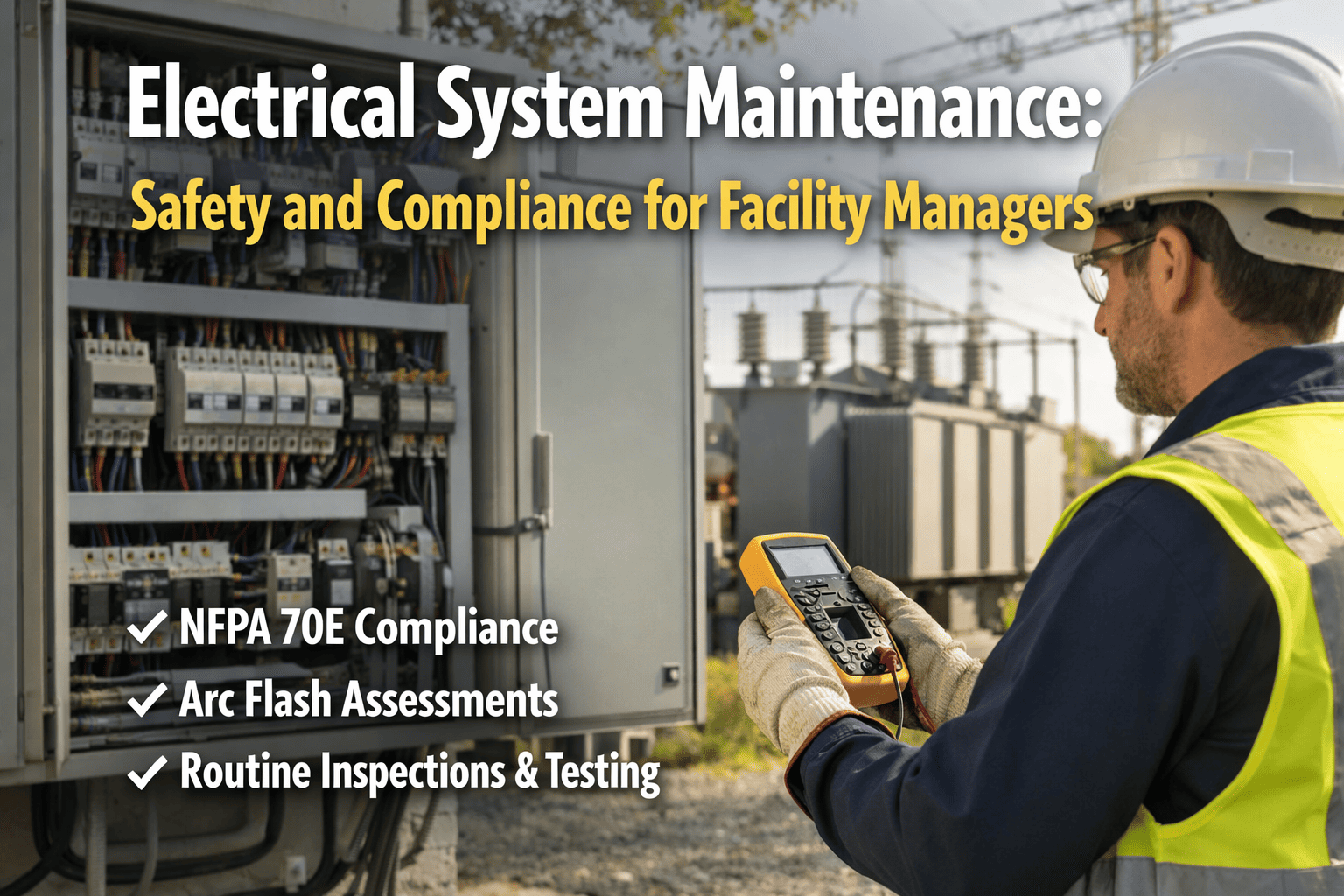
Facility shutdowns are among the most high-stakes events in industrial operations. Whether it's a scheduled turnaround, a seasonal maintenance window, or a critical safety-driven outage, the success of every shutdown depends on one thing above all else—how well you coordinate your contractors. With dozens of external crews, hundreds of simultaneous work orders, and razor-thin timelines, poor contractor coordination can turn a 10-day shutdown into a 16-day budget disaster. Schedule a free consultation to discover how Oxmaint streamlines contractor coordination for shutdowns of any scale.
Stats Banner
The Real Cost of Poor Contractor Coordination
Why facility shutdowns go over budget and over schedule
80%
Of shutdowns exceed projected costs without adequate preparation
300%
Average on-site workforce increase when contractor crews are mobilized
40%
Reduction in shutdown downtime achievable with CMMS-driven coordination
3-5 Days
Average schedule overrun from uncoordinated contractor activities
Section: Why Contractor Coordination Matters
Why Contractor Coordination Is the Make-or-Break Factor in Shutdowns
A facility shutdown is not simply a maintenance event—it is a whole-business operation that touches safety, procurement, engineering, operations, and finance. The on-site workforce can triple overnight as external contractor crews arrive with varying levels of site knowledge, safety training, and familiarity with your specific equipment. Without a centralized system to coordinate every moving part, miscommunication compounds, critical paths slip, and costs spiral.
The biggest differentiator between shutdowns that finish on time and under budget versus those that don't? A structured, digitally-managed contractor coordination process. Organizations that rely on spreadsheets, whiteboards, and phone calls to manage contractor work are flying blind—while those using a CMMS-powered shutdown management platform maintain real-time visibility across every work order, every crew, and every milestone.
Section: Common Challenges
Top Contractor Coordination Challenges During Shutdowns
Understanding what goes wrong is the first step toward getting it right. Here are the issues that derail shutdown timelines most frequently:
Challenge 01
Safety & Site Familiarity
External contractors often lack familiarity with site-specific hazards, confined spaces, and lockout/tagout procedures. Accident probability increases significantly with unfamiliar personnel performing non-routine, high-risk tasks.
Challenge 02
Scope Creep & Discovered Work
Inspections during shutdowns reveal hidden issues that weren't in the original plan. Without a structured change management process, added work overwhelms scheduled capacity and pushes deadlines.
Challenge 03
Resource Conflicts & Scheduling
Multiple contractor crews competing for the same space, equipment, or utilities creates bottlenecks. Uncoordinated scheduling leads to idle time, rework, and critical path delays.
Challenge 04
Communication Breakdown
When updates travel through phone calls and paper logs, information arrives late or gets lost entirely. Progress status, material availability, and safety permits need real-time visibility to keep work flowing.
Inline CTA
Stop Managing Shutdowns with Spreadsheets
Oxmaint gives your team a single platform to plan, schedule, and track every contractor work package—from pre-shutdown planning through post-event review. Real-time dashboards, digital permits, and automated workflows keep every crew aligned and every milestone visible.
Section: Best Practices
5-Phase Contractor Coordination Process for Successful Shutdowns
Leading organizations follow a structured, phased approach to contractor management during shutdowns. Here's the proven framework that consistently delivers on-time, on-budget turnarounds:
1
Pre-Qualification & Selection (12-16 Weeks Out)
Qualify contractors well in advance. Verify trade capabilities, safety records, insurance documentation, and past shutdown experience. Define scope expectations clearly in contracts and consolidate the number of vendors to simplify coordination. Use Oxmaint's
work order management system to build detailed work packages for every contracted scope.
2
Integrated Planning & Scheduling (8-12 Weeks Out)
Build a master schedule that integrates all internal and contractor activities into one timeline. Identify the critical path—the longest sequence of dependent tasks that determines your total shutdown duration. Plan to 80-90% capacity to reserve buffer for discovered work. Stage all parts, tools, and materials by work package.
3
Onboarding & Safety Orientation (1-2 Weeks Out)
Conduct mandatory site orientations covering hazard areas, emergency procedures, permit requirements, and equipment-specific protocols. Verify that every contractor has completed required safety training and holds current certifications. Issue digital access credentials and work permits through your CMMS platform.
4
Execution & Real-Time Coordination (During Shutdown)
Run daily planning meetings each morning and progress check-ins each afternoon. Track work order completion against the master schedule in real-time. Manage discovered work through a defined evaluation process: Is it safety-critical? Will deferral cause failure before the next shutdown? Can it fit within reserved capacity? Digital dashboards keep every stakeholder aligned without endless phone calls.
5
Close-Out & Lessons Learned (Post-Shutdown)
Document all completed work, pending items, and contractor performance evaluations. Capture lessons learned while details are fresh. Analyze schedule compliance, cost variance, and safety metrics. Feed insights back into your CMMS for smarter planning on the next shutdown cycle.
Comparison Table
Manual vs. CMMS-Driven Contractor Coordination
The difference between managing contractors on paper versus a digital platform isn't incremental—it's transformational. Here's how the two approaches compare across the metrics that matter most:
| Coordination Area |
Manual / Spreadsheet Approach |
Oxmaint CMMS Platform |
| Work Order Tracking |
Paper-based logs, updated once daily at best |
Real-time digital tracking with automatic status updates |
| Schedule Visibility |
Static Gantt chart shared via email; outdated within hours |
Live interactive schedule reflecting field progress instantly |
| Safety Permits |
Paper permits, manually verified at toolbox talks |
Digital permits linked to work orders; work blocked until verified |
| Contractor Communication |
Phone calls, radio, and in-person walk-arounds |
Centralized platform with push notifications and mobile access |
| Scope Change Management |
Verbal approvals, poorly documented additions |
Structured workflow with documented evaluation and approval trail |
| Cost Tracking |
Reconciled post-shutdown; surprises discovered in invoices |
Real-time cost accumulation against budget with variance alerts |
| Post-Shutdown Analysis |
Anecdotal feedback in a meeting; rarely formalized |
Data-driven reports on schedule compliance, cost, and KPIs |
Impact Banner
What Oxmaint Users Achieve
Organizations using Oxmaint's shutdown management module report measurable improvements in contractor coordination, schedule adherence, and cost control across their turnaround events.
Pre-Shutdown Contractor Checklist
Pre-Shutdown Contractor Readiness Checklist
Before a single wrench is turned, every item on this checklist should be verified. Use Oxmaint to track assets, assign tasks, and ensure nothing falls through the cracks during the critical pre-shutdown phase:
All contractor scopes formally defined with clear deliverables and acceptance criteria
Safety orientation sessions scheduled and completion tracking configured in CMMS
Master schedule finalized with all contractor activities integrated and critical path identified
All spare parts ordered, received, inspected, and kitted by work package at staging areas
Specialty tools and lifting equipment reserved and calibration verified
Contractor digital access credentials and work permit workflows configured in Oxmaint
Escalation matrix defined with decision-makers and response time targets documented
Buffer capacity (10-20%) reserved in the schedule for discovered and emergent work
CTA Section
Ready to Take Control of Your Next Shutdown?
From contractor onboarding to real-time progress tracking and post-shutdown analysis, Oxmaint's
preventive maintenance and shutdown management tools give your team the visibility and control to deliver every turnaround on time and on budget.
FAQ Section
Frequently Asked Questions
How far in advance should contractor coordination begin for a facility shutdown?
▼
Best practice is to begin contractor pre-qualification and scope definition 12-16 weeks before the shutdown date. Detailed scheduling and material staging should be finalized 4-8 weeks out, with safety orientations and final readiness checks completed in the final 1-2 weeks. Oxmaint's planning tools help you manage every milestone across this timeline.
What is the biggest risk when coordinating multiple contractor crews?
▼
Safety is the primary risk. External contractors are often unfamiliar with site-specific hazards and procedures, and accident probability increases significantly during shutdowns. Beyond safety, resource conflicts—multiple crews needing the same space, utilities, or equipment—are the most common cause of schedule delays. A centralized CMMS platform eliminates these conflicts by giving every crew real-time visibility into the shared schedule.
How does Oxmaint help manage scope creep during shutdowns?
▼
Oxmaint provides a structured workflow for evaluating discovered work against defined criteria: Is the work safety-critical? Will deferral cause equipment failure before the next scheduled shutdown? Can it fit within your reserved buffer capacity? Every decision is documented with a digital audit trail, keeping scope changes controlled and transparent rather than chaotic.
Can contractors access Oxmaint during the shutdown?
▼
Yes. Oxmaint supports configurable access levels, so you can grant contractor crews visibility into their assigned work packages, allow them to update progress, upload completion photos, and sign off on tasks digitally—without exposing sensitive plant-wide data. This eliminates delays caused by paper-based reporting and ensures real-time progress tracking across all crews.
What types of facilities benefit from CMMS-managed shutdowns?
▼
Any asset-intensive facility that conducts planned shutdowns benefits—including manufacturing plants, oil refineries, chemical processing facilities, power generation stations, food and beverage plants, and mining operations. Whether your shutdown lasts three days or three weeks, having a centralized coordination platform reduces risk, cost, and downtime.
Sign up for Oxmaint to see how it fits your specific facility type.