More than 20% of foodborne illness outbreaks are traceable to poor cleaning and sanitising practices — yet most commercial kitchen equipment failures are not food safety failures alone. They are systems failures: no structured PM cadence for condenser coil cleaning that prevents refrigeration failure at peak service, no documentation of hood cleaning that satisfies the NFPA 96 interval required by insurers and fire marshals, no audit trail that demonstrates equipment maintenance to health inspectors who arrive unannounced. This checklist covers five equipment zones — cooking, refrigeration, exhaust and ventilation, warewashing, and fire suppression — with inspection tasks tied to FDA Food Code 2022, NFPA 96, and HACCP requirements, structured for daily through annual cadence. Book a demo to see how Oxmaint's Compliance Tracking feature manages kitchen maintenance schedules, documentation, and inspection readiness across food service facilities.
Equipment & Asset Management · Food Service · Compliance Tracking
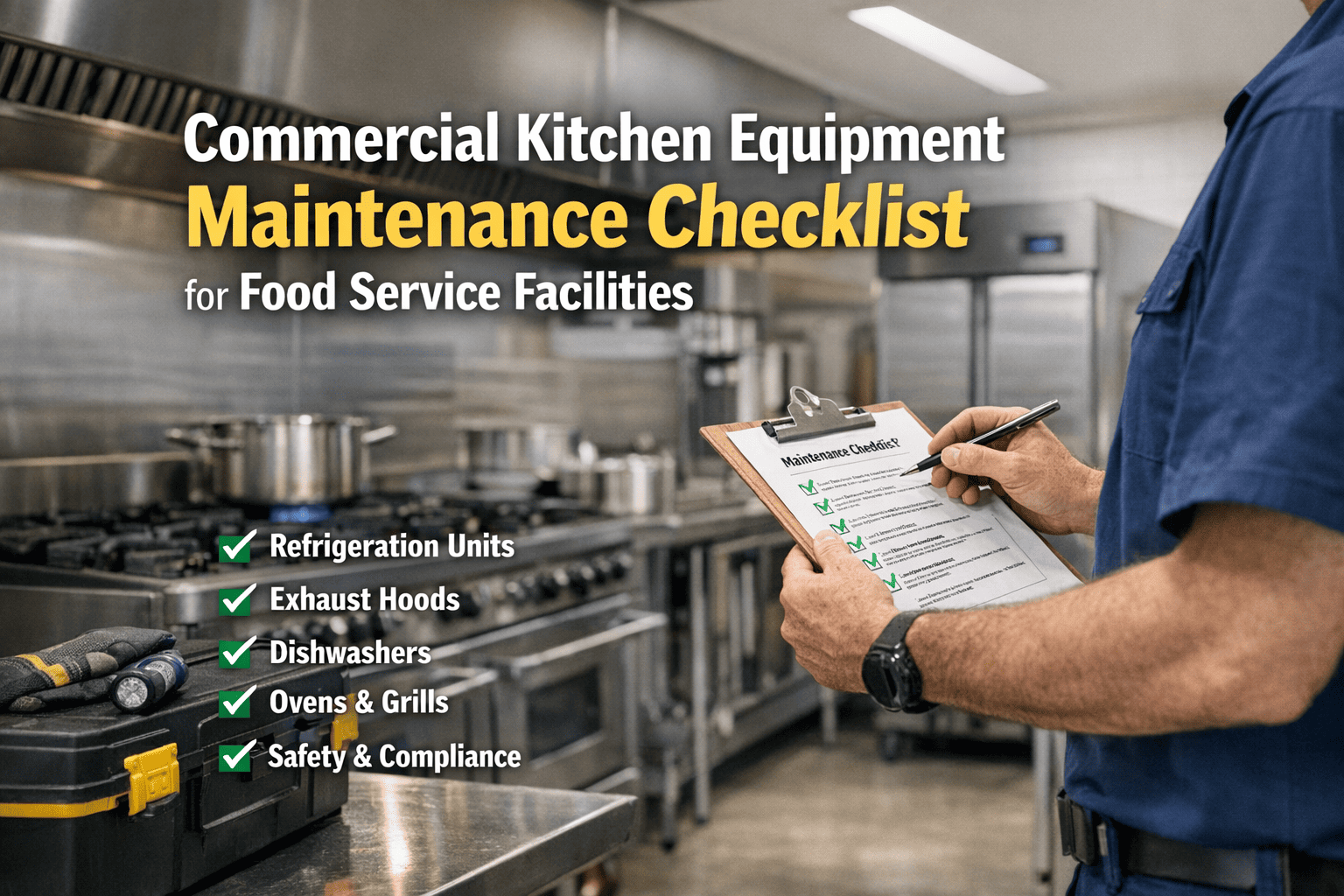
Commercial Kitchen Equipment Maintenance Checklist
Five equipment zones, four inspection cadences, and every regulatory threshold your health inspector, fire marshal, and insurer will ask about — in one audit-ready digital checklist.
20%+Of foodborne illness outbreaks traceable to poor cleaning and sanitising (FDA)
41°FFDA Food Code maximum internal temperature for all refrigeration cold storage units
180°FMinimum final rinse water temperature for high-temperature commercial dishwashers
6 monthsMaximum interval between certified fire suppression system inspections per NFPA 96
Zone 1 — Cooking Equipment
Zone 2 — Refrigeration
Zone 3 — Exhaust & Hood
Zone 4 — Warewashing
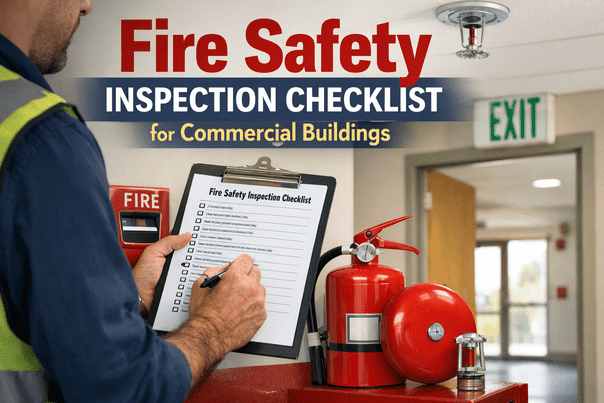
Zone 5 — Fire Suppression
Compliance Risk by Equipment Category
Fire Suppression
Critical — failure voids insurance, triggers immediate shutdown
Exhaust Hood
Critical — NFPA 96 citation, fire risk, operational closure
Refrigeration
High — food safety violation, product loss, health citation
Warewashing
High — sanitisation failure, health code violation
Cooking Equipment
Medium — operational failure during service, gas safety risk
Zone 01
Cooking Equipment — Ovens, Fryers, Ranges & Combi-Steamers
Cooking equipment failures during service are operational crises — a fryer thermostat that reads 25°F high wastes oil and delivers inconsistent product; a combi-steamer scale deposit on the heat exchanger leads to a repair that costs more than an entire year of descaling. Structured PM prevents both.
Daily — Shift Start & End
FDA Food Code 4-501.11
Fryer oil temperature verified with calibrated thermometer — thermostat reading matches actual oil temp within 10°F
Record: Temperature log · Role: Kitchen Supervisor
Gas ranges and burners visually inspected — all pilots lit, no gas odour, drip pans cleaned of overflow
Record: Daily opening checklist · Role: Line Cook / Supervisor
Combi-steamer water inlet and descale indicator checked — descale cycle initiated if indicator triggered
Record: Equipment log · Role: Kitchen Supervisor
Monthly — Preventive Maintenance
OSHA 29 CFR 1910.212
Fryer thermostat calibration checked and documented — replace or recalibrate if deviation exceeds 10°F from reference thermometer
Record: PM work order · Role: Maintenance Technician
Oven door seals and gaskets inspected for cracks, gaps, or heat loss — replace if finger can be inserted between seal and door
Record: PM work order · Role: Maintenance Technician
Combi-steamer descaling completed per water hardness schedule — document water hardness reading and descale solution used
Record: Descale log · Role: Maintenance Technician
Gas connection fittings and flex hoses inspected for wear, kinking, or cracking — no movement restriction on appliances
Record: Gas safety check form · Role: Maintenance Technician
Zone 02
Refrigeration & Cold Storage
Refrigeration failure during service is a double event — food safety violation and inventory loss simultaneously. The FDA Food Code is unambiguous: all refrigeration must maintain at or below 41°F. The maintenance tasks below are what keep that threshold reliably met between health inspections.
Daily — Temperature Monitoring
FDA Food Code 4-204.112
Walk-in cooler internal temperature at or below 41°F — verified with calibrated thermometer, not unit gauge alone
Record: Temperature log (minimum twice daily) · Role: Kitchen Supervisor
Walk-in freezer internal temperature at or below 0°F — sensor positioned at warmest area of unit per FDA code
Record: Temperature log · Role: Kitchen Supervisor
Reach-in refrigerator and prep unit doors closing fully — no door held open, no obstruction preventing full seal
Record: Daily opening check · Role: Line Cook / Supervisor
Weekly — Visual Inspection
FDA Food Code 4-501.11
Door gaskets on all refrigeration units inspected — pliable, no tears, no mould growth, no visible gap when door is closed
Record: Weekly inspection form · Role: Maintenance Lead
Ice build-up checked on evaporator coil — excessive frost indicates door seal failure or defrost cycle malfunction
Record: Equipment observation log · Role: Maintenance Lead
Monthly — Preventive Maintenance
FDA Food Code 4-501.11
Condenser coils cleaned of dust and grease accumulation — dirty coils are the leading cause of refrigeration failure and energy waste
Record: PM work order · Role: Maintenance Technician
Door closer mechanisms and self-closing hinges tested and adjusted — doors must swing closed from any open position
Record: PM work order · Role: Maintenance Technician
Digital checklists, timestamped completion records, and compliance-ready reports — book a 30-minute demo to see Oxmaint's kitchen compliance tracking.
Zone 03
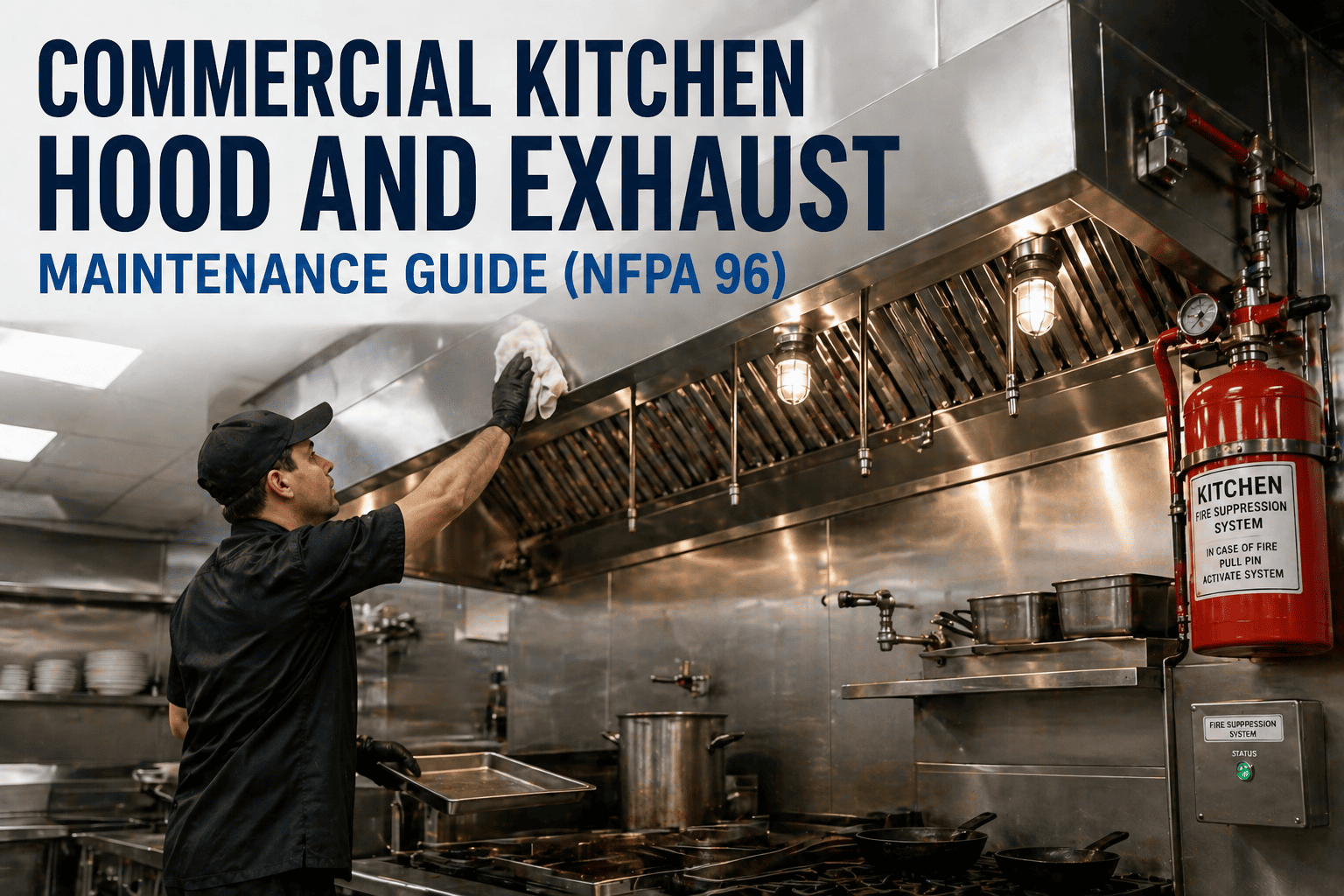
Exhaust Hood & Ventilation System
NFPA 96 places ultimate maintenance responsibility on the equipment owner. A hood cleaning certificate and inspection record are mandatory documentation for health inspectors, fire marshals, and insurance assessors. Without them, a single inspection can trigger operational closure. The tasks below cover both owner-performed daily checks and contractor-required intervals.
Daily — Operational Check
NFPA 96 §4.1.3
Exhaust fan confirmed running before first cooking equipment ignition — never operate cooking equipment without active exhaust
Record: Opening checklist · Role: Kitchen Supervisor
Baffle filters visually checked — no grease accumulation exceeding 1/8 inch; drip trays emptied and wiped
Record: Daily cleaning log · Role: Kitchen Supervisor
Weekly — Filter Service
NFPA 96 §11.4
Baffle filters removed, degreased, and reinstalled — all filter slots occupied before resuming cooking operations
Record: Filter cleaning log · Role: Kitchen Supervisor
Make-up air grilles and supply louvers checked for blockage — reduced make-up air causes negative pressure and smoke spillage
Record: Weekly inspection form · Role: Maintenance Lead
Semi-Annual — Contractor Inspection (Mandatory)
NFPA 96 §11.4 Table
Full duct system, hood, exhaust fan, and all grease removal devices professionally cleaned and inspected by certified contractor
Record: NFPA 96 cleaning certificate (required) · Role: Certified Contractor
Contractor-provided written report received and filed — report must identify any inaccessible areas not cleaned per NFPA 96 §11.6.15
Record: Contractor inspection report (file for minimum 3 years) · Role: Facility Manager
Zone 04
Warewashing & Dishwasher Equipment
High-temperature dishwasher sanitisation is one of the most frequently cited failures during health department inspections. The FDA Food Code requires a dish surface temperature of 160°F — achievable only if the final rinse water reaches 180-194°F and the booster heater is functioning. Every step below is a link in that chain.
Daily — Pre-Service & Each Cycle
FDA Food Code §4-501.112
Wash tank temperature verified at or above 150°F (stationary rack) or 160°F (conveyor) using machine gauge and independent thermometer
Record: Temperature log · Role: Dishwasher Operator / Supervisor
Final rinse temperature at manifold confirmed at 180-194°F — if below 180°F, take machine out of service and initiate manual warewashing
Record: Temperature log (irreversible indicator test strip weekly) · Role: Supervisor
Chemical sanitiser concentration tested — chlorine 50-100 ppm, or quaternary ammonium 200 ppm per manufacturer label
Record: Sanitiser log · Role: Dishwasher Operator
Spray arms, strainer baskets, and scrap trays cleaned of food debris — blocked nozzles prevent full coverage and cause sanitisation failures
Record: End-of-day cleaning log · Role: Dishwasher Operator
Monthly — PM Inspection
FDA Food Code §4-501.11
Booster heater element and thermostat inspected — scale buildup reduces heating capacity and is the leading cause of dishwasher temperature failure
Record: PM work order · Role: Maintenance Technician
Door seal and latch integrity tested — no steam or water escaping from door perimeter during cycle operation
Record: PM work order · Role: Maintenance Technician
Zone 05
Fire Suppression System — Non-Negotiable Compliance
The fire suppression system is the only kitchen maintenance item where failure cannot be remediated by a corrective work order — it triggers immediate operational shutdown pending contractor certification. Every task below is a regulatory minimum, not a recommendation.
Daily — Visual Checks (Owner Responsibility)
NFPA 96 §4.1.5
Suppression nozzles under hood visually clear — no grease deposits, foil wrapping, or physical obstruction blocking discharge pattern
Record: Opening checklist · Role: Kitchen Supervisor
Manual pull station accessible and unobstructed — no equipment, boxes, or materials within 18 inches of pull station location
Record: Opening checklist · Role: Kitchen Supervisor
Semi-Annual — Certified Contractor Inspection (Mandatory)
NFPA 96 §10 / NFPA 17A
Wet chemical suppression system inspected and tagged by UL-300 certified contractor — nozzles, tank charge, detection linkage, and manual pull verified
Record: Contractor certification tag + written report (file for minimum 3 years) · Role: Certified Fire Contractor
Fusible link condition assessed — replace all fusible links that show signs of grease accumulation, corrosion, or deformation
Record: Contractor inspection report · Role: Certified Fire Contractor
Gas shut-off interlock function tested — suppression system activation must trigger automatic gas shutoff to all cooking equipment under hood
Record: Function test record · Role: Certified Fire Contractor
Compliance Reference
Maintenance Frequency & Regulatory Reference
| Equipment | Task | Required Frequency | Governing Standard |
| Walk-in Cooler / Freezer |
Temperature log (minimum twice daily) |
Continuous / Daily |
FDA Food Code 4-204.112 |
| Refrigeration — All Units |
Condenser coil cleaning |
Monthly to quarterly |
FDA Food Code 4-501.11 |
| Exhaust Hood Filters |
Degrease and clean |
Weekly minimum |
NFPA 96 §11.4 |
| Hood, Duct & Fan System |
Full professional cleaning + certificate |
Monthly (high vol) / Semi-annual (low vol) |
NFPA 96 Table 11.4 |
| Fire Suppression System |
Certified inspection and function test |
Every 6 months |
NFPA 96 §10 / NFPA 17A |
| Dishwasher — High Temp |
Rinse temperature verification |
Daily + weekly irreversible test strip |
FDA Food Code 4-501.112 |
| Chemical Sanitiser |
Concentration test (chlorine 50-100 ppm) |
Each use / Daily |
FDA Food Code 4-501.113 |
| Combi-Steamer |
Descaling per water hardness schedule |
Weekly to monthly |
Manufacturer spec / FDA 4-501.11 |
| Grease Trap |
Pump out and inspect |
Weekly to monthly (volume-dependent) |
Local FOG ordinance / health code |
| Ice Machine |
Interior cleaning and sanitisation |
Monthly (NSF/ANSI 12) |
NSF/ANSI 12 / FDA Food Code |
Expert Review
What Food Service Professionals Say
01
The most common health code violation we see is not a dirty kitchen — it is a kitchen that is clean but has no documentation. The inspector does not just look at the equipment; they look at the log. If you cannot prove when you last cleaned the hood or checked the dishwasher temperature, the clean kitchen does not help you.
Environmental Health Inspector, Multi-County Food Service Division
02
A refrigeration failure during a Friday dinner service is a $4,000 ingredient loss and a service shutdown. The condenser coils on those units had not been cleaned in over a year. That is a monthly PM task that costs about 20 minutes. The emergency repair and restocking cost $4,800.
Executive Chef / General Manager, 300-Cover Independent Restaurant
03
Dishwasher temperature failures are almost always a booster heater scale issue. Once a month, 15 minutes of descaling keeps the booster delivering 180°F. Miss it for six months and you replace the element — or worse, you fail a health inspection because surface temperatures are not reaching 160°F.
Commercial Kitchen Equipment Technician, Foodservice Maintenance Specialist
FAQs
Frequently Asked Questions
How does Oxmaint handle the documentation requirement for NFPA 96 hood cleaning?
Each hood cleaning event is logged as a completed work order with date, contractor name, scope, and the certificate scanned and attached. The record is permanently searchable and can be produced to a fire marshal or insurer in under 60 seconds.
Book a demo to see the compliance documentation workflow.
Can Oxmaint alert staff before a compliance interval expires — not just after it has been missed?
Yes. Each recurring task has a lead-time alert — set to 7, 14, or 30 days before the due date depending on contractor scheduling requirements. Semi-annual fire suppression inspections generate booking reminders well in advance of the compliance deadline.
What is the difference between cleaning frequency for high-volume vs low-volume kitchen hoods?
NFPA 96 Table 11.4 sets frequency by cooking type and volume: solid fuel operations require monthly cleaning, high-volume charbroilers quarterly, and moderate-to-low volume operations semi-annually. The AHJ (local fire authority) can mandate more frequent cleaning based on inspection findings.
Does this checklist apply to healthcare, hotel, and school kitchens as well as restaurants?
Yes. FDA Food Code applies to all food service operations serving the public. NFPA 96 and NFPA 101 both apply to healthcare and institutional kitchen operations. Oxmaint ships pre-built kitchen compliance templates for restaurant, healthcare, hospitality, and education verticals.
Every Kitchen Maintenance Task. Every Compliance Record. One Platform.
Oxmaint's Compliance Tracking turns paper kitchen checklists into timestamped digital records — complete with photo evidence, compliance interval alerts, contractor certificate storage, and audit-ready reports for health and fire inspections.