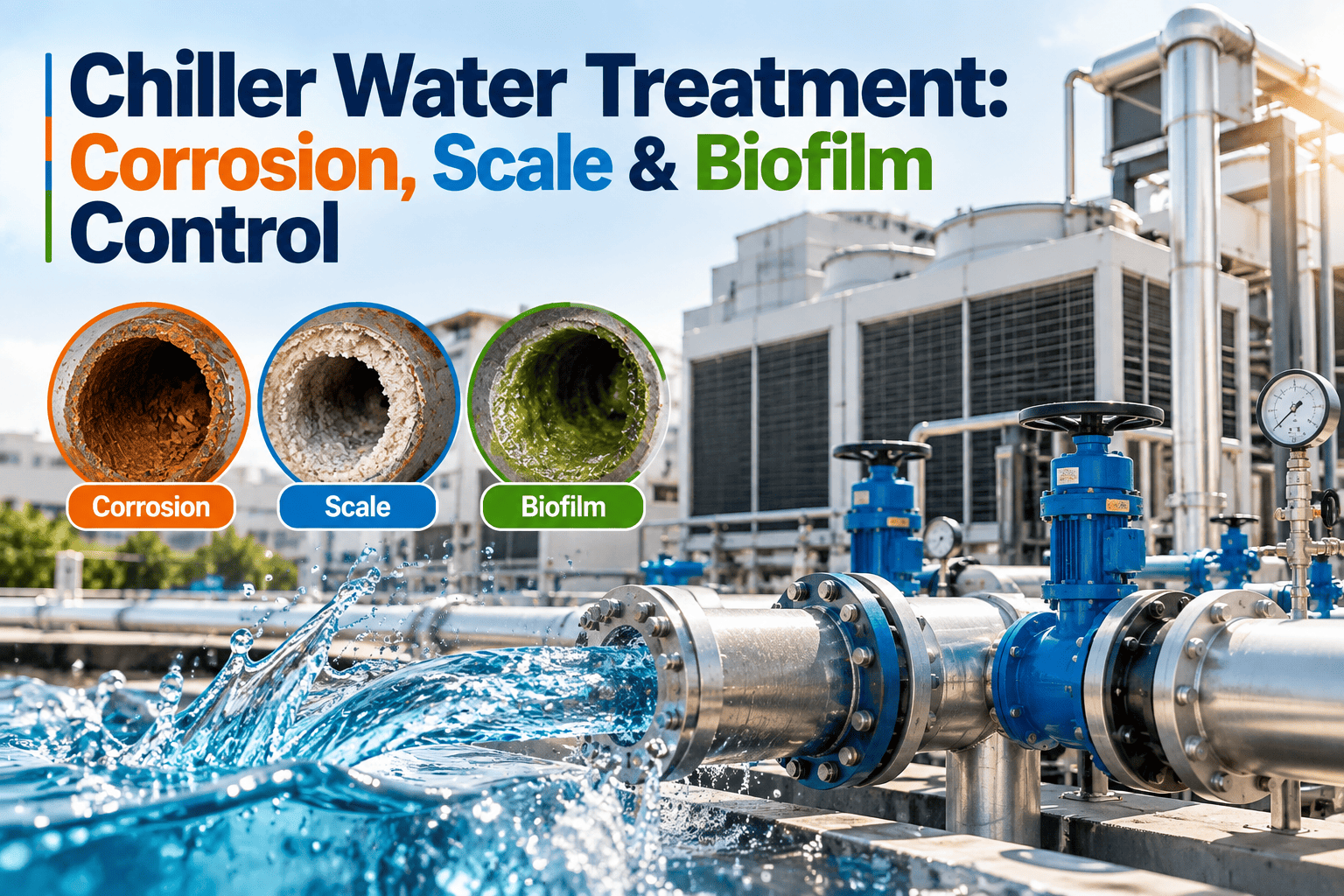
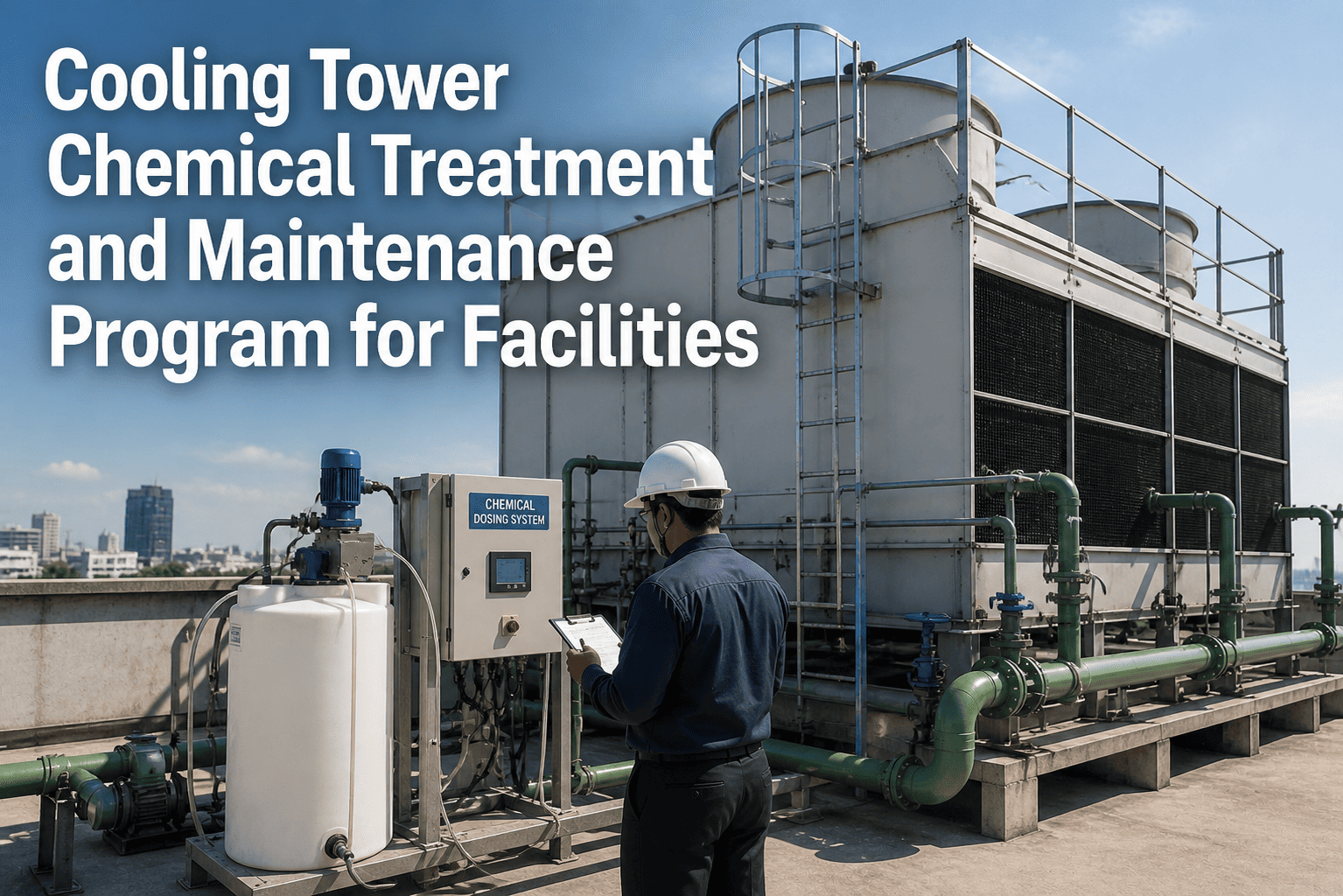
Scale buildup in cooling towers silently destroys efficiency, increases energy costs, and accelerates equipment failure. What begins as a thin mineral layer can quickly become inches of insulating deposits that reduce heat transfer by up to 40% and force compressors to work harder. A systematic inspection checklist transforms reactive descaling emergencies into proactive maintenance that extends equipment life and cuts operational costs. Schedule a consultation to discover how Oxmaint helps facilities maintain scale-free cooling towers year-round.
Understanding Cooling Tower Scale Buildup
Scale forms when dissolved minerals in water—primarily calcium carbonate, calcium sulfate, and silica—precipitate onto heat transfer surfaces as water evaporates. Cooling towers concentrate these minerals 3-5 times faster than the makeup water supply, creating ideal conditions for rapid scale accumulation that demands consistent monitoring and prevention.
The Cost of Uncontrolled Scale Buildup
40%
Reduction in heat transfer efficiency with just 1/8 inch of scale accumulation on condenser tubes
25%
Increase in energy consumption as chillers compensate for reduced cooling capacity
$15K+
Average emergency descaling cost including chemical treatment, downtime, and labor
50%
Reduction in equipment lifespan due to corrosion under deposits and thermal stress
Ready to prevent costly scale emergencies? Join facilities using Oxmaint to automate cooling tower inspections and catch scale problems early.
A thorough inspection protocol covers visual assessment, water chemistry analysis, and performance monitoring. Each checkpoint reveals different aspects of scale accumulation and guides appropriate treatment responses.
Visual Inspection PointsPerform weekly during peak cooling season
Water Chemistry TestingTest daily or per water treatment program requirements
Automate your inspection schedule. Book a demo and see how Oxmaint sends automated reminders and tracks every checklist completion.
Early detection at light or moderate stages prevents costly emergency interventions and equipment damage.
Performance Monitoring Indicators
Beyond visual inspection and water testing, performance data reveals scale accumulation trends. Tracking these metrics enables predictive maintenance before visible symptoms appear.
Approach Temperature
Difference between cold water and wet bulb temperature—rising approach indicates scale on fill media reducing evaporative efficiency
Target: Within 5-10 degrees F of design
Condenser Pressure
Increasing head pressure at constant load signals reduced heat transfer from scale buildup on condenser tubes
Target: Stable at design conditions
DeltaT
Temperature Differential
Range between supply and return water—narrowing differential suggests reduced heat rejection capacity from fouling
Target: 10-15 degrees F typical
Water Flow Rate
Decreasing flow at constant pump speed indicates scale restriction in piping, nozzles, or heat exchanger tubes
Target: Within 10% of design GPM
Prevention Best Practices
Preventing scale formation costs far less than removing it. These proven practices maintain scale-free operation when implemented consistently as part of your maintenance program.
01
Optimize Cycles of Concentration
Balance water conservation against scale risk by maintaining 3-6 cycles based on makeup water quality. Higher cycles save water but concentrate scale-forming minerals faster.
02
Maintain Proper Blowdown
Automatic blowdown controllers maintain target conductivity by bleeding concentrated water. Manual blowdown should occur daily at minimum to prevent mineral accumulation.
03
Chemical Treatment Program
Scale inhibitors like phosphonates and polymers prevent crystal formation. Work with a water treatment specialist to develop a program matched to your water chemistry. Sign up for Oxmaint to track chemical dosing and treatment compliance.
04
Regular Cleaning Schedule
Schedule basin cleaning quarterly and comprehensive tower cleaning annually. Remove debris and sediment that accelerates localized scale formation.
Take Control of Cooling Tower Maintenance
Oxmaint transforms your scale prevention checklist into automated workflows—scheduling inspections, tracking water chemistry trends, and alerting technicians before scale becomes an emergency. Join facilities that have eliminated surprise descaling costs.
How often should cooling tower scale inspections be performed?
Visual inspections should occur weekly during peak cooling season and monthly during off-peak periods. Water chemistry testing should happen daily or according to your water treatment provider's recommendations. Performance metrics should be monitored continuously through building automation systems. Sign up for Oxmaint to automate inspection scheduling based on your specific operating conditions.
What causes scale to form faster in some cooling towers?
Several factors accelerate scale formation: high makeup water hardness, elevated pH levels above 8.5, high cycles of concentration, inadequate blowdown, inconsistent chemical treatment, and higher operating temperatures. Towers in regions with hard water or those running at aggressive water conservation targets experience faster scale accumulation.
Can scale damage be reversed or does equipment need replacement?
Light to moderate scale can typically be removed through chemical cleaning or mechanical methods without permanent damage. However, severe scale that has been present for extended periods can cause under-deposit corrosion and pitting that permanently weakens tubes and surfaces. Early detection through regular inspection prevents irreversible damage. Schedule a consultation to discuss inspection protocols for your equipment.
What is the difference between calcium carbonate and silica scale?
Calcium carbonate scale is the most common type—it appears white or gray and can be dissolved with acid treatments. Silica scale is glassy and extremely hard, requiring specialized fluoride-based chemicals or mechanical removal. Silica scale is more problematic because it insulates better and resists standard cleaning methods. Preventing silica scale requires keeping concentrations below 150 ppm.
How does a CMMS help with cooling tower scale management?
A CMMS like Oxmaint automates the entire scale prevention workflow—scheduling inspections at appropriate intervals, providing mobile checklists for technicians, tracking water chemistry trends over time, generating alerts when readings exceed thresholds, and maintaining documentation for compliance and warranty purposes. This systematic approach catches problems early when treatment costs are lowest.