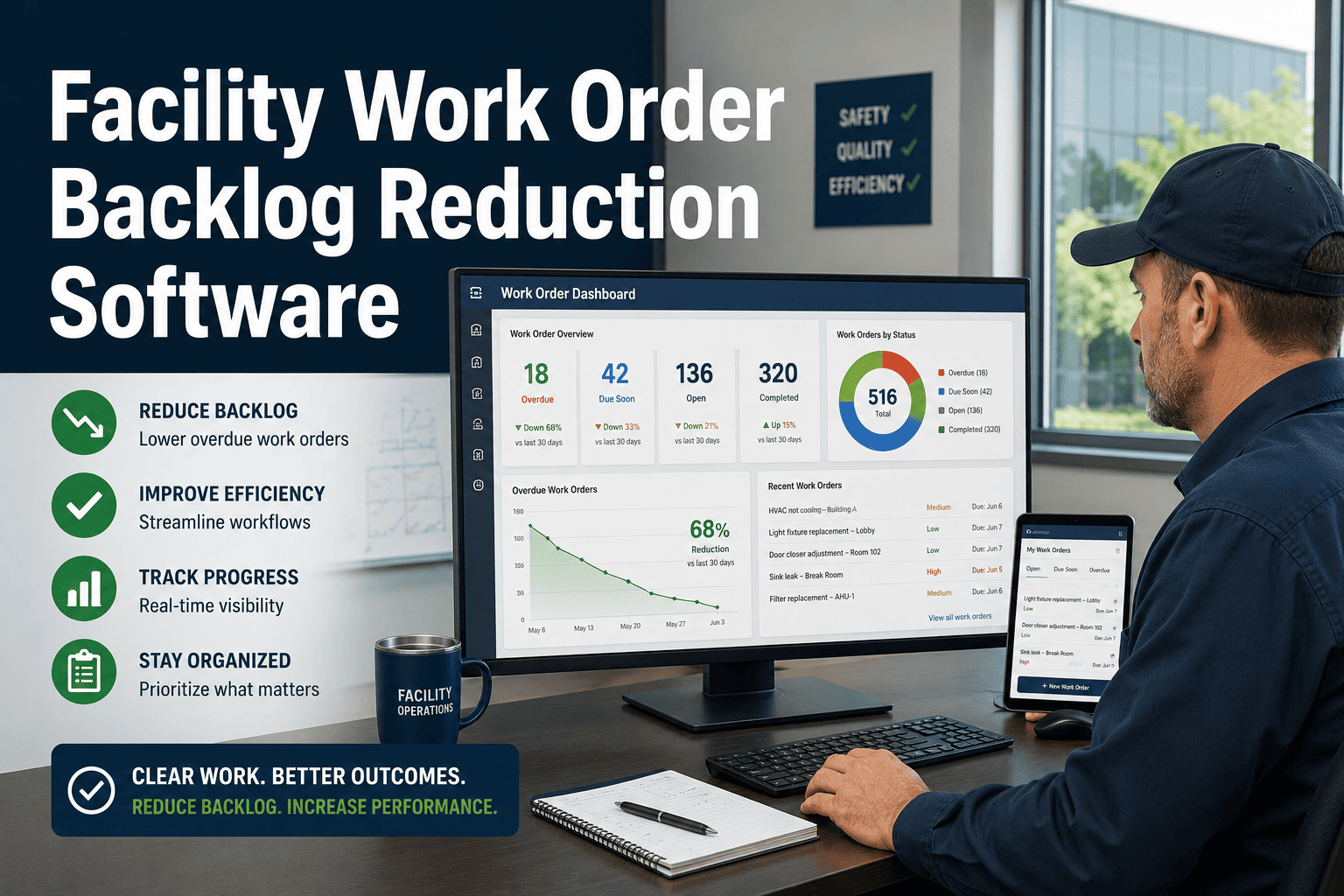
No facility eliminates failures — a pump seizes, a chiller trips, a door closer gives out. What separates a strong maintenance operation from a chaotic one isn't whether corrective work happens, but whether it follows the same disciplined path every time: from the moment an issue is reported to the root cause, the parts used, the labor logged, and a closed record that teaches the next repair. Skip root cause or skip documentation and you land in the broken-fixed-broken-again loop, paying twice for the same fault. This guide lays out a standardized corrective maintenance workflow — intake to verified close — and shows how to run it with OxMaint's work order management, or book a demo to see it against your own assets.
Work Order Automation / Work Order Management
Corrective Maintenance Workflow for Facility Operations
Standardize every repair from issue intake to root cause, parts use, labor time, and completed work history — so corrective work gets faster, cheaper, and rarer.
6
Steps in a disciplined corrective maintenance workflow
<15%
Emergency corrective share above which strategy is failing
MTTR
The headline metric: detection to verified repair
100%
Close-out capture target for parts, labor, and cause
Where corrective maintenance fits
Corrective work is one of three strategies, and mature programs use all three by asset criticality. Knowing the trade-offs keeps corrective maintenance a deliberate choice, not a default state of firefighting.
| Strategy | Trigger | Timing | Best for |
|---|
| Corrective | After a failure | Unplanned, or planned run-to-failure | Non-critical or fail-safe assets |
| Preventive | Schedule or interval | Planned in advance | Predictable, wear-based parts |
| Predictive | Condition data | Just before failure | Critical, monitored assets |
A run-to-failure approach is perfectly valid when it's a conscious, data-backed decision on a low-consequence asset — the problem is only when reactive repair becomes the whole program by accident.
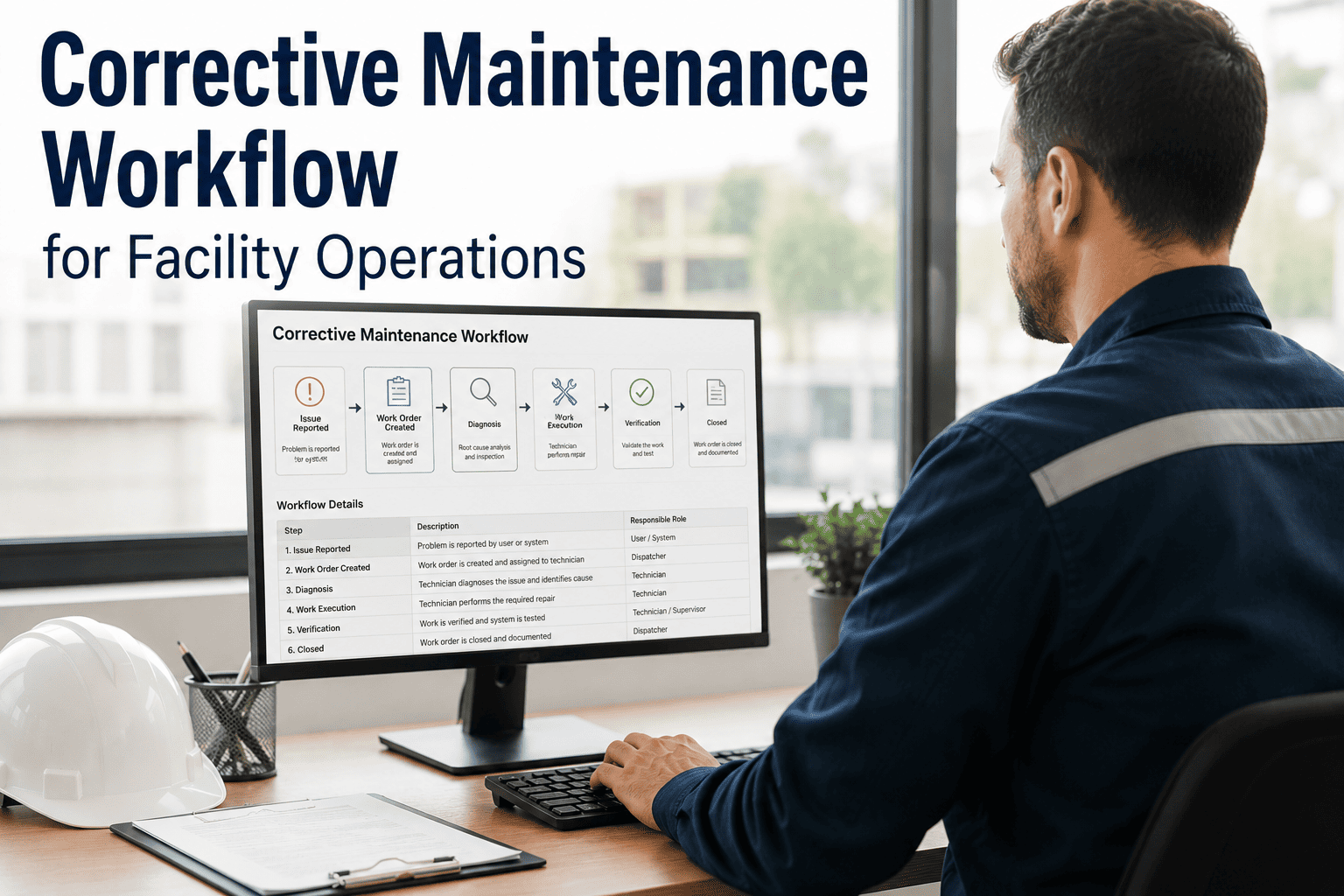
The six-step corrective workflow
Every corrective job should travel the same path. Each step protects the next, and skipping diagnosis or documentation is where recurring failures are born.
1
Intake & reportCapture the issue — asset, location, symptom, and a photo — the moment it's spotted, on mobile.
2
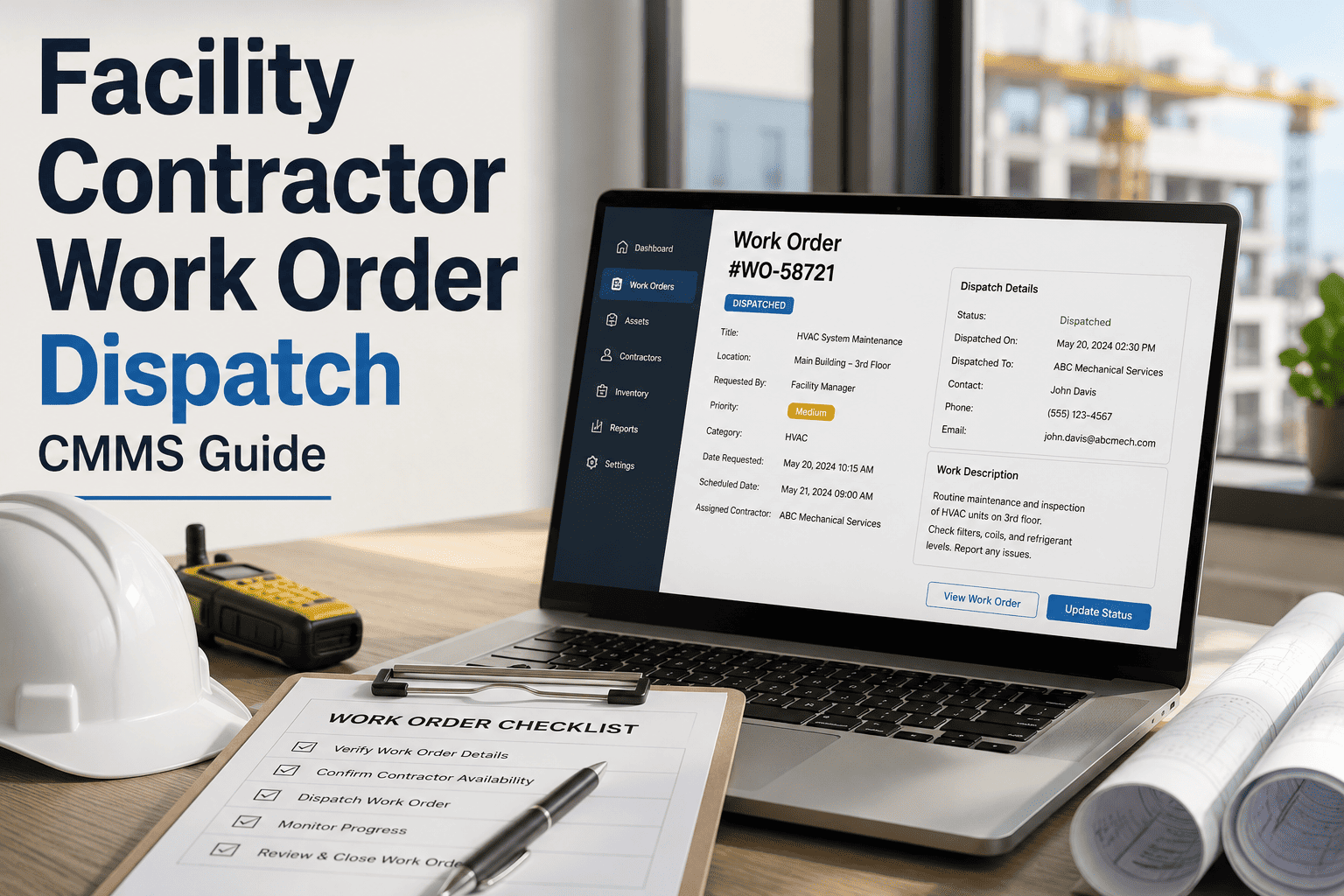
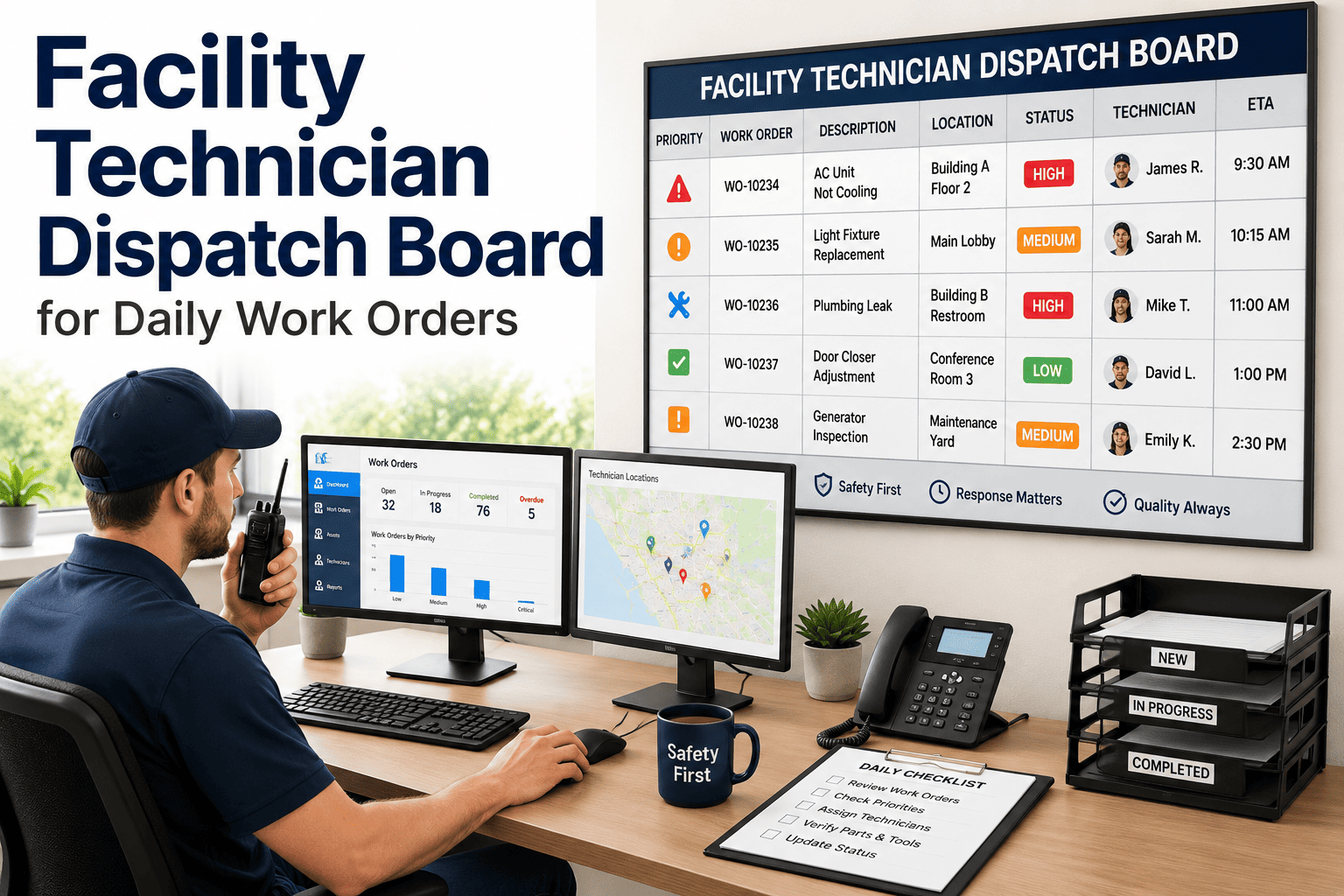
Create & prioritizeOpen a work order, set priority by consequence, and assign the right-skilled technician.
3
Diagnose root causeFind the real cause, not the symptom — the step that decides whether the fault returns.
4
Execute the repairPull kitted parts and follow a digital checklist so nothing is improvised or missed.
5
Test & verifyConfirm the asset is restored and functioning before the work order is allowed to close.
6
Document & reviewLog parts, labor, and failure cause to asset history; if it repeats, add a PM task or redesign.
Make every repair follow the same path
OxMaint guides technicians from intake to verified close — with checklists, kitted parts, and a record that writes your asset history automatically.
What a complete close-out captures
The repair isn't done when the asset runs again — it's done when the record is complete. These fields turn a one-off fix into data that improves the next one.
Root cause / failure code
The standardized reason it failed, so MTTR and MTBF metrics stay reliable across assets.
Parts used
Every component consumed, decremented from inventory to keep stock and cost accurate.
Labor time
Hours from detection to verified repair, the raw material of your MTTR trend.
Photos & notes
Before-and-after evidence and the actions taken, for QA and the next technician.
Asset history link
The repair filed to the asset's record, building a searchable failure timeline.
Prevention action
If the fault repeats, the trigger to add a PM task or transition the asset to predictive care.
Break the broken-fixed-broken loop
The biggest mistake in corrective maintenance is fixing the symptom and calling it done. Root cause analysis is the difference between a repair that holds and one that returns next month.
Symptom only
Fix → fails again → fix again. The same fault drains parts, labor, and uptime on repeat.
Root cause fixed
Diagnose → correct the cause → it stays fixed. The failure leaves the backlog for good.
Expert Review
"Two things separate a corrective program that improves from one that just survives. First, discipline at the close: if the technician doesn't log the parts, the hours, and a real failure code, you've fixed the asset but learned nothing — and your MTTR and MTBF numbers are fiction. Second, honesty about root cause. I've watched teams 'repair' the same bearing four times in a year because nobody asked why it kept failing; a five-minute root-cause step would have caught the misalignment driving it. Standardize the workflow, kit the parts, and force the close-out, and corrective work quietly shrinks as the chronic failures finally get solved."
Reviewed by a facility maintenance reliability manager, 22+ years in CMMS-driven corrective and preventive programs.
See corrective work standardized end to end
Walk through a live corrective job on your own assets — intake, root cause, parts, labor, and a closed record in one workflow.
Frequently asked questions
What is corrective maintenance?
Corrective maintenance is the work done to restore an asset after a failure or detected fault, as opposed to preventive work done on a schedule. Done with discipline, it's planned, documented, and increasingly rare. See it structured in
OxMaint.
What are the steps in a corrective maintenance workflow?
Six steps: intake and report, create and prioritize, diagnose the root cause, execute the repair, test and verify, then document and review. Skipping diagnosis or documentation breeds repeat failures.
Book a demo to see the workflow live.
How is corrective different from preventive maintenance?
Corrective is triggered by a failure; preventive runs on a fixed schedule to stop failures before they happen. Most facilities blend both, plus predictive on critical assets. OxMaint runs all three from one system —
see how in a demo.
Why is root cause analysis so important?
Fixing only the symptom leaves the real fault in place, so it returns and you pay again — the broken-fixed-broken loop. Root cause analysis breaks that cycle and lifts asset reliability. Capture causes consistently in
OxMaint.
What should a corrective work order capture at close-out?
Root cause or failure code, parts used, labor time, photos and notes, and a link to asset history — plus any prevention action if the fault repeats. That record powers every future decision.
Book a demo to see close-out capture.
How do we reduce MTTR on corrective repairs?
Kit common spare parts ahead of time, give technicians step-by-step digital checklists, and standardize failure codes so the data is reliable. Faster, cleaner repairs follow. See kitting and checklists in
OxMaint.
When is run-to-failure a good choice?
When it's a conscious, data-backed decision on a low-consequence, fail-safe asset where planned repair costs more than the failure. The danger is run-to-failure by accident across the whole portfolio.
Book a demo to map asset strategies.
How does OxMaint standardize corrective maintenance?
OxMaint guides every corrective job through the same workflow — intake, prioritization, root cause, repair, verification, and a complete close-out filed to asset history. Try it on your own assets with a
free trial.
Turn reactive fixes into a disciplined workflow
Stop paying twice for the same failure. Standardize corrective maintenance from intake to verified close — and watch chronic faults leave the backlog for good.