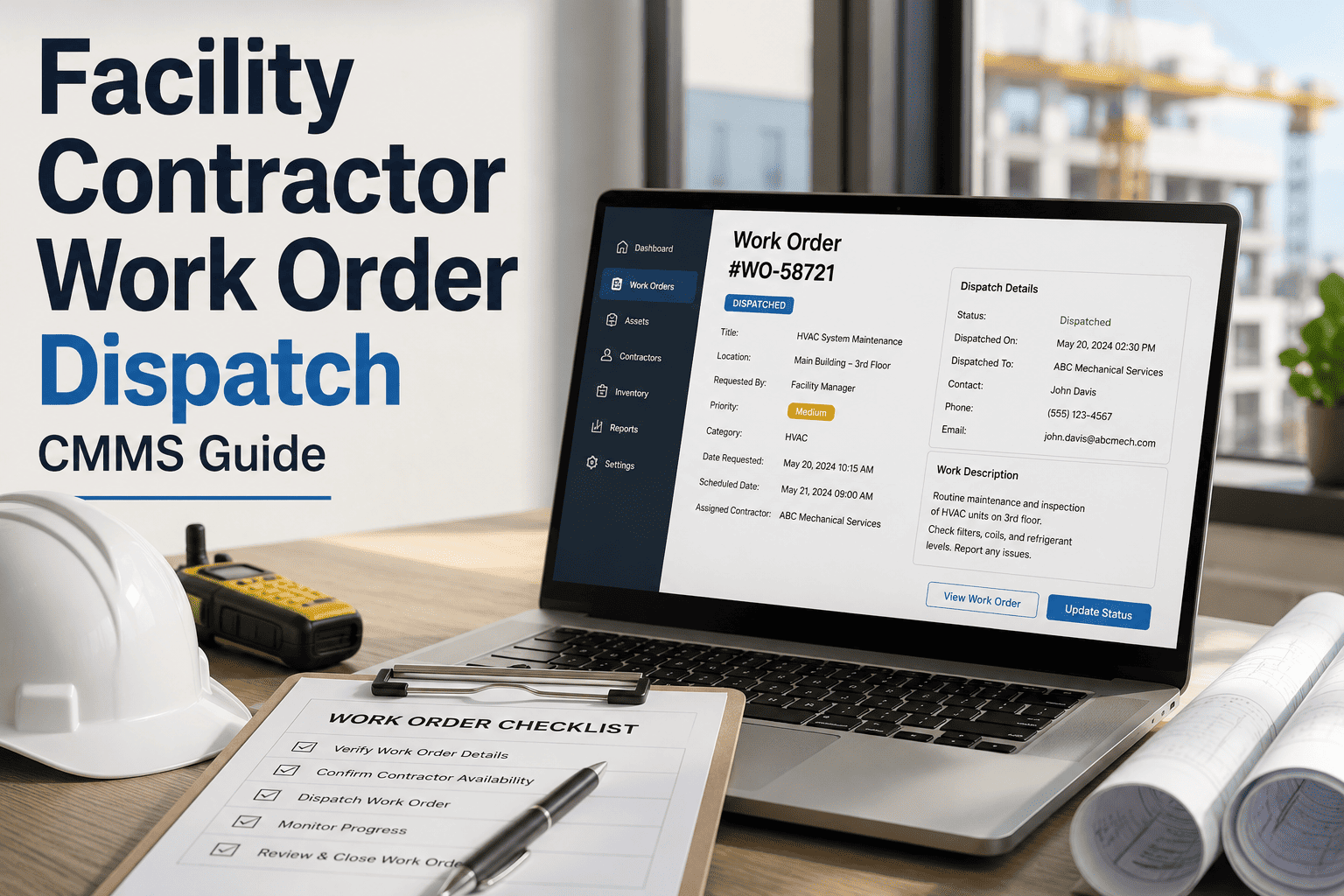
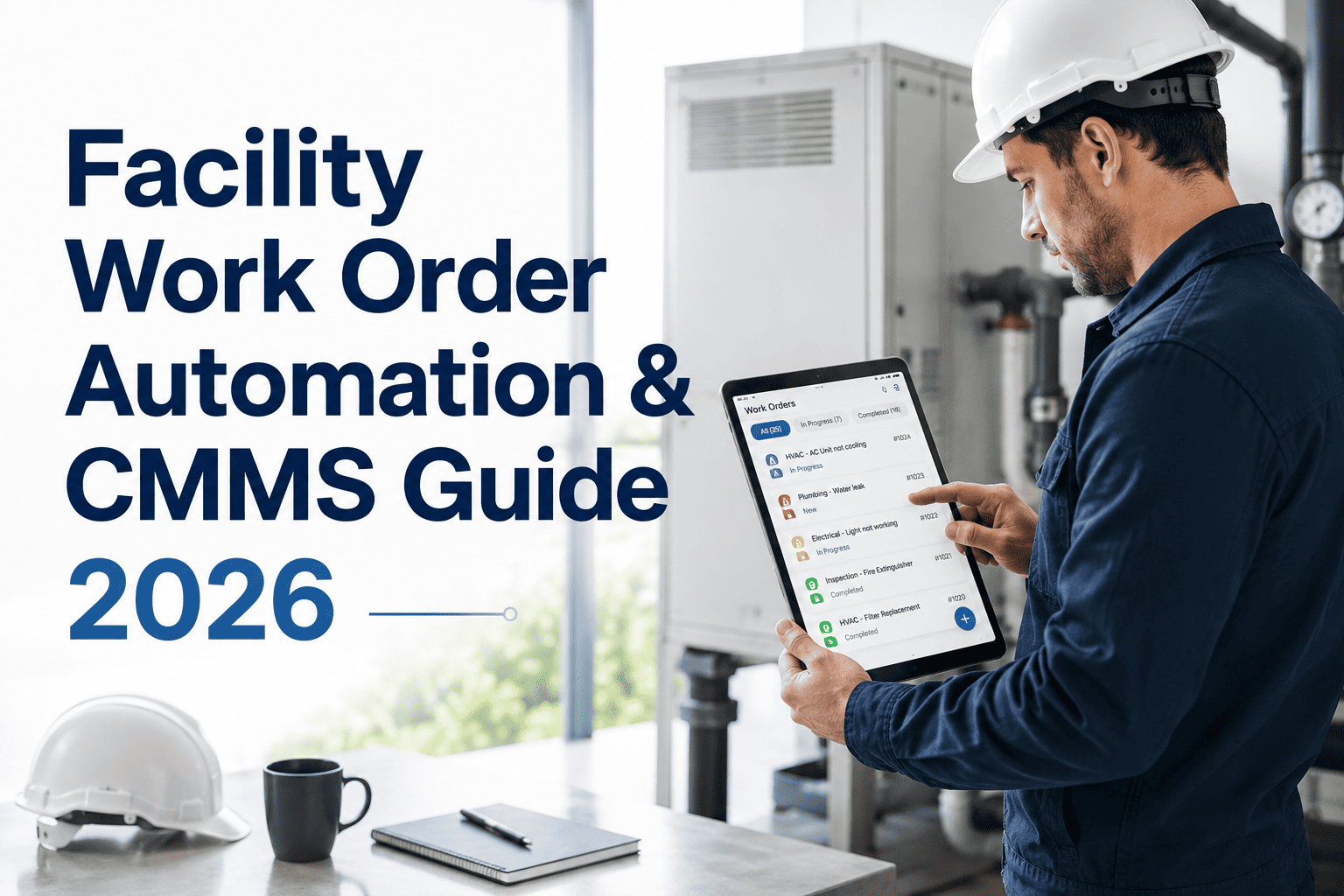
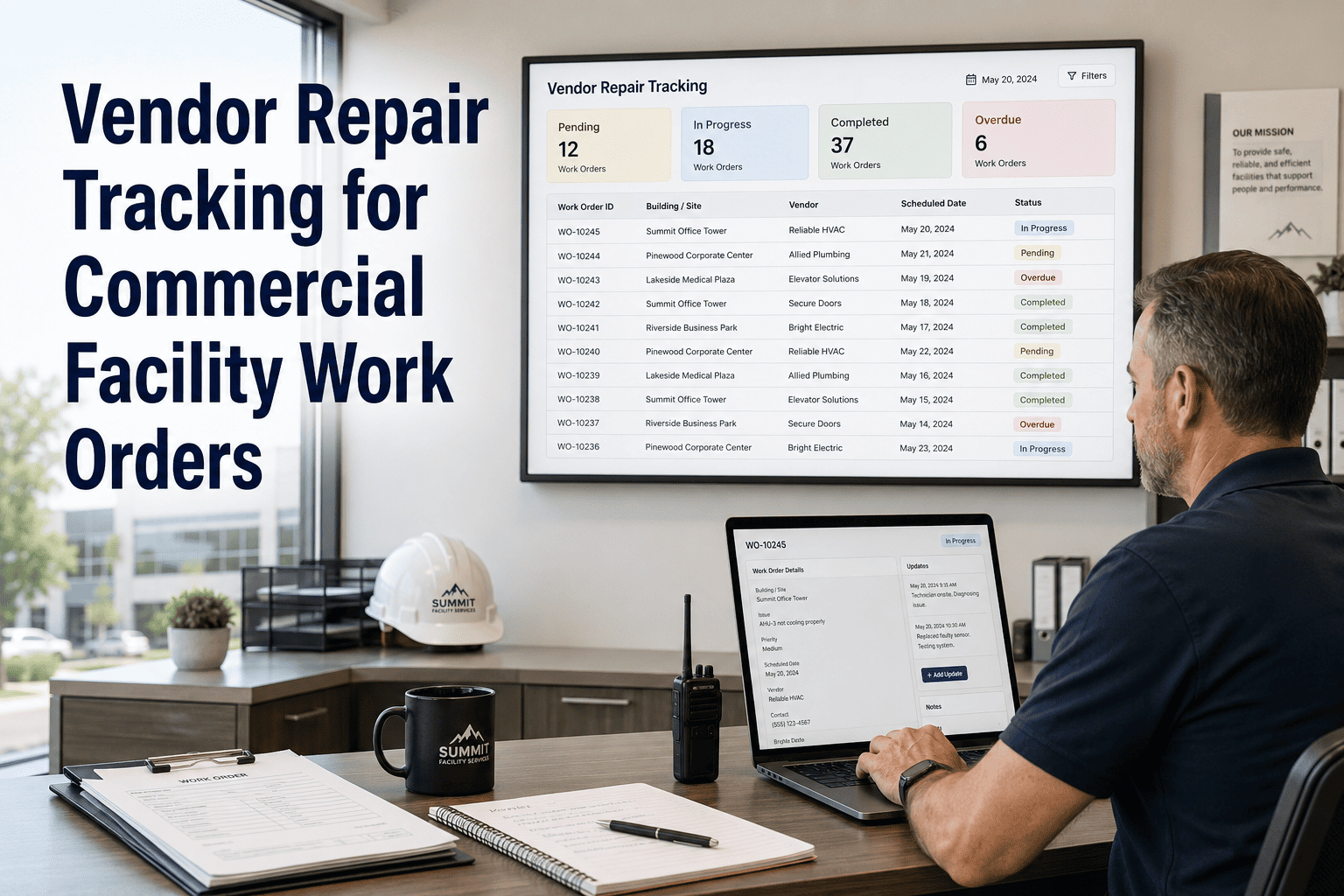
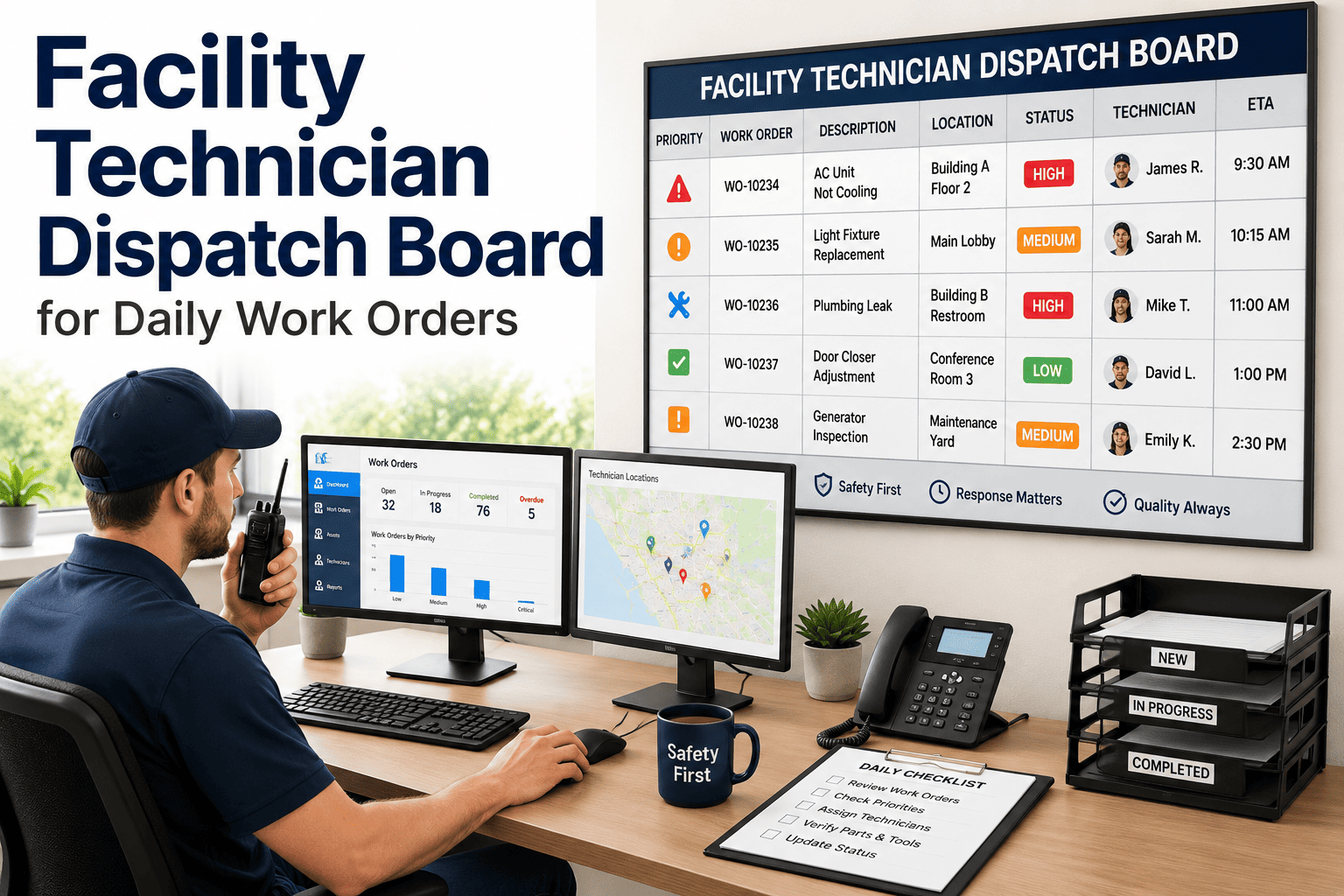
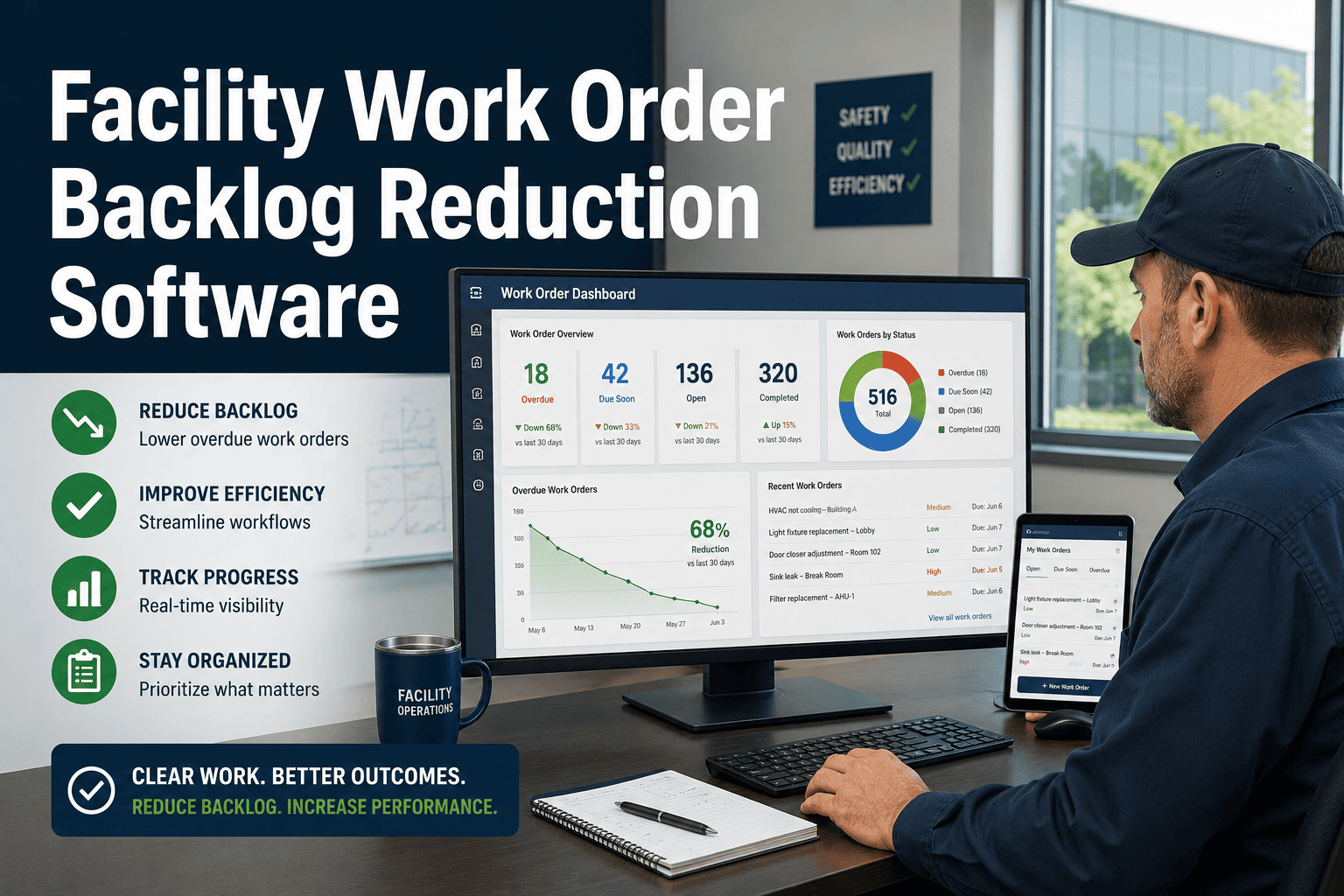
In facility maintenance, the timestamp is the contract. A service agreement can promise a four-hour fix on a critical HVAC failure, but without a record of when the request came in, when a technician acknowledged it, and when the work actually closed, that promise is just paperwork — and every disputed breach is one the vendor wins by default. Most facility teams discover an SLA miss only after a tenant complains, far too late to act. Real-time SLA tracking flips that: it clocks response time, completion SLA, overdue work, and repeat issues on every work order, turning service commitments into provable performance. This page shows how facility teams prove and protect their numbers with OxMaint's work order management — and you can book a demo to see it clocked against your own buildings.
Work Order Automation / Work Order Management
Building Maintenance SLA Tracking for Work Orders
Clock response time, completion SLA, overdue work, and repeat issues on every work order — so facility teams can prove service performance, not just promise it.
99%
Common SLA compliance target for P1 critical work
15-25%
Of SLA breaches that trace back to escalations
30 days
To build a reliable SLA baseline from timestamps
Real-time
Breach alerts that fire before the window closes
The four-tier SLA framework
Every enforceable agreement uses a tiered priority structure — tight enough to protect operations, realistic enough that crews and vendors will sign to it. These reflect broad industry consensus across commercial, healthcare, and retail portfolios.
| Priority | Response | Resolution | Compliance target |
|---|
| P1 Critical | 30 min | 4 hours | 99% |
| P2 Urgent | 2 hours | 24 hours | 95% |
| P3 Routine | 8 hours | 5 days | 90% |
| P4 Low | 48 hours | 30 days | 85% |
Healthcare and data centers tighten P1 further, often to 24/7 coverage with sub-30-minute response. Tiered targets keep a critical failure from being hidden behind strong numbers on low-stakes tickets.
The four signals worth clocking
SLA performance lives in four numbers. Track them together and you can prove service quality and spot trouble before it becomes a dispute.
Response time
The clock from request to acknowledgment. Measures how fast work is picked up, not how fast it's fixed.
Completion SLA
The share of work orders resolved within the agreed window, by priority tier — the headline compliance number.
Overdue work
Open orders past their SLA clock, surfaced live so a manager can intervene mid-month, not after.
Repeat issues
The same asset or fault recurring, which exposes a fix that didn't hold and a hidden reliability problem.
Turn SLA promises into proof
OxMaint timestamps every status change automatically, so compliance is calculated from day one — no spreadsheets, no guesswork.
Response time is not resolution time
The most common SLA mistake is treating acknowledgment as performance. A technician who responds in five minutes but takes six hours on a four-hour P1 has still breached — so the two clocks must be tracked apart.
Response
Clock starts at request, stops the moment a technician acknowledges and owns the job. Reveals dispatch and triage delay.
Resolution
Clock starts at request, stops when the fix is verified and the order closes. Reveals execution and parts delay.
Splitting the two shows exactly where time is lost — at the front desk or out in the field — so the fix targets the real bottleneck.
From breach to recoverable credit
Most service-credit clauses are never invoked — not because targets are met, but because nobody has the evidence to prove a miss. Real-time tracking closes that gap.
1
TimestampEvery status change is logged automatically as it happens.
→
2
DetectThe SLA clock flags a breach — or a near-breach — in real time.
→
3
EvidenceTimestamped records stand up instead of becoming a he-said dispute.
→
4
RecoverService credits calculate and attach to the invoice with proof.
Expert Review
"I tell every facilities leader the same thing: your SLA is only as real as your dashboard. I have watched a healthcare portfolio recover six figures in the first year of live tracking — not by renegotiating a single rate, but by finally having timestamp evidence to invoke credit clauses that had sat unused in the contract for years. The teams that win don't track harder, they track earlier: a warning when an order is halfway to its limit beats a breach report after the window has closed. Response time, completion, overdue, and repeats on one screen is what turns a service agreement from a hope into an instrument."
Reviewed by a facilities service-delivery and vendor-management lead, 18+ years in multi-site SLA governance.
See every work order on its SLA clock
Walk through live response, completion, overdue, and repeat tracking across your own buildings — with breach alerts that fire before the window closes.
Frequently asked questions
What SLA metrics should facility teams track?
At minimum, track response time, completion SLA by priority, overdue work, and repeat issues, plus escalation rate and first-time fix. Together they reveal not just whether you're compliant but why you miss. OxMaint surfaces them on one dashboard —
book a demo.
What's the difference between response time and completion SLA?
Response time measures how fast a request is acknowledged; completion SLA measures whether the fix finished within the agreed window. A fast response with a slow fix still breaches, so both are tracked separately. See both clocks in
OxMaint.
What are typical SLA targets by priority?
A common framework is 30 min / 4 hr for P1, 2 hr / 24 hr for P2, 8 hr / 5 days for P3, and 48 hr / 30 days for P4, with compliance targets near 99% on P1. Critical sites tighten these further. Configure your tiers in
a quick demo.
How is SLA compliance calculated?
The standard formula is work orders resolved within the SLA threshold divided by total work orders, times 100, measured per priority tier. Aggregate scores can hide tier-level failures, so segment by priority. OxMaint computes it automatically —
try it free.
Why do most service-credit clauses never get claimed?
Because proving a breach requires timestamped records, and without them every claim becomes a dispute the vendor wins. When the system logs response and resolution times in real time, credits calculate with evidence attached.
Book a demo to see credit tracking.
How do we catch overdue work before it breaches?
Set warning alerts that fire as an order approaches its SLA limit rather than at the limit, giving a manager time to reassign or escalate. Catching it mid-month prevents the breach from ever closing. See live overdue alerts in
OxMaint.
Why track repeat issues separately?
A request that returns means the first fix didn't hold, which inflates cost and signals a deeper reliability problem masked by a closed work order. Flagging repeats by asset turns them into root-cause work.
Book a demo to see repeat-issue tracking.
How fast can we get a baseline with no data?
Define response and resolution targets per priority, and the system timestamps every status change from the first work order, giving a reliable baseline within about 30 days. No manual data entry needed. Start the clock in
OxMaint.
Can we track SLAs across multiple buildings?
Yes — a multi-site portfolio view compares completion, overdue, and repeat metrics across every location, with drill-down into any building or asset from one screen. It scales from a handful of buildings to dozens.
See the portfolio view in a demo.
How does OxMaint track SLAs on work orders?
OxMaint clocks response and resolution against your tiered targets, alerts before a breach, flags repeat issues, and exports compliance in council- or client-ready form — all from automatic timestamps. Try it on your own buildings with a
free trial.
Prove your service performance, every month
Stop discovering SLA misses from tenant complaints. Clock response, completion, overdue, and repeats on every work order — and turn your service agreement into provable, recoverable performance.