The emergency alarm sounds at 3:17 AM—a pipe burst in the mechanical room. The building management system triggers the backup generator, but instead of the reassuring rumble of diesel ignition, there's silence. Three hours later, with burst pipes flooding two floors, the post-incident report identifies the culprit: a failed coolant temperature sensor that went unnoticed for months. According to facility management research, 70% of generator failures stem from just five root causes—all preventable with proper monitoring. This guide covers the most common diesel generator failures and provides systematic troubleshooting approaches that keep your backup power ready.
Facilities that implement predictive maintenance programs reduce unplanned generator failures by up to 75%. The key lies in understanding failure mechanisms and catching warning signs early. Start your free OXmaint trial to automate failure tracking and never miss a critical maintenance window.
The Five Major Generator Failure Categories
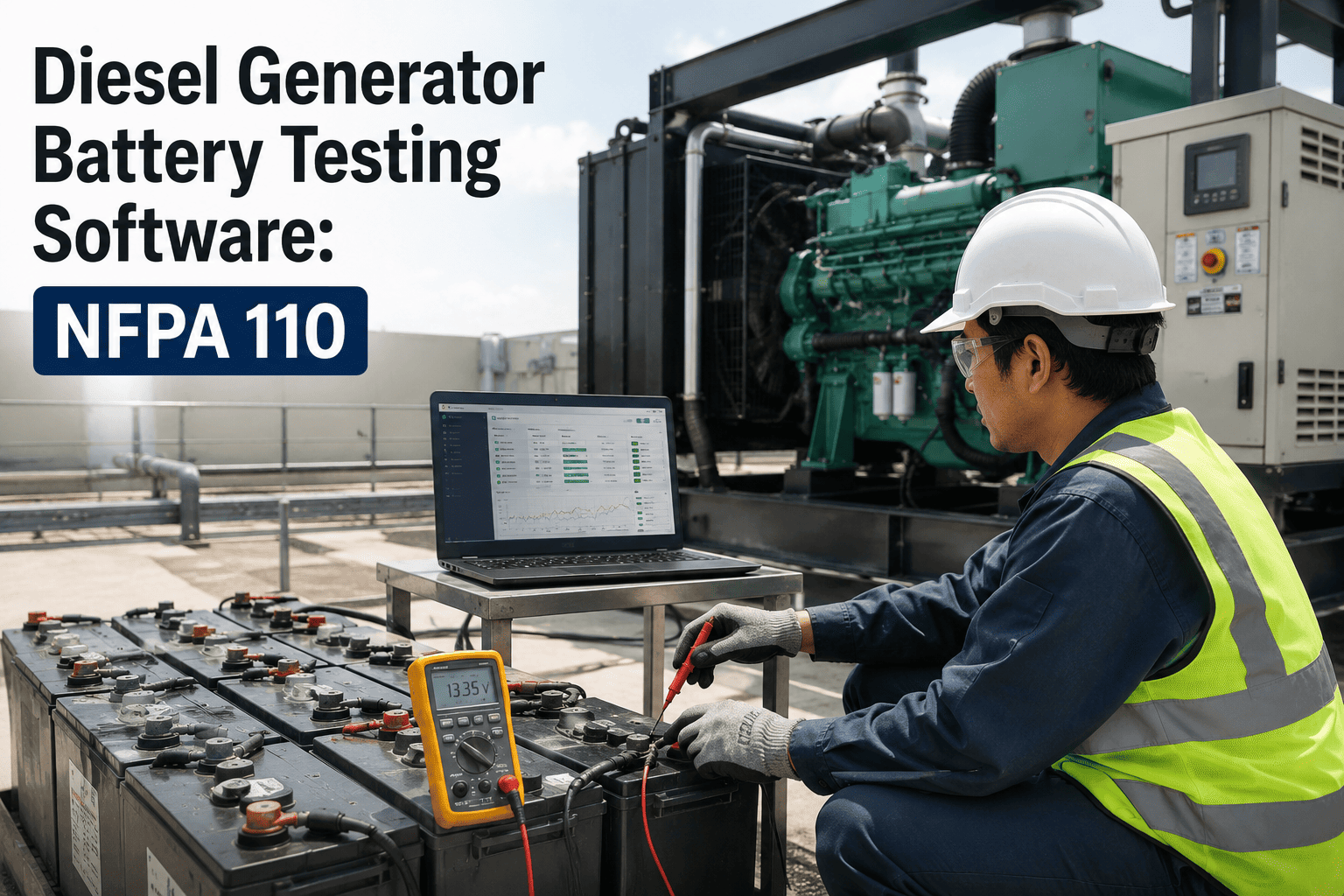
Battery System: The #1 Culprit
Battery failure causes nearly half of all generator startup problems. The insidious nature of battery degradation means failures often occur without warning.
| Problem | Check | Solution |
|---|---|---|
| Dead/Weak Battery | Voltage (12.6V+ for 12V systems) | Charge or replace; test under load |
| Sulfation Buildup | White deposits on plates; specific gravity <1.225 | Slow charging or replacement |
| Corroded Terminals | White/green buildup; voltage drop across connections | Clean with baking soda; apply dielectric grease |
| Faulty Charger | Float voltage (13.2-13.8V) | Repair or replace charger |
| Slow Cranking | Open circuit voltage; CCA rating vs requirements | Full charge cycle; check for parasitic drain |
Electrical and Control System Issues
| Problem | Check | Solution |
|---|---|---|
| ATS Won't Transfer | Transfer switch contacts for pitting/arcing | Clean contacts; replace if pitted >1mm |
| Control Board Fault | Fault codes on display; blown fuses | Reset controller; replace if persistent |
| Voltage/Frequency Off | Output (±5% rated) and frequency (60Hz ±0.5Hz) | Adjust AVR; check governor |
| Sensor Failure | Resistance/voltage against spec; wiring continuity | Replace sensor; repair wiring |
| Ground Fault | Insulation resistance with megohmmeter (>1MΩ) | Locate and repair insulation damage |
Tracking fault codes manually leads to missed patterns and repeat failures. Facilities using digital maintenance systems catch recurring electrical issues 3x faster. Sign up for free and start logging fault codes with automatic pattern detection today.
Fuel System Problems
Diesel fuel degrades over time, making fuel system issues particularly common in standby generators that run infrequently.
| Problem | Check | Solution |
|---|---|---|
| Air in Fuel Lines | Bubbles in clear line section; loose fittings | Bleed system; tighten fittings |
| Clogged Filters | Filter condition; pressure drop | Replace primary and secondary filters |
| Water Contamination | Water separator bowl; fuel sample test | Drain tank sump; treat with biocide |
| Microbial Growth | Dark slime in filters; bacteria test | Clean tank; install fuel polishing system |
| Degraded Fuel | Dark color, foul odor, sediment | Replace fuel older than 12 months |
Cooling System Failures
| Problem | Check | Solution |
|---|---|---|
| Low Coolant | Expansion tank level; leaks at hoses/gaskets | Top up with correct mix; repair leaks |
| Failed Thermostat | Both radiator hoses hot when at temp | Replace thermostat and gasket |
| Blocked Radiator | Fins for debris; internal scaling | Clean external fins; flush system |
| Water Pump Failure | Weep hole leakage; bearing noise/play | Replace pump and drive belt |
| Block Heater Failure | Heater energized; element resistance | Replace heater element |
Quick Diagnostic Reference
Want this diagnostic checklist built into your mobile device with automatic work order creation? Book a personalized demo and we'll show you how facilities cut diagnostic time by 60%.