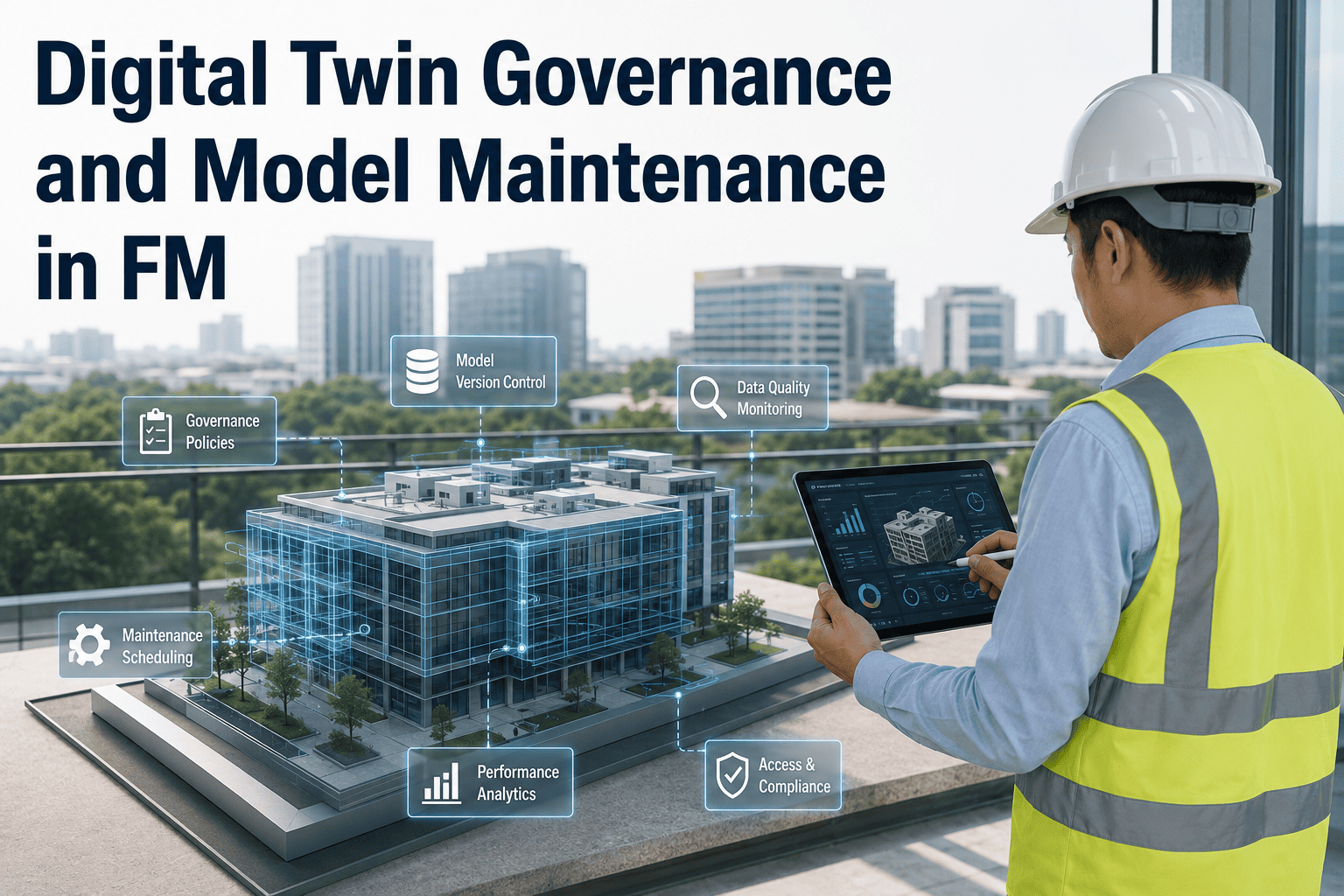
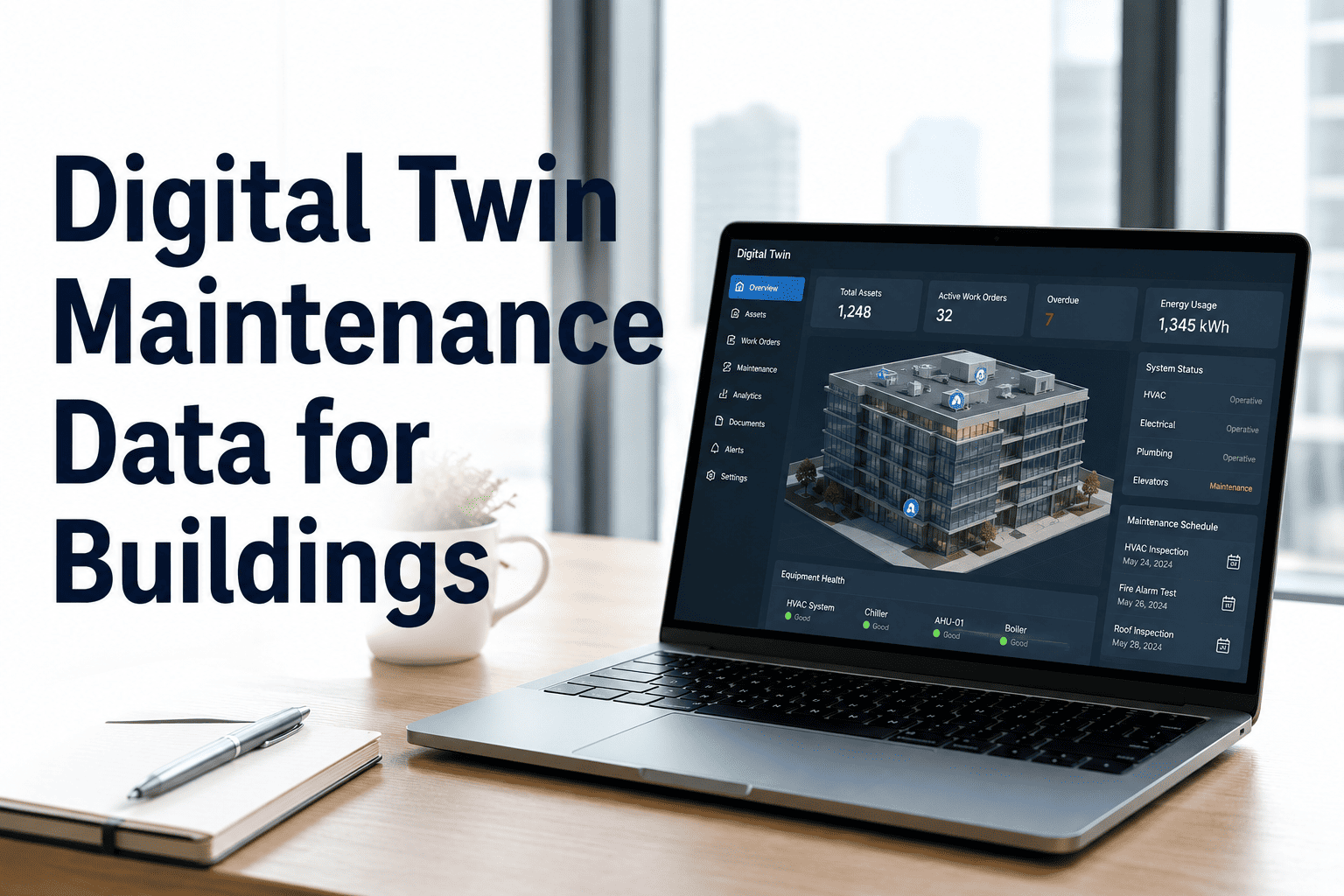
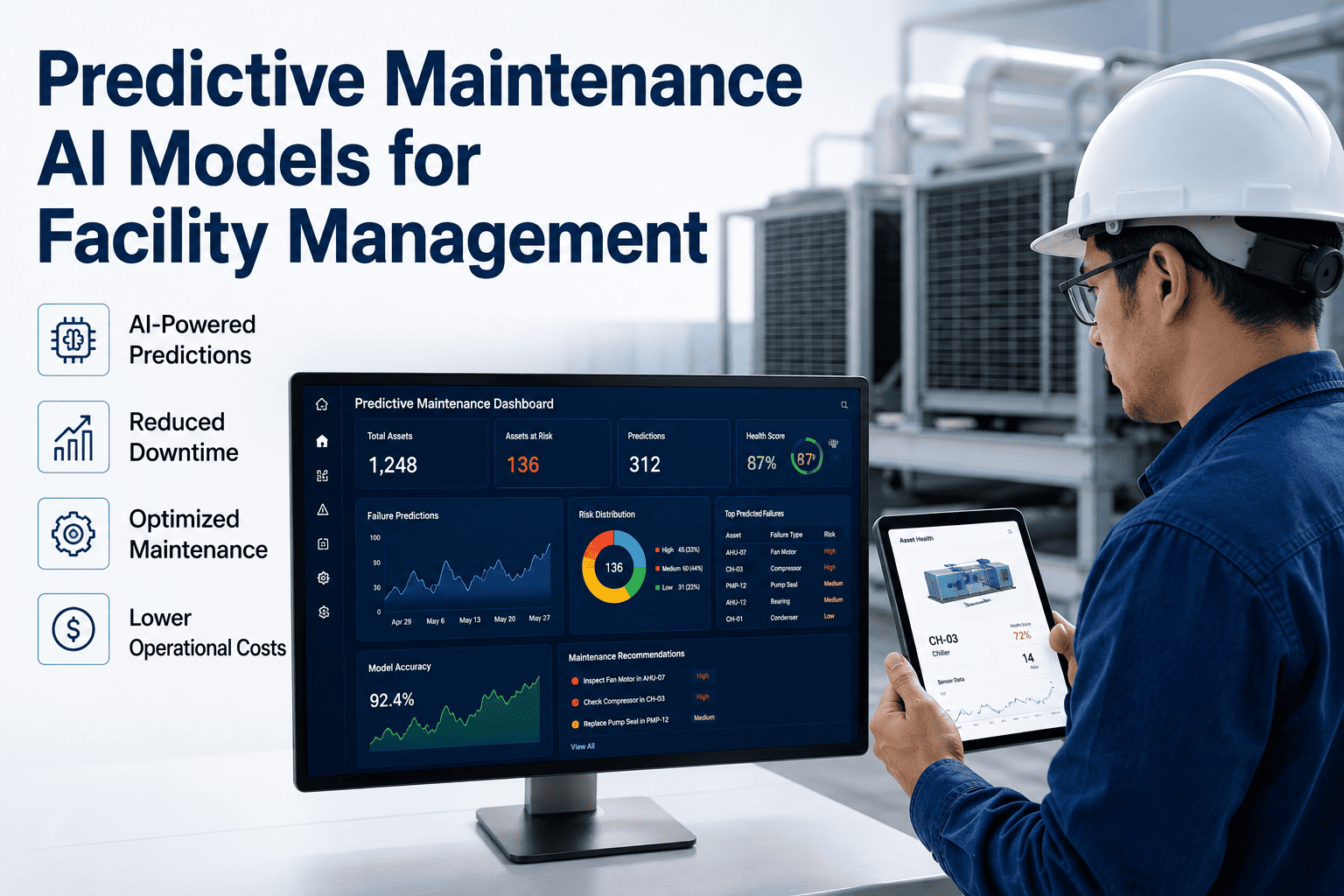
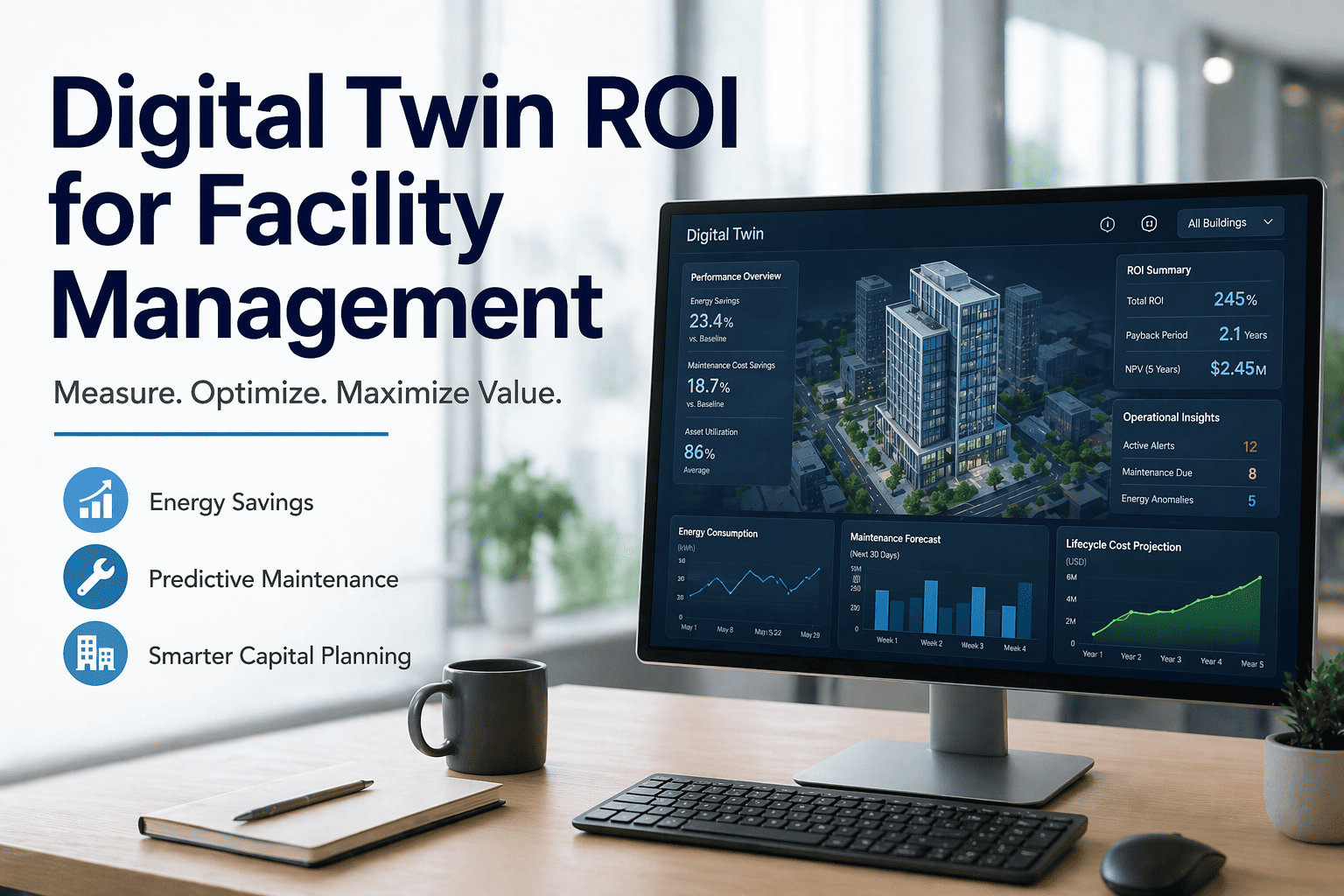
Digital twins are no longer a future-facing concept reserved for aerospace or automotive giants. In 2026, the building twin market is valued at $4.18 billion and expanding at a 44.2% CAGR — the fastest-growing segment in all of facility technology. Commercial real estate portfolios, hospital campuses, data centres, and manufacturing facilities are deploying virtual building models to simulate HVAC performance before making capital decisions, predict equipment failures before they cause downtime, and run energy optimisation scenarios without touching a single physical system. The challenge is not the twin technology itself. It is connecting the virtual model to structured maintenance execution — so every simulation insight converts into a scheduled work order, an updated asset record, and a measurable operational outcome. Sign up free to see how Oxmaint connects digital twin data to your maintenance programme, or book a demo and we will show you the integration live.
Oxmaint connects building digital twin data to structured maintenance execution — turning simulation insights into scheduled work orders, condition-based PM triggers, and audit-ready asset records automatically. Book a demo to see how Oxmaint bridges your digital twin and maintenance programme.
What Is a Building Digital Twin?
A building digital twin is a dynamic virtual replica of a physical facility — updated continuously from IoT sensors, BAS data streams, maintenance records, and occupancy data. Unlike a static BIM model or a floor plan drawing, a digital twin reflects the building's current operational state in real time. It processes live data to simulate future conditions, model what-if scenarios, and predict failures before they manifest in the physical building.
Building Digital Twin
A continuously updated virtual model of a physical building that integrates real-time sensor data, asset condition records, maintenance history, and environmental inputs to simulate performance, predict failures, and optimise operations without physical intervention.
What Feeds the Twin
IoT and BAS sensor streams — temperature, pressure, occupancy, energy. Asset condition records from CMMS — service history, failure patterns, RUL. Maintenance work order data — planned, reactive, and inspection events. Environmental and operational context — weather, occupancy schedules, utility rates.
Six Core Applications of Digital Twins in Facility Management
The building twin market's 44% CAGR is driven by six specific FM applications that deliver measurable financial returns within 12 months of deployment. Each one requires a structured connection between the virtual model and physical maintenance execution to convert simulations into saved costs.
The Integration Gap — Where Digital Twin Value Is Lost
Most buildings that deploy digital twins capture less than 40% of the available value. The reason is not the twin technology — it is the gap between simulation insight and maintenance execution. A twin that predicts a chiller failure has no value until that prediction becomes a scheduled work order, assigned to a technician, with the asset history attached.
Digital Twin FM Performance: Without vs With Oxmaint Integration
The operational difference between a standalone digital twin and a twin integrated with structured CMMS execution is measurable at every stage of the maintenance value chain.
| Performance Factor | Digital Twin + Oxmaint | Digital Twin Without CMMS |
|---|---|---|
| Failure Prediction to Action | Under 60 minutes from twin alert to assigned work order. Technician receives full asset context before attending. Failure prevented before occurrence. | Alert generated by twin. Alert routes to email inbox or dashboard. Average 3 to 6 weeks before manual work order created. Failure often occurs in the delay window. |
| Energy Optimisation Execution | Twin simulates HVAC optimisation scenario. Approved changes converted to PM work orders in Oxmaint. Technicians execute setpoint and controls changes on schedule. Savings documented in ESG dashboard. | Twin simulates scenario. Results emailed to FM team. Changes made informally or forgotten. No execution record. Energy savings unrealised or undocumented for ESG reporting. |
| CapEx Decision Quality | Twin models refurbish vs replace scenarios. RUL data from Oxmaint feeds the simulation. Finance receives CFO-grade CapEx projections from combined twin and asset condition data. Capital budget variance below 8%. | Twin models replacement scenarios but lacks asset condition history from CMMS. Financial projections based on manufacturer estimates, not actual service data. Budget variance 20%+ remains common. |
| Maintenance History Feedback | Every repair outcome, parts consumed, and technician note feeds back into Oxmaint asset record and into twin model recalibration. Prediction accuracy improves with every completed work order cycle. | Twin operates on sensor data only. No repair history feedback. Degradation models do not improve from actual failure and repair events. Prediction quality plateaus or degrades over time. |
| Compliance Documentation | All twin-triggered interventions documented as work orders in Oxmaint — with timestamps, technician signatures, and photographic evidence. Audit-ready compliance records generated automatically. Regulatory inspection answered in minutes. | Twin generates alerts. Responses tracked informally. No structured documentation. Regulatory inspection requires manual record assembly across email, BAS logs, and paper work orders. Gaps standard. |
| ROI Realisation Timeline | Financial returns measurable within 90 days as twin predictions convert to prevented failures. 30% energy savings, 35% downtime reduction, and 25% project timeline compression all documented within year one. | Twin investment delivers theoretical insights but limited operational savings. Without structured execution, predicted savings remain in dashboards rather than in operational cost reductions or energy bills. |
Digital Twin Compliance Frameworks by Region
In 2026, digital twin adoption is being accelerated by regulatory pressure across every major commercial property market. ESG reporting mandates, energy performance standards, and building safety case requirements are turning digital twin data from a nice-to-have into a compliance instrument.
| Region | Digital Twin Compliance Drivers | Oxmaint Twin Integration Support |
|---|---|---|
| USA | NYC Local Law 97 carbon reporting, California Title 24 demand-response, SEC climate disclosure, GSA smart building standards | Carbon tracking from twin energy data, LL97 compliance reports, work order documentation from all twin-triggered interventions |
| UK | Building Safety Act 2022 golden thread requirements, MEES energy performance, UK National Digital Twin Programme, CIBSE TM65 | Golden thread asset documentation, building safety case records, twin-to-work-order integration for statutory compliance |
| UAE | UAE Vision 2030 smart building mandate, Dubai AED 50B smart city investment, OSHAD-SF equipment monitoring, LEED certification | Smart building IoT integration, sustainability KPI dashboards, multi-site twin portfolio visibility, certification documentation |
| Australia | NABERS mandatory energy disclosure, NCC Section J efficiency requirements, state OHS digital documentation obligations | NABERS energy data from twin streams, Section J compliance records, maintenance history per asset for OHS audit |
| Germany | GEG 2024 energy requirements, EU ETS building inclusion, EU EPBD zero-emission targets, up to 40% government retrofit grants | Energy performance records from twin data, GEG compliance documentation, PM scheduling from twin degradation models |
| Canada | Greener Homes Grant smart building incentives, National Energy Code, CSA Z1000 maintenance documentation, ASHRAE 90.1 | Energy management from twin streams, CSA Z1000 maintenance records, multi-province compliance dashboards |
Connect Your Digital Twin to Structured Maintenance Execution
Oxmaint integrates with all major building twin and BAS platforms — converting simulation insights into scheduled work orders, condition-based PM triggers, and compliance-ready asset records automatically. No alert lost in an inbox. No prediction wasted in a dashboard. Book a demo to see the twin-to-work-order integration built for your building type.
Frequently Asked Questions — Digital Twins in Facility Management
QWhat is the difference between a BIM model and a building digital twin?
QHow much does it cost to implement a building digital twin for a commercial facility?
QWhat sensors are required to build a meaningful digital twin for facility management?
QHow does a digital twin support ESG reporting and carbon compliance for commercial buildings?
Your Digital Twin Is Only as Valuable as What Gets Done With Its Insights.
Oxmaint closes the gap between digital twin simulation and physical maintenance execution — automatically converting predictions into work orders, condition alerts into PM schedules, and energy models into documented ESG outcomes. No alerts lost. No insights wasted. No ROI left in a dashboard. Book a 30-minute demo to see the twin-to-CMMS integration built for your facility.