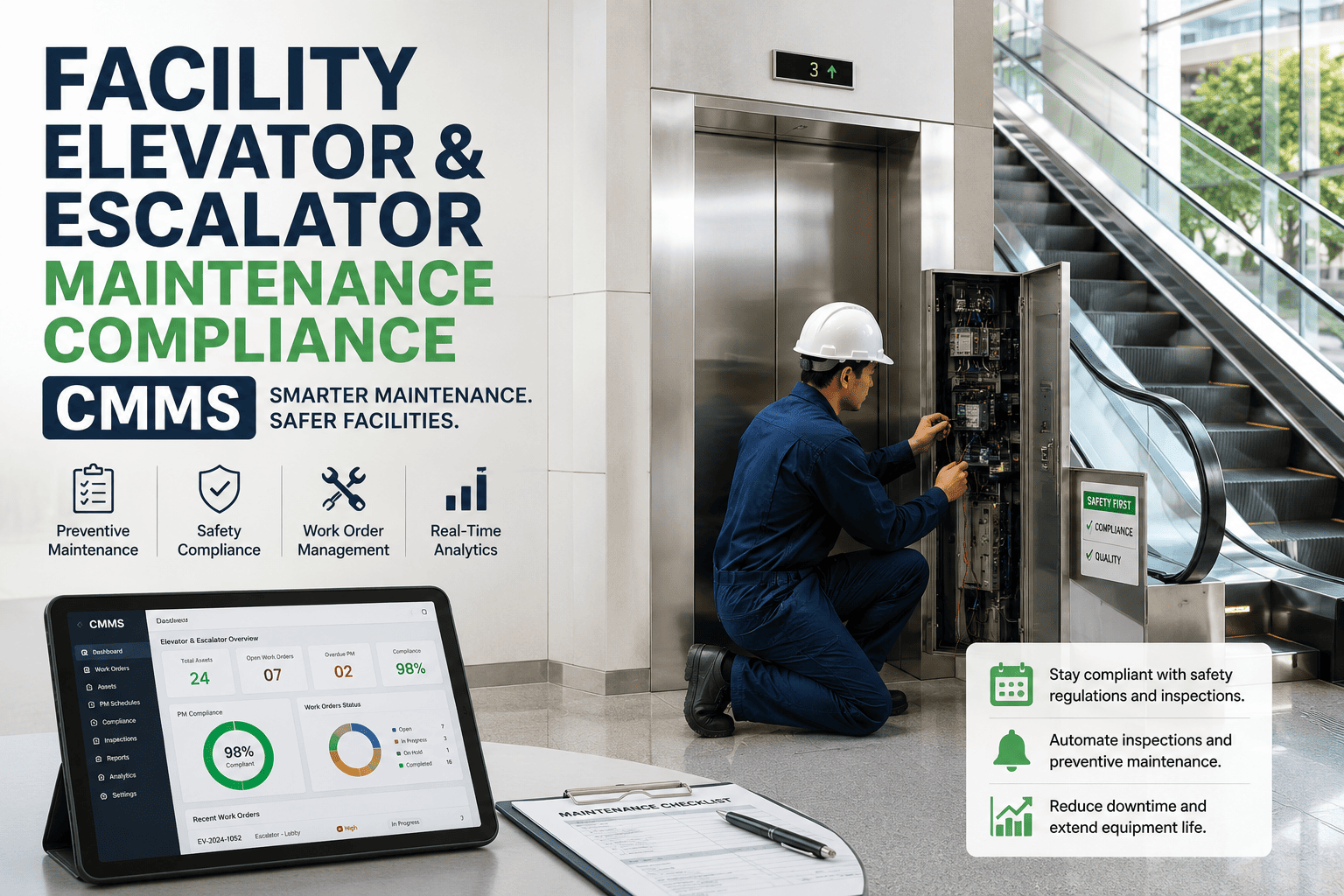
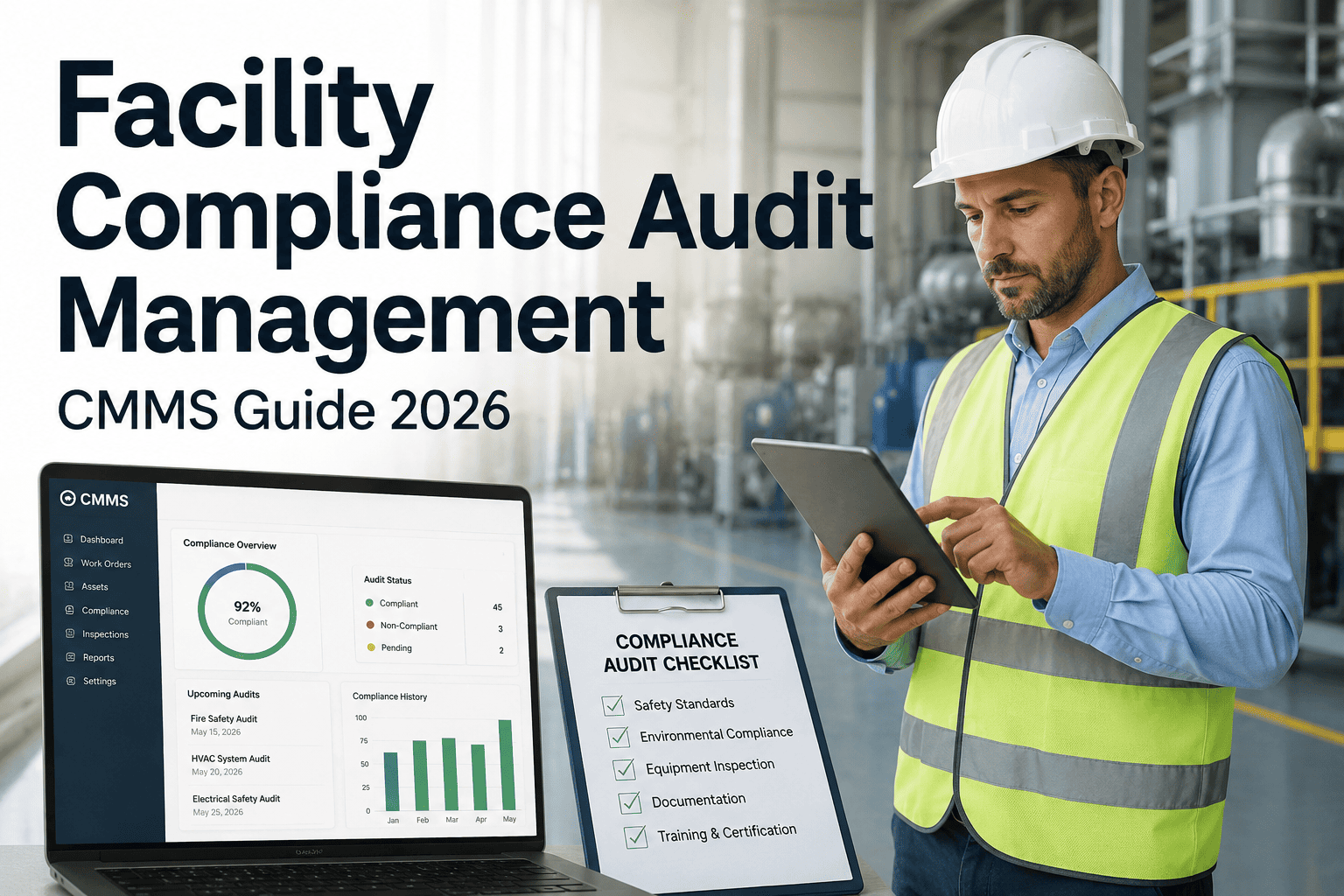
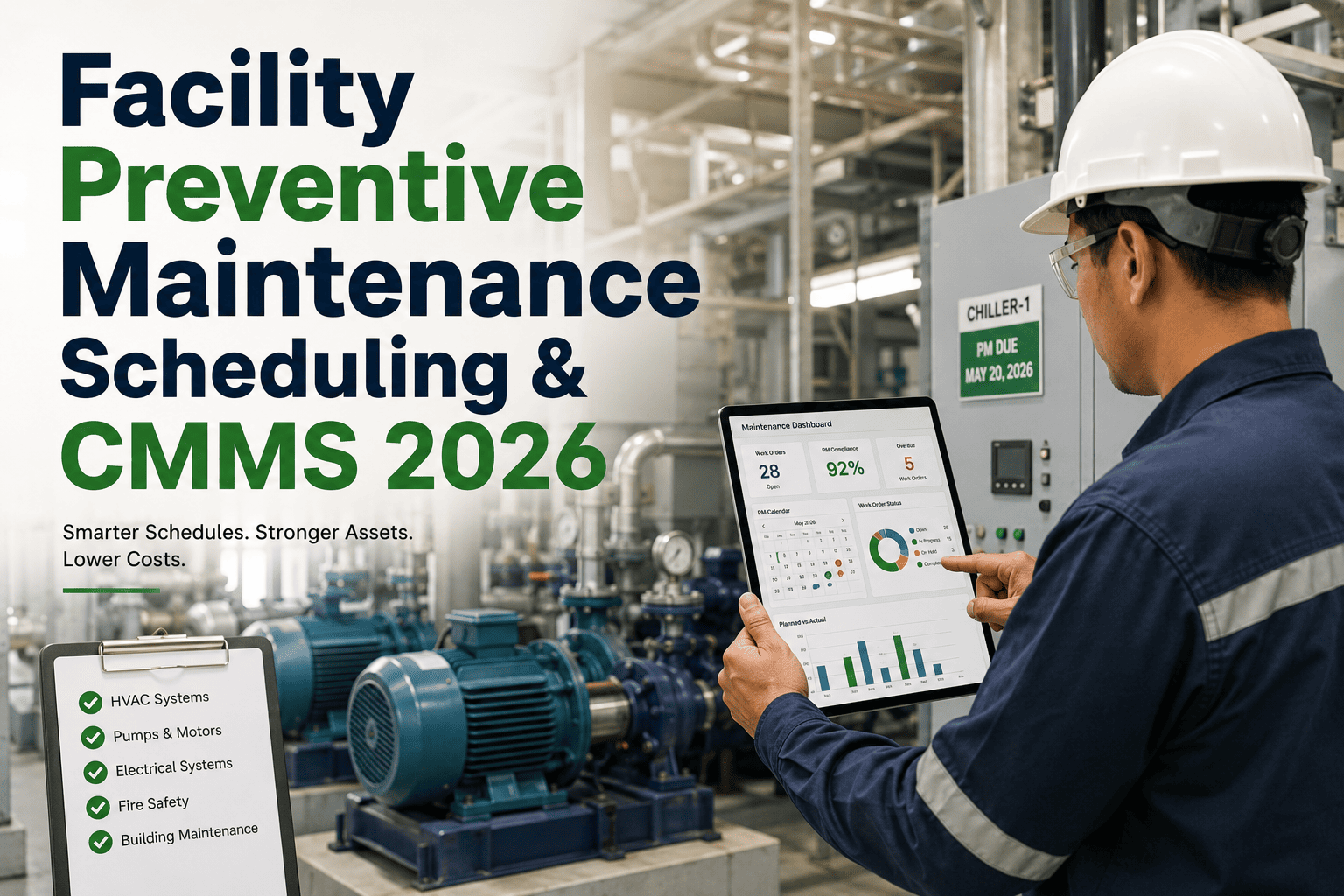
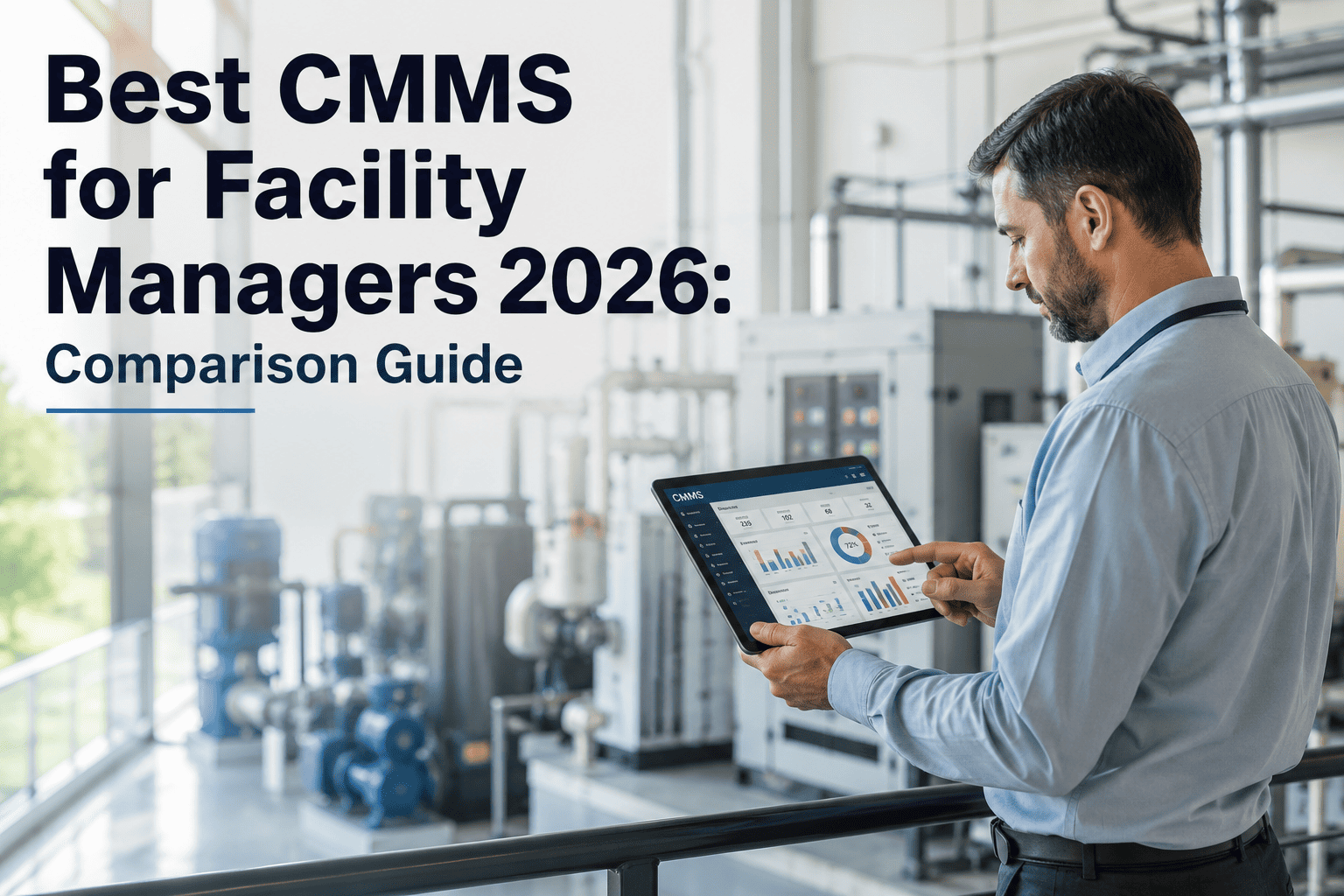
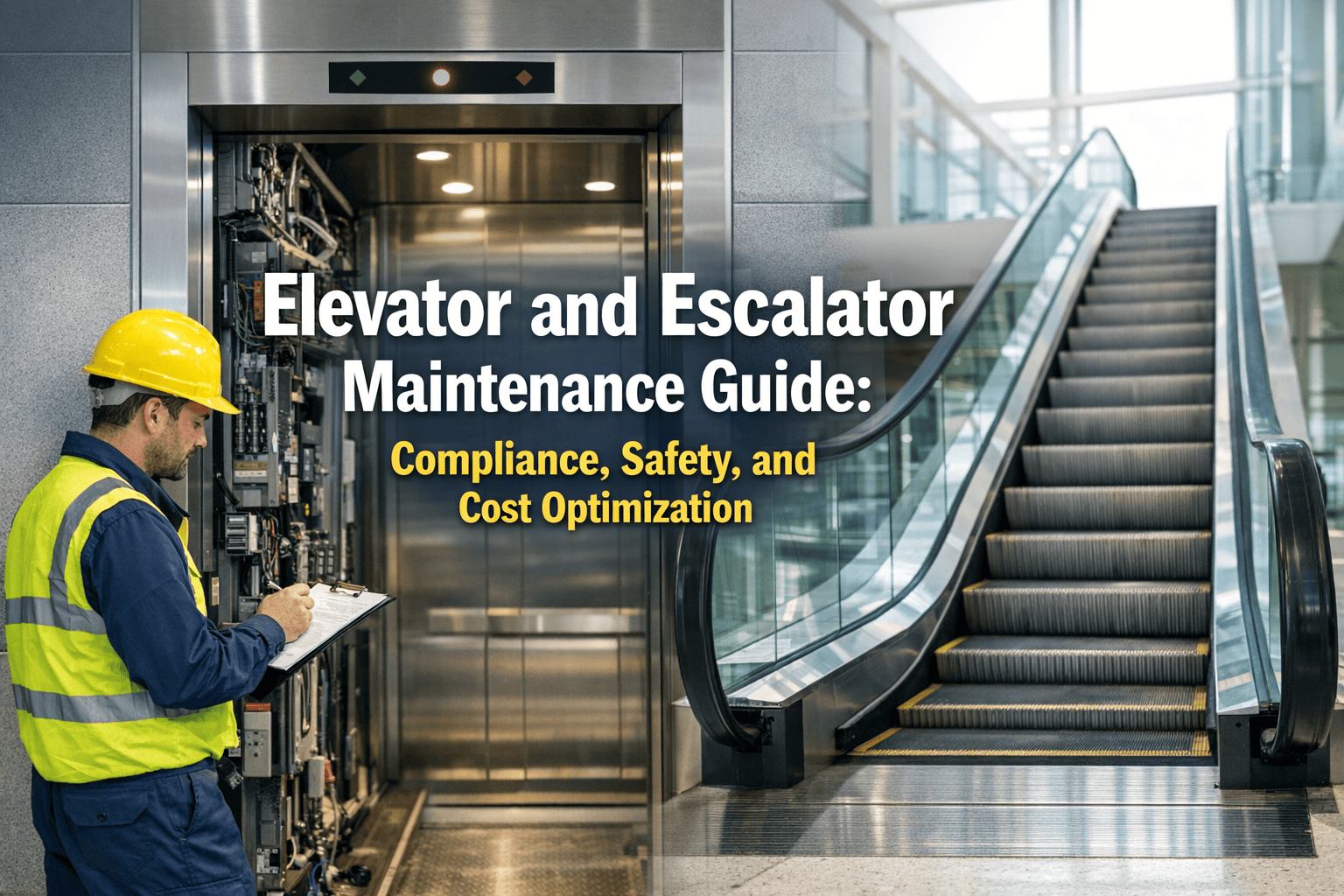
US elevators make 18 billion passenger trips every year — and every single one of those rides depends on a maintenance programme that most facility managers are managing reactively, on spreadsheets, or through a service contract they have not reviewed in years. Sign up for Oxmaint free to bring your elevator and escalator compliance under structured digital management today. The regulatory stakes for elevator maintenance in 2026 are higher than at any point in the past decade. ASME A17.1-2025 — the current Safety Code for Elevators and Escalators — now includes cybersecurity requirements alongside its longstanding mechanical, electrical, and structural mandates. Every elevator and escalator in your building is legally required to have a documented Maintenance Control Program (MCP) under ASME A17.1 Section 8.6. A missing or incomplete MCP is one of the most common inspection violations — and it signals to your Authority Having Jurisdiction (AHJ) that proper maintenance is not being performed. The consequence is not just a fine. It is the grounding of equipment, mandatory reinspection, and reputational exposure in a regulatory environment that is actively tightening enforcement in commercial buildings across every major jurisdiction. Book a demo to see how Oxmaint structures elevator and escalator compliance management, MCP documentation, and inspection scheduling for commercial facilities.
18B
Elevator passenger trips annually in the US — every one dependent on a compliant, documented maintenance programme
ASME A17.1-2025
The current Safety Code for Elevators and Escalators — now including cybersecurity requirements alongside mechanical and inspection mandates
Section 8.6
The ASME A17.1 requirement for a documented Maintenance Control Program (MCP) for every elevator and escalator in your building
4.8x
Emergency repair cost premium vs. planned maintenance — the financial consequence of deferred elevator servicing
Oxmaint · Compliance Management · Building Operations
Elevator Compliance Is Not a Service Contract Problem — It Is a Facility Management Data Problem. Oxmaint Solves It.
MCP documentation per conveyance. Inspection due date tracking with advance work orders. Five-year load test scheduling. Modernization trigger alerts. Certificate and permit storage. Audit-ready records retrievable in under 5 minutes. Built for facility managers — free to start.
100%MCP compliance target
30-dayAdvance inspection alerts
5 minAudit record retrieval
DaysTo deploy Oxmaint
Regulatory Framework
The Global Elevator Safety Code Landscape in 2026 — What Applies to Your Building
Elevator and escalator compliance obligations vary by jurisdiction, but every major market has a mandatory statutory inspection regime with criminal and civil liability for non-compliance. Understanding which code governs your equipment is the starting point for every compliance programme.
USA & Canada
ASME A17.1-2025 / CSA B44-2025
The primary Safety Code for Elevators and Escalators in North America. Governs design, construction, installation, operation, inspection, testing, maintenance, alteration, and repair. Adopted by state and local Authorities Having Jurisdiction (AHJ). Latest 2025 edition adds cybersecurity requirements. Every elevator requires a documented Maintenance Control Program (MCP) per Section 8.6. Canada follows CSA B44-2025 as the parallel standard.
Key requirement: MCP per conveyance, on-site or electronically accessible
European Union & UK
EN 81 Series / BSI / CIBSE SoVT
EN 81-20 is the primary passenger elevator reference across EU member states and is widely adopted beyond the EU as a common safety language. UK practitioners align with BSI standards while referencing CEN, CENELEC, and ISO. CIBSE's Society of Vertical Transportation maintains a continuously updated standards portal for UK compliance. Periodic thorough examination by a competent person required at defined intervals.
Key requirement: Periodic thorough examination, documented service records
China
GB 7588 Framework
China's GB 7588 framework governs core elevator safety including fast-acting unintended car movement protection requirements with very fast response thresholds. Provincial regulations add time-bound rescue response expectations for trapped passengers that building owners must plan for and document. Strong focus on incident readiness documentation alongside standard inspection requirements.
Key requirement: Rescue response time planning, unintended movement protection
UAE & GCC
Civil Defence Codes / OSHAD-SF
UAE Civil Defence codes and OSHAD-SF requirements mandate periodic inspection and certification of all lifting equipment including passenger elevators and escalators. Vision 2030 smart building initiatives are accelerating digital compliance documentation requirements across the GCC. Multi-tenanted commercial buildings face the most active enforcement environments in the region.
Key requirement: Civil Defence certificate, digital maintenance records
The MCP Requirement
ASME A17.1 Section 8.6: The Maintenance Control Program — What It Is, What It Requires, and Why Most Buildings Fail It
The Maintenance Control Program (MCP) is the most commonly cited inspection violation in elevator compliance audits — and it is entirely preventable. ASME A17.1 Section 8.6 requires a documented MCP for every elevator and escalator in your building. A missing or incomplete MCP is direct evidence to the AHJ that proper maintenance is not being performed.
01
What the MCP Must Document
Per ASME A17.1 Section 8.6, every MCP must specify the examinations, tests, cleaning, lubrication, and adjustments required for each conveyance — plus the time intervals for those actions based on equipment type, age, condition, usage, environmental conditions, technology, and manufacturer recommendations. One size does not fit all. Each elevator's MCP must be tailored to its specific application.
02
Where Records Must Be Kept
Written records documenting completion of all required MCP procedures must be kept on-site or electronically accessible at all times — not assembled before a scheduled inspection, but available immediately on demand. An AHJ can request records at any point. Oxmaint stores MCP documentation, inspection records, and service history per conveyance with instant retrieval from any device.
03
AHJ Code Year Verification
Building owners must verify which edition year of ASME A17.1 their Authority Having Jurisdiction is enforcing — because jurisdictions adopt code revisions at different times. Compliance with the 2019 edition does not necessarily satisfy an AHJ enforcing the 2022 or 2025 edition. Oxmaint tracks the applicable code year per building and jurisdiction, alerting FM teams when enforcement upgrades are adopted locally.
04
Cybersecurity — The 2025 Addition
ASME A17.1-2025 adds cybersecurity requirements to the elevator safety code — a first. Modern networked elevator control systems and destination dispatch platforms now have mandatory cybersecurity provisions that facility managers must document and maintain alongside traditional mechanical and electrical maintenance records. Oxmaint's compliance tracking covers both physical and cybersecurity maintenance obligations per conveyance.
Inspection Schedules
Elevator and Escalator Inspection Schedule — What Is Required, How Often, and Who Must Conduct It
ASME A17.1 Appendix N provides inspection and testing interval recommendations — the specific required intervals are set by each AHJ. These are the standard intervals most jurisdictions adopt as their baseline compliance requirements.
Annual
Annual Periodic Inspection — All Elevator Types
Annual inspection by a qualified elevator inspector (QEI-certified in most US jurisdictions) covering all operational safety systems: door operation and sensing, safety circuits, braking systems, hoistway clearances, car and counterweight guide rails, governor and safety gear, lighting, emergency communications, and machine room equipment. Hydraulic elevators typically require annual inspections as their primary statutory cycle. Inspection certificate must be posted in the elevator cab and maintenance records retained on-site or electronically.
All elevator types
QEI-certified inspector
Certificate posted in cab
Records retained on-site
5-Year
Five-Year Full-Load Safety Test — Traction Elevators
Traction elevators require a comprehensive five-year full-load safety test in addition to annual inspections. This test verifies the performance of the safety plank, governor, and buffer under rated load conditions — a test that cannot be conducted with the elevator in normal service and requires pre-planning, load test weights, and coordination with the AHJ. Missing a five-year test is a major compliance violation. Oxmaint generates five-year test work orders 90 days in advance to allow sufficient planning time for load weights, inspector scheduling, and tenant notification.
Traction elevators only
Full-load safety test
90-day advance planning
Load weights required
Annual
Escalator Annual Skirt Performance Test
Escalators undergo annual skirt performance tests per ASME A17.1 requirements — verifying that the skirt deflection protection system prevents passenger entrapment between moving steps and the stationary skirt panel. The annual test is in addition to regular monthly cleaning, lubrication, and visual inspections of step chains, comb plates, handrail drives, braking systems, and safety devices. Escalators in high-traffic commercial buildings typically require more frequent lubrication and step chain inspection than the statutory minimum.
Skirt performance test
Comb plate inspection
Step chain condition
Handrail drive test
Monthly
Monthly Preventive Maintenance — Between Inspections
The statutory inspection is a compliance checkpoint — not a maintenance programme. Between annual and five-year inspections, a structured monthly PM programme is required to keep equipment in the condition the inspection expects to find. Monthly tasks include: door operator lubrication and force testing, cab and hoistway lighting checks, emergency lighting and phone test, machine room inspection and temperature verification, hydraulic fluid level check, rope condition visual assessment, and governor rope lubrication. Every completed PM task logged in Oxmaint against the specific elevator asset record — building the maintenance evidence the MCP requires.
Door operator lubrication
Emergency comm test
Machine room inspection
Logged against asset
Before vs. After
Elevator Compliance Without CMMS vs. Oxmaint Digital Management
Modernization Planning
Elevator Modernization — When to Upgrade, What to Prioritize, and How to Build the Capital Case
Elevator modernization is one of the most significant CapEx events in a commercial building's lifecycle — typically $100,000–$300,000 per cab for full modernization, with partial component upgrades (controls, hydraulics, cab finishes) available in the $25,000–$80,000 range. The financial decision between continued maintenance, partial modernization, and full replacement requires asset condition data that most FM teams do not have.
Modernization Triggers
Equipment age exceeding 20–25 years for traction elevators
Control system obsolescence — parts no longer available from OEM
Recurring entrapments or safety incidents above baseline rate
AHJ notice requiring code compliance upgrades under ASME A17.3
Energy consumption significantly above current drive technology
Annual PM cost exceeding 15–20% of modernization project cost
Typical Modernization Scope
Control system and operator replacement — most common partial upgrade
Drive system: hydraulic conversion or traction drive modernization
Door operators, restrictors, and sensing system upgrades
Machine room equipment: controllers, disconnects, lighting
Cab interiors, lighting, and accessibility compliance upgrades (ADA)
Emergency communication system replacement (5-year cycle common)
Typical Cost Ranges (2026)
Controls-only modernization: $15,000–$35,000 per cab
Drive and controls modernization: $35,000–$80,000 per cab
Full cab modernization (controls, drive, cab): $100,000–$300,000
Hydraulic to machine-room-less (MRL) conversion: $80,000–$150,000
Escalator handrail and step chain replacement: $40,000–$120,000
Annual reserve contribution formula: modernization cost ÷ design life
The Modernization ROI Case
Energy savings: regenerative drives reduce energy use 25–40% vs. legacy systems
PM cost reduction: 30–50% lower annual service cost post-modernization
Entrapment reduction: modern controls eliminate the majority of recall-related callbacks
Building valuation: modernized elevators are a positive factor in property appraisal
Insurance: recurring safety incidents inflate liability premiums — modernization reduces them
Tenant retention: elevator reliability is a top-3 tenant satisfaction factor in commercial office
Results and ROI
What Structured Elevator Compliance Management Delivers — Quantified Outcomes
100%
MCP Compliance Rate
Zero missing or incomplete Maintenance Control Programs across the portfolio. The most common inspection violation eliminated as a byproduct of daily maintenance operations — not a separate compliance administration exercise.
5 min
Audit Record Retrieval
Complete inspection history, test records, MCP documentation, and service logs retrieved in under 5 minutes from the Oxmaint dashboard. Versus 2–5 days of manual record assembly in paper-based systems — with gaps that trigger enforcement action.
30–50%
PM Cost Reduction Post-Modernization
Annual service cost reduction documented after elevator modernization — driven by modern control systems requiring less adjustment, fewer callbacks, and lower parts replacement frequency. Oxmaint's condition tracking identifies the optimal modernization timing to capture this reduction.
25–40%
Energy Consumption Reduction
Regenerative drive technology reduces elevator energy consumption by 25–40% versus legacy hydraulic and older traction systems. Oxmaint's CapEx forecasting includes energy savings in the modernization ROI calculation — strengthening the capital case for the CFO.
2–3 yr
Advance Modernization Warning
Oxmaint generates modernization trigger alerts 2–3 years before end-of-design-life based on asset age, condition scores, and PM cost trends — giving FM teams sufficient lead time to budget, specify, bid, and award modernization projects before equipment failure forces emergency replacement.
4.8x
Emergency vs. Planned Cost Ratio
Emergency elevator component replacement — controller failure, hydraulic pump, door operator — carries the same 4.8x emergency premium as any unplanned facility repair. Structured PM and modernization planning eliminates the conditions that generate emergency elevator spend.
Oxmaint · Compliance Management Platform
Your Elevators Are a Compliance Liability or a Managed Asset. Oxmaint Makes Them the Latter — Free to Start.
MCP documentation per conveyance. Annual and five-year inspection scheduling with advance work orders. Monthly PM tracking. Modernization CapEx alerts 2–3 years ahead. Portfolio compliance dashboard across all buildings. Audit-ready records in 5 minutes. No implementation fees. Deploy in days.
Frequently Asked Questions
Elevator Maintenance, Compliance, and Modernization — What Facility Managers Ask First
What is a Maintenance Control Program (MCP) and why is it the most commonly cited elevator inspection violation?
A Maintenance Control Program (MCP) is a documented programme required by ASME A17.1 Section 8.6 for every elevator and escalator in a commercial building. It specifies the examinations, tests, cleaning, lubrication, and adjustments required for the specific conveyance — along with the time intervals for those tasks based on equipment type, age, condition, usage, environmental conditions, technology, and manufacturer recommendations. The MCP must be maintained and available on-site or electronically accessible at all times for review by the Authority Having Jurisdiction. It is the most commonly cited inspection violation for two reasons. First, service contractors frequently hold MCP documentation without providing building owners with accessible copies. Second, even where documentation exists, it is often generic rather than tailored to the specific conveyance as required. An AHJ that finds a missing or generic MCP treats it as evidence that proper maintenance is not being performed — triggering enforcement action that goes beyond a paperwork finding. Oxmaint stores per-conveyance MCP documentation digitally, linked to the asset record, retrievable instantly from any device. Every PM completion is logged against the MCP requirements, building the audit evidence the MCP represents.
Sign up free to configure your elevator MCPs, or
book a demo to see MCP management in action across a multi-building portfolio.
How often must elevators and escalators be inspected — and what tests are required beyond the annual inspection?
Inspection and testing intervals for elevators and escalators are set by each Authority Having Jurisdiction based on ASME A17.1 Appendix N recommendations. Most US jurisdictions require annual inspections for all elevator types as the minimum statutory cycle. Beyond the annual inspection, traction elevators require a five-year full-load safety test verifying the performance of the safety plank, governor, and buffer under rated load — this is a separate and more demanding test than the annual inspection, requiring pre-planned load test weights, inspector coordination, and potential out-of-service time. Escalators require annual skirt performance tests as a distinct compliance event from general maintenance. Hydraulic elevators typically operate on annual inspection cycles as their primary statutory requirement. Building owners must verify which edition of ASME A17.1 their local AHJ is enforcing, since jurisdictions adopt code revisions at different times — compliance with a prior edition may not satisfy current enforcement expectations. Oxmaint tracks the applicable inspection interval per conveyance, generates annual inspection work orders 30 days in advance, and creates five-year load test work orders 90 days in advance to allow sufficient planning time.
Book a demo to see inspection scheduling across a multi-building elevator portfolio, or
sign up free to start tracking your inspection due dates.
When should a facility manager plan for elevator modernization — and how do I build the capital case for a CFO?
Elevator modernization should be planned — not triggered by failure. The six primary modernization triggers are: equipment age exceeding 20–25 years for traction elevators; control system obsolescence where parts are no longer available from the OEM; recurring entrapments or safety incidents above baseline callback rates; AHJ notices requiring code compliance upgrades under ASME A17.3 (the code for existing installations); energy consumption significantly above current regenerative drive technology benchmarks; and annual PM cost exceeding 15–20% of modernization project cost. When one or more of these triggers are present, the capital case for modernization is built by comparing the total cost of continued maintenance over a 5-year horizon against the modernization investment and its documented returns. The returns include: 30–50% reduction in annual PM costs post-modernization; 25–40% energy consumption reduction from regenerative drives; eliminated emergency repair exposure from aging control and hydraulic systems; and positive building valuation impact at disposition or refinancing. Oxmaint's CapEx forecasting module generates modernization trigger alerts 2–3 years before end-of-design-life and builds the 5-year cost comparison automatically from maintenance cost history — giving FM leaders the CFO-ready capital case that turns a budget request into an investment approval.
Sign up free to start tracking elevator asset age and condition, or
book a demo to see a modernization CapEx case built from real maintenance data.
My building has a full-service elevator maintenance contract — why do I still need a CMMS for elevator compliance?
A full-service elevator maintenance contract transfers the execution of maintenance tasks to a contractor — it does not transfer the legal compliance responsibility to that contractor. Under ASME A17.1 and equivalent regulations globally, the building owner or facility manager remains legally responsible for ensuring that inspections, tests, and maintenance are performed per the applicable code. This responsibility has three practical consequences that a service contract alone cannot address. First, the building owner needs independent documentation: MCP records must be available on-site or electronically at all times — not held exclusively by the service contractor in their own system. Second, the building owner needs verification that contracted tasks are actually being performed: service reports describe what was done but do not automatically flag overdue tasks or missed PM intervals. Third, the building owner needs advance planning capability for five-year tests, modernization timing, and CapEx provision — none of which a service contractor proactively manages on behalf of their client. Oxmaint operates alongside your service contract as the building owner's independent compliance management layer: tracking due dates, storing records, verifying contractor completion, and managing the capital planning that the service contract does not provide.
Book a demo to see how Oxmaint complements your existing elevator service contract, or
sign up free to take independent control of your elevator compliance records.
What does ASME A17.1-2025 add to elevator compliance requirements — and what do facility managers need to do differently?
ASME A17.1-2025 is the current Safety Code for Elevators and Escalators, adopted alongside CSA B44-2025 in Canada. The 2025 edition introduces several changes that facility managers need to be aware of. The most significant addition for building owners is the inclusion of cybersecurity requirements — a first in the A17.1 series. Modern elevator control systems, destination dispatch platforms, and networked monitoring equipment now have mandatory cybersecurity provisions that must be documented and maintained alongside traditional mechanical and electrical records. Facility managers with building automation systems that interface with elevator controls need to ensure these connections are assessed against the cybersecurity requirements. Additionally, the 2025 edition addresses test enable operation requirements and adds elastomeric buffer requirements. Building owners should verify with their local AHJ whether the 2025 edition has been adopted for enforcement in their jurisdiction — adoption timelines vary by state and municipality, and compliance is measured against the edition the AHJ is enforcing, not necessarily the most current published edition. Oxmaint tracks the applicable code year per building and alerts FM teams when local AHJ adoption of a new edition is confirmed, ensuring compliance programmes stay aligned with current enforcement expectations.
Sign up free to configure your elevator compliance programme for the current code edition, or
book a demo to see how Oxmaint manages code year tracking across a multi-jurisdiction portfolio.
Oxmaint · Elevator and Escalator Compliance Management
18 Billion Elevator Trips This Year. Every Single One Depends on a Compliance Programme You Actually Control. Oxmaint Gives You That Control.
MCP documentation per conveyance. Annual inspection due date tracking with 30-day advance work orders. Five-year load test scheduling with 90-day lead time. Monthly PM programme management. Modernization trigger alerts 2–3 years ahead. Portfolio compliance dashboard across all buildings. Audit-ready records in 5 minutes. ASME A17.1-2025 cybersecurity compliance tracking. Free to start. No implementation fees. No IT project required.