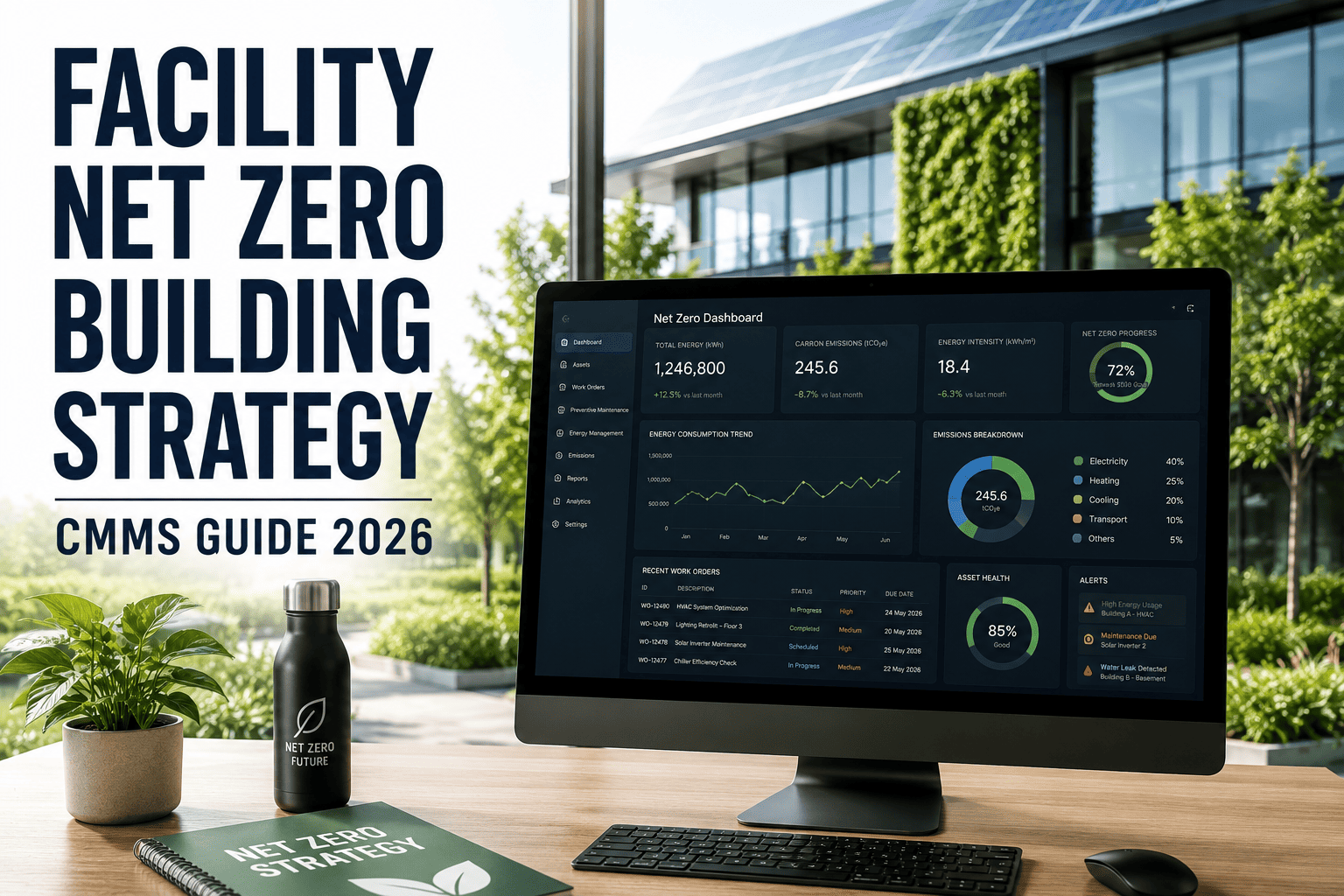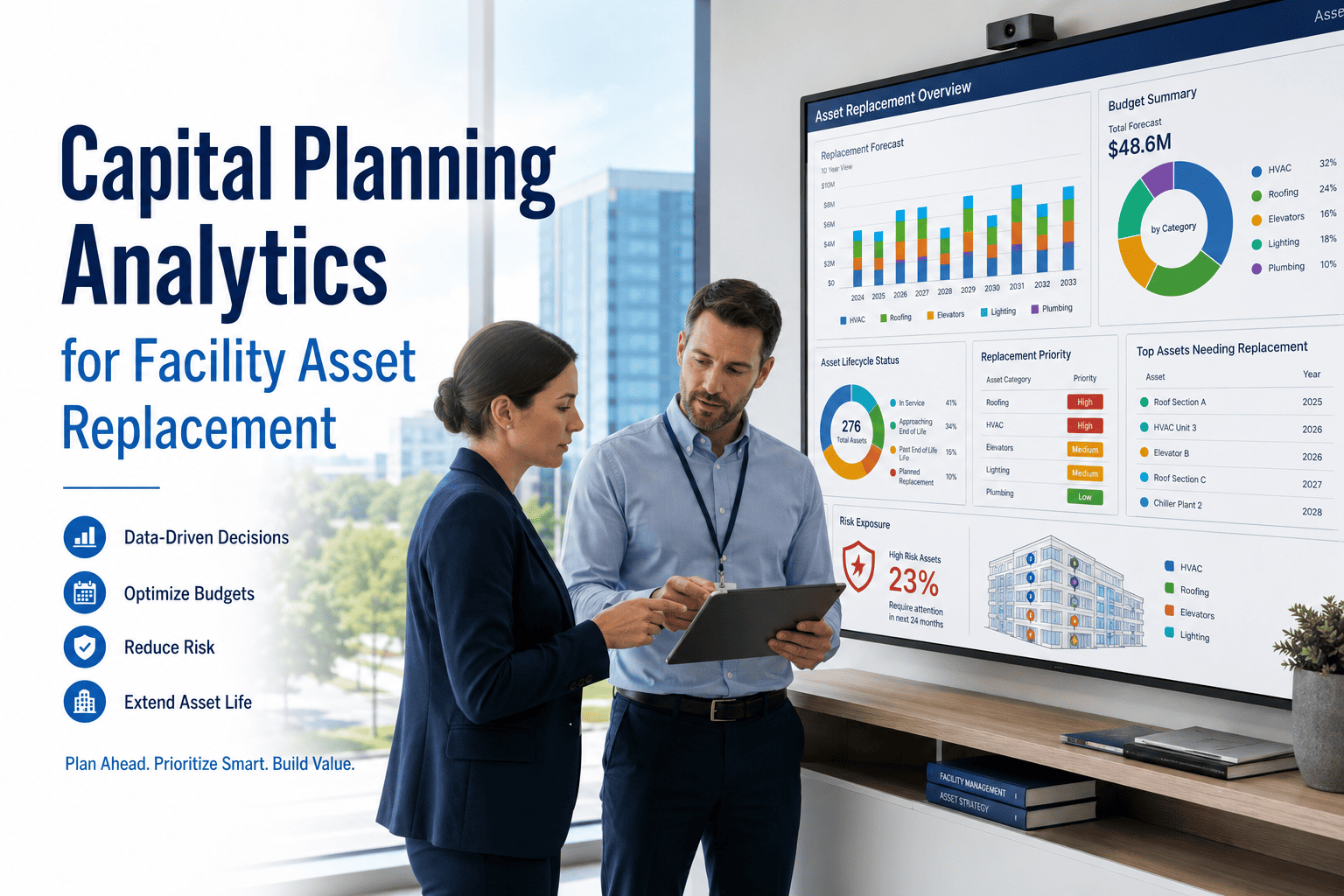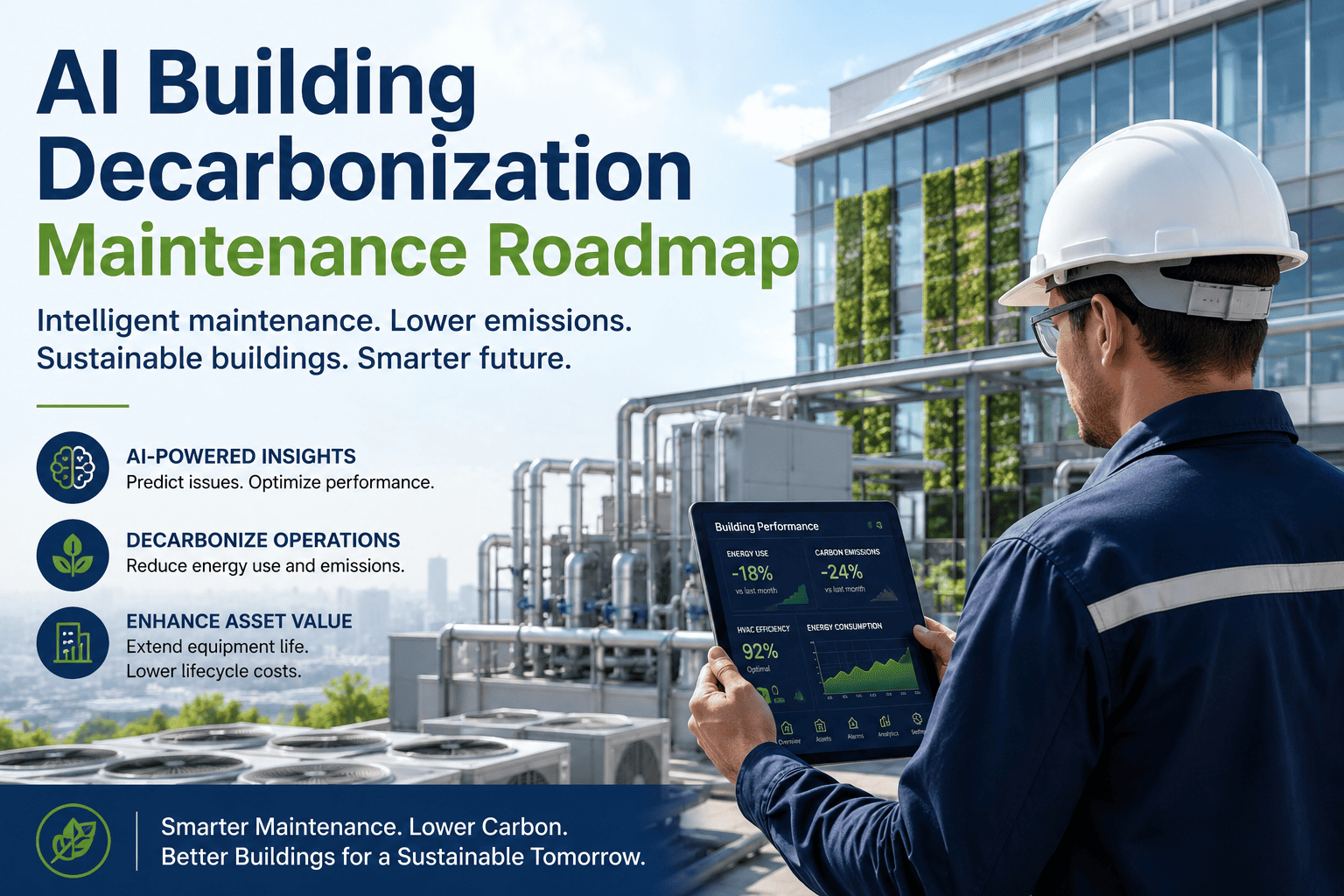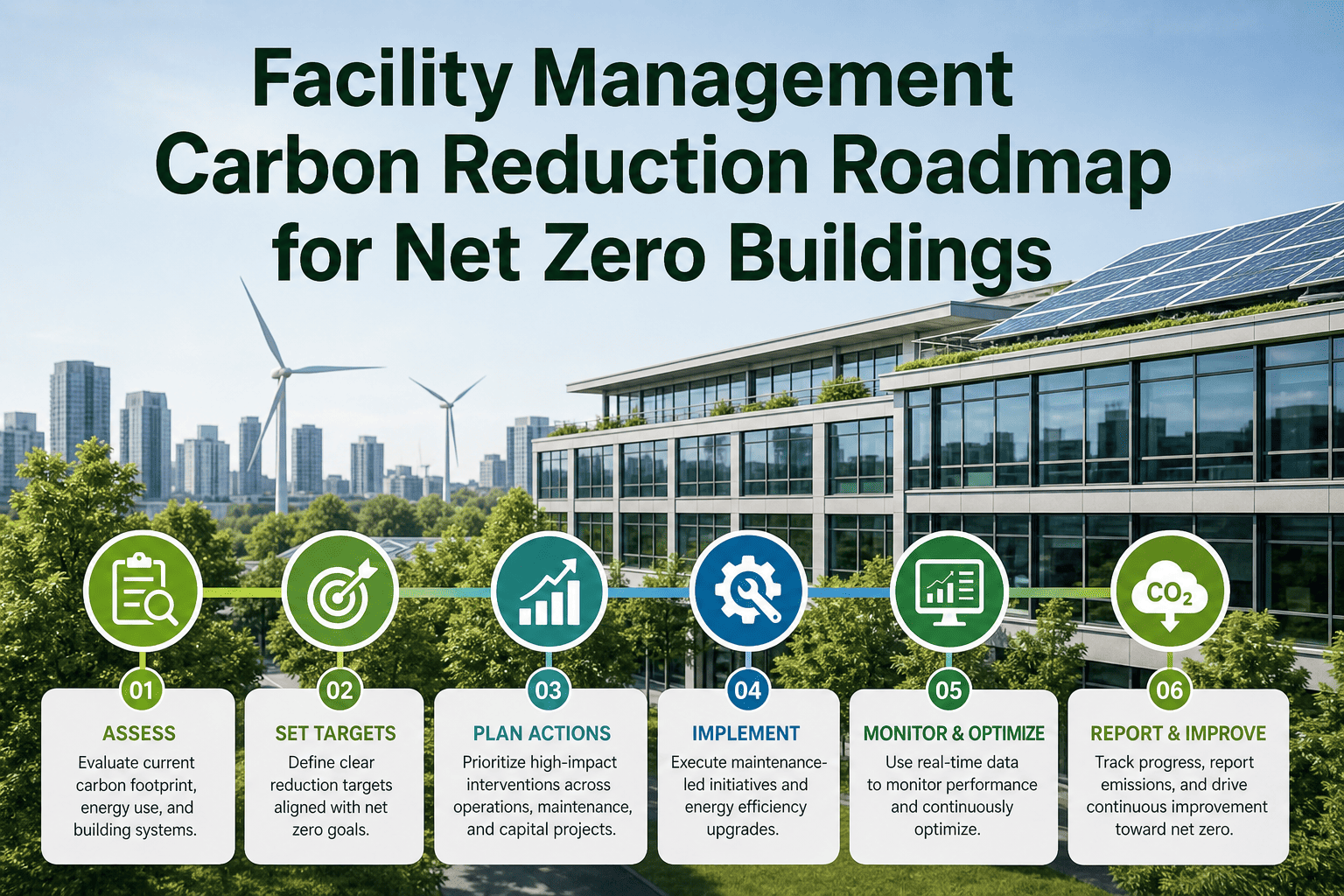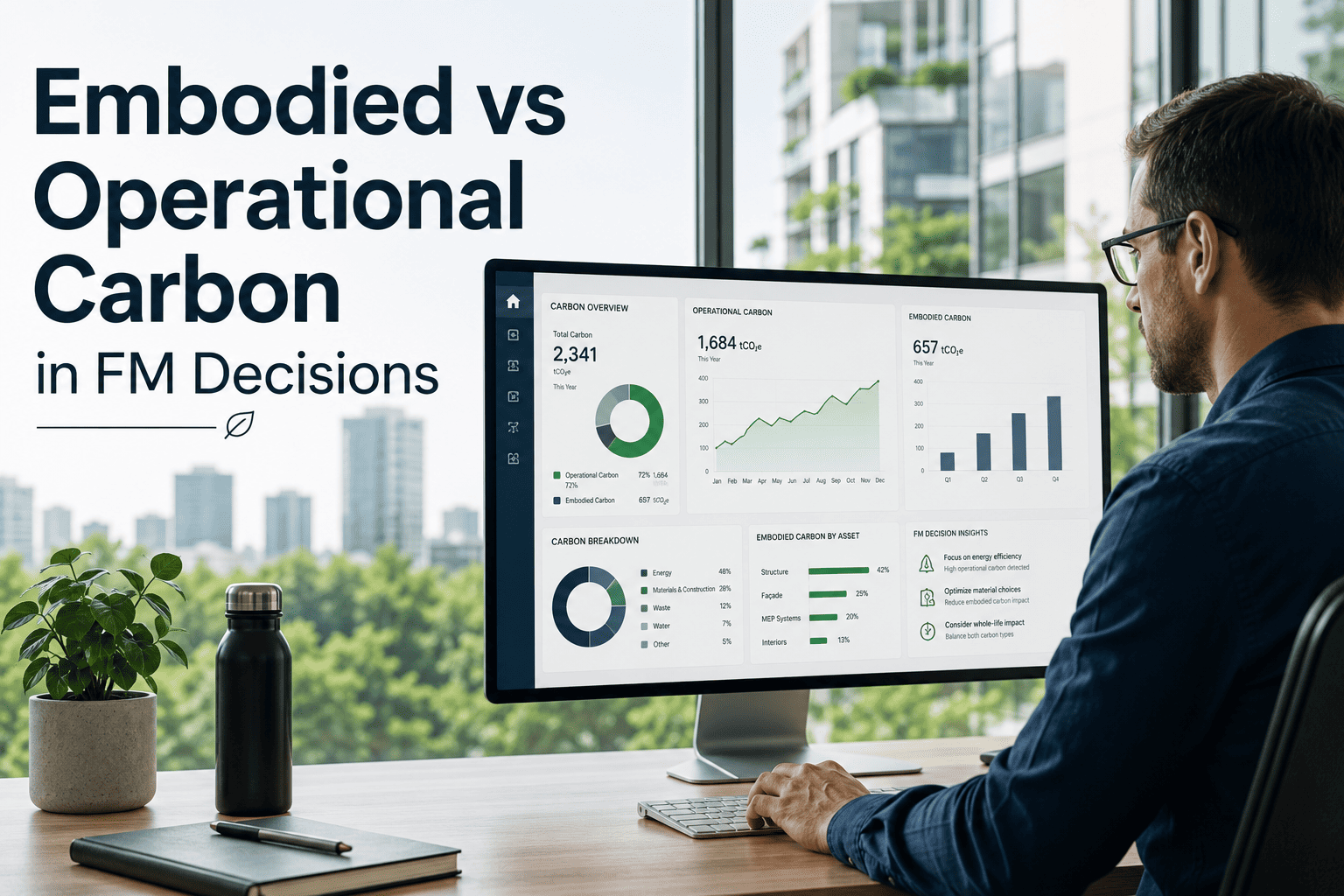
Understanding the difference between embodied carbon and operational carbon is now central to smart facility management decisions, because replacing a working piece of equipment to save operational carbon can actually increase your building's total lifetime carbon footprint. Embodied carbon facility metrics account for the emissions generated from manufacturing, transporting, and installing new equipment, while operational carbon building emissions stem from the daily energy consumed to run those assets. To make a sound building carbon tradeoff, maintenance and reliability teams must weigh the embodied carbon retrofit decision against projected operational savings across the asset's whole life. OxMaint helps teams capture the asset performance and energy data needed to make these complex facility carbon decisions without guesswork. You can start tracking your equipment's true lifecycle impact today when you Start Free Trial.
Replacing a working system to save energy can actually raise total carbon emissions.
A new high-efficiency chiller might save 15% on monthly operational carbon building emissions, but if the manufacturing and installation of that new chiller emit 40 tons of CO2e, the facility won't break even on total carbon for another decade. Facility leaders must balance the embodied carbon replacement decision against operational efficiency gains.
Replace 10-year-old HVAC unit for a projected 12% operational energy reduction.
+35t CO2e upfront embodied carbonOptimize existing asset via predictive maintenance and tune-ups to extend life by 7 years.
Net carbon savings achieved soonerHow to calculate embodied vs operational carbon for facility assets
Accurate carbon accounting facility methodology requires compiling the total greenhouse gas emissions across an asset's lifecycle. Most commercial buildings generate 40-50% of their total lifetime carbon before the equipment is even switched on.
- M: Manufacturing emissions (raw material extraction, refining, assembly)
- T: Transportation emissions (shipping to the facility site)
- I: Installation emissions (construction equipment, refrigerant charging)
- R: Replacement emissions (future parts needed over the lifecycle)
- D: Demolition/Disposal emissions (end-of-life recycling or scrapping)
- Eannual: Annual electricity consumption (kWh)
- EF: Local grid emissions factor (kg CO2e per kWh)
- Fannual: Annual fossil fuel consumption (gas, oil for heating)
- EFf: Fuel-specific emissions factor
- Years: Expected remaining useful life of the asset
A mid-sized commercial facility replacing a 500-ton water-cooled chiller might save 22,000 kWh annually in operational energy. However, if the new chiller carries 28 tons of embodied CO2e, the facility won't achieve actual net-zero carbon impact for 6 to 8 years. Tracking these metrics in an EAM system is critical for defensible ESG reporting.
The building carbon tradeoff: When to replace vs retrofit
Making an embodied carbon retrofit decision requires a structured framework. Maintenance teams must compare the remaining usable life and operational efficiency of an existing asset against the carbon debt of a new replacement.
| Facility Asset Scenario | Operational Carbon Impact | Embodied Carbon Impact | Recommended FM Action |
|---|---|---|---|
| Asset is >75% through lifespan, efficiency degrading 15%+ | High (inefficient energy use) | Low (amortized over previous decades) | Replace with high-efficiency unit |
| Asset is 30% through lifespan, minor efficiency drop | Low to Moderate | High (new manufacturing carbon debt) | Retrofit with VFDs and predictive maintenance |
| Asset fails repeatedly, high refrigerant leaks | Very High (leaks + emergency energy use) | Moderate (but replacement is justified) | Replace and optimize new install |
| Newly installed asset (<5 years old), running rough | Spiking due to unmaintained components | N/A (already sunk cost) | Tune & Optimize via CMMS work orders |
Quantify the Carbon Debt of Replacement
Request Environmental Product Declarations (EPDs) from manufacturers to calculate the exact embodied carbon of the proposed new equipment before approving a capital expenditure.
Model the Operational Carbon Trajectory
Analyze historical energy consumption data to project how much operational carbon the current asset will emit over the next 5, 10, and 15 years if left in place with standard maintenance.
Calculate the Break-Even Point
Divide the new equipment's embodied carbon by the annual operational carbon savings. If the break-even point exceeds 50% of the new asset's expected lifespan, the building carbon tradeoff favors retrofitting.
How OxMaint supports holistic facility carbon decisions
Tracking embodied vs operational carbon requires more than spreadsheets. OxMaint integrates asset lifecycle data, energy consumption history, and maintenance analytics into a single AI-powered CMMS and EAM platform, ensuring your facility carbon decisions are driven by data, not guesswork.
Asset Lifecycle Tracking
Maintain a complete digital record of every asset from installation to disposal. OxMaint tracks install dates, model numbers, and replacement costs, giving you the baseline data needed to calculate embodied carbon facility impacts accurately.
Predictive Maintenance AI
Extend the useful life of existing equipment by 20-30% using AI-driven fault detection. By preventing catastrophic failures and optimizing performance, you delay the embodied carbon debt of new purchases.
Energy & KPI Analytics
Connect operational energy consumption directly to work order history. Identify which assets are spiking operational carbon building emissions due to deferred maintenance, bad valves, or clogged filters.
Capital Planning Reports
Generate auditable ESG and capital replacement reports in seconds. Justify retrofit vs replace decisions to stakeholders with hard data on operational savings versus embodied carbon costs.
Embodied carbon analysis facility example: The 180-asset plant
Consider a 180-asset manufacturing plant spending $42,000 annually on energy for an aging compressed air system. The facility manager is pressured to replace the entire system to meet new corporate sustainability targets.
The Replacement Proposal
Replacing the 12-year-old air compressors with new high-efficiency models costs $85,000. The new units promise 18% energy savings, equating to roughly $7,500 per year in operational savings. However, the manufacturing and shipping of the new compressors introduce 22 tons of embodied CO2e. At the local grid's carbon intensity, it would take 9.5 years for the operational carbon savings to offset the embodied carbon of the new equipment.
The OxMaint-Driven Alternative
Using OxMaint's predictive maintenance analytics, the team identifies that 80% of the efficiency loss is due to unmaintained filtration, leaking valves, and a failing unloader valve. By spending $4,200 on targeted retrofits and routing preventive work orders, they recover 14% of the energy efficiency. They extend the asset's life by 5 years, avoiding 22 tons of embodied carbon immediately while still reducing operational carbon building emissions.
"We stopped defaulting to full asset replacement. By using OxMaint to prove our existing equipment could be optimized, we avoided $85K in capex and eliminated 22 tons of unnecessary embodied carbon from our ESG report."
See how OxMaint tracks your whole-life carbon impact.
Book a 30-minute demo to see how our CMMS and EAM platform maps asset lifecycle data to energy consumption, helping you make defensible retrofit vs replace decisions.
Embodied vs operational carbon FM questions answered
What is the difference between embodied and operational carbon in a building?
Operational carbon refers to the emissions generated by the daily energy use of a building or piece of equipment (electricity, heating, cooling). Embodied carbon refers to the upfront emissions generated from manufacturing, transporting, and installing that equipment. For a true facility carbon decision, both must be tracked together over the asset's whole life.
How does a CMMS help reduce embodied carbon?
A CMMS like OxMaint reduces embodied carbon by extending the useful life of existing assets. By enforcing preventive maintenance schedules and using AI for predictive fault detection, the platform prevents premature equipment failure, thereby delaying the purchase of new equipment and avoiding the heavy manufacturing emissions associated with it.
When should I make an embodied carbon retrofit decision instead of replacing equipment?
You should retrofit when the operational efficiency loss is reversible through maintenance, and the remaining useful life of the asset is greater than 40%. If the new equipment's embodied carbon will take more than half of its expected lifespan to pay off via operational savings, a targeted retrofit is the better building carbon tradeoff. Book a Demo to see how our analytics map this for you.
Why is tracking operational carbon FM important for ESG reporting?
Tracking operational carbon FM is critical because operational emissions often account for 50-60% of a facility's total lifetime carbon footprint. Without accurate work order and energy consumption data, ESG reports rely on estimates. OxMaint ties energy spikes directly to asset performance, giving auditors defensible, real-time data.
What data is needed for an embodied carbon analysis facility evaluation?
To perform an embodied carbon analysis facility evaluation, you need the asset's original installation date, manufacturer Environmental Product Declarations (EPDs), transportation distances, and end-of-life disposal plans. OxMaint's asset tracking module securely stores this lifecycle data so you can calculate whole-life carbon instantly during capital planning.
Optimize your facility carbon decisions with OxMaint.
Stop guessing on retrofit vs replace decisions. Use AI-driven asset tracking and maintenance analytics to lower both operational and embodied carbon. Start your free trial or book a personalized demo today.
Free 14-day trial · No credit card required