Facilities that survive hurricanes, power grid failures, and public health emergencies without shutting down share one characteristic: a tested, documented emergency preparedness programme connected to their maintenance system. FEMA data shows 40% of small and mid-size businesses never reopen after a major disaster, and 25% of those that do close within a year. For commercial buildings, hospitals, data centres, manufacturing plants, and campus facilities, business continuity is not an insurance question. It is a maintenance programme question. The facilities that recover fastest are the ones whose backup power was load-tested last month, whose emergency checklists were completed last quarter, and whose compliance records are accessible from a mobile device during a grid outage. Sign up free to pre-load your facility emergency preparedness programme in Oxmaint, or book a demo to see compliance-linked emergency maintenance scheduling configured for your building type.
Connect Your Facility Emergency Programme to Your Maintenance System
Oxmaint pre-loads emergency preparedness inspection schedules, backup power testing calendars, and crisis response checklists as recurring PM tasks linked to your asset register. Every completed test generates a timestamped compliance record. Every deficiency triggers a corrective work order automatically.
What Facility Emergency Preparedness Actually Requires in 2026
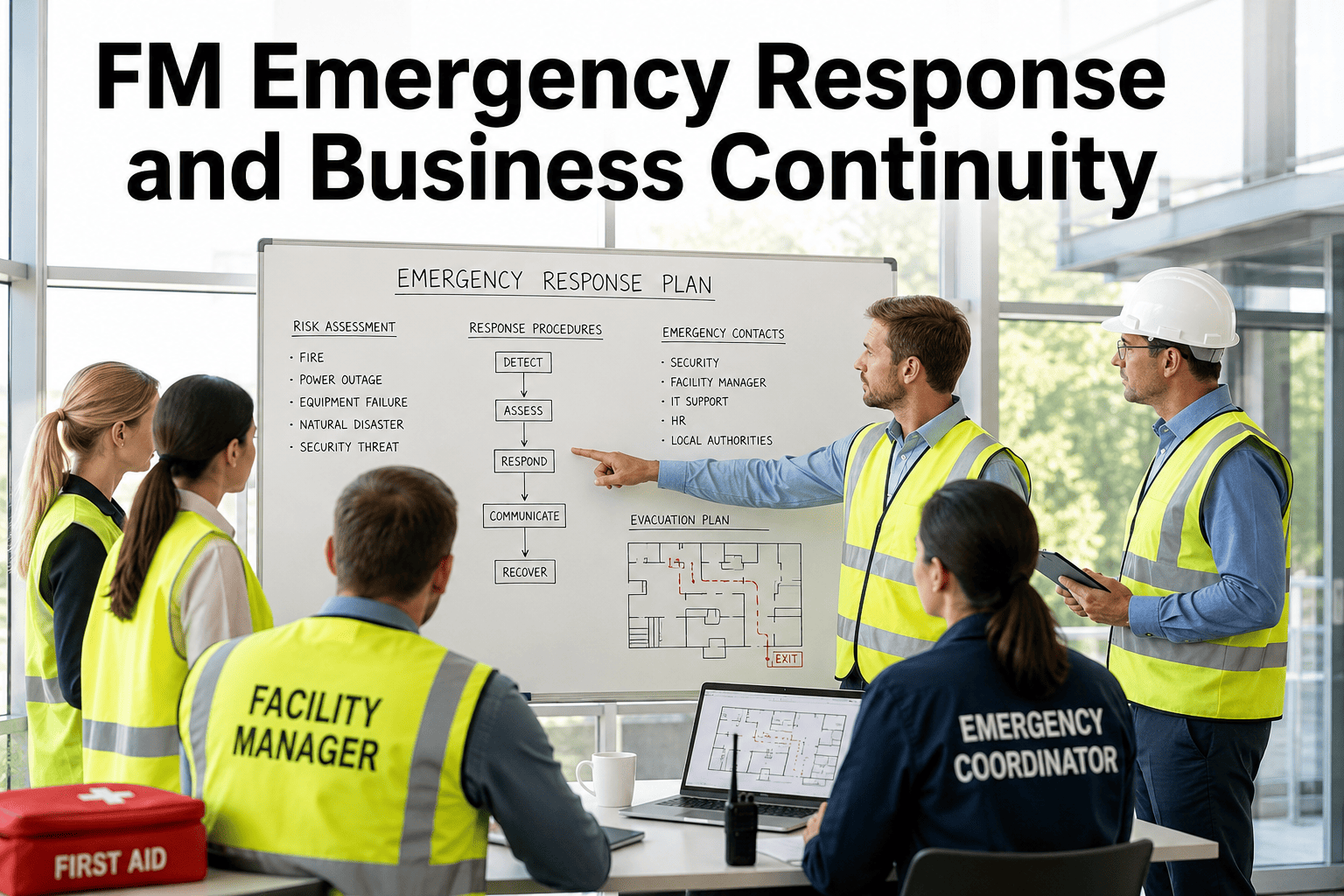
Emergency preparedness for commercial and industrial facilities is not a binder in the maintenance office. It is a continuous maintenance programme covering four interlocking disciplines: backup power reliability, extreme weather resilience, crisis response protocols, and business continuity documentation. Each discipline requires recurring inspections, tested procedures, and audit-ready records. None of it works if the maintenance system does not track it.
The 6 Most Common Emergency Preparedness Failures in Commercial Facilities
Most facilities have emergency plans. Most of those plans fail their first real activation. The gap is almost never the plan itself. It is the maintenance programme that was supposed to keep the plan operational.
Emergency Preparedness Inspection Schedule by System and Interval
The table below defines minimum inspection, testing, and maintenance intervals for critical emergency preparedness systems across commercial and industrial facilities. All intervals reflect NFPA, OSHA, and building code minimums. Facilities in high-risk weather zones or with critical occupancies should apply more frequent intervals where noted.
| System / Asset | Monthly | Quarterly | Annual | Regulatory Reference |
|---|---|---|---|---|
| Standby Generator (Level 1) | 30-minute loaded test, visual inspection, coolant and oil check | Fuel system inspection, battery load test, exhaust system check | Full load bank test, oil and filter change, transfer switch functional test | NFPA 110 Section 8.4 |
| Automatic Transfer Switch | Visual inspection, connection integrity check | Exercise under load, transfer timing verification | Full operational test, contact inspection, thermographic scan | NFPA 110 Section 8.6 |
| Emergency Lighting Units | 30-second activation test, lamp and indicator check | Battery capacity verification at ambient temperature | 90-minute full-discharge test per NFPA 101 Section 7.9 | NFPA 101 Section 7.9 |
| Exit Signs | Visual illumination check, obstruction clearance | Battery function test on battery-backed units | Full functional test, photometric verification | NFPA 101 Section 7.10 |
| Fuel Storage (Diesel) | Tank level verification, leak and spill check | Fuel sample analysis for microbial contamination | Full tank inspection, fuel polishing or replacement, additive treatment | NFPA 30, EPA Tier II where applicable |
| UPS Systems | Alarm and indicator status check | Battery impedance testing, runtime estimation check | Full discharge test, battery replacement assessment, inverter test | IEEE 1188, manufacturer specification |
| Roof and Drainage | Drain and gutter visual check after rain events | Drain clearing, membrane visual inspection | Full roof inspection, sealing, weather preparation before storm season | IBC Section 1611, local building codes |
| Egress Routes and Fire Doors | Clearance check, signage verification | Fire door operational test, hardware inspection | Full egress audit, door gap measurement, closer adjustment | NFPA 80, IFC Chapter 10 |
Load Every Inspection Row Into Oxmaint as a Recurring PM Task in Under 15 Minutes
Oxmaint pre-loads the inspection schedules above as PM task templates linked to your generator, ATS, emergency lighting, and egress assets. Completion auto-logs with technician attribution and timestamp. Deficiencies auto-generate corrective work orders. Book a demo to see emergency preparedness PM templates for your facility type.
Reactive vs Prepared: What the Difference Looks Like During an Event
| Scenario | Reactive Facility | Oxmaint-Managed Facility |
|---|---|---|
| Grid power fails at 2 AM | Generator starts, ATS fails to transfer. Facility dark. Emergency call to contractor. 6-hour response. | ATS quarterly test completed 3 weeks prior. Transfer completes in 8 seconds. No calls. No downtime. |
| Hurricane warning 48 hours out | Emergency roof and drain inspection scrambled. Deferred maintenance discovered. No time to repair. Water intrusion damage during event. | Pre-season roof inspection completed. Drain clearing PM completed. Flood barriers staged. No reactive scramble. |
| Emergency lighting fails during evacuation drill | Last test was a 30-second monthly check. Battery capacity was never validated. Citation issued. Remediation required before next occupancy. | Annual 90-minute test completed 4 months prior. Battery replacement triggered. Full capacity confirmed at drill. |
| Insurance adjuster requests maintenance records | 3 weeks of staff time to assemble paper records. Several inspection logs missing. Claim disputed. Partial payout. | Complete digital audit trail exported in under 60 seconds from Oxmaint. Full claim supported. No gaps. |
| Regulator inspection post-event | Monthly generator tests logged but no load testing documentation. NOM, OSHA, or NFPA citation issued. | All NFPA 110 and NFPA 101 test records timestamped and technician-attributed. Inspection passes without citation. |
How Oxmaint Manages Facility Emergency Preparedness
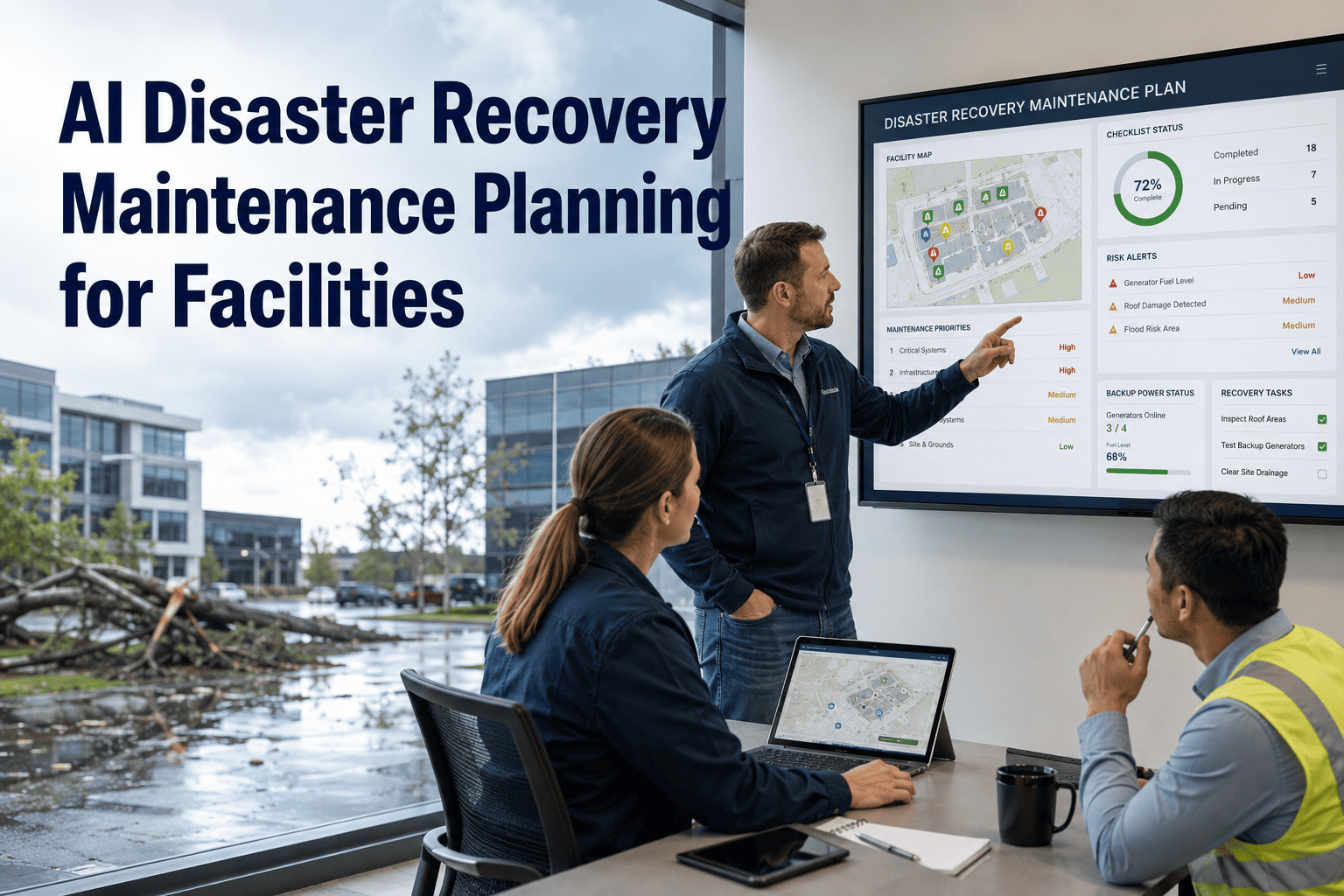
Oxmaint connects your emergency preparedness programme to your asset register, PM schedule, and compliance documentation system. Generator PM tasks, ATS tests, emergency lighting duration tests, and seasonal weather preparation checklists all live in the same platform as your routine maintenance. Every completion generates a record. Every deficiency generates a work order. Every record is accessible on mobile during the event it is designed to support.
Generator load tests, ATS exercises, emergency lighting duration tests, egress audits, and seasonal weather preparation tasks pre-loaded as recurring PM schedules. Linked to your specific assets from day one. Sign up free to activate templates for your facility.
When a generator load test reveals a fuel system issue or an ATS transfer time exceeds spec, Oxmaint converts the inspection finding into a corrective work order automatically with priority, asset link, and due date pre-populated. No manual follow-up required.
Oxmaint's mobile app caches asset records, checklists, and emergency procedures locally. Technicians execute emergency response tasks on mobile during the event, with full sync when connectivity is restored. No clipboard dependency during crisis operations.
Every completed emergency preparedness inspection is timestamped, technician-attributed, and permanently stored in Oxmaint. Insurance adjusters, fire marshals, and building inspectors receive a complete compliance documentation package exported on demand without manual assembly. Book a demo to see the compliance export for your facility type.
Emergency Preparedness Performance Benchmarks
Frequently Asked Questions: Facility Emergency Preparedness
QHow often must emergency generators be tested under load per NFPA 110?
QWhat documentation do insurance companies require after a facility emergency event?
QCan Oxmaint send alerts when emergency preparedness tasks are overdue?
QHow does Oxmaint support multi-site emergency preparedness management across a portfolio?
Never Miss an Emergency Preparedness Inspection Deadline Again
Oxmaint pre-loads NFPA 110, NFPA 101, and IFC emergency preparedness inspection schedules as recurring PM tasks linked to your assets. Every completion logs automatically. Every deficiency triggers a work order. Every AHJ or insurance audit produces a complete documentation export in under 60 seconds. Book a 30-minute demo to see emergency compliance management configured for your facility type and occupancy.