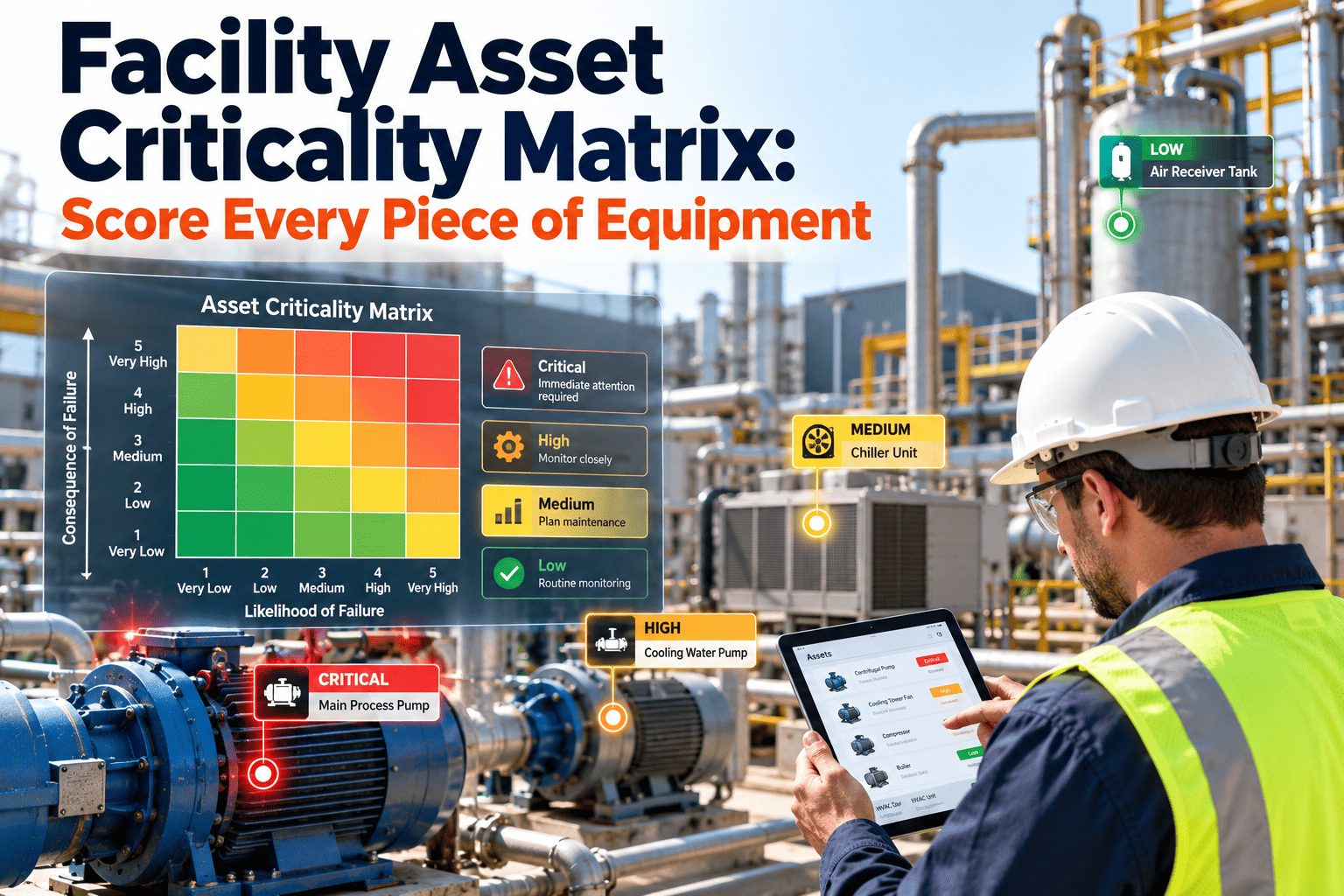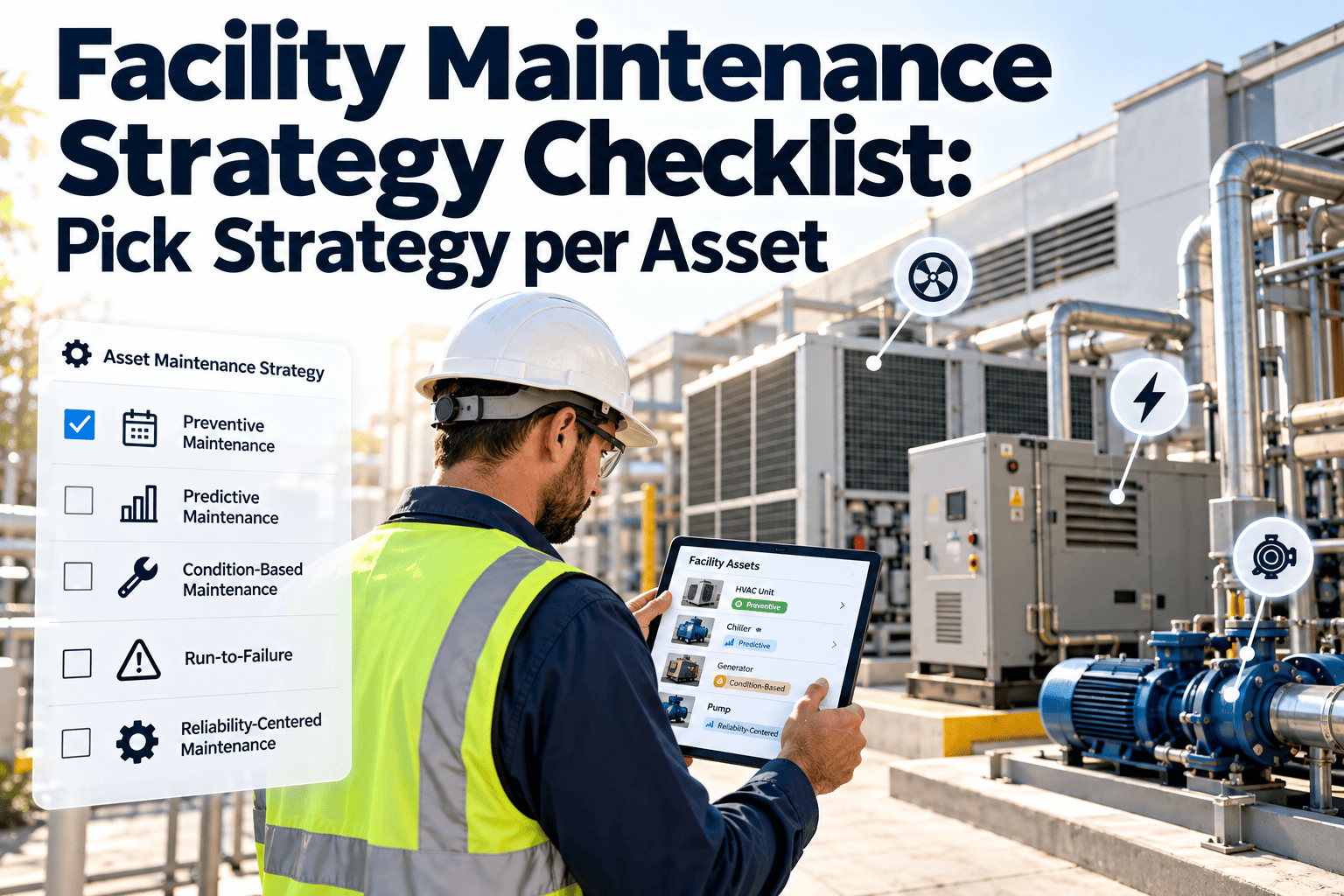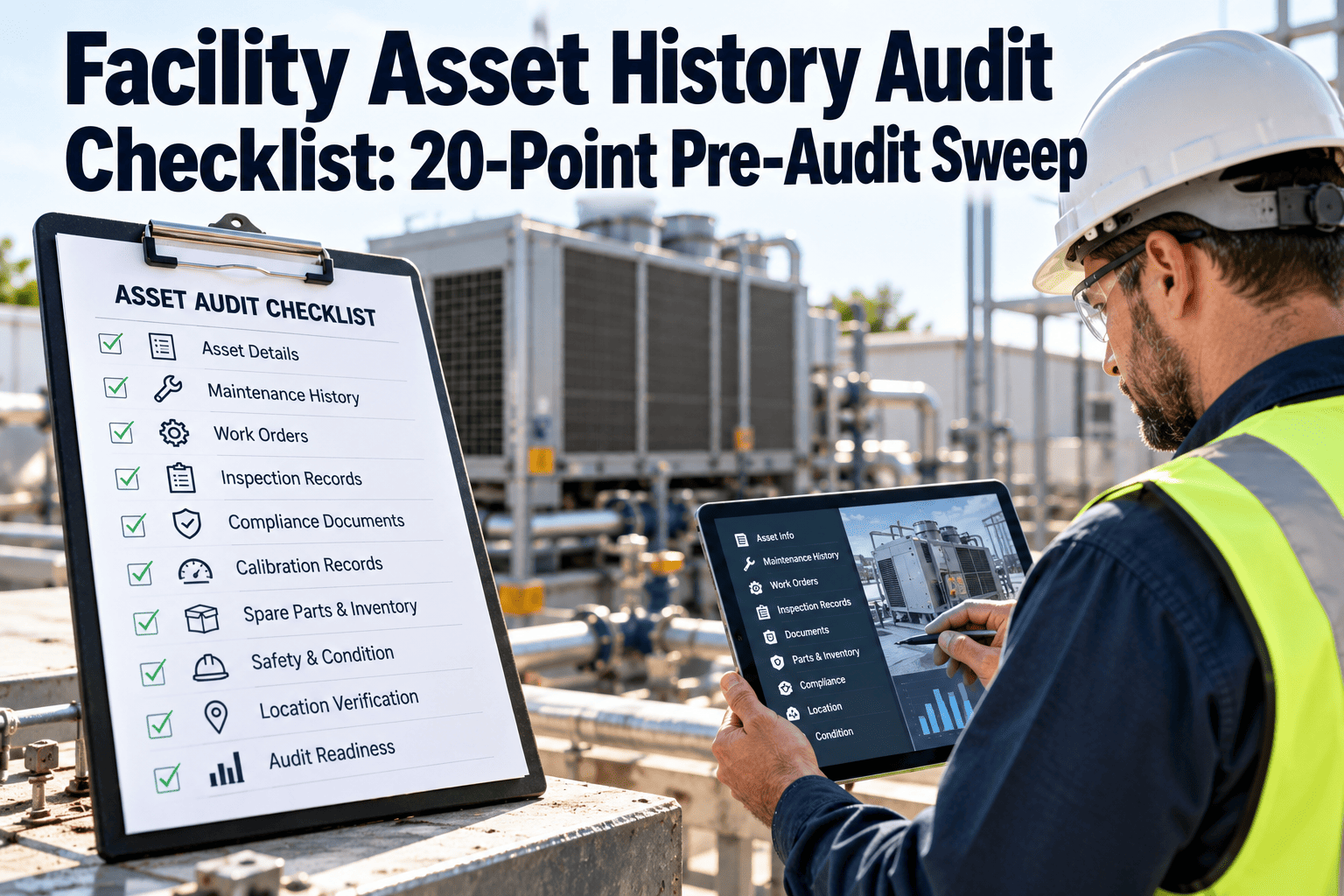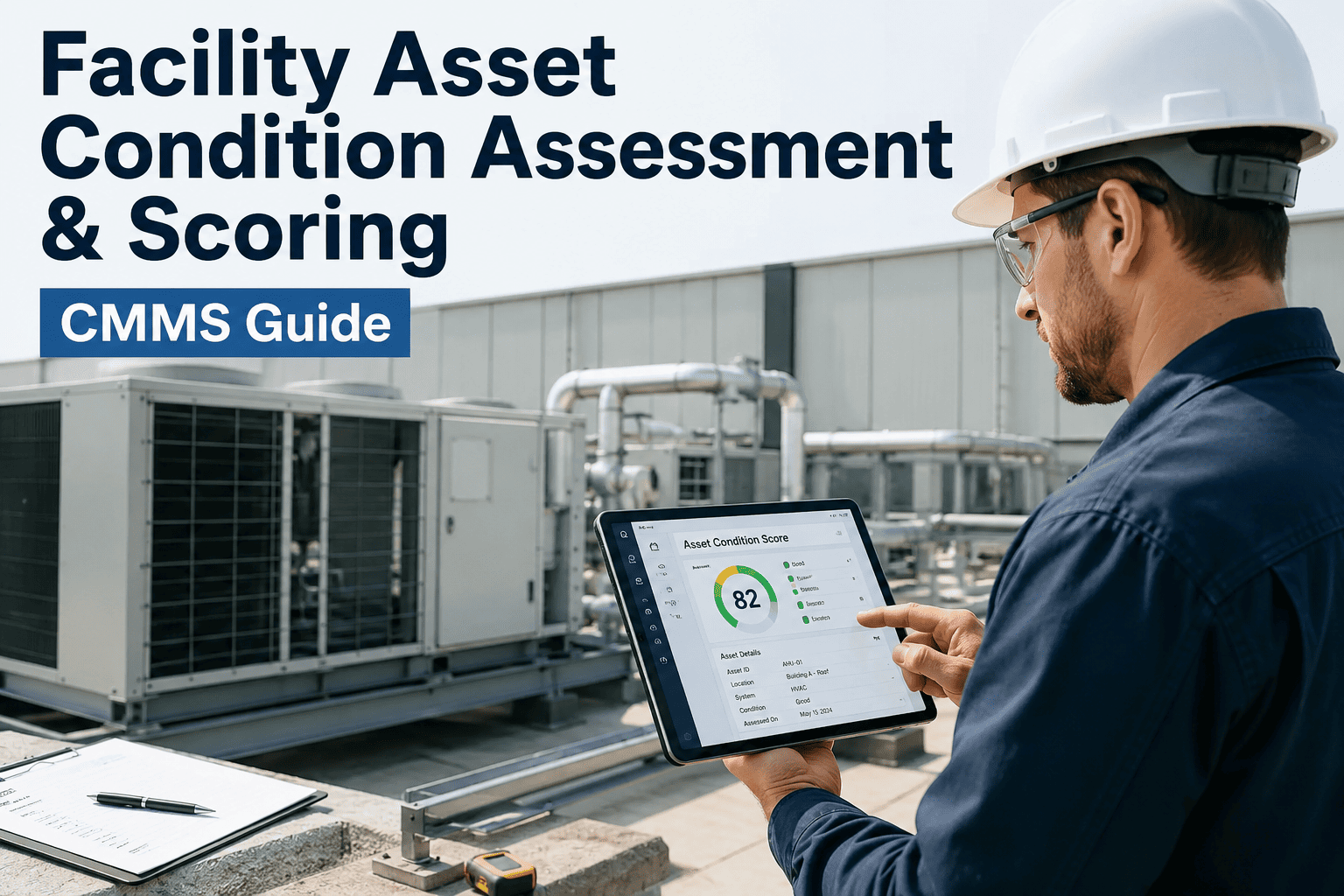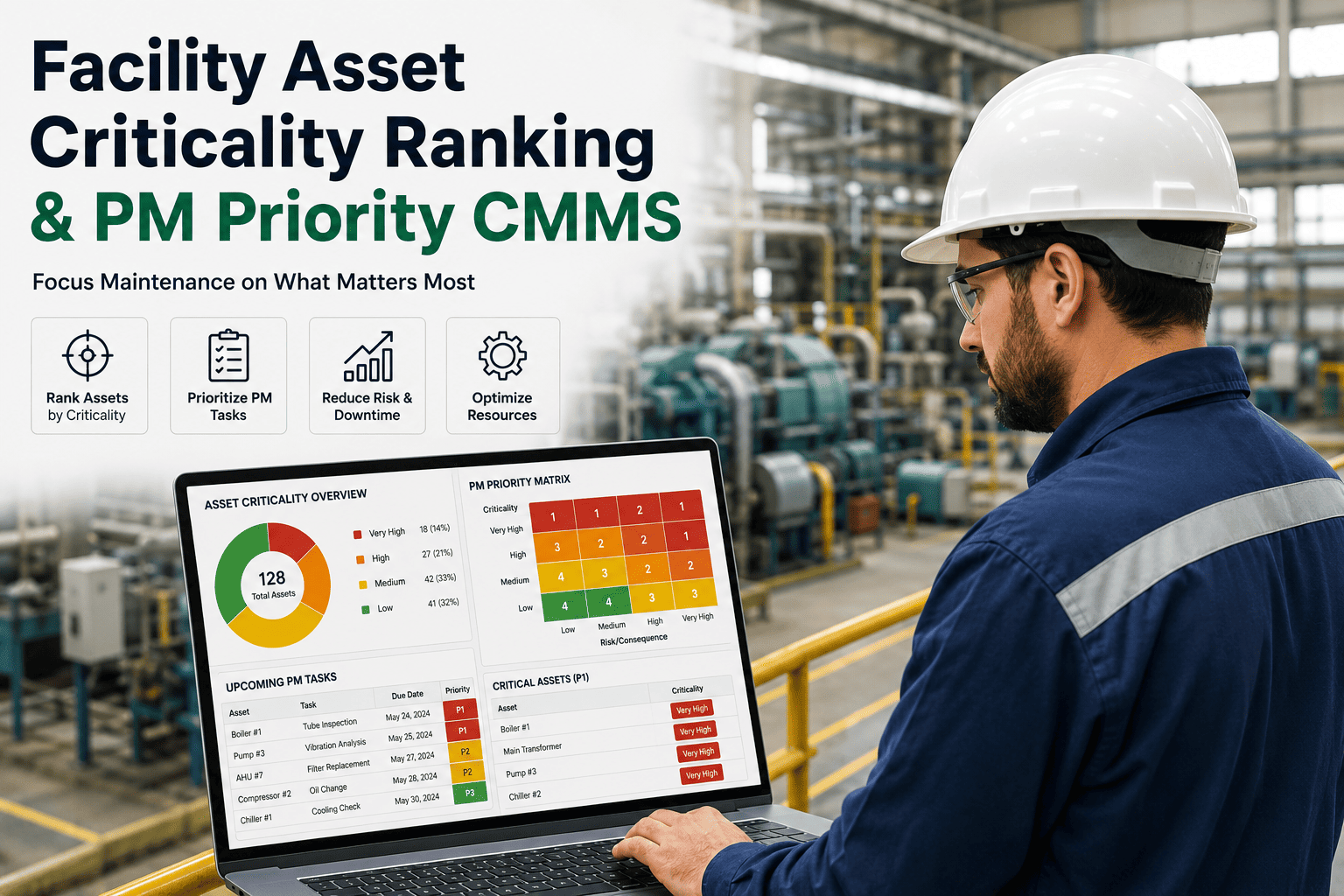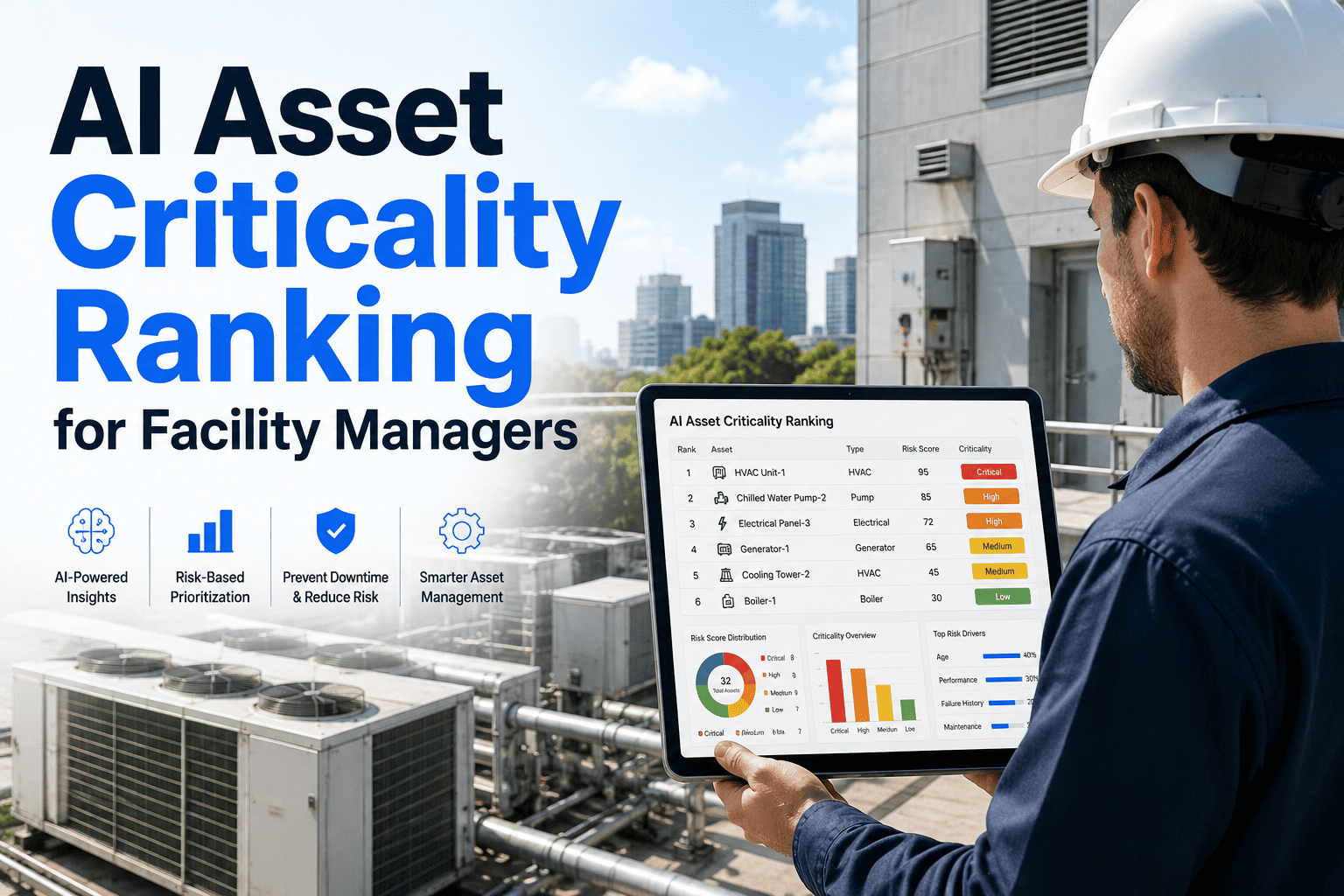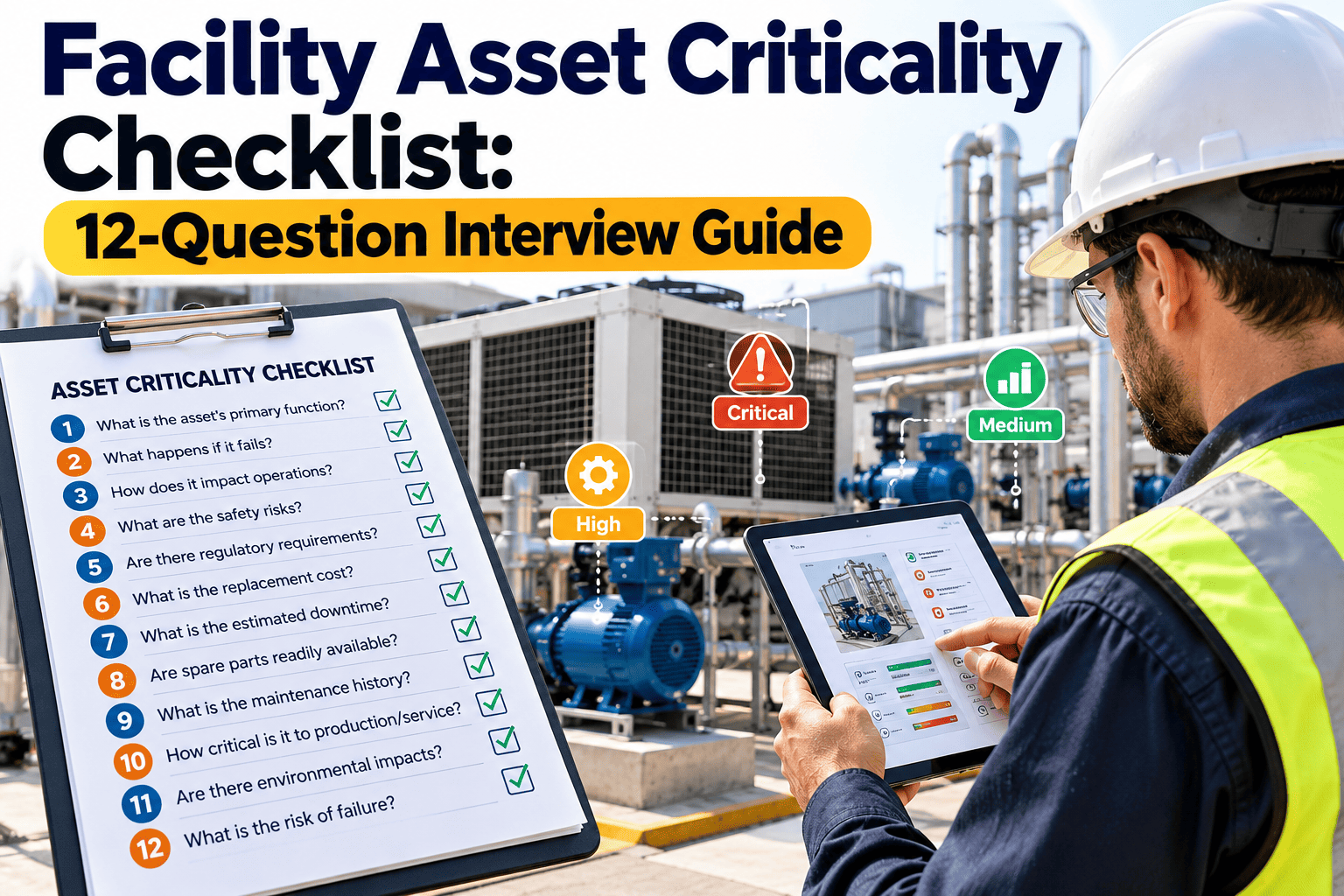
Ask two asset owners about the same chiller and you can get opposite answers: one calls it the heart of the building, the other calls it spare capacity. This 12-question interview guide gives every facility team the same questions, score anchors, and tier bands, so criticality ranking stops depending on who happened to be in the room. It follows the consequence-times-likelihood logic used in SMRP-style criticality work. Teams that store the results in an asset management system can then drive PM, spares, and work order priority from one consistent source.
Facility Asset Criticality Checklist: 12-Question Interview Guide
Standardize how asset owners describe failure consequences, likelihood, and detectability. Twelve structured questions turn opinions into comparable scores across every building, so the assets that can hurt people, tenants, or budgets rise to the top of your maintenance plan.
Why the Same Asset Gets Five Different Scores
Criticality scoring usually fails because of the conversation, not the math. Without a script, each interview becomes a negotiation shaped by the loudest owner, the most recent breakdown, and whichever repair invoice someone remembers.
Unscripted interviews
- Different questions asked in each building
- Scores anchored on the last breakdown
- Repair cost mistaken for consequence
- Most assets end up labelled critical
- No record of why a score was given
12-question guide
- Same questions, same order, every owner
- Failure history reviewed before the interview
- Consequence scored across safety, compliance, operations, and cost
- Score anchors define what 1, 3, and 5 mean
- Answers recorded against the asset
Four scoring biases the script neutralizes
- Recency bias: the asset that failed last month looks more critical than the one that quietly carries the building.
- Cost bias: an expensive repair is not the same as a severe consequence. A cheap pump can shut a kitchen or a lab.
- Ownership bias: owners tend to rate their own equipment higher because they feel its failures personally.
- Everything-is-critical drift: when no one has to justify a 5, every asset becomes a 5 and the ranking loses meaning.
Preparation Checklist Before the First Interview
Thirty minutes of preparation prevents most scoring arguments. Tick each item before you sit down with an asset owner.
The 12-Question Criticality Interview
Ask the questions in order and read the wording as written. Tick each box when the question is answered and a score from 1 to 5 is recorded. The anchors under each question keep scores comparable between owners.
Stage 1: Safety and compliance (Q1 to Q3)
Stage 2: Operations and occupants (Q4 to Q7)
Stage 3: Financial exposure (Q8 and Q9)
Stage 4: Likelihood and detectability (Q10 to Q12)
Keep Every Interview Answer Attached to the Asset
Scores trapped in spreadsheets age quickly. Store the criticality score, tier, and owner comments in the asset record so PM schedules and work order priority can read them.
- Asset records with criticality fields
- Mobile access for interviewers
- Priority rules driven by tier
Turning 12 Answers Into One Criticality Score
The scoring rules below are a practical starting point. Calibrate the thresholds with your reliability team before the first full rollout, then keep them fixed so scores stay comparable year to year.
| Step | Inputs | Rule |
|---|---|---|
| 1. Consequence base | Q1, Q2, Q3, Q4, Q7, Q9 | Take the highest score. One severe consequence outweighs several mild ones. |
| 2. Backup adjustment | Q6 | If a tested backup carries full load (score 1), reduce the Q4 operations score by one point before step 1. |
| 3. Lead-time uplift | Q5, Q8 | If impact is immediate (Q5 of 5) and repair is slow (Q8 of 4 or 5), add one point, capped at 5. |
| 4. Likelihood | Q10, Q11 | Average the two scores and round to the nearest whole number. |
| 5. Criticality score | Consequence x Likelihood | Result runs from 1 to 25. Place it on the matrix below. |
| 6. Detectability flag | Q12 | A score of 4 or 5 does not change the tier, but it flags the asset for monitoring or tighter rounds. |
Example tier matrix
| C \ L | L1 | L2 | L3 | L4 | L5 |
|---|---|---|---|---|---|
| C5 | 5 | 10 | 15 | 20 | 25 |
| C4 | 4 | 8 | 12 | 16 | 20 |
| C3 | 3 | 6 | 9 | 12 | 15 |
| C2 | 2 | 4 | 6 | 8 | 10 |
| C1 | 1 | 2 | 3 | 4 | 5 |
C is consequence, L is likelihood. Dark cells are Tier A (15 to 25), amber cells are Tier B (8 to 14), light cells are Tier C (1 to 7).
Interview Day Flow: From Preparation to Register
- Step 1: Prepare (about 30 minutes). Complete the preparation checklist, print the work order history, and confirm the owner and technician are both available.
- Step 2: Interview (about 20 to 30 minutes per asset group). Read each question as written, record the owner's words, and ask for evidence when an answer scores a 4 or 5.
- Step 3: Score in the room. Agree each score before leaving. Scores assigned later from memory drift toward the interviewer's own view.
- Step 4: Calibrate across owners. Compare similar assets across buildings and resolve outliers with a second reviewer.
- Step 5: Load and act. Enter scores in the asset register, assign the tier, and link each tier to its maintenance strategy and work order priority.
Calibration Checklist After the Interviews
Calibration catches the quiet errors that single interviews cannot. Run it before any score reaches a maintenance plan.
What Each Tier Should Change in Maintenance
A score only has value when it changes behaviour. Map each tier to a clear strategy so planners, technicians, and storekeepers know what the number means.
| Tier | Maintenance strategy | Work order priority | Spares | Score review |
|---|---|---|---|---|
| Tier A (15 to 25) | Preventive plus condition-based or predictive monitoring; defined failure-mode checks | Highest; fast response with escalation | Critical spares stocked or reserved | Annually and after major events |
| Tier B (8 to 14) | Time-based or meter-based preventive maintenance with periodic inspections | Standard planned priority | Min/max stock on common wear parts | Every two years |
| Tier C (1 to 7) | Minimal PM, routine inspection, or run to failure where safe and economical | Scheduled when convenient | Order on demand | When the asset or use changes |
How Oxmaint supports the workflow
- Asset register: hold criticality score, tier, owner, and interview notes in one asset record.
- Preventive maintenance: generate and schedule PM by tier, with extra inspection tasks on Tier A assets.
- Work orders: let priority inherit from tier so urgent calls on critical assets are not buried in the queue.
- Inspections and mobile: use mobile checklists to capture condition findings that refresh likelihood scores.
- Inventory and reports: tie critical spares and tier-level reporting to the same asset data.
Run the Next Criticality Review From One Place
Move the interview results out of spreadsheets and into the work your team does every day. Tier-aware PM and work orders keep maintenance effort pointed at the assets that matter most.
- Tier-based PM scheduling
- Priority-aware work orders
- Reporting by criticality
Common Interview Mistakes and How to Fix Them
| Mistake | What happens | Fix |
|---|---|---|
| Scoring on repair cost only | Cheap but process-stopping assets rank low | Score consequence across safety, compliance, operations, and cost |
| Interviewing only technicians | Operational impact is underestimated | Always include the operations lead who feels the outage |
| Accepting untested backups | Redundancy is credited that does not work | Ask for the last test date before scoring Q6 |
| Scoring from memory | Recent failures dominate | Bring printed work order history for Q10 |
| Never rescoring | Tiers drift away from reality | Set a review date and trigger earlier reviews after major repairs or changes |
Measuring Whether the Interview Program Works
Track a short set of metrics after rollout. They show whether scoring is complete, whether strategy follows the tier, and whether critical assets are getting the attention they were ranked for.
| Metric | What it shows | Direction |
|---|---|---|
| Assets with a recorded score | Interview coverage across the portfolio | Toward 100% of in-scope assets |
| Tier A assets with an active PM plan | Strategy follows criticality | 100% |
| Scores past their review date | Data currency | Falling to zero |
| Reactive work orders on Tier A | Whether critical assets are still failing unexpectedly | Trending down |
| Scores with recorded evidence | Audit readiness and consistency | Toward 100% for Tier A |
Criticality Interview FAQs
How long does a 12-question interview take?
Plan roughly 20 to 30 minutes per asset group once failure history is prepared. Group similar assets so owners answer once, not per unit.
Who should be in the interview?
Include the operations owner and the technician who maintains the asset. Add a reliability or facility lead to review your scoring approach if you want an outside view.
Should we score every asset or only major systems?
Start with major systems, then score components only on Tier A systems. This keeps effort proportional to risk.
How often should criticality be reviewed?
Review Tier A annually and after major failures, retrofits, or occupancy changes. Lower tiers can follow a longer cycle.
Can the scores live in a CMMS?
Yes. Store the score, tier, and notes in the asset record so PM and work orders can use them, and start a trial to see the workflow.
Give Every Asset Owner the Same Questions
Standard interviews produce scores your team can defend. Put those scores to work in preventive maintenance, work orders, and spares planning across every building.
- One scoring method
- One asset record
- One maintenance priority