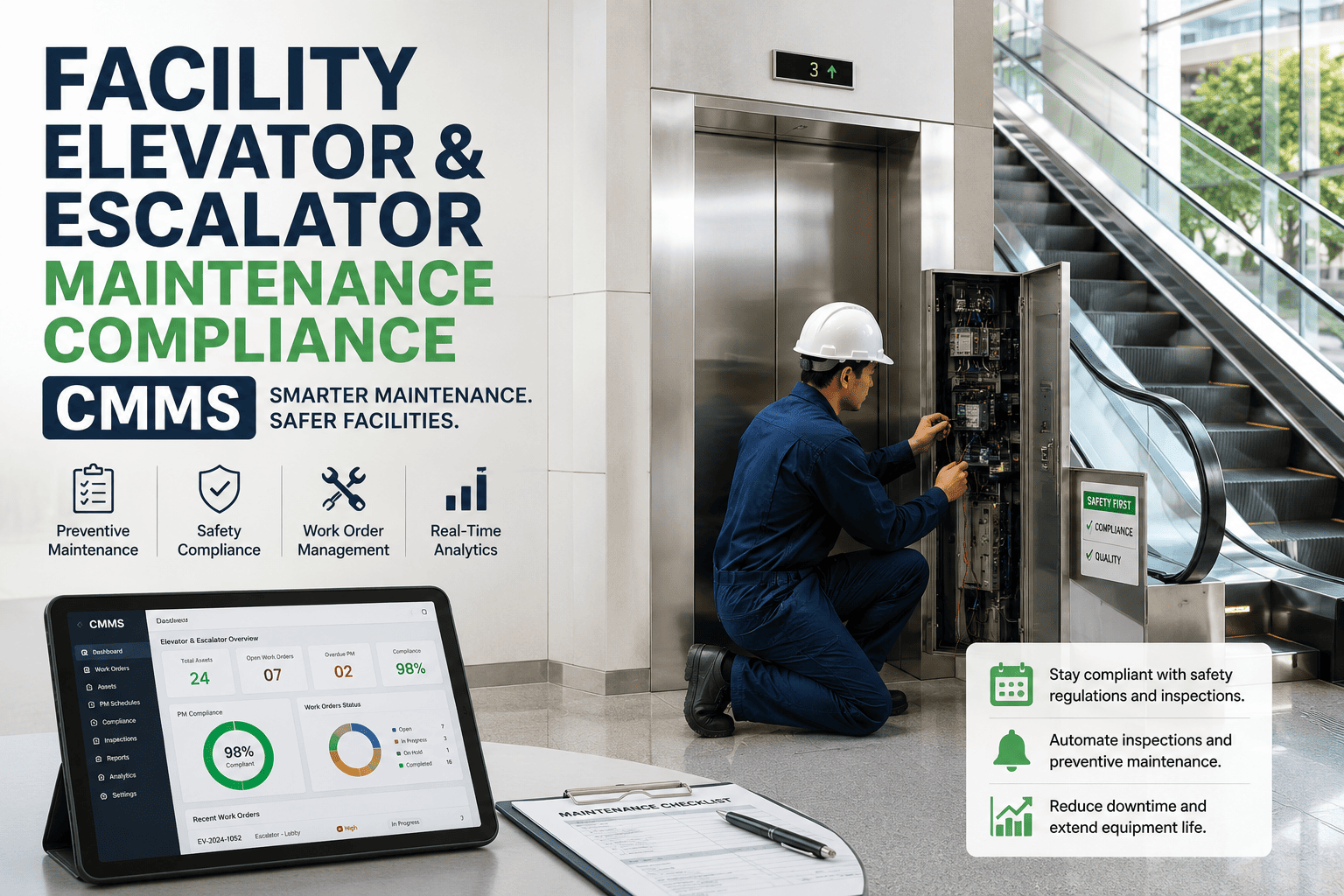
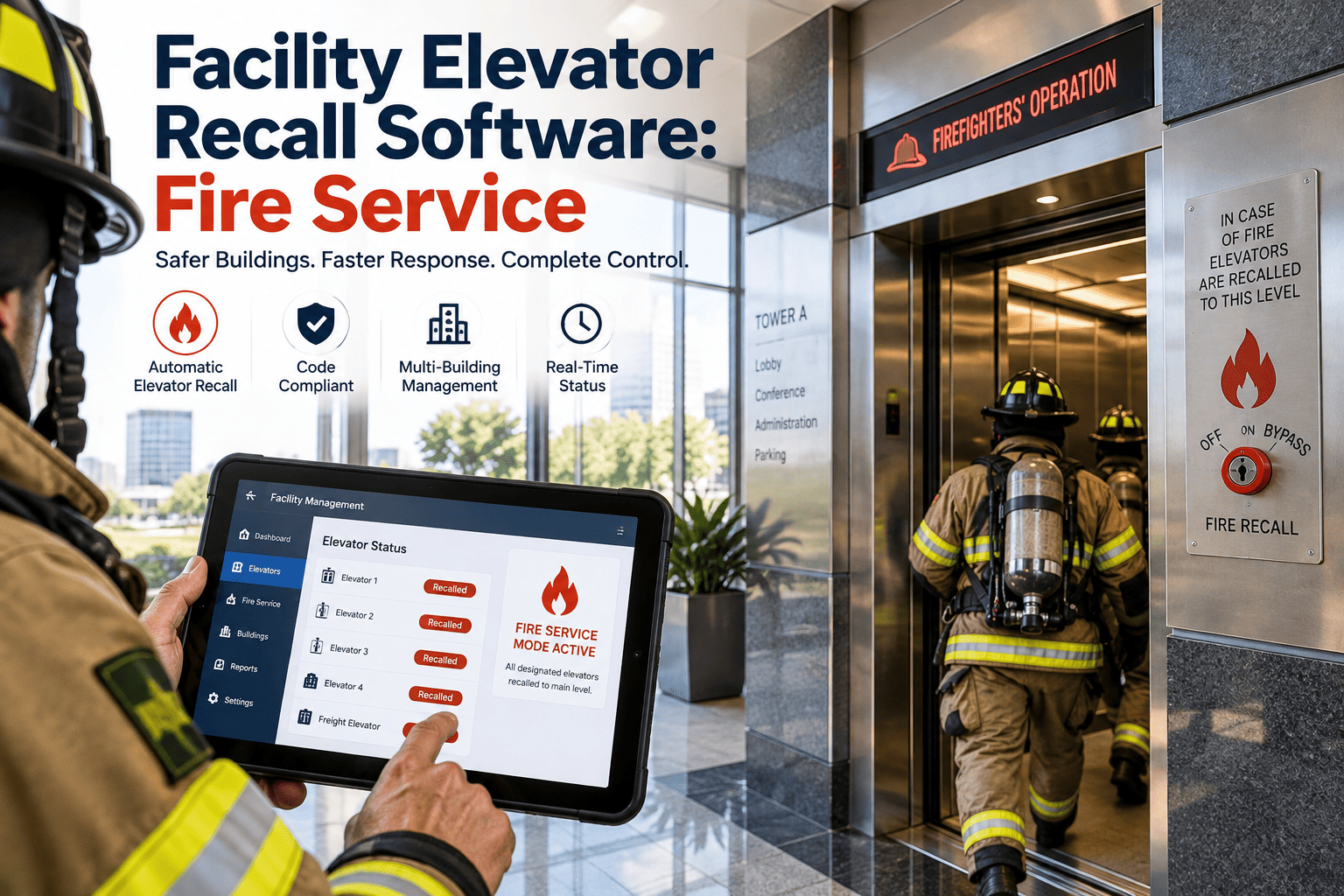
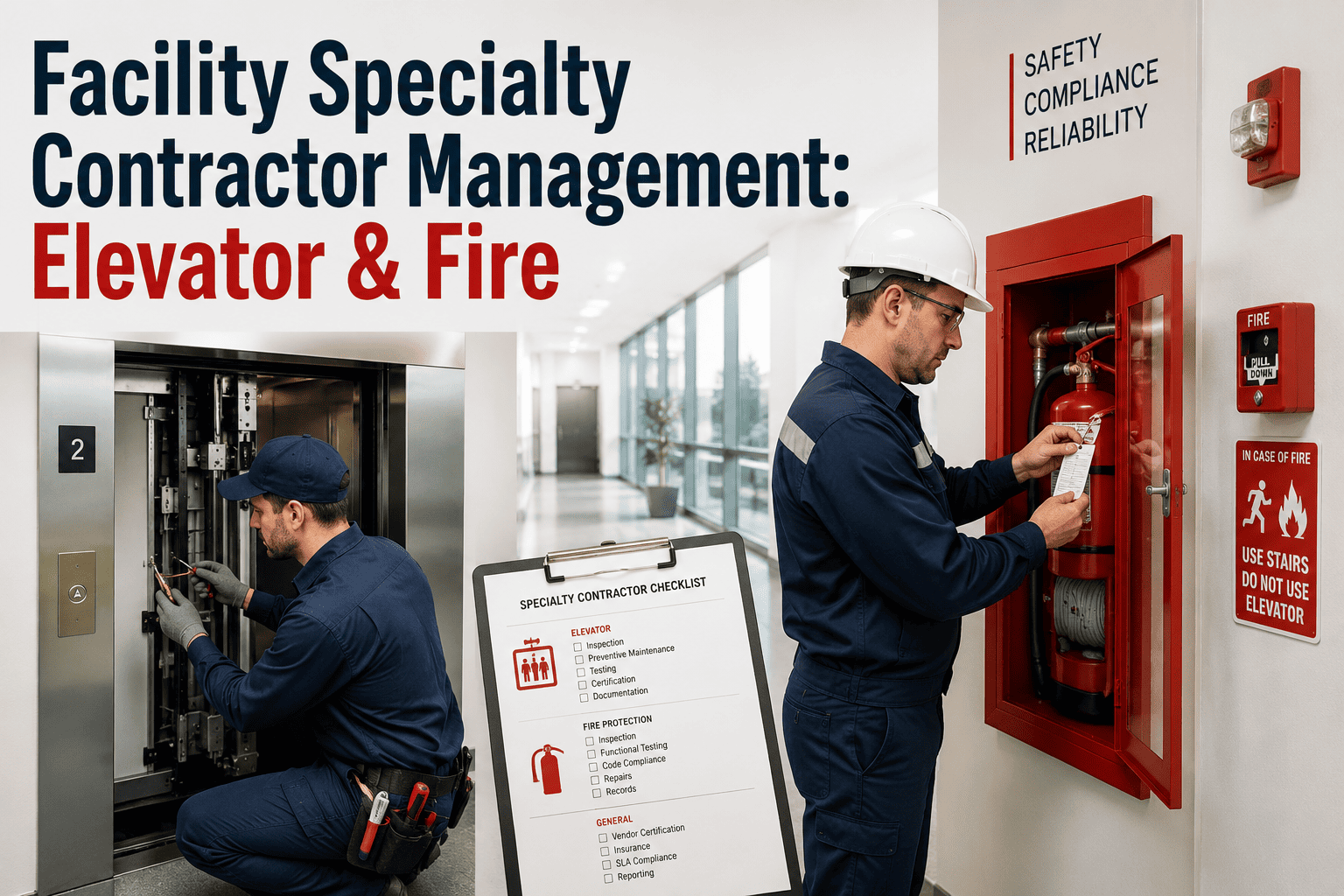
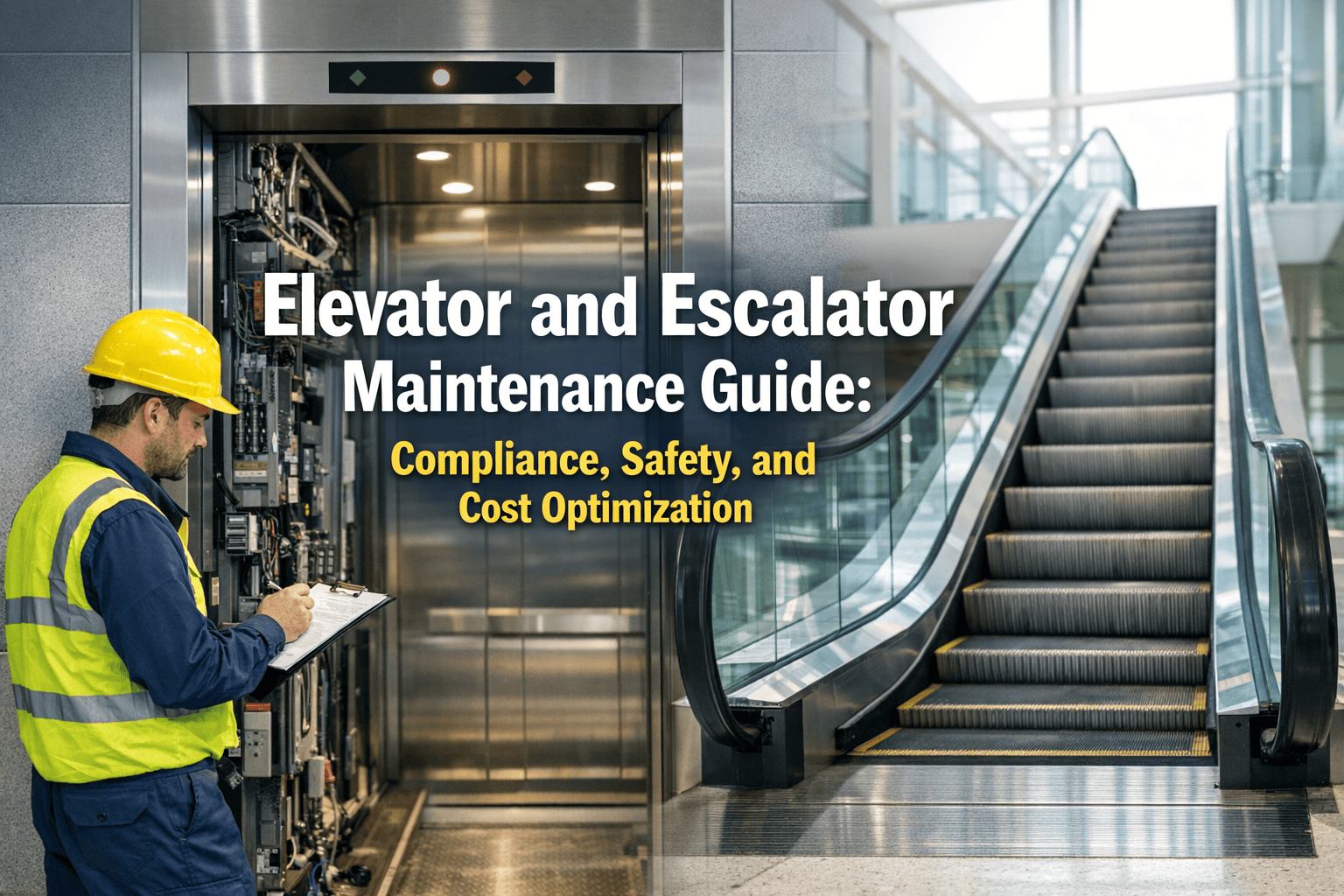
A 24-story mixed-use building in Chicago has six elevators. Three sit under an OEM full-maintenance contract, two on time-and-materials with a local independent, one is offline pending modernization. The facility manager knows all of that from memory. What she cannot answer without three spreadsheets, two vendor portals, and an inspector's binder is when the last five-year full-load safety test happened on car 4, whether car 2 crossed its callback threshold, or whether an ASME A17.1 Section 8.6 Maintenance Control Program actually exists per car. OxMaint pulls every conveyance into one compliance system — book a 30-minute demo to see it live.
Vertical Transportation Compliance — OxMaint CMMS
ASME A17.1 Compliance, Vendor Accountability, And Modernization Planning — In One Platform
MCP documentation per car. Inspection scheduling with advance work orders. Contract SLA tracking. Callback trend analysis. Modernization CapEx alerts. Audit records in 5 minutes.
18B
US elevator passenger trips every year — every one dependent on a documented, code-compliant Maintenance Control Program
4.8x
Cost premium of emergency elevator repairs versus structured PM — controller failures, pump failures, door operator failures
$1M+
Average liability exposure of a single documented entrapment or escalator injury incident in commercial facilities
Sec 8.6
ASME A17.1 mandate — every elevator and escalator must have a documented Maintenance Control Program on file
The Portfolio Reality — Why Elevator Compliance Slips Through The Cracks
Facility teams do not fail elevator compliance because they do not care. They fail because vertical transportation lives across three separate systems that rarely talk — the maintenance vendor's platform, the AHJ inspection binder, and whatever spreadsheet the facility manager keeps for tracking capital planning. When a surveyor or insurance auditor asks for MCP evidence per car, the assembly time is measured in days, not minutes. OxMaint consolidates every car into one live compliance view, so the answer is always one click away.
Simulated Portfolio Compliance View — 3 Buildings, 14 Cars
MCP current & test compliant
Test due within 30 days
Overdue or MCP missing
Tower A · Downtown Office · 24 floors
Car 1 — Traction · 3,500 lbMCP current · 5-yr test 08/2027
Car 2 — Traction · 3,500 lbMCP current · Annual due 11/2026
Car 3 — Traction · 3,500 lbCallback trend +38% · Review flagged
Car 4 — Traction · 4,000 lb5-yr full-load test overdue 42 days
Tower B · Medical Office · 8 floors
Car 1 — Hydraulic · 4,500 lbMCP current · Fluid service 09/2026
Car 2 — MRL · 3,000 lbMCP current · Annual due 07/2027
Car 3 — Freight · 8,000 lbAHJ periodic due 22 days
Retail Concourse · Mall Anchor · 3 floors
Escalator 1 — DownMonthly step-chain OK · Annual 04/2027
Escalator 2 — UpMonthly step-chain OK · Annual 04/2027
Escalator 3 — DownComb-plate wear alert · PM this cycle
Moving Walk 1MCP file missing · Section 8.6 finding
3 red items · 3 amber · 8 green — portfolio view auto-updated. Every finding is a work order, every overdue is a scheduled action, every MCP gap is closable this week.
Reactive Elevator Management vs OxMaint-Managed Program
The measurable difference between a reactive elevator program and a CMMS-managed one is not the maintenance itself — vendors do broadly the same work either way. The difference is what happens between the visits: whether callbacks trend, whether inspections come due unannounced, whether the vendor is meeting SLA, and whether the modernization decision is data-supported or reactive. This is what changes when the program moves into OxMaint.
| Dimension |
Reactive Program |
OxMaint-Managed Program |
| MCP documentation per car |
Filed in binder, gaps discovered on audit |
Digital MCP tied to each car asset, updated with every visit |
| Annual & 5-year inspection scheduling |
Reactive when inspector arrives |
Advance work orders 60 and 30 days ahead of due date |
| Vendor SLA tracking |
No timestamp evidence of response-time breach |
Every callback timestamped, SLA breaches auto-flagged for credit recovery |
| Callback trend analysis |
Same problem recurs, no pattern visible |
90-day rolling trend per car exposes recurring fault categories |
| Modernization decision |
Made under emergency conditions after major failure |
Triggered by data 2–3 years ahead — CapEx planned, not reacted to |
| AHJ audit response time |
2 to 5 days of manual record assembly |
Full compliance package retrieved in under 5 minutes |
| Invoice verification |
Contractor invoice paid without cross-check |
Work orders match invoiced tasks, 12–18% typical invoice reduction |
ASME A17.1 Section 8.6 — What Every Elevator Legally Requires
Every elevator and escalator in commercial operation in the United States must, by code, have a documented Maintenance Control Program specific to that unit. Section 8.6 is not a suggestion. The MCP defines what tasks are performed, at what interval, by whom, using what procedures, and where the records are kept. When it is missing or incomplete, the finding lands on the building owner. The five inspection cadences below are the backbone every MCP must cover — OxMaint pre-loads all five per car type so no MCP is ever undocumented.
D
Daily
Operational Checks
Cab lighting, emergency phone, door reversal, floor leveling, and escalator handrail speed and step condition observed. Facility staff may perform. Any anomaly logged as work order.
M
Monthly
Safety Device & PM Cycle
Escalator safety brake and step-chain tension test, elevator door restrictor and interlock test, controller inspection, machine-room housekeeping, brake operation check. Qualified mechanic required.
Q
Quarterly
Hoistway & Governor Inspection
Rail lubrication, hoistway cleanout, overspeed governor inspection, door operator and gib inspection, escalator drive-chain tension, wire-rope condition survey. Findings drive corrective PM.
A
Annual
Full Category Inspection
Complete elevator inspection per ASME A17.2, no-load safety tests, escalator step and skirt clearance test, brake test, witnessed by AHJ-approved inspector. Certificate issued upon pass.
5Y
Every 5 Years
Full-Load & Safety Test
Traction elevator full-load safety test, hydraulic elevator pressure relief and rupture-valve test, governor calibration, buffer test. Highest-consequence test in the program — most frequently overdue.
Vendor Contracts — Where 60% Of Elevator Cost Actually Hides
Elevator maintenance contracts drift upward 4–8% every year without challenge, cost between $3,500 and $10,000 per car annually, and contain SLA clauses that most facility teams have never enforced because they cannot produce the timestamp evidence. The five clauses below are where money and accountability get lost — and where OxMaint provides the log that puts leverage back on the building owner side of the table.
01
Callback Rate Cap Without Tracking
Most contracts cap callbacks at 4 to 6 per car per year before excess-billing kicks in. Without a CMMS log matching every callback to a timestamped work order, the vendor's count is the count that wins.
02
Response Time SLA Without Evidence
Contracts routinely promise 30 or 60-minute entrapment response and 4-hour service response. Service credits attach to breaches — but only if the building can prove the arrival time.
03
PM Task Completion — Or Skipped?
Monthly PM invoices billed in full even when tasks are deferred or partially completed. When contractors must log each task in OxMaint, invoices drop 12–18% and PM compliance rises simultaneously.
04
Parts & Fluid Pass-Through Fees
On oil-and-grease contracts, hydraulic fluid and specialty parts are billed separately. Without a CMMS record of what actually went into the car, verifying the invoice is impossible.
05
Modernization Scope Creep
Modernization proposals arrive without baseline callback and repair data to justify the scope. When OxMaint shows two years of maintenance history per car, scope negotiations move from vendor-driven to owner-driven.
Turn Contract Language Into Enforced Accountability
Every SLA breach with timestamp evidence. Every PM task logged. Every callback trend visible. Service credits become recoverable dollars — not aspirational contract clauses.
The 6 Signals That Tell You It Is Time To Modernize
Modernization is the single largest capital decision a facility team makes on vertical transportation — often $150,000 to $400,000 per car for a traction elevator, more for a full replacement. Get the timing right and the case builds itself. Get it wrong and the building runs a car into the ground while paying premium repair costs, then reacts to a failure with a rushed procurement. These six signals — tracked continuously in OxMaint — are the leading indicators that put modernization on the CapEx roadmap 2 to 3 years ahead of the failure event.
1
Equipment Age Beyond 20–25 Years
Traction elevators, hydraulic pumps, and legacy relay-logic controllers reach a cost-benefit inflection where continued PM costs more than modernization amortized over remaining useful life.
2
Controller And Parts Obsolescence
OEM discontinues parts for the controller generation. Every subsequent failure requires reclaimed parts at premium prices or extended downtime while parts are located.
3
Callback Rate Above Baseline
Four or more callbacks per year on a well-serviced car is the industry warning threshold. OxMaint tracks callbacks per car and category — nuisance trips, door faults, controller resets — as a live trend.
4
AHJ Notice For Code Compliance Upgrade
Local jurisdictions periodically issue mandatory upgrades under ASME A17.3 (existing installations code). These are non-negotiable and dictate modernization timing whether the building is ready or not.
5
Energy Consumption Above Regen Benchmark
Modern regenerative drives cut elevator energy use 25–40% versus geared-traction motors and standard drives. The energy delta alone builds part of the modernization business case.
6
Annual PM Cost Above 15–20% Of Modernization
When one year of maintenance and repair spend on a car exceeds 15–20% of the modernization project cost, the 5-year total-cost comparison flips clearly in favor of modernization.
Outcomes Facility Teams Report Within One Compliance Cycle
The results that matter to facility engineering leaders are not marketing metrics — they are the numbers that come up at insurance renewal, at AHJ inspection, and at CapEx review. These are the measurable outcomes teams report after moving elevator and escalator maintenance into OxMaint.
100%
Coverage of ASME A17.1 Section 8.6 MCP documentation across all managed cars
5 min
Full compliance package retrieved for AHJ or insurance audit, versus days of manual assembly
40%
Typical callback reduction after 12 months of trend-driven PM adjustments
12–18%
Vendor invoice reduction when contractors log completed tasks in OxMaint
Q
Our AHJ inspection used to be a two-day project. We had one elevator on a full-maintenance contract, three on time-and-materials, and one binder that was always slightly out of date. In OxMaint, every car has its own MCP file, every inspection is scheduled 60 days ahead, and every callback is tied to a timestamped work order. The inspector's last visit ran 90 minutes and produced zero findings — for the first time in eleven years.
Director of Building Services · 3-tower mixed-use portfolio · Illinois · 14 elevators, 5 escalators
Frequently Asked Questions
Vertical Transportation — OxMaint CMMS
Every Car. Every Inspection. Every Callback. Every Contract Clause. Documented.
ASME A17.1 Section 8.6 MCP in place per car. Advance inspection scheduling. Vendor SLA tracking with timestamp evidence. Modernization triggers on the CapEx roadmap 2–3 years ahead.