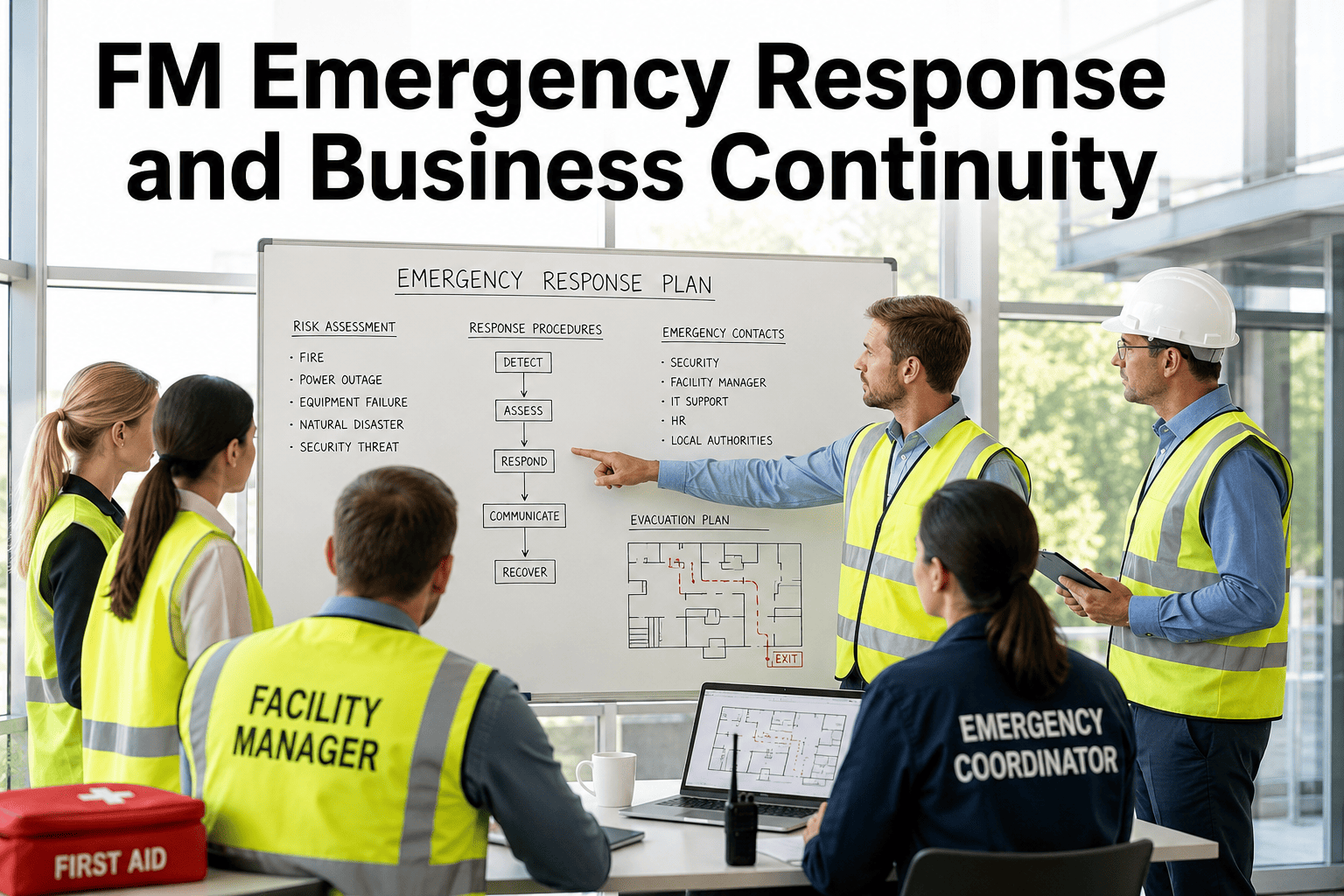
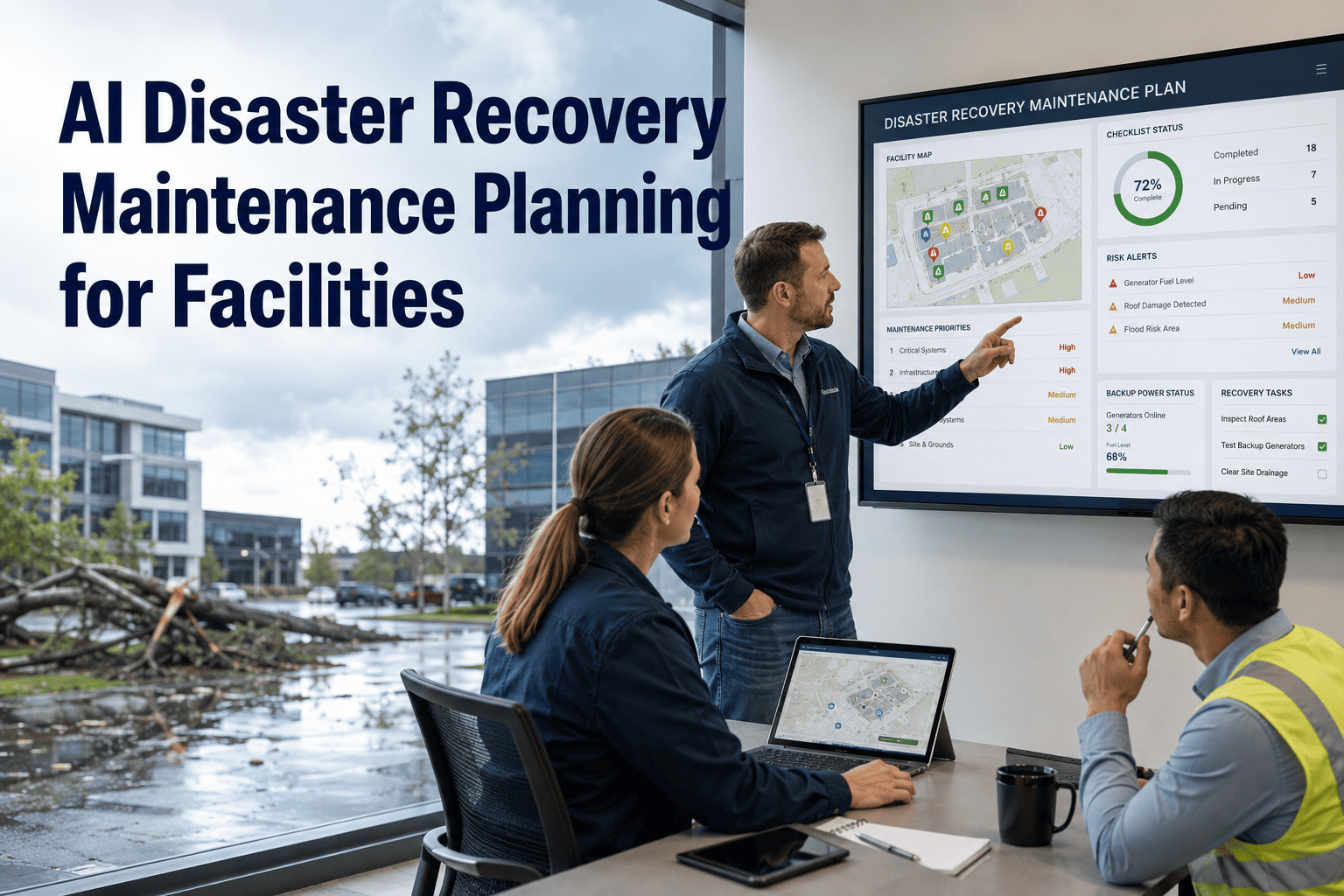
At 2:14 AM on a Tuesday, the main electrical feed to a 340,000 sq ft corporate campus failed. The facility team had no documented emergency response plan, no confirmation that the backup generator had been tested in the past 18 months, and no central system to communicate with building occupants or track which critical systems had transferred to emergency power. What followed was 11 hours of reactive chaos — and $840,000 in business disruption costs that a structured emergency preparedness program, backed by OxMaint's compliance tracking and asset management platform, would have reduced to under 90 minutes of managed response. This guide covers what building emergency preparedness actually requires — not just a binder on a shelf, but a living, documented, regularly tested operational framework that keeps your facility resilient when critical systems fail.
Emergency Preparedness in Facility Management: Ensure Business Continuity
Build a tested, documented emergency preparedness framework — covering power outages, equipment failures, natural disasters, and critical system recovery — with CMMS-driven response protocols that activate automatically when emergencies occur.
The 5 Emergency Categories Every Facility Must Plan For
Effective emergency preparedness is not a single plan — it is five distinct response frameworks, each with its own trigger conditions, critical systems checklist, communication protocols, and recovery timeline. Most facilities have documentation for fire and evacuation but are dangerously underprepared for the four categories below.
Emergency Preparedness vs. Reactive Response — The Cost Gap
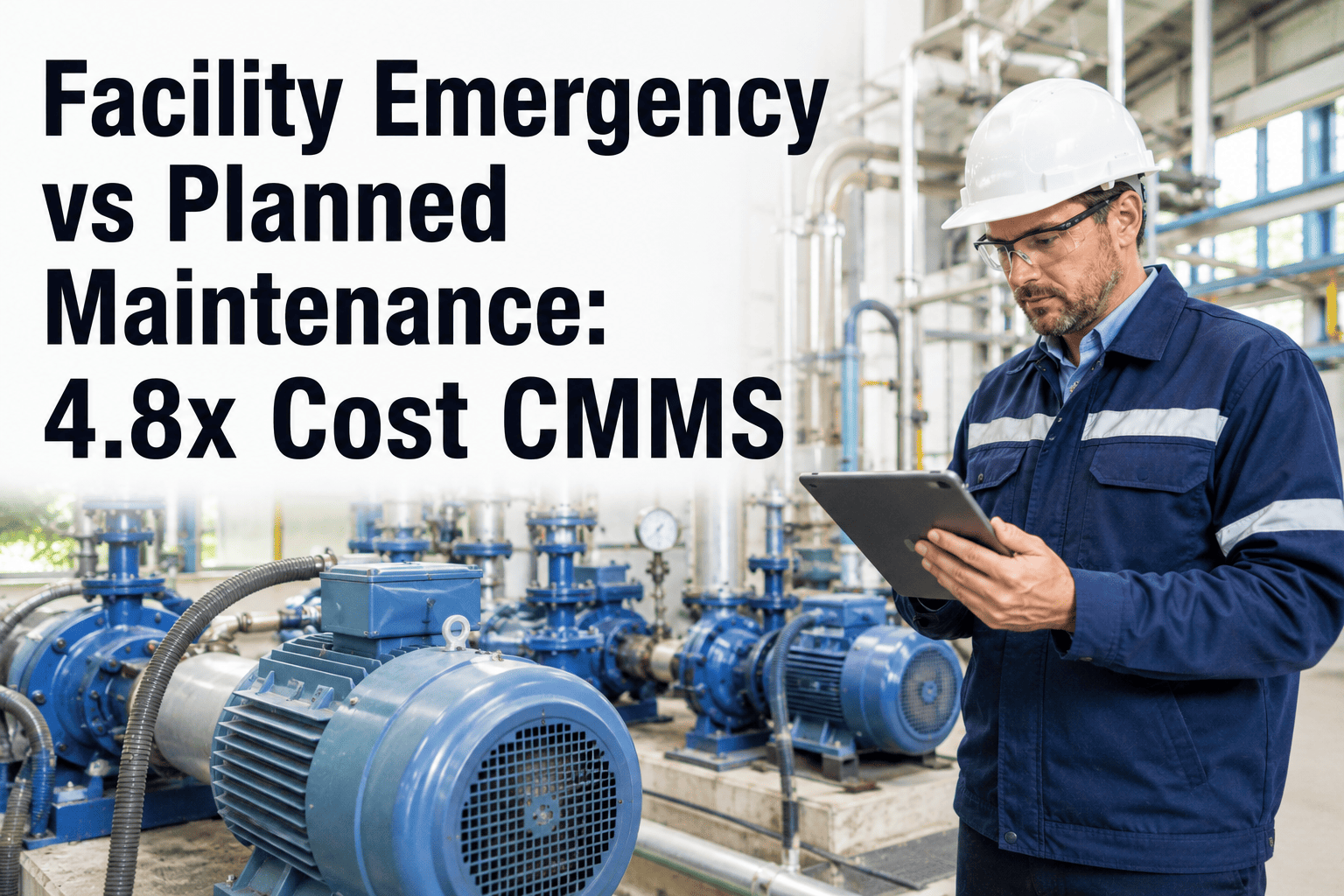
Every emergency category has two cost curves — the cost of preparation (testing, documentation, maintenance of critical systems) and the cost of unplanned response (business disruption, vendor premiums, tenant impact, potential liability). The gap between these curves is where the ROI of emergency preparedness programs lives.
Critical Systems That Must Be Tested — Not Just Maintained
The distinction between maintenance and testing is critical in emergency preparedness. Maintained systems operate under normal conditions. Tested systems have verified their emergency response capability under simulated failure conditions — and only tested systems can be relied upon when the real emergency arrives.
| Critical System | Maintenance Requirement | Testing Requirement | Test Frequency | Documentation |
|---|---|---|---|---|
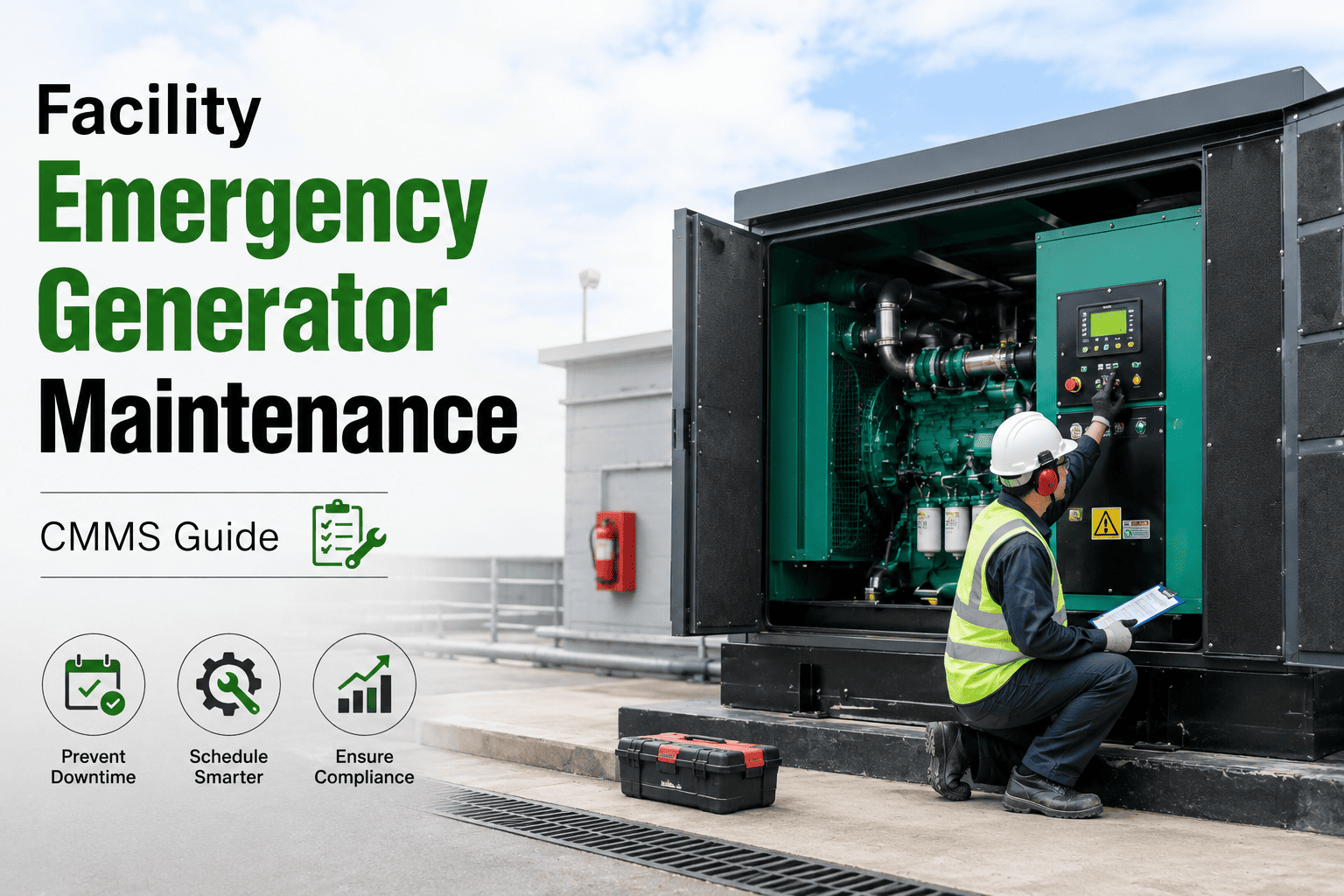
| Emergency Generator | Monthly visual + oil/coolant check | Full-load bank test at 100% rated capacity | Annually (NFPA 110) | Load, voltage, runtime log |
| Automatic Transfer Switch | Quarterly inspection | Transfer time test (utility loss simulation) | Monthly with generator test | Transfer time, load confirmation |
| UPS Systems | Monthly battery voltage check | Full discharge to rated runtime | Annually | Runtime achieved, load, battery health |
| Fire Suppression | Annual inspection (NFPA 25) | Flow test, alarm verification | Per NFPA 25 schedule | Test report, AHJ sign-off |
| Emergency Lighting | Monthly brief function test | 90-minute full discharge test | Annually (NFPA 101) | Duration, lux levels, battery condition |
| HVAC Backup / Redundancy | Per PM schedule | Manual transfer to redundant unit | Semi-annually | Transfer time, capacity verification |
| Communication Systems | Monthly battery and function check | Full emergency broadcast test | Quarterly | Coverage, clarity, battery backup duration |
OxMaint automatically schedules every critical system test, generates pre-test checklists, logs all results with timestamps, and alerts you when test compliance falls behind regulatory requirements — before an inspector or an actual emergency reveals the gap.
The 6 Components of a CMMS-Backed Emergency Plan
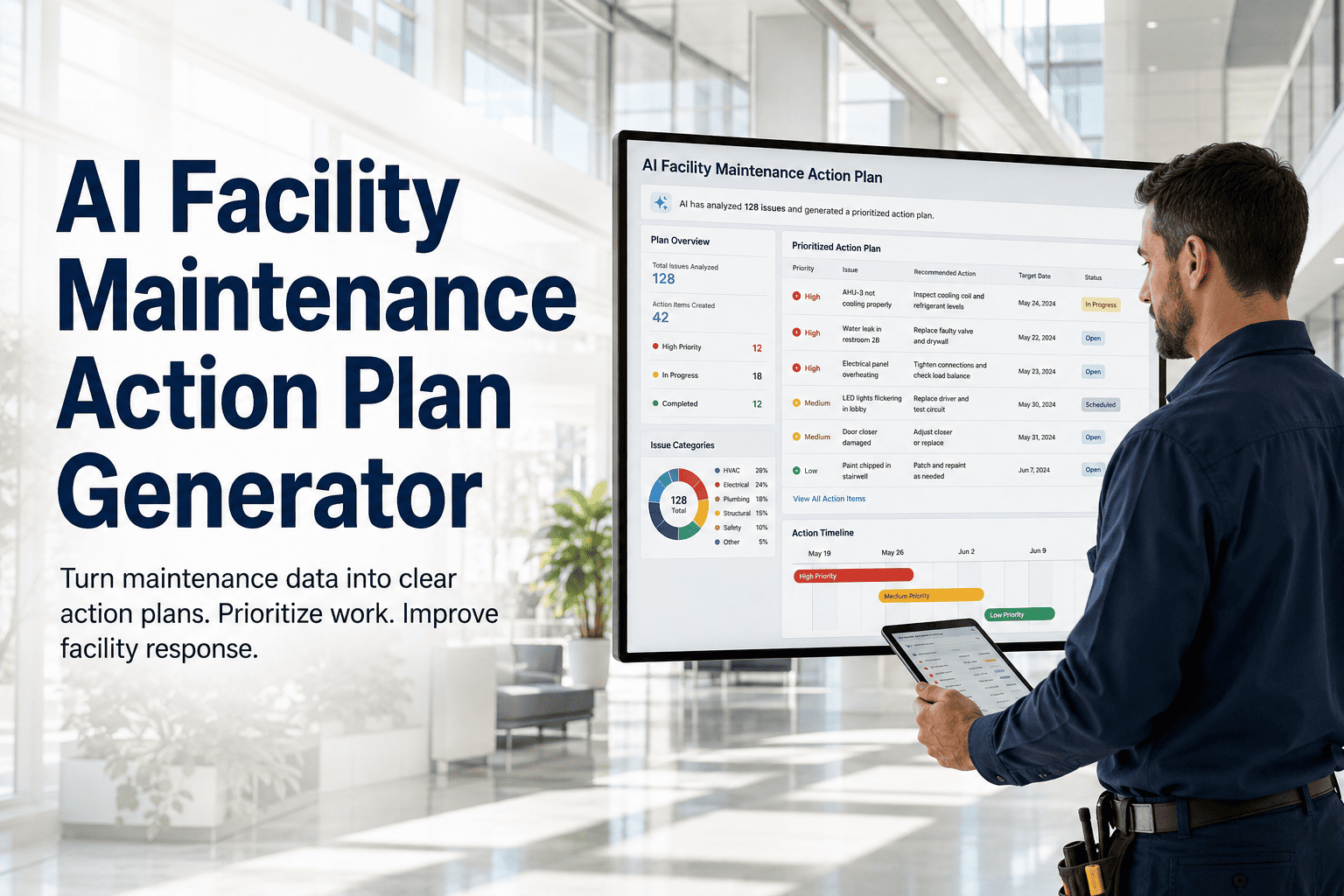
Every critical asset tagged as life-safety, business-critical, or deferrable — so emergency work orders are automatically prioritized when a system fails during a declared emergency.
Pre-built work order sequences that trigger automatically on emergency events — power outage response checklist, water system isolation protocol, generator monitoring during extended outage.
All emergency vendor contacts linked to asset types in OxMaint — so the on-call technician sees the right vendor for the right system without searching through contact lists during a crisis.
All generator tests, ATS transfer times, UPS discharge results, and fire system test records stored with timestamps and technician sign-off — meeting NFPA 110, NFPA 25, and NFPA 101 documentation requirements.
OxMaint tracks every regulatory test deadline and sends alerts 30, 14, and 7 days before due dates — ensuring no critical test lapses due to schedule gaps or calendar oversight.
Every emergency event documented as a formal incident record — timeline, systems affected, response actions, recovery duration, and lessons learned — building institutional knowledge for future preparedness.
"Emergency preparedness in facilities management fails in one of two ways: either the plan exists only on paper and has never been tested, or the systems the plan depends on have not been maintained to the point where they can actually execute their emergency function. A generator that has not been load-bank tested in three years is not emergency infrastructure — it is a liability. The facilities I see performing best in actual emergencies share one practice: they treat emergency system testing as a non-negotiable compliance item in their CMMS, not a nice-to-have exercise scheduled when convenient."
— Senior Facility Operations Director, Critical Infrastructure Division — 24 years managing mission-critical facility emergency programs
FEMA data from the 2023 Business Continuity Impact Study found that organizations with documented, tested emergency response plans recovered from facility disruptions 4.7x faster than those with informal response processes — and experienced 62% lower total incident costs across all emergency event categories.
Emergency Readiness Is Not a Document. It Is a System.
OxMaint turns your emergency preparedness plan into a living, tested, compliance-tracked operational framework — with automated test scheduling, emergency work order templates, and real-time critical system status available to your team when every minute matters. Book a demo to see emergency compliance tracking configured for your facility type.