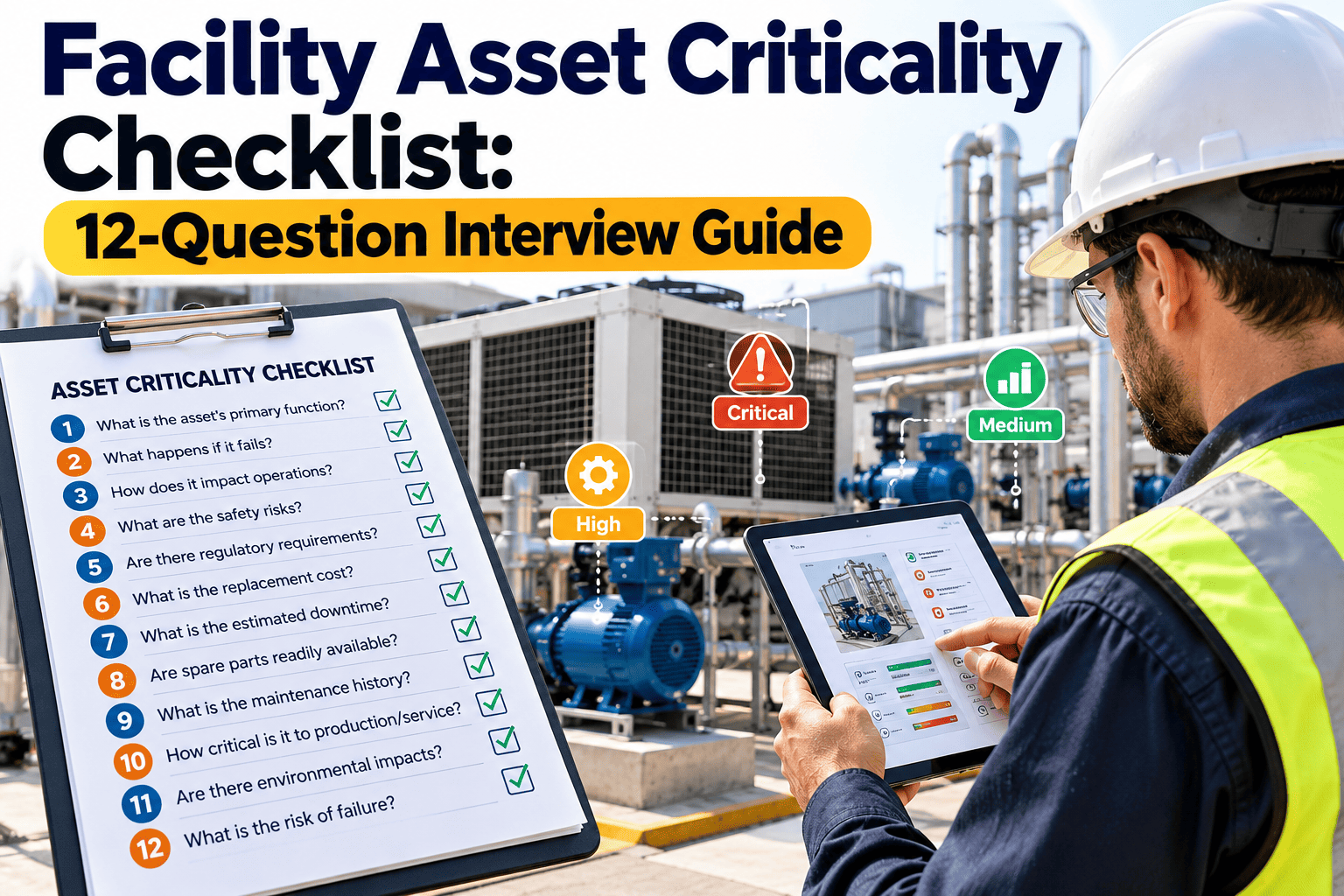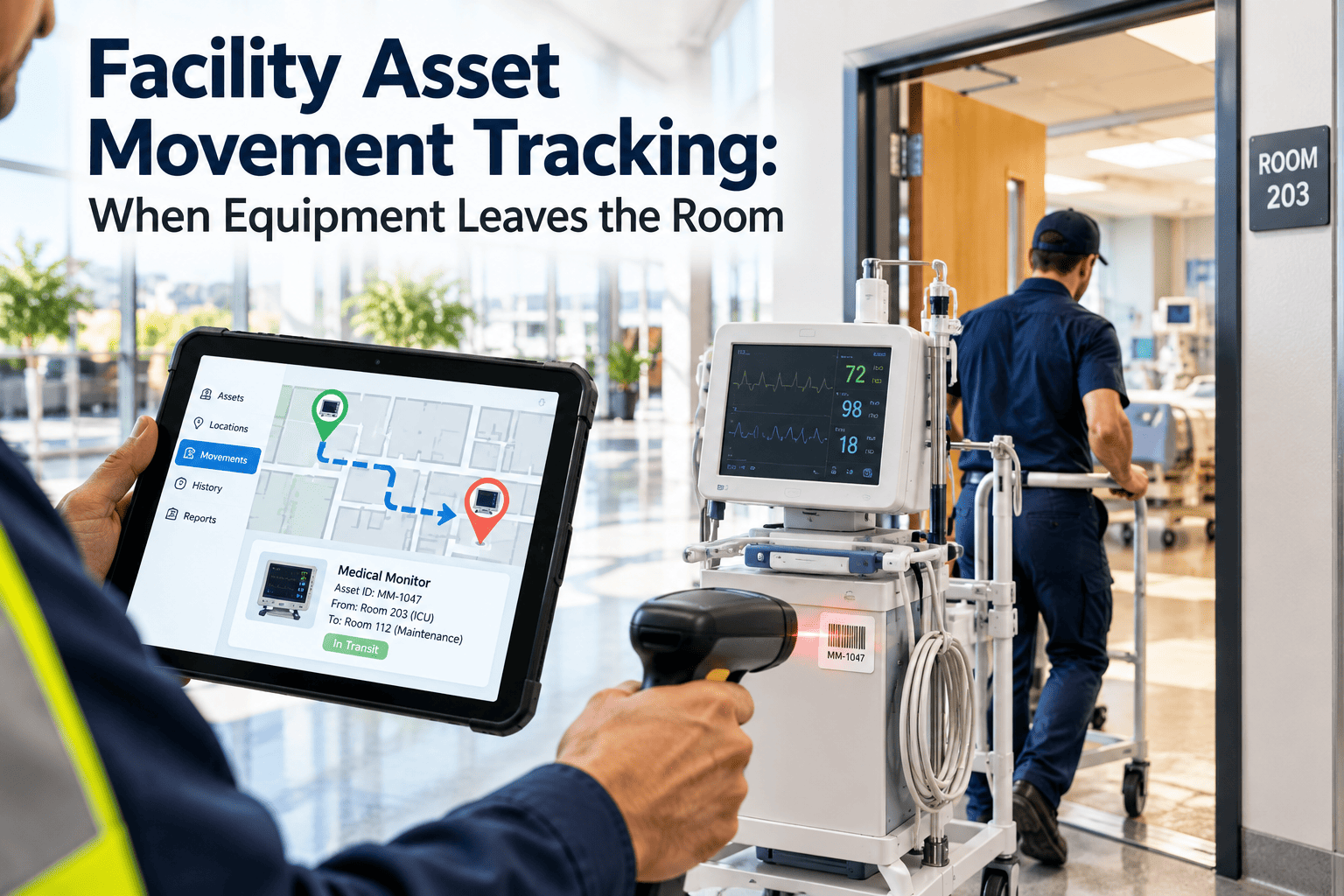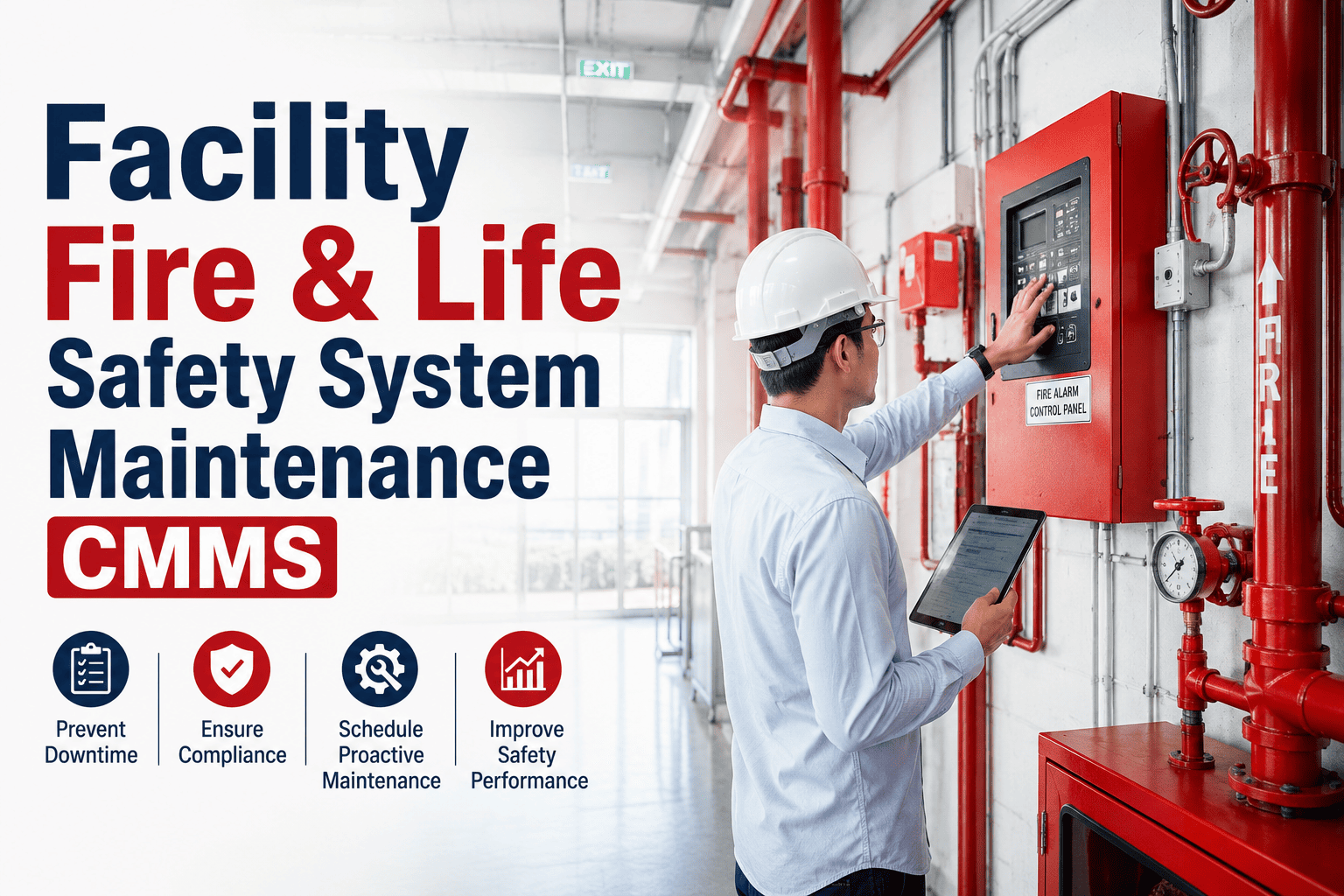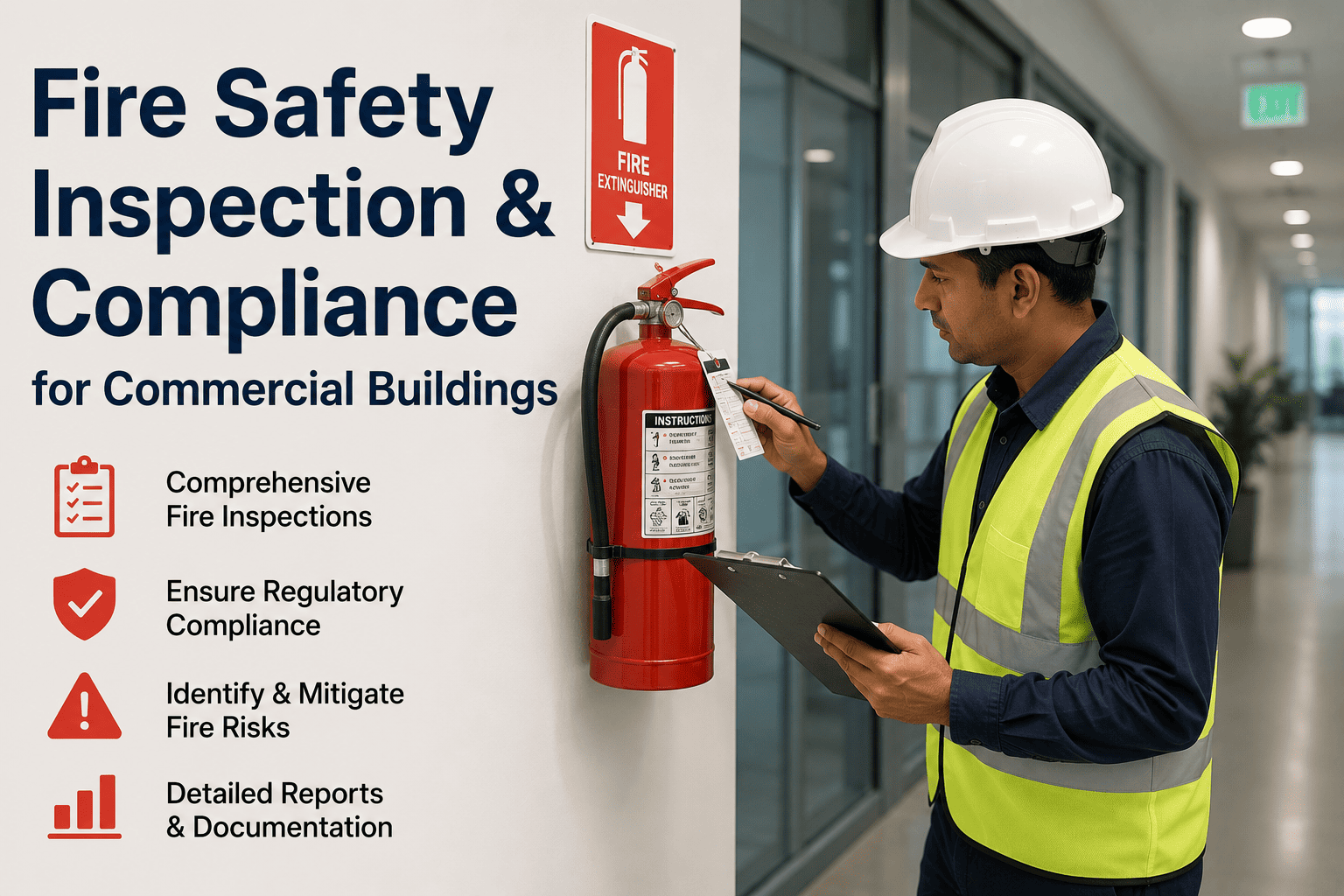
Most maintenance priorities are a judgment call, but some assets are decided for you. Fire sprinklers, alarm panels, backflow preventers, and refrigerant-bearing equipment sit under codes and regulations that set inspection frequency, qualified personnel, and record retention. A missed test is a compliance finding, not a deferred task, and an inspector will ask for dates, names, and signatures. Keeping this list current is far easier when every regulated asset, due date, and report lives in one system such as Oxmaint.
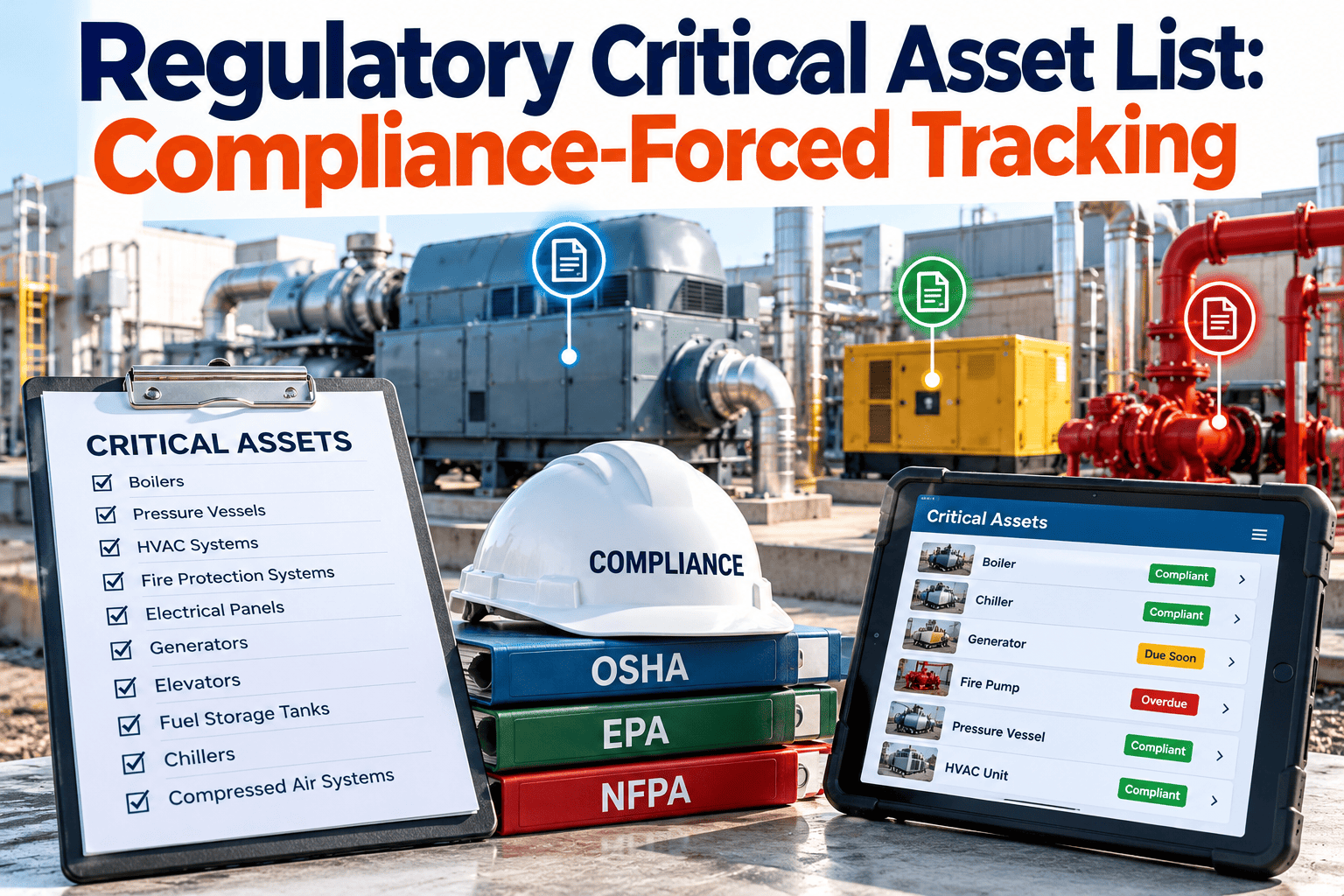
Regulatory Critical Asset List: Compliance-Forced Tracking
Regulators, not risk scores, define these assets. Build one living register of fire, life safety, refrigerant, and backflow equipment so every inspection, test, and record is due, assigned, and provable.
Why Regulatory Assets Follow Different Rules
- You choose the strategy
- Intervals can flex with condition
- Skipping a task is a business decision
- Records are for your own learning
- The code or regulator sets the strategy
- Intervals are fixed by standard or local rule
- Skipping a task is a violation
- Records are legal evidence
A boiler can be low risk and still regulated. A critical chiller can be unregulated. Track both lists, and let the compliance list override the score.
The Regulatory Asset Register: What Belongs on the List
Adopted editions and local amendments vary, so confirm requirements with your authority having jurisdiction.
| System | Typical governing source | What to track | Evidence to keep |
|---|---|---|---|
| Sprinklers, standpipes, fire pumps | NFPA 25 | Control valves, gauges, flow switches, pump tests, hydrants | Inspection and test reports, deficiency notes |
| Fire alarm and detection | NFPA 72 | Panels, detectors, notification devices, batteries, monitoring | Test records, device lists, impairment logs |
| Refrigerant equipment | EPA Section 608, Clean Air Act | Appliance charge, leaks, repairs, technician certification | Service records, leak inspection and repair logs |
| Backflow preventers | Local water authority | Device location, type, annual test status | Certified tester report filed with the utility |
| Emergency lighting, exit signs | Life safety code as adopted locally | Fixtures, battery units, test dates | Dated functional test log |
| Portable extinguishers | NFPA 10 | Placement, monthly checks, annual service tags | Inspection tags, service reports |
| Elevators and lifts | State or local elevator code | Certificates, inspections, contractor service | Current operating certificate |
The Compliance Calendar: Cadence Drives the Workload
Each regulated asset carries tasks at different frequencies. Exact intervals depend on the component and the edition adopted, so use this as a planning view.
- Valve and gauge checks
- Extinguisher visual checks
- Short emergency light tests
- Alarm and flow device tests
- Pump run checks
- Refrigerant leak checks where required
- Backflow testing
- Full alarm testing
- Extinguisher servicing
- Internal sprinkler assessments
- Hydrostatic or flow tests
- Component replacement cycles
- Impairments
- Post-repair retests
- Refrigerant repair verification
Put Every Regulated Asset on One Schedule
Assign due dates, owners, and required evidence once, then let the system remind your team before anything lapses.
The Audit-Ready Evidence Chain
An inspection only counts if the record can be produced. Every regulated task should leave the same trail.
- Asset identified. Unique ID, location, and the standard that applies.
- Task scheduled. Frequency set from the governing source, not from habit.
- Qualified person assigned. Certified technician or licensed contractor, matched to the task.
- Work performed and recorded. Readings, results, and photos captured on site.
- Deficiency raised. Failed items become corrective work orders with a deadline.
- Retest and close. Proof of correction is attached to the original record.
Refrigerant Records Under EPA Section 608
- Record appliance location, refrigerant type, and charge size
- Log every addition, recovery, and leak repair with date and technician
- Keep technician certification copies on file
- Flag equipment that triggers leak inspection or repair obligations
- Retain disposal and recovery documentation
Fire and Life Safety: Managing Impairments
When a protection system is out of service, the clock starts. Teams need a repeatable response.
Common Gaps That Cause Findings
| Gap | Why it happens | Fix | Exposure |
|---|---|---|---|
| Asset missing from the list | Renovations, tenant fit-outs, undocumented devices | Walk down each system and reconcile against drawings | High |
| Report cannot be found | Files held by contractors or personal folders | Require uploads to the asset record on completion | High |
| Wrong interval used | Old standard edition or copied schedule | Record the source and edition on each task | Medium |
| Deficiency never closed | Notes sit in a report with no work order | Auto-create corrective work from failed items | High |
| Expired technician credential | No tracking of certificates | Store credentials with expiry reminders | Medium |
How Oxmaint Supports Compliance Tracking
- Asset management. Tag each regulated asset with its standard, authority, and responsible party.
- Preventive maintenance scheduling. Generate recurring inspections and tests on fixed intervals with advance notice.
- Mobile inspections. Technicians complete checklists and attach photos and signatures on site.
- Corrective work orders. Failed items convert into tracked repairs with owners and due dates.
- Compliance records and reporting. Pull a complete history for an inspector in minutes rather than days.
- Dashboards. Show overdue and upcoming compliance tasks across buildings.
Measures That Show You Are in Control
Frequently Asked Questions
Which assets are regulatory critical?
Any asset covered by a code, standard, or regulation that mandates inspection or records, such as fire protection and refrigerant equipment.
Does a low risk score remove a compliance task?
No. Regulatory requirements apply regardless of internal scoring.
Who confirms the correct intervals?
Your authority having jurisdiction and the adopted code edition. Record them in Oxmaint so tasks follow them.
How long should records be kept?
Retention rules vary by standard and jurisdiction, so set the longest applicable period per asset.
Can contractor reports be centralized?
Yes, and you can book a demo to see report uploads attached to asset records.
Building the Register From Scratch
Many facilities discover gaps only when an inspector asks for a device list. A structured walkdown prevents that.
- Collect source documents. Gather drawings, permits, prior inspection reports, contractor service lists, and certificates of occupancy.
- Walk every floor and system. Verify devices in the field against paperwork, including those added during tenant fit-outs.
- Assign unique asset IDs. Label equipment physically and record location, type, and manufacturer.
- Attach the governing requirement. Note the standard, edition, and authority for each asset group.
- Define tasks and frequencies. Convert requirements into recurring inspections and tests with clear pass criteria.
- Assign owners and backups. Every regulated task needs a responsible person and a named substitute.
Who Owns What: Responsibilities Matrix
| Role | Responsibility | Records they should hold |
|---|---|---|
| Facility manager | Overall compliance program, budget, and escalation | Master register, audit results, corrective action tracking |
| Maintenance supervisor | Scheduling, assignment, and review of completed tasks | Work orders, technician checklists, deficiency follow-up |
| Technician | Performing in-house inspections and documenting results | Field readings, photos, signed checklists |
| Licensed contractor | Specialized testing, repair, and certification | Test reports, certifications, deficiency lists |
| Safety or risk officer | Oversight, impairment decisions, regulator liaison | Impairment logs, incident records, inspector correspondence |
Managing Contractors for Regulated Work
Much regulated testing is outsourced, but responsibility for compliance stays with the building owner or operator.
- Verify credentials. Confirm licenses and certifications before work starts and note expiry dates.
- Define deliverables. Require a written report, device-level results, and a deficiency list for every visit.
- Set submission deadlines. Reports should be uploaded within a fixed window after the visit.
- Track deficiencies to closure. A report that lists failures is only the beginning of the job.
- Review scope annually. Check that contracts still cover every system and device on your register.
Backflow Prevention: A Small Asset With Large Consequences
Backflow devices protect the potable water supply, and utilities typically require periodic testing by a certified tester.
- List every device by type, size, and location
- Record the last test date and the next due date
- Store the tester certification with each report
- Track failed tests through repair and retest
- Confirm the utility received the filed result
Working With the Authority Having Jurisdiction
The authority having jurisdiction interprets codes for your site, so early communication prevents surprises.
- Ask which code editions are currently adopted and which local amendments apply.
- Confirm acceptable test methods and who is allowed to perform them.
- Clarify reporting channels, such as electronic submission to a third-party portal or the fire department.
- Document each conversation and keep the answer with the asset record.
- Notify the authority when major equipment is added, replaced, or taken out of service.
A 30-Day Inspection Readiness Checklist
- Reconcile the asset register with a physical walkdown
- Confirm every task has a completion record attached
- Close or schedule every open deficiency
- Verify technician and contractor credentials are current
- Print or export the history for each regulated system
- Review open impairments and document interim measures
- Confirm refrigerant logs match service invoices
- Brief staff on who speaks with the inspector
Managing Change: Tenants, Renovations, and Acquisitions
Regulated assets change faster than most registers. Build update triggers into every project.
Emergency Lighting, Extinguishers, and Other Easily Missed Items
Large systems get attention, while small distributed devices are the ones that quietly lapse.
| Asset group | Why it gets missed | How to control it |
|---|---|---|
| Emergency and exit lighting | Hundreds of fixtures spread across floors | Tag each fixture, use route-based checklists, log failures by location |
| Portable extinguishers | Moved, removed, or tags expire unnoticed | Record each unit, schedule monthly checks, track annual service dates |
| Fire doors and dampers | Treated as building fabric, not equipment | Add to the register with defined inspection tasks |
| Kitchen suppression systems | Managed by tenants or outside vendors | Require service reports and track semiannual dates |
| Eyewash and safety showers | Considered safety rather than maintenance | Schedule recurring activation checks and log results |
Cost of Getting It Wrong
Compliance failures carry consequences beyond a fine, and they tend to compound.
- Regulatory action. Citations, mandated corrective plans, and re-inspection fees.
- Insurance exposure. Gaps in required testing can complicate claims after an incident.
- Operational disruption. Impaired systems can force restrictions on occupancy or activities.
- Liability. After a fire or release, inspection records become the first documents requested.
- Reputation. Tenants and customers expect safe, well-maintained buildings.
Handling Deficiencies the Right Way
Every failed test creates an obligation. How quickly and visibly you respond shapes your compliance standing.
| Deficiency type | Typical response | Record required |
|---|---|---|
| Critical: system impaired | Immediate notification, interim protection measures, urgent repair | Impairment log, repair work order, retest result |
| Major: device failed test | Repair or replace within a defined deadline | Failed result, parts used, passing retest |
| Minor: documentation gap | Correct the record and prevent recurrence | Updated report and process note |
Training and Credentials to Track
- Refrigerant technician certification. Keep a copy on file for every person who services regulated equipment.
- Fire protection licenses. Contractors who test sprinklers and alarms often need local or state licensing.
- Backflow tester certification. Many utilities accept reports only from approved testers.
- Internal training records. Document who is trained to perform in-house inspections and when it was last refreshed.
- Expiry reminders. Set alerts well ahead of renewal dates to avoid last-minute gaps.
Digital Records vs Paper Binders
- Reports scattered across offices and contractors
- Hard to search by asset or date
- Easy to lose during staff turnover
- Slow to produce for an inspector
- Every report attached to its asset
- Searchable by system, date, or technician
- Retained regardless of who leaves
- Exportable on request in minutes
Check retention rules and any required original signatures with your authority having jurisdiction before retiring paper records.
Quarterly Compliance Review Agenda
- Review overdue and upcoming regulated tasks by building and system.
- Walk through open deficiencies and confirm owners and deadlines.
- Check active and recent impairments and the time each remained open.
- Confirm contractor reports have been received and filed.
- Review credential expiry dates for staff and contractors.
- Note regulatory changes or newly adopted code editions that affect tasks.
Five Habits of Teams That Stay Compliant
- One register. A single source of truth for regulated assets, not separate lists per department.
- Tasks before due dates. Work is scheduled with lead time, not discovered when it is already late.
- Evidence at completion. Reports and photos are uploaded the same day the work is done.
- Deficiencies tracked like emergencies. Failed items have owners, deadlines, and visible status.
- Regular self-audits. The team finds its own gaps before an inspector does.
Be Inspection-Ready Every Day, Not Just Before the Visit
Keep the regulatory asset list, schedules, and evidence in one place your whole team can use.