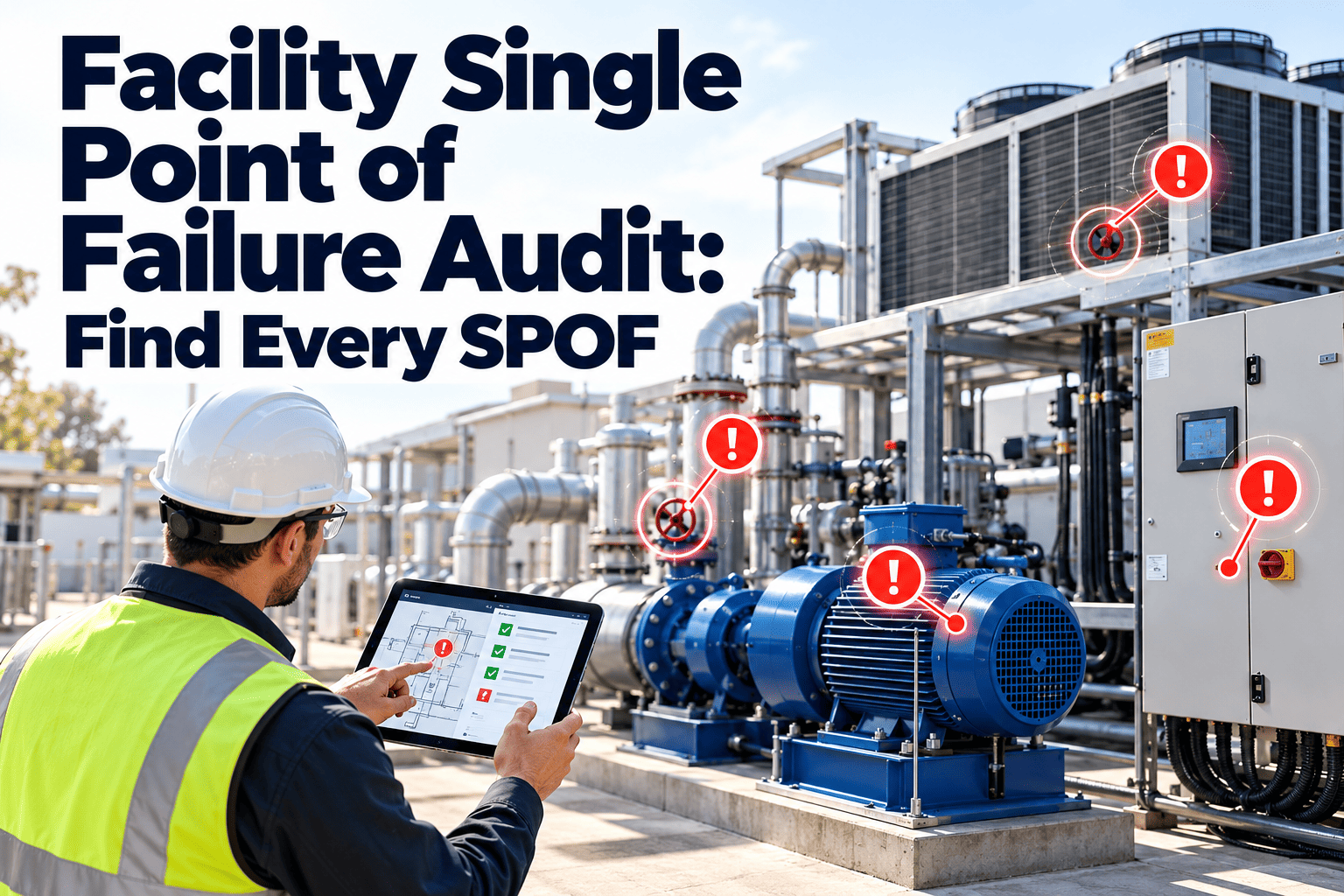
A single point of failure is any one component whose loss stops a critical function, with nothing ready to take over. In facilities they hide in plain sight: one chilled water pump feeding a whole wing, one main breaker, one network core switch, or one technician who knows how the controls work. A structured audit finds them before an outage does. This guide walks through the method, drawing on resilience thinking from TIA-942 data center standards, and shows how a CMMS with asset criticality tracking keeps the findings alive.
Facility Single Point of Failure Audit: Find Every SPOF
Redundancy on a drawing does not guarantee redundancy in service. An audit tests each critical function from supply to load and asks what happens when one link breaks.
Why SPOFs Survive for Years
- Systems grow by addition, and nobody redraws the full dependency chain.
- Redundant equipment shares a pipe, panel, or control signal upstream.
- Backup units are installed but not tested under load.
- Knowledge sits with one person, with no written procedure.
- Spare parts for the single unit have long lead times.
The Six-Stage Audit Method
Define critical functions
List what the building must keep doing: cooling, power, life safety, connectivity, access.
Map the dependency chain
Trace each function from source to load, including controls and utilities.
Test each link
Ask what stops if this item fails and whether anything automatically takes over.
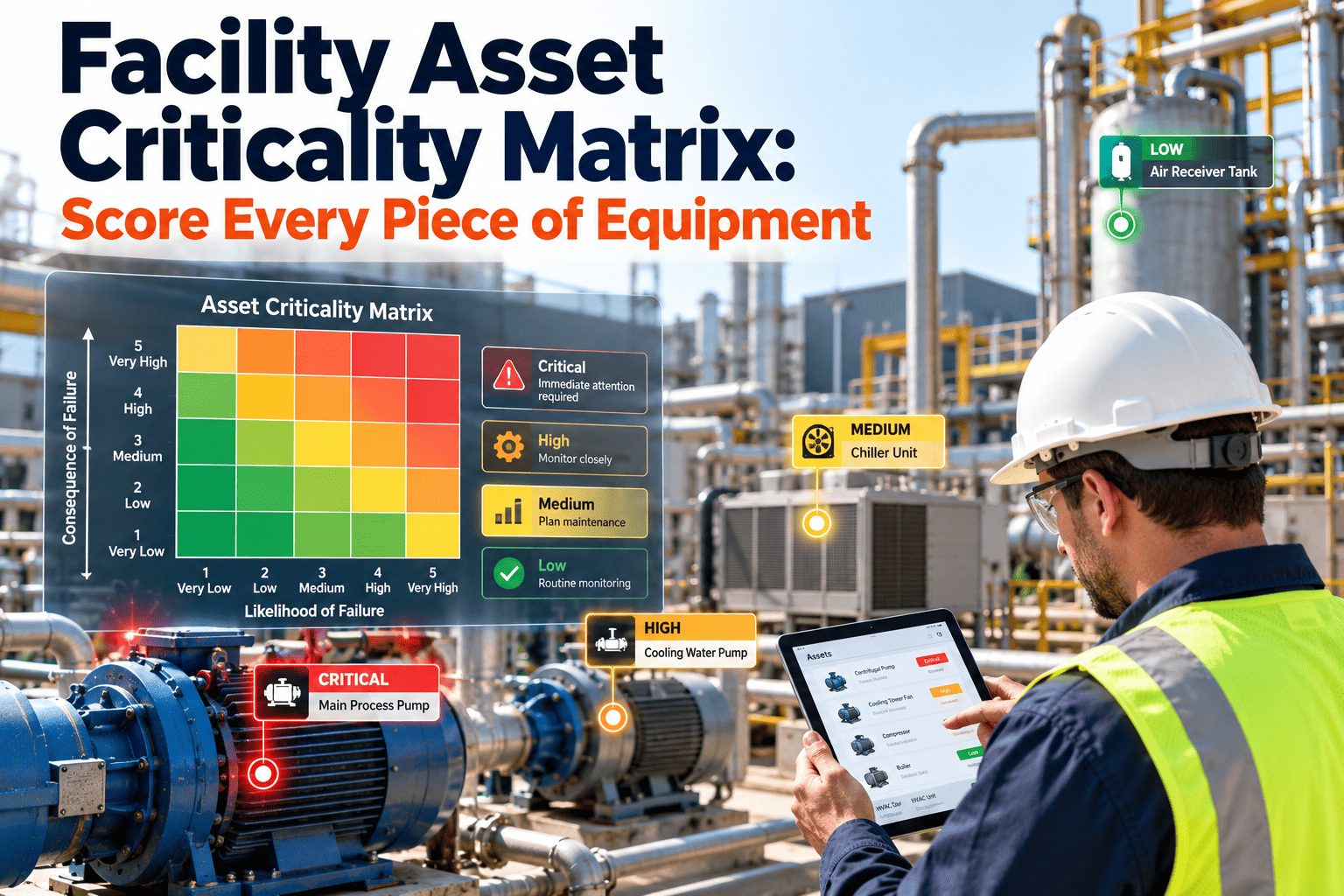
Score the risk
Rate likelihood and consequence, using work order history as evidence.
Choose a treatment
Add redundancy, add a spare, increase inspection, or accept with a plan.
Re-audit on change
Repeat after any major modification and on a fixed cycle.
Redundancy Levels in Plain Terms
| Configuration | Meaning | SPOF exposure |
|---|---|---|
| N | Capacity exactly matches the load | Any failure or maintenance outage affects service |
| N+1 | One extra unit beyond required capacity | Protects against one unit failing; shared upstream paths can still fail |
| 2N | Two complete, independent systems | Lowest exposure; costs the most to build and maintain |
Concurrent maintainability, meaning a component can be serviced without shutting the load down, is a separate test from redundancy and worth auditing on its own.
Turn Audit Findings Into Tracked Work
Record criticality on each asset and let preventive maintenance focus where failure hurts most.
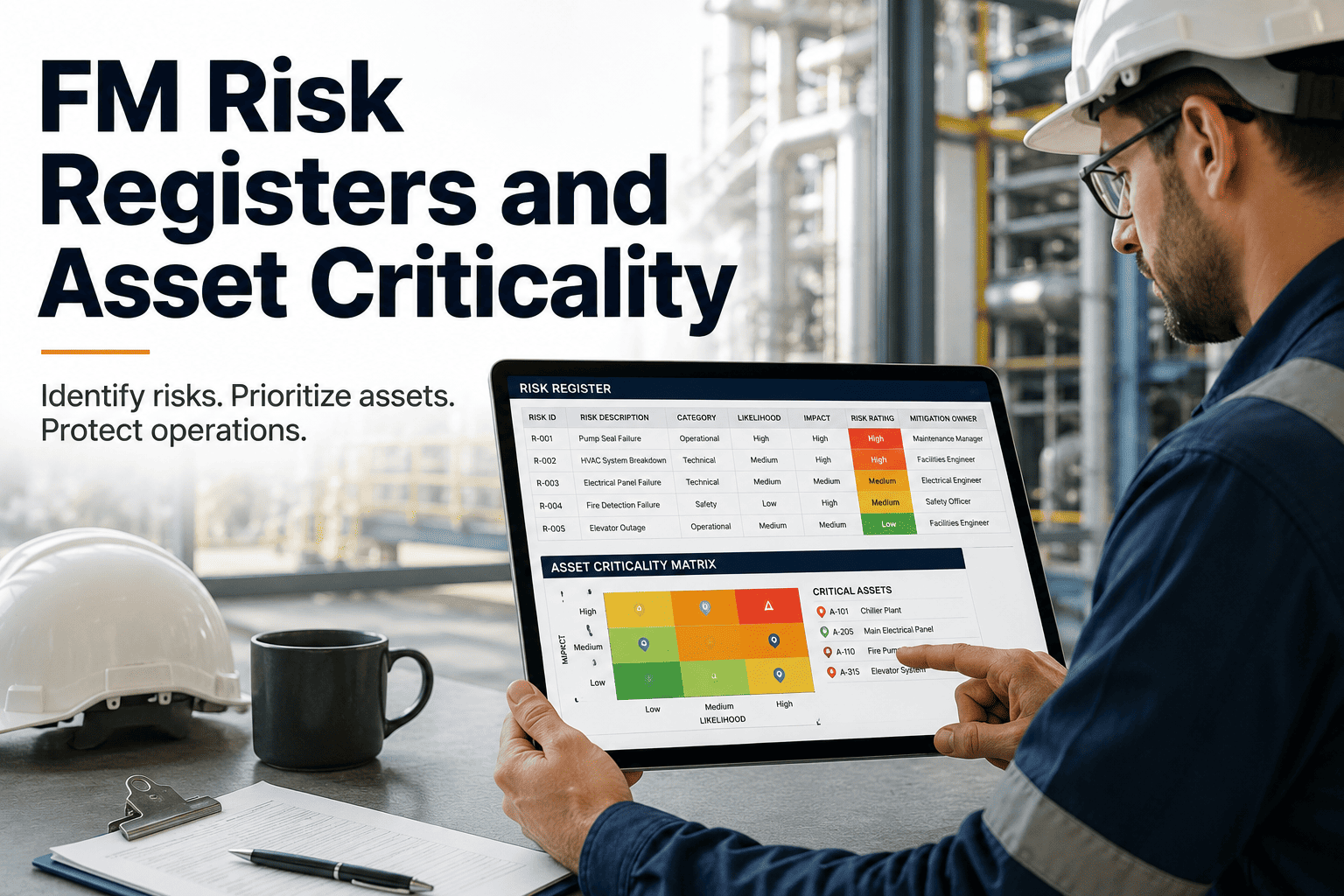
Risk Matrix: Where to Act First
Where SPOFs Hide, System by System
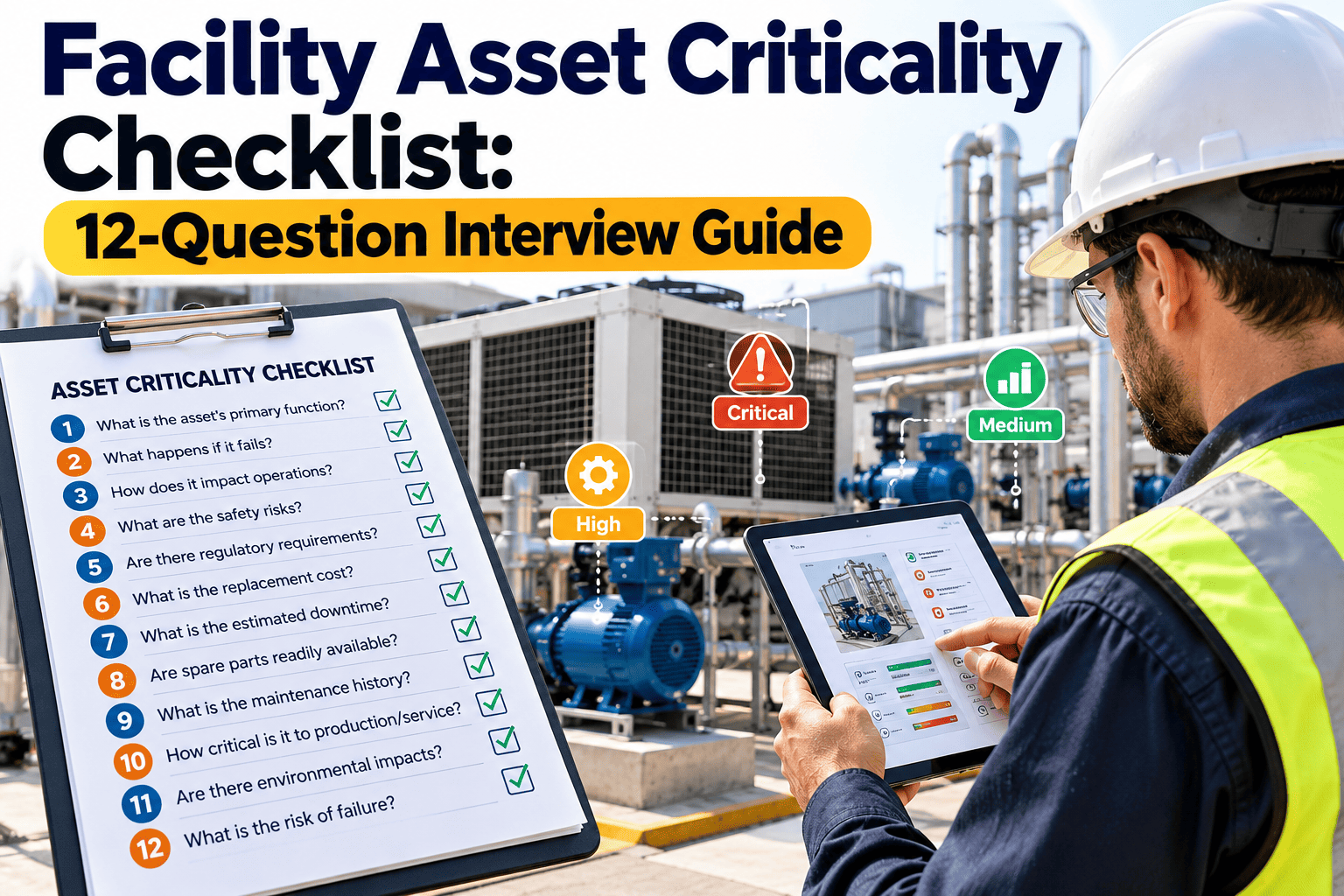
Audit Questions for Every Critical Asset
Function
- What stops if this fails?
- How long can operations tolerate it?
- Is there an automatic fallback?
Condition
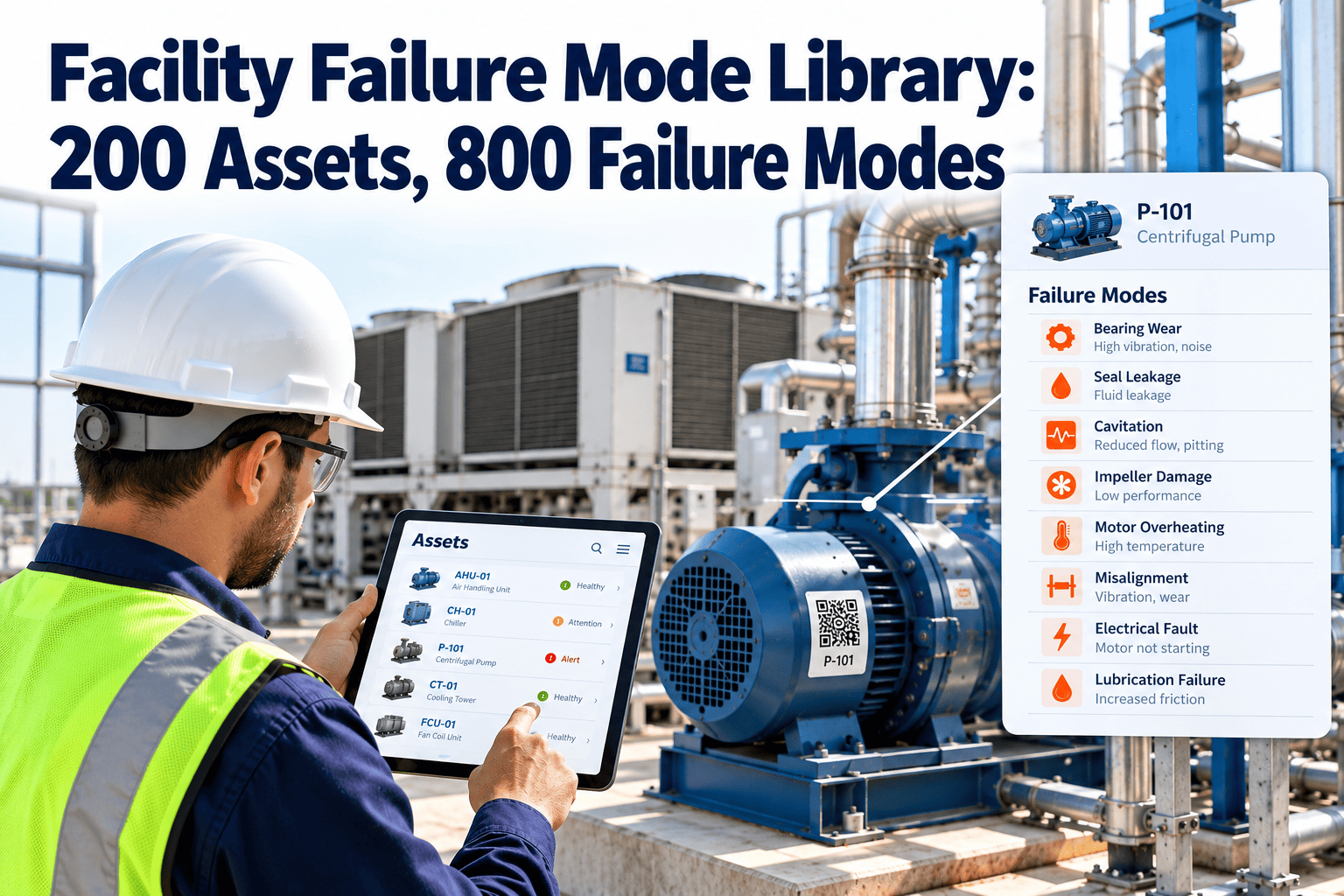
- How old is it and how often has it failed?
- Is the backup tested under real load?
- Are PM tasks current?
Recovery
- Is a spare stocked or on a long lead time?
- Is there a written repair procedure?
- Who can do the work out of hours?
Keeping the Audit Alive in a CMMS
SPOF Versus Common-Mode Failure
A true single point of failure is one unit with no backup. A common-mode failure is subtler: two units that appear independent but share something that can fail them both.
Why this matters for the audit
A drawing that shows two of everything can still hide a single path. Trace every upstream and downstream dependency, not just the equipment itself.
Lessons From Data Center Resilience
TIA-942 describes rated levels of data center infrastructure, from basic capacity with little redundancy up to fault-tolerant designs with independent paths. The ideas travel well to commercial buildings.
- Distinguish capacity redundancy from path redundancy. Extra equipment on one path still fails together.
- Test whether a component can be maintained while the load stays live.
- Consider the facility's site, power, cooling, telecom, and architecture as separate resilience areas.
- Match the investment to the cost of downtime. Not every area needs the highest level.
- Document the intended level so later changes do not silently erode it.
Adapting for non-data-center buildings
A hospital, laboratory, or cold storage facility has different critical loads, but the method is the same: define the function, map the path, and find the single link.
Worked Example: A Chilled Water Loop
Function
Keep a lab wing within temperature limits around the clock.
Chain
Chillers, primary pumps, header, secondary pump, air handlers, controls.
Finding
Two chillers exist, but one secondary pump serves the entire wing.
Treatment
Add a standby pump, or stock a spare with a documented swap procedure.
Follow-up
Raise pump inspection frequency and test failover on a schedule.
Record
Attach findings and actions to the pump's asset record.
Network, Controls and Digital SPOFs
Digital SPOFs often fall between facilities and IT teams. Assign an owner for each dependency so nothing is missed.
People, Vendors and Supply Chain SPOFs
- A single technician who alone understands a controls system or a legacy plant.
- A sole service contractor with no response commitment out of hours.
- A critical spare with one supplier and a long lead time.
- An obsolete part with no direct replacement on the market.
- A required permit, inspection, or certification held by one individual.
Reducing human dependency
Write short procedures, cross-train a second person, and store the documents against the asset. These actions cost far less than redundant equipment.
Testing Redundancy Without Causing an Outage
Plan
- Define the test objective and the rollback step
- Choose a low-risk window
- Notify affected teams
Execute
- Remove the primary from service in a controlled way
- Confirm the backup starts and carries the load
- Record readings and timings
Review
- Compare results to design intent
- Raise corrective work orders for faults
- Update the procedure and schedule
Treatment Options for Each Finding
| Option | When it fits | Trade-off |
|---|---|---|
| Add redundancy | High consequence, frequent failure | Capital cost and space |
| Stock a critical spare | Long lead time, quick swap possible | Inventory cost and storage |
| Increase inspection and PM | Moderate risk, no budget for change | Ongoing labor |
| Add monitoring and alarms | Early warning can prevent failure | Setup and alarm management |
| Write a recovery procedure | People or vendor dependency | Needs rehearsal to be useful |
| Accept and document | Low consequence or cost not justified | Requires sign-off and review |
Metrics for a SPOF Reduction Program
Common audit mistakes
- Auditing equipment lists instead of dependency paths.
- Trusting drawings without walking the system.
- Ignoring people and vendors as risk sources.
- Finding risks but never raising work orders to fix them.
Running the Audit as a Team
One person cannot see every dependency. Bring together the people who operate, maintain, and depend on each system.
Maintenance
Knows failure history, repair difficulty, spare parts, and which workarounds quietly hold the system together.
Operations
Knows which functions cannot stop, how long a pause is tolerable, and what manual fallbacks exist.
IT and controls
Knows the network, software, and automation dependencies that hide behind the equipment.
Workshop format that works
- Pick one critical function per session, such as cooling for the server room.
- Draw the chain on a whiteboard from source to load.
- Ask at each link what happens if it fails right now.
- Capture answers, evidence, and open questions on the spot.
- Assign a named owner and date for every action before the session ends.
Scoring Consequence and Likelihood Consistently
| Rating | Consequence description | Likelihood description |
|---|---|---|
| Low | Minor inconvenience, workaround available | No history of failure, recent maintenance, good condition |
| Medium | Partial loss of function or noticeable disruption | Occasional faults, aging, or maintenance gaps |
| High | Loss of critical function, safety or compliance impact | Repeated failures, poor condition, or known weaknesses |
Use evidence for likelihood
Work order history, inspection findings, and PM compliance give likelihood a factual basis. Without records, ratings turn into opinions and arguments.
Include recovery time
Two assets with the same consequence differ if one can be replaced in an hour and the other takes months. Recovery time raises the real priority.
From Findings to a Maintenance Strategy
Tag critical assets
Mark single-path assets with a criticality flag in the asset register.
Tighten PM
Add tasks and shorten intervals where one failure would stop a critical function.
Stock spares
Hold parts for assets with long lead times and no backup.
Add condition checks
Use inspections and readings to detect decline before failure.
Rehearse recovery
Run drills for swapping the unit or switching to manual operation.
Report progress
Share open actions and trends with leadership each quarter.
Audit Triggers Beyond the Annual Cycle
- A significant failure or near miss on any critical system.
- Major equipment replacement, expansion, or change of use.
- Changes to staffing, contractors, or key suppliers.
- New regulatory or insurance requirements.
- Findings from an outage elsewhere in the same industry.
Keeping the audit practical
Start with the five functions the business cannot lose, finish those, and then widen the scope. A complete audit of a small scope beats an unfinished audit of everything.
Power Systems: A Closer Look at Hidden Single Paths
Electrical systems hide more single paths than most teams expect, because redundancy is often added to equipment but not to the distribution that feeds it.
What to inspect and test
- Thermal imaging of switchgear and connections on a regular schedule.
- Battery health tests and replacement before end of life.
- Generator load tests that reflect real demand, not just a no-load run.
- Transfer switch operation tests, with results recorded each time.
Mechanical and Fire Safety Systems
- Cooling plants with one cooling tower, one condenser water loop, or one makeup water source.
- Heating systems that rely on a single boiler or one fuel connection.
- Air handling units serving critical spaces with no adjacent unit able to cover.
- Fire pumps and water supplies with only one source or valve that can isolate the system.
- Sump and drainage pumps in flood-prone areas with no standby unit or alarm.
Isolation valves and manual overrides
A valve that cannot be operated, or a manual override nobody has practiced, turns a redundant design into a single path. Exercise valves and rehearse overrides as part of planned maintenance.
Compliance expectations
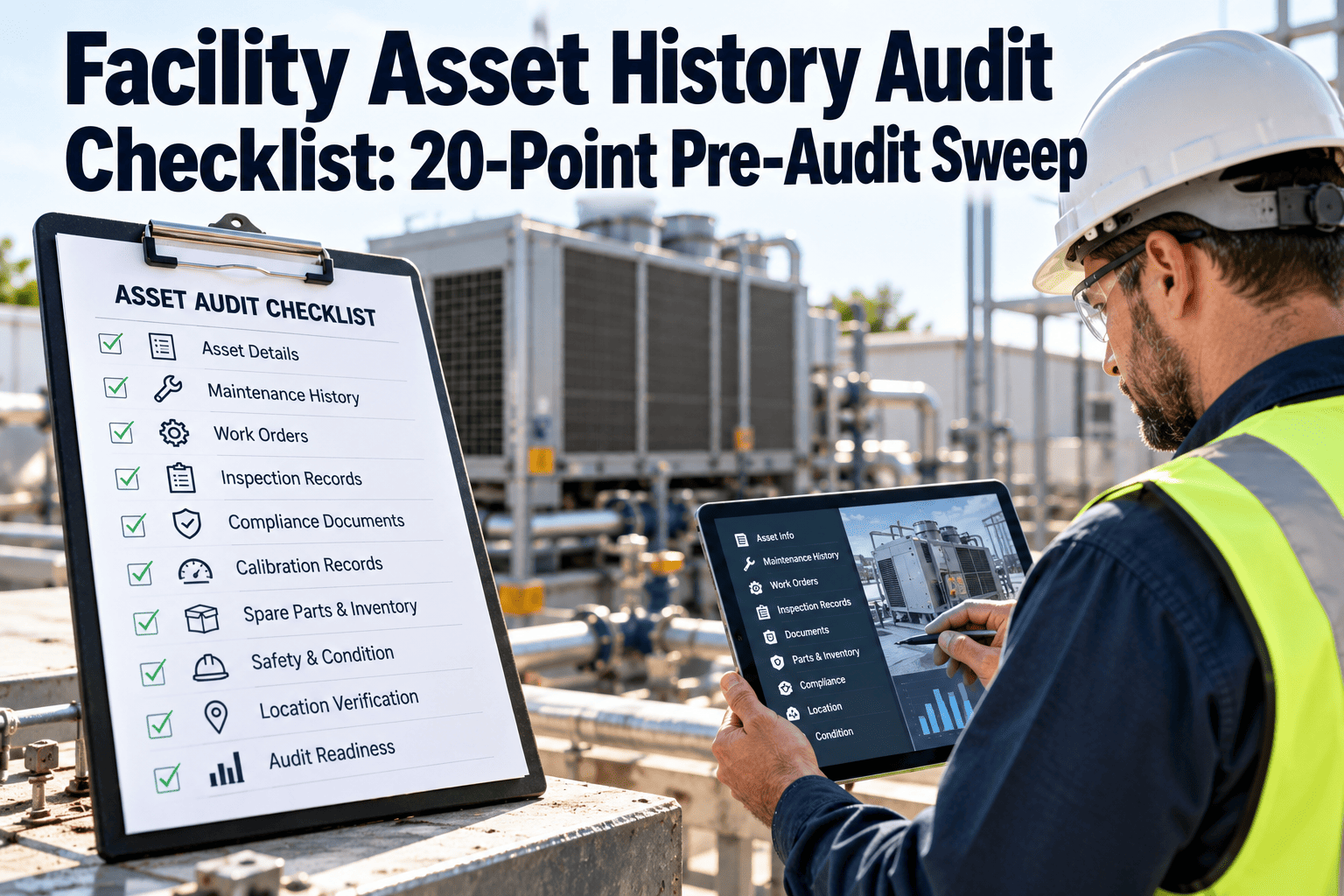
Fire and life safety systems are typically subject to inspection and testing requirements set by local codes. Keep inspection records against each asset so evidence is ready when an auditor asks.
Documenting SPOF Findings So They Get Fixed
| Field | What to record | Why it matters |
|---|---|---|
| Asset and function | The item and the function it supports | Links the finding to business impact |
| Failure consequence | What stops and for how long | Supports prioritization |
| Current protection | Backup, spare, monitoring, or procedure | Shows residual risk |
| Action and owner | The chosen treatment and a named person | Prevents findings from lingering |
| Due date and status | Target date and progress | Enables reporting to leadership |
Review open items monthly
A finding with no owner and no date is a note, not an action. Review open items regularly and escalate those that stall.
Frequently Asked Questions
How often should we run a SPOF audit?
At least annually and after major changes to power, cooling, or controls.
Is N+1 enough to remove a SPOF?
Not always. Shared piping, panels, or controls can still be a single path.
Can a person be a SPOF?
Yes. Undocumented knowledge held by one person is a real operational risk.
What if we cannot afford redundancy?
Use spares, tighter PM, and recovery plans. Book a demo to see risk-based scheduling.
Where do we record findings?
On each asset record, with actions as work orders. Sign up to set this up.
Find the Weak Link Before It Fails
Map your critical assets, score the risk, and give every single-path system a maintenance plan.