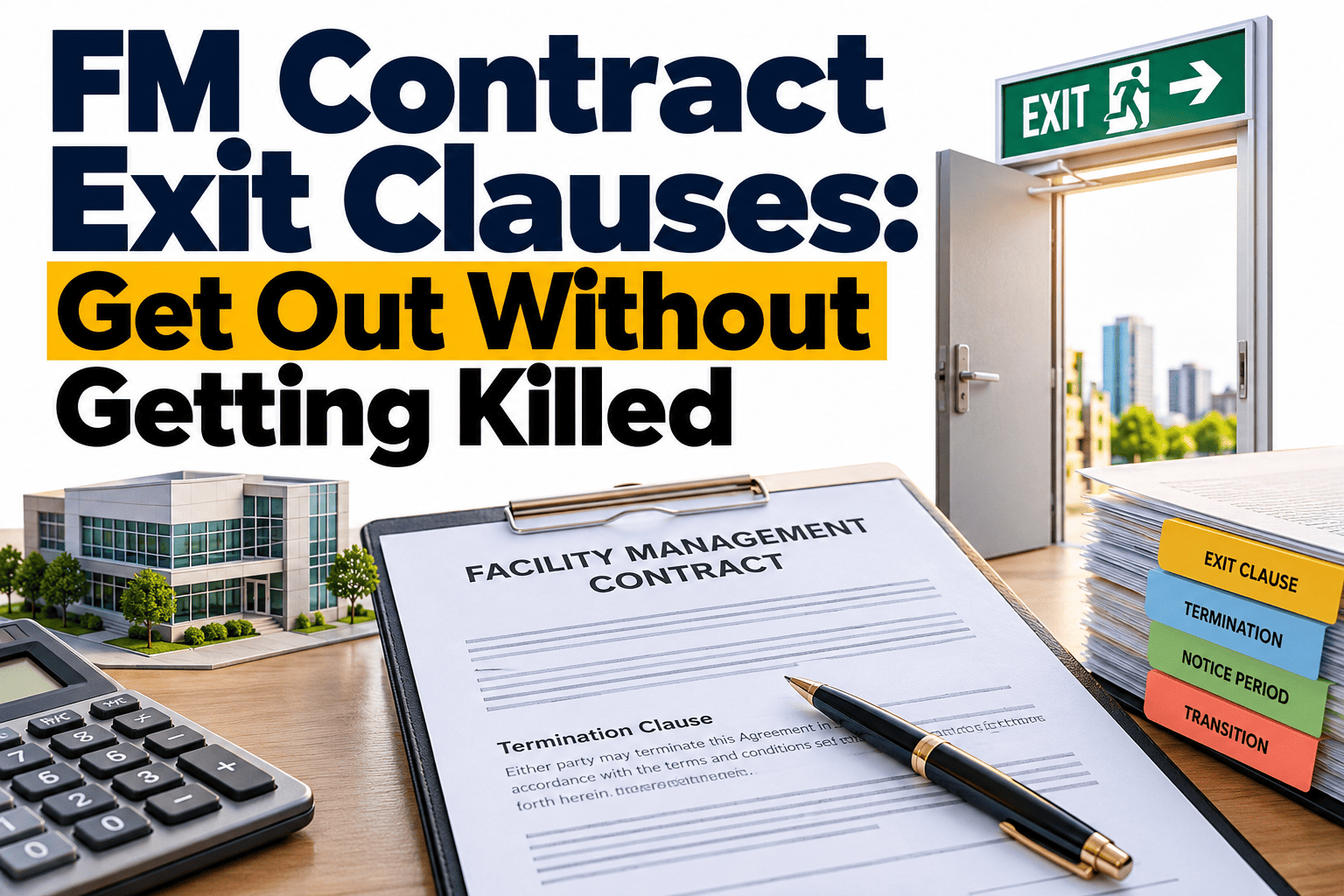
Most facility management contracts are negotiated around scope, price and service levels. The exit gets a single page at the back, if it gets attention at all. Then performance slips, the business wants to switch providers or bring services in-house, and the contract quietly decides how expensive that move will be. Termination fees, locked-in notice periods, missing data and withheld records can turn a simple transition into a costly dispute. This guide lays out the exit clauses every outsourced FM agreement should contain, how to negotiate them, and how to keep the maintenance records you need to leave on your own terms. It is general information, not legal advice.
FM contract exit clauses: how to leave a vendor without paying for the privilege
The cost of switching providers is largely written into the contract on day one. Strong exit terms protect service continuity, your data and your budget when the relationship ends.
The hidden price of a weak exit clause
Contract with weak exit terms
- Termination is possible only at expiry or after a large early exit payment
- Automatic renewal triggers if notice is missed by a few days
- Asset registers, work histories and drawings remain with the vendor
- No obligation to cooperate with the incoming provider
- Disputes over final invoices and deductions drag on for months
Contract with strong exit terms
- Clear rights to terminate for convenience, cause and failure to meet service levels
- Renewal requires an active decision, with reminder dates built in
- All records are owned by the client and delivered in a usable format
- Defined handover duties, with support through the transition period
- Final accounts, deductions and disputes follow a set timetable
An exit clause is only valuable if you can use it. Review notice mechanics, thresholds and evidence requirements long before you need them.
Six ways out, and the clause each one needs
| Exit route | When it applies | What the clause should state |
|---|---|---|
| Expiry | Contract reaches its end date | Renewal only by written agreement, with advance reminder obligations |
| Convenience | You want out without proving fault | Notice period, fee schedule that declines over time, and cap on total exposure |
| Material breach | Vendor fails a core obligation | Definition of breach, written notice, and a fair cure period before termination |
| Persistent service failure | Repeated SLA misses over a set period | Measurable thresholds, rolling window and a right to exit without fee |
| Insolvency | Vendor becomes financially unstable | Immediate termination right, plus access to records and step-in options |
| Change of control | Vendor is acquired or restructured | Right to terminate or renegotiate if ownership changes materially |
The exit clauses every FM contract should include
Notice period and renewal mechanics
Specify notice length, how notice is delivered and who may sign it. Avoid evergreen renewals that roll over if nobody objects.
Red flag: notice window that closes many months before expiryTermination fee schedule
Tie any early exit payment to genuine unrecovered costs, and let the amount fall each year as the vendor recoups its investment.
Red flag: flat fee equal to remaining contract valueCure period and breach definition
Define what counts as material breach and how long the vendor has to fix it. Shorter cure periods suit safety-critical services.
Red flag: undefined breach standard open to disputeData and records ownership
State that asset registers, work order history, inspection records, drawings and compliance certificates belong to the client, whatever system holds them.
Red flag: records described as vendor intellectual propertyTransition and handover duties
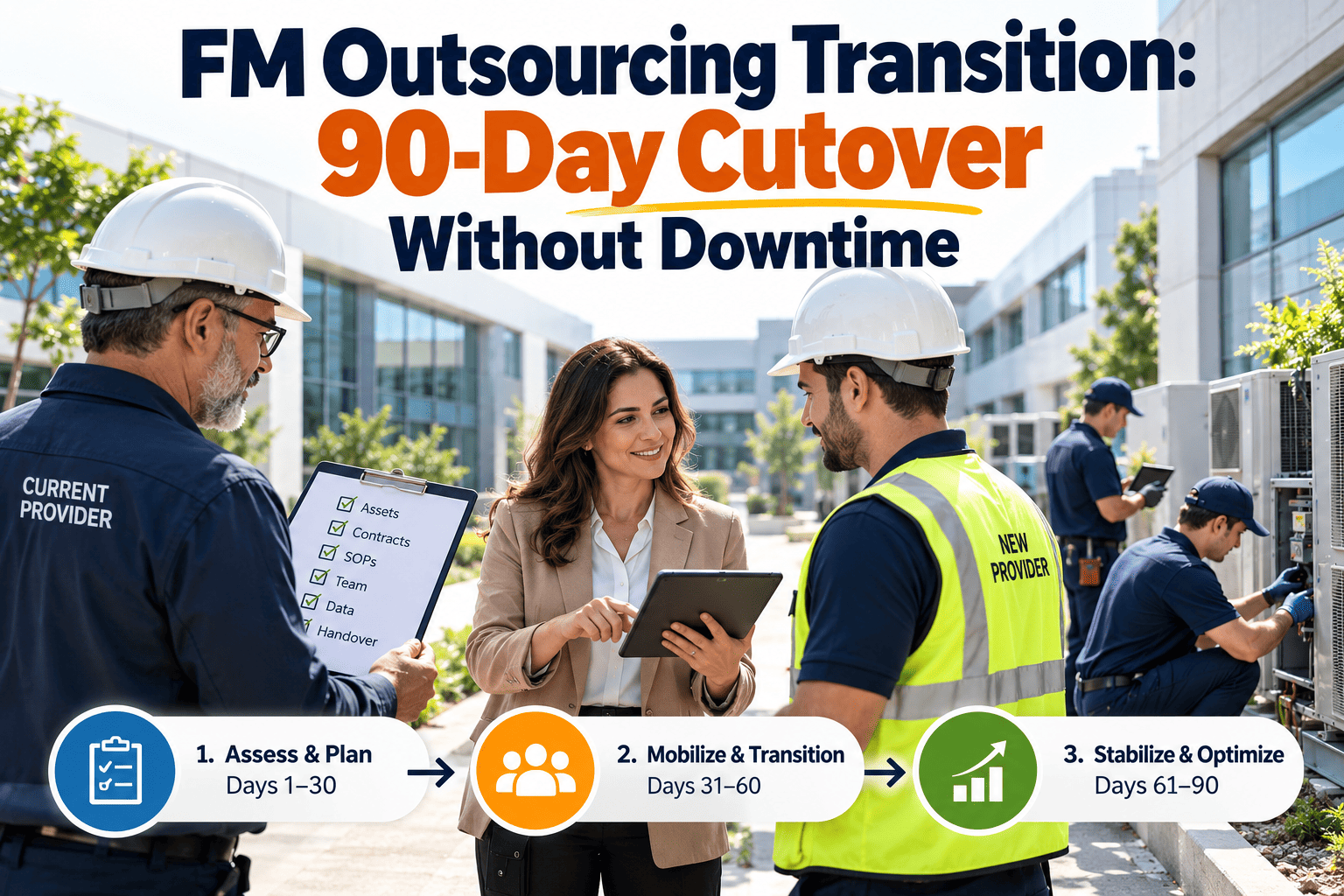
Require a transition plan, cooperation with the incoming provider, knowledge transfer sessions and continued service during the handover.
Red flag: no obligations after the termination dateStep-in rights
Allow the client to take over or appoint a substitute when the vendor cannot perform, particularly for life-safety and compliance services.
Red flag: no right to act until the contract formally endsAssets, spares and equipment
Clarify ownership of tools, vehicles, spare parts, software licences and any equipment the vendor installed, and the price for transfer if any.
Red flag: unclear title to critical spares and toolsStaff and subcontractor arrangements
Address how on-site staff and subcontractors are handled at exit. Rules vary by jurisdiction, so take local legal advice.
Red flag: unknown liabilities passing to the client at exitAn exit calendar that starts a year before expiry
Review the contract and notice dates
Confirm notice deadlines, renewal terms and any fees. Diary every date.Audit performance and records
Compile SLA results, open defects, compliance status and asset data.Decide: renew, rebid or insource
Compare options on total cost, risk and capability, then issue notice if needed.Run the handover plan
Agree knowledge transfer, data delivery, key holders and site access.Joint inspection and sign-off
Record asset condition, outstanding work, meter readings and stock levels.Close accounts and review
Settle final invoices, resolve deductions and capture lessons for the next contract.Where exit risk is highest in an FM agreement
- Address the high-impact, likely risks in the contract before signing
- Share the risk view with procurement and legal teams, so exit planning is part of every renewal discussion
- Prepare contingency plans for the high-impact, unlikely events
- Settle lower-impact items through clear closing checklists
- Assign each risk an owner on the client side, with a review date tied to the contract calendar
- Revisit the risk view after every major change in scope, vendor ownership or site portfolio, because exposure shifts as the relationship matures
Performance evidence turns a termination right into a usable one
- Log every service request, response time and completion time against the agreed service levels
- Keep dated inspection records and photographs showing the condition of assets and areas
- Record repeat failures on the same asset, since they support a persistent failure claim
- Store contractor certificates, permits and compliance documents in one searchable place
- Track credits, deductions and disputed invoices with supporting evidence
- Hold copies of the asset register and maintenance schedules outside the vendor's systems
- Document every written notice and formal communication, including delivery proof
- Capture meeting minutes and agreed actions from monthly service reviews, since they show when problems were raised and how the vendor responded
- Record near-misses, safety observations and audit findings, which strengthen any case that service standards were not met
- Keep a running log of variations, instructions and approvals, so scope disputes can be settled from documents rather than memory
What a usable records handover actually contains
- Specify file formats and delivery dates in the contract, so the data arrives early enough to be checked
- Require a test extract during the contract term, not just at exit, to confirm the data is complete
- Ask for photographs and attachments to be exported along with the records they support
- Assign a named person on each side to own the data transfer and sign off that it is complete
- Hold back a defined portion of final payment until the records have been delivered and checked
Keeping statutory and life-safety services running during transition
List every regulated service
Fire detection, emergency lighting, lifts, water hygiene, pressure systems and electrical testing all carry inspection deadlines.Map due dates across the handover
Identify inspections due shortly before or after exit, and decide who completes each one.Confirm competence and certification
The incoming provider must hold the right accreditations before taking responsibility.Agree a clear changeover moment
Document the date and time responsibility transfers, so no service falls into a gap.Closing the books without a long argument
Clauses that shorten disputes
- A defined final account process with dates for each step
- Clear treatment of credits, deductions and retention amounts
- An escalation path from site managers to senior executives before formal action
- Agreed mediation or expert determination for technical disagreements
- Continuing insurance and indemnity obligations for work done before exit
Gaps that prolong them
- No agreed baseline for asset condition at handover
- Vague wording on who pays for defects found after exit
- Liability caps that do not reflect the value of the services
- Missing evidence for performance credits or service failures
- No timetable for releasing retained payments
Ask legal counsel to review liability, indemnity and insurance language. These terms differ by jurisdiction and by contract structure.
Rebid, switch or insource: questions to answer before serving notice
- What would the service cost on a like-for-like basis, including management overhead and systems
- Does the organization have the skills, supervision and certifications to deliver regulated work
- Which services are best kept with specialist contractors, such as lifts and fire systems
- How long will the incoming model take to reach the current standard of service
- What data and tools will support the new arrangement from the first day
- Are there contract terms that should change in the next agreement, based on lessons from this one
- Will the new arrangement be flexible enough to handle added sites, reduced scope or a future change of provider without penalty
- Who inside the organization will own vendor management after the change, and do they have the time and data to do it well
When to negotiate exit terms, and how much leverage you have
At tender and award
- Maximum leverage, because vendors are competing
- Make exit terms a scored evaluation criterion
- Request sample transition plans from every bidder
- Ask bidders to price transition support separately
At renewal
- Moderate leverage, if a credible rebid is possible
- Use performance data to request better terms
- Remove automatic renewal and reduce fees
Mid-term
- Lowest leverage, unless service has failed
- Use a formal variation process for changes
- Link any concession to a documented benefit
How Oxmaint helps you stay in control of the exit
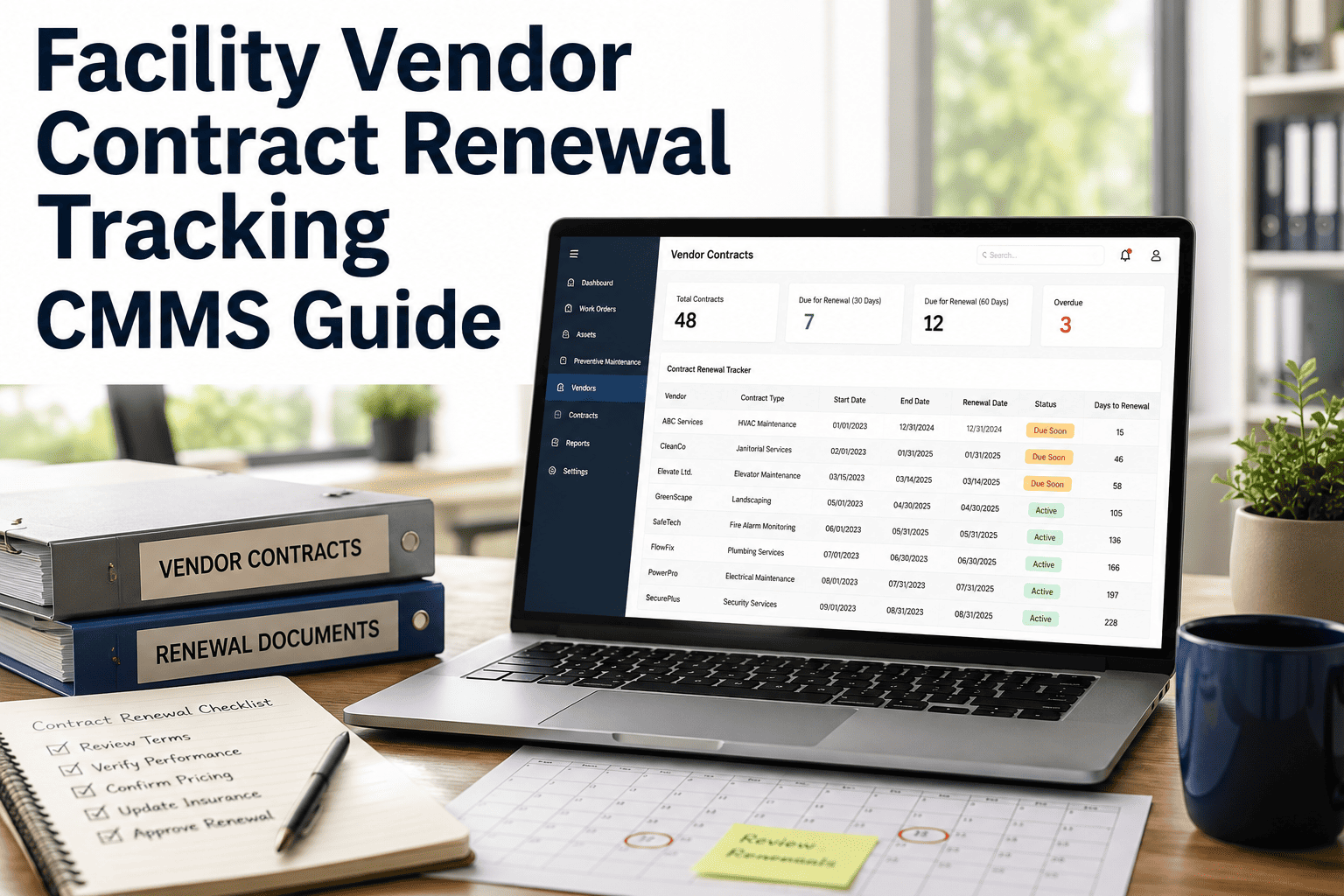
- Asset registers, locations and documents are stored under the client's account
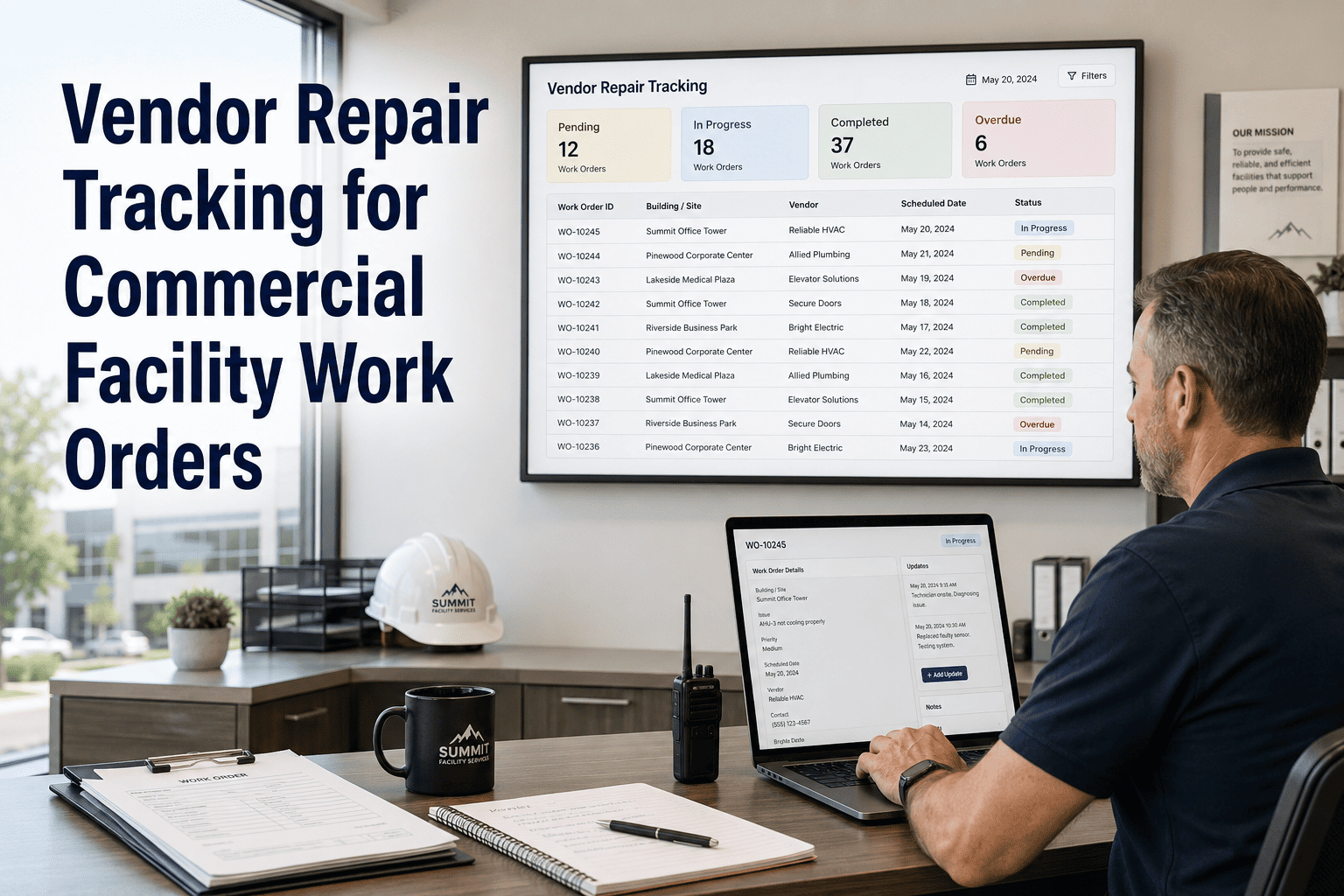
- Work orders capture request time, response, completion and technician notes
- Preventive maintenance schedules and inspection checklists create dated compliance records
- Vendor performance can be reviewed using work order and service level reports
- Records can be reported and shared with an incoming provider or in-house team
Teams planning a transition can build an independent asset record before notice is ever served.
Exit clause checklist before you sign or renew
- Termination for convenience is available, with a declining fee schedule
- Renewal needs written agreement, and reminder dates are diarized
- Breach, cure and persistent failure are clearly defined and measurable
- Client ownership of data, drawings and records is stated explicitly
- Handover and cooperation duties continue after the termination date
- Step-in rights apply to life-safety and statutory services
- Ownership of tools, spares and software licences is documented
- Staff and subcontractor arrangements have been reviewed locally
- Final account process, timetable and dispute route are agreed
FM contract exit clauses: common questions
What is the most important FM exit clause?
Ownership and delivery of records is often the most valuable, because it protects continuity. Keep a copy in your own system.
Can I terminate an FM contract for poor performance?
Usually only if the contract defines breach or persistent service failure and you hold evidence.
How long should an FM notice period be?
It depends on the scope and transition effort. Many agreements use several months, so match it to realistic handover time.
What causes the highest exit costs?
Termination fees, double running during handover and rebuilding missing asset data are typical drivers.
Should legal counsel review exit terms?
Yes, especially staffing and liability terms. To plan the operational side, book a demo.