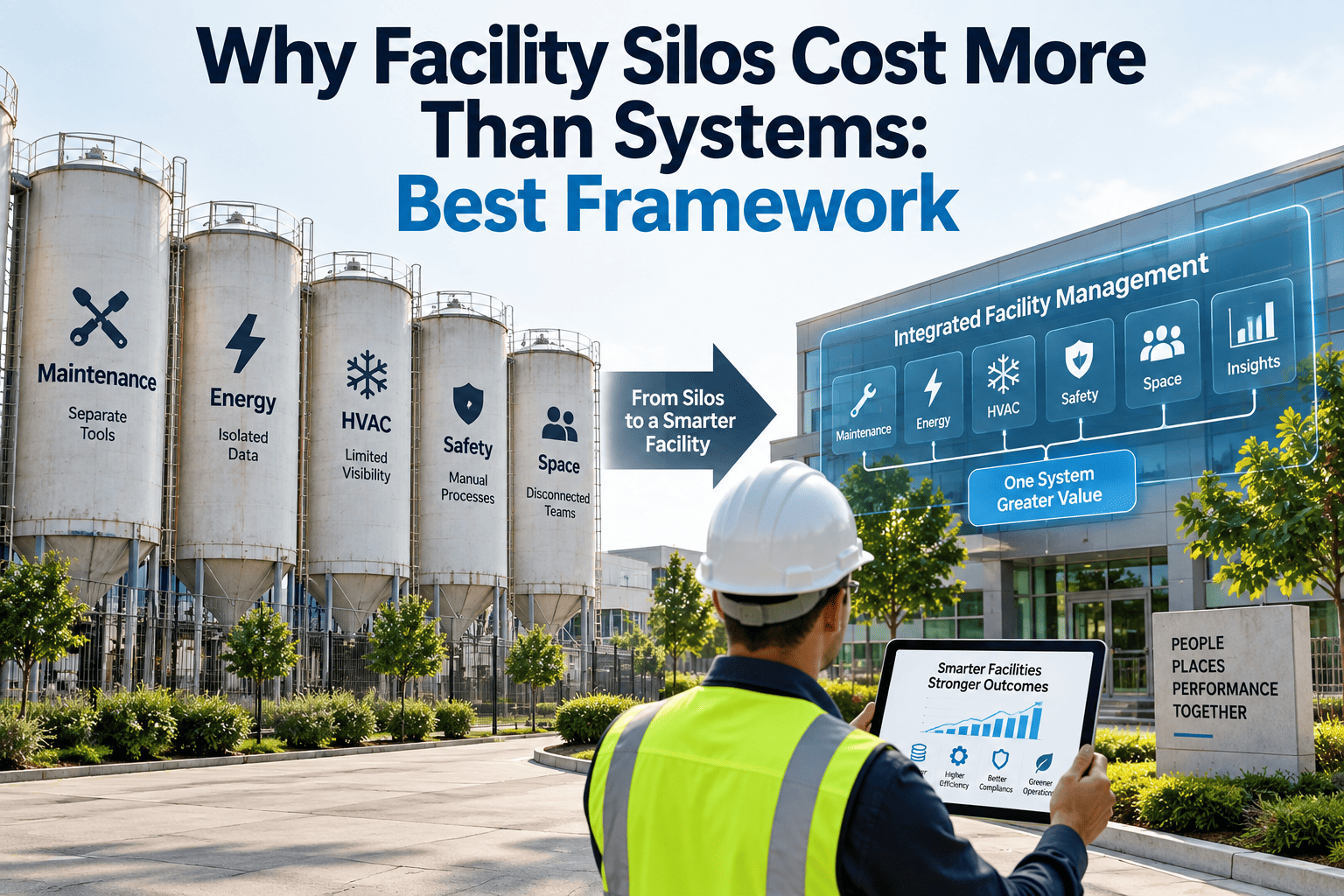
Facility management is overwhelmingly judged as overhead — 70% of CFOs still view FM as a cost center rather than a strategic function. But the FM leaders repositioning the function as a strategic partner using cost, risk and value evidence are the ones winning bigger budgets, boardroom influence and enterprise credibility. This guide breaks down the facility management strategic value playbook — value demonstration, executive engagement and the positioning approach that moves FM from operational overhead to strategic partner — and shows how OxMaint's AI-powered CMMS platform provides the real-time data that makes that shift provable. Ready to change the conversation? Start Free Trial and see the difference on your assets today.
FM Strategic Transformation
Stop defending the budget. Start demonstrating the value.
Facility management strategic positioning shifts the conversation from "what does FM cost?" to "what risk and value does FM manage?" — and it starts with evidence your CFO can't ignore.
Yet organizations that reposition FM as a strategic partner report 15–25% lower total cost of ownership and demonstrably higher asset availability.
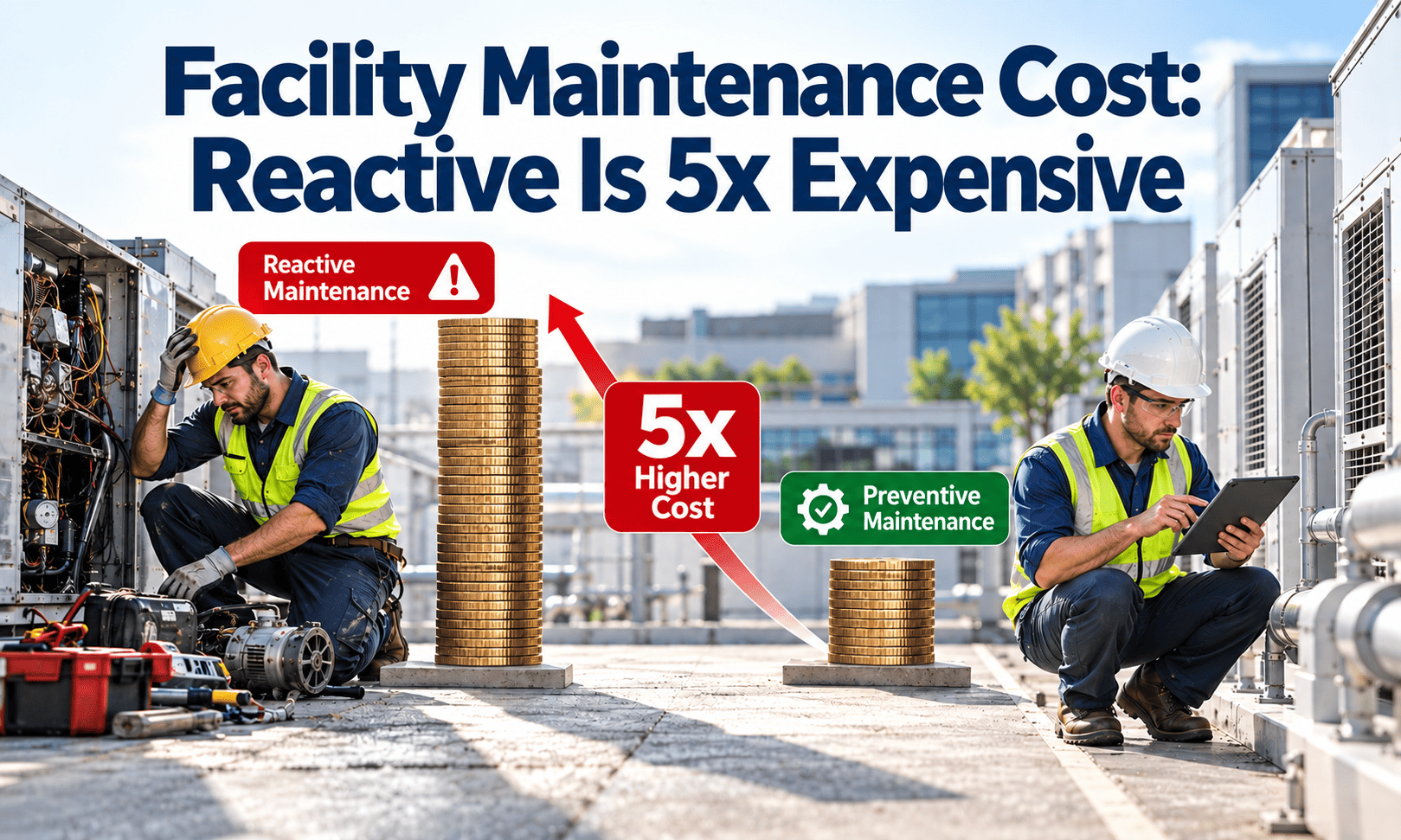
The Cost Center Problem
Why facility management is stuck in the cost-center narrative
When the only metric the board sees is "FM spend as % of revenue," every budget cycle becomes a fight for survival. The facility management value proposition dies on the spreadsheet before anyone reaches the asset register.
Reactive reporting only
Most FM teams report spend after the fact — monthly invoice batches, annual budget variance — with no forward-looking risk or uptime narrative. The board sees cost, never consequence.
No value evidence layer
Spreadsheets track what was spent, not what was avoided. Without downtime-cost-avoided, compliance-risk-reduced or asset-life-extended metrics, FM has no defensible value story.
Operational language at executive level
Boards don't buy "work orders closed." They buy risk reduction, uptime and capital deferral. When FM speaks operationally, it stays operational — permanently overhead.
FM Value Demonstration
The 4 pillars of facility management strategic value
FM function transformation requires four evidence pillars. Each one converts an operational metric into a boardroom-ready business outcome.
Risk-adjusted spend, not just spend
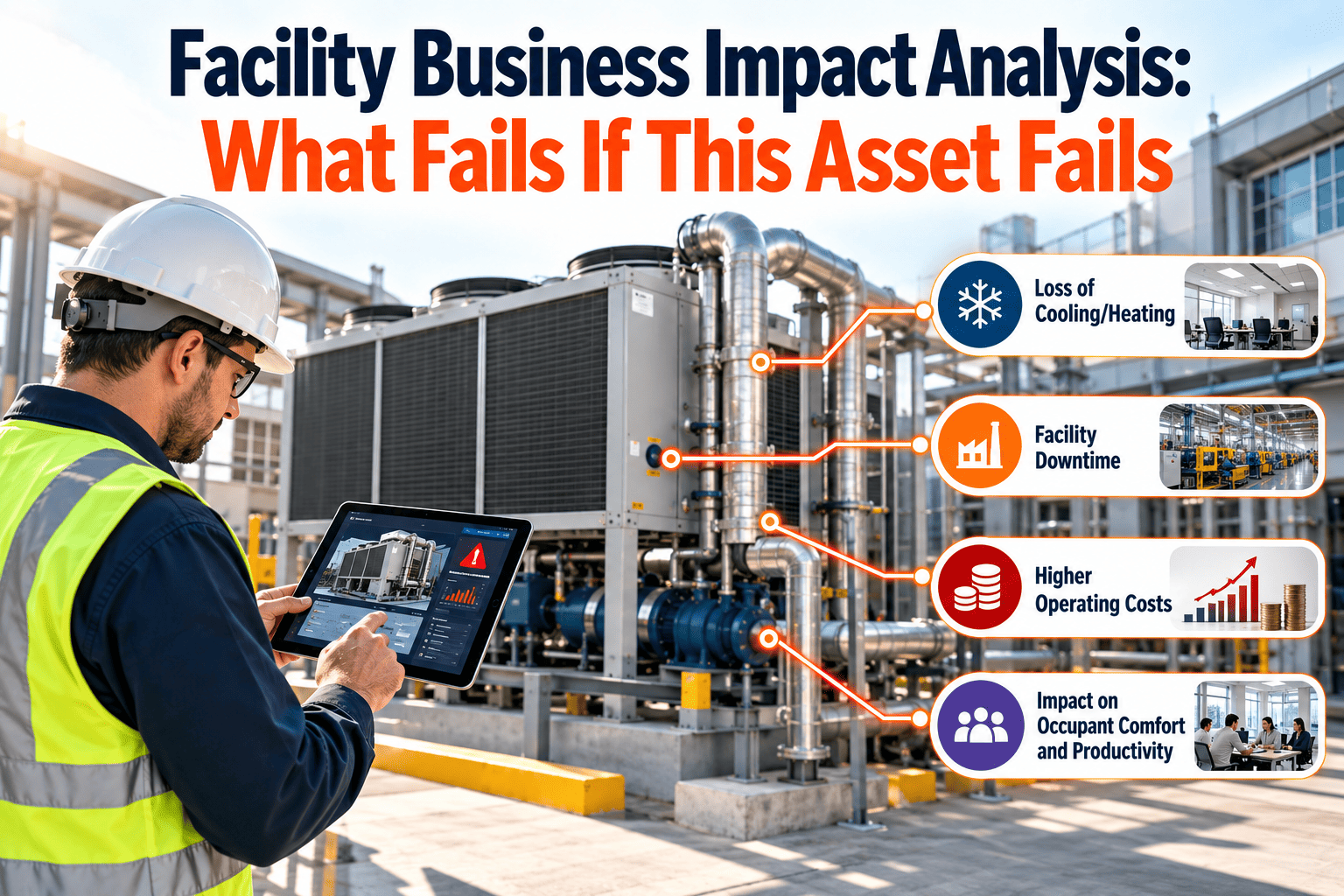
Move beyond "FM cost per sq ft" to cost-of-failure-avoided. A single avoided chiller failure can offset $50K–$120K in emergency repair, business disruption and tenant credits — but only if you can prove it with work-order history and asset condition data.
Audit-readiness as a strategic asset
Compliance failures — OSHA, NFPA, FMCSA, ISO 55000 — cost enterprises $40K–$200K per incident plus reputational damage. A facility strategic function maintains real-time compliance dashboards that turn audit-readiness from a scramble into a quarterly win report.
Asset availability drives revenue
In manufacturing, logistics and healthcare, uptime is revenue. Every 1% improvement in asset availability translates directly to throughput. FM strategic positioning means owning that number — not handing it to operations and hoping.
Deferring CAPEX through better OPEX
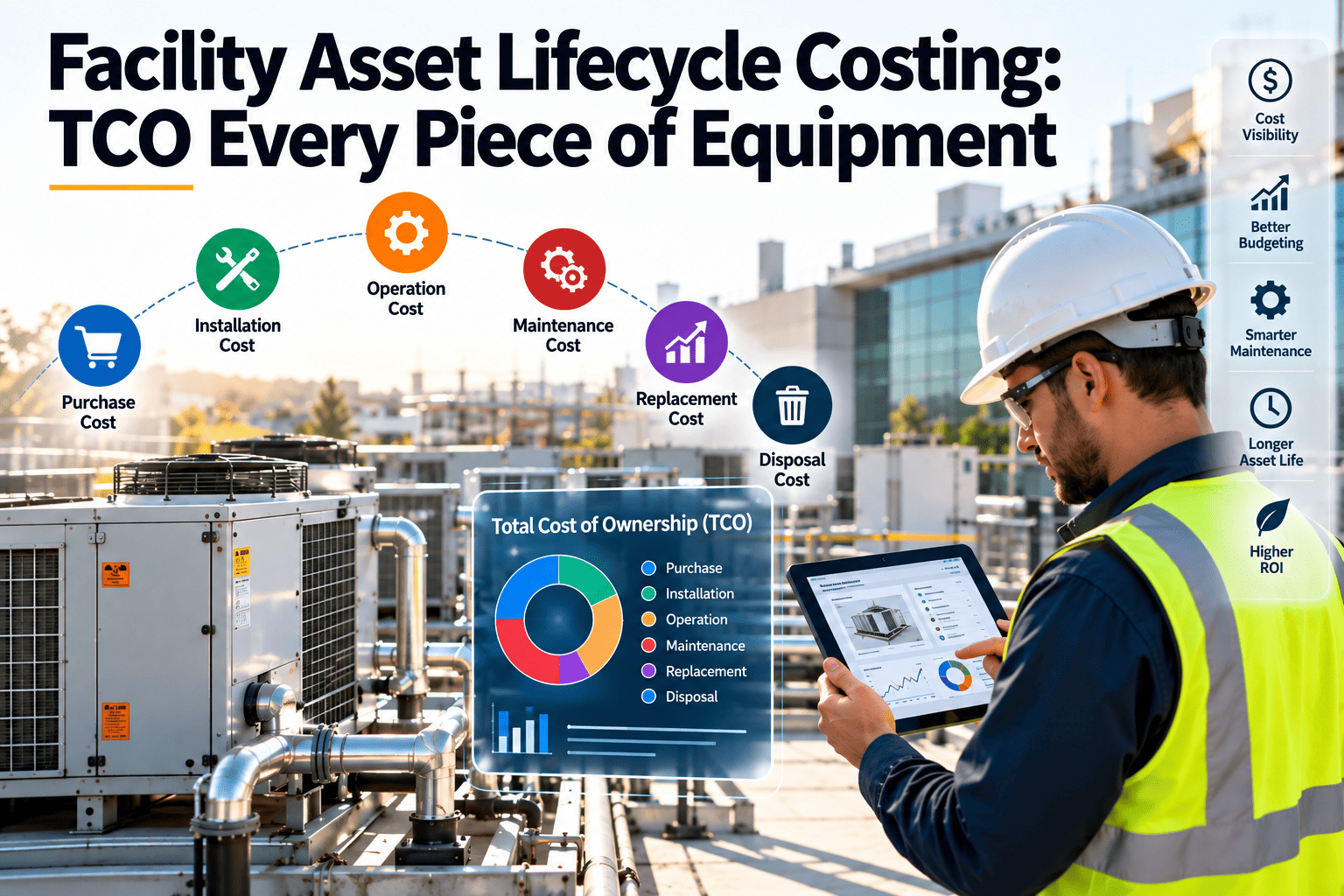
A well-run preventive and predictive program extends asset life by 20–40%, deferring $500K–$2M in capital replacement. That deferred CAPEX is pure strategic value — but you need asset lifecycle analytics to claim it in the boardroom.
Worked Example
From overhead to business partner: a 180-asset scenario
A facilities team managing 180 critical assets across 3 sites spends $42K/yr on reactive maintenance and loses 120 hours of production downtime annually. Here's what changes when they reposition as a strategic function with the right evidence layer.
| Metric (12-month baseline) | Before: Cost Center Mode | After: Strategic Function | Boardroom Impact |
|---|---|---|---|
| Reactive maintenance spend | $42,000 / yr | $18,500 / yr | 56% reduction — defensible OPEX win |
| Unplanned downtime hours | 120 hrs | 38 hrs | 68% fewer disruptions to operations |
| PM compliance rate | 61% (untracked) | 96% (auditable) | Compliance risk down, audit time halved |
| Asset lifecycle (avg) | 9.2 yrs | 12.8 yrs | $740K CAPEX deferred over 3 yrs |
| Executive reporting cadence | Annual budget defense | Quarterly value + risk review | FM invited to strategy table |
Total demonstrable value: $268K in cost avoidance, risk reduction and deferred CAPEX — against a $42K baseline. That's the FM strategic contribution gap most teams are sitting on right now.
FM Strategic Positioning
The 5-step facility management repositioning roadmap
Repositioning FM as a business partner isn't a rebrand — it's a structured 5-month shift in how the function measures, reports and engages. Each phase produces boardroom-ready evidence.
Baseline the true cost of the status quo
Audit every asset, work order and spare-parts record. Quantify reactive spend, downtime hours and compliance gaps. This baseline — messy as it is — becomes your before-picture and your ROI denominator.
Deploy a data platform that proves value
Move from spreadsheets and paper to a CMMS that captures real-time work-order, asset-condition and cost data. Without a system of record, every value claim is anecdotal. OxMaint rolls out in days, not months.
Build the 4-pillar value dashboard
Construct an executive-facing dashboard showing cost avoidance, risk/compliance status, uptime contribution and CAPEX deferral. Translate every operational metric into a financial or risk outcome the CFO recognizes.
Shift the executive engagement cadence
Replace the annual budget-defense meeting with quarterly strategic reviews. Present value delivered, risk mitigated and capital recommended — not invoices. Frame FM as the function that protects asset value and operational continuity.
Lock in strategic-partner status
By month five, the data tells the story. FM is now invited to capital planning, risk committee and growth-strategy conversations. The function is funded as strategic infrastructure, not discretionary overhead.
How OxMaint Helps
How OxMaint powers the FM strategic function shift
OxMaint's AI-powered CMMS and EAM platform gives facility leaders the real-time data, analytics and reporting infrastructure needed to prove facility management strategic value — and sustain it.
Real-time cost & value analytics
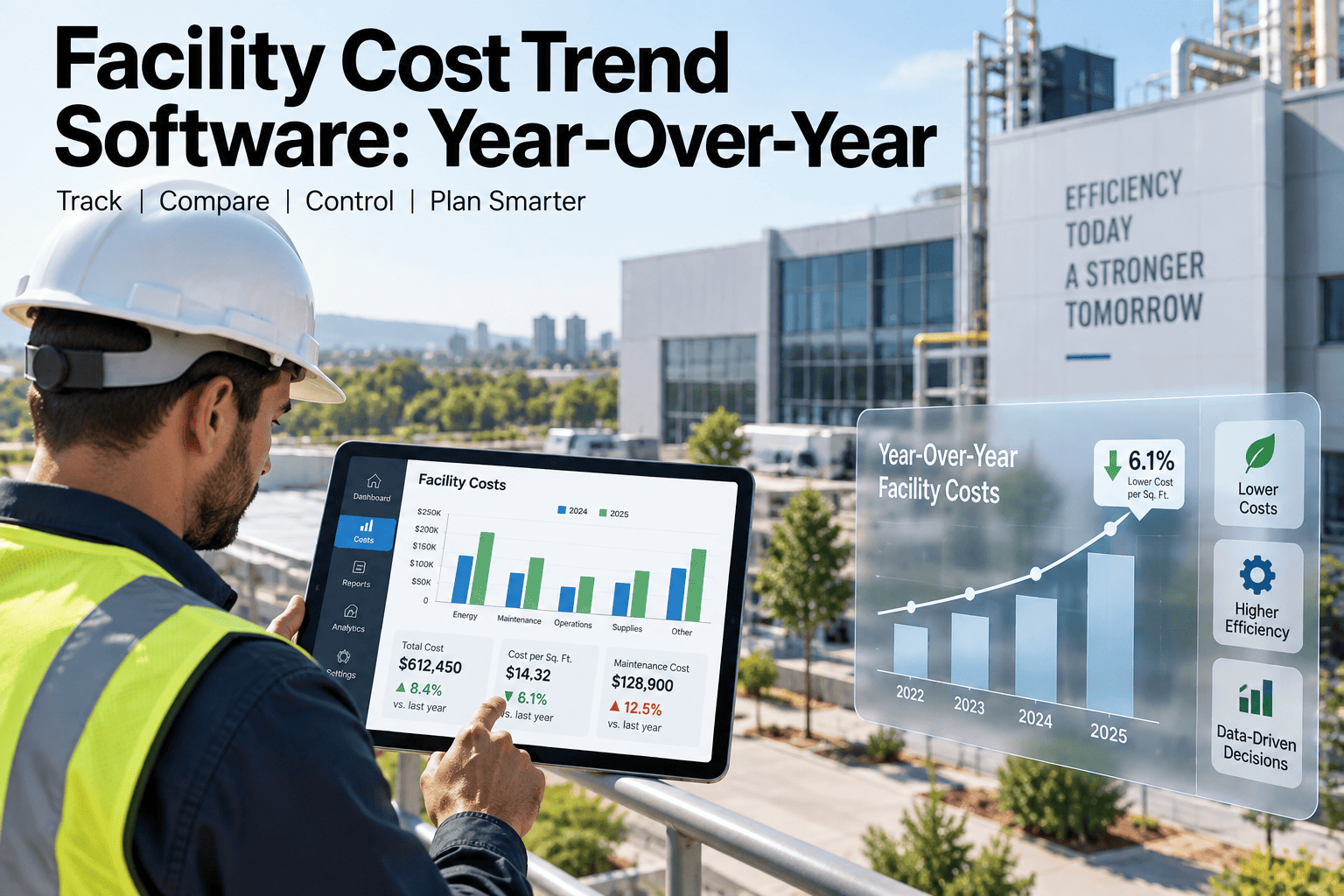
Live dashboards convert work orders, asset costs and downtime into boardroom-ready metrics: cost-of-failure-avoided, OEE impact and CAPEX deferral. No more manual spreadsheet rollups — the value story updates itself.
Outcome: defensible value reporting in one clickPredictive maintenance intelligence
AI-driven failure prediction flags assets at risk 7–21 days before breakdown, cutting unplanned downtime 30–50% and extending asset life 20–40%. That's the uptime and capital-efficiency pillar, automated.
Outcome: 30–50% less unplanned downtimeCompliance & audit readiness
Automated PM scheduling and digital audit trails keep every asset inspection, certification and corrective action logged and retrievable. OSHA, NFPA, FMCSA, ISO 55000 — audit-ready in minutes, not weeks.
Outcome: compliance risk cut, audit prep time halvedExecutive-grade reporting
Pre-built strategic reports — quarterly value review, risk register, capital-deferral summary — translate maintenance activity into financial language. OxMaint makes FM the function that shows up to the boardroom with answers.
Outcome: FM leads quarterly strategic reviewsSee OxMaint on your assets — book a 30-min demo
Watch how facility leaders use OxMaint to generate the cost, risk and value evidence that moves FM from overhead to strategic partner.
FM Strategy FAQ
Frequently asked questions about FM strategic positioning
How do I stop being seen as a cost center in facility management?
You stop being seen as a cost center by reporting value, not just spend. That means tracking cost-of-failure-avoided, downtime hours saved, compliance risk reduced and CAPEX deferred — then presenting those numbers to executives quarterly. A platform like OxMaint automates this evidence layer so you're never defending invoices again. Book a demo to see the reporting in action.
What metrics prove facility management strategic value?
The four highest-impact metrics are: cost avoidance (emergency repair + downtime cost prevented), PM compliance rate (target 95%+), asset availability/uptime contribution, and capital deferral (asset life extended vs. replacement schedule). Pair these with a compliance risk score and you have a complete strategic value picture.
How long does FM function transformation take?
A focused transformation — baseline, platform deployment, dashboard build, executive cadence shift — takes 4–6 months for a mid-size operation. The data infrastructure (CMMS rollout) is the longest pole; OxMaint deployments typically go live in days to weeks, not the 6–12 months legacy systems demand.
What's the ROI of repositioning FM as a strategic partner?
Organizations that successfully shift report 15–25% lower total cost of ownership, 30–50% less unplanned downtime and 20–40% longer asset life. For a 180-asset operation, that typically translates to $200K–$400K in annual demonstrable value — plus intangible gains in boardroom influence and budget stability.
Do I need a CMMS to demonstrate facility management value?
In practice, yes. Spreadsheets can't capture real-time work-order costs, asset condition history, PM compliance or predictive failure signals — and without that data, every value claim is anecdotal. A CMMS like OxMaint is the system of record that makes strategic reporting defensible, auditable and automated. Start a free trial to see how fast you can stand it up.
Turn your FM function into a strategic asset
Join the facility leaders using OxMaint to prove cost avoidance, cut downtime 30–50% and earn a seat at the strategy table.
Free 14-day trial · No credit card