A 3-5 year facility management strategic plan transforms your FM department from a reactive cost center that responds to whoever shouts loudest into a proactive business function that aligns capital, assets, and maintenance with corporate direction. Without an FM strategic roadmap, maintenance teams average 50-60% reactive work, draining budgets through unplanned downtime and emergency labor. Building a structured facility management roadmap — covering portfolio alignment, capability building, and CMMS data maturity — is what secures executive funding and drives measurable reliability gains. See how OxMaint supports this transition when you Start Free Trial, or read on to build your multi-year plan.
Is your FM roadmap driving business value — or just keeping the lights on?
Most facility teams operate without a 3-5 year FM strategic plan, relying on day-to-day firefighting. The result is 3x higher lifecycle costs and stalled capital approvals. Turn your facility strategy into a funded, measurable roadmap.
Why you need a 3-5 year FM strategic roadmap
A facility management strategic plan is the bridge between daily operations and long-term enterprise goals. When FM strategy development is treated as an annual budgeting exercise rather than a continuous roadmap, asset reliability drops, capital requests get denied, and maintenance backlogs grow by an average of 15-20% year over year. A formal FM multi year plan shifts the conversation from "what broke today" to "how do we optimize asset lifecycle value over the next five years."
How to build a facility management strategic plan: a 4-phase timeline
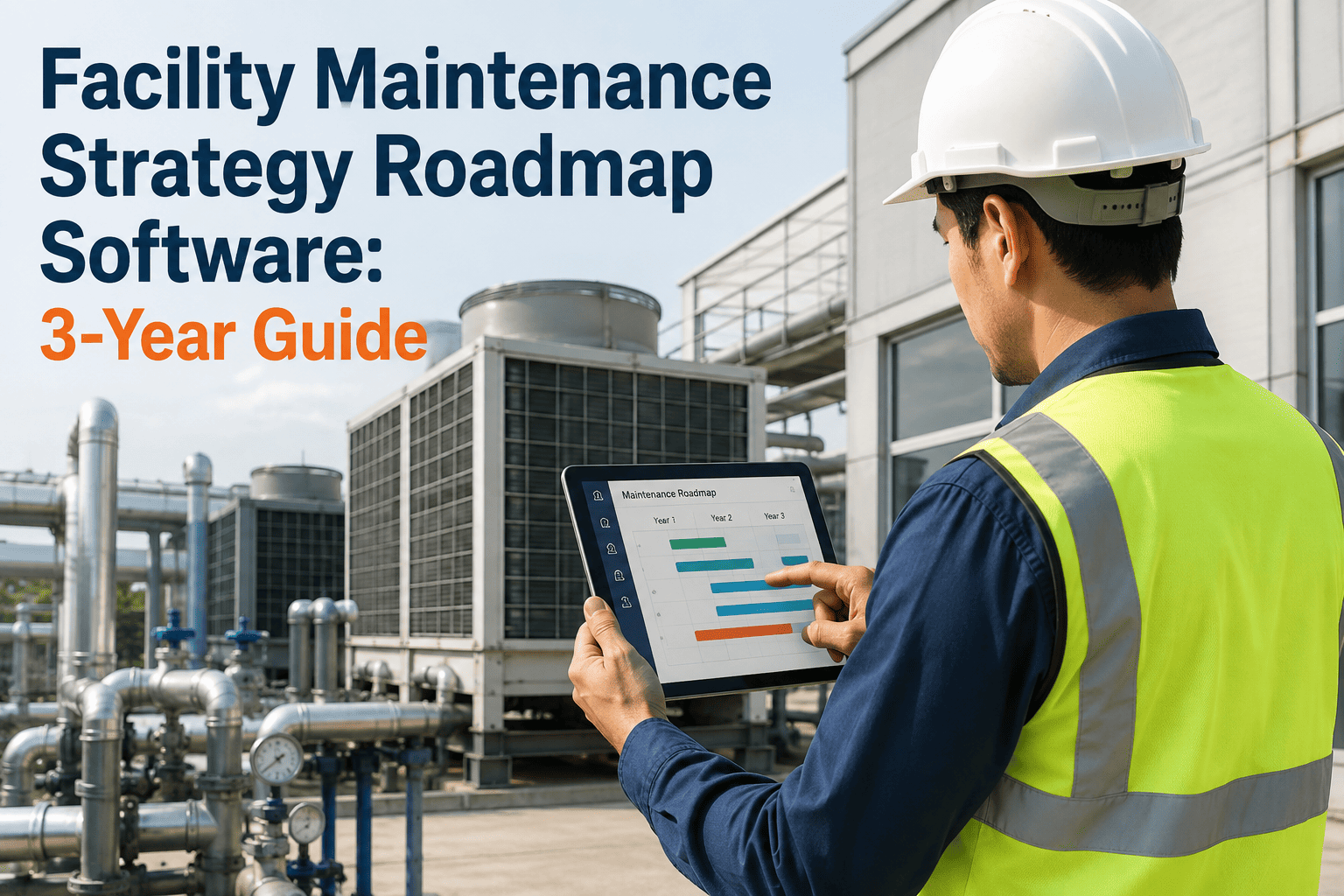
Effective facility management planning follows a structured timeline. Rather than treating strategy as a static document, successful reliability leaders use a rolling 3-5 year FM strategic roadmap that adapts to asset condition data and business changes. Here is a proven 12-month phase-by-phase approach to FM strategy development.
Audit your current asset register, building systems, and maintenance history. Rank assets by criticality to business operations. A CMMS like OxMaint pulls this baseline in days, not months, by aggregating work order history and failure codes into a single dashboard.
Compare your current reactive ratio (typically 60%+) against the target state (under 20%). Identify gaps in spare parts inventory, technician skills, and predictive maintenance sensors. Define the budget and hiring requirements needed to close these gaps over 3 years.
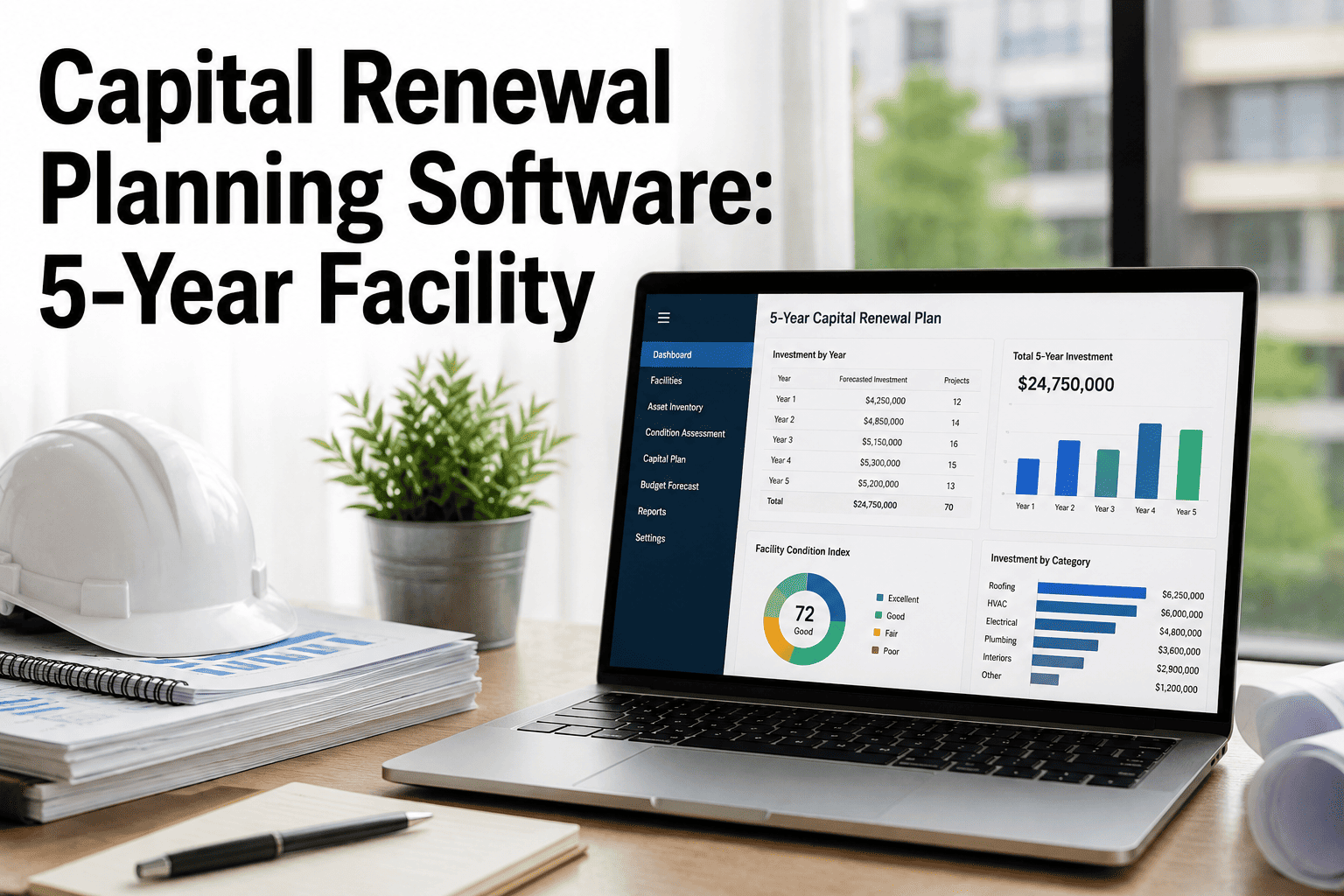
Draft the 3-5 year facility strategy plan. Map capital expenditure (CapEx) and operational expenditure (OpEx) to specific asset lifecycle events. Align PM schedules, predictive maintenance rollouts, and inventory optimization with corporate financial targets.
Present the FM strategy roadmap to the C-suite using ROI, downtime reduction, and compliance metrics. Secure funding and begin executing Year 1 objectives, using your CMMS to track KPIs like MTBF (Mean Time Between Failures) and OEE (Overall Equipment Effectiveness).
The cost of NOT having an FM long term plan
A reactive facility management approach is silently draining your budget. Without an FM planning strategy, assets fail unexpectedly, energy efficiency drops, and compliance audits become emergencies. Consider this real-world scenario to understand the financial impact.
A 180-asset manufacturing plant operating without a facility strategic roadmap was spending $42,000 annually on emergency HVAC and conveyor repairs. Reactive maintenance consumed 65% of their labor hours. After implementing a 3-year FM strategic plan powered by OxMaint — establishing PM schedules, tracking asset condition, and optimizing spare parts — they reduced unplanned downtime by 35% and cut emergency repair costs to $14,500 within 18 months. The strategic shift delivered $27,500 in direct annual savings and freed up 1,200 labor hours for proactive improvements.
| Operational Metric | Reactive FM (No Plan) | Strategic FM (3-5 Year Plan) |
|---|---|---|
| Reactive Work Ratio | 60% - 80% | Under 20% |
| Asset Lifespan | Shortened by 30-40% | Optimized to full lifecycle |
| Budget Predictability | Volatile, emergency-driven | Forecasted CapEx & OpEx |
| Downtime Costs | $50K - $500K per critical failure | 30-50% reduction via PMs & PdM |
| Audit Readiness | Scrambling for documentation | Automated compliance logs |
Turn your 3-5 year FM strategic plan into measurable ROI
See how OxMaint maps your asset portfolio, automates PMs, and predicts failures. Book a 30-minute demo to build your facility management roadmap today.
How OxMaint powers your facility management roadmap
A strategic plan is only as good as the system executing it. OxMaint is an AI-powered CMMS and EAM platform that operationalizes your FM strategy roadmap — moving you from spreadsheets and whiteboards to data-driven preventive and predictive maintenance. Here is how OxMaint capabilities map directly to your strategic planning goals.
Map your entire portfolio in OxMaint to rank asset criticality and lifecycle costs. Outcome: Eliminate blind spots, justify CapEx requests, and align facility strategy with business risk.
Schedule and track PMs based on usage, time, or condition. Outcome: Drop reactive work ratios below 20% and extend asset lifespan by 30% as defined in your FM multi year plan.
Link BOMs (Bills of Materials) to assets for auto-reorder. Outcome: Cut inventory holding costs by 15-25% while eliminating stockouts that delay critical repairs.
Leverage machine learning on sensor and work order data to forecast failures. Outcome: Predict breakdowns before they happen, cutting unplanned downtime by 30-50%.
Key elements of a successful facility strategy plan
A funded FM strategic roadmap requires more than good intentions. Executives approve facility management strategy development when it is backed by clear data, industry standards (like ISO 55000), and measurable KPIs. Ensure your plan includes these critical pillars.
Your FM plan must map directly to corporate revenue goals. If a facility supports a high-margin production line, its assets should have higher criticality rankings and more robust redundancy plans.
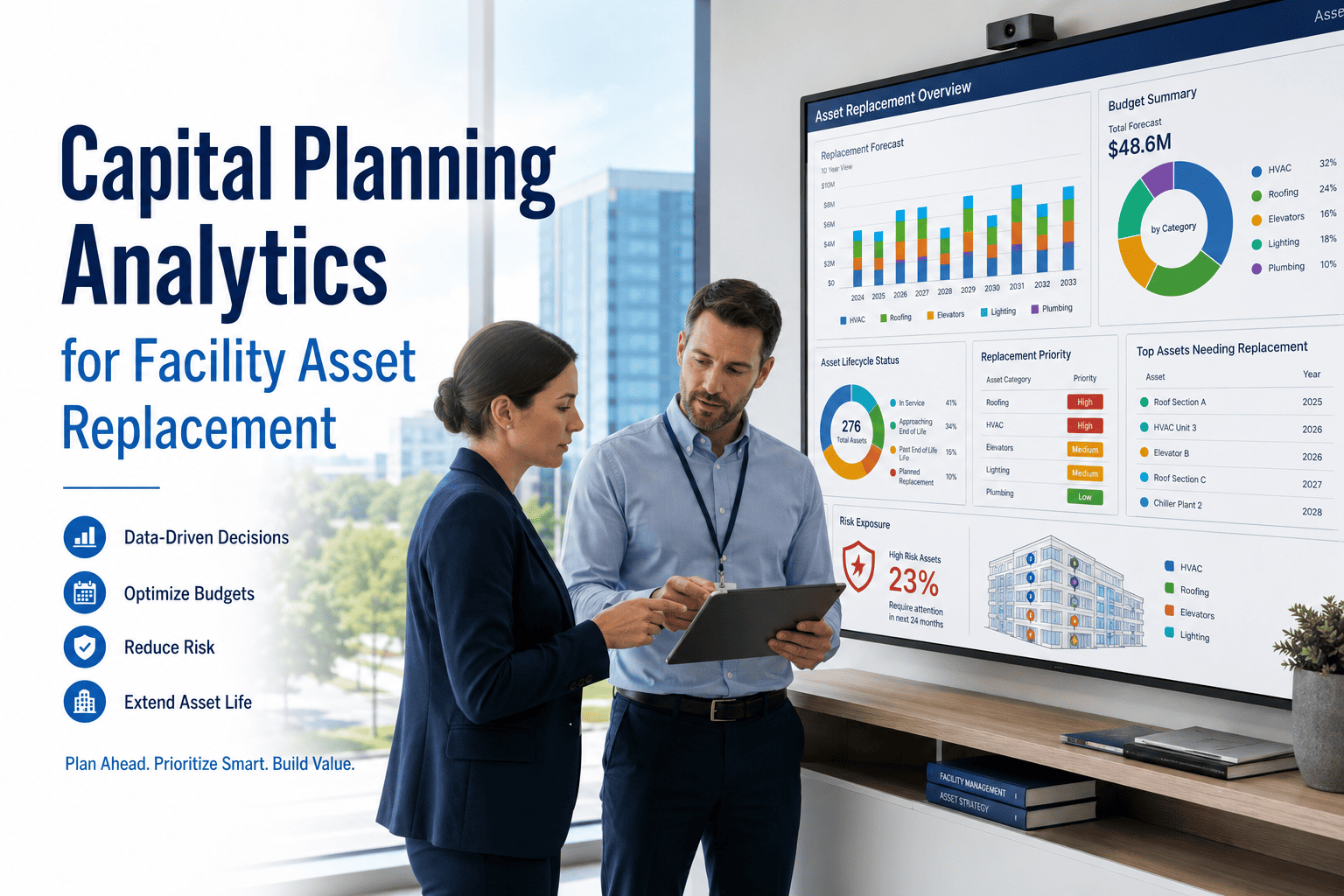
Move beyond visual inspections. Use CMMS data, IoT sensors, and failure history to assess true asset condition and predict remaining useful life (RUL) for your 3-5 year capital plan.
Identify skill gaps in your maintenance team. A strategic plan must budget for training, new hires, or outsourced expertise to execute predictive maintenance and complex overhauls.
Transition from spreadsheets to an AI-powered EAM. Your roadmap should define clear milestones for CMMS adoption, mobile work order execution, and dashboard reporting.
FM strategic plan FAQs
An FM strategic plan is a 3-5 year roadmap that aligns facility and asset management operations with overarching business objectives. It defines how maintenance budgets, capital expenditures, and technology investments will be deployed to maximize asset reliability, ensure compliance, and reduce operational costs over the planning horizon.
Most effective facility management roadmaps span 3 to 5 years. This timeframe is long enough to plan major capital replacements and technology rollouts (like a new CMMS), but short enough to remain adaptable to changing business conditions and asset health data. A rolling 3-5 year FM strategic roadmap is updated annually.
Executive buy-in requires speaking the language of ROI and risk mitigation. Present your facility strategy plan using metrics like projected downtime reduction, lifecycle cost savings, and compliance risk avoidance. Using a platform like OxMaint to generate data-backed forecasts makes your funding request undeniable. You can Book a Demo to see these reports in action.
A maintenance schedule is a tactical, day-to-day list of tasks (like changing a filter monthly). An FM strategic plan is the overarching framework that dictates why that asset matters, what its lifecycle cost is, and when it should be replaced or upgraded over the next 5 years. The schedule executes the strategy.
Your FM planning strategy should track KPIs like Mean Time Between Failures (MTBF), Mean Time to Repair (MTTR), Overall Equipment Effectiveness (OEE), reactive maintenance ratio (target under 20%), and planned maintenance compliance. These metrics prove the ROI of your strategic plan to stakeholders.
Ready to execute your facility management roadmap?
Stop reacting to breakdowns. Start building a data-driven 3-5 year FM strategic plan with OxMaint. See how AI-powered maintenance analytics can cut your downtime by up to 50%.