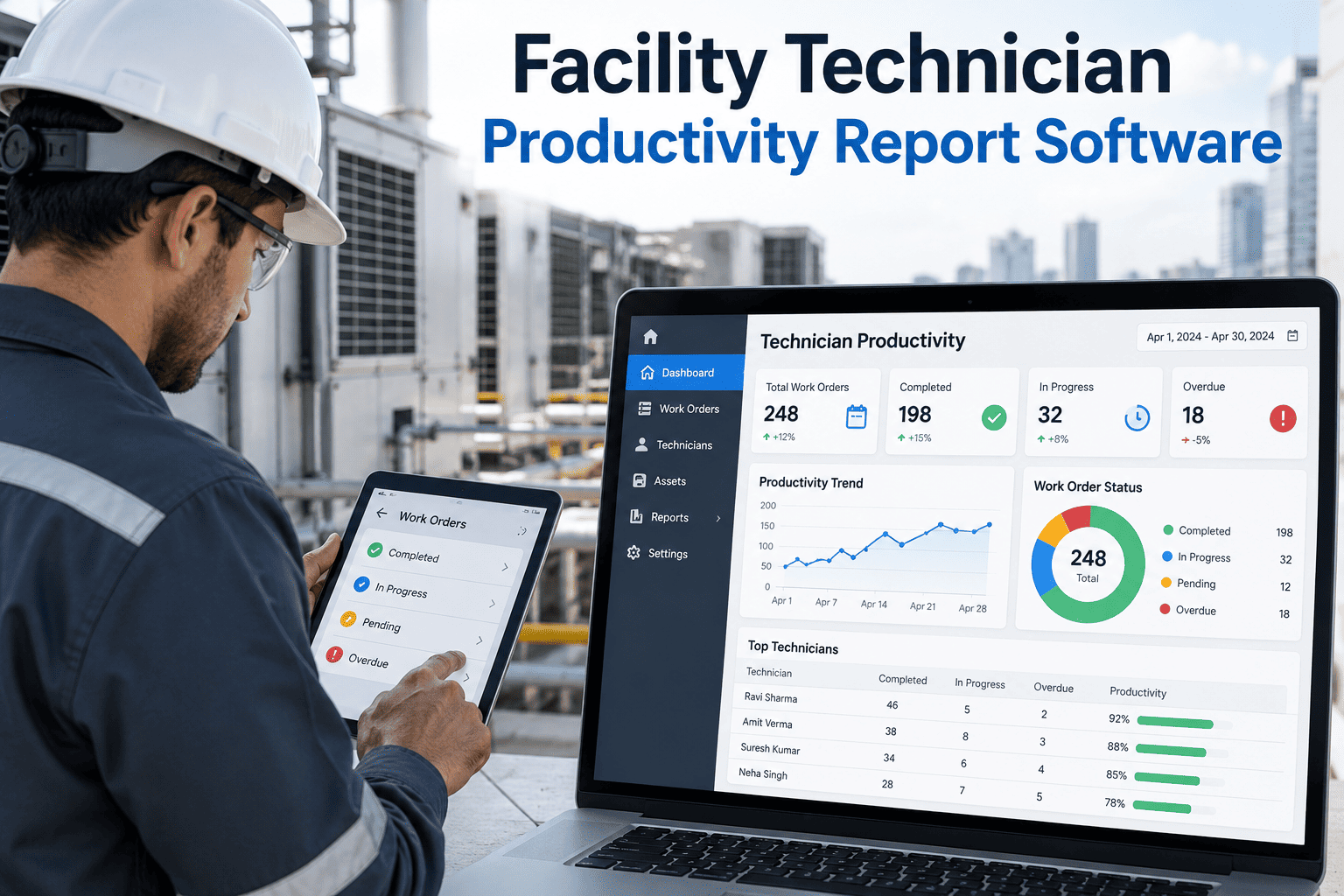
Technician pay is the first thing candidates compare and the last thing many facilities teams update. When a posted band sits below the local market, requisitions stay open, preventive maintenance slips, and overtime quietly becomes the staffing plan. This guide turns the latest federal wage data into a practical pay-band structure for commercial facility technicians, then adds the total compensation pieces that decide whether an offer is accepted. It also covers what keeps people after they sign, from predictable schedules to clean work orders. If you want to see how maintenance management software can remove admin load from your technicians, keep reading.
FM Technician Pay Bands: What to Pay to Actually Hire in 2026
Requisitions age when bands trail the market. Anchor commercial facility technician pay to real wage data, build levels that reward skill, and present total compensation that closes offers.
Where a pay band loses the candidate
Most teams blame the talent shortage when a requisition ages. In practice, the offer loses ground at five identifiable points in the hiring path, and pay is involved in every one.
What the federal data says about 2026 pay
The most reliable public benchmark is the Bureau of Labor Statistics series for heating, air conditioning, and refrigeration mechanics and installers, where most facility technicians are classified. The figures below come from the May 2025 release.
Wage distribution with hourly equivalents
| Percentile | Annual wage | Hourly equivalent (2,080 hours) | How to use it |
|---|---|---|---|
| 10th | $40,050 | $19.25 | Trainee and helper floor |
| 25th | $48,360 | $23.25 | Entry technician, limited scope |
| 50th | $61,010 | $29.33 | Fully productive technician |
| 75th | $77,060 | $37.05 | Multi-skilled or certified technician |
| 90th | $95,210 | $45.77 | Lead, controls, or specialist |
The gap between the 25th and 75th percentiles is about $28,700 a year. That spread is where skills, certifications, and employer type live, and it is why a single flat rate rarely works.
Regional spread in state medians
| State | Median annual wage | Versus national median |
|---|---|---|
| District of Columbia | $84,390 | About 38% higher |
| Alaska | $77,430 | About 27% higher |
| Illinois | $77,410 | About 27% higher |
| Massachusetts | $77,300 | About 27% higher |
| Connecticut | $76,610 | About 26% higher |
| Florida | $56,670 | About 7% lower |
Read the benchmark before you trust it
Public wage tables are a starting point, not a pay band. Five limits matter for commercial facility roles.
- The category includes installers. A building technician who handles HVAC, electrical, plumbing, and controls may benchmark above the occupation median.
- The series reflects wages, not total compensation. Benefits, on-call pay, vehicles, and tool programs sit outside it.
- State medians hide metro differences. A large city inside a low-wage state can behave like a high-wage market.
- The survey has a reference period. Treat it as a floor and check it against live offers you have won and lost.
- Job titles differ. Match on scope of work and certifications, not on the title in your HR system.
What a 15 to 25 percent adjustment looks like in dollars
Assume a Tech II band with a midpoint of $52,000 and offers that keep losing. The steps below are arithmetic against the national median, not a market claim, so test them against local postings.
How to choose the right point
Move toward the upper end when you hire against contractors, run rotating shifts, or cover critical environments. Stay nearer the lower end when your local market is soft and your total package is strong.
A four-level band ladder anchored to the data
Contiguous levels give technicians a visible path and give managers room to hire near the midpoint. The ranges below use the national percentiles and should be shifted by your local factor.
| Level | Typical scope | Market anchor | Annual range | Hourly range |
|---|---|---|---|---|
| Trainee | Assists, rounds, filter and belt tasks under supervision | 10th to 25th | $40,050 to $48,360 | $19.25 to $23.25 |
| Technician I | Runs PMs independently, basic troubleshooting | 25th to 50th | $48,360 to $61,010 | $23.25 to $29.33 |
| Technician II | Diagnoses across systems, mentors, handles after-hours calls | 50th to 75th | $61,010 to $77,060 | $29.33 to $37.05 |
| Lead or specialist | Controls, chillers, planning, contractor oversight | 75th to 90th | $77,060 to $95,210 | $37.05 to $45.77 |
Placement rules that prevent compression
- Hire fully qualified candidates at or near the band midpoint, not at the floor.
- Define promotion criteria by demonstrated skills and certifications, not by tenure alone.
- Review incumbents against the new band before you post it.
- Document exceptions so approvals stay consistent across sites.
Base pay versus the offer a candidate actually sees
Candidates compare take-home reality, not band midpoints. Present every component in writing.
Components worth pricing out
The internal equity matrix
Raising the hiring band without a plan for current staff creates compression. Each combination has a predictable result.
Who you are really competing against
A commercial facility rarely competes only with the building across the street. Technicians also weigh offers from several other employer types, and each one wins on a different lever.
| Competing employer | What they usually lead with | Where you can respond |
|---|---|---|
| Service contractors | High earning potential, overtime, and variety of sites | Stable hours, one campus, and a defined career ladder |
| Other building owners | Similar base pay with different benefits | Differentials, certification support, and tool programs |
| Industrial and manufacturing plants | Shift pay and structured overtime | Predictable rotations and a cleaner work environment |
| Equipment manufacturers | Formal training and brand credentials | Paid manufacturer training and broader system exposure |
Pay for the skills that are scarce
Skill-based steps let you spend budget where vacancies hurt most instead of lifting every rate equally.
- Refrigerant handling and chiller operation, since these tasks carry regulatory and equipment risk.
- Building automation and controls troubleshooting, which is hard to hire for and easy to lose to contractors.
- Electrical competency, including safe work practices and lockout procedures.
- Boiler and pressure system operation where jurisdictions require licensing.
- Planning and scheduling ability, which turns a strong technician into a lead.
Set the band, then protect the work behind it
Oxmaint gives technicians mobile work orders, scheduled PMs, and asset history in one place, so the job you hired for is the job they actually do.
From offer to day 90
Pay wins the signature. The first three months decide whether the technician stays.
Building the business case for finance
Budget owners tend to see the band increase as a cost and the vacancy as free. Reverse that view by pricing the vacancy.
Keep the pay structure compliant
Confirm exempt versus non-exempt status for hourly technicians, apply overtime rules consistently, and review whether on-call time is compensable under your restrictions. Check local pay transparency rules and confirm details with counsel or HR before publishing bands.
What pay cannot fix, and what can
Technicians leave for money, but they also leave for friction. Fewer surprises and less paperwork are part of the compensation story.
| Daily friction | Why it drives turnover | Workflow response in Oxmaint |
|---|---|---|
| Paper or spreadsheet PMs | Double entry after every shift | Preventive maintenance schedules and mobile work orders |
| Unknown asset history | Repeat diagnosis of the same fault | Asset records with past work orders and notes |
| Missing parts | Return trips and callbacks | Inventory tracking tied to work orders |
| Unclear priorities | Reactive firefighting and uneven workload | Prioritized backlog and scheduling views |
| Hard-to-prove overtime | Disputes about hours and call-outs | Time-stamped work order history and reports |
Measure whether the new band is working
Review these indicators quarterly and change the band based on evidence, not on the loudest complaint.
A review cadence that keeps bands current
A band set once and left alone falls behind within a year. A light, repeatable review keeps it aligned with the market without turning every quarter into a negotiation.
Signals that the band needs an early review
- Two or more strong candidates decline in the same month citing pay.
- A technician resigns and names a specific competing offer.
- Overtime climbs for three consecutive months without a rise in workload.
- Contractor invoices grow because internal roles remain unfilled.
Frequently asked questions
Close the offer, then keep the technician
Pair a market-based pay band with a maintenance system that respects technician time. Start with Oxmaint or walk through your workflow with our team.